
Game review
IDLE_DIRECTIVE
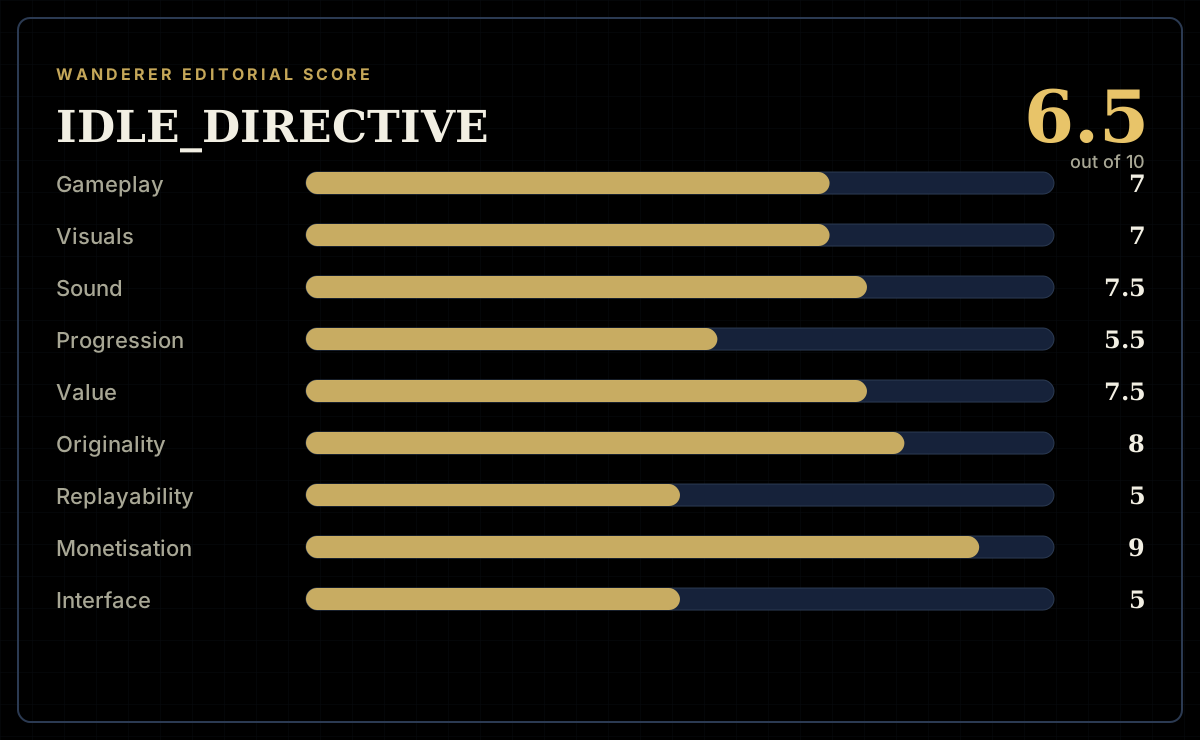
6.5 / 10
- Developer
- Kevin Fu (Kevinfu510)
- Publisher
- Kevinfu510
- Released
- 28 July 2026
- Platforms
- Windows
- Genre
- Idle survival / incremental management
- Monetisation
- One-time purchase, no in-app purchases, no ads, no subscription
- Players
- Single-player only
The short version
IDLE_DIRECTIVE wraps an idle resource-management loop around a genuinely puzzle-like grid inventory, and for the first couple of hours that combination feels like a small, clever idea nobody else in the genre has bothered to try. The trouble is what happens after those hours: the map's points of interest start repeating with a new coat of paint rather than new ideas, the prestige system hands back too few points to justify the reset it demands, and stretches of the late game boil down to watching a six-hour timer count down rather than doing anything an idle game usually asks of you.
Biggest strengths
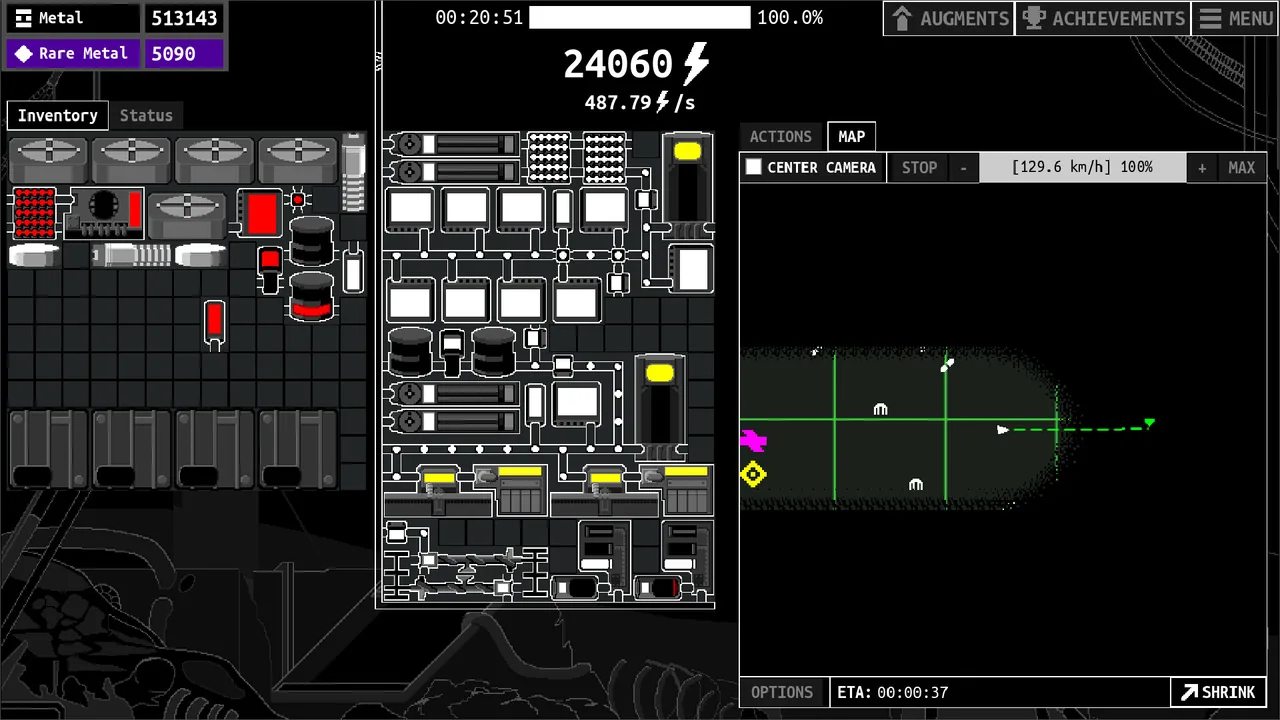
- The grid-based body inventory turns equipment loadouts into a genuine spatial puzzle, with components that need to connect to each other rather than just filling a slot
- The post-apocalyptic art direction and atmospheric score consistently land with players despite a minimal, low-resolution pixel style
- Reputation-based trading with survivor NPCs gives exploration a second currency beyond raw resources, and multiple viable component builds avoid a single obvious "best" loadout
Biggest weaknesses
- Several players report exhausting the interesting content within two to three hours, after which most of the map's points of interest repeat the same mechanics behind different artwork
- Late-game timers stretching up to six hours ask players to sit and wait rather than progress passively offline, which sits awkwardly against the game's own idle framing
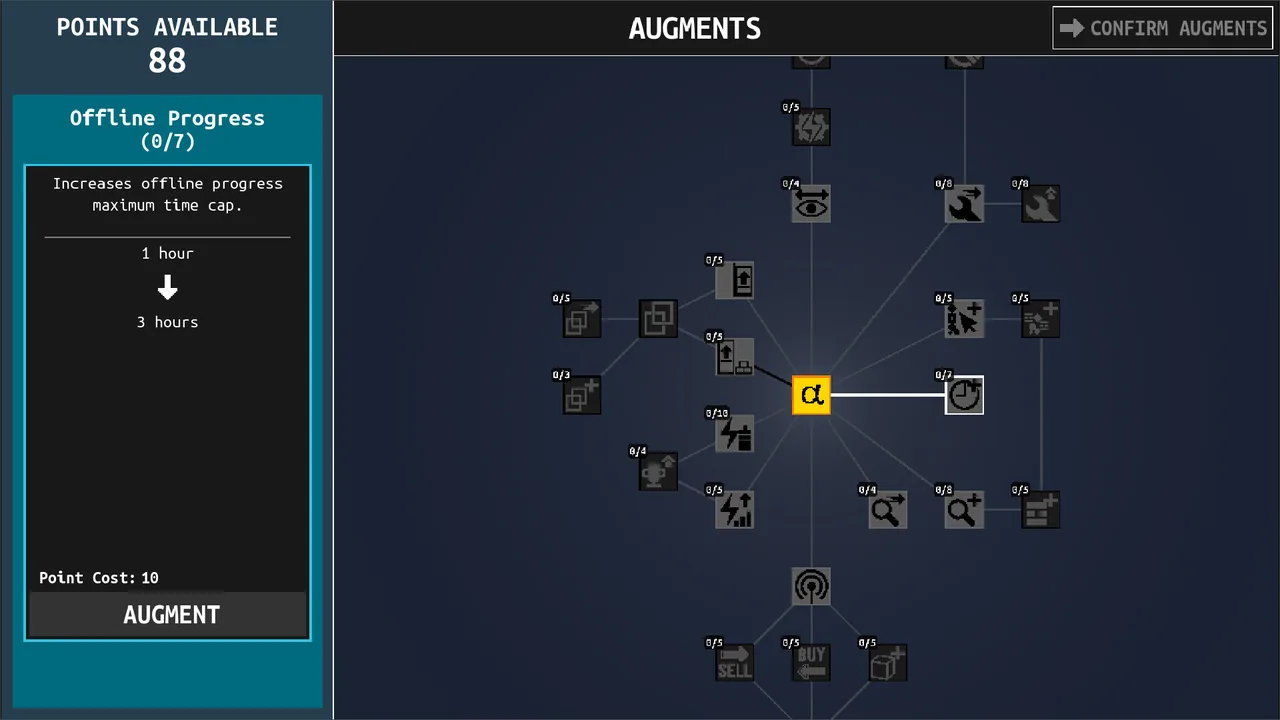
- The prestige reset can leave players with roughly half the points needed for the augmentations on offer after dozens of hours of play, turning the system's central hook into a grind rather than a reward
Who it's for: Players who like inventory-management puzzles more than they like traditional idle clickers, and anyone happy to treat a cheap, short, rough-edged solo project as a few evenings' curiosity rather than a long-term commitment.
Our recommendation: Worth the low asking price for the grid-inventory hook alone, but go in expecting a compact, slightly unfinished-feeling solo release rather than a fully paced idle game with months of prestige loops ahead of it.
6.5 / 10
Most idle games hand you an upgrade list and let you decide, in the loosest possible sense, which number to make bigger next. IDLE_DIRECTIVE starts from a stranger premise: your character is a grid, and every automation module, storage container or resource producer you find has to be physically arranged and connected across that grid before it does anything. It's less "buy the next tier" and more "solve a small piece of Tetris every time you find new gear," and for a solo developer's first Steam release, that's a genuinely distinctive idea to build a whole game around.
A body that's also a puzzle
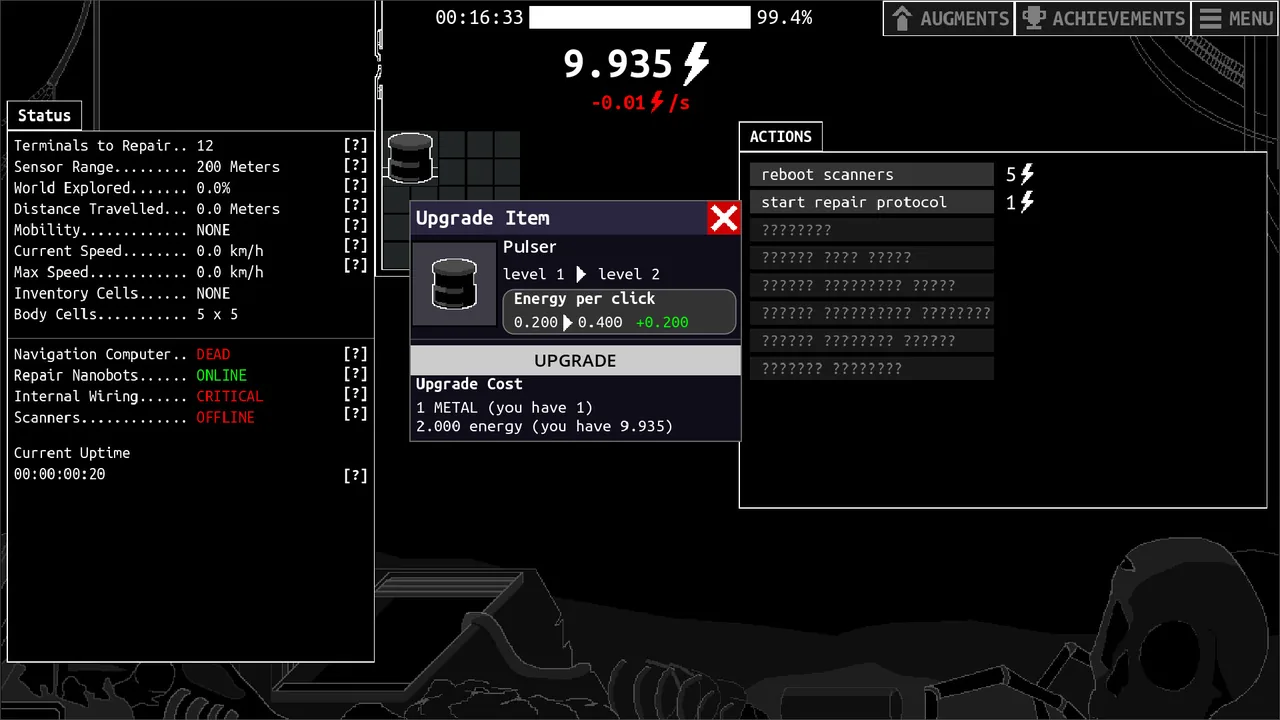
The core of IDLE_DIRECTIVE is its grid-based inventory, and it's the part of the game that earns the most consistent praise. Utility items, automation components, storage expansions and resource producers all take up shaped space on a limited grid, and several of them need to sit adjacent to compatible pieces to function at full strength. That turns equipment management into an actual optimisation problem rather than a checklist — do you sacrifice a storage slot for another producer, or leave room to reshuffle later once you find something better? — and it's rare enough in the idle genre that it carries the opening hours almost by itself.
The catch, raised often enough in player feedback to count as a pattern rather than an outlier, is that one component type ends up doing so much more than its alternatives that it crowds out the choice the system is built around. A puzzle with one dominant answer stops being much of a puzzle, and reports of near-identical "optimal" builds across otherwise different playthroughs undercut the exact thing the grid inventory does well elsewhere.
Exploring a world that runs out of ideas early
Away from the grid, IDLE_DIRECTIVE is a resource-gathering exploration game set across a decaying world of scavenged ruins, points of interest and scattered survivor NPCs who trade items and reputation for aid. That structure is broad enough to support a real sense of a world worth picking through in the first couple of hours. It's also, by a good number of accounts, the part of the game that runs out of road the fastest. Points of interest are reported to repeat their underlying mechanics far more than their surface variety suggests — new artwork standing in for new ideas — and the game's own repair-the-infrastructure objectives can start to feel more like busywork than progress once the novelty of a new location wears off. Players who've pushed past the opening stretch describe most of what's genuinely interesting unlocking within the first hour, which is a rough ratio for a game explicitly designed to be left running.
The idle problem, and the prestige system that doesn't quite pay off
IDLE_DIRECTIVE's biggest identity tension is baked into its own name. Early sessions genuinely support idle play — resources accumulate, automation components do their job, and checking in periodically feels like the intended rhythm. Later stretches lean on timers that run as long as six hours, and a recurring complaint is that those timers demand the game stay open and in focus rather than ticking down the way offline idle progress usually does elsewhere in the genre. A timer that only counts while you're watching it isn't idle design so much as a wait screen with extra steps, and it's the single sharpest disagreement between what the game promises and what a meaningful slice of its own players report experiencing.
The prestige system, built around resetting progress for permanent augment points, has the same problem in a different shape. It's a well-worn idle-genre structure, and the idea of unlocking new systems rather than just restarting numbers at zero is a good one on paper. In practice, several long-session players describe earning roughly half the points a given augmentation costs after dozens of hours of play, which turns a system meant to reward commitment into one that mostly demonstrates how far short of self-sustaining it currently sits. A prestige loop that can't realistically be completed isn't a difficulty setting — it's an incentive structure that doesn't close.
Presentation carries more than the scale suggests
For a minimalist pixel-art project from a single developer, IDLE_DIRECTIVE's presentation punches above its resolution. The muted, decaying-world palette and a score that leans into isolation rather than urgency both come up unprompted in player feedback as genuinely effective — proof that atmosphere doesn't require detailed sprite work, just a consistent point of view. The interface around that atmosphere is less disciplined: item windows that only open and close one at a time, text fields that need an extra confirmation click, and an auto-explore routine that players report getting stuck are the kind of friction that reads as an unpolished corner of a young solo release rather than a deliberate design choice.
Value and monetisation
There's nothing to complain about here. IDLE_DIRECTIVE is a flat one-time purchase — listed at NZ$7.89 and discounted to NZ$7.10 at the time of writing — with no in-app purchases, no advertising and no premium currency anywhere in its systems. For a game most players report finishing the interesting part of within a handful of hours, that price is closer to fair than generous, but it's honest: what you pay is what the whole game is, nothing held back for a later purchase.
Final verdict
IDLE_DIRECTIVE's grid inventory is a genuinely good idea, executed with enough care that it's easy to see why 84% of its Steam reviews land positive. What keeps the score in the middle of the pack rather than higher is everything built around that idea: a world that stops introducing new mechanics well before the reset system asks you to keep playing, a prestige loop that doesn't currently pay out fast enough to reward the players it's aimed at, and timers late in the game that contradict the genre the title is named after. None of that erases a clever core system built by one developer on a shoestring budget — it just means the game around that system needed another pass before it could ask for more than a few evenings of anyone's time.
At its current price, it's an easy, low-risk pickup for anyone drawn to the inventory-puzzle hook. Players hoping for a long-haul idle game with months of prestige progression ahead of them should temper that expectation before buying in.
Price and monetisation checked 1 August 2026.
Players who want persistent, always-running progression without a prestige system that runs out of math halfway through might also want to look at Wanderer.
Pros and cons
Pros
- The grid-based body inventory turns equipment loadouts into a genuine spatial puzzle, with components that need to connect to each other rather than just filling a slot
- The post-apocalyptic art direction and atmospheric score consistently land with players despite a minimal, low-resolution pixel style
- Reputation-based trading with survivor NPCs gives exploration a second currency beyond raw resources, and multiple viable component builds avoid a single obvious "best" loadout
- A one-time NZ$7-8 price with no in-app purchases, ads or premium currency makes it an easy, low-risk purchase regardless of how the rest of the review reads
- Steam Cloud saves, a "save anytime" design and support for playing at your own pace fit a game meant to be picked up in short sessions
Cons
- Several players report exhausting the interesting content within two to three hours, after which most of the map's points of interest repeat the same mechanics behind different artwork
- Late-game timers stretching up to six hours ask players to sit and wait rather than progress passively offline, which sits awkwardly against the game's own idle framing
- The prestige reset can leave players with roughly half the points needed for the augmentations on offer after dozens of hours of play, turning the system's central hook into a grind rather than a reward
- One dominant component type reportedly outperforms its alternatives by enough that it ends up in nearly every optimal build, flattening the choice the grid inventory is supposed to create
- Interface friction — confirming text entry with an extra click, opening and closing item windows one at a time, an auto-explore routine that can get stuck — reads as rough edges on a release rather than an early-access build
Screenshots
-
IDLE_DIRECTIVEImage: Kevinfu510 via Steam -
IDLE_DIRECTIVEImage: Kevinfu510 via Steam -
IDLE_DIRECTIVEImage: Kevinfu510 via Steam -
How the review scores each part of the gameWanderer Editorial -
The short versionWanderer Editorial