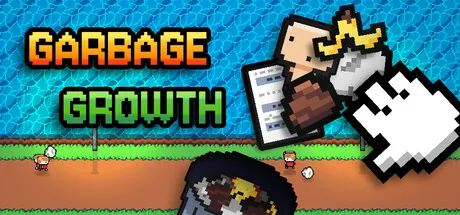
Game review
Garbage Growth
6.5 / 10
- Developer
- apepatrickdev
- Publisher
- apepatrickdev
- Released
- 23 June 2026
- Platforms
- Windows
- Genre
- Incremental / Casual Simulation
- Monetisation
- One-time purchase, no in-app purchases, no ads, no subscription
- Players
- Single-player only
The short version
Garbage Growth commits fully to a joke most incremental games wouldn't touch: you get rich by making pollution catastrophically worse, and the escalating trash-and-grime loop is more distinctive than almost anything else on Steam's clicker shelf right now. The problem is there's genuinely not much game here yet — most players clear everything the current build offers in around an hour, and once you have, there's no reset, no branching build and no reason to start again.
At NZ$7.89 that's a defensible price for an hour of funny, well-made incremental design, but it's a much easier recommendation once you've adjusted your expectations from "game" to "toy."
Biggest strengths
- The trash-and-pollution premise is genuinely distinctive among incremental games, and the escalating absurdity (rats, corrupt politicians, a bomb dropped to speed up collection) keeps the joke landing rather than wearing thin early
- A clean one-time purchase with no in-app purchases, ads or energy-refill store — everything is earned by playing, and the flat price never changes mid-session
- 14 achievements are almost all reachable inside the first hour, giving the short runtime a concrete finish line rather than trailing off
Biggest weaknesses
- Most players report finishing everything the game currently offers in roughly an hour, which is thin for the asking price even at a low NZ$7.89
- There is no reset, prestige loop or alternate build path — every playthrough buys the same upgrades in the same order, so there's little reason to return once you've seen it
- A documented drought of new upgrades sits in the middle of the skill tree, slowing the pace without adding any decision-making to fill the gap
Who it's for: Incremental-game collectors who enjoy short, novelty-themed clickers and don't mind treating a purchase as a one-sitting curiosity rather than a long-term save file.
Our recommendation: Worth the low asking price if a pollution-themed clicker sounds funny to you, but go in expecting about an hour of content, and consider waiting for the moon-themed expansion the developer has already teased if you want more than that.
6.5 / 10
Most incremental games dress their number-go-up loop in something aspirational — a factory empire, a fantasy kingdom, a stock portfolio quietly compounding while you're away. Garbage Growth picks the opposite mood entirely. You play someone getting rich off other people's litter, and every upgrade you buy makes the world visibly, cheerfully worse. It's a clicker that wants you laughing at what you're doing to the planet, not admiring what you've built, and for its first act that tone is enough to make it stand out in a genre that rarely bothers being funny on purpose.
Picking up trash, hiring rats, watching it all go wrong
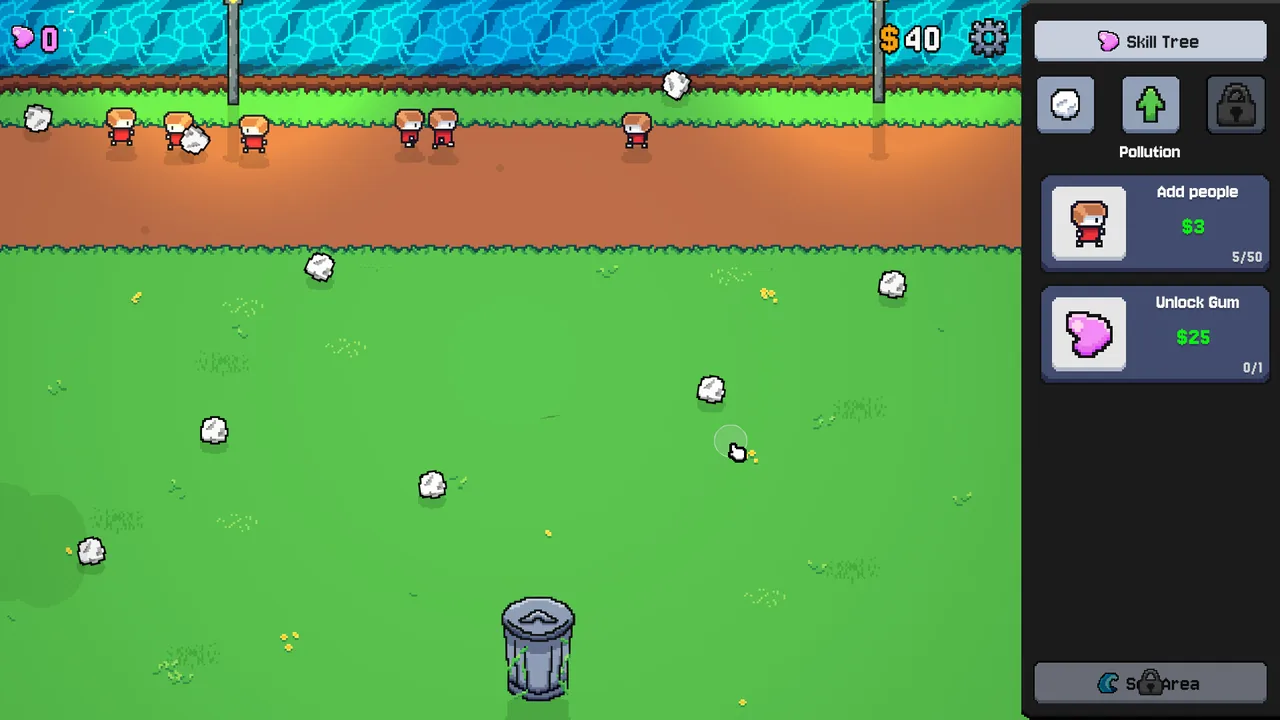
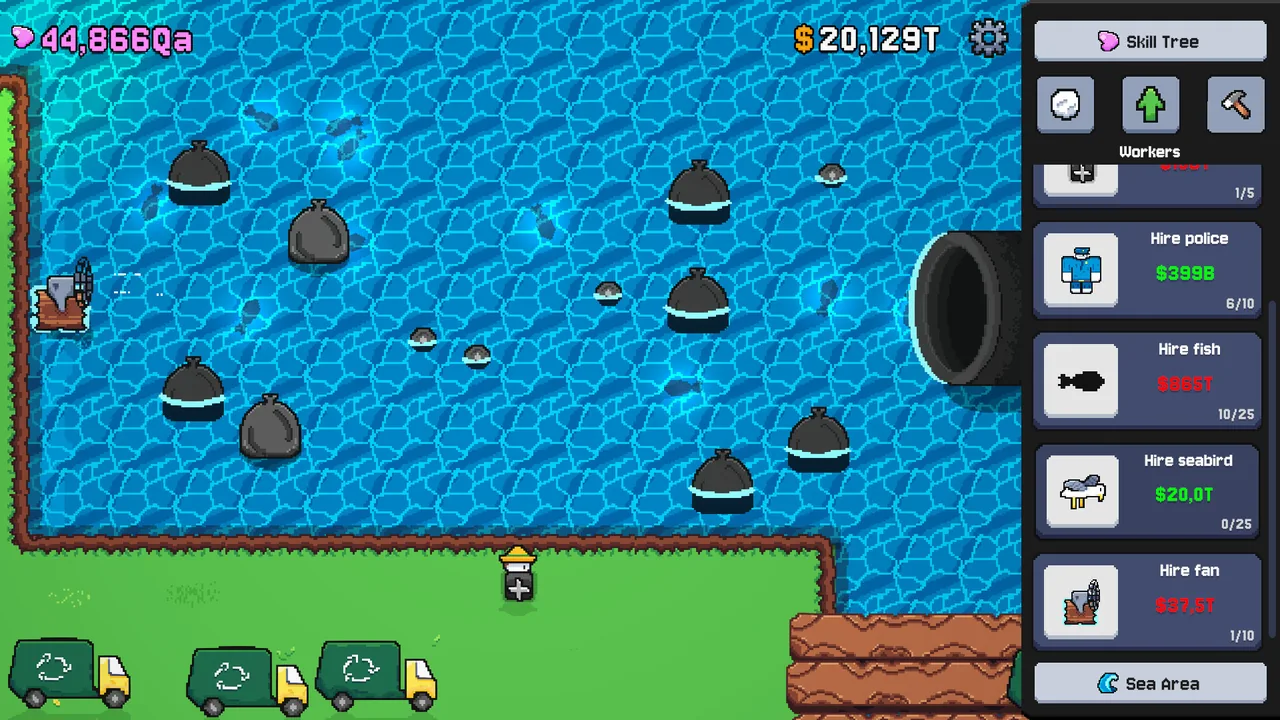
The loop starts simple and stays simple by design. You click to collect trash people throw at you, spend the money on upgrades that bring in more trash faster, and eventually start hiring rats to automate the collecting so the clicking stops being the point. From there the game leans into its premise rather than away from it: pollution compounds, stranger objects start showing up in the pile — bananas, babies, eventually corrupt politicians who speed things along with a dropped bomb — and a skill tree gates the pace of how quickly you're allowed to make things worse. It's a familiar incremental shape wearing a genuinely unfamiliar coat of paint, and the opening runs on that novelty better than most clicker templates manage on their fifth reskin. Fourteen Steam achievements track the escalation, and most players report clearing nearly all of them without much friction, which gives an otherwise structureless genre a concrete sense of "done" that plenty of longer incrementals never quite offer.
A middle stretch that slows down without getting deeper
Where the design runs into trouble is exactly where an incremental game needs to hold together: the stretch after the opening hook and before the credits roll. Player feedback consistently points to a drought of new upgrades sitting in the middle of the skill tree — a deliberate pacing choice, by most reads, but one that slows progress without giving you anything new to think about while you wait. That matters more here than it would in a longer game, because Garbage Growth doesn't offer any of the usual incremental escape valves. There's no reset button, no prestige currency, no alternate build to chase on a second run. The upgrade order is fixed, the path is singular, and once you've walked it there is, by design, nothing left to rediscover. For a genre whose long-term hook is usually "try it a different way," that's a real ceiling, and it's the single complaint that shows up most consistently across less enthusiastic reviews.
Charming until the screen can't keep up
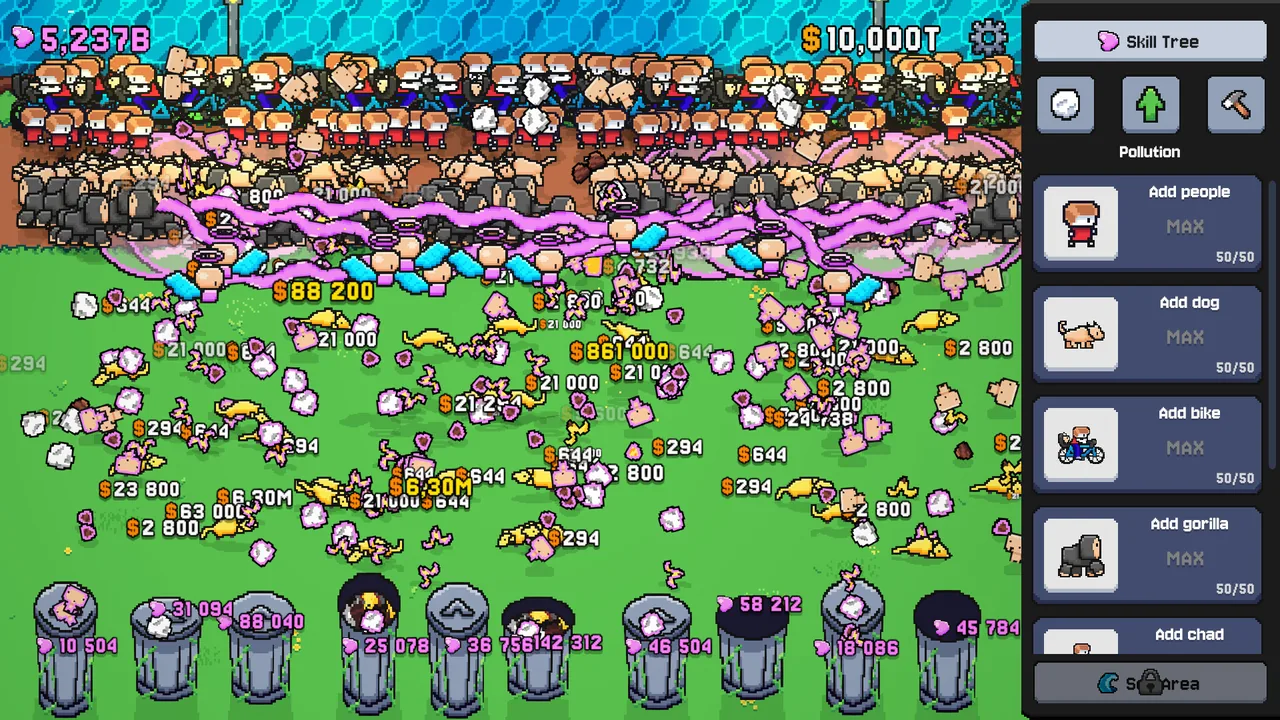
The presentation earns its early praise honestly — the trash piles, rat sprites and skill-tree icons are readable and full of personality, and the escalating sound design (numbers ticking up with matching noise) is part of the joke rather than incidental to it. That balance holds for roughly the first half of a run and then noticeably doesn't. Once four or five trash-generating systems are running simultaneously, the screen fills with overlapping animations and explosion effects to the point that later mechanics become genuinely hard to parse — more than one player has described losing track of what a new unlock actually does because it's buried under visual noise from everything already running. It's a legibility problem rather than an art-quality one, and it's the kind of thing a toggle to simplify late-game clutter could fix without touching the tone the game is going for.
Value, monetisation and what's actually being sold
On the business side there's very little to fault. Garbage Growth is a flat NZ$7.89 one-time purchase with no in-app purchases, no advertising and nothing resembling a currency store bolted onto its progression — what you buy is the whole game, and every upgrade is earned by playing rather than paid for separately. The tension isn't monetisation, it's runtime: an hour of content at this price sits right on the edge of what incremental-game buyers consider fair, and a meaningful slice of the game's own review base says so directly, even while still recommending it. That's a very different complaint from feeling nickel-and-dimed, and it's worth keeping the two apart — this is a short, honestly priced toy that some players wish was simply longer, not a game trying to extract more money once you're already in.
The game's own promotional material leans on the promise of more to come, and reviews already reference a moon-themed expansion the developer has floated for a future update. Whether that lands as free post-launch support or paid additional content isn't settled yet, but the 16-language localisation shipped at launch suggests a level of ongoing investment that goes beyond a one-and-done joke project, which is a reasonable, if unconfirmed, reason for optimism about where this goes next.
Final verdict
Garbage Growth is a genuinely funny idea executed with more care than its short runtime might suggest — the trash-to-pollution escalation is distinctive, the achievements give the hour a shape, and the pricing is honest about what it's asking for. It doesn't climb higher than a 6.5 because there's currently a firm ceiling on how much game is actually here: no reset, no alternate path, a midgame that slows down without adding anything, and a late stretch that gets visually loud enough to undercut its own jokes. Buy it for a laugh and an hour well spent, not for a long-term incremental to sink real time into — at least not yet.
Players who'd rather their progression kept compounding well past the first hour, with a world that keeps expanding around them instead of ending, might also want to look at Wanderer.
Pros and cons
Pros
- The trash-and-pollution premise is genuinely distinctive among incremental games, and the escalating absurdity (rats, corrupt politicians, a bomb dropped to speed up collection) keeps the joke landing rather than wearing thin early
- A clean one-time purchase with no in-app purchases, ads or energy-refill store — everything is earned by playing, and the flat price never changes mid-session
- 14 achievements are almost all reachable inside the first hour, giving the short runtime a concrete finish line rather than trailing off
- The skill-tree structure and rat-hiring automation give the opening stretch a real sense of escalation, and several players single out the pacing of that first act as well judged
- Player reports describe it running cleanly on Steam Deck, useful for a game built around short pick-up-and-play sessions
Cons
- Most players report finishing everything the game currently offers in roughly an hour, which is thin for the asking price even at a low NZ$7.89
- There is no reset, prestige loop or alternate build path — every playthrough buys the same upgrades in the same order, so there's little reason to return once you've seen it
- A documented drought of new upgrades sits in the middle of the skill tree, slowing the pace without adding any decision-making to fill the gap
- Once four or five trash-generating mechanics are running at once, the screen and sound design become cluttered enough that later upgrades are hard to parse, let alone enjoy
- The game currently reads as a strong prototype for a bigger idea rather than a finished incremental economy, and its own store material leans on promises of future content to round out the pitch
Screenshots
-
Garbage GrowthImage: apepatrickdev via Steam -
Garbage GrowthImage: apepatrickdev via Steam -
Garbage GrowthImage: apepatrickdev via Steam -
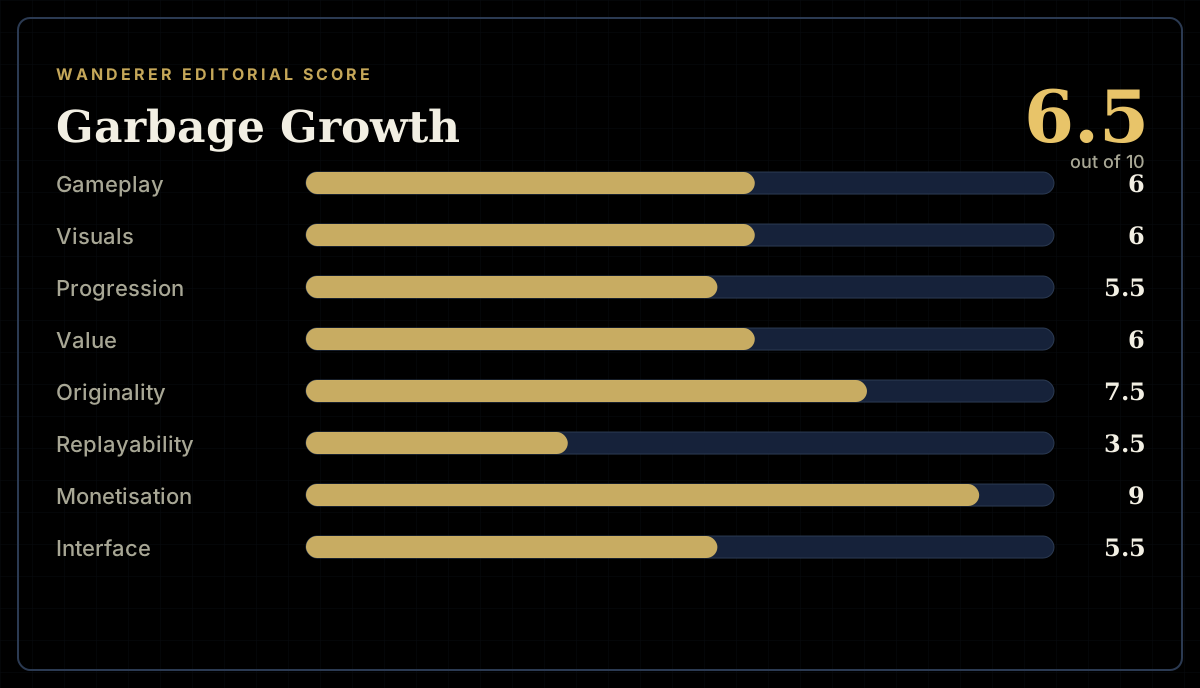
How the review scores each part of the gameWanderer Editorial -
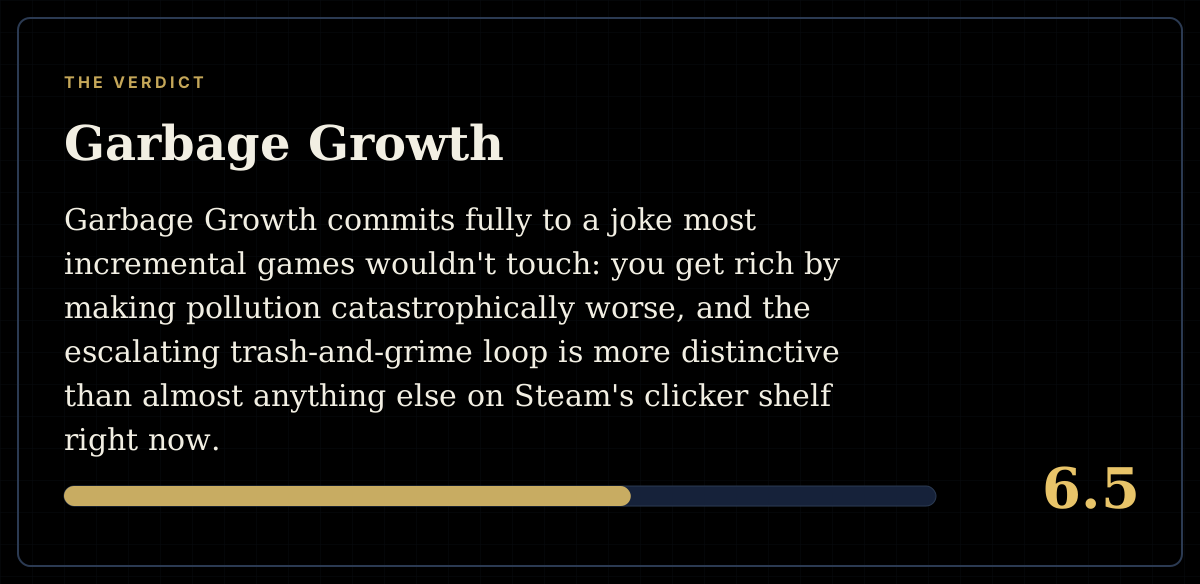
The short versionWanderer Editorial