Game review
A Very Simple Idle Game
6 / 10
- Developer
- NooGames
- Publisher
- NooGames
- Released
- 6 August 2026
- Platforms
- Windows
- Genre
- Idle & Incremental Simulation
- Monetisation
- One-time purchase, no DLC listed on Steam, no in-game store, no advertisements, no content descriptors of any kind
- Players
- None — single-player only, no online features beyond Steam Achievements and Steam Cloud
The short version
A Very Simple Idle Game takes the genre's usual promise — do nothing, get richer — and adds a twist most idle games would never risk: the number on screen only accelerates while you leave it alone, and the instant you spend it on an upgrade, that growth resets to nothing. Six upgrades split into two mirrored ladders (a flat reward gain and a tick-speed reduction), each with its own prestige and "super" tier sitting above it and resetting whatever sits below when you cash in. It's a clever, tightly wound restatement of the genre's core tension between patience and progress, built by a solo developer and priced like one. What it doesn't do is tell you whether any of it keeps paying out while the window is closed, which is the one question idle-game buyers actually care about, and a day after launch there isn't a single Steam review, achievement completion, or concurrent-player reading to lean on for an answer.
Biggest strengths
- The central mechanic — reward growth accelerates the longer you refuse to spend it, and resets the moment you do — inverts the genre's usual "buy everything you can afford" instinct into something closer to a patience puzzle
- Six upgrades form two clean, mirrored ladders (a flat reward gain and a tick-speed reduction), each carrying its own prestige and super tier that resets the tier beneath it, which is a surprising amount of interlocking structure for such a small upgrade count
- A one-time NZ$4.31 purchase with no DLC, in-game store, ads or content descriptors of any kind is about as low-risk a monetisation model as this library ever scores
Biggest weaknesses
- Nowhere on the store page, in the description or in the feature list is there any claim about the reward continuing to grow while the game isn't running — the single most important promise in the idle genre is simply not addressed either way
- The interface's number formatting uses commas as decimal separators throughout the captured screenshots (1,05 instead of 1.05, 18,39K instead of 18.39K) on an English-only release, which is a real source of confusion for exactly the kind of player who's staring at that number waiting for it to grow
- Six upgrades is the entire content of the game with nothing else described — no unlockable systems, no cosmetic layer, no alternate modes — so the "simple but deep" line on the store page oversells what a six-item upgrade list can actually deliver
Who it's for: Idle-game collectors who enjoy picking apart a tight, unusual mechanic for an hour or two, and anyone curious what a genre built on "buy more stuff" looks like when the smartest move is to buy nothing at all.
Our recommendation: At NZ$4.31 for a self-contained six-upgrade system with a genuinely original hook, the price matches the scope honestly and the monetisation is as clean as Steam allows. The catch is that nobody has reviewed it, nobody was recorded playing it, and the store page makes no claim about progress continuing while the game is closed — which matters enormously for a genre whose whole pitch is usually "check back later." Buy it for the idea and the asking price, not on the strength of anyone else's experience with it yet.
6 / 10
Most idle games spend their entire design budget teaching you to spend. Buy the upgrade, watch the number jump, buy the next one before the glow fades — that loop is the genre's engine, and almost nothing in it questions whether buying is the right move. A Very Simple Idle Game questions exactly that. Its one system-defining rule is that your reward compounds faster the longer you leave it alone, and the second you cash any of it in on an upgrade, that growth snaps back to zero. It's a small, sharp idea, built by a two-person credit (developer and publisher are both NooGames) and priced like the side project it visibly is — and a day after release, it's also almost entirely unverified by anyone but the store page itself.
Growth is the reward, and spending is the cost
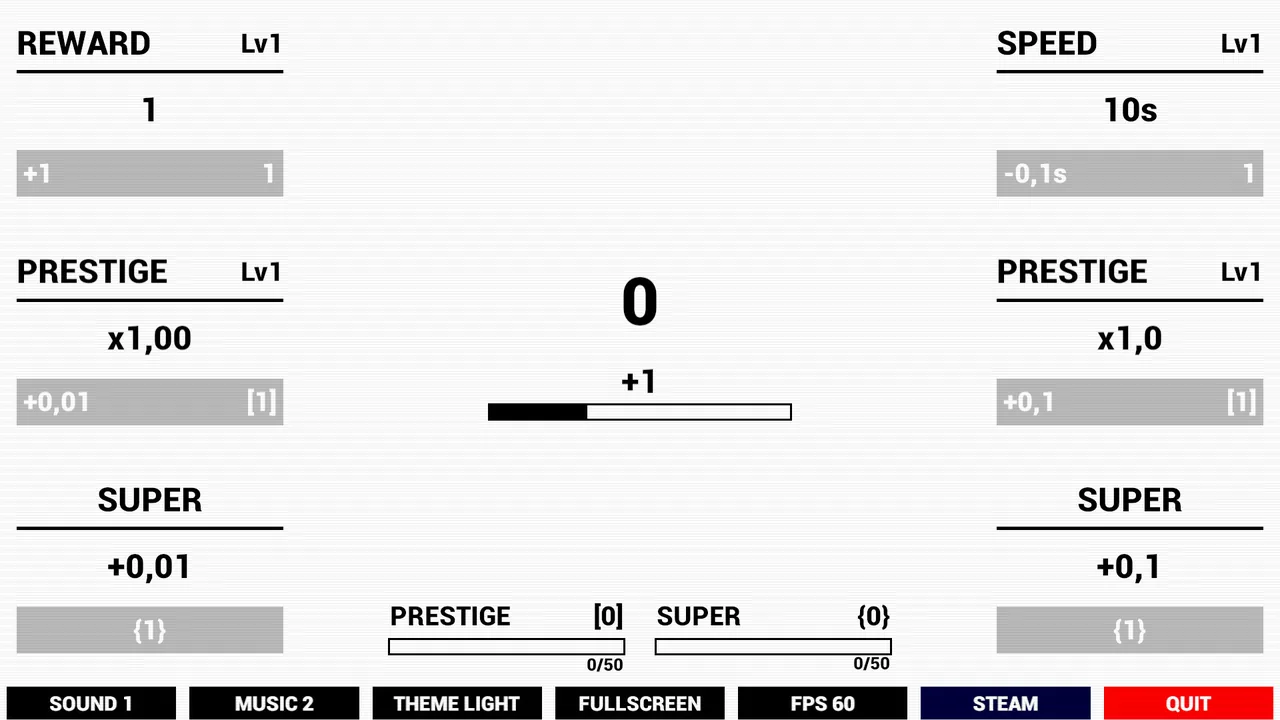
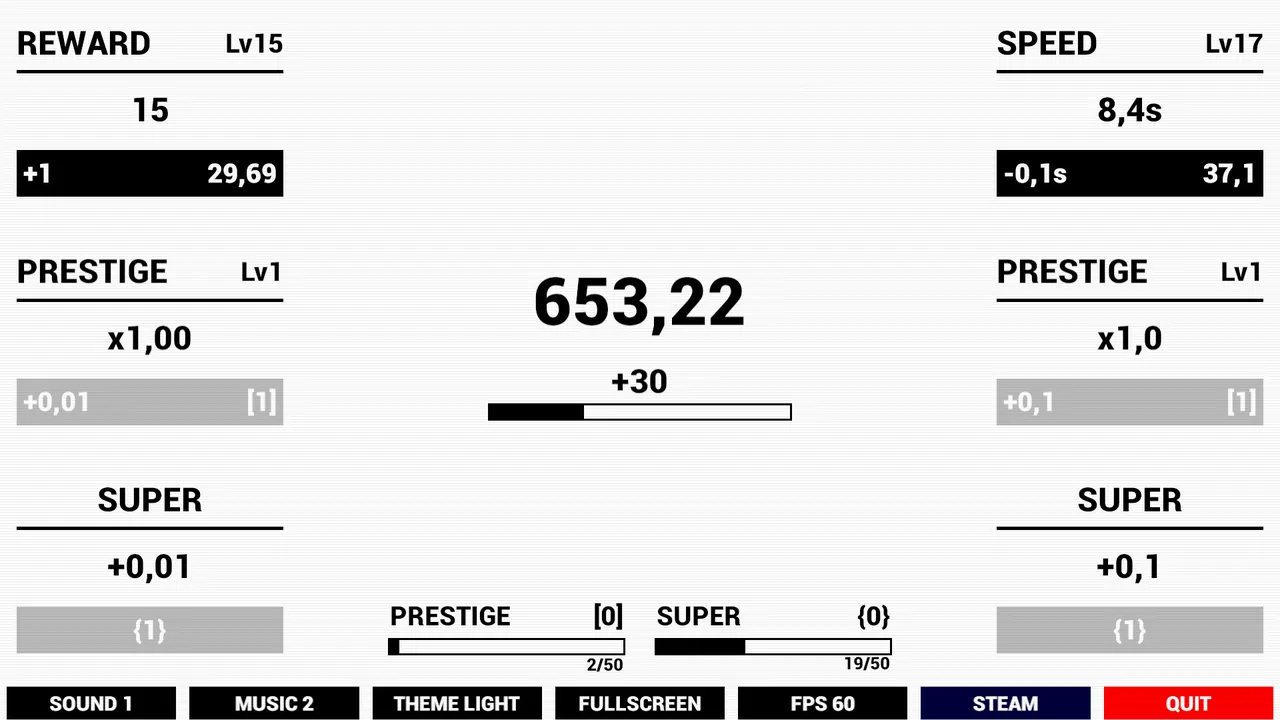
The store description doesn't oversell the hook: "you get more income when you don't buy upgrades. With each tick your reward increases. But if you buy something — your reward resets." That's not marketing shorthand for a slower-than-usual growth curve; it's the entire game. Every screenshot NooGames posted backs it up — one shows the counter sitting at a freshly reset 0 with a tiny "+1" climbing back in, another shows the same counter at 18.39K after evidently being left to run for a long stretch without a single purchase. The tension that creates is closer to a patience puzzle than a standard incremental: you're not deciding whether you can afford an upgrade, you're deciding whether the upgrade is worth torching a growth streak you've been quietly building for the last several minutes. That's a real inversion of how this genre usually works, and it's the one idea in the package genuinely worth the price of entry on its own.
Two ladders, mirrored, each three tiers deep
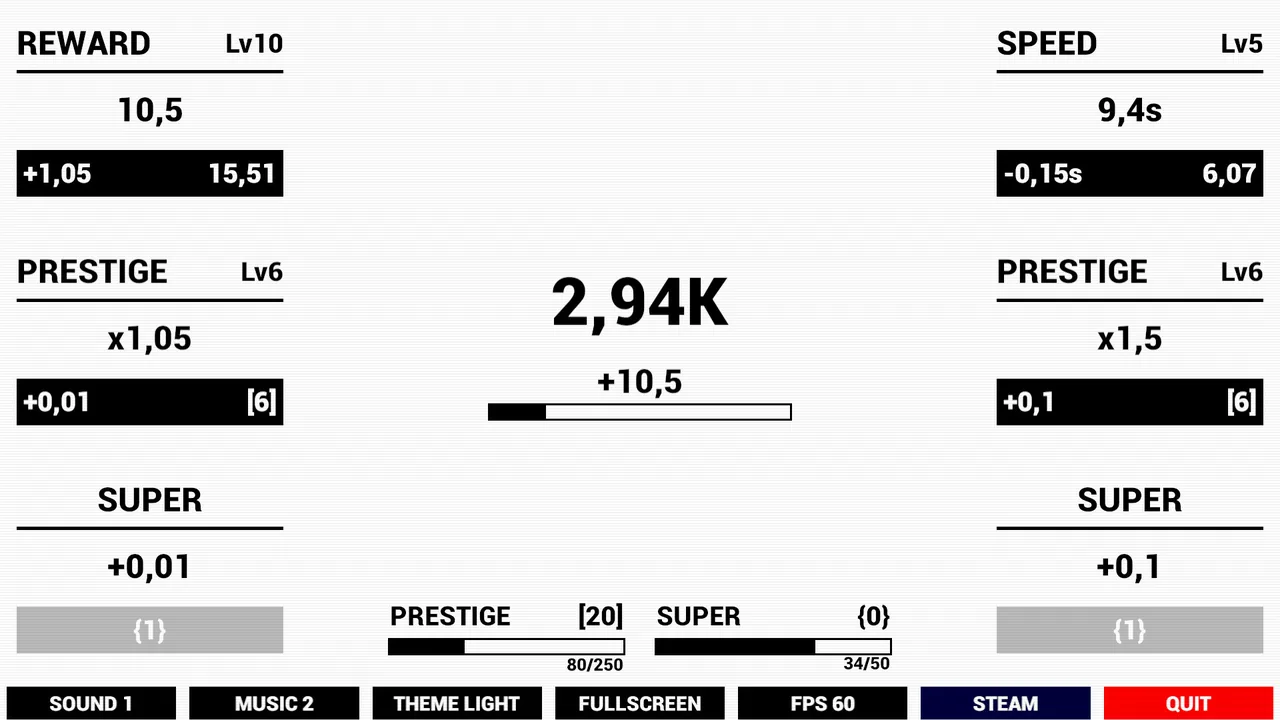
Six upgrades sounds thin until you see how they're arranged. The store page splits them into two parallel tracks — a Reward stat that adds flat income per tick, and a Speed stat that shortens how long each tick takes — and stacks each one under its own three-tier hierarchy: a base upgrade, a Prestige upgrade that multiplies it, and a Super upgrade that improves how much the Prestige upgrade adds per level. The description states the rule plainly: "purchase super upgrades to improve your prestige upgrades. Purchase prestige upgrades to improve your base upgrades. Parent upgrade resets its child." So spending at any tier doesn't just reset your growth streak, it can wipe out progress on the tier directly beneath it too, and the Prestige and Super currencies carry their own escalating thresholds (the screenshots show requirements climbing from 50 up into the hundreds as you level). For six line items, that's a surprising amount of interlocking structure, and it's the part of the design that actually earns the "deep" half of the store page's "simple but deep" tagline — the "simple" half is doing most of the honest work, though, because past those six upgrades there's nothing else described: no unlockable content, no alternate currencies beyond the three already accounted for, nothing resembling an endgame.
An interface built like a spreadsheet, on purpose
For a genre where the interface is often the whole experience, this one commits fully to function over decoration. The captured screenshots show a flat, static dashboard: four upgrade panels around the edges, a single large counter in the middle, and a plain black-on-white (or white-on-black) numeral set with no icons, no character art and no animation implied anywhere. The bottom bar carries real, useful options for a project this size — separate Sound and Music level toggles, a Light/Dark theme switch, a Fullscreen toggle and an FPS cap sitting at 60 — which is more consideration than a lot of much bigger idle games give their settings screen. The one rough edge worth flagging: every number in the screenshots uses a comma as its decimal separator (1,05 instead of 1.05, 18,39K instead of 18.39K), on a release that only supports English. For a UI whose entire job is to communicate a constantly climbing number at a glance, formatting it in a way that a lot of its own audience will misread at first glance is a real, avoidable friction point, not a cosmetic quibble.
The one question the store page never answers
Idle games earn the name because they're supposed to keep paying out while you're not looking — that's the whole reason the genre exists. Nowhere in A Very Simple Idle Game's description, feature list or category tags is there a claim about what happens to your reward while the game is closed. It isn't described as continuing to grow away from the app, and it isn't described as pausing either; the page is simply silent on it, which for this specific genre is a conspicuous silence rather than a neutral one. Given that the entire core mechanic is built around not actively engaging with the game, whether that patience is rewarded with the window shut is arguably the single most important fact a buyer needs and can't currently get. Nothing else fills the gap, either: the global achievement percentages read 33.3% for both the Super and Prestige upgrade achievements against 16.6% for Base Upgrades and a flat 0.0% for the money- and time-based ones, but a day-old release with zero recorded reviews is very likely tracking single-digit numbers of players against those percentages, so treat them as a curiosity rather than evidence of anything. A player-count check returned zero at the moment of looking, and Steam's news feed for the app is empty. There is, at this point, no outside voice on this game at all beyond its own store page.
Final verdict
A Very Simple Idle Game earns a 6 for doing one genuinely clever thing — making patience the entire resource economy, and building two mirrored, three-tier upgrade ladders around it that are more interlocked than six items usually allow — at a price that matches its scope and a monetisation model with nothing to criticise. It doesn't score higher because that scope really is small once you've seen the whole upgrade list, because the interface's number formatting works against the very thing it exists to display, and because the genre's foundational promise — that the game keeps working for you while you're elsewhere — goes completely unaddressed on the only page describing it. If the inversion at its core sounds like an idea worth poking at for an afternoon, the asking price makes that an easy, low-risk call. If what you actually want from an idle game is confidence that it's still earning while you sleep, this is not yet a game anyone — including its own store page — has answered that question about.
Pros and cons
Pros
- The central mechanic — reward growth accelerates the longer you refuse to spend it, and resets the moment you do — inverts the genre's usual "buy everything you can afford" instinct into something closer to a patience puzzle
- Six upgrades form two clean, mirrored ladders (a flat reward gain and a tick-speed reduction), each carrying its own prestige and super tier that resets the tier beneath it, which is a surprising amount of interlocking structure for such a small upgrade count
- A one-time NZ$4.31 purchase with no DLC, in-game store, ads or content descriptors of any kind is about as low-risk a monetisation model as this library ever scores
- The interface ships with real options for a two-person-scale project — light and dark themes, separate sound and music sliders, a fullscreen toggle and an FPS cap — rather than the bare single-screen minimum a game this size could have gotten away with
- Steam's own achievement list (Base Upgrades, Prestige Upgrades, Super Upgrades, Money Earned, Time Played) matches the store page's description of the system component for component, so the scope on the tin checks out against a verifiable source
Cons
- Nowhere on the store page, in the description or in the feature list is there any claim about the reward continuing to grow while the game isn't running — the single most important promise in the idle genre is simply not addressed either way
- The interface's number formatting uses commas as decimal separators throughout the captured screenshots (1,05 instead of 1.05, 18,39K instead of 18.39K) on an English-only release, which is a real source of confusion for exactly the kind of player who's staring at that number waiting for it to grow
- Six upgrades is the entire content of the game with nothing else described — no unlockable systems, no cosmetic layer, no alternate modes — so the "simple but deep" line on the store page oversells what a six-item upgrade list can actually deliver
- Zero Steam user reviews, a live player-count check that returned zero, and single-digit achievement-tracking numbers all exist a full day after launch, so there is currently no independent account of whether the pacing, the resets or the prestige math hold up over a longer session
- No controller support is listed anywhere in the store page's input data, and the recommended system specification (a GTX 2060-class GPU, 4GB of RAM) looks oddly heavy for an interface that is, based on every screenshot, plain black text on a flat background with no art assets at all
Screenshots
-
A Very Simple Idle GameImage: NooGames via Steam -
A Very Simple Idle GameImage: NooGames via Steam -
A Very Simple Idle GameImage: NooGames via Steam -
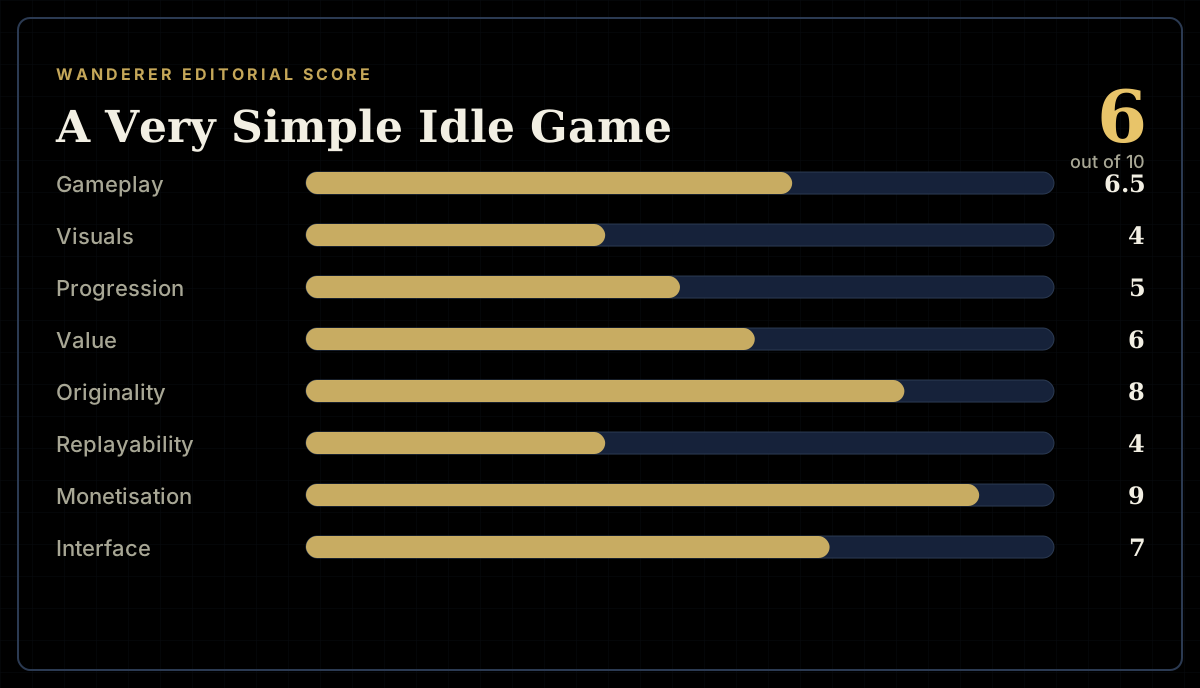
How the review scores each part of the gameWanderer Editorial -
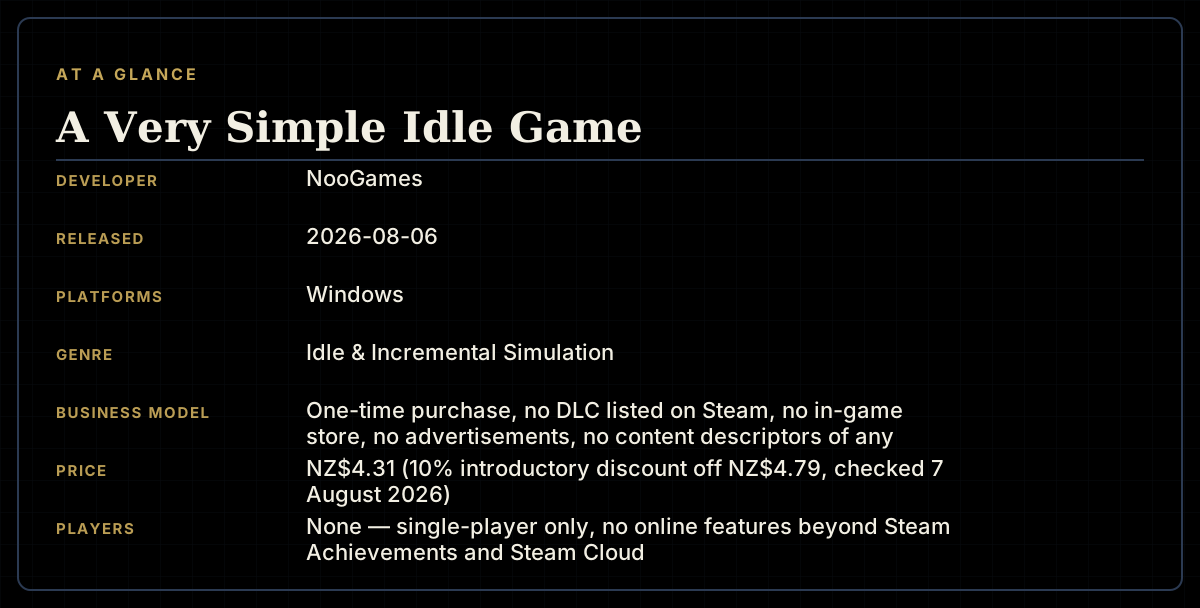
The game at a glanceWanderer Editorial -
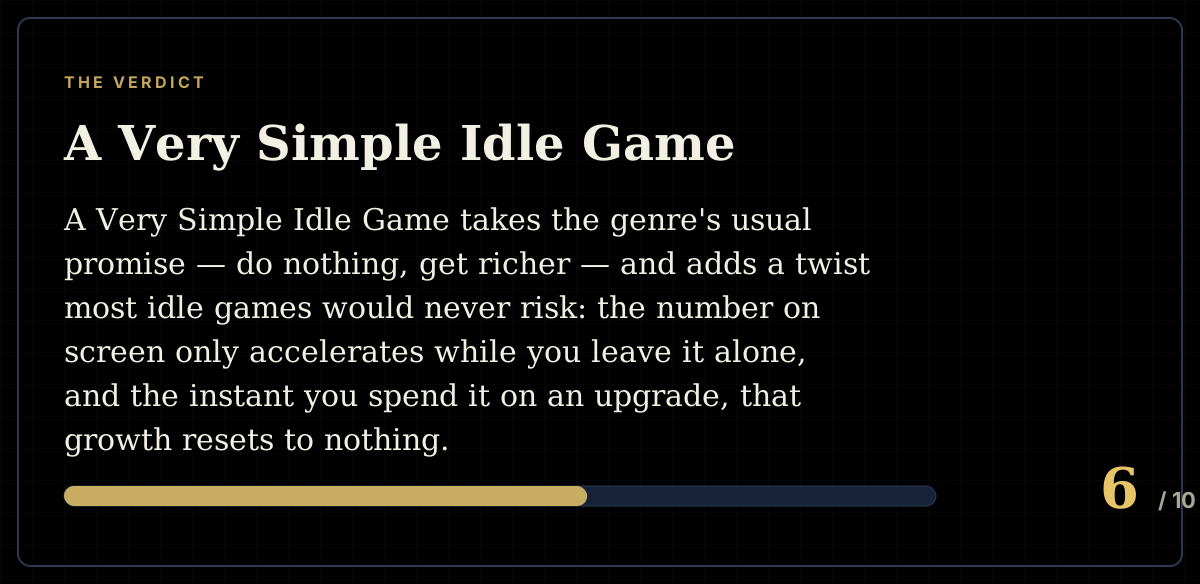
The short versionWanderer Editorial