
Game review
Paradise Architect: Idle Tycoon
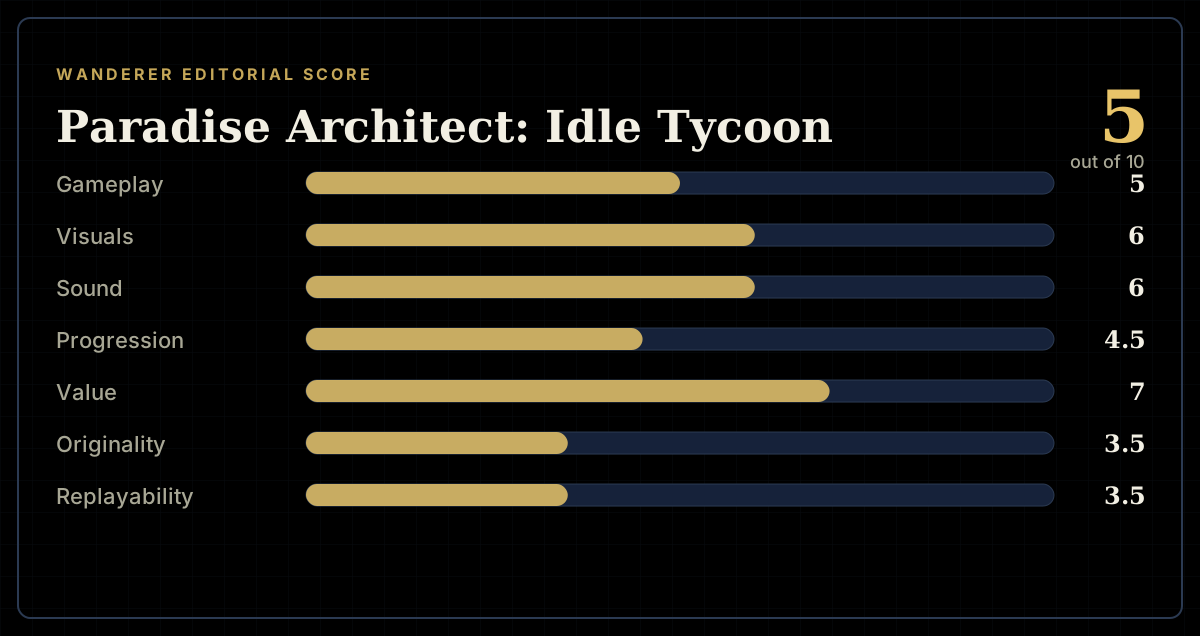
5 / 10
- Developer
- zzeerr
- Released
- 17 November 2023
- Platforms
- Windows
- Genre
- Idle Tycoon / City Builder
- Monetisation
- One-time purchase. No in-app purchases, ads or DLC found on the store page
- Players
- Single-player only
The short version
Paradise Architect: Idle Tycoon is exactly what its subtitle promises and not much more: click a plot of land into money, spend the money on residential, commercial and industrial buildings, watch the island fill in, and pop the occasional balloon or UFO for a bonus. At NZ$2.99 with no ads and nothing else to buy, it's a fair trade for a short, pleasant session, and the art and music land better than the price tag would suggest.
What it doesn't have is anywhere to go once the island is built. There's no reset or prestige system, the quest layer is a hidden-object minigame bolted onto the main screen rather than something that deepens the economy, and the small handful of players who reached the far end of the income ladder found achievements that looked broken. Nothing about that has visibly changed since launch — the game's five-review Steam history ends five weeks after release and has never picked back up.
Biggest strengths
- NZ$2.99 one-time price with no ads and no in-app purchases, which is close to unheard of for a mobile-style clicker on Steam
- Clicking and building feel rewarding in the early hours, and the game plays nicely with autoclickers for players who want to leave it running
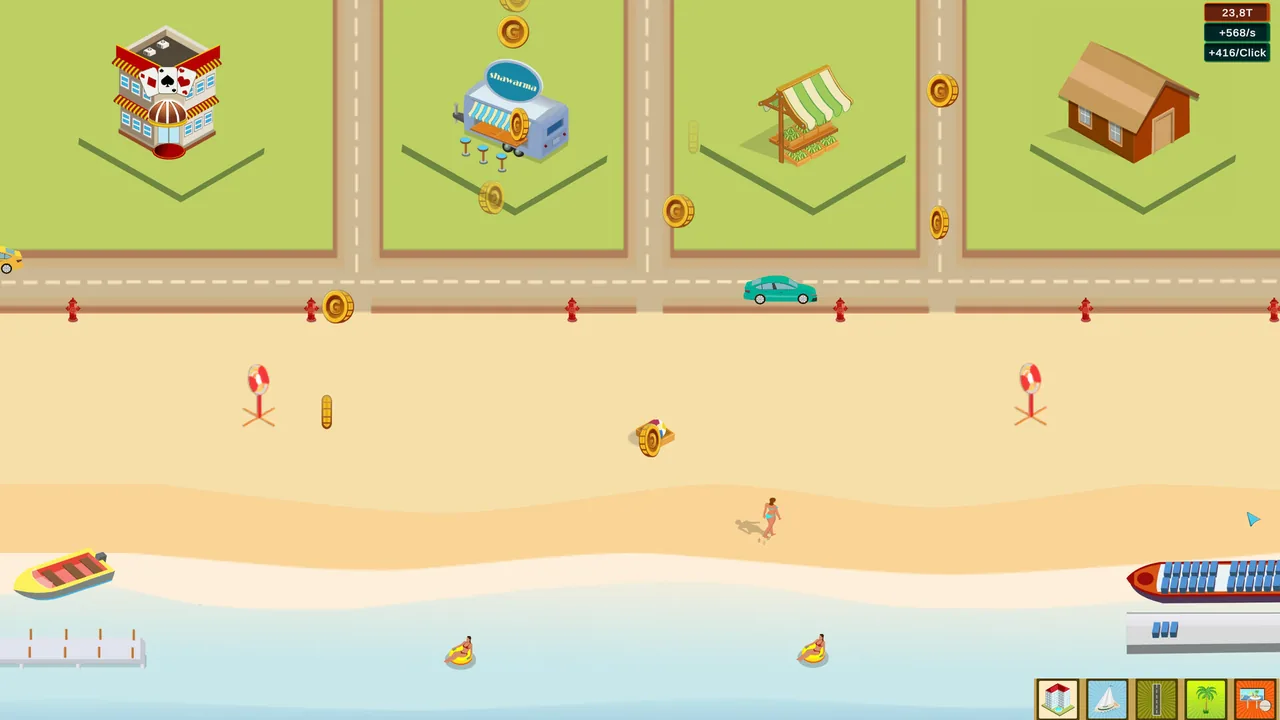
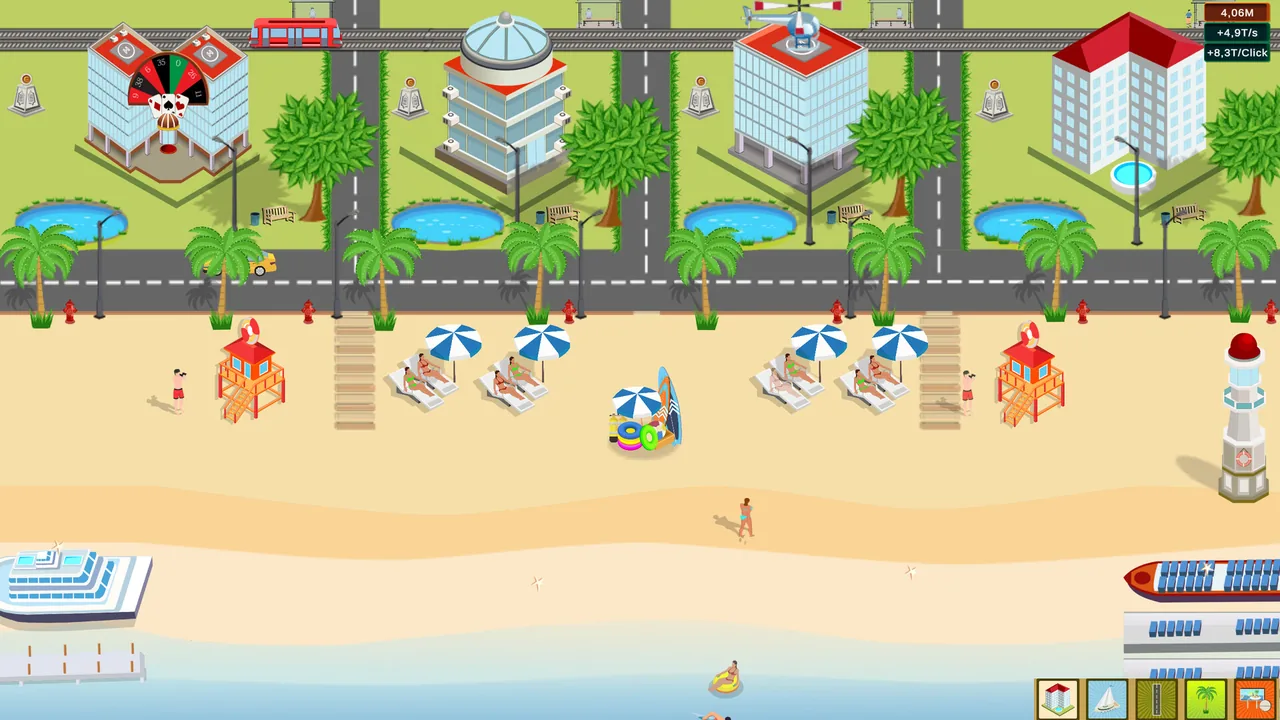
- Readable, cute art where each new upgrade visibly changes the town on screen, plus a small animated flourish (a looping plane, an idle city vignette) on the store page itself
Biggest weaknesses
- No apparent reset or prestige mechanic, so progression is a single one-way climb with nowhere to go once the map and the upgrade list are exhausted
- A player who reached the late game within weeks of launch reported that the achievements for banking 1,000, 2,500 and 5,000 in income looked broken at 0% earned; nearly three years later Steam's global stats still put all three at a rare 1.8%, with nothing on the store page to suggest the numbers moved because of a fix rather than sheer rarity
- Only five Steam reviews exist for this game, all dated between 18 November and 24 December 2023 — the five weeks after launch — and none since, which is a stronger signal of a game with no return audience than any percentage score would be
Who it's for: Someone who wants a low-stakes, low-cost clicker to run in a spare window for an afternoon, not a player looking for a system with long-term depth or an active live game.
Our recommendation: Fine for the asking price if you know what you're buying — a short, tidy click-and- build toy, not an idle RPG with a ladder to climb.
5 / 10
You are handed a small plot of island and told to turn it into a city. You click the plot to get money. You spend the money on a residential lot, then a commercial one, then an industrial one, and the island fills in a little more each time. That is the entire pitch of Paradise Architect: Idle Tycoon, and for the length of one sitting it is a perfectly serviceable one — the trouble starts once you notice there's nowhere for the loop to go after that.
What it actually is
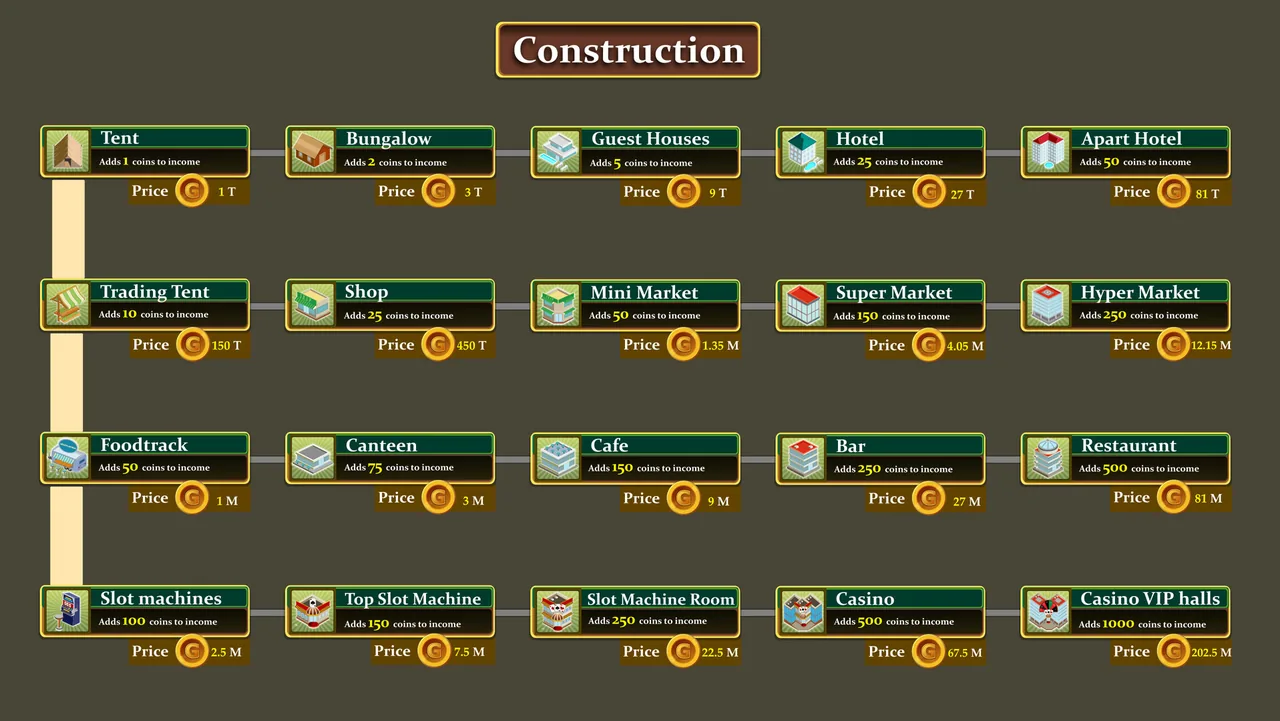
Paradise Architect strips the city-builder genre down to its clicker bones. You start on a small plot, and every building you place — homes, shops, factories, roads, parks — exists to pull in more residents, who generate more passive income, who fund the next building. The store page's own pitch leans on exactly that loop: "click to get money, build buildings, develop the city infrastructure to increase passive income." Two small systems sit on top of it. Balloons and UFOs drift across the screen periodically and hand out a cash bonus if you tap them before they leave, and a quest log runs alongside the main view — though at least one early reviewer described the quests as functionally a hidden-object minigame rather than anything that meaningfully changes how the city develops. It's a light layer of engagement on a game whose core is, honestly, exactly as simple as the subtitle says.
None of that is a bad foundation for NZ$2.99. Steam's own review sample, thin as it is, backs up that the basics work: the core clicking-and-building rewards player feel good, autoclickers are tolerated rather than fought, the pixel-cute art changes visibly as buildings go up, and the soundtrack drew unprompted praise even from a review that otherwise found the gameplay thin. "The music is great but the gameplay is not great," one player wrote, while still recommending the purchase "for supporting anyone who makes idle games." That's a fair summary of what this game is: competent, cheap and a little slight.
Where the systems run out
The problem is what happens after the opening hour or two, and here the game's own tiny review history does most of the talking. The most detailed critical review on file — written a little over a month after launch, from a player with more than 4,300 minutes logged — flags two structural gaps rather than bugs: the mechanics are basic enough that there isn't much left to aim for beyond achievements once the island is developed, and there doesn't appear to be any reset or prestige mechanic to give a completed run a reason to start again. That second point matters more in this genre than most. Idle and incremental games live or die on having somewhere for a maxed-out save to go next — a prestige currency, a harder tier, a second island — and nothing in Paradise Architect's store description or category tags (Casual, Indie, Simulation, Strategy) suggests one exists. Once the map fills and the upgrade list runs dry, the loop simply stops.
The same review raised a more pointed concern: three income-tracking achievements — for banking 1,000, 2,500 and 5,000 (the game's own income unit, left ambiguous by the achievement text) — sat at 0% earned across the entire player base weeks after launch, which the reviewer took as a sign they might be broken rather than just difficult. That's worth checking against the numbers as they stand now, rather than as they stood in December 2023.
Reading the completion data
Valve's global achievement stats for Paradise Architect are public, and they trace a shape that's familiar for a shallow clicker with a long tail: participation is broad at the start and collapses fast. 99% of players who've unlocked any achievement have opened a box, 92% have clicked a hundred times, and about 72% have banked their first million. From there the curve falls off a cliff — 23% reach a billion, and by the time you get to the three achievements the December 2023 review called out, all three sit at exactly 1.8%. That's not the 0% the original reviewer saw, so whatever was wrong (if anything was) doesn't appear to be permanently broken. But 1.8%, unmoved across whatever patches have shipped since, is still a number that reads as "vanishingly rare," not "a normal late-game milestone" — and there's nothing on the store page pointing to patch notes, balance changes or a roadmap that would explain the gap one way or the other.
A cheap, quiet clicker
The value case is genuinely straightforward: NZ$2.99, no ads, no in-app purchases, nothing else to buy on the store page — a rarity in a genre where free-to-play mobile ports usually try to sell you a second currency by the second building. If you're the kind of player who wants a light, pleasant, self-contained clicker for a spare hour and no interest in a subscription-style live game, the price alone makes this an easy yes.
What it isn't is an active one. Paradise Architect launched on 17 November 2023, and its entire Steam review history — five reviews, four of them positive — was written between 18 November and 24 December that year. Not one more has landed since, across nearly three years. That's a much harder signal to argue with than a review percentage: it isn't that people played it and disliked it enough to leave a bad review, it's that almost nobody appears to have picked it up, finished it and had anything left to say, in either direction, since the month it came out. For a single- developer release at this price, that's not damning on its own — plenty of small premium games have a short shelf life and that's fine. It does mean anyone buying it today should go in expecting a finished, static, unsupported toy rather than a game with active development behind it.
Verdict
Paradise Architect: Idle Tycoon does the small thing it sets out to do — a cheap, pleasant, autoclicker-friendly city-tycoon loop with better art and music than its price implies — and then stops well short of giving that loop anywhere to go. No reset mechanic, a quest layer that one early player wrote off as a hidden-object minigame, and a small cluster of late-game achievements that still look suspiciously rare years on all point the same direction: this is a first hour that works, wrapped around systems that were never built out past it. Buy it if NZ$2.99 for a quiet afternoon of watching a town fill in sounds appealing. Don't expect the kind of depth or ongoing support that would keep you coming back, because for two years and nine months, almost nobody else has.
Pros and cons
Pros
- NZ$2.99 one-time price with no ads and no in-app purchases, which is close to unheard of for a mobile-style clicker on Steam
- Clicking and building feel rewarding in the early hours, and the game plays nicely with autoclickers for players who want to leave it running
- Readable, cute art where each new upgrade visibly changes the town on screen, plus a small animated flourish (a looping plane, an idle city vignette) on the store page itself
- The soundtrack is good enough that even a lukewarm Steam review singled it out unprompted
- Balloons and UFOs drifting across the screen for a click-for-cash bonus give the moment-to- moment loop a small reason to keep glancing back
Cons
- No apparent reset or prestige mechanic, so progression is a single one-way climb with nowhere to go once the map and the upgrade list are exhausted
- A player who reached the late game within weeks of launch reported that the achievements for banking 1,000, 2,500 and 5,000 in income looked broken at 0% earned; nearly three years later Steam's global stats still put all three at a rare 1.8%, with nothing on the store page to suggest the numbers moved because of a fix rather than sheer rarity
- Only five Steam reviews exist for this game, all dated between 18 November and 24 December 2023 — the five weeks after launch — and none since, which is a stronger signal of a game with no return audience than any percentage score would be
- Windows only, with no macOS, Linux or mobile build, in a genre whose audience often expects to carry progress between a desktop and a phone
- Quests are, in one early player's words, a hidden-object minigame stapled onto the main screen rather than a system that feeds back into the city's economy
Screenshots
-
Paradise Architect: Idle TycoonImage: zzeerr via Steam -
Paradise Architect: Idle TycoonImage: zzeerr via Steam -
Paradise Architect: Idle TycoonImage: zzeerr via Steam -
How the review scores each part of the gameWanderer Editorial -
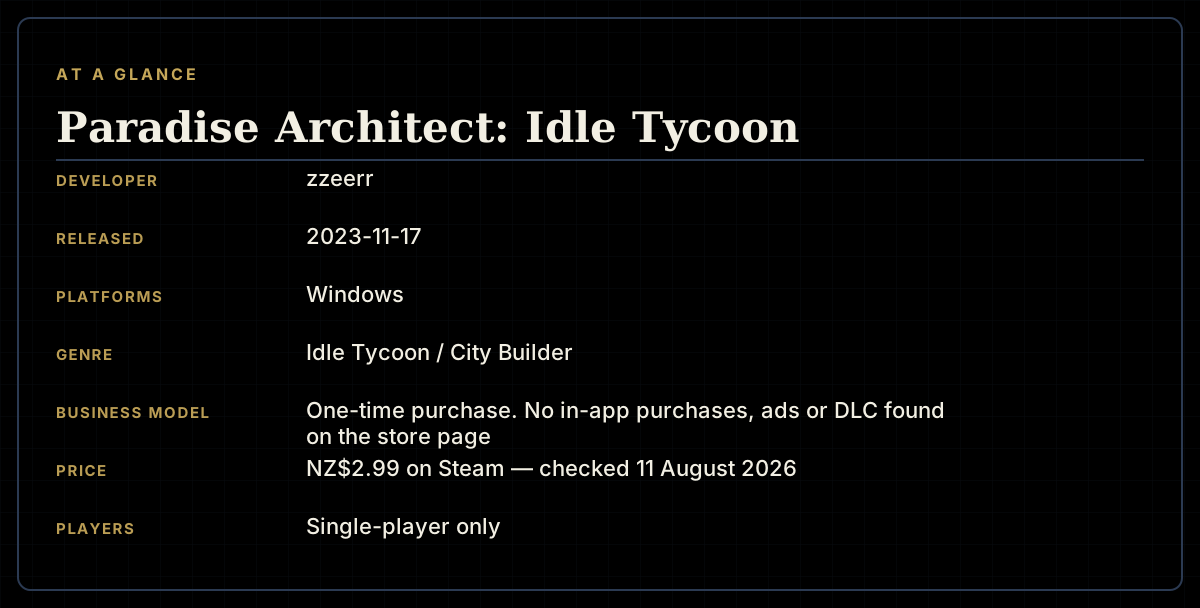
The game at a glanceWanderer Editorial -
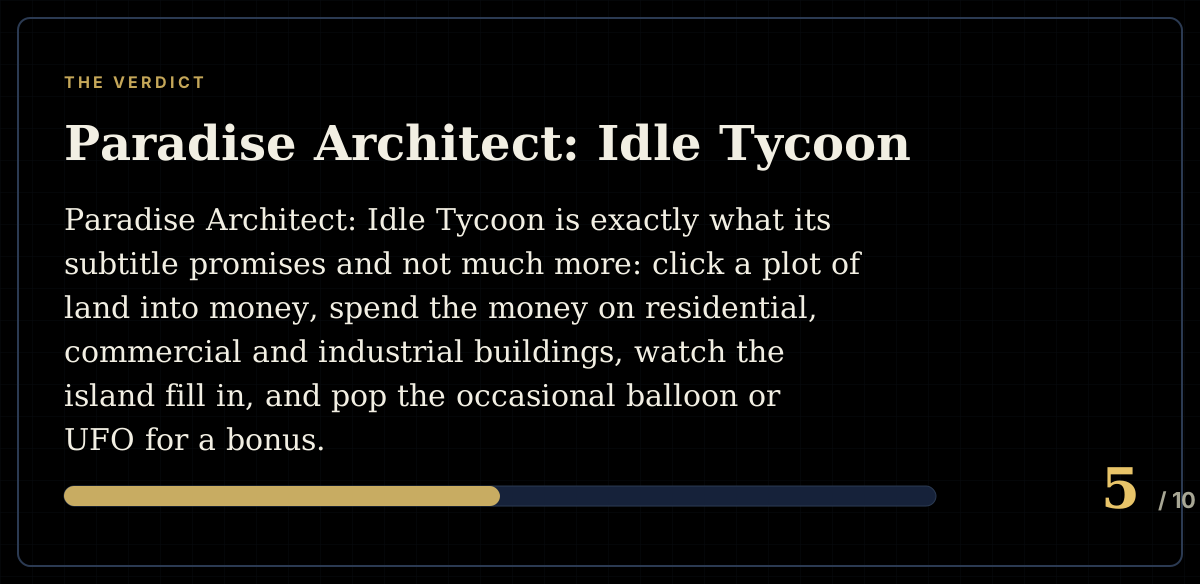
The short versionWanderer Editorial