Game review
Defrag Incremental
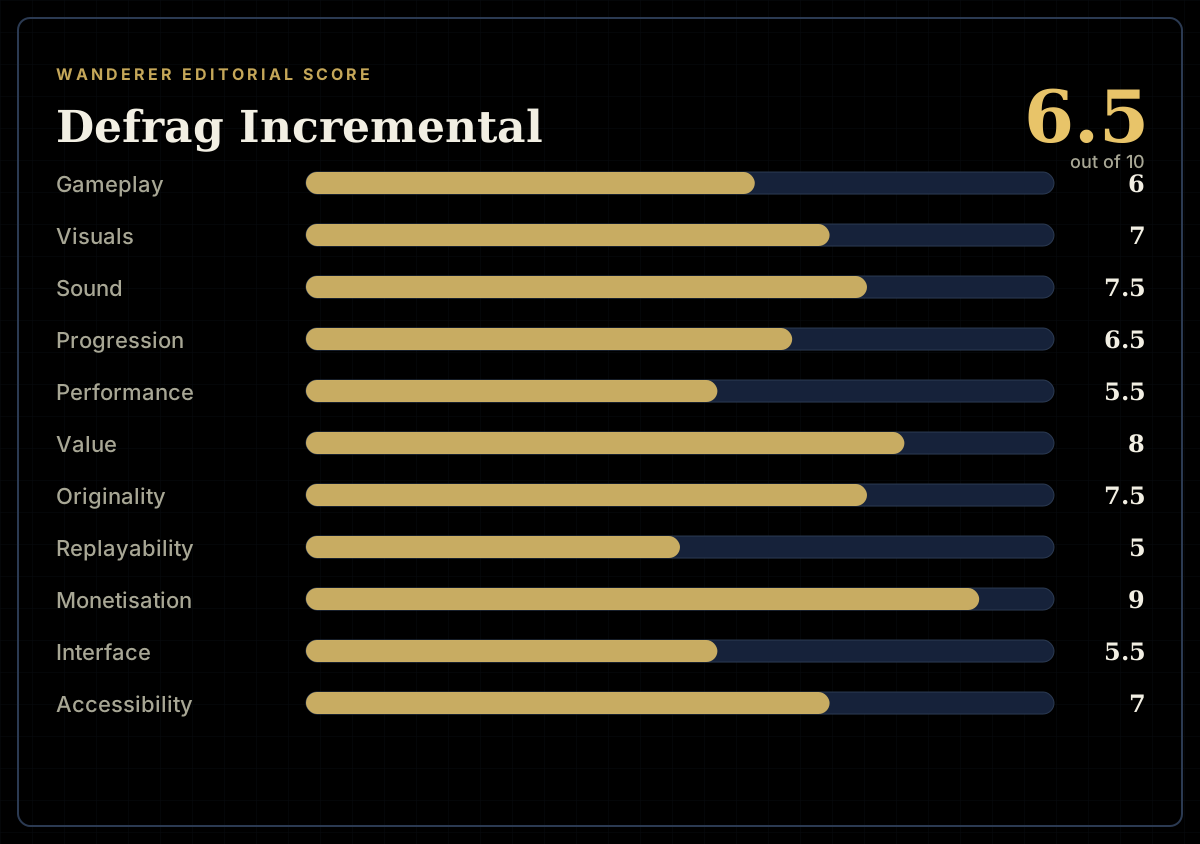
6.5 / 10
- Developer
- Pollo Arcade Low Bit
- Publisher
- Pollo Arcade Low Bit
- Released
- 31 July 2026
- Platforms
- Windows
- Genre
- Incremental
- Monetisation
- One-time purchase, no in-app purchases, no ads, no subscription
- Players
- Single-player only
The short version
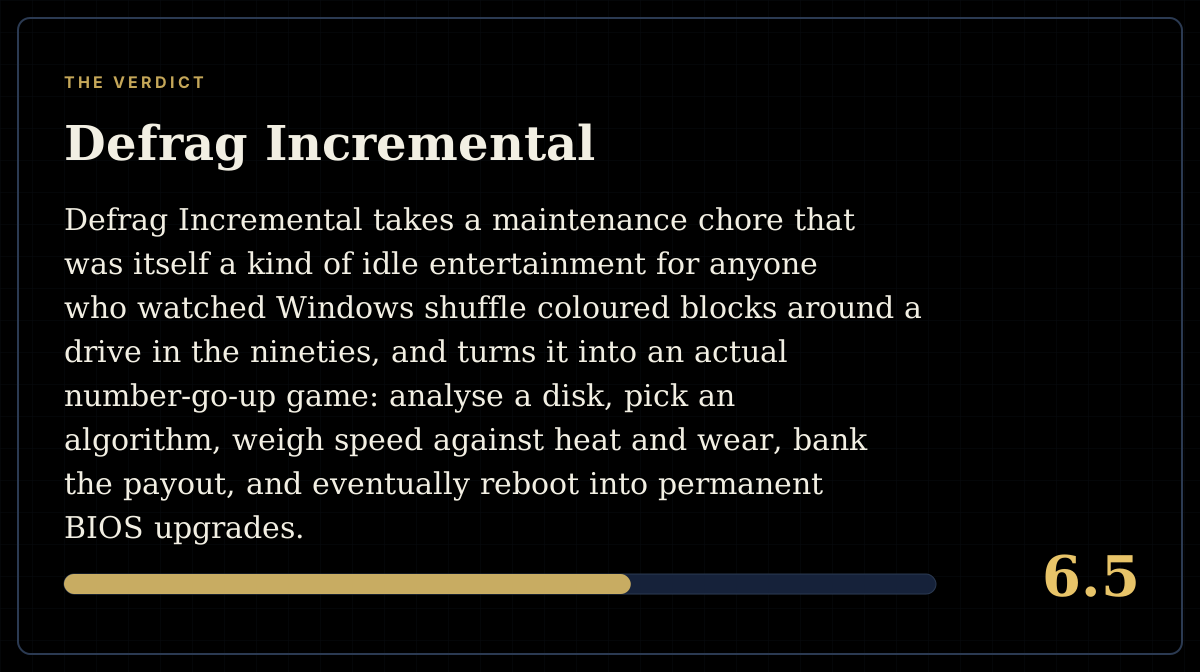
Defrag Incremental takes a maintenance chore that was itself a kind of idle entertainment for anyone who watched Windows shuffle coloured blocks around a drive in the nineties, and turns it into an actual number-go-up game: analyse a disk, pick an algorithm, weigh speed against heat and wear, bank the payout, and eventually reboot into permanent BIOS upgrades. It borrows the nostalgia honestly rather than just wearing it as a skin, and the reboot loop underneath is a perfectly serviceable incremental structure.
The Mixed rating tells two different stories depending on when you look. Every one of its nine negative reviews was posted within about 21 hours of launch, describing a broken options menu, a corrupted save and a first hour that felt like busywork with no payoff. The positive reviews, several written a day or two later with five to ten times the playtime, describe most of that being patched already. What survives the patches is a real design complaint: the game gates its automation upgrade behind roughly an hour of repetitive manual clicking, and the game's own achievement data shows that's exactly where a big chunk of the audience gives up.
Biggest strengths
- The central conceit is genuinely well-observed — disk defragmentation was already a kind of idle spectacle in the DOS and early Windows era, and the game leans into that rather than just borrowing beige-and-blue set dressing
- A permanent BIOS-upgrade reboot layer gives the loop real long-term shape instead of a single flat number climbing forever
- Several of the most detailed post-launch reviews describe the developer actively working Steam's discussion boards and shipping fixes within the first day or two, which is the kind of support a NZ$5 debut rarely gets this fast
Biggest weaknesses
- Every one of the nine negative reviews was filed within roughly a day of release and describes the same handful of launch bugs — an options screen that broke fullscreen, a corrupted save, unreadable or seemingly inert upgrade text — which is a rough first impression however quickly it gets fixed afterward
- Multiple negative reviewers independently object that the game plays as a manual clicker for its first hour rather than the automatable incremental the store page promises, and the game's own achievement data backs that complaint up with a real drop-off, not just a loud minority
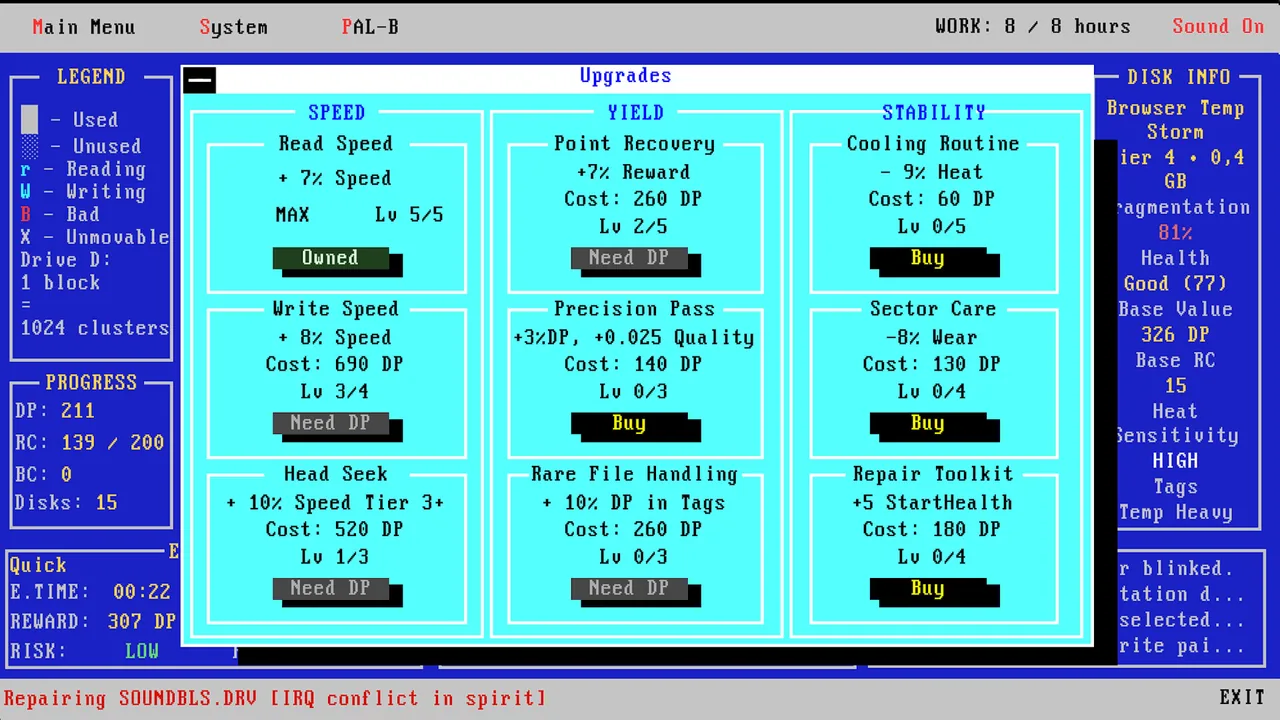
- Individual upgrades are described as too small to notice ("+5% write speed" with no visible effect), which makes the early manual phase feel unrewarding on top of being repetitive
Who it's for: Incremental fans who remember actual disk defragmentation and want that nostalgia wired into a real progression loop, and anyone happy to tolerate a slow, manual opening hour in exchange for a cheap, largely-automatable idle game afterward.
Our recommendation: A fair NZ$5.11 bet for a patient incremental player, especially now that the worst launch-week bugs appear resolved, but go in knowing the first hour asks for real manual attention before the game lets you treat it as background noise.
6.5 / 10
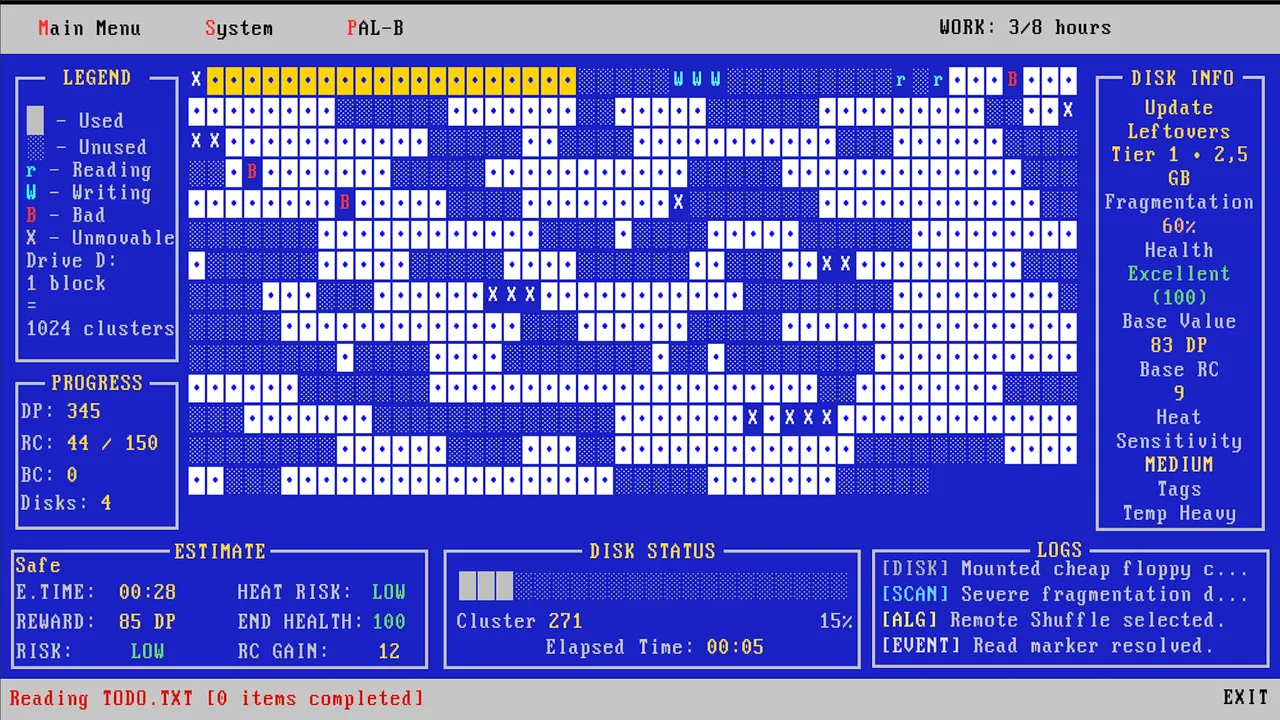
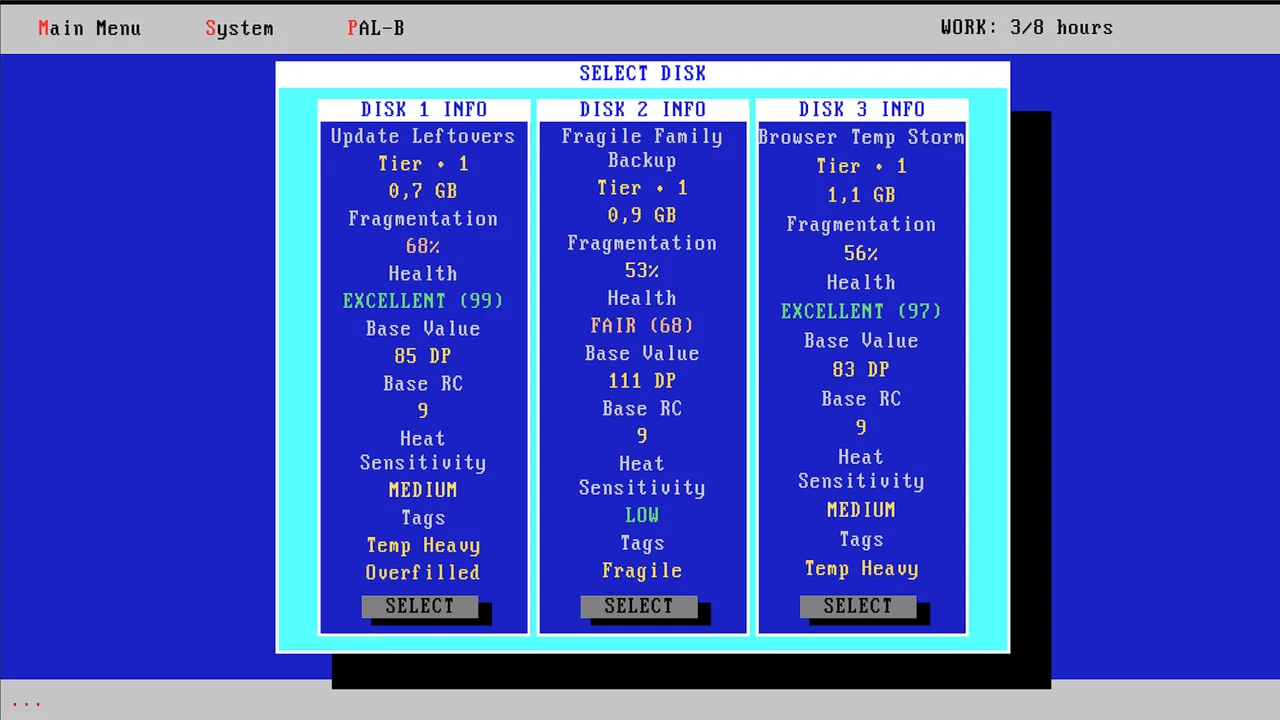
There's a specific kind of nineties computing memory this game is fishing for: kicking off a disk defragmenter, watching the little coloured blocks shuffle themselves into order over the course of an evening, and feeling like something important was happening even though you were, in the most literal sense, watching a progress bar. Defrag Incremental is the first game to notice that this was already a kind of idle entertainment and to build an actual incremental structure underneath it — you take on messy drives as paying jobs, choose an algorithm suited to each one's quirks, manage heat and wear against the clock, bank the payout, and eventually reboot into permanent BIOS upgrades that reshape every run after. It's a clean, specific idea for a genre that spends a lot of its energy skinning the same "number goes up" chassis in whatever aesthetic is handy, and on that idea alone it's worth a look.
Whether the execution earns the nostalgia is a more complicated question, and Defrag Incremental's 21-review Mixed rating on Steam is really two different verdicts layered on top of each other depending on when the reviewer played.
A launch week the timestamps explain
Every one of the game's nine negative reviews was posted between roughly 17:30 on 31 July, the day of release, and mid-afternoon the following day — a window of well under 24 hours. None of the authors report much playtime either: the longest sat at 99 minutes logged at the time of writing, several clocked in under half an hour. The complaints line up almost exactly across that narrow window: an options menu that shrank the window to its smallest size the moment you opened it and had to be worked around by staying in windowed mode, a save file that broke partway through a session, upgrade text small enough that players couldn't tell whether a purchased bonus was doing anything at all, and a general sense — in one reviewer's words — that the whole thing felt unfinished next to the discussion board's list of open bug reports.
The positive side of the ledger tells a following-day story. Several of the twelve positive reviews were written after that same launch window, with playtime running from several hours up past twenty, and describe most of those exact problems as resolved: "an update has been pushed which fixed the majority of the bugs," one wrote, walking back complaints from an earlier draft of their own review. Another credited the developer with visibly working the Steam discussion boards and shipping "several updates on release day" alone. That's a meaningfully different fact from "this game has bugs" — it's a game that shipped rough and got fixed inside about 48 hours, and Steam's review system has no mechanism for letting a Mixed rating built on day-one impressions catch up to that. There's no Early Access period hiding behind this one either — the store page shows a single release date with no separate Early Access entry, and every review in the sample, positive and negative, was posted within days of that same 31 July date. This is a genuinely new, genuinely rocky launch, not an old reputation wearing a fresh release date.
The complaint that survives the patch notes
Strip out the bug reports and one criticism remains, raised independently by several of the negative reviewers in almost identical language: this doesn't play like an incremental at first, it plays like a manual clicker with an incremental's marketing. The automation upgrade that turns Defrag Incremental into the sort of game you can leave running sits roughly an hour into a typical run, and reviewers describe that opening hour as a repetitive loop of choosing a disk, watching a short defrag animation, and doing it again — engaging enough once, tedious on the fifteenth repeat. One reviewer summarised the whole loop, once automation finally arrives, as "you click twice, you wait" repeated for days of in-game time.
This is where the game's own achievement data is more useful than any one review. Steam's global achievement stats show 98.3% of players complete their first defrag job and 70.7% reach their first reboot — healthy numbers for an opening tutorial stretch. The completion rate holds reasonably well through the early game: 59.5% clear the fourth disk tier, 53.1% process 25 disks total. Then it falls off a cliff. Only 26.2% of players ever unlock automation — roughly half of the players who'd already put in 25 disks' worth of manual clicking give up before reaching the one upgrade that would stop the clicking. That's not a vague sentiment from a handful of unhappy reviewers; it's the single steepest drop in the entire achievement curve, and it sits exactly where the negative reviews say the tedium lives. Whatever balance decision put a meaningful stretch of forced manual play between the tutorial and the automation unlock, it's costing the game roughly half its remaining audience at that exact gate.
Past automation, the curve keeps thinning in a way that looks more like ordinary incremental attrition than a specific design fault: 12.3% reach tier five, and completing the game's top tier sits at a rare 0.6%. That kind of long tail is normal for the genre — most incremental players never finish the true endgame of anything — and it shouldn't be read as evidence of a second broken gate the way the automation cliff should.
Presentation and feel
The retro DOS framing is more than surface dressing. Reviewers who lived through the era being referenced single out small touches — period-accurate hard-drive sound effects, a deliberately plain, readable pixel interface — as doing real work to sell the fantasy, and more than one described the game as "more fun and involved than most idle games" precisely because the defragmentation conceit gives every decision a concrete, visualisable action instead of an abstract resource bar. The flip side, raised by more than one negative review, is that individual upgrade increments are pitched too small to register — a "+5% write speed" purchase that produces no visible change is a bad feeling in any incremental, and it's a worse one during the exact hour players are already frustrated waiting for automation to unlock.
Price and monetisation
There's nothing to complain about on the business side. NZ$5.11 (20% off a NZ$6.39 list price) is the entire transaction — no in-app purchases, no ads, no premium currency sitting between a finished job and its payout. A free demo exists as its own Steam listing, which is the right call for a game whose most-discussed flaw is exactly the kind of thing a fifteen-minute trial would surface before anyone spends money. For comparison, incrementals at this price point don't always clear the bar this cleanly: Garbage Growth sells a comparably short loop for a similar asking price with far less long-term structure underneath it, while Incrempire asks a similar question about a skill tree that runs out before the rest of the game does.
Final verdict
Judge Defrag Incremental purely on its premise and its reboot structure and it's a genuinely clever NZ$5 incremental that earns its nostalgia rather than borrowing the aesthetic and hoping nobody checks. Judge it purely on its Steam rating and it looks shakier than it currently is — nine of its nine negative reviews are launch-day snapshots of bugs the developer appears to have moved fast on, and the rating has no way to reflect that yet. The part of the criticism that does hold up under its own achievement data is the automation gate: an hour of manual, repetitive clicking standing between the tutorial and the point where the game becomes the idle experience it's actually selling, and it's costing roughly half of an already-invested audience at that exact point. That's a real design decision with a measurable cost, not a launch bug, and it's the reason this doesn't score higher than a solid middle mark. Buy it if the premise appeals and you're willing to push through that first hour; wait for a patch note mentioning the automation timing if you're not.
Players who like their progression compounding without a manual clicker gate in front of it might also enjoy Wanderer, where the automation — resting, offline progress — is available from the very first session.
Pros and cons
Pros
- The central conceit is genuinely well-observed — disk defragmentation was already a kind of idle spectacle in the DOS and early Windows era, and the game leans into that rather than just borrowing beige-and-blue set dressing
- A permanent BIOS-upgrade reboot layer gives the loop real long-term shape instead of a single flat number climbing forever
- Several of the most detailed post-launch reviews describe the developer actively working Steam's discussion boards and shipping fixes within the first day or two, which is the kind of support a NZ$5 debut rarely gets this fast
- A free demo is available as its own Steam listing, so anyone unsure about the loop or the retro aesthetic can try before paying
- Steam's own accessibility categories for the game — mouse-only play, no timed input required — match what an incremental audience actually needs, and nothing in the review sample contradicts that
Cons
- Every one of the nine negative reviews was filed within roughly a day of release and describes the same handful of launch bugs — an options screen that broke fullscreen, a corrupted save, unreadable or seemingly inert upgrade text — which is a rough first impression however quickly it gets fixed afterward
- Multiple negative reviewers independently object that the game plays as a manual clicker for its first hour rather than the automatable incremental the store page promises, and the game's own achievement data backs that complaint up with a real drop-off, not just a loud minority
- Individual upgrades are described as too small to notice ("+5% write speed" with no visible effect), which makes the early manual phase feel unrewarding on top of being repetitive
- Windows only, with no Steam Deck-specific notes on the store page despite a low-spec, mouse- driven game that reads like an easy fit for one
- The endgame achievement for finishing the game's top tier sits at a fraction of a percent of the player base, so anyone buying for a long late-game climb should expect that climb to be steep and largely unproven at this population size
Screenshots
-
Defrag IncrementalImage: Pollo Arcade Low Bit via Steam -
Defrag IncrementalImage: Pollo Arcade Low Bit via Steam -
Defrag IncrementalImage: Pollo Arcade Low Bit via Steam -
How the review scores each part of the gameWanderer Editorial -
The short versionWanderer Editorial