Game review
Incrempire
6 / 10
- Developer
- FMGames, Regnum Noctis
- Publisher
- FMGames
- Released
- 21 July 2026
- Platforms
- Windows, macOS, Linux
- Genre
- Incremental Tower Defense
- Monetisation
- One-time purchase, no ads, no in-app purchases; an optional cosmetic-leaning Supporter Pack DLC and bundled Deluxe Edition exist for players who want to pay extra
- Players
- Single-player only
The short version
Incrempire puts you in charge of a kingdom under siege, arms you with a cursor that kills anything it hovers over, and layers a skill tree and a handful of towers on top. The opening stretch is genuinely satisfying incremental design — numbers climb, new nodes unlock, the kingdom feels a little safer each run. The trouble is that stretch is most of the game. A large share of its own player base reports maxing the skill tree inside two or three hours, after which the back half leans on randomised rune drops and a "hard mode" several reviewers describe as barely harder than normal.
Biggest strengths
- The core loop of hovering your cursor over incoming waves while towers and spells clear the rest is immediately readable and satisfying in the opening hour
- Skill-tree unlocks persist across failed runs, so a wipe against a tougher wave still feels like forward progress rather than a reset to zero
- A clean one-time purchase with no ads, no energy timers and no in-app purchase store — everything is earned by playing
Biggest weaknesses
- A large share of negative Steam reviews describe maxing the entire skill tree in roughly two hours, after which there is nothing left to spend currency on but randomised rune upgrades
- Cursor-click damage scales to the point of outpacing towers and spells in the late game, according to multiple reviewers, which flattens the strategic choice the skill tree is supposed to create
- Hard mode is described by several players as easier or no more demanding than normal difficulty, undercutting the main source of replayability the store page leans on
Who it's for: Incremental and clicker fans who want a short, self-contained kingdom-defense session rather than an endless-scaling number-go-up game, and players who value a clean one-time purchase with zero monetisation pressure over a deep late-game.
Our recommendation: Reasonable at its base price if you treat it as a two-to-four-hour incremental snack rather than a long-term idle game. Players expecting the tree, the runs and the numbers to keep expanding well past the first few hours should wait for the developer's promised content updates before buying in.
6 / 10
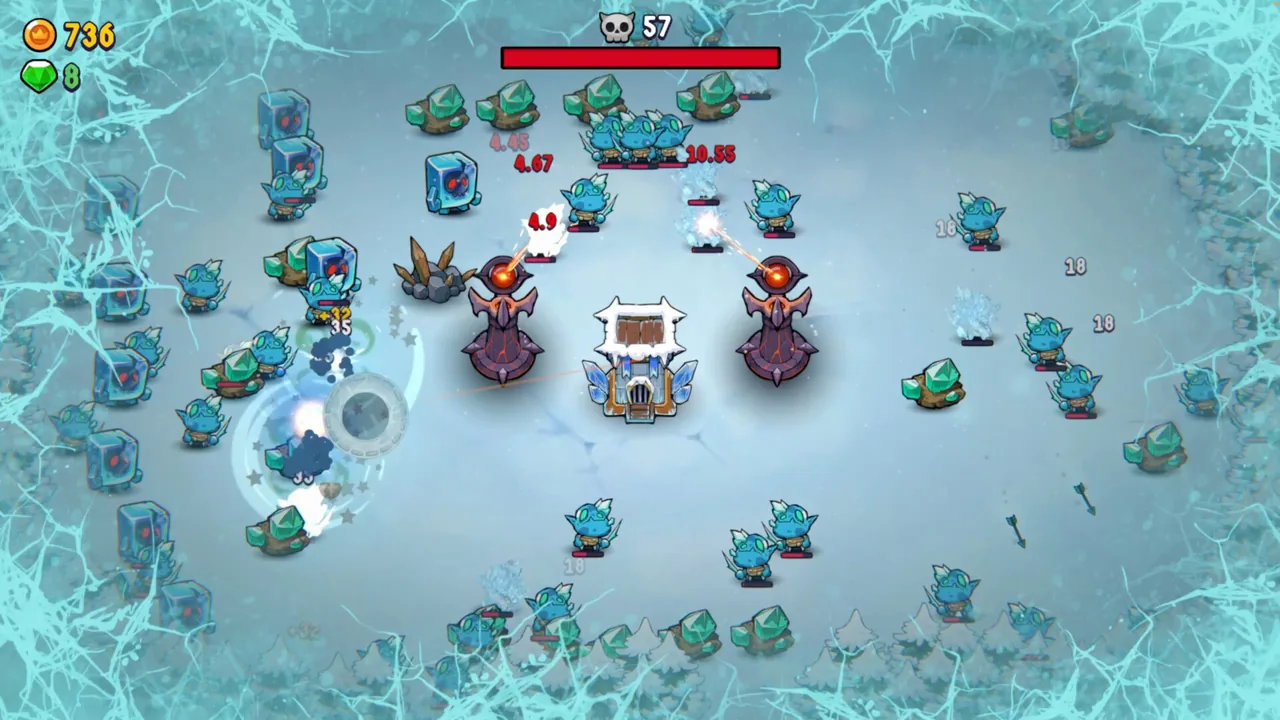
There's a specific kind of incremental game that lives or dies on one question: does the tree keep growing faster than you can climb it? Incrempire spends its opening hour answering that question with a confident yes. You're defending a kingdom from waves of monsters, killing anything your cursor touches, dropping towers along the approach and feeding every coin earned back into a skill tree that unlocks new spells and permanent stat boosts. It's an easy loop to fall into, and for a while it does exactly what an incremental is supposed to do — reward attention with visible, escalating power.
The problem is what happens once the tree runs out, and for a meaningful share of the people who have actually finished it, that happens uncomfortably early.
A cursor, a skill tree, and a kingdom that needs both
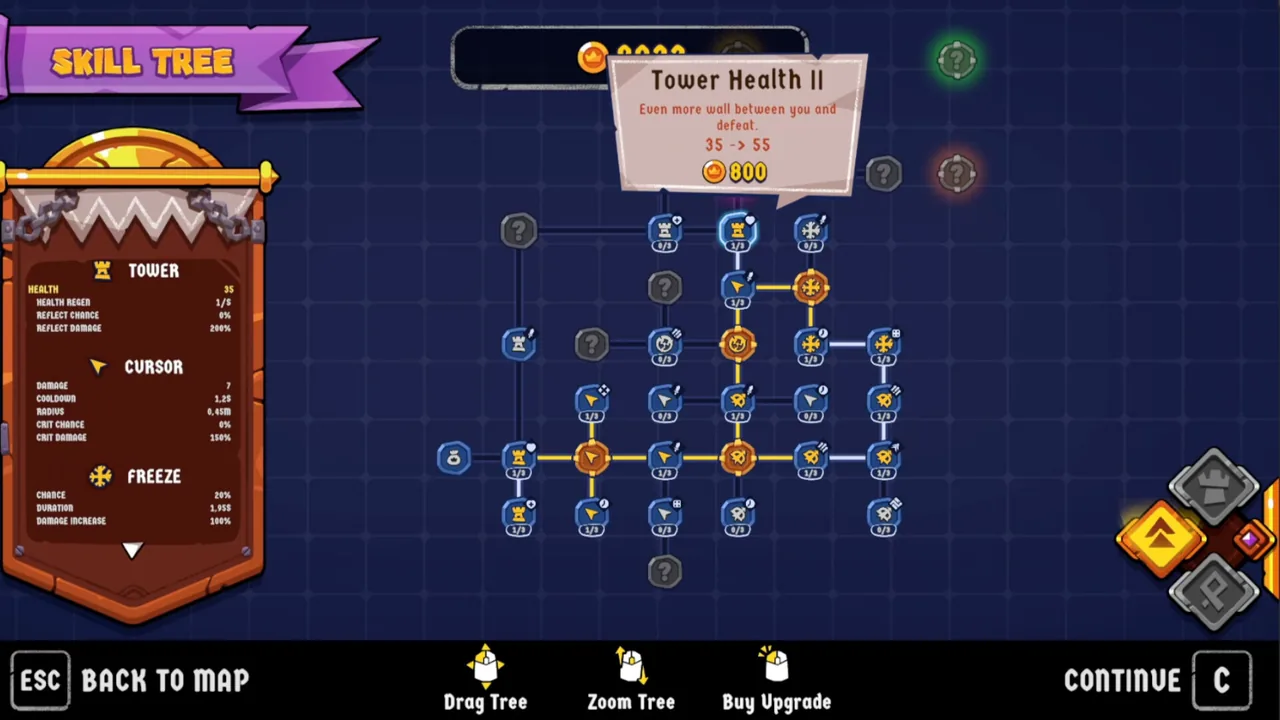
Incrempire's core identity is a genre mashup rather than a single clean idea: part clicker, in that your cursor directly kills anything it passes over; part tower defense, in that placed structures and spells handle the waves you can't personally reach; and part incremental RPG, in that a persistent skill tree turns coins earned in combat into permanent upgrades that carry across attempts. Losing a run doesn't erase that progress — the store page frames it as each defeat making you stronger for the next try, and that's an accurate description of how the currency and tree persistence actually work. It's a forgiving structure that suits a genre built around numbers going up rather than punishing failure.
Twenty-five levels spread across four biomes give the campaign a reasonable amount of visual variety for its length, and nine achievements give completionists something to chase beyond the main skill tree. None of that is groundbreaking — a Roblox-style incremental with a tower-defense skin isn't a new pitch, and more than one player review draws that exact comparison — but the execution in the opening hours is clean enough that the comparison doesn't feel like an insult. Waves are readable, upgrades land often enough to keep the loop feeling alive, and the fantasy kingdom-under-siege framing gives an otherwise generic incremental some actual stakes.
The tree finishes before the fight does
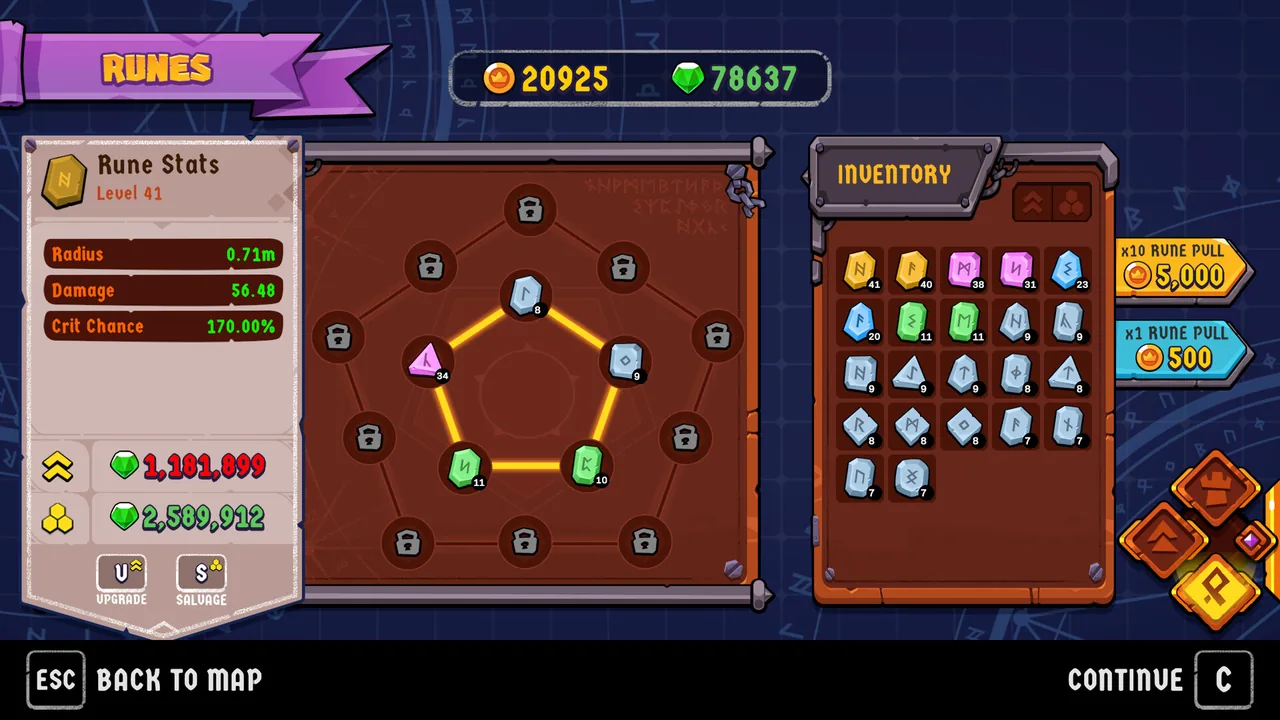
Where Incrempire runs into real trouble is pacing, and the complaint shows up with striking consistency across its negative reviews. Multiple players report maxing out the entire skill tree in roughly two hours — some considerably faster — which leaves a large portion of the advertised 2-to-5-hour campaign running on a build that has nothing left to grow. What replaces meaningful choice at that point is a pool of randomised rune upgrades, and reviewers who've reached that stage describe it less as a new system and more as the game quietly switching off the thing that made it interesting.
That pacing problem compounds with a balance issue several players flag independently: cursor damage from direct clicking scales hard enough in the late game to outpace towers and support spells, which undercuts the strategic layer the skill tree was supposed to build. When one input method dominates every other system combined, the tree stops being a set of decisions and starts being a checklist. Hard mode, the game's main offered source of extra challenge and replay value, comes in for the same criticism — several reviewers describe it as barely distinguishable from normal difficulty, which removes the obvious second reason to keep playing once the story mode campaign ends.
None of this makes the opening hours a lie. It makes Incrempire a game whose best material is front-loaded, and whose systems don't have enough runway to support the length its own store page promises.
Value, and a developer that's still listening
At NZ$12.49, Incrempire sits in an awkward spot against player-reported completion times as short as 90 minutes and rarely longer than three or four hours for a full clear. That tension shows up directly in the negative review pile, where the price is the single most common specific complaint — not the concept, not the presentation, but the ratio of asking price to content once the skill tree stops giving you anything new to do. It's a fair criticism for an incremental game specifically, a genre whose whole appeal usually rests on systems that keep expanding well past the opening session.
On the monetisation side, there's genuinely little to fault. Incrempire is a flat one-time purchase with no advertising, no energy system gating your session length, and no in-app purchase store bolted onto the skill tree. A separate Supporter Pack and bundled Deluxe Edition exist for players who want to pay a little more, but nothing about the core game gates meaningful progress behind them — that's a genuinely clean structure, and reviewers who otherwise criticise the game's length are consistent in crediting it for not padding that shortfall with monetisation pressure instead.
It's also worth noting the developer hasn't gone quiet on the length and endgame criticism. Public comments from the team acknowledge the feedback directly and describe planned updates, including an expanded skill tree and a larger campaign-style content addition. That's the right response to this specific set of complaints, and it's a reasonable factor for a prospective buyer to weigh — but a review has to score the game that shipped, not the one that's promised, and as of launch the tree still runs out well before the fighting does.
Final verdict
Incrempire gets the hardest part of an incremental tower-defense hybrid right: the opening loop of clicking, building and unlocking is immediately satisfying, and the persistent-progress structure means failure never feels like wasted time. It falls short of a strong recommendation because the skill tree — the system that's supposed to carry the whole experience — visibly runs dry for a large share of players well before the advertised playtime is up, and the difficulty options meant to extend that runtime don't add much once you're there.
Buy it as a short, well-made incremental snack at its base price, not as a long-term idle game with room to grow. Players chasing the kind of progression that keeps expanding for dozens of hours, rather than tapering off after two, should wait to see whether the promised content update actually delivers that depth.
Price and monetisation checked 1 August 2026.
Players who want that longer-tail progression — a skill tree, a kingdom and a combat loop built to keep growing for the long haul rather than wrapping up in an afternoon — might also want to look at Wanderer.
Pros and cons
Pros
- The core loop of hovering your cursor over incoming waves while towers and spells clear the rest is immediately readable and satisfying in the opening hour
- Skill-tree unlocks persist across failed runs, so a wipe against a tougher wave still feels like forward progress rather than a reset to zero
- A clean one-time purchase with no ads, no energy timers and no in-app purchase store — everything is earned by playing
- Four distinct biomes and 25 levels give the short campaign real visual variety rather than one reskinned map on repeat
- The developer has publicly acknowledged the length and endgame complaints and has committed to a larger content update rather than treating the launch build as finished
Cons
- A large share of negative Steam reviews describe maxing the entire skill tree in roughly two hours, after which there is nothing left to spend currency on but randomised rune upgrades
- Cursor-click damage scales to the point of outpacing towers and spells in the late game, according to multiple reviewers, which flattens the strategic choice the skill tree is supposed to create
- Hard mode is described by several players as easier or no more demanding than normal difficulty, undercutting the main source of replayability the store page leans on
- At NZ$12.49 for a campaign several reviewers finished in 90 minutes to three hours, the price sits uncomfortably against the game's own advertised 2-5 hour estimate
- Some late-level difficulty spikes reportedly force backtracking to grind earlier stages for currency rather than pushing forward, a pacing problem that shows up repeatedly in player feedback
Screenshots
-
IncrempireImage: FMGames via Steam -
IncrempireImage: FMGames via Steam -
IncrempireImage: FMGames via Steam -
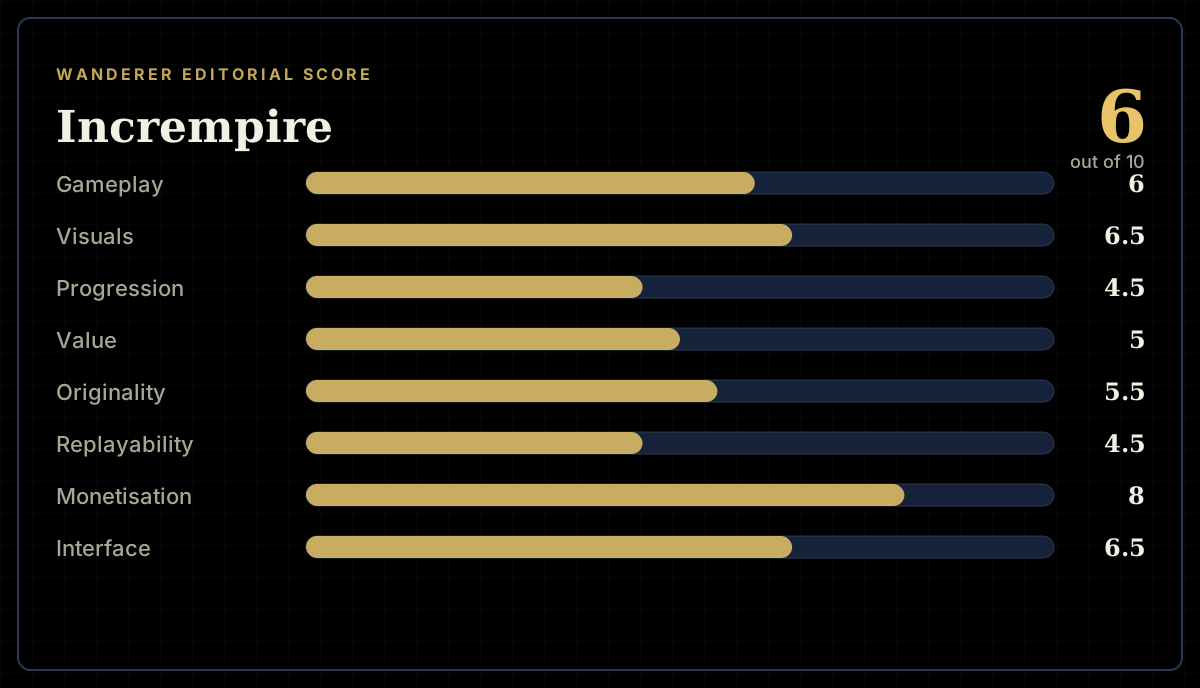
How the review scores each part of the gameWanderer Editorial -
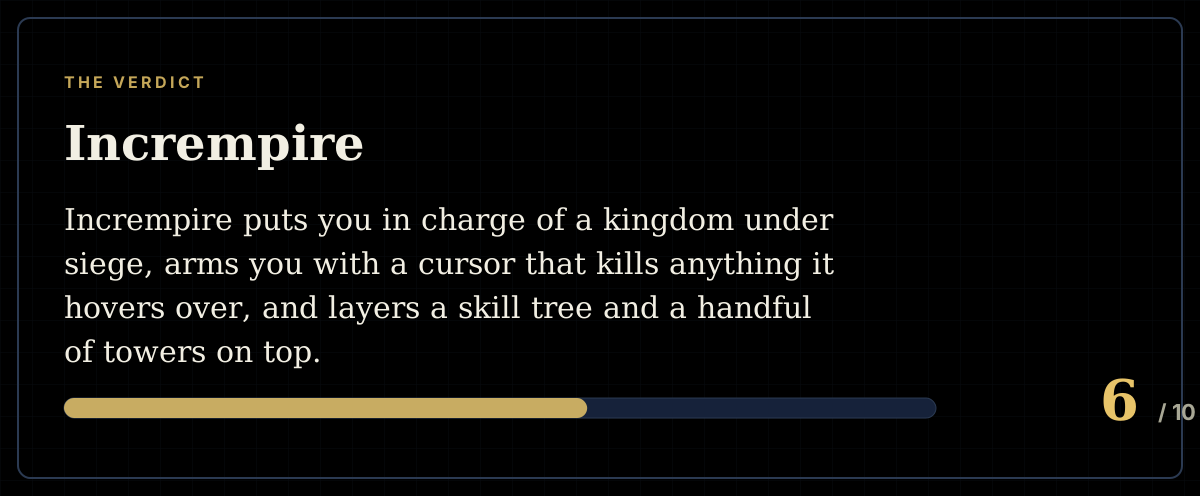
The short versionWanderer Editorial