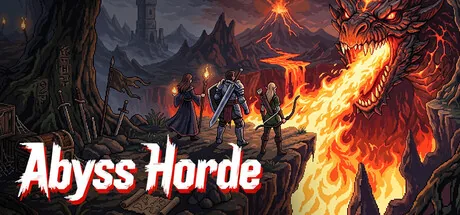
Game review
Abyss Horde
7 / 10
- Developer
- Solo Gaming
- Publisher
- Solo Gaming
- Released
- 31 July 2026
- Platforms
- Windows
- Genre
- Tower Defence / Roguelite
- Monetisation
- One-time purchase. No in-app purchases, no ads, no premium currency — a point reviewers coming from mobile tower defence raise unprompted. Listed at NZ$6.31 — checked 3 August 2026.
- Players
- Single-player only
The short version
Abyss Horde takes tower defence's structure and Vampire Survivors' upgrade cadence and welds them together: your towers fire automatically, waves escalate, and every level-up hands you a choice of cards and runes. It's calm, it's cheap, it runs beside other work, and the meta progression is generous enough that a bad run still leaves you stronger. It's also unmistakably repetitive — towers stop feeling different, runs get long, and the pull is the numbers rather than the decisions. At four US dollars, with players averaging fourteen hours in week one, that's a very easy trade.
Biggest strengths
- Genuinely strong value — the median reviewer has fourteen hours logged in a game costing about four US dollars, with 38 achievements running well past that
- The meta layer is well built: Gold buys permanent skill-tree upgrades while Soul Shards buy randomised runes inside a run, so failure still converts into progress
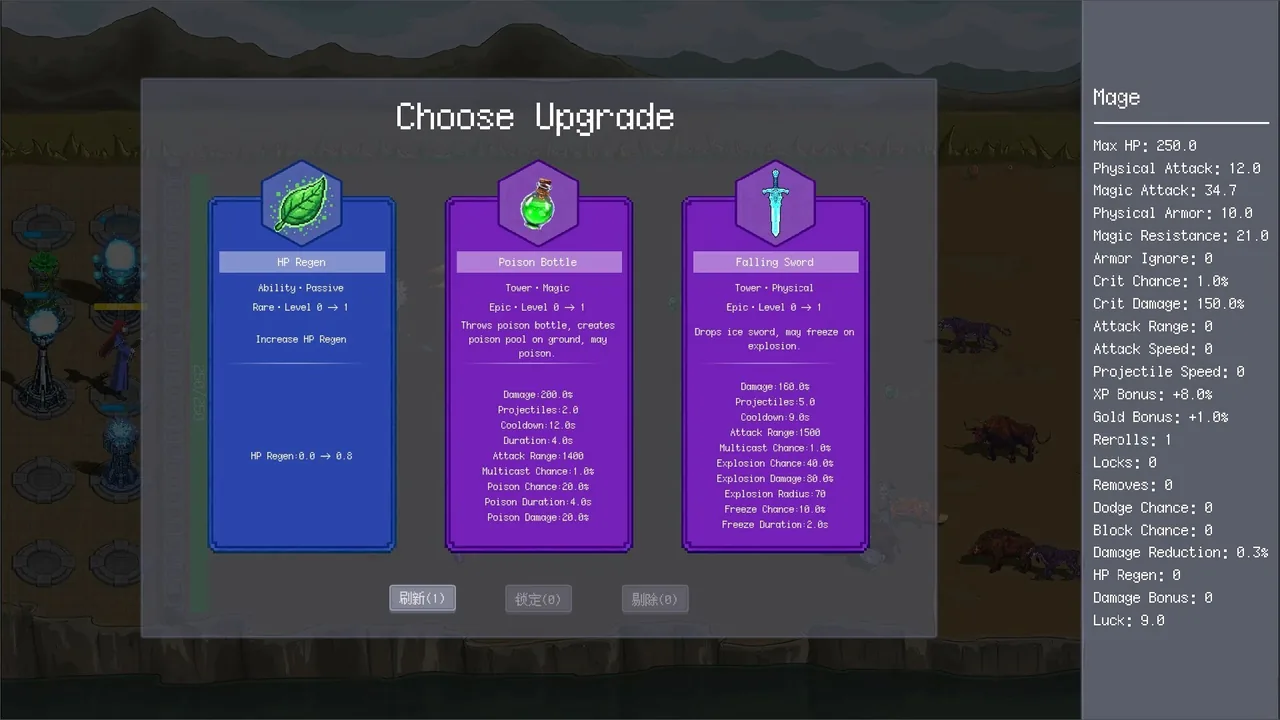
- Reroll, lock and delete options for upgrade offers are available from the start rather than unlocked later, which is unusually player-friendly for the genre
Biggest weaknesses
- Repetition sets in — multiple players describe the towers ceasing to feel distinct and ask for skill evolution, fusion or rebirth systems to add variety
- Runs are long relative to their payoff, and one of the few negative reviews is specifically about time-to-reward
- The opening is punishing before the meta tree and the second hero come online, which reads as difficulty to some and as a grind gate to others
Who it's for: Idle and roguelite players who want something to tick along on a second monitor with occasional input, and tower defence fans who don't want to fight the price of a mobile port. Not for players who need tactical variety, and not for anyone who resents grinding a meta tree.
Our recommendation: An easy buy at this price if the "watch it work, pick an upgrade, get slowly stronger" loop is one you enjoy. Expect to grind the permanent skill tree — the first runs are deliberately hard and the second hero makes a real difference — and expect the mid-game to settle into a rhythm rather than escalating in complexity. Back up your save folder; at least one player lost a long run to an unclean shutdown.
7 / 10
Here's the number that matters: across the thirty reviews Abyss Horde has collected in its first week, the median playtime is thirteen hours and forty-eight minutes. The game costs about four US dollars. Several of those reviewers are past twenty hours, one past thirty.
Whatever else is true about it, that ratio is doing something right.
Two genres, welded
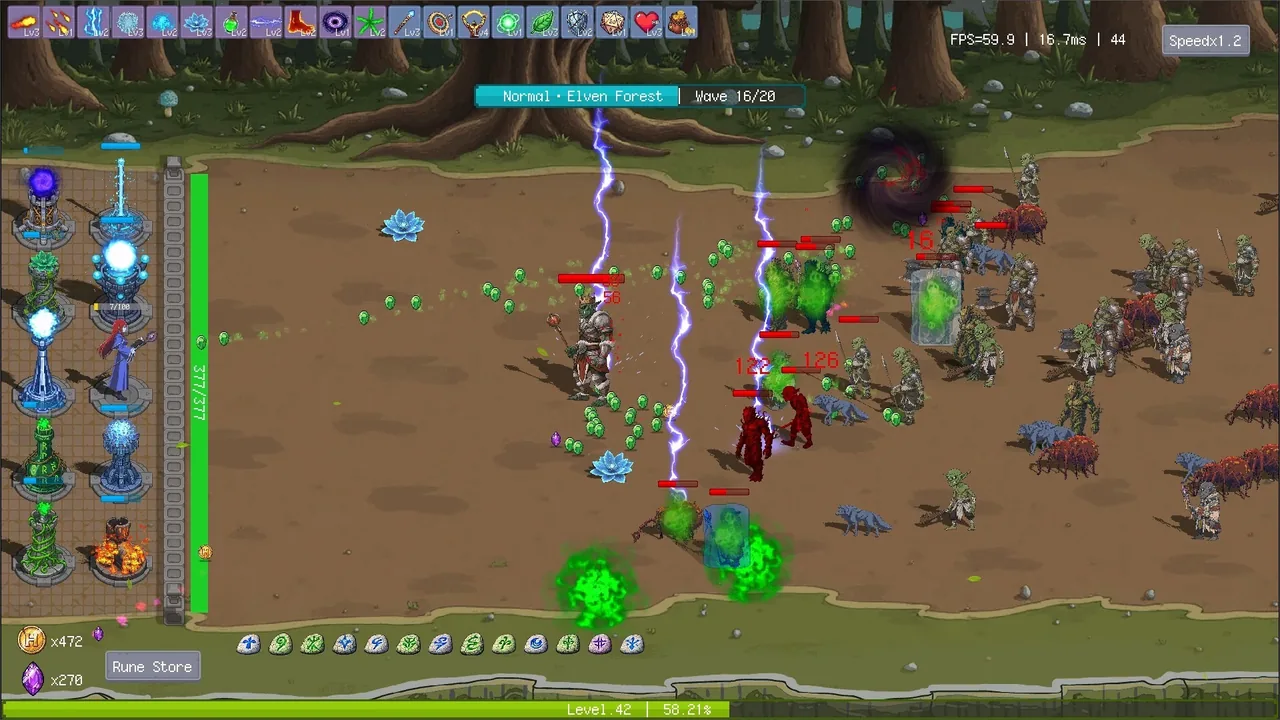
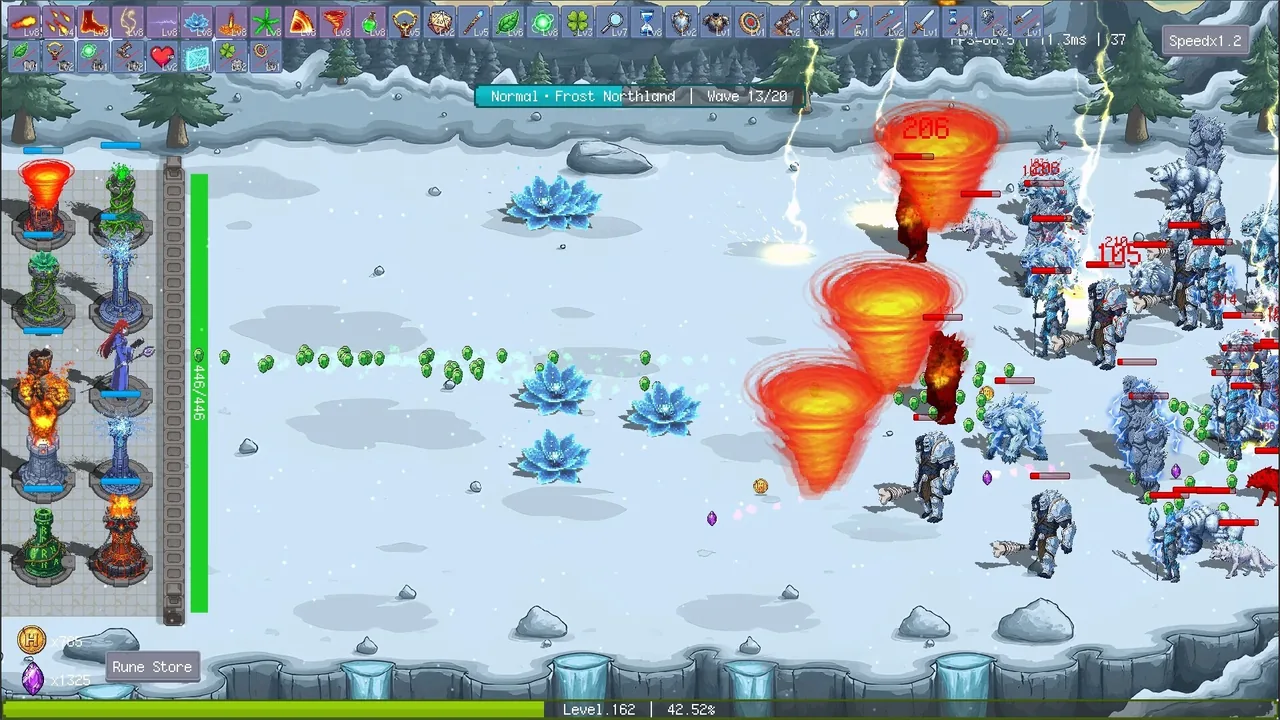
The structure is tower defence: enemies walk a line, you place towers, waves escalate, bosses arrive. The texture is Vampire Survivors: your towers fire automatically, experience accrues fast, and every level-up interrupts with a choice of upgrade cards. One reviewer describes it as plants versus zombies wearing a roguelite's skeleton, which is unkind but not inaccurate.
What that combination buys is a game you can leave running beside something else. There's no unit positioning to micromanage, no active aiming, no timers demanding attention — you pick cards, you occasionally fire a hero ability, and otherwise you watch things die. Several reviewers say explicitly that they play it while working, watching videos, or on calls, and one Japanese review notes they keep falling asleep to it, which given the game's calm pace reads as a compliment.
It isn't idle, though, and the game's more precise reviewers make the distinction: the upgrade prompts arrive frequently enough that you can't walk away, especially once you've boosted experience gain. Call it a second-monitor game rather than an idle one.
The layer that keeps people playing
The meta progression is the strongest part of the design, and it's a two-currency system done properly. Gold buys permanent upgrades on a skill tree between runs. Soul Shards buy randomised runes inside a run. A failed attempt still converts into permanent power, so the difficulty curve bends toward you over time rather than demanding you get better at a fixed challenge.
One small design choice deserves specific praise: reroll, lock and delete options for upgrade offers are available from the very start, not dangled as unlocks. Anyone who has played this genre knows how often those tools are held back as the reward for twenty hours of play, and having them immediately makes the early runs far less frustrating.
The achievement distribution suggests it's working. Nine in ten players unlock the second hero and clear the first map, 81% reach level 50, and 60% are still going by the third map and the third hero — an unusually gentle drop-off. The tail runs a long way down: 1.5% for wave 40 of endless, 0.9% for wave 60, 1.3% for the seventh Abyss difficulty. There's more here than four dollars usually buys.
Where it wears thin
The criticism is as consistent as the praise, and it's the genre's oldest problem: repetition. Towers stop feeling distinct once their numbers converge, and the requests in the reviews are all for variety systems rather than more content — skill evolution, fusion, a rebirth mechanic, more maps and characters. The one substantive negative review is about time-to-reward: runs that take a long while and don't return enough progress for the investment.
There's also a difficulty complaint pointing the other way — the opening is hard before the meta tree comes online, and the second hero is described as the point where things ease. Whether that's tuning or a grind gate depends on your patience with the first hour.
And defensive stats appear to be a dead branch; more than one player asks what they're for beyond polluting the upgrade pool, which in a game built on drafting is a real problem — a useless option in every offer is a hidden tax on the whole system.
A save-loss story worth reading
One Korean review documents losing every scrap of data after a mid-session PC reboot, twenty-three hours in — and then updates to say the developer responded on the discussion board within thirty minutes and helped partially recover it. That's the second save-loss report in a week of small releases, and the same advice applies as it did to Corner Market: back up the save folder if a long run matters to you.
The response time is worth noting too. Whatever else a one-person studio can't do, this one answers.
Verdict
Abyss Horde isn't original and doesn't pretend to be. It's a competent, calm, generously built combination of two well-worn genres, sold without a cash shop at a price that makes the whole question of value slightly absurd — the median buyer has spent longer with it than most people spend with games costing ten times more.
Seven out of ten: a point off for the monotony that sets in around the mid-game, a point off for the dead stats and the thin top end, and full marks for respecting the player's time and wallet. If you liked Whack-A-Monster's cheerful simplicity but wanted something with a real progression spine, this is the better buy.
Players who want that "slowly getting stronger" feeling to carry on while they're away from the keyboard entirely may also enjoy Wanderer.
Pros and cons
Pros
- Genuinely strong value — the median reviewer has fourteen hours logged in a game costing about four US dollars, with 38 achievements running well past that
- The meta layer is well built: Gold buys permanent skill-tree upgrades while Soul Shards buy randomised runes inside a run, so failure still converts into progress
- Reroll, lock and delete options for upgrade offers are available from the start rather than unlocked later, which is unusually player-friendly for the genre
- Fully automatic combat with periodic upgrade choices makes it a legitimate second-screen game without being a game that plays itself entirely
- No monetisation of any kind, which reviewers arriving from mobile tower defence specifically call out as the reason they stayed
Cons
- Repetition sets in — multiple players describe the towers ceasing to feel distinct and ask for skill evolution, fusion or rebirth systems to add variety
- Runs are long relative to their payoff, and one of the few negative reviews is specifically about time-to-reward
- The opening is punishing before the meta tree and the second hero come online, which reads as difficulty to some and as a grind gate to others
- Defensive stats are widely considered near-useless, narrowing viable builds
- Content is thin at the top: the maps and characters currently on offer run out well before the endless modes do
Screenshots
-
Abyss HordeImage: Solo Gaming via Steam -
Abyss HordeImage: Solo Gaming via Steam -
Abyss HordeImage: Solo Gaming via Steam -
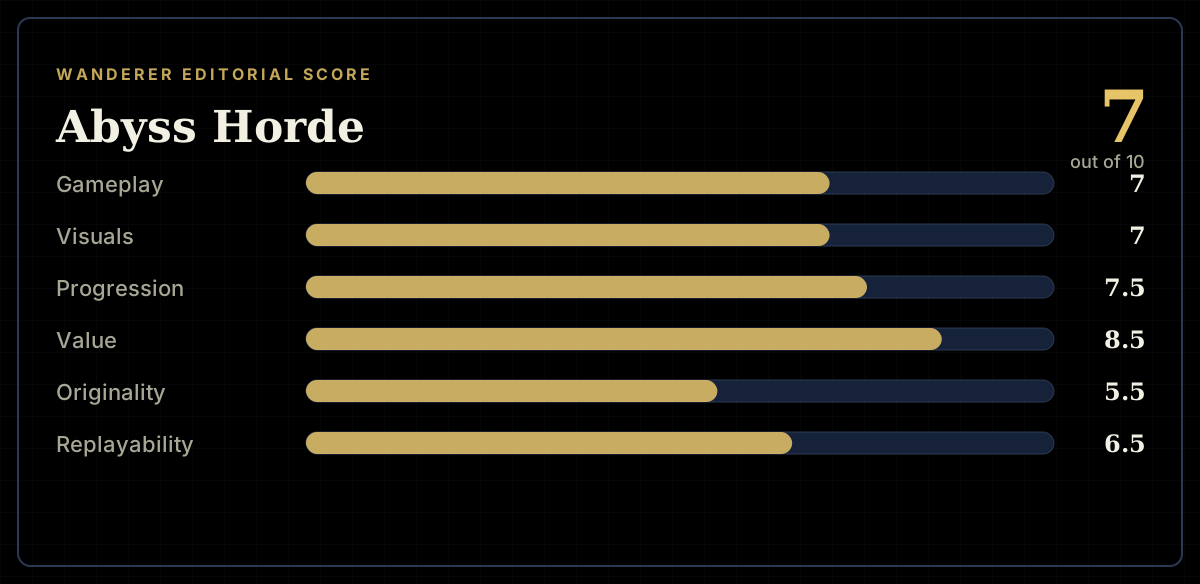
How the review scores each part of the gameWanderer Editorial -
The short versionWanderer Editorial