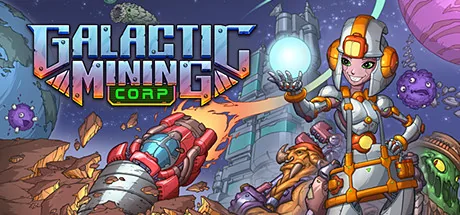
Game review
Galactic Mining Corp
7 / 10
- Developer
- Windybeard
- Publisher
- Windybeard
- Released
- 18 May 2021
- Platforms
- Windows
- Genre
- Incremental mining roguelite
- Monetisation
- Premium, one-off purchase — no in-app purchases, ads or premium currency; an optional soundtrack is sold separately as a standalone Steam product, not as in-game DLC
- Players
- Single-player
The short version
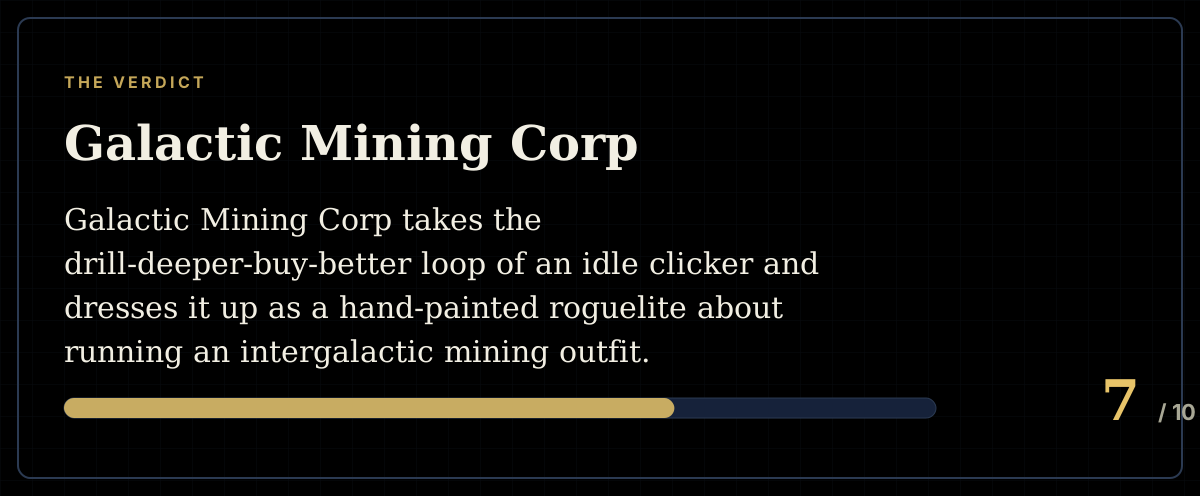
Galactic Mining Corp takes the drill-deeper-buy-better loop of an idle clicker and dresses it up as a hand-painted roguelite about running an intergalactic mining outfit. The core hook — send a drill into a planet's core, cash out the fragments, hire more crew, drill somewhere harder — is genuinely compelling for the first several hours, carried by an excellent soundtrack and some of the nicer 2D art in the genre.
It loses ground once the initial curiosity wears off. The interface rarely explains what a stat or upgrade actually does, several planets become effectively unbeatable even at maxed-out gear, and a handful of players report crashes and unreadable text on certain displays. It's a good game for filling odd hours rather than a game built to hold anyone for a hundred of them.
Biggest strengths
- The drill-planet-core-spend-on-upgrades loop is immediately legible and quietly addictive
- Hand-drawn art direction gives every planet type (frozen moons, acid worlds, sandy comets, dark stars) a distinct look
- Original soundtrack is consistently singled out as one of the game's best assets
Biggest weaknesses
- The interface explains almost nothing about what stats, upgrades or the Coretrium perk tree actually do
- Several planets scale into fights that feel unbeatable even with fully upgraded drills and crew
- A minority of players report crashes and display/resolution problems with no in-game settings to fix them
Who it's for: Idle and incremental fans who want their number-go-up loop wrapped in an actual art style and soundtrack, and who don't mind figuring out the systems themselves.
Our recommendation: Worth it on sale, and defensible at full price if you already know you like drill-and-upgrade loops. Read a handful of recent user reviews before buying if late-game balance and interface friction are dealbreakers for you.
7 / 10
Most mining games ask you to point a pickaxe at a wall. Galactic Mining Corp asks you to point an entire corporation at a planet, watch a drill chew through its core, and then decide whether the fragments that come back out are worth reinvesting in a bigger drill, a bigger crew, or a completely different rock. That's a more interesting question than it sounds, and for the first handful of hours, Windybeard's small roguelite answers it well.
Drill, cash out, upgrade, repeat
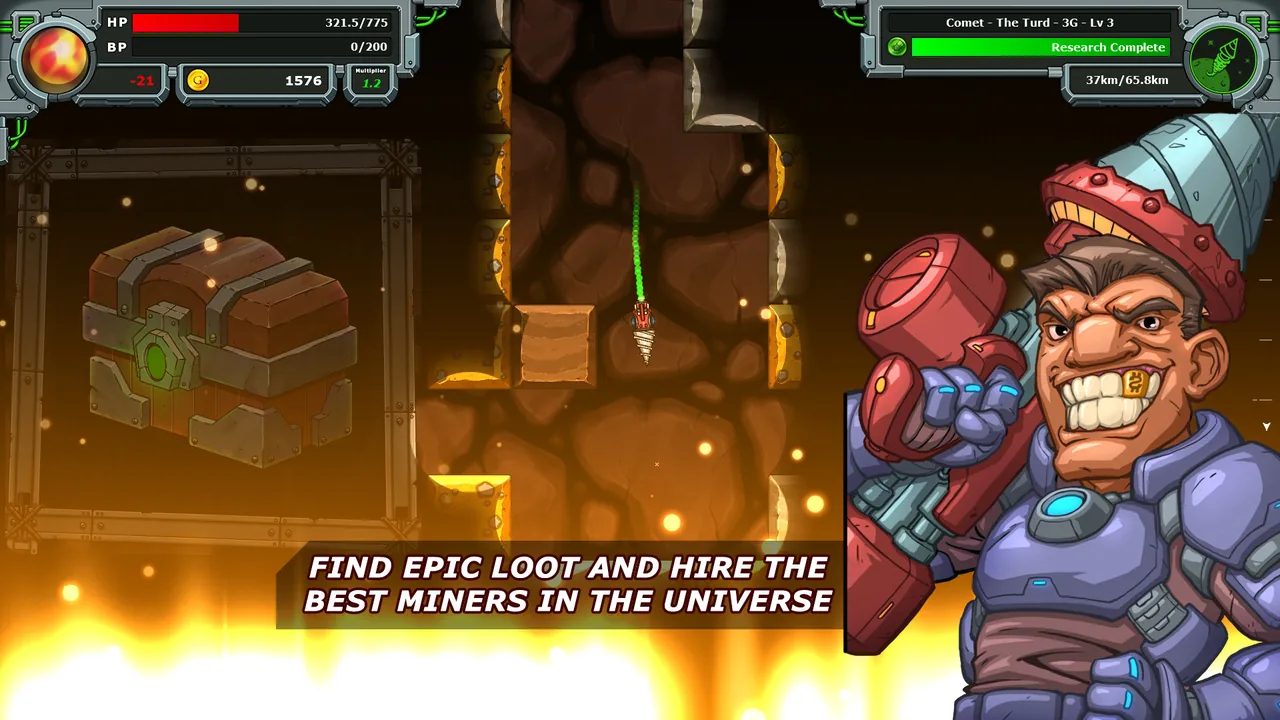
The loop is straightforward enough to explain in one sentence: pick a location on the galaxy map, send a drill down through a planet's layers, extract Coretrium fragments as you go, then spend those fragments and the profits from whatever you dug up on better equipment, more crew and a bigger headquarters. What keeps it from feeling like a plain incremental game is the framing — every planet is a discrete, roguelite-flavoured run with its own hazards, and the payoff is a perk tree rather than a flat number going up. Frozen planets, acid moons, sandy comets and dark stars all behave differently once the drill gets there, and the game leans on that variety to justify sending you back out repeatedly rather than parking you on one profitable world forever.
Where the loop earns its "incremental" tag on Steam is in how cleanly it rewards short sessions. There's no requirement to sit and watch a drill work; profits and fragments bank whether or not you're paying close attention, and the next meaningful decision — which upgrade to buy, which crew member to hire, which planet to risk next — is always a click away. For an idle-adjacent audience, that's exactly the right shape.
The crew and the corporation
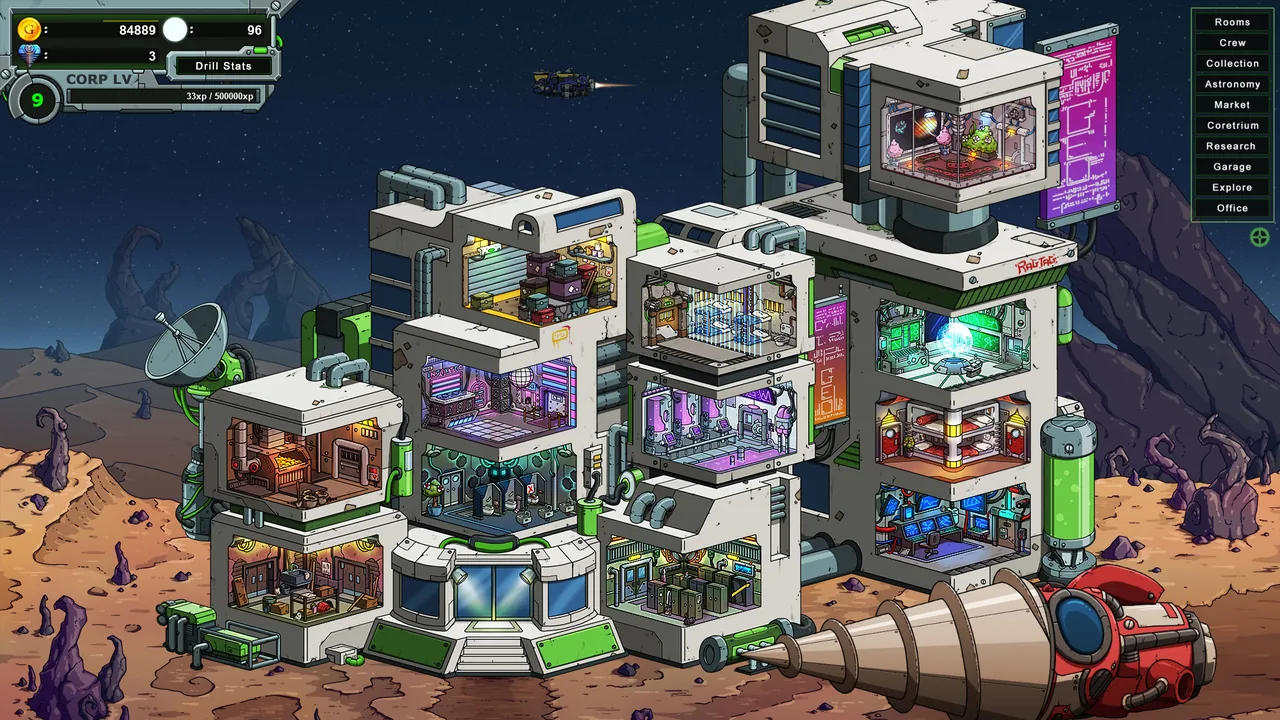
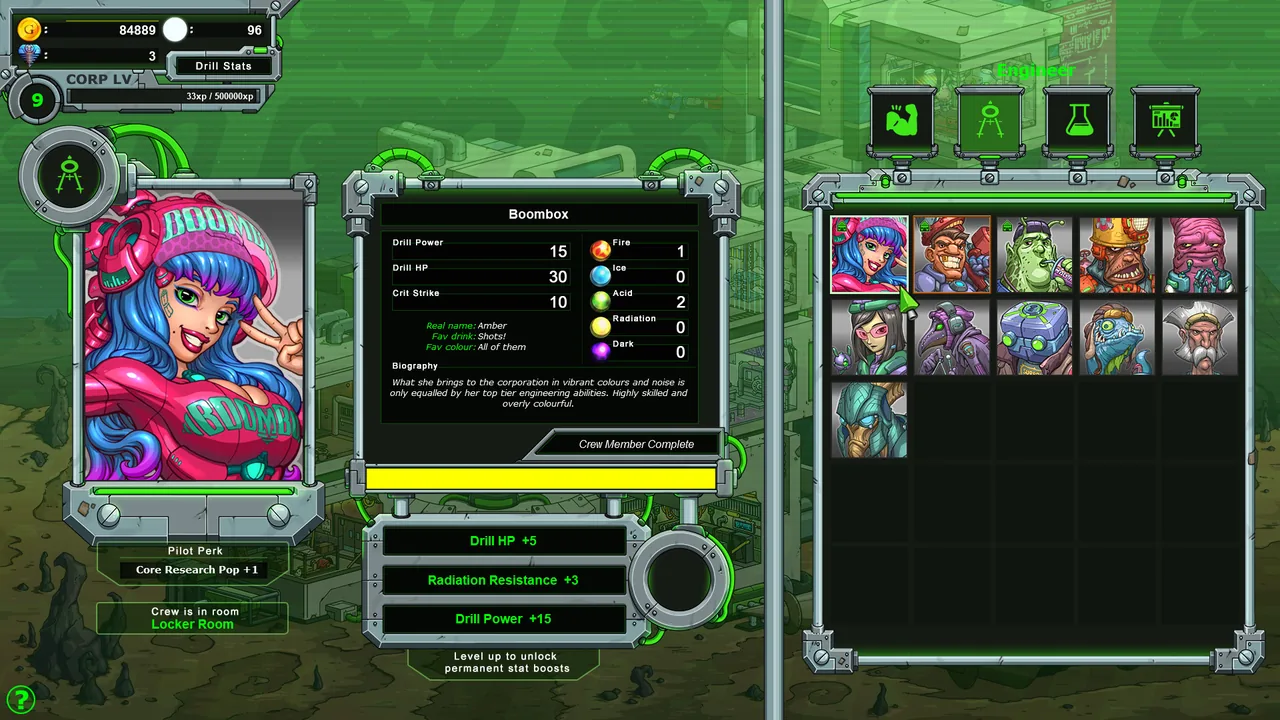
The corporation-building half of the game is where Windybeard clearly put the most care. More than seventy crew members are available to hire, each with their own stats and specialities, and the headquarters itself grows physically as you invest in it rather than just unlocking menu entries. Layered on top is a large cataloguing system — items, tiles and planetary discoveries all get logged, giving completionists a reason to keep exploring even once the profit math on a given planet stops improving. A hundred Steam achievements back that structure up, which suggests the studio built the endgame around collection and completion rather than around a story beat or a final boss.
That's also the system's ceiling. Nothing in the crew or cataloguing loop introduces a genuinely new decision once you understand the pattern — it's the same "hire, assign, repeat" shape from the opening hour through to the credits, just with bigger numbers. Players who've put dozens of hours into it describe exactly this: the loop stays technically engaging far longer than it stays interesting, and a few describe finishing every achievement mostly to have a reason to stop rather than because the game gave them a natural conclusion.
Presentation carries a lot of weight
Where Galactic Mining Corp is least ambiguous is its presentation. The hand-drawn art style is called out again and again as a highlight, and it's doing real work here — each biome has enough personality that "another planet" doesn't automatically mean "the same planet with a different palette." The original soundtrack gets even more consistent praise, showing up as a specific, named strength across a wide spread of otherwise very different opinions on the game. For a small studio's roguelite in a genre that often ships with stock or minimal audio, that's a genuine point of distinction.
The interface is the recurring complaint
If there's one thread that runs through the game's criticism more than any other, it's the interface. Stats, upgrades and the Coretrium perk tree are presented without much explanation of what they actually change, which turns early planning into guesswork rather than strategy. That problem compounds later on: a number of players report reaching planets where the difficulty simply outpaces what a fully upgraded drill and crew can handle, with no clear feedback on what went wrong or what to fix. A smaller but real group also reports technical friction — crashes, and display or resolution issues that leave text unreadable with no in-game option to correct it. None of this is universal, but it's consistent enough across independent accounts that it reads as a genuine rough edge rather than a one-off complaint.
Value and monetisation
There's nothing to flag on the monetisation side. Galactic Mining Corp is a straight one-time purchase with no in-app purchases, no premium currency and no energy systems gating progress — the only separate product on its Steam page is a standalone soundtrack release, not a piece of in-game content locked behind a second payment. At its list price it's a fair ask for a genre fan; on one of its frequent discounts, it's an easy recommendation for anyone who wants a few dozen hours of low-stakes drilling and doesn't need the interface to hold their hand.
Final verdict
Galactic Mining Corp gets the hardest part of an incremental roguelite right: the moment-to-moment decision of where to drill next and what to spend the proceeds on is compelling from the very first session, and the art and music make that loop pleasant to sit inside. It falls short of a higher score because the systems around that loop — the interface explaining what anything does, the balance of the harder planets, the shape of the endgame — never get the same polish as the core hook. Idle and incremental fans looking for something with more visual identity than the average clicker will get real value here, especially at a discount. Players who need clear systems and a satisfying finish line should go in with tempered expectations.
Pros and cons
Pros
- The drill-planet-core-spend-on-upgrades loop is immediately legible and quietly addictive
- Hand-drawn art direction gives every planet type (frozen moons, acid worlds, sandy comets, dark stars) a distinct look
- Original soundtrack is consistently singled out as one of the game's best assets
- No in-app purchases, energy timers or premium currency behind any of the progression
- Over 70 hireable crew members and a large item-cataloguing side goal give collectors something to chase
Cons
- The interface explains almost nothing about what stats, upgrades or the Coretrium perk tree actually do
- Several planets scale into fights that feel unbeatable even with fully upgraded drills and crew
- A minority of players report crashes and display/resolution problems with no in-game settings to fix them
- The core loop stops introducing new ideas well before most players are done with the content on offer
- There is no real ending or closing sequence — the game simply stops giving you new things to do
Screenshots
-
Galactic Mining CorpImage: Windybeard via Steam -
Galactic Mining CorpImage: Windybeard via Steam -
Galactic Mining CorpImage: Windybeard via Steam -
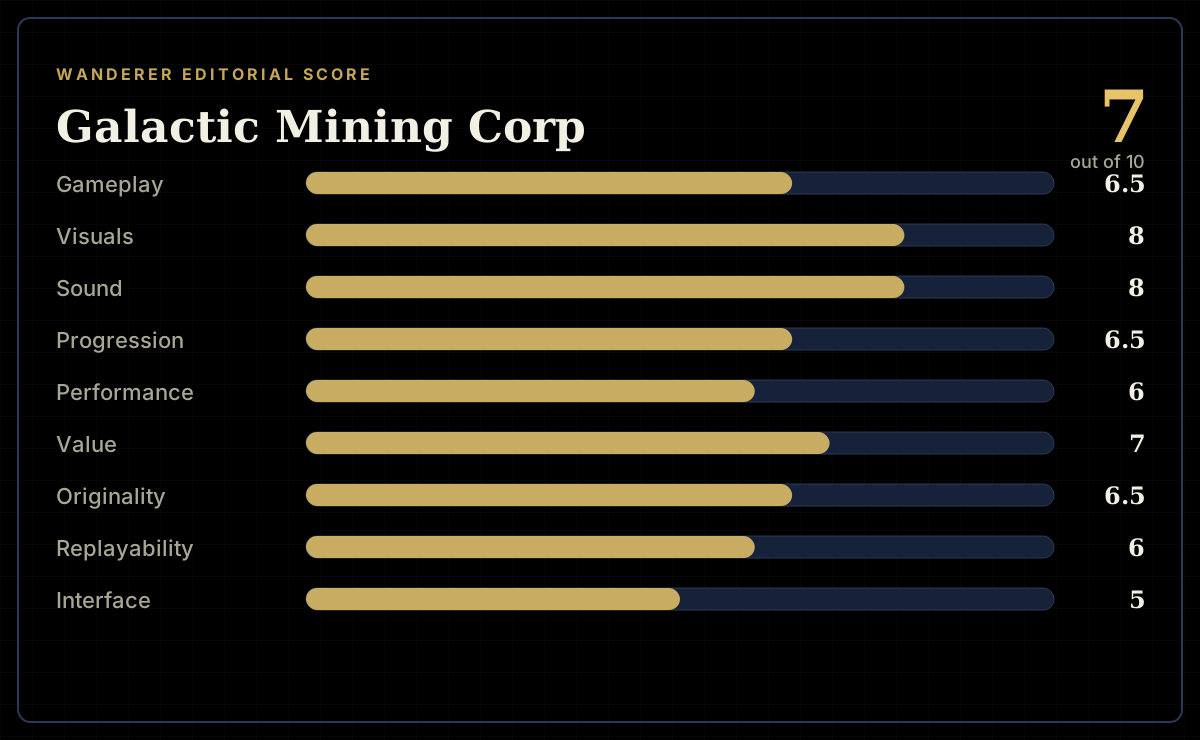
How the review scores each part of the gameWanderer Editorial -
The short versionWanderer Editorial