Money for Girls: Amortized Review
A Detective Story Wrapped Around a Predatory Loan Money for Girls: Amortized casts you as a girl detective spending a sweltering summer trying to save her mother from a predatory l
8.6 / 10
Browse by genre
988 Narrative games reviewed and scored, best first.
988 reviews
A Detective Story Wrapped Around a Predatory Loan Money for Girls: Amortized casts you as a girl detective spending a sweltering summer trying to save her mother from a predatory l
8.6 / 10
One of 2024's most critically decorated narrative games — a Peabody Award nomination, an IGF Grand Prize shortlisting, a 90 on OpenCritic — telling a genre-blending story about clones, generational trauma and a pandemic-scarred future through the eyes of a devoted Watcher serving her ALLMOTHER, undercut for a small but genuinely coherent minority of players by exploration sections several call needlessly oversized for a game built almost entirely around its writing.
8.5 / 10
The Paper Mario game a huge share of its own reviewers say Nintendo stopped making — turn-based RPG combat, real puzzle-solving abilities, genuine charm — built by a small independent team instead, and rarely called out for anything beyond a handful of specific, old-school JRPG design choices.
8.5 / 10
A top-down adventure about a self-doubting painter restoring colour to a world that's lost it, from the Wandersong and Celeste team -- Overwhelmingly Positive on Steam and still drawing new five-star reviews five years on, with one consistent, specific complaint about how the painting itself controls.
8.5 / 10
A free time-travel Sokoban puzzler that gets one specific, difficult idea exactly right — solving a puzzle by recording your own past actions and then working alongside the ghost of what you just did.
8.5 / 10
Solo developer Thomas Hsu's SQL-powered detective sim asks players to solve ten increasingly absurd crimes in the fictional city of Los Zorangeles by actually writing database queries, and an overwhelmingly positive review corpus — including plenty of working data professionals — praises its writing and world-building even as several reviewers flag a rough difficulty spike and thin quality-of-life tooling in the back half.
8.5 / 10
A free, story-driven tower defense game about an overworked magical girl reshaping a living barrier to hold back monster waves — short, and so consistently compared to Madoka Magica by its own players that the comparison reads as a shared, spontaneous consensus rather than marketing.
8.5 / 10
Capcom's confident return to its own franchise after 2013's divisive DmC reboot, splitting combat across three wildly different playable characters -- Overwhelmingly Positive on Steam seven years on at 96% of over 169,000 reviews, with a scattered but real minority complaint about DLC nickel-and-diming, a stale PC port (still no ultrawide or DLSS support), and a story some players find thinner than the combat around it.
8.5 / 10
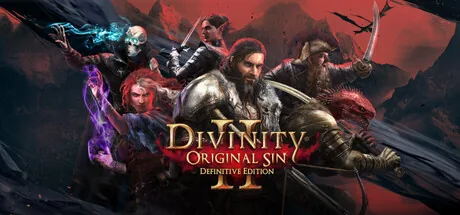
Widely regarded as one of the best-written RPGs ever made — reviewed against the backdrop of a well-documented ownership dispute in which the game's original creators were pushed out of ZA/UM, a fact a large share of this game's own reviewers raise before they say anything else.
8.5 / 10
The former Telltale team proved the choice-driven narrative game was never dead, just badly run — four million copies, a BAFTA and 97.5% across 181,617 reviews, most of whose complaints are about a release schedule that has since ended.
8.5 / 10
Nine years on, the game that taught Larian how to build Baldur's Gate 3 is still the sharper tactical puzzle of the two — a combat system built from fire, water and armour that rewards a party that thinks in physics, and a brutal opening act that punishes one that doesn't.
8.5 / 10
The Definitive Edition of Dragon Quest XI doesn't reinvent the turn-based JRPG, and that's the point — an orchestral score, a full second 2D presentation of the same 100-hour campaign, and combat that trusts the format instead of subverting it.
8.5 / 10
Read review of Dragon Quest XI S: Echoes of an Elusive Age — Definitive Edition
A point-and-click adventure dressed as a 1996 educational CD-ROM, with something wrong underneath it. One of the highest-rated games on Steam this year at 99% positive — and its single-save-file design is the reason that number isn't higher still.
8.5 / 10
A subscription MMORPG where one character can learn every job in the game, and where the story you're required to sit through before reaching the current patch has grown into a decade-plus commitment. Reviewed with Dawntrail current and patch 7.55 freshly out.
8.5 / 10
A conventional open-world checklist game wearing the most beautiful presentation layer in the genre — and, after Sony's reported retreat from PC in March 2026, quite possibly the last Sucker Punch game PC players get to buy.
8.5 / 10
An Earthbound-flavoured turn-based RPG about a socially anxious old man, his truffle-pig best friend, and a corporate conspiracy involving giant mushrooms — built around a genuinely novel idea where awkward conversations function as real combat encounters, and near-unanimously loved by the players who've played it.
8.5 / 10
A free Ace Attorney-style courtroom mystery visual novel starring Hololive English's Myth and Council talents as a high-school detective drama, earning a Very Positive launch reception for its production quality and writing, with reviewers' honest caveats limited to a couple of quickly-patched launch bugs and a deep reliance on Hololive familiarity.
8.5 / 10
A turn-based pixel-art RPG about a party trapped in a time loop, from solo-ish developer insertdisc5 -- Overwhelmingly Positive at 97% and beloved for its writing and characters, but a small, consistent and often self-aware minority of players say the game's central design idea, deliberately repetitive loops, genuinely fails to work as a game even when it succeeds as art.
8.5 / 10
A solo developer's six-year passion project about a one-hit-kill assassin who can foresee his own fights -- Overwhelmingly Positive on Steam seven years on, still one of the best-reviewed action games of its era, but famous now for a very specific ongoing story: a free story-continuing DLC promised since shortly after launch that, as of this review, still hasn't shipped.
8.5 / 10
Two Simple Rules, A Circle's Existential Crisis, And A Pool Of Reviewers Who All Agree Metanoia, developed and published by Meteoric Works, released on Steam on February 27, 20
8.5 / 10
A fantasy JRPG from the Persona 5 team that turns an election campaign into a turn-based RPG's core loop, built around a class system deep enough to carry the whole eighty-hour runtime and a calendar that never lets you forget the clock is running.
8.5 / 10
A first-person speedrunning platformer built around discarding cards for guns or traversal tricks, whose movement design earns some of the most enthusiastic praise this library has documented, attached to a visual-novel dating-sim story its own fanbase mocks almost unanimously while still recommending the game without hesitation.
8.5 / 10
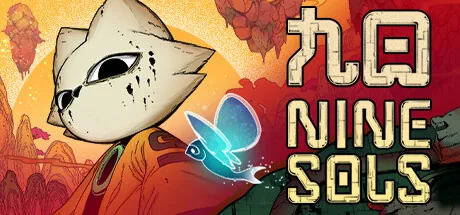
A hand-drawn Taopunk action-platformer that translates Sekiro's deflection combat into 2D with remarkable precision — and asks you to accept that parrying is the only real answer it has.
8.5 / 10
A short, genuinely inventive puzzle adventure that reaches outside the game window to talk to you — 98.3% positive, and if you're on Linux or Steam Deck you should buy a different version of it.
8.5 / 10