Game review
Nine Sols
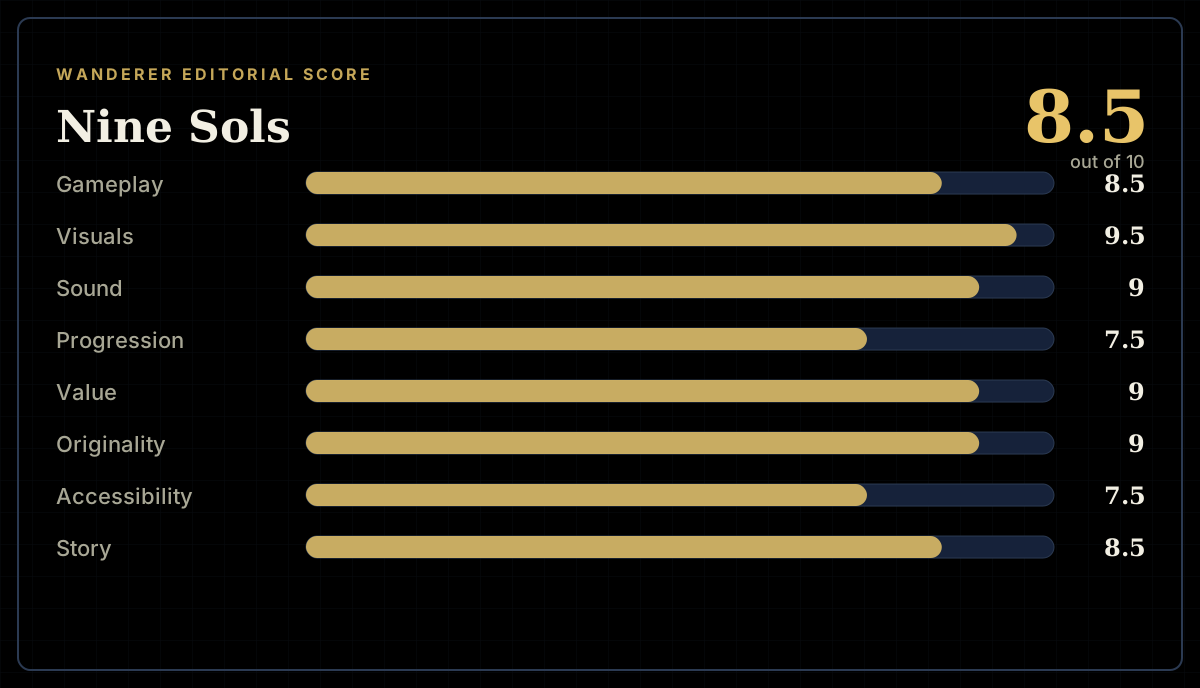
8.5 / 10
- Developer
- RedCandleGames
- Publisher
- RedCandleGames
- Released
- 28 May 2024
- Platforms
- Windows, macOS, PlayStation 5, Xbox Series X|S, Nintendo Switch
- Genre
- Action Platformer
- Monetisation
- One-time purchase. Optional soundtrack and digital art book sold separately; no in-game purchases of any kind.
- Players
- Single-player only
The short version
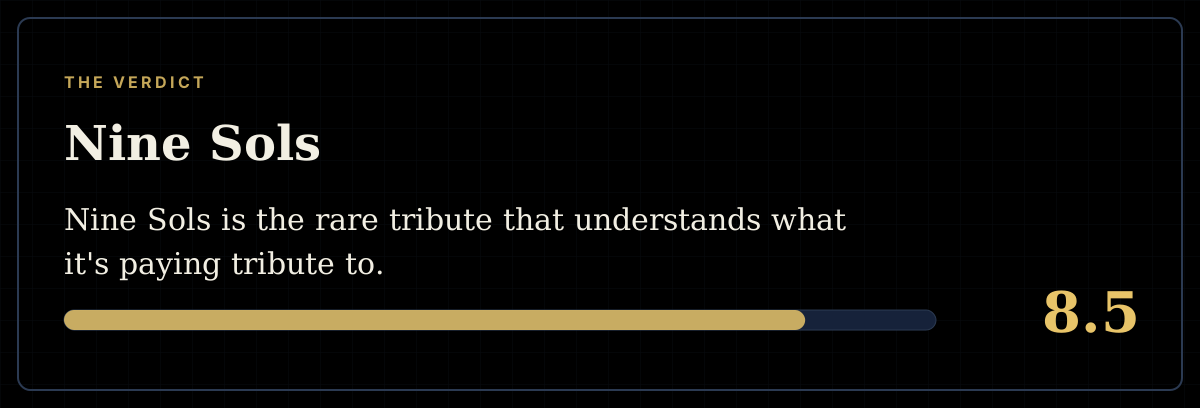
Nine Sols is the rare tribute that understands what it's paying tribute to. Sekiro's combat wasn't hard for its own sake — it was a rhythm game about standing your ground, and Red Candle rebuilt that in two dimensions with a jade-charge counter that makes deflecting an offensive act rather than a defensive one. Wrap it in the best hand-drawn art of its generation and a Taopunk setting nobody else is working in, and you have a genuinely special game.
Its critics have a real point, though, and it deserves stating plainly: this is parry-or-nothing. Attacks track hard and hitboxes are generous in the enemy's favour, which is deliberate — dodging is meant to fail so that deflecting is the answer. If that clicks, the combat is a dance. If it doesn't, you'll spend twenty hours waiting for permission to press a button, and no skill tree will fix it.
Biggest strengths
- Hand-drawn art and animation that stand comfortably alongside anything in the genre
- The deflection system genuinely captures what made Sekiro's combat sing, which nobody else has managed in 2D
- A distinctive Taopunk setting — Chinese mythology fused with decayed science fiction — told with real confidence
Biggest weaknesses
- Combat funnels everything through parrying; enemy tracking and hitboxes are tuned to make dodging unreliable on purpose
- Several bosses reduce to waiting for a parryable attack rather than choosing between options
- As a metroidvania it's thin — the map and exploration are the least interesting things in it
Who it's for: Players who loved Sekiro's deflection rhythm and want it in 2D, and anyone who values art direction and world-building over mechanical breadth. Metroidvania fans who come mainly for exploration and build variety should know the combat is the whole game here.
Our recommendation: Buy it, ideally on sale — it hits 40-60% off regularly and was at an all-time low for its second anniversary. Try the deflection on the first real boss before committing your refund window, because your feelings there will be your feelings at hour twenty.
8.5 / 10
The most-upvoted positive review of Nine Sols exists to argue with a negative one. It opens by saying a thorough, well-written critical review almost talked the author out of buying the game, and then rebuts it point by point. Over a thousand people found that helpful. Elsewhere in the corpus, another highly-rated positive review begins "I'm seeing a lot of unfair negative reviews about this game." And the dissenters are just as deliberate — one of the best-argued negatives opens with "I want to temper the overwhelming praise that Nine Sols is getting."
Games at 95% positive don't usually produce this. Nine Sols does, because the thing it's excellent at is also the thing it refuses to compromise on, and people who bounce off it bounce off hard.
What it is
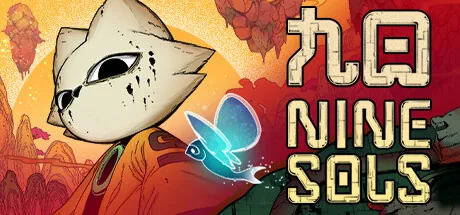
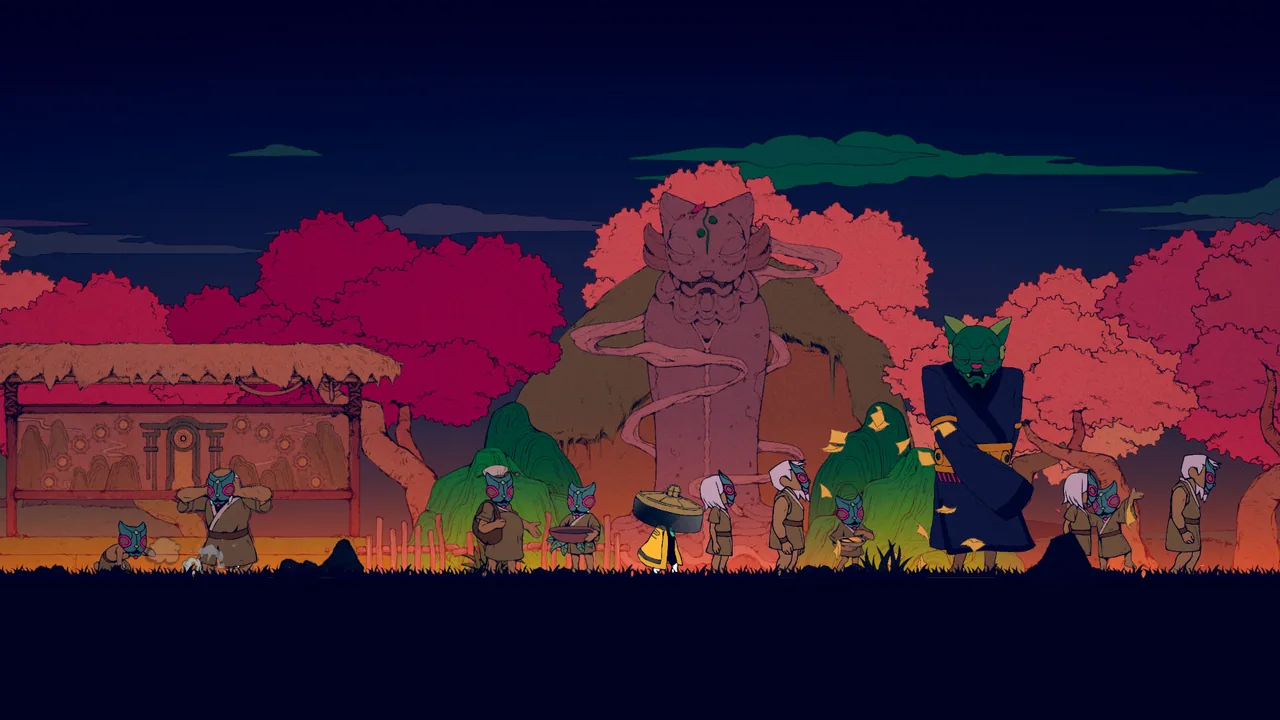
You play Yi, a Solarian warrior woken by a human child into a decayed sanctuary called New Kunlun, on a revenge quest against the nine rulers of that realm. The setting is what Red Candle call Taopunk: Chinese and Taiwanese mythology fused with worn-out science fiction, temples and circuitry, Taoist cosmology running on failing machines. It is a genuinely distinct aesthetic, and the studio — the twelve-person team behind the horror games Detention and Devotion — commits to it completely.
The art is the first thing that lands. It's hand-drawn, richly animated, and the environments do storytelling work that the dialogue then doesn't have to. The soundtrack, built over years by a dedicated composing team, is one of the best in recent independent games. Nine Sols won Best Game at gamescom latam's BIG Festival in 2025, and it is not hard to see the case.
The combat, and the argument about it
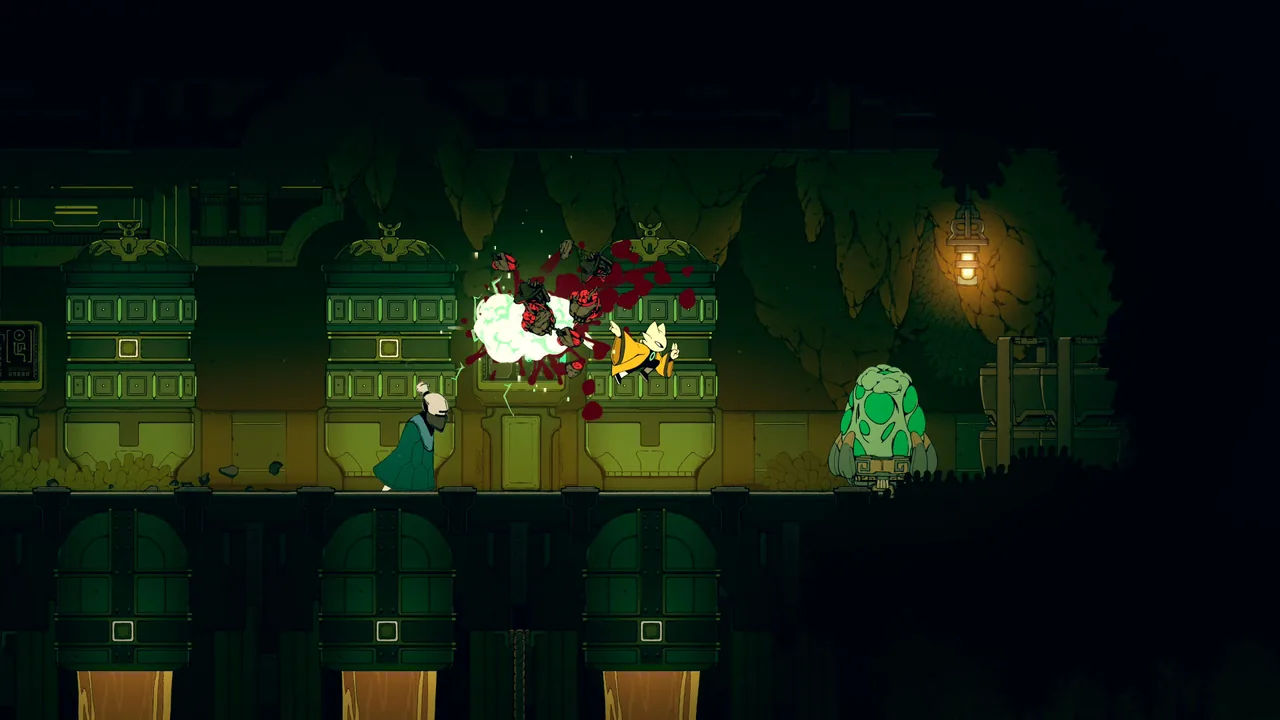
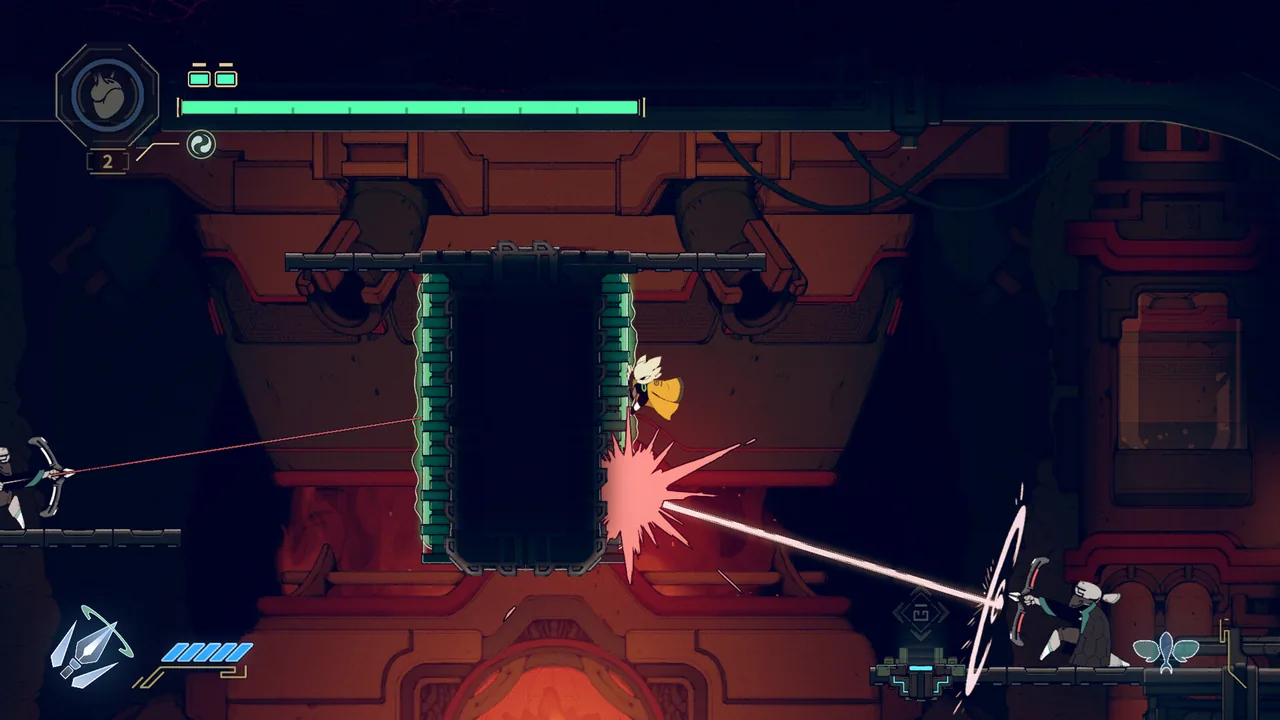
Nine Sols builds everything on deflection. Rather than dodging attacks, you parry them at the last moment; successful deflections build a jade charge you spend on a talisman that detonates against the enemy. That's the loop: absorb, accumulate, punish. It is a faithful and clever 2D translation of what Sekiro: Shadows Die Twice did in 3D, and when a boss fight clicks it produces the same specific pleasure — a fight becoming a rhythm you're playing rather than a threat you're avoiding.
Now the criticism, because it's coherent and it comes from people who played properly. The median playtime across the hundred most-helpful English negative reviews is 22.6 hours. These are not refund-window opinions.
Their central charge is that the game forces the parry by making everything else unreliable. As one reviewer puts it, attacks were given "absolutely HUGE hitboxes that do not correspond to the attack animation," on top of enemies tracking your position mid-swing, so dodging simply doesn't work as an alternative. Another, at 29 hours, describes the consequence: "I spent a lot of time just standing waiting for the boss to do a parryable attack. The options in combat are re[stricted]."
I think both sides are right, and the disagreement is about design philosophy rather than execution. Nine Sols is not a game with a parry option; it's a game where parrying is the verb, and the tuning exists to stop you avoiding the thing it's about. That's a legitimate choice and it produces a purer, tighter experience than a more permissive design would. It also means the game has one answer, and if that answer doesn't suit your hands, there's no build, no weapon and no skill node that opens a second route. Sekiro at least gave you prosthetics and stealth; this gives you the wall and asks you to learn it.
The related complaint — that as a metroidvania it's unremarkable — is fair too. The map is functional, the exploration rewards are modest, and nobody finishes this game talking about its world layout. Judged against Hollow Knight on those terms it loses comfortably. Judged as a boss-rush action game with connective tissue, which is closer to what it actually is, the comparison stops mattering.
It is not as impenetrable as its reputation
Here's where the data pushes back on the "too hard" framing. Of 35 achievements, 83.3% of players finish the first chapter, 58.6% the second, 47.4% the third and 41.6% the fourth. Roughly four in ten buyers push through the main arc of a game routinely described as brutally difficult. For a hard action game that is a strong completion profile — plenty of far gentler games post worse numbers — and it suggests the difficulty is teaching people rather than repelling them.
Red Candle have also done real accessibility work. There's adjustable difficulty, and in February 2025 they added a red-green colourblind assist mode that recolours attack cues and health bars, followed by two patches fixing cases the first pass missed. That's more care than most studios take after the reviews are already in.
A language split worth reporting accurately
One widely-upvoted positive review claims the game was being review-bombed for reasons unconnected to its quality. Rather than repeat that, it's measurable, so here are the numbers.
Sentiment by language: Traditional Chinese sits at 96.9% positive across 4,687 reviews — the highest of any language, and Red Candle are a Taiwanese studio. English is 95.5%, Korean 94.2%, Russian 93.1%, Japanese 89.9%. Simplified Chinese is 85.5% of 4,655 reviews, more than eleven points below Traditional Chinese and the lowest in the corpus by a clear margin.
That gap is real and it's the largest in the data. What produced it isn't something a review corpus can settle, and I'm not going to pretend otherwise. Two things are worth saying plainly: it's the only meaningful divergence in an otherwise remarkably consistent global reception, and even at 85.5% that language cohort still rates the game Very Positive. Whatever is happening there, it hasn't distorted the overall picture.
Support and value
Two years on, this is a finished game being quietly looked after rather than monetised. The patch notes since launch are colourblind support, controller prompt fixes, translation proofreading, a Unity engine upgrade addressing a security vulnerability in November 2025, and a memory-leak fix in December 2025. Around it Red Candle have built a prequel manga, an art book, a documentary about the four-year alternate-reality game that promoted it, and a plush.
At NZ$43.59 for a 25-to-30 hour game with no purchases of any kind, it's fairly priced, and it goes on sale hard — 40% off in December 2025, 60% off for its second anniversary in May 2026. There is no version of this game that costs you anything after you buy it.
The verdict
Nine Sols earns an 8.5. The art, the sound and the setting are close to the top of the independent scene, the deflection combat is the most successful attempt anyone has made at bringing Sekiro's rhythm into two dimensions, and it's a complete, confident, uncompromised piece of work from a small studio.
The half-point I'm holding back is for the narrowness. A game that funnels every encounter through a single mechanic lives or dies on whether that mechanic suits you, and Nine Sols tunes its enemies specifically to close off the alternatives. When it works it's a dance. When it doesn't it's a metronome you're losing to, and the game has nothing else to offer you — no build to rethink, no approach to swap. Its most thoughtful critics aren't wrong about that, and a review that pretends 95% positive means universal appeal isn't doing its job.
Buy it if Sekiro's combat is a fond memory rather than a bad one, and let the first real boss decide for you. Skip it if you want a metroidvania in the exploring-and-experimenting sense — the map is the least of what's on offer here, and the fighting is all of it.
Pros and cons
Pros
- Hand-drawn art and animation that stand comfortably alongside anything in the genre
- The deflection system genuinely captures what made Sekiro's combat sing, which nobody else has managed in 2D
- A distinctive Taopunk setting — Chinese mythology fused with decayed science fiction — told with real confidence
- An outstanding soundtrack, credited to a dedicated team and built over years
- Complete, self-contained and fairly priced, with no monetisation of any kind
Cons
- Combat funnels everything through parrying; enemy tracking and hitboxes are tuned to make dodging unreliable on purpose
- Several bosses reduce to waiting for a parryable attack rather than choosing between options
- As a metroidvania it's thin — the map and exploration are the least interesting things in it
- Frustration is the intended texture in places, and the game is less flexible about that than Sekiro was
- Heavy dialogue and cutscene load through the middle chapters slows the pacing
Screenshots
-
Nine SolsImage: RedCandleGames via Steam -
Nine SolsImage: RedCandleGames via Steam -
Nine SolsImage: RedCandleGames via Steam -
How the review scores each part of the gameWanderer Editorial -
The short versionWanderer Editorial