Game review
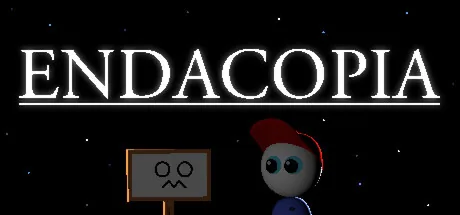
Endacopia
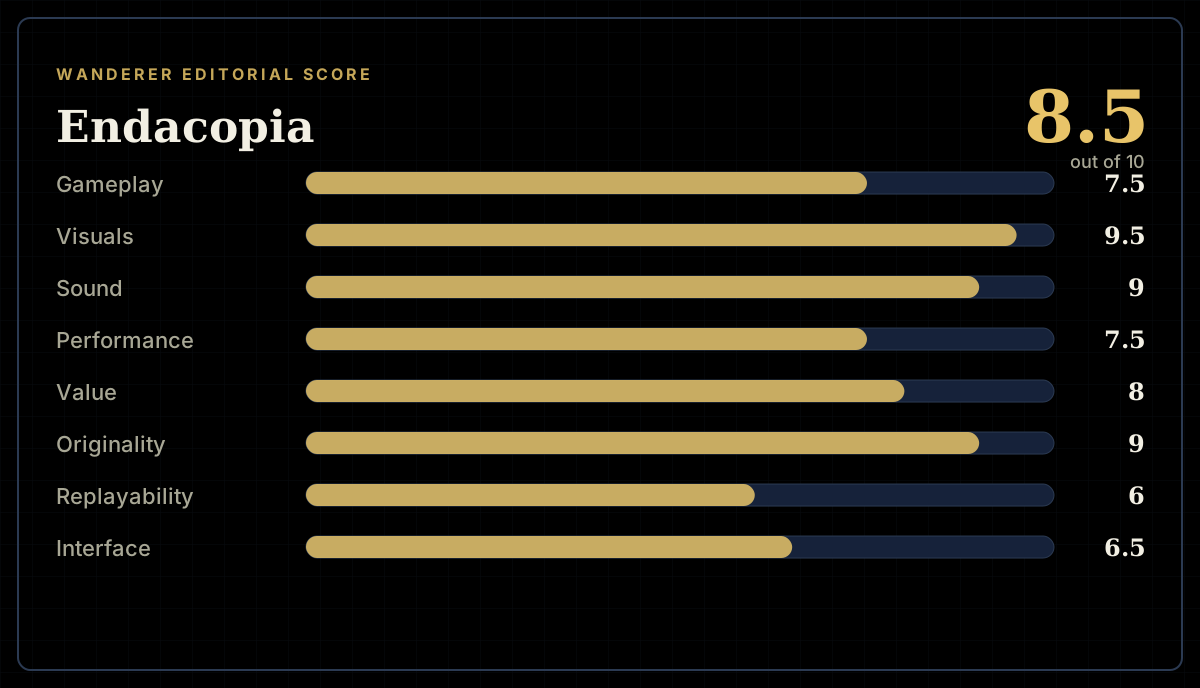
8.5 / 10
- Developer
- Andyland
- Publisher
- Andyland
- Released
- 27 July 2026
- Platforms
- Windows
- Genre
- Point-and-Click Adventure
- Monetisation
- One-time purchase. No DLC, no in-app purchases, no season pass. Listed at NZ$23.38 — checked 4 August 2026.
- Players
- Single-player only
The short version
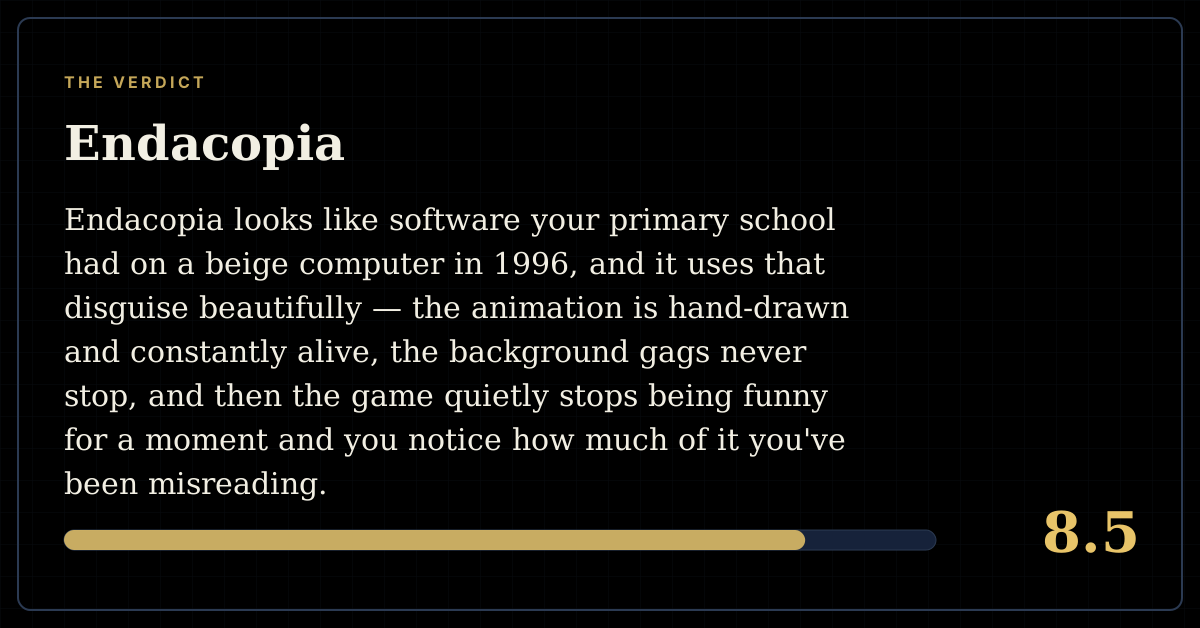
Endacopia looks like software your primary school had on a beige computer in 1996, and it uses that disguise beautifully — the animation is hand-drawn and constantly alive, the background gags never stop, and then the game quietly stops being funny for a moment and you notice how much of it you've been misreading. The writing, art and music are genuinely exceptional. What holds it back is structural: one save file, a mid-game decision that forks the story, secrets you can permanently miss, and at least one area that can lock you out of unfinished business without warning. Extraordinary craft, awkward plumbing.
Biggest strengths
- The animation is the star — hand-drawn, constantly moving, and packed with background gags that reward looking rather than clicking
- A pitch-perfect pastiche of 1990s edutainment software that stops being a joke and becomes the point
- Music and sound design are consistently strong, and the whole package feels authored rather than assembled
Biggest weaknesses
- One save file and no chapter select, so seeing the other side of the mid-game branch means replaying everything
- Content can be permanently missed, and at least one area ejects you without warning that you're done with it
- Softlocks have been reported, including a puzzle that can leave players unable to progress at all
Who it's for: Players who want a hand-made adventure with real personality, anyone nostalgic for edutainment-era software, and people who like their horror suggested rather than shouted. Not for players who need clear objectives, and not for completionists who expect to tidy up loose ends after the credits.
Our recommendation: Buy it, and before you start, understand two things. There is one save slot and no chapter select, so a mid-game branch and a lot of optional content are effectively one-shot unless you replay the whole five-or-six-hour game. And the "horror" tag oversells it — this is a comedy adventure with unsettling edges, not a scare machine. Go in for the craft and the world, not for a fright.
8.5 / 10
Ninety-nine per cent. Two thousand reviews in eight days, and sixteen people out of eighteen hundred English-speaking players didn't get on with it — and a decent share of those sixteen are jokes rather than complaints.
Numbers like that usually mean one of three things: a tiny sample, a review-bombed rival, or a game so specific that only the people who want it ever buy it. Endacopia is mostly the third. It is a hand-animated point-and-click adventure that looks exactly like educational software from 1996, and if that sentence did something to you, the score is real and you should stop reading and go buy it.
For everyone else, here's what it is and where it creaks.
The disguise
You play Mellow, a boy who has lost his senses, escaping an uncomfortable home into a world of chunky pastel rooms, googly-eyed characters and cheerful nonsense. Everything is drawn and animated by hand, in a style that a lot of people have been following on the internet for years before this game existed. Backgrounds are stuffed with gags that have nothing to do with anything. Characters move constantly and expressively. It is enormously charming.
The trick is that the presentation isn't a coat of paint over a horror game, and it isn't a bait and switch either. The unease comes from the same place the comedy does — from a world that runs on dream logic and doesn't consider itself strange. You poke at something you probably shouldn't have, and the register shifts for a moment, and then you're back in the joke. It's much closer to the uncanny end of Inscryption than to anything with a jumpscare budget.
Which brings up the review's one real marketing complaint, and it comes from players who loved everything else: the horror framing oversells. Two separate reviewers, both otherwise positive about the craft, note that maybe a fifth of the game reads as horror and the rest is comedy adventure. If you arrive expecting sustained dread you will feel misled. If you arrive expecting a funny, beautiful, occasionally upsetting adventure, it delivers exactly that.
Why the pastiche does real work
It would be easy to file the 1996-CD-ROM look under nostalgia bait, and it isn't. The aesthetic is load-bearing.
Educational software of that era had a particular grammar: you were dropped into a hub, every object was clickable, most clicks produced a small animated gag rather than progress, and the software never told you what it wanted. That grammar was designed to reward aimless poking by children with unlimited time. Endacopia adopts it wholesale — and then uses the fact that you've been trained to poke at everything as the mechanism by which you find things you were not supposed to find.
That's a smarter horror device than a monster closet, because it makes curiosity the delivery system. The game never has to threaten you; it just has to let you keep doing the thing it taught you to do in the first ten minutes.
It's also why the presentation and the puzzle design are so entangled, for better and worse. The best puzzles here work because the fiction of "friendly learning software" gives them a logic to subvert. The worst ones fail for the same reason — when everything is clickable and most clicks are jokes, the line between a decorative gag and a required interaction gets thin, and the art style is busy enough to hide it. Several players report hunting a wiki for something that turned out to be sitting in plain sight.
The trade is worth it. But it's a real trade, not a free win.
What you actually do
More than you'd expect. You explore areas in the order you choose, collect tools and toys and rubbish, talk to people who may or may not be helpful, play a spread of minigames, and — genuinely — fight monsters in first person with your fists, blocking and dodging and punching.
That variety is why a six-hour game doesn't sag as much as its backtracking should make it. It's also where the unevenness lives. The combat is a novelty rather than a system. The puzzles swing between inventive and impenetrable, and the ones that miss tend to miss because the art style makes the interactive thing hard to distinguish from the decorative thing. And there's a lot of walking between rooms — the most common substantive complaint after the save system.
There's also a genre-label quibble worth passing on: movement is WASD, not click-to-move, which irritated at least one buyer who took "point and click" literally.
The save file
Here is the thing I'd want to know before starting, and it's the most-upvoted criticism the game has.
There is one save slot. There is no chapter select. There is a significant decision partway through that forks the outcome, and there are secrets scattered everywhere that are easy to walk past permanently. At least one area — players name Timesville specifically — can eject you when you trigger the wrong thing, with unfinished business behind you and no way back short of starting the whole game again.
For a game whose entire pleasure is poking at scenery to see what's hidden in it, that's a frustrating combination. The achievement data shows how it plays out: 28% of players have reached the escape ending, 18% the other one, and the deeper secret achievements sit between 5% and 15%. People are finishing it once and, understandably, not going back round for four to six hours to catch what they missed.
None of this is unfixable. Multiple save slots, a chapter select, or a post-credits free-roam would resolve it entirely, and the developer is patching daily — seven updates in eight days, with cloud saving added at 1.04. Softlocks have been reported too, including one puzzle that leaves players stuck outright, so a bug-fix pass is clearly ongoing. If you're reading this months from now, check whether the save system has changed before you take a point off for it.
Worth it
8.5 out of 10. Rated 8.5 out of 10.
Endacopia is the kind of game that justifies scrolling past the front page of new releases. It's made by one person with an unmistakable voice, it commits completely to a bit that could have been one joke and turns it into a whole world, and the animation alone is worth more than the asking price. The affection in its reviews is not manufactured — it's what happens when something this specific reaches the people it was made for.
It isn't a ten because the structure fights the content. A game built on hidden things should not punish you for missing hidden things, and a single save slot in a branching story is a design decision from the era it's pastiching, not one worth reviving. Fix the plumbing and this is a 9.
Go in knowing it's a comedy first, a horror second, and a one-shot third. Then let it be strange at you.
Pros and cons
Pros
- The animation is the star — hand-drawn, constantly moving, and packed with background gags that reward looking rather than clicking
- A pitch-perfect pastiche of 1990s edutainment software that stops being a joke and becomes the point
- Music and sound design are consistently strong, and the whole package feels authored rather than assembled
- Genuinely strange characters and worldbuilding delivered by implication rather than exposition
- Wildly varied content — minigames, a first-person fist-fighting mode, tool collecting — that keeps a six-hour game from settling into one rhythm
- Patched daily since launch, with cloud saving added within five days
Cons
- One save file and no chapter select, so seeing the other side of the mid-game branch means replaying everything
- Content can be permanently missed, and at least one area ejects you without warning that you're done with it
- Softlocks have been reported, including a puzzle that can leave players unable to progress at all
- Long stretches of backtracking that reduce the middle of the game to walking between rooms
- Puzzle quality swings hard — some are inventive, others are opaque in ways that send you to a wiki
- Marketed with a horror framing that overstates what's actually a comedy adventure with unsettling moments
Screenshots
-
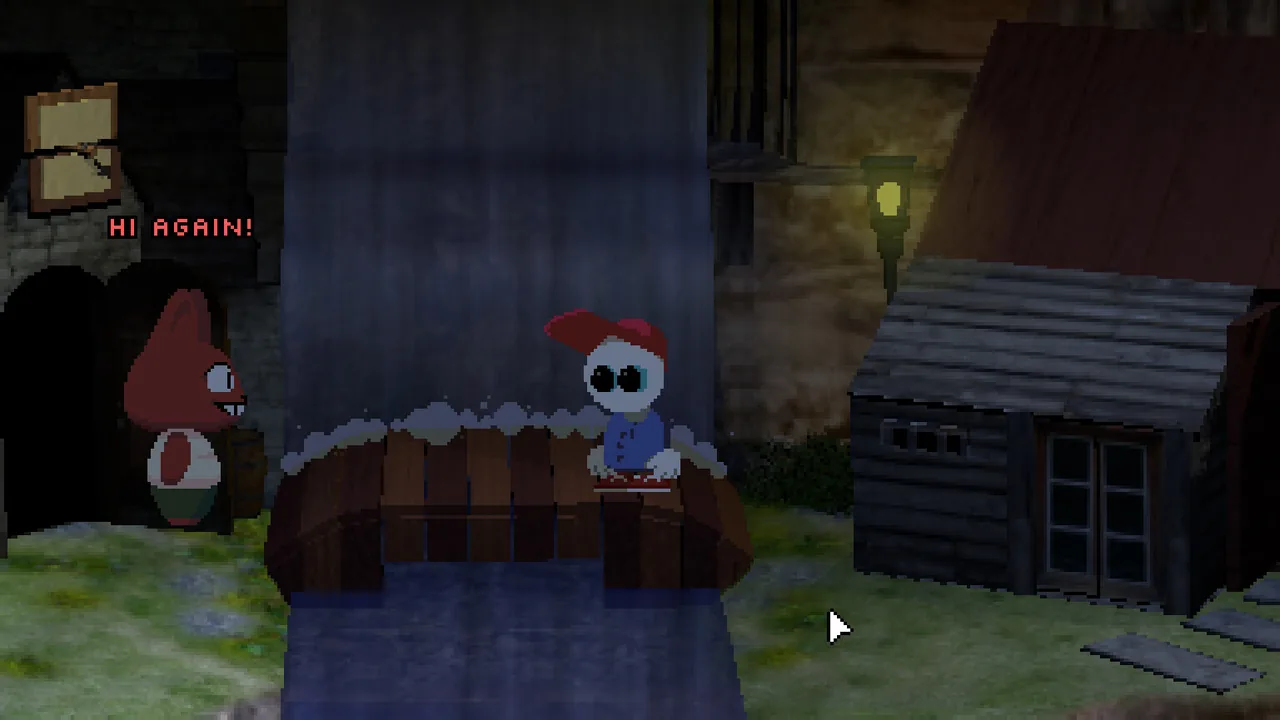
EndacopiaImage: Andyland via Steam -
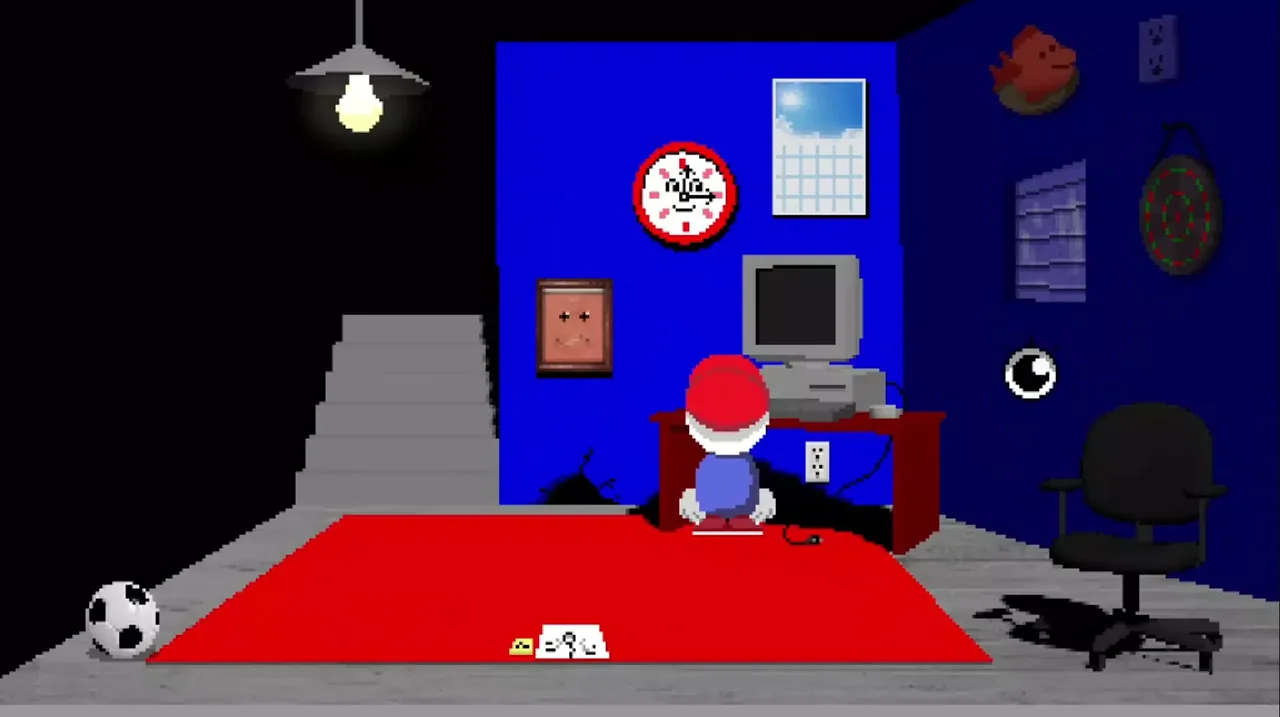
EndacopiaImage: Andyland via Steam -
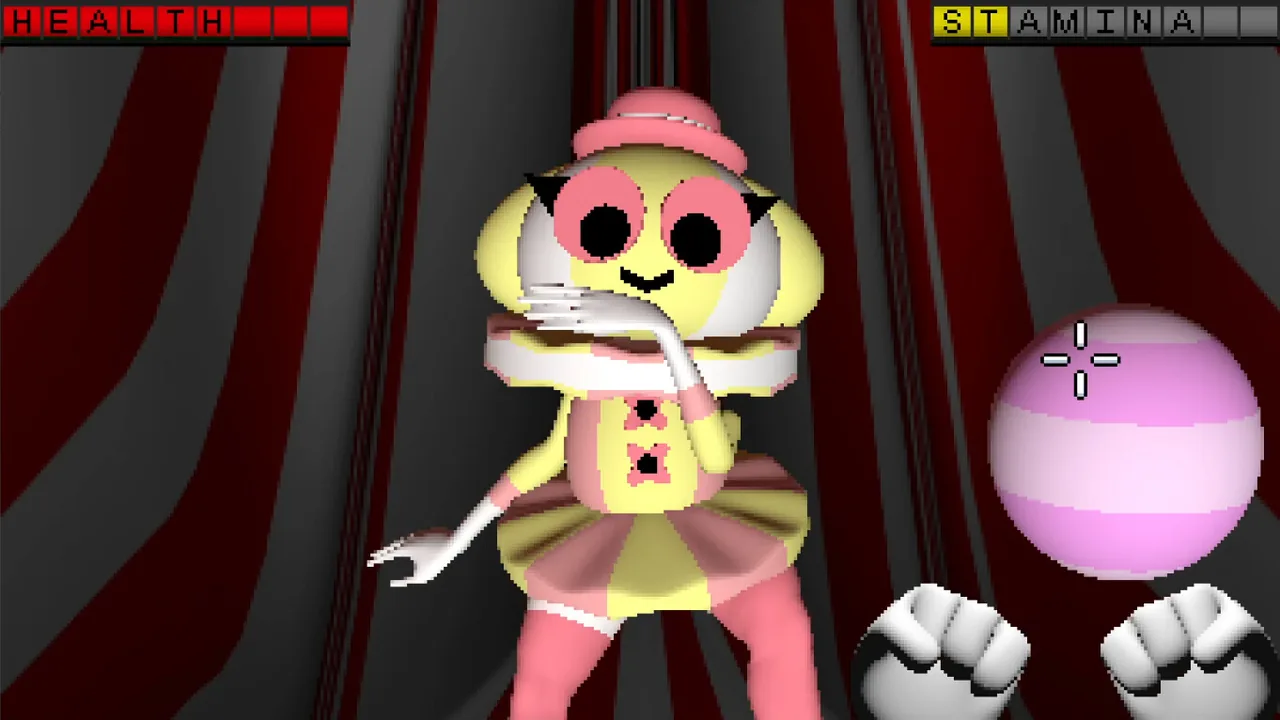
EndacopiaImage: Andyland via Steam -
How the review scores each part of the gameWanderer Editorial -
The short versionWanderer Editorial