
Game review
Neon White
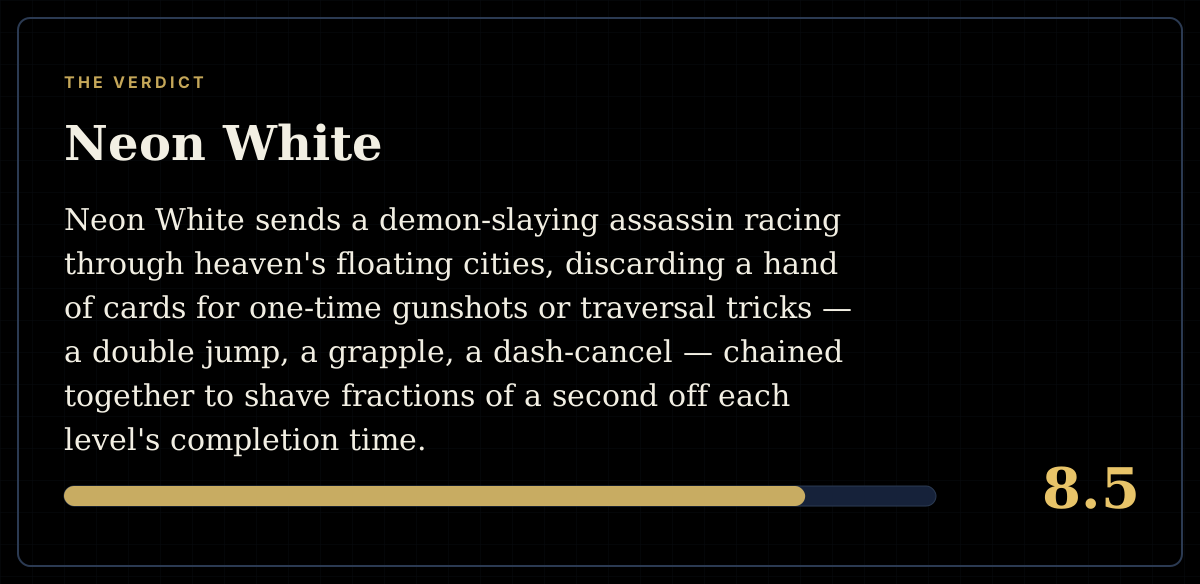
8.5 / 10
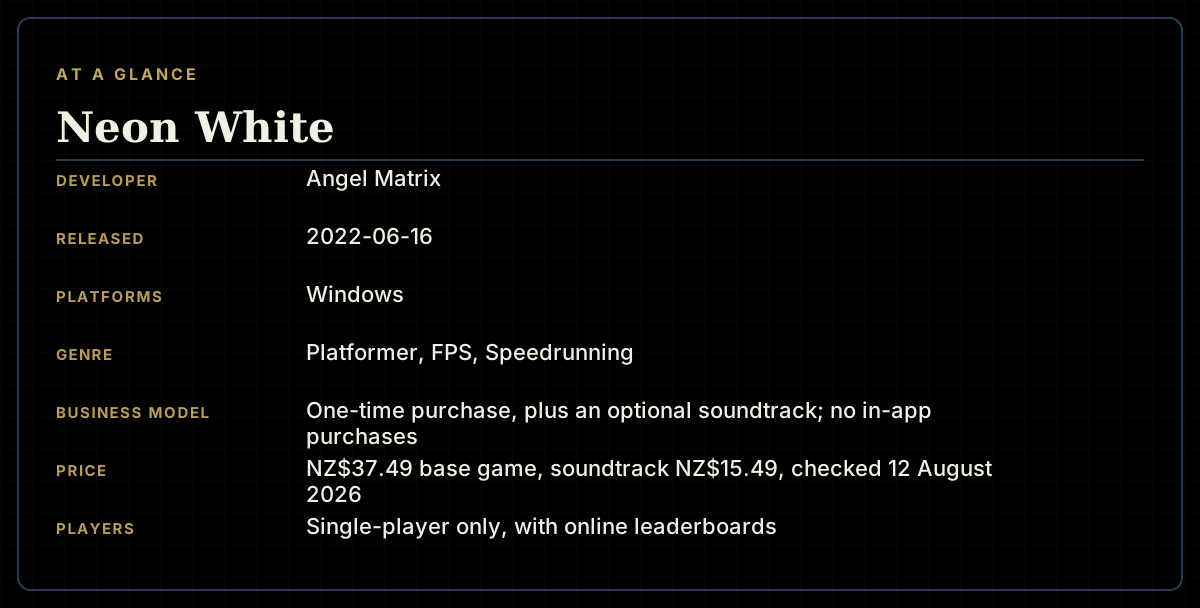
- Developer
- Angel Matrix
- Publisher
- Annapurna Interactive
- Released
- 16 June 2022
- Platforms
- Windows
- Genre
- Platformer, FPS, Speedrunning
- Monetisation
- One-time purchase, plus an optional soundtrack; no in-app purchases
- Players
- Single-player only, with online leaderboards
The short version
Neon White sends a demon-slaying assassin racing through heaven's floating cities, discarding a hand of cards for one-time gunshots or traversal tricks — a double jump, a grapple, a dash-cancel — chained together to shave fractions of a second off each level's completion time. Developed by Angel Matrix and published by Annapurna Interactive, it released 16 June 2022 and sits at Overwhelmingly Positive, 98.1% across 14,887 English-language reviews — one of the highest scores this library has recorded. What makes this review interesting to write isn't the headline number so much as what sits underneath it: reviewer after reviewer, on both sides of the recommend line, uses nearly identical language to describe the game's visual-novel dating-sim story and dialogue as genuinely bad, sometimes hilariously so, and recommends the game anyway, overwhelmingly, because the movement and level design underneath it are that good.
Biggest strengths
- Movement and level design draw overwhelming, specific, often ecstatic praise, described repeatedly as some of the tightest, most satisfying platforming-shooter design available, rewarding both casual completion and dedicated speedrun optimisation
- The card-discard system, spending a limited hand for either a gun's special ability or a traversal trick, gives every level a genuine puzzle-routing layer that reviewers credit for keeping the loop fresh across dozens of stages
- A widely and specifically praised soundtrack, produced in part by the artist Machine Girl, reinforces the game's high-energy pace rather than sitting in the background
Biggest weaknesses
- The visual-novel story and dialogue are described, near-unanimously and often in colourful terms, as genuinely bad — flat, over-the-top anime-trope characters and writing that a large share of reviewers say they had to actively push through rather than enjoy
- Several reviewers specifically object to being required to browse in-game character art between missions as part of the social/dating-sim structure, calling it an unwelcome tonal mismatch with the gameplay
- A smaller but detailed minority of reviewers, mostly with longer playtime, argue the back half of the game's level design doesn't sustain the quality of its opening stretch as consistently
Who it's for: Fans of tight, skill-based movement games and speedrunning who don't mind, or actively enjoy, deliberately over-the-top anime dialogue; a poor fit for anyone who needs a story they can take seriously to stay engaged.
Our recommendation: Some of the best first-person movement design this library has covered, attached to a story its own community treats as a running joke rather than a reason to avoid the game — buy it for the gameplay, brace yourself for the dialogue.
8.5 / 10
Introduction
Neon White drops the player into heaven as a former demon, racing through short, dense levels against the clock, using a limited hand of cards that can each be discarded either for a one-time gun ability or a traversal trick — a double jump, a dash, a grapple — chained together in split seconds to find faster and faster routes to the exit. Developed by Angel Matrix and published by Annapurna Interactive, it released 16 June 2022 and sits at Overwhelmingly Positive, 98.1% across the 14,887 English-language reviews sampled for this review — a genuinely rare score, and one of the highest this library has recorded. What makes the corpus worth reading closely rather than simply reporting the number is a striking, consistent pattern running through nearly all of it: the gameplay and the story are judged almost as two separate products, and reviewers overwhelmingly recommend the game specifically because one is exceptional enough to carry the other.
Movement design that earns near-universal superlatives
Start with what draws this game's most consistent, enthusiastic praise. Reviewers describe the core loop — discard, shoot or jump, chain, repeat — as some of the tightest first-person movement design available anywhere, rewarding both a relaxed first playthrough and obsessive, dedicated optimisation for a leaderboard time. One reviewer, deep into a heavily-praised review, described it scratching an "ADHD riddled brain more than anything I have ever played," calling it "maybe the fastest puzzle game ever made." The card-discard system is the specific mechanical hook reviewers keep returning to: rather than simply collecting weapons, every card is a one-time-use decision that trades a gun's special ability for a traversal trick, which turns each level into a genuine routing puzzle rather than a straightforward run-and-gun course. That structure, combined with dozens of levels and a real speedrunning community built around dev-time targets, gives the game a skill ceiling reviewers credit with sustaining interest well past a first completion.
Sound design earns its own specific, repeated praise, anchored by a soundtrack produced in part by the artist Machine Girl — several reviewers name the collaboration directly and credit it with matching the game's breakneck pace in a way a generic electronic score wouldn't. Steam's achievement data backs up the depth reviewers describe: the top achievements sit around 87-88%, tied to early mission completions, tapering down through a genuine skill gradient to under 3% for the hardest speedrun-tier "Hell rank" challenges — evidence of a real, sustained community chasing optimisation long after the main story ends.
A story its own fans openly mock
Here's the part of this review that needs to be stated plainly, because the corpus is unusually blunt about it. Neon White's framing narrative — delivered through visual-novel-style dialogue scenes with dating-sim elements between levels — is described by a large share of reviewers, across both the positive and negative samples, as genuinely bad writing. This isn't a minority complaint tucked into a handful of negative reviews; it's the dominant characterisation across the entire corpus, expressed with remarkable consistency and, often, real comic relish. One of the game's most-upvoted positive reviews lists it as a direct trade-off: "Pros: Great movement/mechanics ... Cons: you need an acquired taste of deep fried cringe to get through some of the dialogue." Another, similarly high-voted, called it "the worst writing I've seen in anything ever, not even bad enough to be funny most of the time," and then closed with "game slaps tho" — a thumbs-up regardless. That pattern repeats dozens of times across this sample: specific, often creative criticism of the writing, immediately followed by an enthusiastic recommendation anyway.
It's worth being fair about what's actually being criticised, because "bad writing" covers a range of complaints here. Several reviewers specifically object to a structural choice — being prompted to browse character art between missions as part of the game's dating-sim framing — calling it an unwelcome tonal mismatch with the high-speed gameplay rather than simply disliking the dialogue's content. Others focus purely on the dialogue itself, describing characters as flat, over-the-top anime archetypes that undercut whatever emotional stakes the story is reaching for. A smaller number of negative reviews take the writing seriously enough as a dealbreaker to recommend against the whole game despite praising the gameplay in the same review — a 145-vote review put it bluntly: "gameplay is fun but I cannot stand the [censored] writing in this game."
A minority report on the level design itself
A separate, quieter criticism worth including concerns pacing rather than tone. A smaller cluster of detailed, longer-playtime reviews argue the back half of the game's level design doesn't sustain the quality of its opening stretch as consistently, with one 53-vote review — otherwise highly positive about the game's core feel — noting the mid-to-late game leans more on "fiddly" precision challenges than the streamlined flow that made the earlier levels stand out. This is a genuinely minor thread relative to the writing discussion, but worth flagging as evidence that even this game's warmest reception isn't entirely uncomplicated on the gameplay side either.
Two products in one box, by design or by accident
What's most interesting about reading this corpus in full is how deliberately the community has settled on treating Neon White as two separable things. Reviewers rarely argue the story is secretly good, and rarely argue the gameplay has real flaws worth dwelling on — instead, the near-universal move is to grade each half independently and let the gameplay's strength decide the final verdict. Whether that reflects an intentional creative choice by Angel Matrix — deliberately leaning into melodrama and anime-trope excess as its own kind of joke — or simply a mismatch between two teams' strengths isn't something a review corpus can settle, and several reviewers explicitly decline to adjudicate it themselves, framing the tonal whiplash as "so weird it loops back around to being tolerable" rather than resolving it either way.
Final Verdict
Neon White is, by the overwhelming consensus of its own players, a genuinely exceptional piece of movement and level design wrapped around a story that same audience treats as a running joke rather than a reason to stay away. That's an unusual thing for a review to conclude, but it's the honest shape of a corpus this consistent: 98% of reviewers recommend a game whose writing a huge share of that same 98% openly mock in the same breath. If tight, addictive, endlessly optimisable movement design is what you're buying a game for, this delivers about as well as anything this library has covered. Just don't go in expecting the story to be the reason you stay.
Pros and cons
Pros
- Movement and level design draw overwhelming, specific, often ecstatic praise, described repeatedly as some of the tightest, most satisfying platforming-shooter design available, rewarding both casual completion and dedicated speedrun optimisation
- The card-discard system, spending a limited hand for either a gun's special ability or a traversal trick, gives every level a genuine puzzle-routing layer that reviewers credit for keeping the loop fresh across dozens of stages
- A widely and specifically praised soundtrack, produced in part by the artist Machine Girl, reinforces the game's high-energy pace rather than sitting in the background
- A healthy skill ceiling backed up by achievement data, with dedicated speedrun-tier challenges that keep a meaningful share of players engaged well past a first completion
Cons
- The visual-novel story and dialogue are described, near-unanimously and often in colourful terms, as genuinely bad — flat, over-the-top anime-trope characters and writing that a large share of reviewers say they had to actively push through rather than enjoy
- Several reviewers specifically object to being required to browse in-game character art between missions as part of the social/dating-sim structure, calling it an unwelcome tonal mismatch with the gameplay
- A smaller but detailed minority of reviewers, mostly with longer playtime, argue the back half of the game's level design doesn't sustain the quality of its opening stretch as consistently
- The core gameplay and the framing story are in open tension throughout, which some reviewers say never resolves into a coherent whole even if they enjoyed both halves separately
Screenshots
-
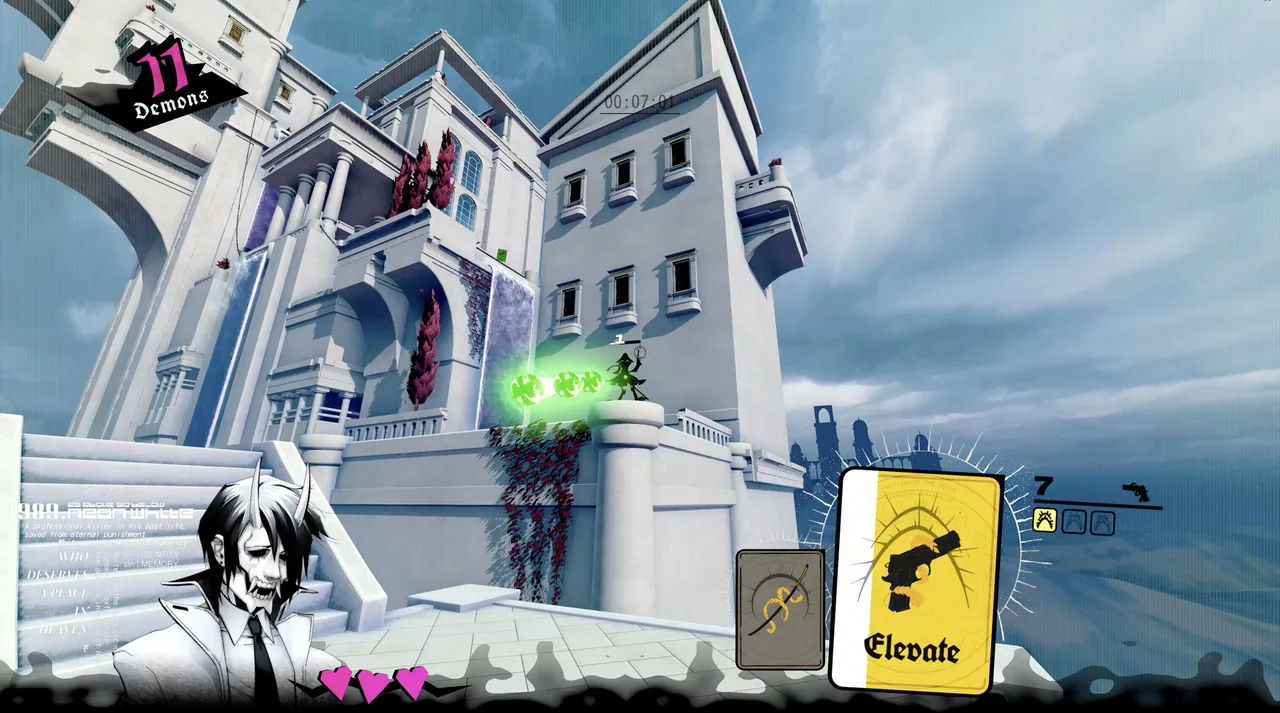
Neon WhiteImage: Annapurna Interactive via Steam -
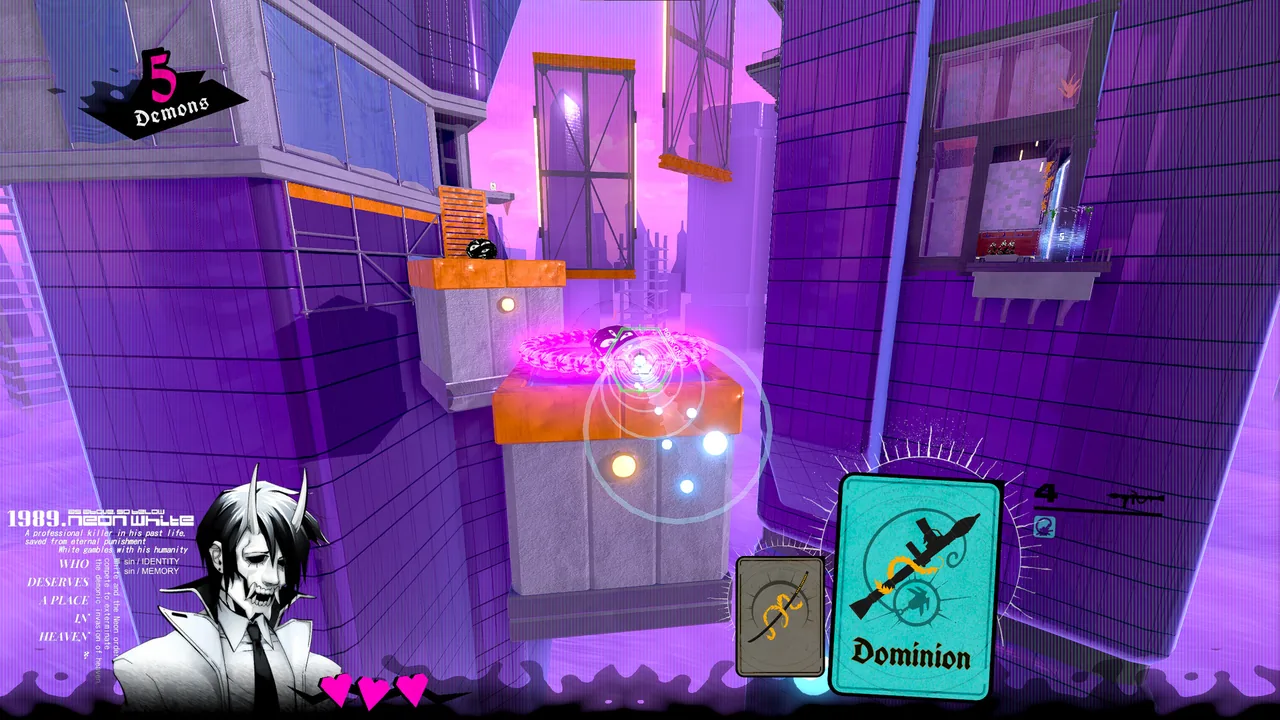
Neon WhiteImage: Annapurna Interactive via Steam -
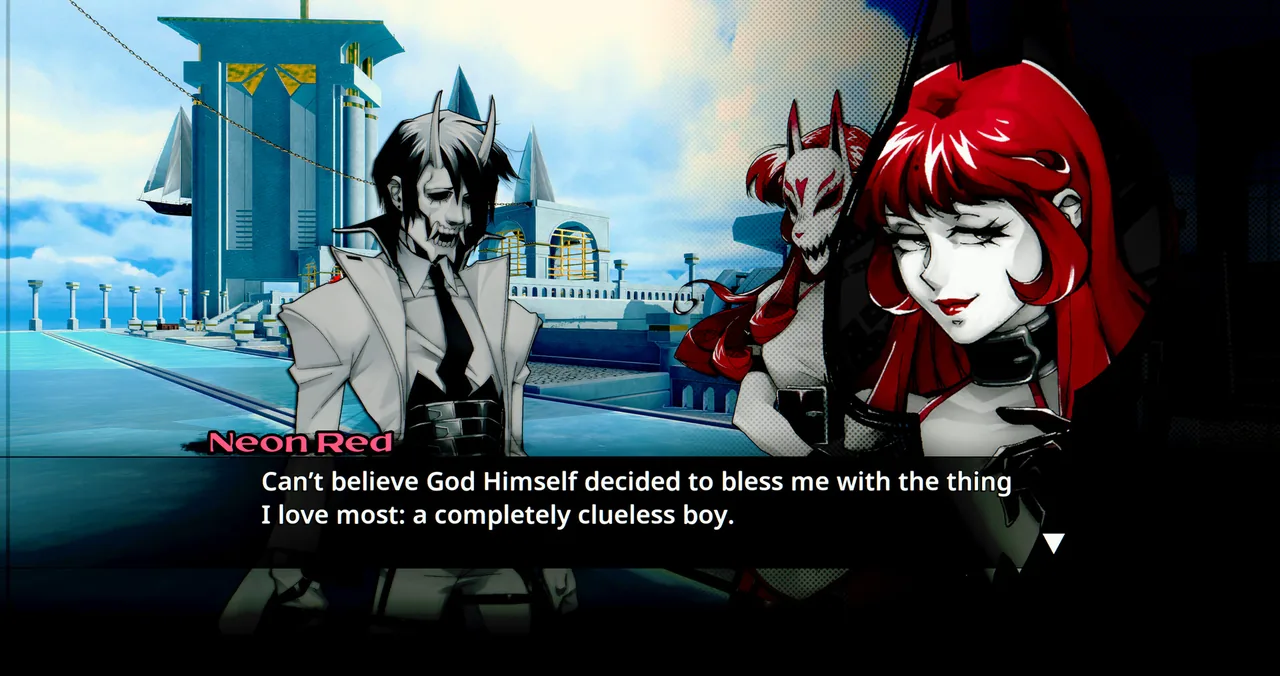
Neon WhiteImage: Annapurna Interactive via Steam -
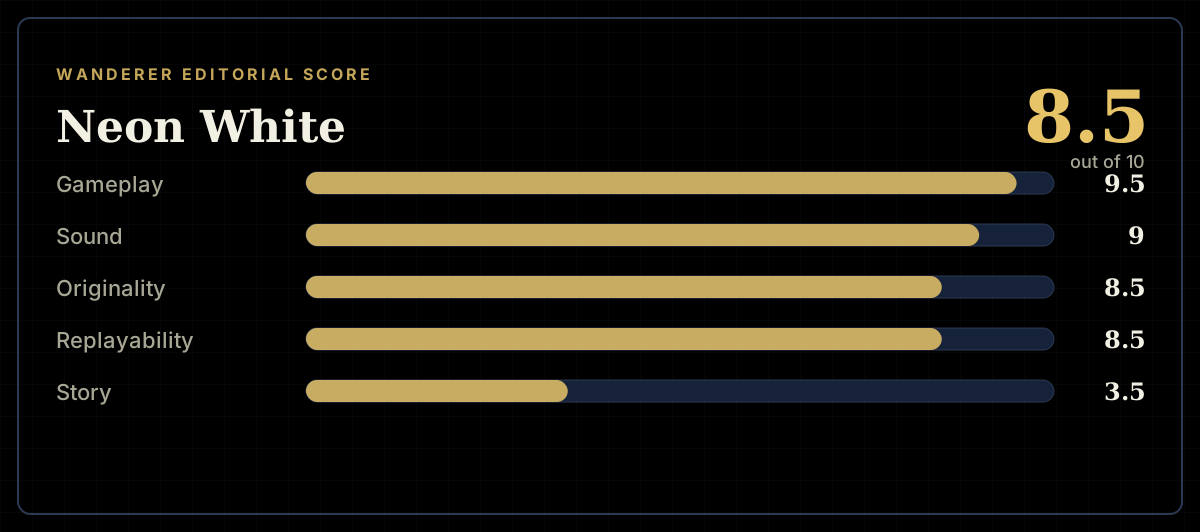
How the review scores each part of the gameWanderer Editorial -
The essentials at a glanceWanderer Editorial -
The short versionWanderer Editorial