Game review
Potionomics
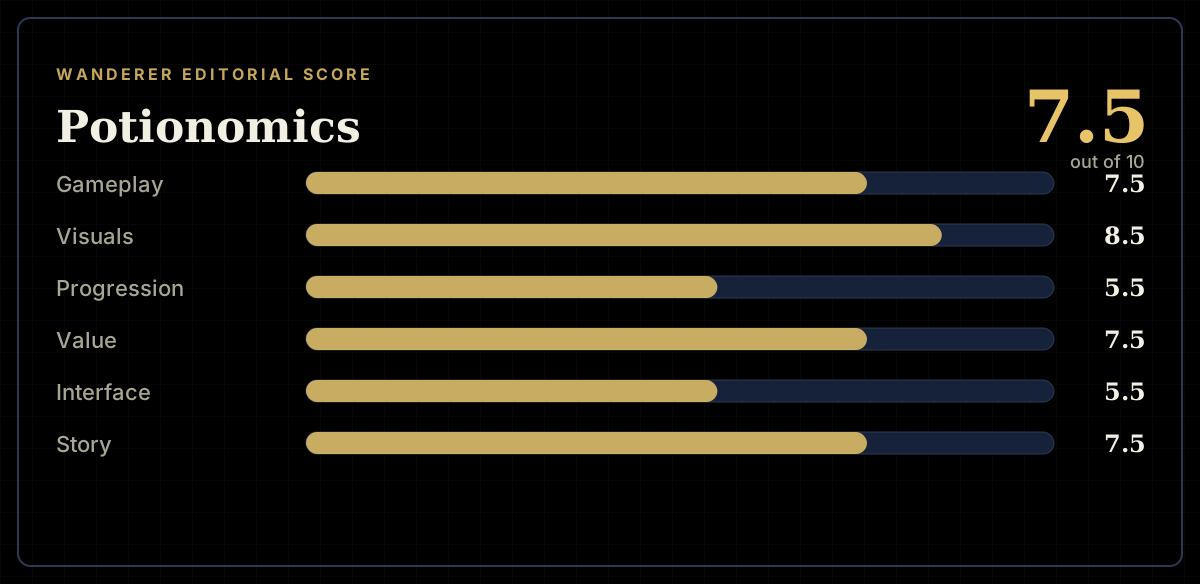
7.5 / 10
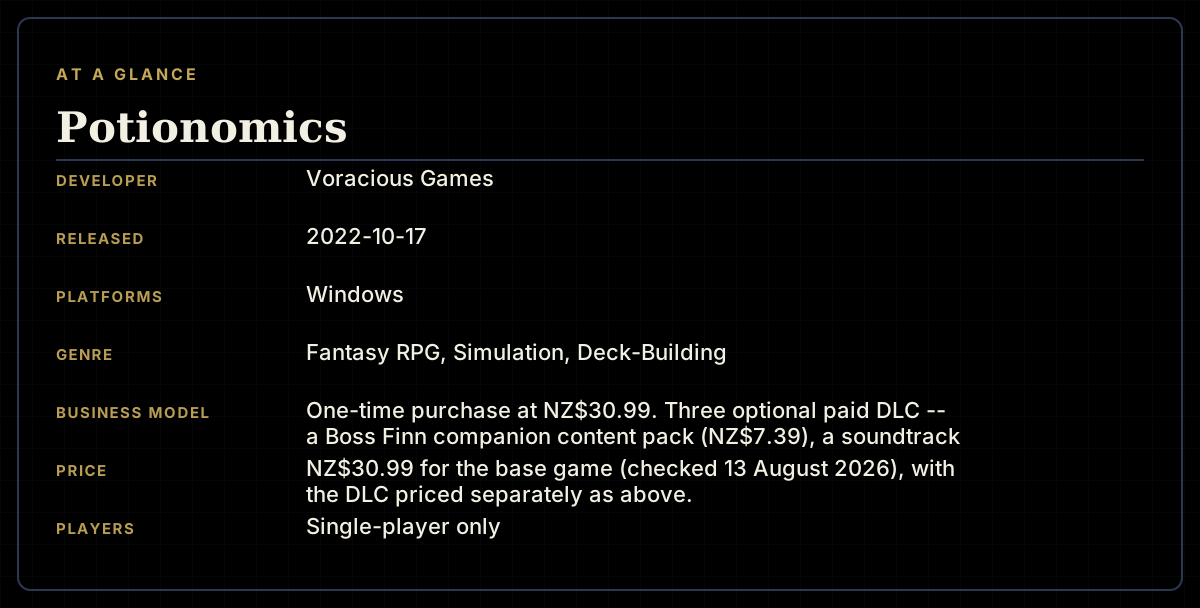
- Developer
- Voracious Games
- Publisher
- XSEED Games, Marvelous USA
- Released
- 17 October 2022
- Platforms
- Windows
- Genre
- Fantasy RPG, Simulation, Deck-Building
- Monetisation
- One-time purchase at NZ$30.99. Three optional paid DLC -- a Boss Finn companion content pack (NZ$7.39), a soundtrack (NZ$12.39) and an artbook (NZ$12.39) -- none required to finish the game.
- Players
- Single-player only
The short version
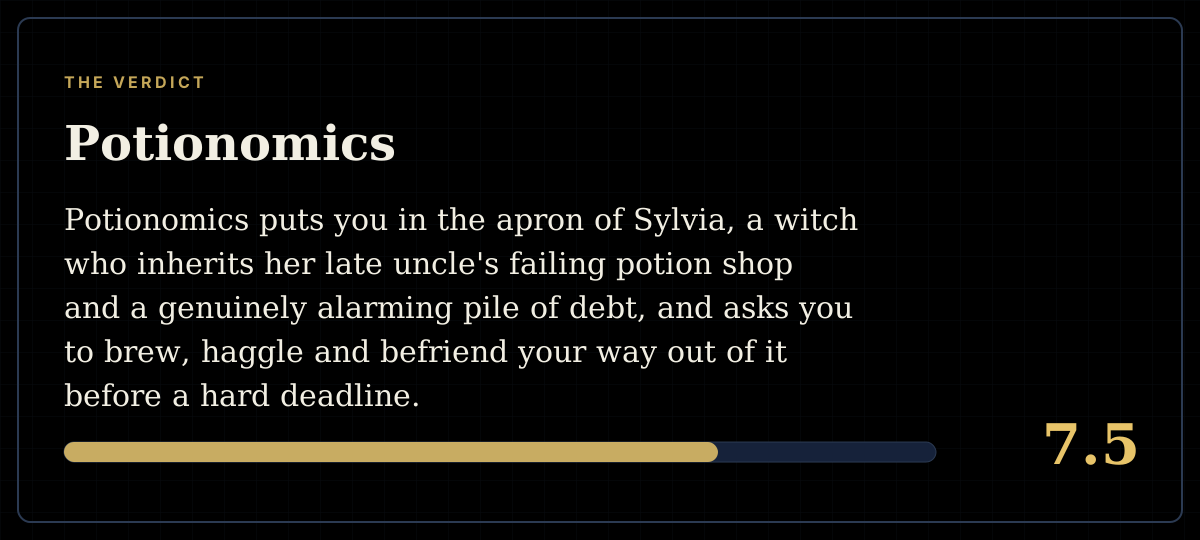
Potionomics puts you in the apron of Sylvia, a witch who inherits her late uncle's failing potion shop and a genuinely alarming pile of debt, and asks you to brew, haggle and befriend your way out of it before a hard deadline. Its haggling minigame -- a card-based negotiation system where you manage a rival's rising stress instead of just naming a price -- is the part critics and players agree is the best idea in the genre in years, and it won the audience award at the 2023 Independent Games Festival on the strength of it. It sits at Very Positive, 90.6% of 6,931 reviews. The negative sample is consistent about what drags the experience down: a potion-brewing and inventory loop that becomes repetitive clicking rather than a puzzle, a difficulty curve several reviewers call confusing rather than hard, and technical issues including tab-out crashes and a "Steam Deck Verified" badge that a cluster of 2025-2026 reviews say doesn't reflect a working Deck experience. The game's own achievement data backs up the harshest version of the difficulty complaint -- barely one in six players who own it have ever actually cleared their debt.
Biggest strengths
- The card-based haggling battles are a genuinely original, well-liked centrepiece that several critics single out as the best thing about the whole design
- A likeable, well-written cast with real relationship depth, prominent and well-received LGBTQ+ representation, and enough charm that multiple reviewers call it one of their favourite games regardless of its rough edges
- Strong, distinctive art direction and character design that reviewers praise even when they're otherwise critical of the game
Biggest weaknesses
- The potion-brewing and ingredient-inventory loop becomes repetitive, click-heavy busywork for a large share of reviewers well before the game's several dozen hours are up
- A difficulty curve that reviewers describe as confusing rather than challenging -- unclear what a given ten-day competition actually requires until it's too late to prepare
- The game's own achievement data shows only 17.3% of owners have ever paid off the shop's debt, meaning the large majority never see the ending at all
Who it's for: Players who enjoy narrative-driven management sims with romance options -- Stardew Valley or Coffee Talk crowds looking for something with sharper numbers underneath -- and who don't mind a genuine risk of losing partway through rather than a purely cosy, unlosable loop. Less suited to anyone who wants low-stress shopkeeping with no deadline pressure.
Our recommendation: Worth its price for the haggling system and the cast alone, and there's a real chance you'll fall for it completely, but go in aware that a meaningful share of owners never finish it -- pick a lower difficulty than your first instinct suggests, and expect the middle hours to feel more like inventory admin than fantasy adventure.
7.5 / 10
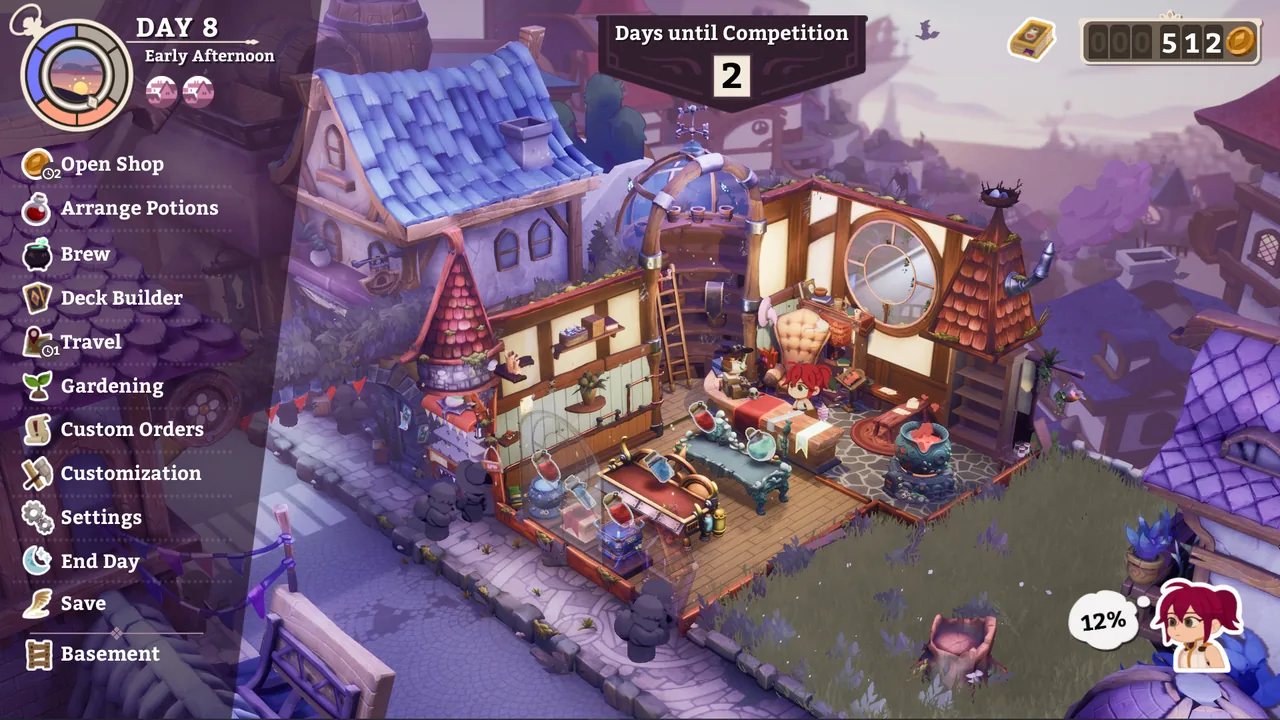
Sylvia, the witch at the center of Potionomics, inherits two things from her late uncle: a potion shop in the town of Rafta, and a debt large enough that the game opens by telling you, flatly, that you have a fixed number of days to clear it or lose everything. That's an unusually sharp hook for a genre that mostly trades in the opposite feeling -- Stardew Valley and its imitators are built around the idea that nothing bad can really happen if you just keep puttering along. Potionomics keeps the puttering -- brewing potions, decorating a shop, falling for a cast of adventurers and rival vendors -- but bolts a real, failable deadline underneath it, and that tension is either the best decision in the whole design or the thing quietly ruining it, depending on which review you read.
The best idea in the genre in a while
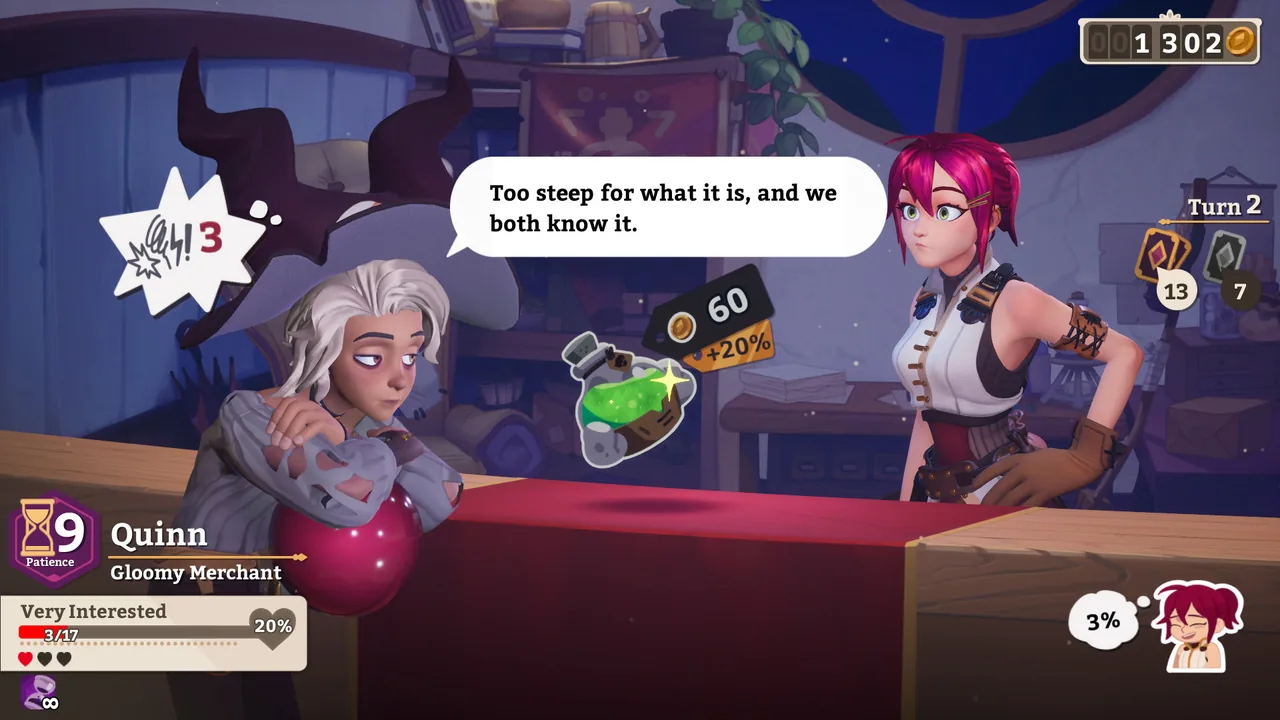
Start with what nearly everyone agrees on. Selling a potion in Potionomics isn't a single transaction -- it's a card-based negotiation minigame where you play haggling tactics to push a customer's offer up while managing their rising stress meter, and pushing too hard makes them walk. It's a clean, tense little system that rewards reading a specific customer's personality and deck rather than just maxing a stat, and it's the part of the design press coverage keeps coming back to. PC Gamer's 87/100 review specifically praised the "card-based haggling battles," and it's the single feature Steam reviewers cite most often when explaining why they kept playing past the point where other systems started to wear thin. It's a genuinely clever reinvention of what "haggling" means in a management sim, and it alone is most of the reason Potionomics won the audience award at the 2023 Independent Games Festival.
Where the charm turns into admin work
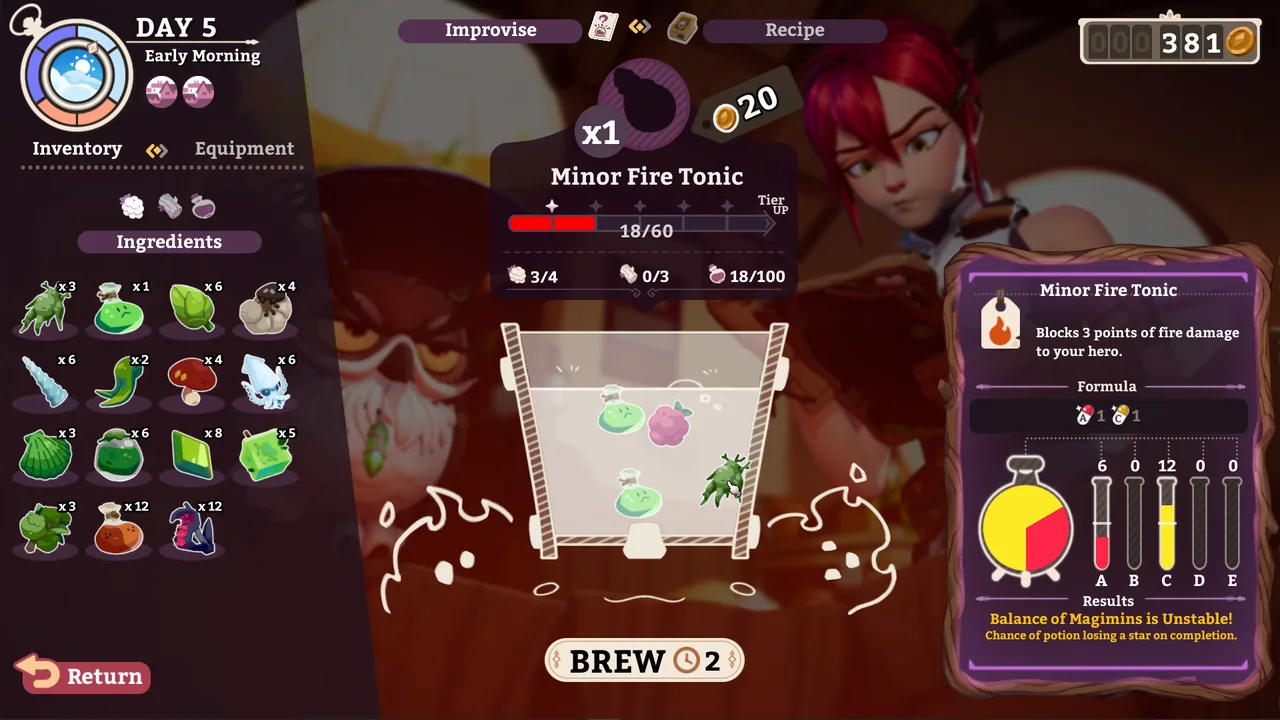
The system doing the heavy lifting on the other side of the counter -- gathering ingredients, brewing potions, managing a growing and increasingly fiddly inventory -- is where the negative reviews concentrate almost entirely. "The gameplay loop of finding potion combinations and the haggling card game isn't bad, but this game is an inventory management simulator at its core," reads a representative complaint from March 2026, and it's echoed across the sample by reviewers using very different words: "too much unnecessary clicking," "identitary signals" aside, one 2026 review even jokes the repetitive clicking is "a risk factor of wrist tendonitis." RPGFan's 74/100 review made the same point at launch, calling the potion-brewing "exhausting" once its novelty wears off, and several Steam reviewers describe the game settling into repetition specifically after the third of the game's five major competitions -- right around where a first-time player would still expect things to be opening up, not narrowing down.
A difficulty curve people can't read
The more serious complaint, and the one the game's own data backs up hardest, is about difficulty and clarity rather than raw challenge. Reviewers repeatedly describe the ten-day competition cycles -- Potionomics' core pacing mechanism, where you're racing a clock toward a public sales contest -- as opaque about what they actually require until it's too late to prepare properly. "You have 10 days to brew some potions for a competition... [and] the game lies to you, and you find that out by getting a GAME OVER screen," reads one April 2026 review. Another, from February 2026, frames it as a genre-identity problem rather than a difficulty problem: "It's too hard to be a cutesy cozy management and dating sim but too easy to be a satisfying number-cruncher. Who is this game for, exactly?" A January 2026 review cites the game's own achievements directly: "Most players don't get past stage 2 of 5, if steam achievements are to be believed" -- and checking that claim against Valve's public achievement data confirms it's not an exaggeration. Only 17.3% of owners have ever unlocked "Debt Paid Off," the achievement for actually winning the game, and only 14.7% have completed the endgame dungeon that follows it. The vast majority of the people who bought Potionomics have never seen how it ends.
That's a genuinely useful thing to know before starting: the game rewards picking a genuinely easy difficulty on a first run far more than its "cosy shopkeeping" marketing suggests, and the Masterwork Edition's later addition of extra difficulty and gameplay options (more on that below) exists in large part because the original balance asked too much of players who came in expecting a relaxed pace.
Characters, writing and one specific controversy
Where the game is on much steadier ground is its cast. Sylvia's circle of adventurers and rival shopkeepers draws consistent praise for personality and voice, even from reviewers who are otherwise unhappy with the mechanics -- "the models on those characters are amazing," reads one review that's critical of almost everything else. The romance options include prominent LGBTQ+ relationships that a clear majority of reviewers mention approvingly or simply as a natural part of the cast; a small minority frame it more skeptically, calling out what one review describes as "identitary signals," which is worth noting as a real if minority strand of the discourse around the game rather than a widely shared complaint. Writing quality gets a more even split -- plenty of reviewers call the dialogue charming and funny, a smaller number find it grating well before the credits, and one specific criticism recurs among longer-playtime reviewers: the story's final stretch takes what multiple reviews independently describe as an unexpectedly dark or "bizarre" tonal swing relative to everything before it, enough that at least one couple who'd been enjoying the game together say it soured the whole experience retroactively. Exactly what happens is a spoiler this review won't detail, but the pattern across independent reviews is specific enough to be worth flagging rather than dismissing as one outlier's reaction.
Crashes, Steam Deck, and the Masterwork upgrade
On the technical side, a recurring and specific bug shows up across the negative sample: the game crashing when players tab out of the window, sometimes repeatedly in a single session. Separately, a cluster of late-2025 reviews are pointed about the game's Steam Deck Verified badge not matching reality -- "does not work on Steam Deck in spite of being marked as verified," reads one from December 2025, describing a warped, unusable title screen. Both issues have shown up recently enough that they read as current rather than resolved launch-week bugs.
The most significant thing to happen to Potionomics since launch didn't touch PC directly at first: a Masterwork Edition released for consoles on 22 October 2024 added full voice acting, new difficulty modes and additional gameplay options -- addressing, more or less directly, the two biggest launch-week criticisms (silent dialogue and an unforgiving, unclear difficulty curve). Several of those improvements, including voice acting, have since made their way back into the PC version through free updates -- one July 2026 Steam review specifically notes "now it has voice acting" as new since their last playthrough. It's a genuinely unusual and welcome case of a studio going back and fixing the exact things critics complained about at launch, well over a year after the fact.
Final verdict
Potionomics is, at its best, one of the more inventive management-sim ideas of 2022 -- a haggling system clever enough to win an audience-choice award on its own, wrapped around a cast people have real affection for. What keeps it from an easy top-tier recommendation is everything surrounding that centrepiece: an inventory and brewing loop that turns to busywork for a meaningful share of players, a difficulty curve the game's own achievement data shows most owners never get through, and a handful of persistent technical rough edges years after launch. The developer's own response -- going back to add voice acting and easier difficulty options after listening to exactly this feedback -- is a genuinely good sign, and worth factoring into the score.
7.5 out of 10. Recommended, with a clear caveat: play it for the haggling system and the characters, pick an easier difficulty than your instincts suggest on a first run, and don't be surprised if the middle stretch feels more like paperwork than potion-brewing before the story picks back up. Most owners never finish it -- that doesn't have to be you, but it's worth going in knowing the odds.
Pros and cons
Pros
- The card-based haggling battles are a genuinely original, well-liked centrepiece that several critics single out as the best thing about the whole design
- A likeable, well-written cast with real relationship depth, prominent and well-received LGBTQ+ representation, and enough charm that multiple reviewers call it one of their favourite games regardless of its rough edges
- Strong, distinctive art direction and character design that reviewers praise even when they're otherwise critical of the game
- Real stakes -- a hard debt deadline and a genuine possibility of failure -- that give the shopkeeping loop tension most cosy management sims don't attempt
Cons
- The potion-brewing and ingredient-inventory loop becomes repetitive, click-heavy busywork for a large share of reviewers well before the game's several dozen hours are up
- A difficulty curve that reviewers describe as confusing rather than challenging -- unclear what a given ten-day competition actually requires until it's too late to prepare
- The game's own achievement data shows only 17.3% of owners have ever paid off the shop's debt, meaning the large majority never see the ending at all
- Reports of frequent crashes, especially when tabbing out of the window, and a cluster of 2025-2026 reviews describing the game as effectively unplayable on Steam Deck despite carrying Valve's Verified badge
Screenshots
-
PotionomicsImage: XSEED Games via Steam -
PotionomicsImage: XSEED Games via Steam -
PotionomicsImage: XSEED Games via Steam -
How the review scores each part of the gameWanderer Editorial -
The essentialsWanderer Editorial -
The final verdictWanderer Editorial