Game review
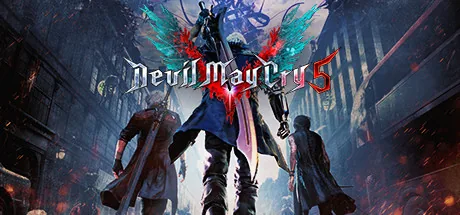
Devil May Cry 5
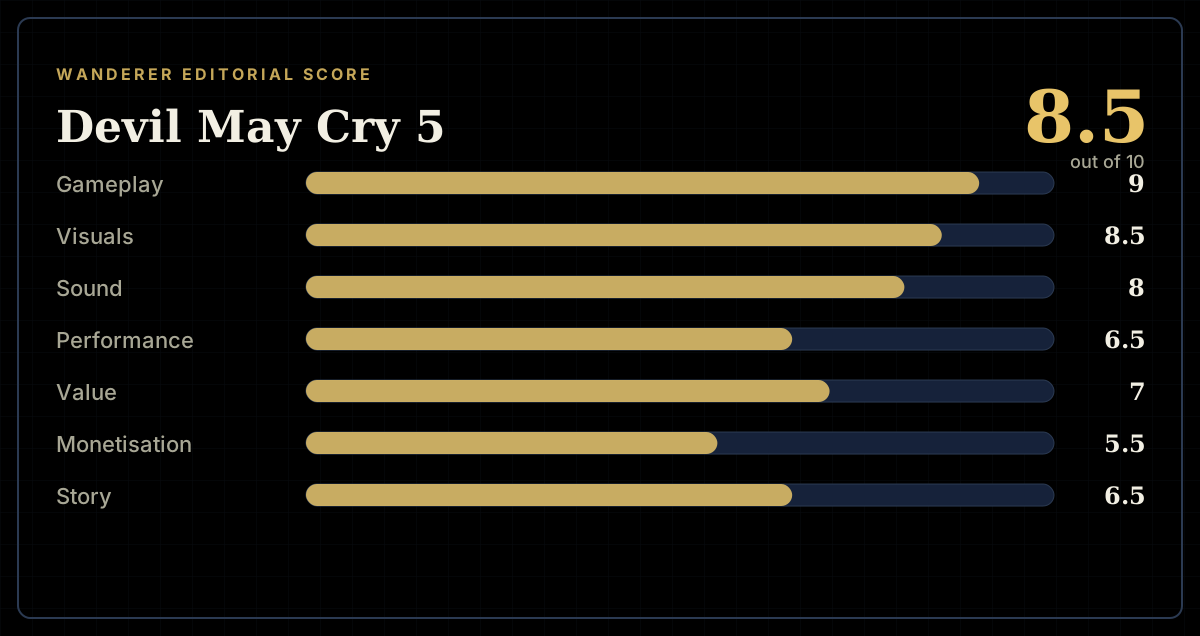
8.5 / 10
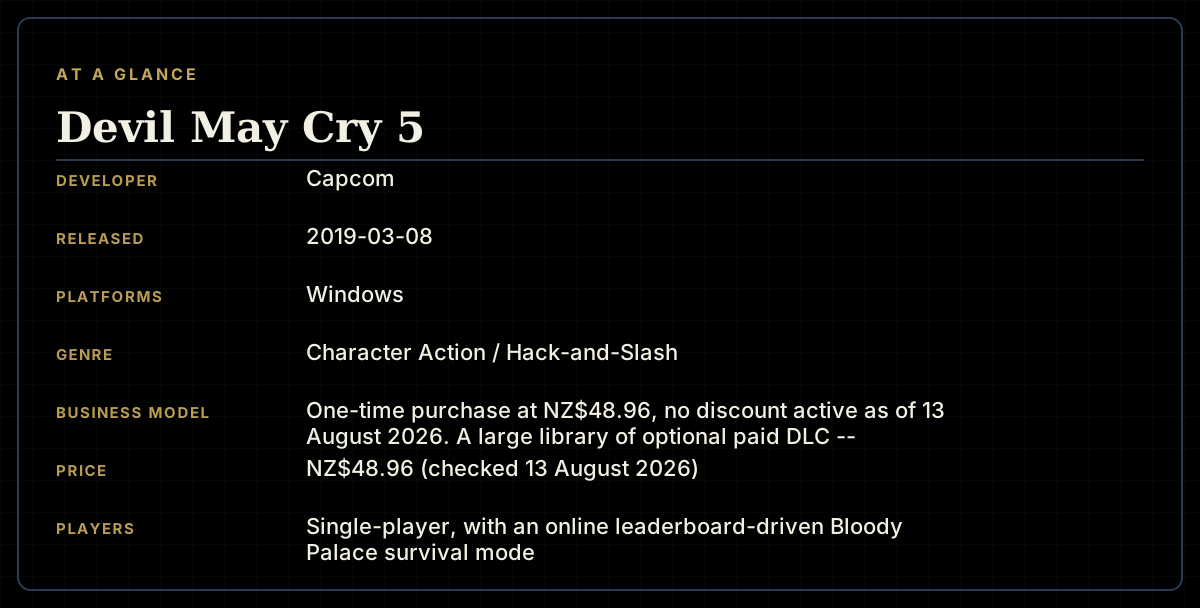
- Developer
- Capcom
- Publisher
- Capcom
- Released
- 8 March 2019
- Platforms
- Windows
- Genre
- Character Action / Hack-and-Slash
- Monetisation
- One-time purchase at NZ$48.96, no discount active as of 13 August 2026. A large library of optional paid DLC -- costumes, taunts, colour packs, a separately-sold playable Vergil (NZ$7.95) and purchasable Red Orb in-game currency bundles up to NZ$31.95 -- sits alongside a base game where Red Orbs are also earned freely through normal play.
- Players
- Single-player, with an online leaderboard-driven Bloody Palace survival mode
The short version
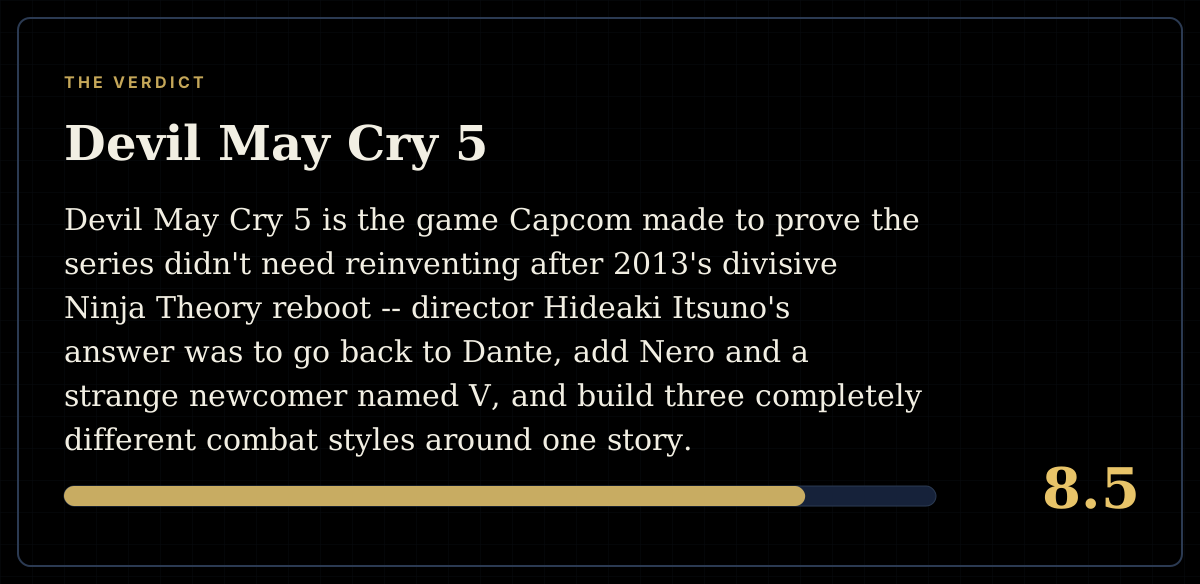
Devil May Cry 5 is the game Capcom made to prove the series didn't need reinventing after 2013's divisive Ninja Theory reboot -- director Hideaki Itsuno's answer was to go back to Dante, add Nero and a strange newcomer named V, and build three completely different combat styles around one story. Launch critics agreed emphatically (Metacritic 87-89, IGN 9.5/10, The Guardian 5/5), and Steam's audience, one of the largest in this review's history at over 169,000 reviews, still rates it Overwhelmingly Positive at 96% seven years later.
The negative sample that exists is real but scattered rather than concentrated on one problem: a vocal minority dislikes V's slower playstyle and forced character-switching, the story draws "story" as a complaint in about a fifth of negative reviews without any single specific plot issue dominating, and a real, still-current PC-port frustration -- no native ultrawide or DLSS support seven years and one Special Edition later -- shows up repeatedly. A large paid-DLC library, including purchasable in-game currency, draws pointed "nickel and diming" complaints even though the base combat and campaign don't require any of it.
Biggest strengths
- Three genuinely distinct playable characters -- Dante's four fighting styles, Nero's Devil Breaker arms, V's demon-summoning -- praised near-universally as some of the best character-action combat design in the genre
- Launch critic consensus (Metacritic 87-89, multiple 9+ scores) that the series recovered convincingly from the 2013 reboot's divisive reception
- Franchise-best commercial performance -- 2 million units in two weeks, 12.9 million lifetime as of fiscal 2025 -- backed by a stable 96% Overwhelmingly Positive Steam score seven years on
Biggest weaknesses
- A large paid-DLC catalogue -- costumes, taunts, a separately-sold playable Vergil, and purchasable Red Orb currency bundles up to NZ$31.95 -- draws real "nickel and diming" and occasional "pay to win" complaints, even though none of it is required to finish the game
- No native ultrawide monitor or DLSS support as of this review, a persistent, specifically-named complaint from PC players seven years after release
- V's slower, familiar-summoning playstyle is the series' most divisive character choice -- reviewers who dislike him call him consistently the game's weak point
Who it's for: Character-action and hack-and-slash fans, especially anyone burned by or curious about the DmC reboot looking for a return to form. A strong recommendation on its own combat merits even for newcomers, though the story leans on a decade of prior entries some players will feel the absence of.
Our recommendation: One of the best character-action games of its console generation on pure combat terms, worth full price for the gameplay alone -- just ignore the DLC storefront entirely unless a specific costume or Vergil himself genuinely appeals, since none of it is needed to enjoy or finish the base game.
8.5 / 10
In 2013, Ninja Theory's DmC: Devil May Cry split the series' audience over a redesigned Dante and a tonal shift the fanbase never fully embraced. Devil May Cry 5, six years later, is Capcom's unambiguous answer to that split: bring back the original Dante, bring back Nero, add a strange new third character named V, and build the whole game around proving the series' classic "stylish action" formula still had somewhere to go. Director Hideaki Itsuno, who'd led the franchise's best-regarded entries before the reboot, said he set out to make his best work. Judged by both the critical and commercial record, he succeeded: Metacritic settled at 87-89 across platforms at launch, IGN gave it 9.5/10, The Guardian gave it a full 5/5, and it went on to become the best-selling game in the franchise's history — 2 million copies in its first two weeks, 12.9 million lifetime as of Capcom's fiscal 2025 reporting.
Three characters, one very confident combat system
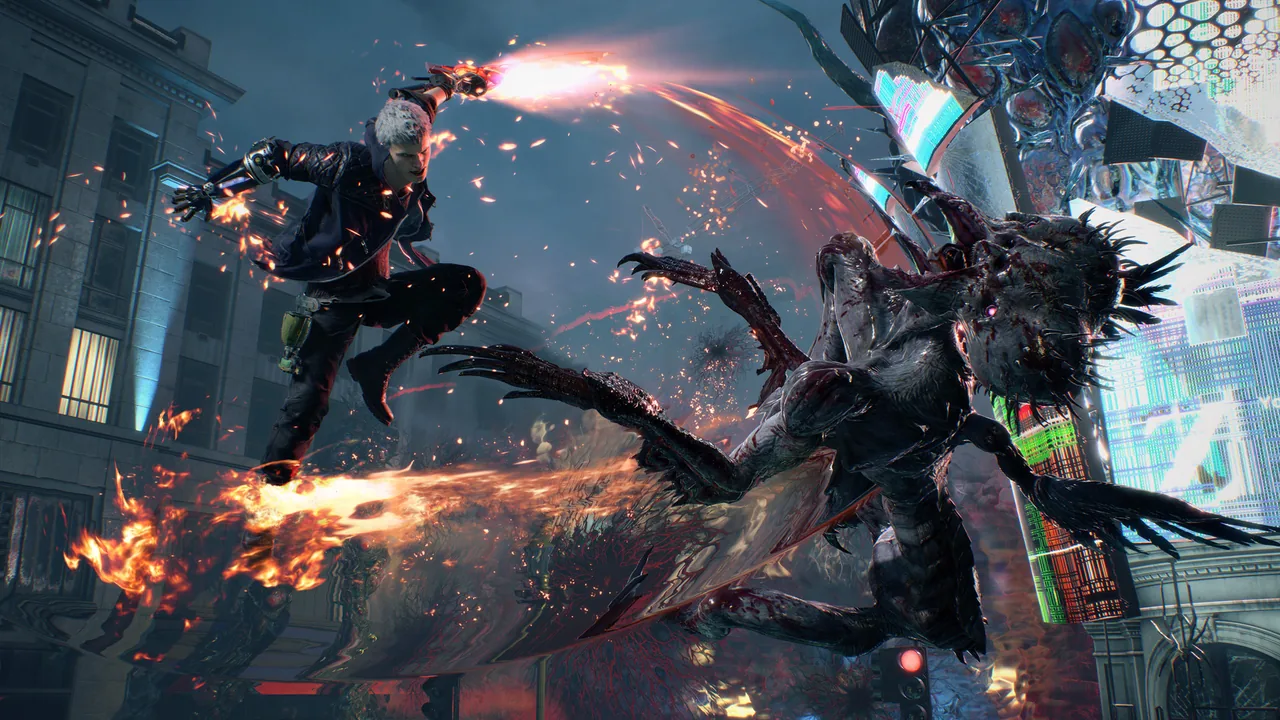
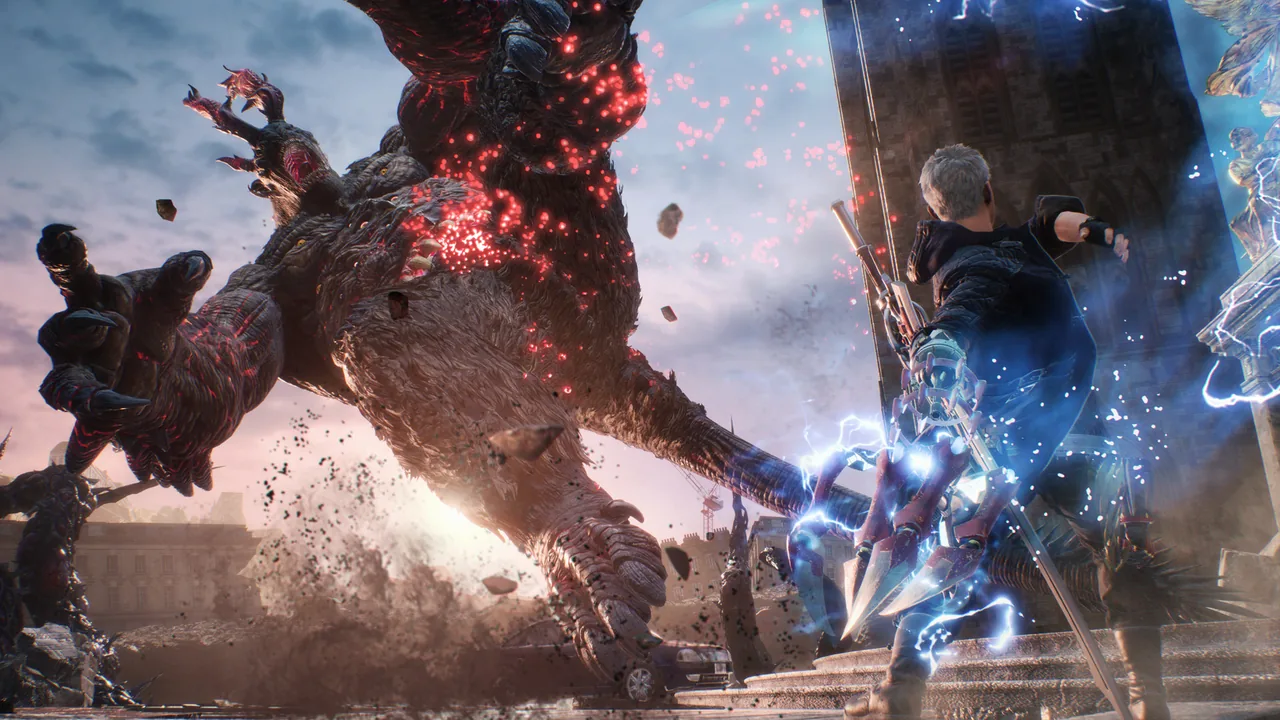
The structural gamble at the centre of Devil May Cry 5 is splitting its campaign across three playable characters with almost nothing in common mechanically. Nero, the returning protagonist from Devil May Cry 4, loses his demonic arm early and spends the game swapping between disposable robotic "Devil Breaker" prosthetics, each with a different special ability, turning equipment management into a live combat decision. Dante, unlocked partway through, returns with four distinct fighting styles and a full arsenal of Devil Arms, offering by far the highest skill ceiling of the three. V is the real gamble: a frail newcomer who can't fight in melee at all, instead directing three demonic familiars from a safe distance while reciting poetry between fights — a slower, more tactical, deliberately uncool playstyle in a series built on cool.
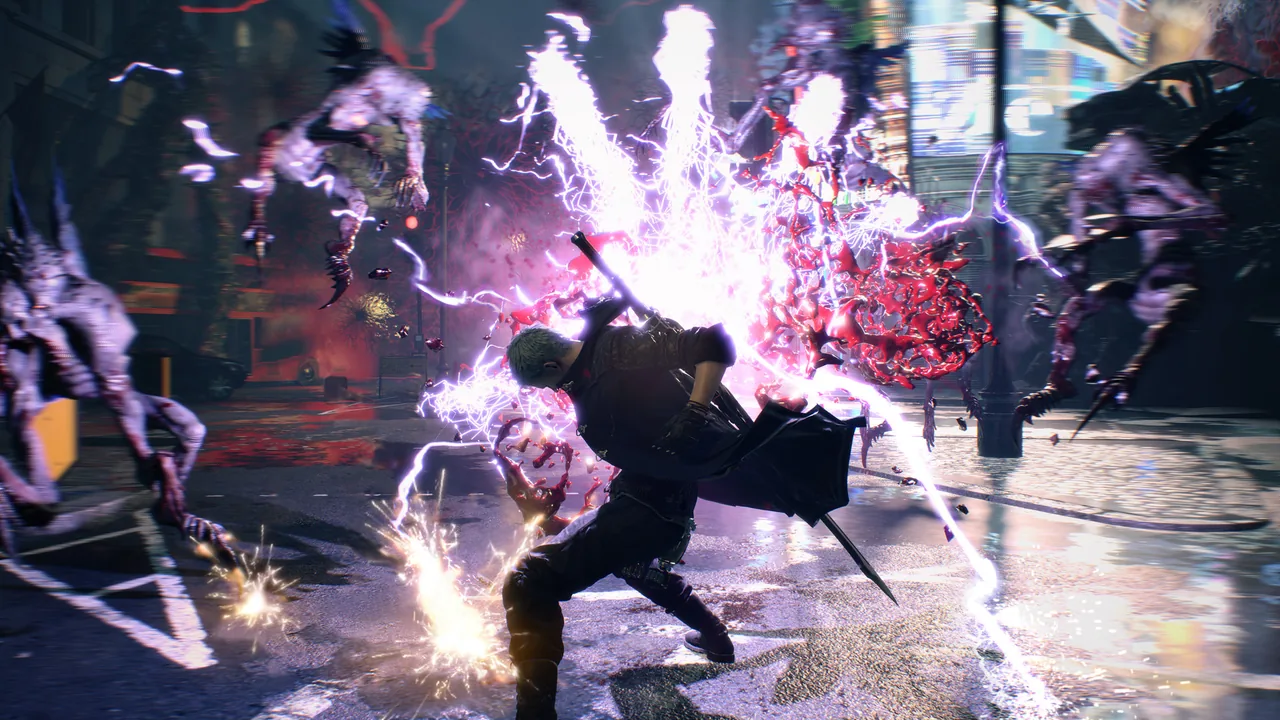
Seven years of Steam reviews confirm the critical consensus held: this is, by wide agreement, some of the best character-action combat of its console generation, and it remains the single most consistently praised part of the game across the entire review history checked for this piece. Where opinion splits is specifically on V. A real, recurring minority of negative reviews single him out by name as the character they resent being forced to play, with his slower pace and indirect combat style landing as a mood-killer between Nero and Dante's more visceral sections rather than the palette-cleanser Capcom clearly intended. It's a legitimate design risk that mostly paid off critically — reviewers broadly credit the ambition of trying something that different — but it's also the game's most personally divisive element, and worth knowing about if slower, pet-summoning combat isn't your thing.
Where the negative sample actually lands
With over 169,000 reviews and a 96% positive score, Devil May Cry 5's negative sample is a small slice of a very large, very satisfied audience — but it's worth reading anyway, because unlike a game with one dominant complaint, this one's discontent is genuinely scattered across several smaller, real issues rather than concentrated on a single failure. Story shows up as a complaint in roughly a fifth of a 100-review negative sample pulled for this review, but without much consensus on what specifically is wrong — some call the writing "cringe," others find the plot thin compared to the combat wrapped around it, and a few simply say they didn't feel invested without having played earlier entries. That diffuseness is itself informative: it reads less like a genuine narrative failure and more like a story that was never the main event being judged against combat that clearly was.
The camera is a more concrete and more frequently repeated complaint, showing up across roughly a twelfth of the sample, particularly in tighter arena spaces and during Nero's Devil Breaker combos — a fair, specific critique rather than a vague one. And a scattering of players report the game running poorly on capable hardware, with one review describing an RTX 3050 Ti laptop struggling to hold 1080p on High settings without manual config tweaks, alongside repeated, specific complaints that the PC version still lacks native ultrawide monitor support and DLSS — notable gaps for a game that's now seven years past release and has already received one enhanced Special Edition release for PS5 and Xbox Series X|S with ray tracing, features that haven't made their way back to improve the original PC version's feature set in kind.
The DLC storefront is the part that draws the sharpest complaints
The one issue that shows up with genuine edge in the negative sample, rather than mild grumbling, is the monetisation. Devil May Cry 5 ships with over thirty pieces of paid downloadable content: character costumes, taunt animations, colour palette swaps, music packs, a Vergil playable-character DLC priced separately at NZ$7.95, and — the specific target of the sharpest complaints — purchasable bundles of Red Orbs, the game's core in-game currency, running from NZ$3.25 for 100,000 up to NZ$31.95 for a million. "When u die and dont have red orbs you can buy them PAY TO WIN?" reads one blunt review; it's worth noting in fairness that Red Orbs are also earned generously through normal play and are used mainly to continue after death or unlock optional extras rather than to gate core progression, so the "pay to win" framing overstates the practical impact for most players — but the presence of a real-money currency purchase option in a NZ$48.96 premium single-player game is a legitimate, specific thing to flag, and it's the complaint in this sample that reads as a genuine design choice worth criticising rather than a matter of taste.
Costume unlocks tied to the game's hardest difficulty settings compound the same frustration for a smaller group of completionists — several reviews note that unlocking certain outfits requires clearing the game on its highest difficulty tiers, which simply double enemy stats rather than meaningfully changing encounter design, extending the grind without adding new challenge. The global achievement data backs up how sharply that filters the audience: the most common achievement sits at 86.6%, a healthy story-progress marker, but the hardest difficulty-tier and completionist achievements fall to between 1.1% and 2.4% — a steep, expected cliff for Dante-Must-Die-tier content, and consistent with reviewers' framing of the highest difficulties as a grind reserved for a small, dedicated subset of the audience rather than something the game expects most players to chase.
Verdict
Devil May Cry 5 did exactly what it needed to: it took a series that had just been through a genuinely divisive reboot and delivered a confident, critically vindicated, commercially dominant return to form, built on some of the best character-action combat of its generation split across three genuinely different playable characters. Seven years of Steam reviews back the launch-critic consensus up almost entirely — the complaints that exist are real but scattered: a divisive third character in V, a story some feel is thinner than the combat surrounding it, a camera that gets crowded in tight spaces, a PC port that's gone seven years without ultrawide or DLSS support, and a genuinely sprawling paid-DLC storefront, most pointedly its purchasable in-game currency, that a vocal minority resents on principle even though none of it is required to enjoy or finish the game.
8.5 out of 10. A confident, critically and commercially vindicated return to form for the series, let down only by a stale PC feature set and a DLC storefront that oversells what it's actually gating.
Pros and cons
Pros
- Three genuinely distinct playable characters -- Dante's four fighting styles, Nero's Devil Breaker arms, V's demon-summoning -- praised near-universally as some of the best character-action combat design in the genre
- Launch critic consensus (Metacritic 87-89, multiple 9+ scores) that the series recovered convincingly from the 2013 reboot's divisive reception
- Franchise-best commercial performance -- 2 million units in two weeks, 12.9 million lifetime as of fiscal 2025 -- backed by a stable 96% Overwhelmingly Positive Steam score seven years on
- A free Bloody Palace survival mode and multiple higher difficulties add real replay value on top of the campaign at no extra cost
Cons
- A large paid-DLC catalogue -- costumes, taunts, a separately-sold playable Vergil, and purchasable Red Orb currency bundles up to NZ$31.95 -- draws real "nickel and diming" and occasional "pay to win" complaints, even though none of it is required to finish the game
- No native ultrawide monitor or DLSS support as of this review, a persistent, specifically-named complaint from PC players seven years after release
- V's slower, familiar-summoning playstyle is the series' most divisive character choice -- reviewers who dislike him call him consistently the game's weak point
- Campaign length (commonly cited around 15-20 hours for a first clear) draws occasional value complaints given the price, particularly from players comparing it to earlier series entries
Screenshots
-
Devil May Cry 5Image: CAPCOM Co., Ltd. via Steam -
Devil May Cry 5Image: CAPCOM Co., Ltd. via Steam -
Devil May Cry 5Image: CAPCOM Co., Ltd. via Steam -
How the review scores each part of the gameWanderer Editorial -
The essentialsWanderer Editorial -
The short versionWanderer Editorial