Game review
Blasphemous
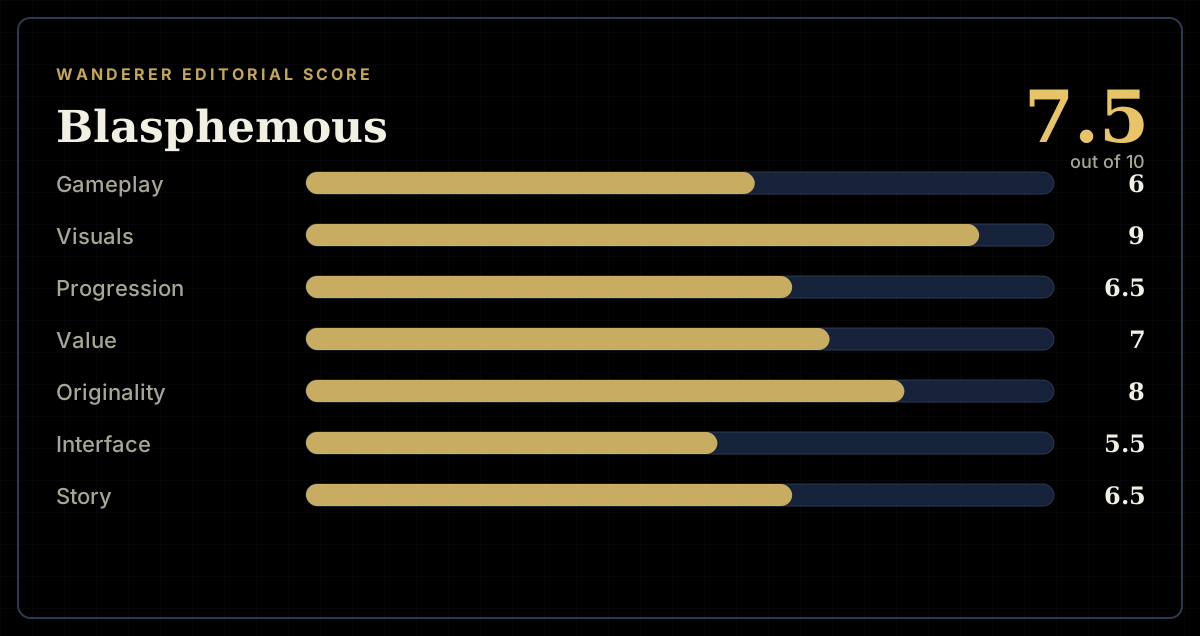
7.5 / 10
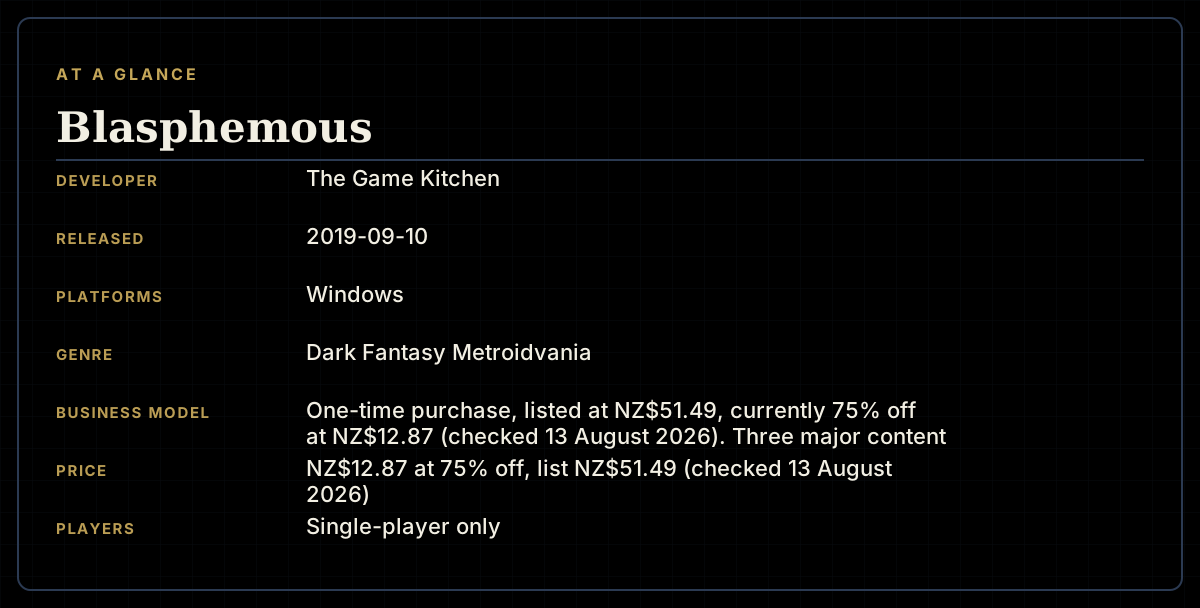
- Developer
- The Game Kitchen
- Publisher
- Team17
- Released
- 10 September 2019
- Platforms
- Windows
- Genre
- Dark Fantasy Metroidvania
- Monetisation
- One-time purchase, listed at NZ$51.49, currently 75% off at NZ$12.87 (checked 13 August 2026). Three major content expansions -- The Stir of Dawn, Strife and Ruin, and Wounds of Eventide -- were all released free between 2020 and 2021.
- Players
- Single-player only
The short version
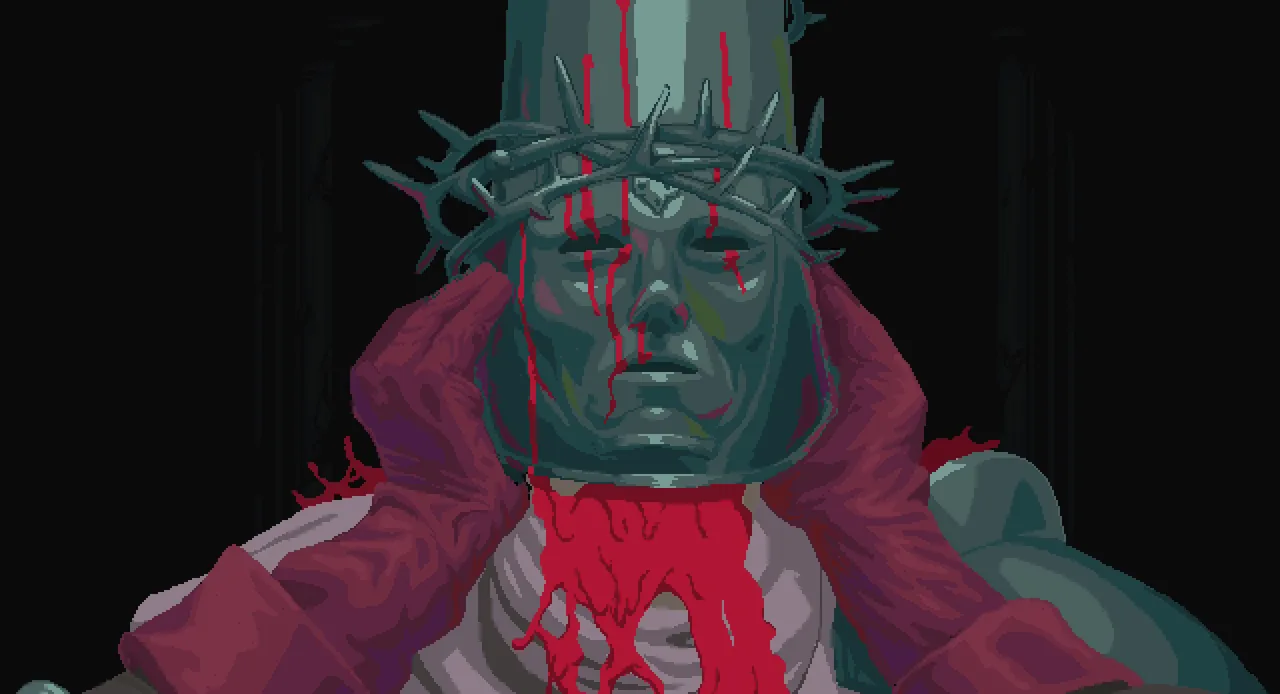
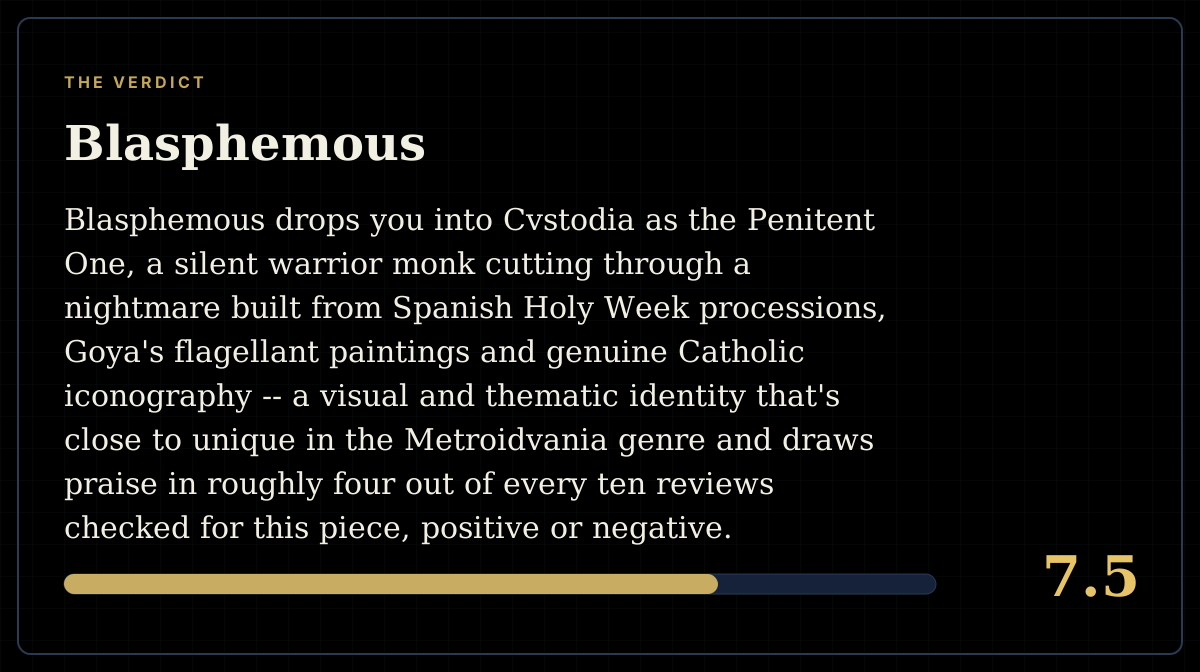
Blasphemous drops you into Cvstodia as the Penitent One, a silent warrior monk cutting through a nightmare built from Spanish Holy Week processions, Goya's flagellant paintings and genuine Catholic iconography -- a visual and thematic identity that's close to unique in the Metroidvania genre and draws praise in roughly four out of every ten reviews checked for this piece, positive or negative. Launch critics were consistently mixed-positive (Metacritic 76-82), praising "visual style, combat, boss battles and interconnected world" while flagging "level design, gameplay mechanics and backtracking" as the drag -- and Steam's audience makes almost exactly the same argument seven years later: Very Positive, 89.8% of 66,476 reviews.
What hasn't moved since 2019 is the specific shape of the complaint: movement and combat that a real share of a 100-review negative sample calls clunky, sluggish or unresponsive, punishing platforming with instant-death spikes, genuinely inconsistent controller support despite the store page's "Full controller support" listing, and missable content that requires either a guide or a second playthrough to see in full. Three major free expansions between 2020 and 2021 added substantial content without ever resolving that core feel complaint, which suggests it was a design choice rather than a bug the developers didn't get around to fixing.
Biggest strengths
- A genuinely distinctive visual and thematic identity -- Spanish Holy Week processions, Goya's flagellant paintings and real Catholic iconography rendered in detailed pixel art -- referenced approvingly in roughly four in ten reviews checked, positive and negative alike
- Strong, memorable boss fights that draw consistent praise even from reviewers otherwise critical of the rest of the combat
- Genuinely substantial post-launch support -- three free major expansions between 2020 and 2021, adding a New Game+ mode, a crossover with Bloodstained, and a new ending -- with nothing held back as paid DLC
Biggest weaknesses
- Movement and combat draw the most common specific complaint in the current negative sample -- called clunky, sluggish or unresponsive by a meaningful share of reviewers across the entire seven-year review history, not just at launch
- Platforming sections with instant-death spikes and punishing traversal are a real, repeated frustration, distinct from and often described as less fair than the boss fights
- Controller support draws specific, technical complaints -- inconsistent button recognition and poor DualSense support reported by several reviewers despite the store page listing full controller support
Who it's for: Metroidvania and soulslike fans specifically drawn to atmosphere and a distinctive visual identity, who can tolerate combat and platforming that a meaningful share of the audience finds genuinely frustrating rather than appropriately difficult. Less suited to players who want the tight, responsive movement of genre peers like Hollow Knight.
Our recommendation: Worth playing for the setting and art alone, which are close to unmatched in the genre -- go in at the current deep discount, expect the movement to take real adjustment, and don't be surprised if the exact thing some players call the game's soul is what frustrates you most.
7.5 / 10
Few Metroidvanias look, or feel, like anything else in the genre. Blasphemous is one of the exceptions, and it earns that distinction honestly: creative director Enrique Cabeza built the game's nightmare world of Cvstodia directly out of Spanish Holy Week processions, the flagellant paintings of Francisco Goya, and the religious art of Seville painters like Murillo, Velázquez and Zurbarán. It's a genuinely uncommon well to draw from for an action-platformer, funded through a 2017 Kickstarter and shipped by developer The Game Kitchen, a Seville studio, on 10 September 2019. Launch critics responded with real but qualified enthusiasm — Metacritic settled at 76-82 across platforms, with reviewers consistently praising "visual style, combat, boss battles and interconnected world" while just as consistently flagging "level design, gameplay mechanics and backtracking" as the drag on the experience. Seven years on, Steam's audience is telling almost exactly the same story: Very Positive, 89.8% of 66,476 reviews.
A world built from a genuinely rare well of inspiration
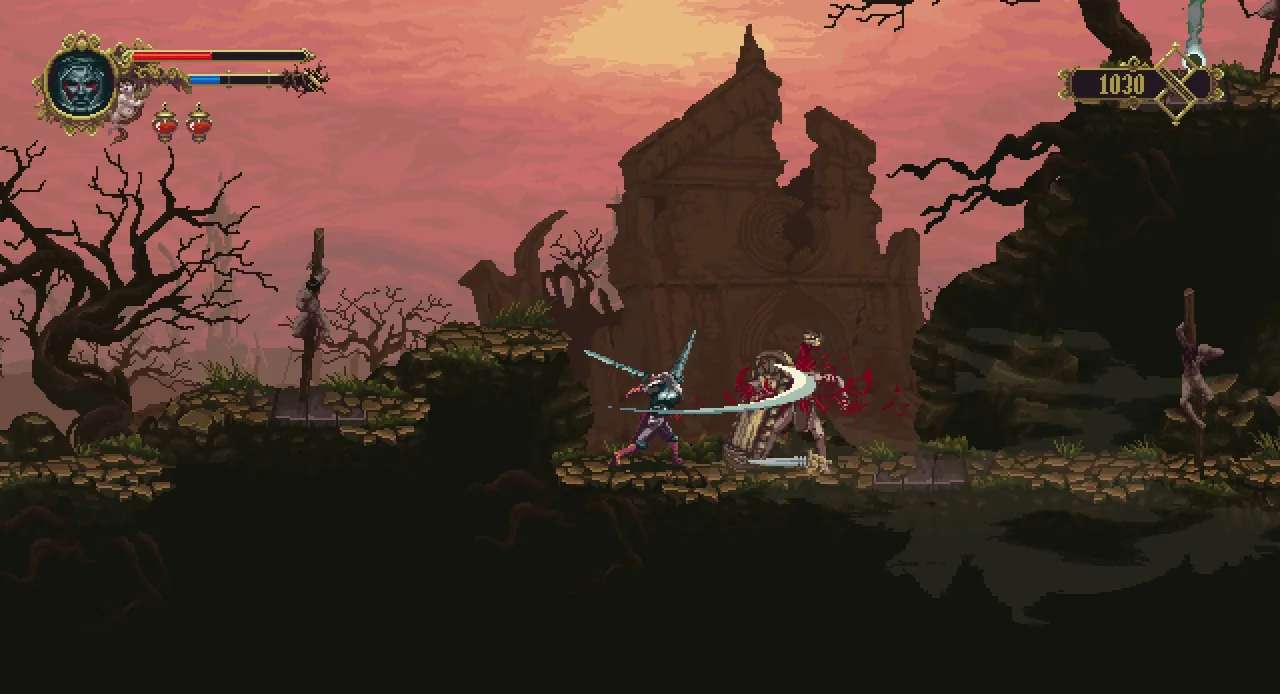
The strongest, most consistent thread across the entire review history — critics in 2019, and players writing this month — is the setting itself. Roughly four in ten of a 100-review negative sample checked for this piece reference the art or atmosphere approvingly, even inside reviews that go on to recommend against buying the game — a similar pattern to how universally a handful of other 2019 titles' visuals get praised regardless of the reviewer's overall verdict, but notably stronger here given how specifically thematic the praise is. "The art design and atmosphere are flawless; it is almost like a moving painting," reads one representative negative review, before going on to detail exactly why the rest of the game didn't land for that particular player. That specific split — genuine reverence for the world, real frustration with playing in it — is the throughline of essentially the entire negative-review sample, and it maps precisely onto what launch critics said in September 2019.
The narrative leans into the same unusual well: a cryptic, lore-heavy story told mostly through item descriptions and environmental detail rather than direct exposition, clearly modelled on the Dark Souls approach to worldbuilding. Reviewers who enjoy piecing a story together themselves tend to credit it as a real strength; several others describe finding it confusing or feeling under-explained, a fair enough split for a deliberately oblique narrative style that isn't for everyone.
Where the same complaint has held for seven years
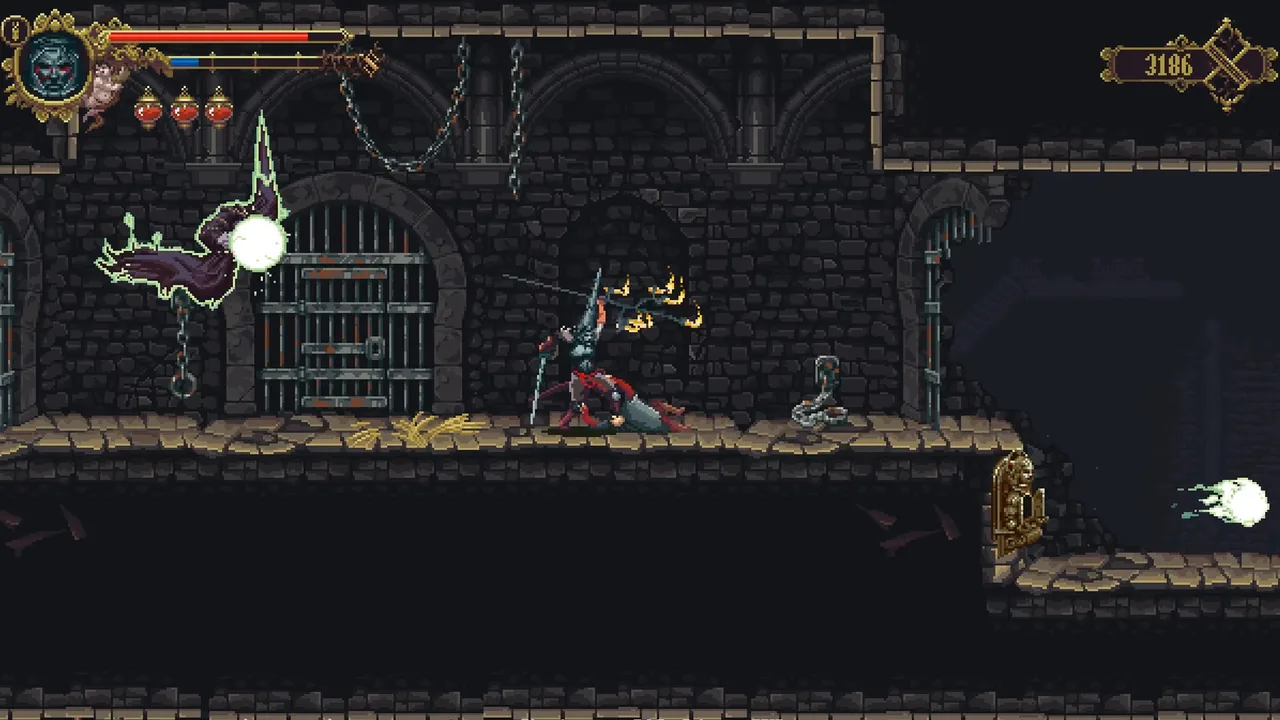
The specific shape of the negative sample is worth dwelling on precisely because it's so consistent. Movement and combat feel is the single most common complaint — described across dozens of reviews as "clunky," "sluggish," "floaty" or simply unresponsive, with several reviewers noting that hits don't reliably interrupt actions the way the genre usually allows, leading to frustrating trade damage in close-quarters fights. "Chore-like gameplay coupled with painfully annoying, sluggish controls," reads one; "unresponsive controls, clunky platforming physics" reads another, alongside praise for the same game's art in the same sentence. This isn't a technical bug report so much as a recurring judgment about game feel — and the fact that it appears in near-identical language in reviews written years apart, and matches what critics said at launch before any patch had a chance to land, strongly suggests it's an intentional, weighty design choice (in keeping with the genre's soulslike influences) that a real share of the audience simply never adjusts to rather than something incremental patches were ever going to fix.
Platforming compounds the complaint rather than sitting separately from it. Instant-death spike traps and precise jump sequences show up repeatedly as a specific frustration, described by several reviewers as feeling less fair than the boss fights, which by contrast draw some of the most consistent praise in the entire sample — reviewers who are otherwise critical of the combat routinely carve out an exception for the bosses specifically, describing them as well-designed and genuinely satisfying to learn.
Controller support is a smaller but pointed technical complaint worth flagging plainly: despite the Steam store page listing full controller support, several reviewers describe inconsistent button recognition and specifically poor DualSense compatibility, with one describing being unable to navigate menus properly with a connected controller at all. It's not a universal report, but it's specific enough and recurs often enough across the sample to be worth a heads-up for anyone planning to play with a gamepad rather than assuming the store listing tells the whole story.
Real, substantial post-launch support
To the developers' credit, Blasphemous received unusually generous free post-launch content: The Stir of Dawn in 2020 added a New Game+ mode, Strife and Ruin in 2021 brought a crossover with Bloodstained: Ritual of the Night, and Wounds of Eventide later that year added an entirely new ending that sets up the 2023 sequel — all released at no additional cost. That's a genuinely strong record of ongoing support for a single-purchase indie game, and it's part of why the title crossed a million players by March 2021 and went on to spawn a well-received sequel. It's worth noting, though, that none of these updates appear to have meaningfully changed the core movement and combat feel that both 2019 critics and current players consistently name as the game's central friction point — the additions expanded what there was to do, rather than changing how it felt to do it.
The global achievement data reflects a genre-typical shape with one specific wrinkle: the opening achievement sits at 93.5%, main-story markers fall through the 30-50% range, and the hardest completionist achievements bottom out between 2.7% and 7.1% — consistent with several reviewers' specific complaint that meaningful content, including certain endings and collectibles, is missable within a single playthrough and effectively requires either a guide or a deliberate second run to see in full.
Verdict
Blasphemous is a genre entry with a real, distinctive identity — few Metroidvanias reach into Spanish Catholic religious art and Holy Week tradition for their visual language, and the result is close to unmatched in the genre for atmosphere, even by reviewers who otherwise recommend against buying it. What's kept it from a cleaner, more universal recommendation across seven years and two audiences — professional critics in 2019, and the players who've bought it since — is a movement and combat feel that both groups independently, consistently describe the same way: heavy, occasionally unresponsive, and a real adjustment for players used to snappier genre peers. Three substantial free expansions show a developer that kept investing in the game long after launch, even if they never fundamentally changed that core feel. At its current steep discount, it's an easy recommendation for anyone specifically drawn to the setting; go in aware that the thing making the game feel weighty and deliberate is also the thing a real share of its own audience never quite warms to.
7.5 out of 10. One of the most visually and thematically distinctive Metroidvanias of its era, let down only by a combat and movement feel that's divided its audience, unchanged, since the week it launched.
Pros and cons
Pros
- A genuinely distinctive visual and thematic identity -- Spanish Holy Week processions, Goya's flagellant paintings and real Catholic iconography rendered in detailed pixel art -- referenced approvingly in roughly four in ten reviews checked, positive and negative alike
- Strong, memorable boss fights that draw consistent praise even from reviewers otherwise critical of the rest of the combat
- Genuinely substantial post-launch support -- three free major expansions between 2020 and 2021, adding a New Game+ mode, a crossover with Bloodstained, and a new ending -- with nothing held back as paid DLC
- A cryptic, lore-heavy narrative that rewards attentive exploration for players who enjoy piecing a story together themselves, in the mould of Dark Souls
Cons
- Movement and combat draw the most common specific complaint in the current negative sample -- called clunky, sluggish or unresponsive by a meaningful share of reviewers across the entire seven-year review history, not just at launch
- Platforming sections with instant-death spikes and punishing traversal are a real, repeated frustration, distinct from and often described as less fair than the boss fights
- Controller support draws specific, technical complaints -- inconsistent button recognition and poor DualSense support reported by several reviewers despite the store page listing full controller support
- A significant amount of content, including some endings and collectibles, is missable within a single playthrough, which several reviewers say requires a guide or a second full run to see
Screenshots
-
BlasphemousImage: Team17 via Steam -
BlasphemousImage: Team17 via Steam -
BlasphemousImage: Team17 via Steam -
How the review scores each part of the gameWanderer Editorial -
The essentialsWanderer Editorial -
The short versionWanderer Editorial