Game review
Katana ZERO
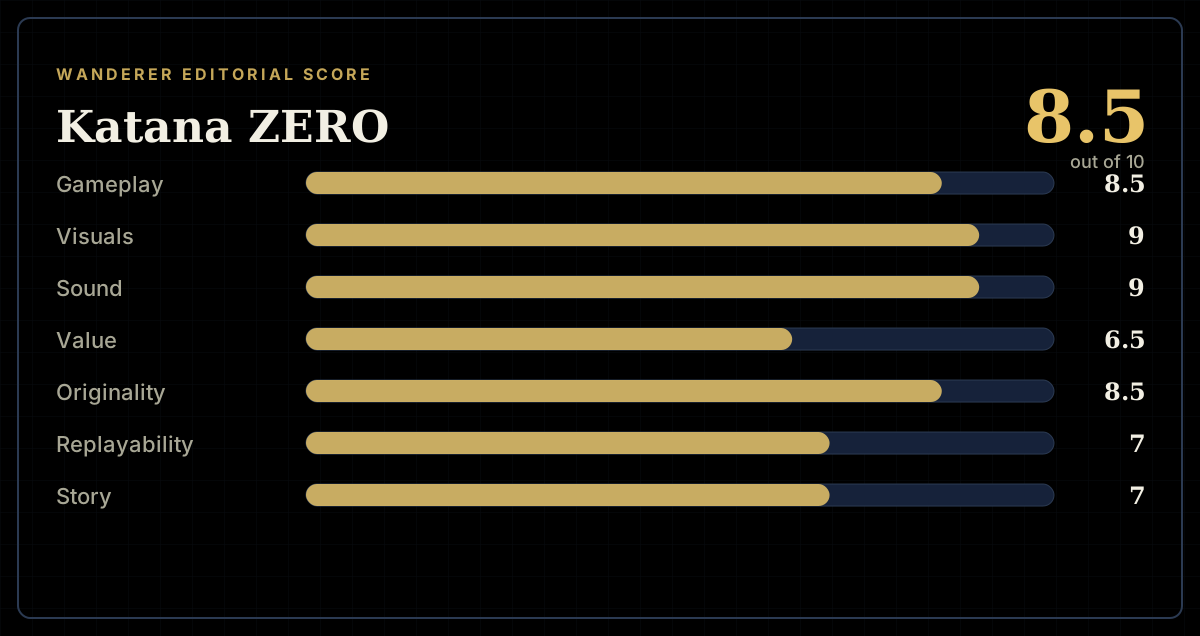
8.5 / 10
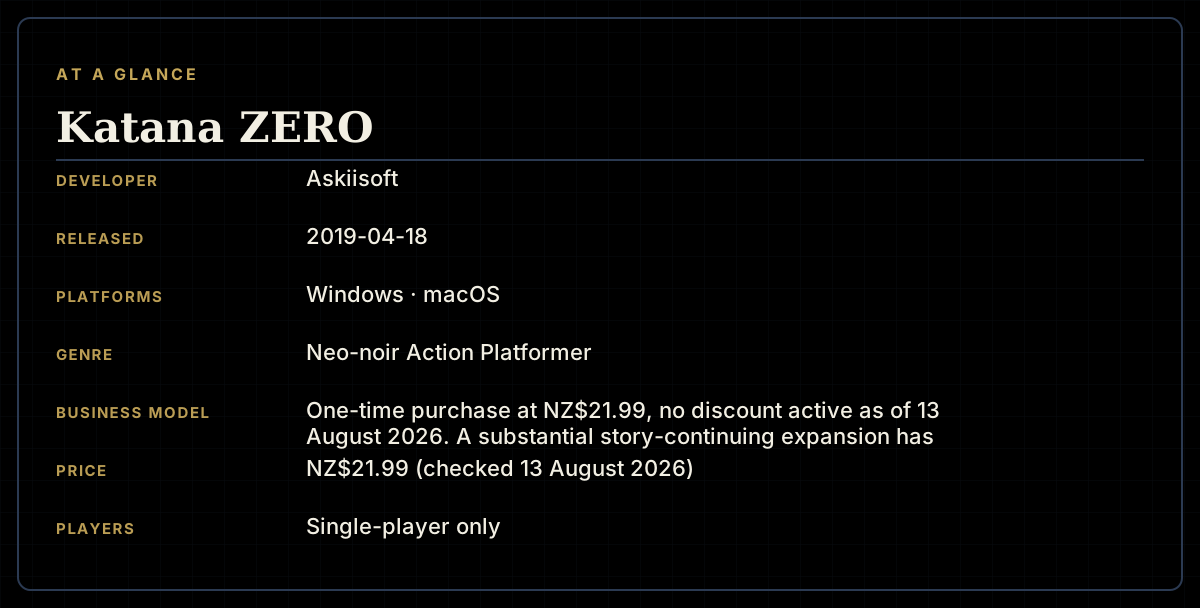
- Developer
- Askiisoft
- Publisher
- Devolver Digital
- Released
- 18 April 2019
- Platforms
- Windows, macOS
- Genre
- Neo-noir Action Platformer
- Monetisation
- One-time purchase at NZ$21.99, no discount active as of 13 August 2026. A substantial story-continuing expansion has been promised free since shortly after launch and remains unreleased; no paid DLC or microtransactions exist.
- Players
- Single-player only
The short version
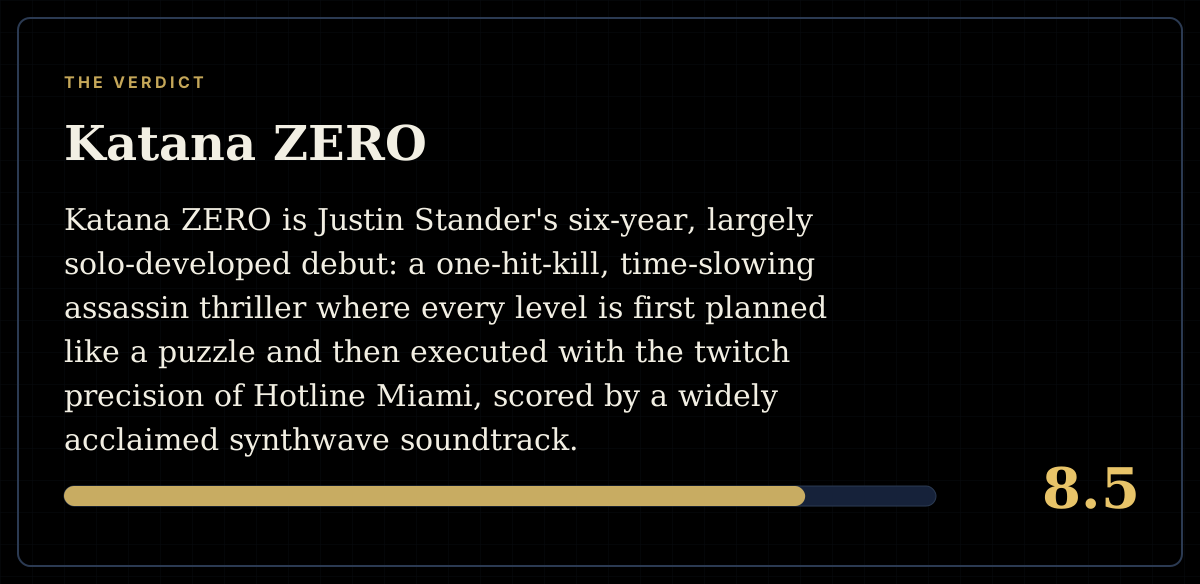
Katana ZERO is Justin Stander's six-year, largely solo-developed debut: a one-hit-kill, time-slowing assassin thriller where every level is first planned like a puzzle and then executed with the twitch precision of Hotline Miami, scored by a widely acclaimed synthwave soundtrack. It launched to real acclaim -- Metacritic 83, OpenCritic 87%, named the best game of 2019 by USgamer -- and Steam's audience has barely wavered since: Overwhelmingly Positive, 97.9% of 75,884 reviews, one of the highest scores checked across this entire review series.
What's changed since 2019 is context, not quality. The story ends on a deliberate cliffhanger that critics were divided on even at launch, and Askiisoft announced a free story-continuing DLC shortly after release to resolve it -- content that, as of this review in August 2026, still hasn't shipped, having grown over six-plus years of development into what the developer itself has called "nearly the size of the base game." A 100-review negative sample shows that saga is now a genuine, recurring complaint in its own right, alongside older, steadier criticism of the game's short length and unforgiving, trial-and-error difficulty.
Biggest strengths
- A genuinely tight, distinctive core loop -- plan a room like a puzzle, then execute it with twitch-precision one-hit-kill combat and time-slowing dodges -- that's drawn some of the most consistent praise of any game checked in this review series
- A widely acclaimed synthwave soundtrack and neo-noir pixel art that critics and players alike single out as genre highlights
- Real critical prestige to back up the Steam score -- Metacritic 83, OpenCritic 87%, named USgamer's best game of 2019 -- that's held up remarkably well seven years later
Biggest weaknesses
- The story ends on a deliberate cliffhanger, and a promised free DLC to resolve it -- announced shortly after launch in 2019 -- still hadn't shipped as of August 2026, a wait now well past six years and a recurring, pointed complaint in current reviews
- A short campaign, commonly finished in a handful of hours, draws value complaints from a real minority given the current asking price
- One-hit-kill, trial-and-error combat is by design unforgiving, and a meaningful share of negative reviews describe specific sections -- particularly on Hard mode -- as frustrating rather than fair
Who it's for: Fans of tight, punishing, replay-focused action games in the Hotline Miami mould who can accept the base story ending unresolved for now. Less suited to players who want a complete narrative arc on release, or who bounce hard off one-hit-kill trial-and-error combat.
Our recommendation: One of the best action games of its era on pure mechanical and presentational merit, and still an easy recommendation at its low asking price -- just go in knowing the story won't be finished when you finish the game, and that "when" the free DLC arrives has been an open question for well over half a decade.
8.5 / 10
Justin Stander built Katana ZERO almost entirely alone, starting in his sophomore year at McGill University in 2013 and finishing six years later on a budget reported at around $60,000. What shipped on 18 April 2019 — Windows, macOS and Switch first, Xbox One the following year — is a tight, brutal little action-platformer that turned into one of that year's most acclaimed indie releases: Metacritic settled at 83, OpenCritic at 87%, and USgamer named it the single best game of 2019. Seven years on, Steam's audience has barely wavered from that verdict — Overwhelmingly Positive at 97.9% of 75,884 reviews, one of the highest scores encountered anywhere in this review series.
A puzzle disguised as a bloodbath
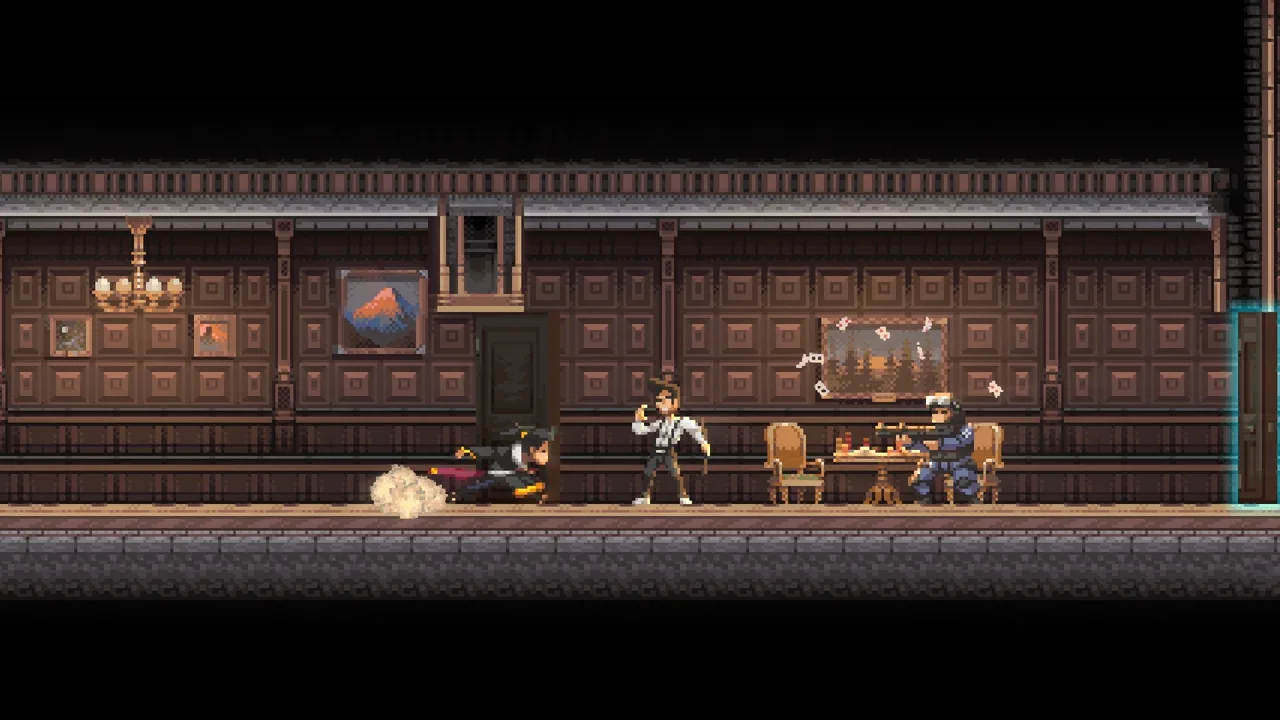
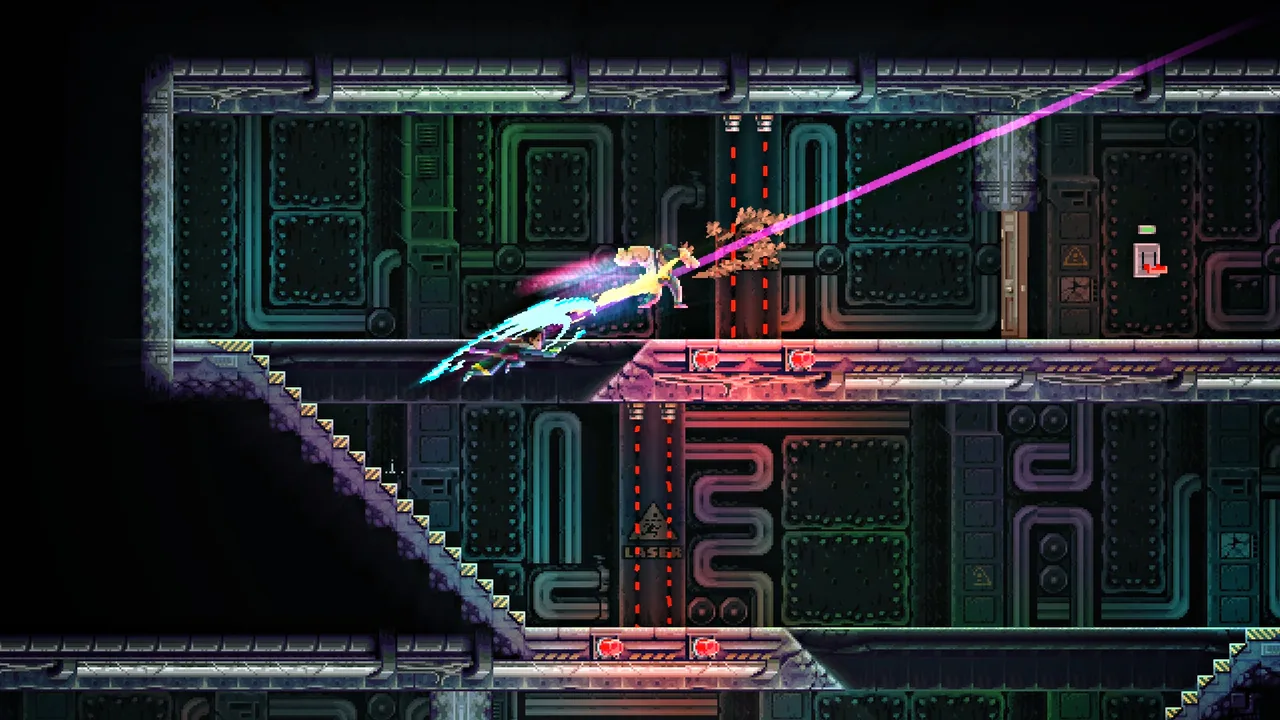
The premise is simple and the execution is razor-sharp: Subject Zero, an amnesiac supersoldier working as a contract assassin, dies in one hit and kills almost everything else in one hit too. Every room is effectively a puzzle first and an action sequence second — you can slow time, throw objects, deflect bullets with a katana, and, crucially, die and instantly retry as many times as it takes to find a clean route through a room, which the game then plays back to you as a stylish, edited "highlight reel" once you succeed. It's a structure that rewards planning and improvisation in roughly equal measure, and it's the single most consistently praised element of the entire game — reviewers across the whole seven-year span, positive and negative alike, tend to agree the core loop itself is excellent, even when they have real complaints about everything wrapped around it. The widely acclaimed synthwave soundtrack and neon-soaked neo-noir pixel art round out a presentation package that critics compared favourably to genre touchstones like Hotline Miami at launch, and that comparison still comes up constantly in today's reviews — sometimes as praise, sometimes, from a smaller group, as a mark against it for feeling derivative.
A cliffhanger that was controversial even in 2019
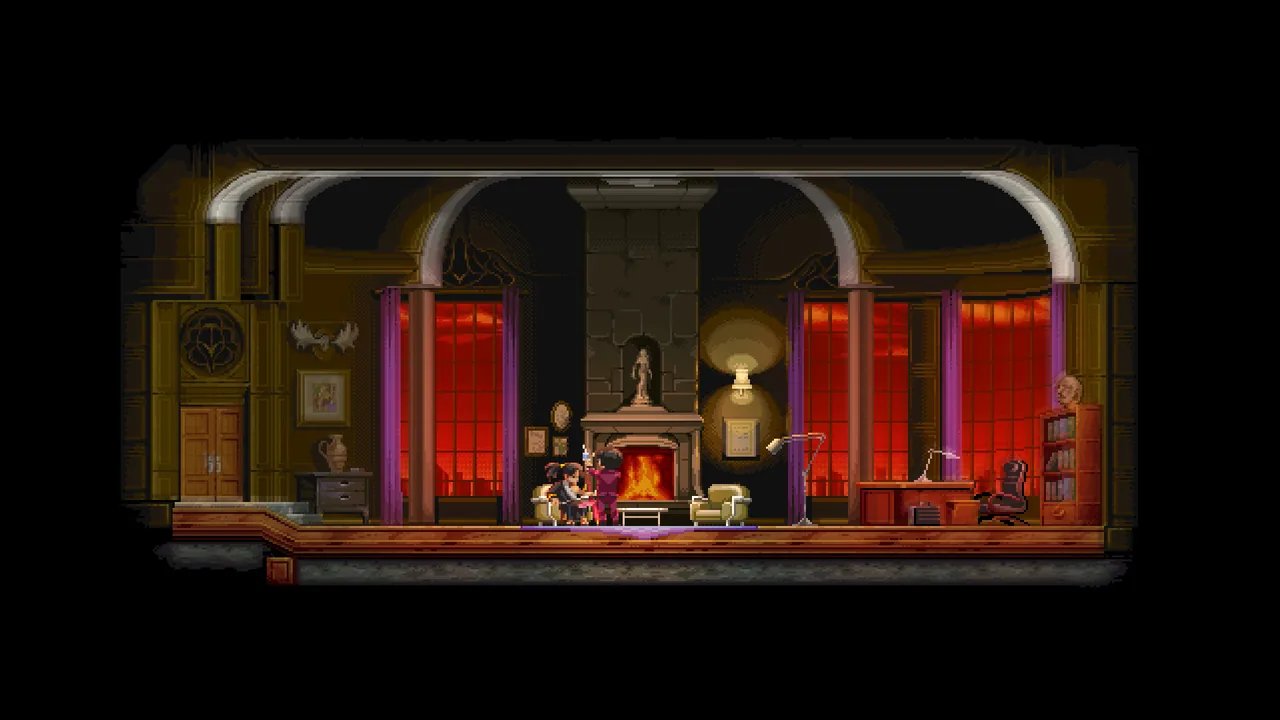
The one place launch critics were genuinely split, rather than simply grading on a curve, was the story's ending. Katana ZERO's narrative — told through a therapist's office between missions, where Subject Zero's memory and reliability as a narrator are both deliberately in question — builds to a cliffhanger rather than a resolution, an ambitious swing IGN and others praised as "fresh, exciting, and innovative" even while noting the unresolved ending as a real point of friction. That divide was baked in from day one: this was never simply a case of the story being bad, but a genuine disagreement about whether an intentionally unfinished story was a bold choice or an unsatisfying one.
Seven years, and the promised ending still hasn't arrived
What's changed the calculus since 2019 is what happened next — or rather, what hasn't. Askiisoft announced a free story-continuing DLC not long after launch, intended to resolve exactly the cliffhanger critics flagged. By early 2020, according to contemporary coverage, its scope had already grown; by 2021, reports described it as having expanded to roughly six times its original size, closer to "Katana ZERO 1.5" than a conventional DLC pack. As of 2025 and into 2026, Askiisoft has continued to say the content is "finally nearing completion" and will remain free for existing owners — but as of this review in August 2026, more than seven years after the base game shipped, it still hasn't been released, and the developer has publicly declined to give a firm date.
That saga now shows up as its own distinct, recurring complaint in current Steam reviews, separate from and in addition to the ending's original divisiveness. "The dev really put a door in the game that says 'Locked... I should come back in a few months,' announced a free dlc to finish the incomplete story," reads one representative 2026 review, trailing off in evident frustration. "dlc when," reads another, blunter one, from a player who's logged over 4,600 minutes with the base game already. It's a genuinely unusual thing to be able to say about a seven-year-old game with a near-universal critical and player consensus: the single most talked-about ongoing issue with it isn't a bug or a balance problem, but a promise still outstanding.
The steadier, older complaints
Underneath the DLC saga, the negative sample also carries two more familiar, consistent threads. Length draws real if secondary criticism — the base campaign is commonly finished in a handful of hours, and several reviewers, particularly recent ones, call that thin set against the current asking price, even at a relatively modest NZ$21.99. And difficulty is a genuine, if expected, sticking point for a portion of the audience: the one-hit-kill, trial-and-error structure that most reviewers credit as the game's core strength is, for a real minority, simply not fun, described variously as "unforgiving," "stressful" or "boring" by players who bounce off the genre's demands regardless of how well-executed this particular version of them is. Hard mode draws its own specific complaint about enemies that parry aggressively, seen by several reviewers as pushing past challenging into simply frustrating. The achievement data backs up how sharply the difficulty filters the audience: roughly half of players earn the main story-completion achievement, but Hard mode's completion achievement sits at just 4.8%, and the top-rank "Gold" achievement at 2.8%, consistent with a game whose hardest content is squarely aimed at a small, dedicated slice of its audience rather than the average buyer.
Verdict
Katana ZERO remains, on the strength of a genuinely excellent core loop, one of the best-reviewed action games of its generation, and nothing about the actual game has gotten worse in the seven years since launch — quite the opposite, its reputation has if anything solidified. What makes reviewing it in 2026 different from reviewing it in 2019 is entirely about context rather than content: a deliberately unresolved ending that was already dividing critics at launch has now sat unresolved for over seven years, with a promised free conclusion that's grown enormously in scope and still carries no release date. That's a genuinely unusual, well-documented situation worth knowing about before buying, even though it doesn't retroactively make the existing game worse — it just means the story you'll experience today is, by design and by circumstance both, still only half told.
8.5 out of 10. One of the tightest, best-presented action games of its era, and still an easy recommendation at its price — just go in aware you're buying half a story, with the other half's release date still, seven years on, an open question.
Pros and cons
Pros
- A genuinely tight, distinctive core loop -- plan a room like a puzzle, then execute it with twitch-precision one-hit-kill combat and time-slowing dodges -- that's drawn some of the most consistent praise of any game checked in this review series
- A widely acclaimed synthwave soundtrack and neo-noir pixel art that critics and players alike single out as genre highlights
- Real critical prestige to back up the Steam score -- Metacritic 83, OpenCritic 87%, named USgamer's best game of 2019 -- that's held up remarkably well seven years later
- A distinctive precognition/replay mechanic, letting the player rehearse and revise a level's solution, that critics called fresh and innovative at launch and still feels distinct today
Cons
- The story ends on a deliberate cliffhanger, and a promised free DLC to resolve it -- announced shortly after launch in 2019 -- still hadn't shipped as of August 2026, a wait now well past six years and a recurring, pointed complaint in current reviews
- A short campaign, commonly finished in a handful of hours, draws value complaints from a real minority given the current asking price
- One-hit-kill, trial-and-error combat is by design unforgiving, and a meaningful share of negative reviews describe specific sections -- particularly on Hard mode -- as frustrating rather than fair
- A small but real cluster of technical complaints -- a 60fps cap some players say triggers motion sickness during camera movement, and inconsistent roll behaviour on certain floor types
Screenshots
-
Katana ZEROImage: Devolver Digital via Steam -
Katana ZEROImage: Devolver Digital via Steam -
Katana ZEROImage: Devolver Digital via Steam -
How the review scores each part of the gameWanderer Editorial -
The essentialsWanderer Editorial -
The short versionWanderer Editorial