Game review
Solar Ash
7 / 10
- Developer
- Heart Machine
- Publisher
- Annapurna Interactive
- Released
- 2 December 2021
- Platforms
- Windows
- Genre
- Action Adventure, Sci-Fi
- Monetisation
- One-time purchase. No DLC, no microtransactions.
- Players
- Single-player only
The short version
Solar Ash sends you skating across the debris of a collapsing star system on grind-rail boots, scaling colossal alien Remnants and unravelling a sparse, philosophical story about loss. It's Heart Machine's follow-up to the beloved Hyper Light Drifter, published by Annapurna Interactive, and it sits at Very Positive on Steam -- roughly 90% of 1,494 total reviews, a smaller sample than most titles this size because Steam only got the game a year after its original December 2021 release.
The review sample's dominant pattern, repeated independently across years by fans of the developer's earlier work, is a specific and consistent letdown: genuinely great movement and striking art wrapped around a game that several reviewers say repeats its first zone's ideas for the rest of its 7-13 hour runtime, with a story that stays sparse rather than building toward real answers. It's well-liked rather than beloved, and the gap between those two is the story worth telling five years on.
Biggest strengths
- Fluid, genuinely satisfying momentum-based skating traversal that draws consistent praise as the game's clearest strength, several reviewers reaching for Shadow of the Colossus and Sonic comparisons
- Striking, painterly sci-fi art direction that's close to universally praised even by otherwise disappointed reviewers
- A soundtrack from Disasterpeace (Hyper Light Drifter, Fez) that draws real, if slightly more mixed, praise for its more subdued, environmental register
Biggest weaknesses
- A consistent, years-long complaint that the game's ideas -- both mechanical and narrative -- are mostly established in the first zone and repeat with little evolution across the rest of the runtime
- A sparse, philosophical story that several reviewers say never fully resolves, with the ending specifically singled out as unsatisfying relative to the buildup
- Persistent, specific reports of poor Steam Deck performance, still noted in the review sample years after the Steam release
Who it's for: Fans of pure movement-based platforming and striking, painterly sci-fi art who don't need deep combat or a fully resolved narrative -- think Journey or Shadow of the Colossus more than a traditional action-adventure. Less suited to Hyper Light Drifter fans expecting a similarly tight, layered experience, or anyone who wants the story to actually resolve.
Our recommendation: Worth playing for the skating traversal and art direction alone, especially on sale given the review sample's consistent price-to-content complaints at full price. Go in treating it as its own thing rather than a Hyper Light Drifter successor -- that comparison is where most of the disappointment in the review history comes from.
7 / 10
Solar Ash puts you on a pair of grind-rail boots, skating across the fractured remains of a collapsing star system in search of your lost home, scaling colossal alien creatures called Remnants and piecing together a sparse, philosophical story about grief and loss along the way. It's the second game from Heart Machine, the small studio behind the widely beloved Hyper Light Drifter, published by Annapurna Interactive. The game's original release was 2 December 2021, on PlayStation 4, PlayStation 5 and PC via a timed Epic Games Store exclusive; Steam didn't get it until a year later, in December 2022, which is why its Steam review count — 1,494 total — is smaller than a game of this pedigree would usually carry. What it sits at is Very Positive, roughly 90% positive, a solid number that hides a specific, remarkably consistent verdict running through years of reviews.
What Solar Ash gets right
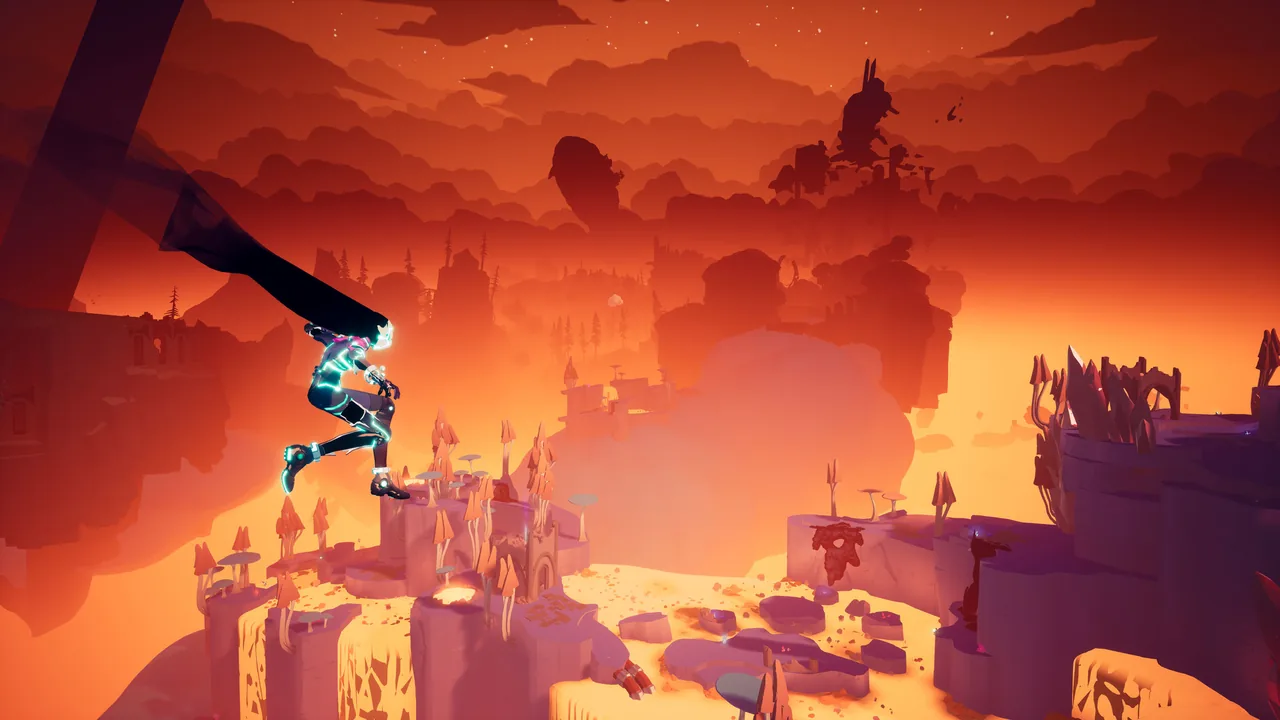
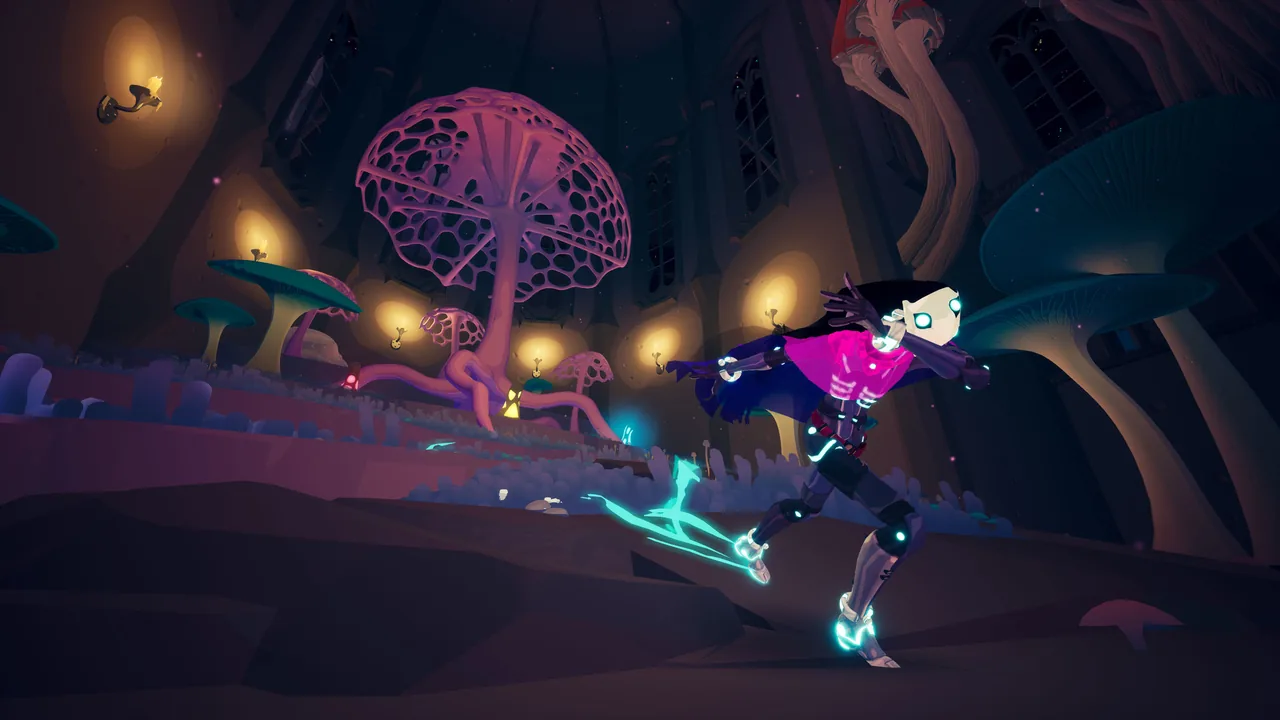
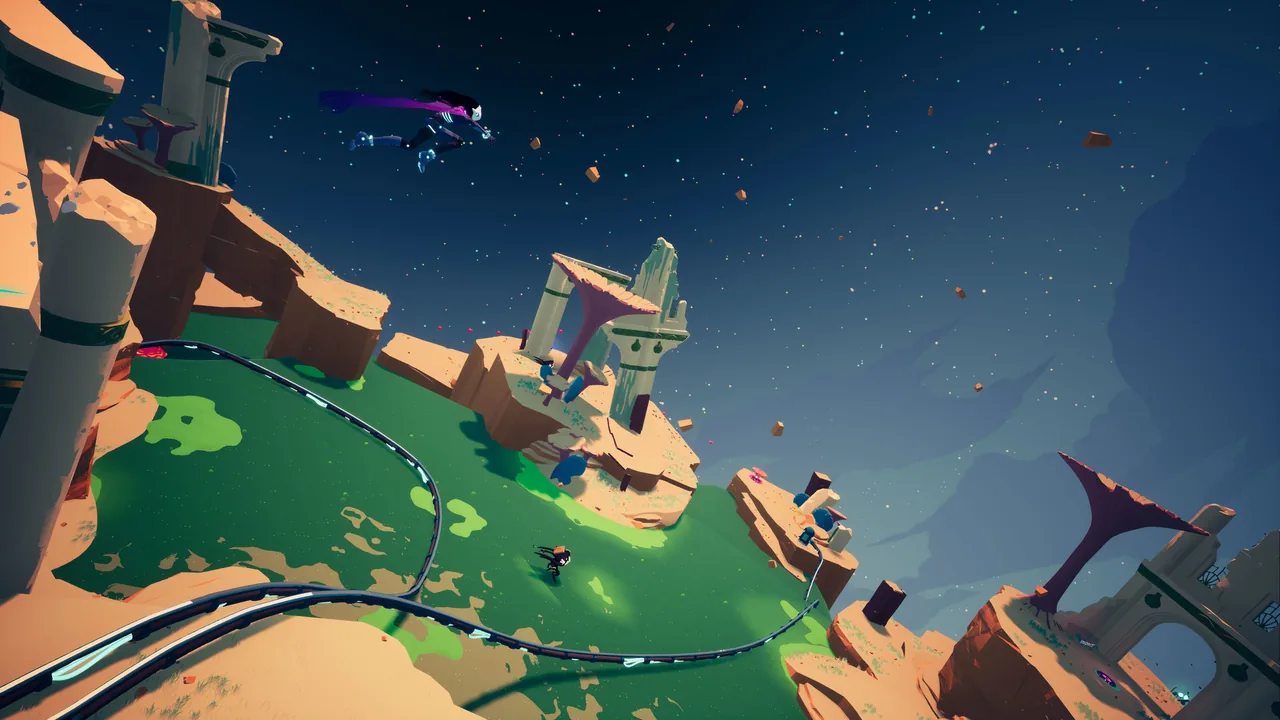
The traversal is the game's clearest, most consistently praised strength. Reviewers across the sample — positive and negative alike — single out the momentum-based skating as genuinely satisfying, drawing comparisons to Shadow of the Colossus's scale and Sonic's speed in the same breath. "Shadow of Colossus on rollerblades," reads one 2026 review, capturing a comparison that recurs independently across the sample. The art direction draws similarly close to universal praise — striking, painterly sci-fi environments that several reviewers say are worth experiencing on their own, even from reviewers who go on to describe the game overall as a disappointment. The boss-scale Remnant encounters, where the skating traversal and combat intersect at their biggest scale, are consistently called out as the game's best individual moments, distinct from the more repetitive open-world traversal between them.
A game that plateaus early
Set against that praise, one specific, consistent complaint runs through the negative sample from the game's Steam launch through 2026: Solar Ash largely establishes its mechanical and narrative ideas in its first zone and doesn't meaningfully build on them for the rest of the game. "The first zone you beat is pretty much how the rest of the game is going to be, nearly one to one for the rest of the other" areas, reads one representative 2025 review. Another: "It's cool. I like it. But I can't recommend it. I enjoyed it for a while but left dissatisfied with what I got. The ending in particular falls flat." A third, more pointed: "Everything in the game feels low stakes / impactless ... it's sort of surprising they left non-boss combat in it at all, since it doesn't feel elegant." The story draws a parallel version of the same complaint — reviewers consistently describe it as sparse and philosophically ambitious without fully paying off that ambition, with the ending specifically singled out across multiple reviews as the weakest part of the experience.
A specific, more concrete technical complaint recurs alongside these design criticisms: poor Steam Deck performance. "This game still runs verrrry poorly on the Steam Deck," reads a 2023 review, and the complaint doesn't disappear from later reviews in the sample, suggesting it was never fully resolved for handheld players specifically, distinct from the broader design critique.
The shadow of Hyper Light Drifter
What sharpens every one of these complaints, more than they'd land on their own, is the specific pedigree Solar Ash carries. A meaningful share of the review sample is explicitly written by self-identified Hyper Light Drifter fans, and the comparison consistently works against the newer game. "I expected great things from Heart Machine. Hyper Light Drifter was cool, highly stylized, and different... Solar Ash is not that," reads one review. Another, more pointed, from a player with 150-plus hours in the earlier game: "This is a really disappointing platformer and I did 100% completion of it... I really wanted to love it because I love Hyper Light Drifter." This isn't a complaint about Solar Ash failing on its own terms so much as a recurring sense across the sample that a studio capable of something tighter and more distinctive delivered something merely solid instead — a different kind of disappointment than a simply bad game generates, and one that shows up specifically because of who made it.
It's worth balancing this against the sample's genuine fans, who are real and vocal in their own right: "great game tbh. had a blast playing it... idk why people are complaining about" it, reads one 2026 review, and several others describe the game as exactly the chill, movement-focused experience they wanted without measuring it against the developer's earlier work at all. Reviewers who approach Solar Ash as its own thing, rather than a Hyper Light Drifter successor, consistently report a better experience than those who don't.
How it has aged
The achievement data is consistent with a shortish, well-paced game most buyers finish without pushing into full completion: a top achievement around 93%, tapering to a median of 33% across 32 achievements, with the hardest challenges — a full endgame speedrun and hard-mode completion — sitting around 4-5%, a fairly typical curve for a 7-13 hour game with light optional extras. Reviews have continued arriving steadily through 2026, several years after the Steam release, suggesting Solar Ash has settled into a stable, moderately-sized audience rather than fading from view — neither a forgotten disappointment nor a sleeper hit that grew beyond its initial reception.
7 out of 10. Solar Ash remains a genuinely well-crafted, beautiful movement-based platformer that earns real, specific praise for its traversal and art — undercut by a consistent sense, across years of reviews and especially among fans of Heart Machine's earlier work, that it establishes its best ideas early and doesn't build meaningfully on them, closing on a story that several reviewers specifically call unsatisfying. Play it for the skating and the scale of its Remnant fights rather than expecting Hyper Light Drifter's tighter, stranger successor, and you'll likely land closer to the sample's satisfied reviewers than its disappointed ones.
Pros and cons
Pros
- Fluid, genuinely satisfying momentum-based skating traversal that draws consistent praise as the game's clearest strength, several reviewers reaching for Shadow of the Colossus and Sonic comparisons
- Striking, painterly sci-fi art direction that's close to universally praised even by otherwise disappointed reviewers
- A soundtrack from Disasterpeace (Hyper Light Drifter, Fez) that draws real, if slightly more mixed, praise for its more subdued, environmental register
- Boss-scale "Remnant" encounters that several reviewers single out as genuine highlights, distinct from the more repetitive open traversal between them
Cons
- A consistent, years-long complaint that the game's ideas -- both mechanical and narrative -- are mostly established in the first zone and repeat with little evolution across the rest of the runtime
- A sparse, philosophical story that several reviewers say never fully resolves, with the ending specifically singled out as unsatisfying relative to the buildup
- Persistent, specific reports of poor Steam Deck performance, still noted in the review sample years after the Steam release
- Set against expectations from Heart Machine's beloved Hyper Light Drifter, a meaningful share of reviewers -- including longtime fans of that game -- describe Solar Ash as merely solid rather than the successor they hoped for
Screenshots
-
Solar AshImage: Annapurna Interactive via Steam -
Solar AshImage: Annapurna Interactive via Steam -
Solar AshImage: Annapurna Interactive via Steam -
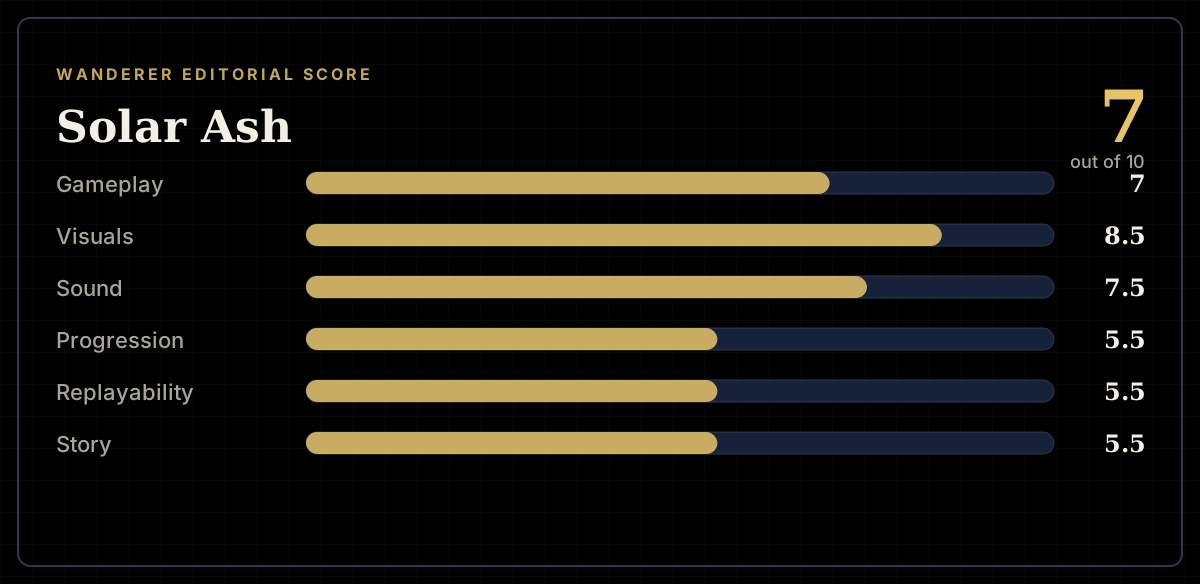
How the review scores each part of the gameWanderer Editorial -
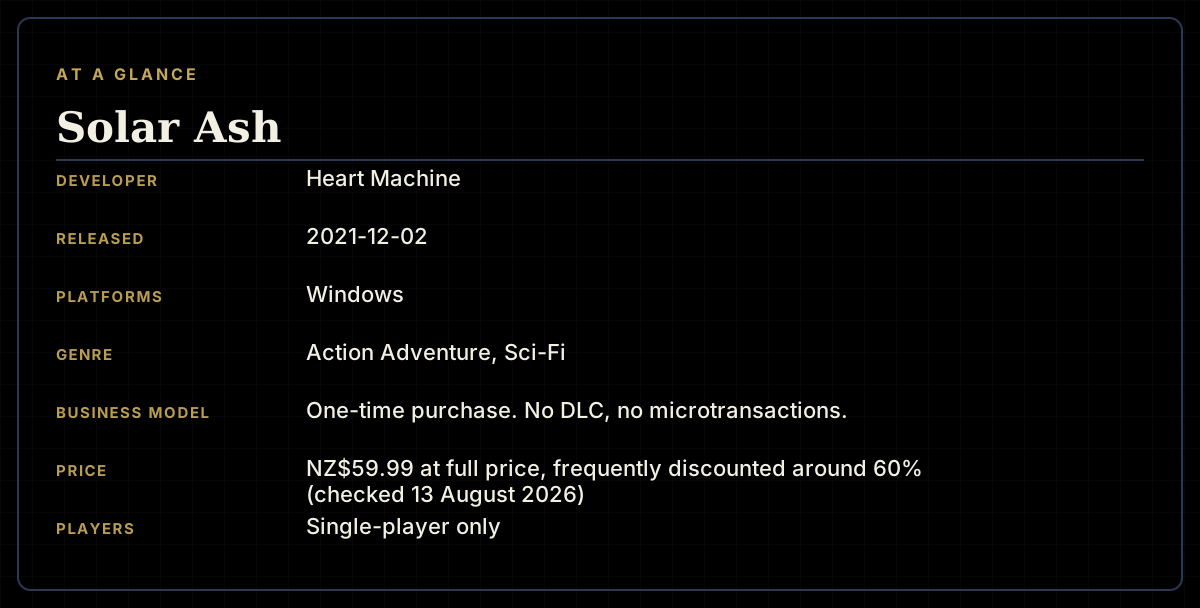
The essentialsWanderer Editorial -
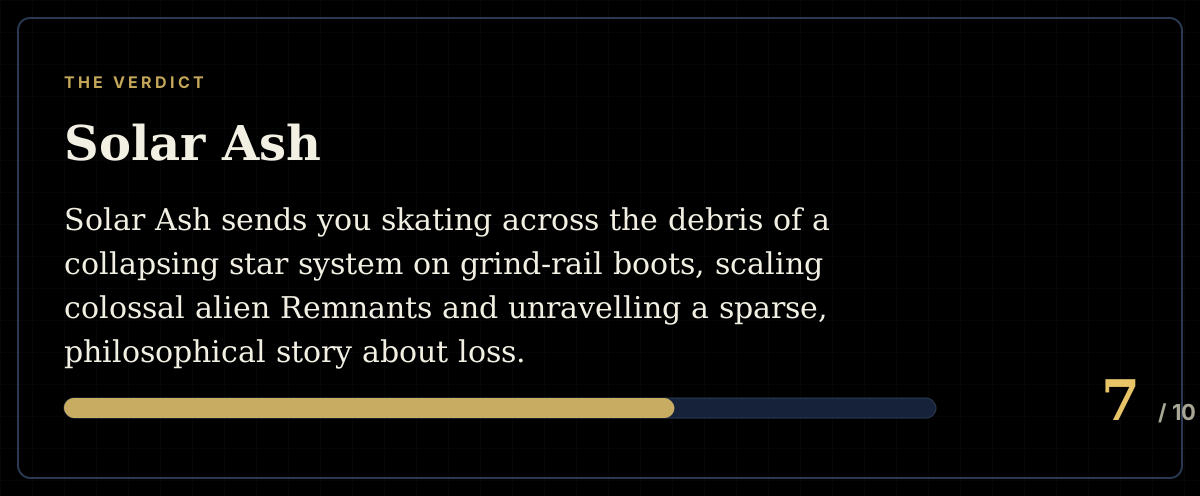
The short versionWanderer Editorial