Game review
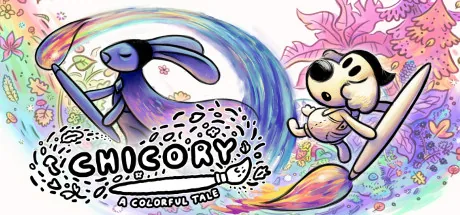
Chicory: A Colorful Tale
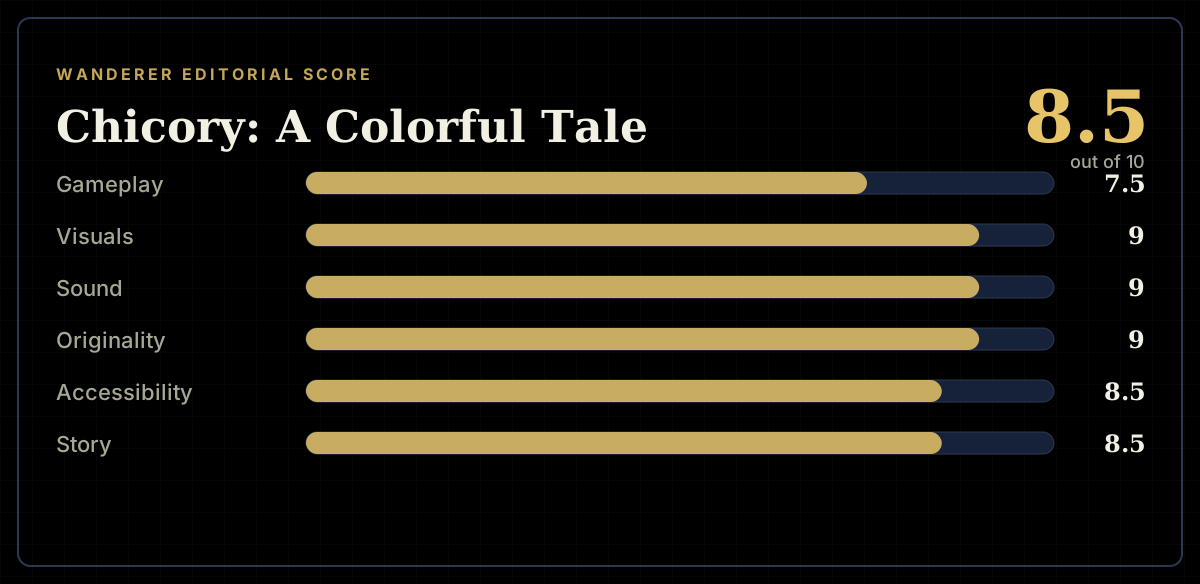
8.5 / 10
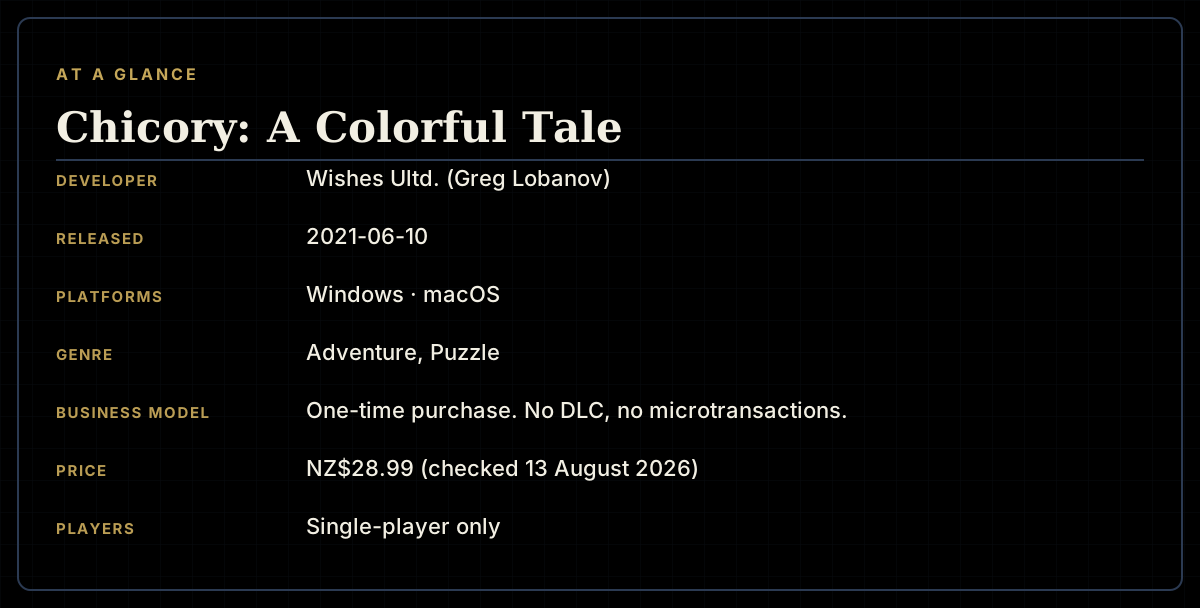
- Developer
- Wishes Ultd. (Greg Lobanov)
- Publisher
- Finji
- Released
- 10 June 2021
- Platforms
- Windows, macOS
- Genre
- Adventure, Puzzle
- Monetisation
- One-time purchase. No DLC, no microtransactions.
- Players
- Single-player only
The short version
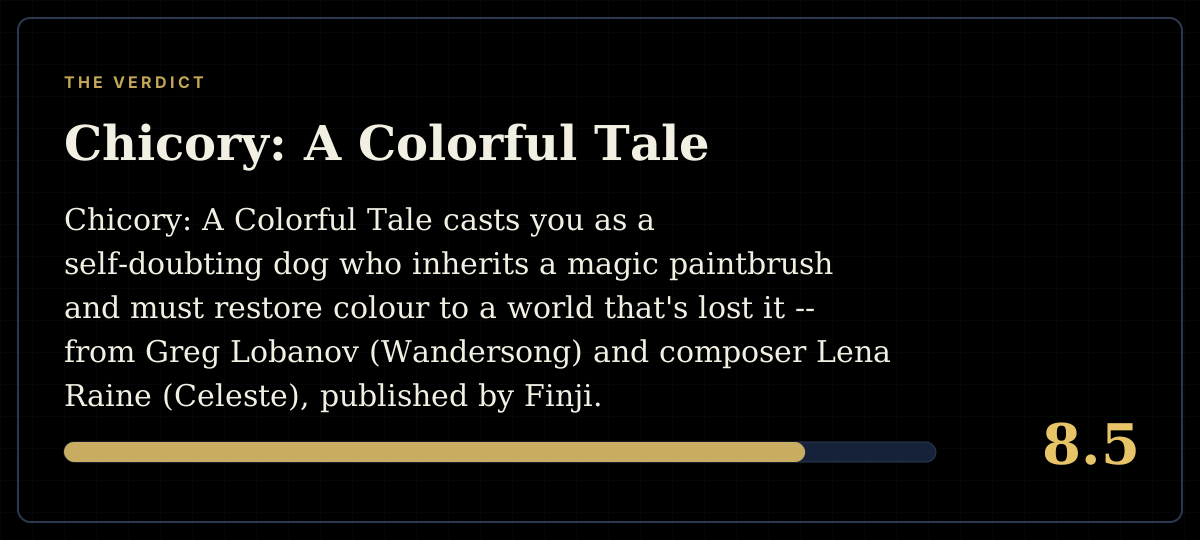
Chicory: A Colorful Tale casts you as a self-doubting dog who inherits a magic paintbrush and must restore colour to a world that's lost it -- from Greg Lobanov (Wandersong) and composer Lena Raine (Celeste), published by Finji. It launched on 10 June 2021 to Overwhelmingly Positive reviews, roughly 97% of 3,986 total, and five years on it is still drawing enthusiastic new reviews rather than fading into "beloved but dated."
The one complaint that recurs consistently across the negative sample, from launch week through 2026, is specific rather than diffuse: painting with a mouse and keyboard feels imprecise for a meaningful minority of players, undercutting a mechanic the entire game is built around. A smaller, related complaint describes pacing that slows and repeats in the back half for players who don't connect with the story's themes of self-doubt and creative perfectionism.
Biggest strengths
- A genuinely inventive central mechanic -- painting the entire world in real time -- that doubles as puzzle design, self-expression and a metaphor for the story's themes all at once
- A sincere, well-regarded story about self-doubt, perfectionism and creative anxiety that a large share of reviewers describe as personally moving rather than merely well-written
- An outstanding soundtrack from Lena Raine (Celeste) that draws sustained praise even from reviewers otherwise critical of the game
Biggest weaknesses
- A specific, recurring complaint from launch through 2026 that painting controls feel imprecise on mouse and keyboard, undercutting the mechanic the entire game is built around for that minority of players
- A meaningful minority describe pacing that slows and grows repetitive in the back half, particularly for players who don't connect with the story's central themes
- Some reviewers find the writing flat or the story's messaging muddled, a minority view but a consistent one across the sample
Who it's for: Players who want a gentle, emotionally sincere adventure game about creativity, anxiety and self-doubt, told through a genuinely inventive world-painting mechanic -- fans of Celeste's emotional honesty or Wandersong's warmth. Less suited to players who need precise, responsive controls above all else, or who want a brisker pace throughout.
Our recommendation: An easy recommendation at its NZ$28.99 asking price, especially for players who connect with games about creative anxiety and imposter syndrome. If you play primarily with mouse and keyboard, be aware the core painting mechanic draws a specific, recurring complaint about precision -- worth trying the demo or a controller first if that's a concern.
8.5 / 10
Chicory: A Colorful Tale puts you in control of a nervous, self-doubting dog who stumbles into possession of the Wielder's Brush — a magic paintbrush capable of restoring colour to a world that has mysteriously lost all of it — despite believing, repeatedly and out loud, that they aren't ready for the responsibility. It launched on 10 June 2021 from Wishes Ultd., led by Greg Lobanov (Wandersong) with a soundtrack by Lena Raine (Celeste), published by Finji. Five years on, it sits at Overwhelmingly Positive on Steam — roughly 97% of 3,986 total reviews — and, unusually for a game this far from its release window, it is still generating enthusiastic new five-star reviews rather than settling into "well-regarded but rarely discussed."
A mechanic that is also the theme
The obvious hook is the painting: at any point, in real time, you can colour in the black-and-white world around you, and the game builds genuine puzzle design, exploration and personal expression on top of that single verb. But what elevates Chicory above a clever gimmick, according to the review sample almost unanimously, is how directly the mechanic serves the story. The protagonist is paralysed by the belief that they're an unworthy successor to the brush's previous, more talented wielder — and painting a chaotic, ugly, deliberately-imperfect scrawl across the world is, mechanically and narratively, the same act. "I found the story about self-doubt, perfectionism and creativity to be very relatable and moving," reads a representative 2026 review. "One of the rare cases where the story is in perfect sync with the gameplay." Another: "It has a poignant story that is especially likely to resonate with many artists." This isn't a minority reading — it's the single most common thing positive reviewers reach for across five years of the sample, and it's a large part of why the game keeps finding new fans well past its launch window.
Lena Raine's soundtrack is the other point of near-universal praise, cited approvingly even inside otherwise critical reviews: "The soundtrack ranges from fine to amazing," reads one negative review that goes on to list several other complaints, and a review focused purely on the music opens with "I got this game pretty much entirely because Lena Raine made the soundtrack" before describing the rest as merely fine.
The complaint that doesn't go away
Set against that consensus, one specific, mechanical complaint recurs with real consistency from launch week straight through to 2026: painting with a mouse and keyboard feels imprecise for a meaningful share of players, and because painting is the game's central verb, that imprecision lands harder than a similar complaint would in most games. "I wasn't able to keep within the lines using mouse and keyboard," reads a launch-week review. A parent reviewing the game with their five-year-old in 2022 makes the same point: "the concept is wonderful... but I found the game failed to capitalize much on the primary mechanic of painting." As recently as 2024, a reviewer still not fully sold notes "it's basically a coloring book with pretty iffy controls such that it's kinda impossible to draw a straight line." This is specific enough, and repeated enough across years, that it reads as a real design limitation for a subset of players rather than a skill issue — reviewers who mention a controller generally don't report the same frustration.
A second, related complaint concerns pacing: a meaningful minority describe the back half of the roughly 10-15 hour campaign as slower and more repetitive than the opening hours, particularly reviewers who didn't personally connect with the central themes of self-doubt and creative anxiety. "It's an interesting concept but it got really boring really fast," reads one representative 2024 review — a minority position, but one that appears independently across enough reviews to be worth flagging honestly rather than treating the Overwhelmingly Positive score as the whole story. A small handful of very recent reviews also report crashes, though nothing in the sample suggests this is widespread rather than isolated hardware-specific instances.
Accessibility as a genuine strength, not a footnote
Chicory's accessibility work deserves its own mention rather than a passing line, because it is unusually substantial for an indie game of this size and directly relevant to the core mechanic: a game fundamentally about colour was built with roughly 40 documented accessibility options, including robust colour-blind support, adjustable text size, adjustable game speed and reduced-input modes. That work was recognised with an IndieCade Innovation award and an SXSW Gaming Award for Excellence in Narrative, alongside a Best Indie Game nomination at The Game Awards — a meaningfully strong showing for a first commercial release built around a mechanic that, on paper, sounds hardest for colour-blind and motor-impairment-affected players to access. It doesn't fully resolve the mouse-and-keyboard precision complaint above — one reviewer specifically notes the eye-strain accommodation exists but doesn't fully solve their discomfort — but it represents a genuine, credited design commitment rather than a marketing line.
How it has aged
Chicory has aged into exactly the kind of indie game a "how it's aged" question is meant to surface: one that has quietly kept finding new players rather than being carried by launch-week momentum. The achievement data reflects a game most buyers actually finish — the first story milestone sits at 91%, with a steady, expected taper down to the completionist collectible achievements around 7-10%, consistent with a narrative game whose core story most players see through even if they don't chase every collectible. Five years after release, the review sample still skews toward recent, detailed, enthusiastic write-ups rather than the thin trickle of a game people have stopped discovering — a good sign for a title with no sequel, no ongoing content updates and no marketing push keeping it in view.
8.5 out of 10. Chicory: A Colorful Tale remains one of 2021's most distinctive and sincerely loved indies, built around a painting mechanic that genuinely serves its story about self-doubt and creative anxiety rather than sitting apart from it. A specific, real complaint about mouse-and- keyboard control precision is worth knowing before you buy, and a controller is worth trying first if that's a concern for you — but it hasn't stopped this from being one of the more quietly enduring recommendations from its release year.
Pros and cons
Pros
- A genuinely inventive central mechanic -- painting the entire world in real time -- that doubles as puzzle design, self-expression and a metaphor for the story's themes all at once
- A sincere, well-regarded story about self-doubt, perfectionism and creative anxiety that a large share of reviewers describe as personally moving rather than merely well-written
- An outstanding soundtrack from Lena Raine (Celeste) that draws sustained praise even from reviewers otherwise critical of the game
- Extensive, genuinely documented accessibility work -- around 40 distinct accessibility options including colour-blind support central to a game about colour -- recognised with an IndieCade Innovation award and an SXSW Award for Excellence in Narrative
Cons
- A specific, recurring complaint from launch through 2026 that painting controls feel imprecise on mouse and keyboard, undercutting the mechanic the entire game is built around for that minority of players
- A meaningful minority describe pacing that slows and grows repetitive in the back half, particularly for players who don't connect with the story's central themes
- Some reviewers find the writing flat or the story's messaging muddled, a minority view but a consistent one across the sample
- A small number of recent reviews report crashes, though these appear isolated rather than widespread in the sample checked
Screenshots
-
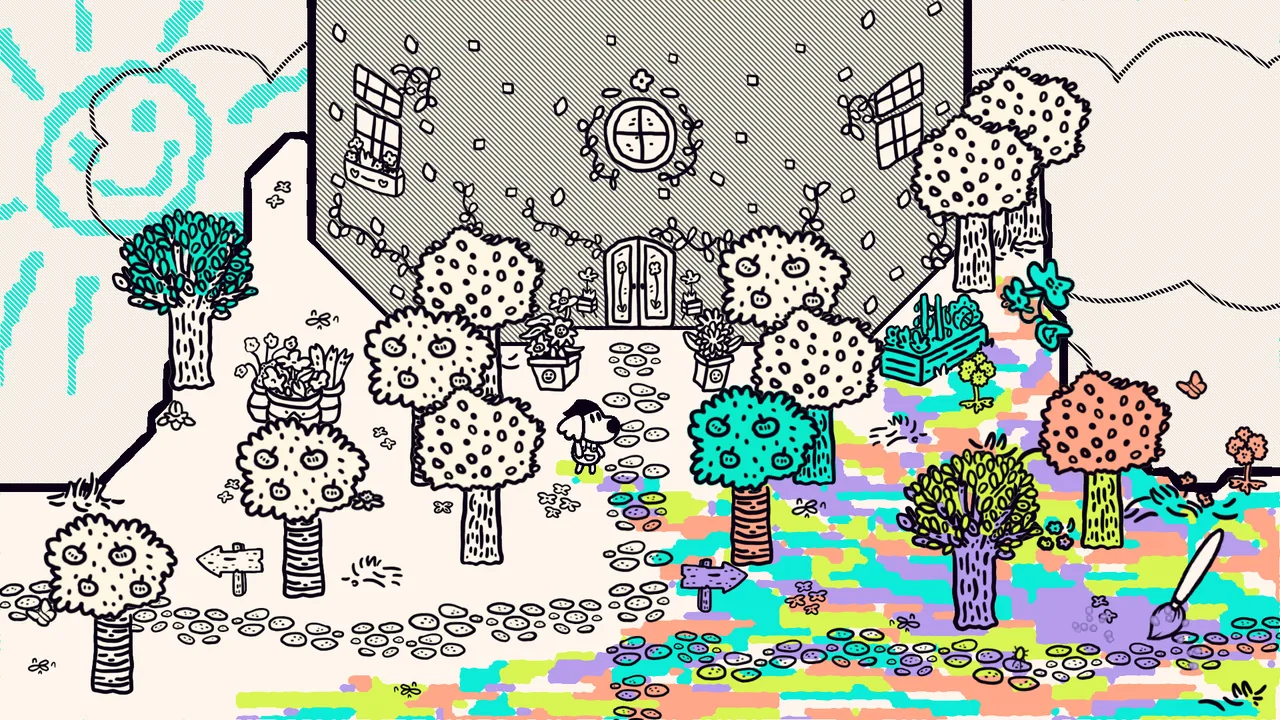
Chicory: A Colorful TaleImage: Finji via Steam -
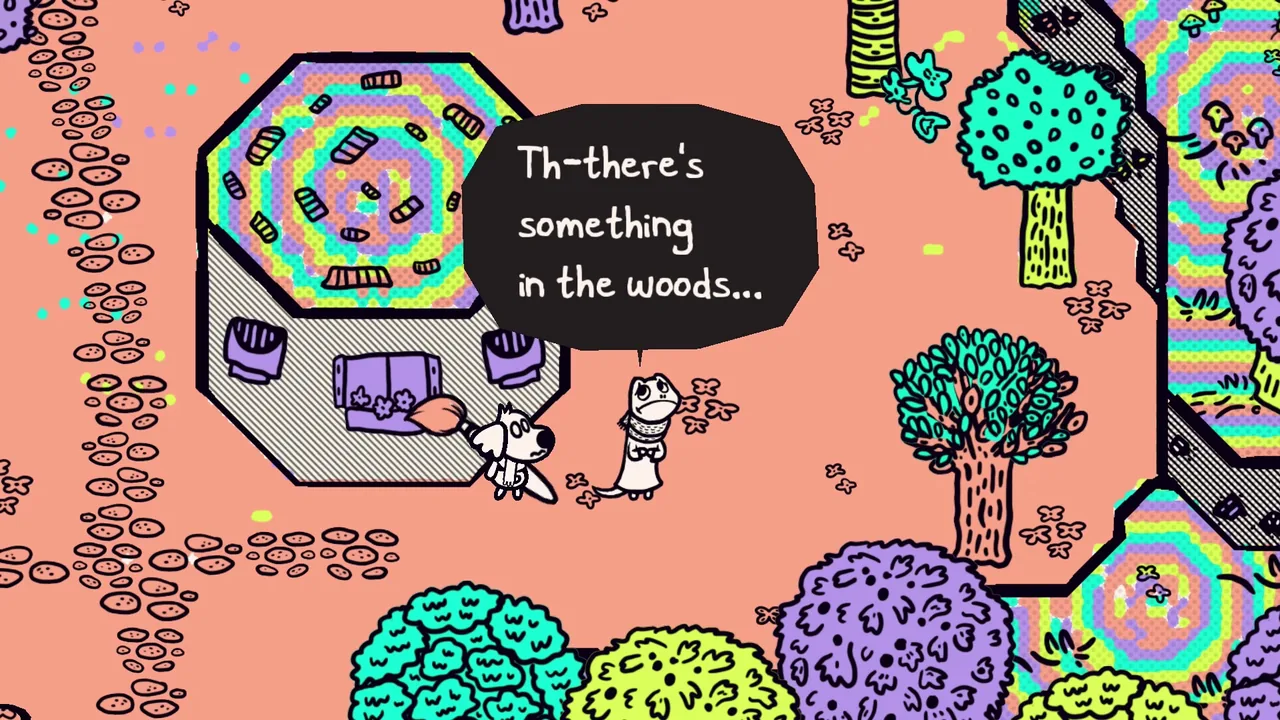
Chicory: A Colorful TaleImage: Finji via Steam -
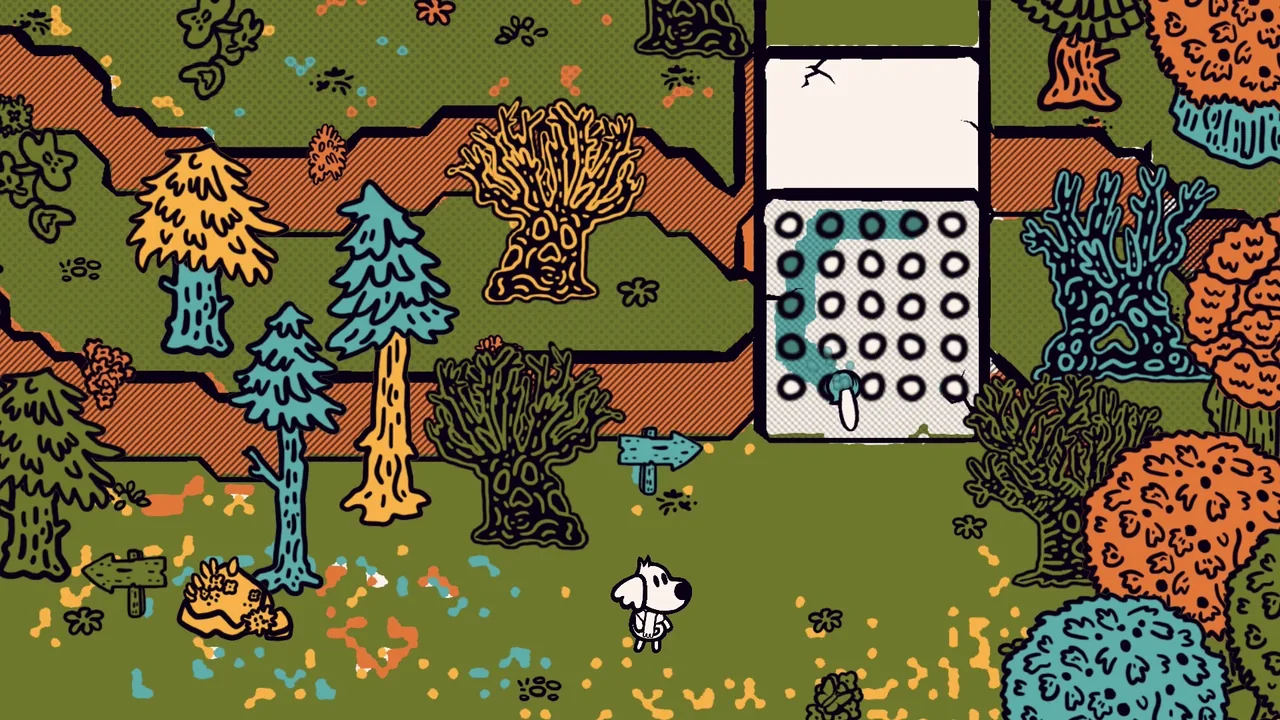
Chicory: A Colorful TaleImage: Finji via Steam -
How the review scores each part of the gameWanderer Editorial -
The essentialsWanderer Editorial -
The short versionWanderer Editorial