Game review
He Who Watches
8 / 10
- Developer
- Bobby Vanden
- Publisher
- Draknek and Friends
- Released
- 2 September 2026
- Platforms
- Windows, macOS
- Genre
- Adventure, Indie
- Monetisation
- One-time purchase, no in-game purchases listed
- Players
- Single-player
The short version
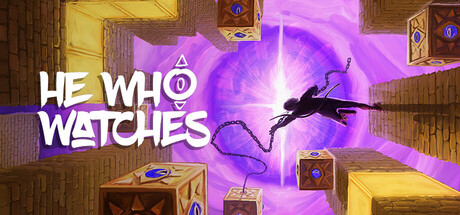
He Who Watches, released 2 September 2026 by Bobby Vanden and published by Draknek and Friends, is a first-person puzzle game built around walking on any surface and manipulating gravity, sending players deep into an ancient labyrinth of intricate spatial puzzles in search of an imprisoned god. It sits Very Positive with a sample of 57 reviews, and reading widely through it reveals genuine, detailed enthusiasm from an unusually puzzle-literate audience who repeatedly compare the game favourably to some of the genre's most respected names, including Portal, The Witness, The Talos Principle, Stephen's Sausage Roll, Bonfire Peaks and A Monster's Expedition. Reviewers consistently praise the core gravity-walking mechanic as a genuinely fresh, disorienting-yet-legible way to inhabit 3D puzzle space, and a distinctive hint system that solves a miniature version of the current puzzle rather than simply revealing the answer draws specific, repeated praise. Set against that acclaim, this review found one highly detailed, methodical negative review that documents a real and specific problem: a sharp difficulty spike after the game's third chamber, where puzzle logic becomes markedly more obscure and less consistently telegraphed than the carefully-paced opening hours. This review also found reports of frustration over how the game's pre-release demo was handled, with at least one reviewer noting it was removed at launch without clear indication of how much total content the full game actually contains.
Biggest strengths
- The core gravity-walking mechanic draws overwhelming, specific praise as a genuinely fresh approach to first-person 3D puzzle design, with reviewers describing snappy, disorienting-yet-legible movement and a real sense of inhabiting puzzles from the inside rather than viewing them from outside
- Reviewers repeatedly and specifically compare the game favourably to some of the most respected names in the puzzle genre, including Portal, The Witness, The Talos Principle, Stephen's Sausage Roll, Bonfire Peaks and A Monster's Expedition, reflecting an unusually puzzle-literate and demanding review audience
- A distinctive hint system draws consistent, specific praise, with reviewers describing genuine appreciation for a design that has players solve a smaller, simplified version of the current puzzle to unlock the core insight, rather than simply revealing a direct solution
Biggest weaknesses
- At least one highly detailed, methodical reviewer documents a sharp difficulty spike after the game's third chamber, describing puzzles that suddenly become obscure and less logically telegraphed than the carefully-paced opening hours, with hint puzzles that sometimes explain concepts through what that reviewer calls "brute force alone" rather than genuine logical deduction
- The same detailed reviewer specifically criticises overworld puzzles gating progress along the main path, describing some as unnecessarily obtuse and requiring elaborate multi-stage setups for what should be simpler connective content, distinct from the core chamber puzzles' quality
- Multiple reviewers report frustration over how the pre-release demo was handled, with at least one reviewer noting it was removed at launch without any clear indication of how much total content the full game contains, making it harder to judge value relative to the asking price
Who it's for: Fans of demanding, mechanically inventive first-person puzzle games, particularly players who've enjoyed Stephen's Sausage Roll, Bonfire Peaks, A Monster's Expedition, or other titles in the "deep sokoban" tradition, looking for a genuinely fresh spatial-reasoning challenge.
Our recommendation: Strongly worth it for dedicated puzzle fans; go in aware of a real, well-documented difficulty spike after the opening chambers, and expect genuine, sustained mental effort rather than a gentle difficulty curve throughout.
8 / 10
Introduction
He Who Watches, released 2 September 2026 by Bobby Vanden and published by Draknek and Friends, is a first-person puzzle game built entirely around walking on any surface and manipulating gravity, sending players deep into an ancient labyrinth of intricate spatial puzzles in search of an imprisoned god at its centre. It sits Very Positive with a sample of 57 reviews, and reading widely through it reveals genuine, detailed enthusiasm from an unusually puzzle-literate audience who repeatedly and specifically compare the game to some of the genre's most respected names, sitting alongside one highly detailed dissenting account this review found worth taking seriously.
A genuinely fresh way to inhabit 3D puzzle space
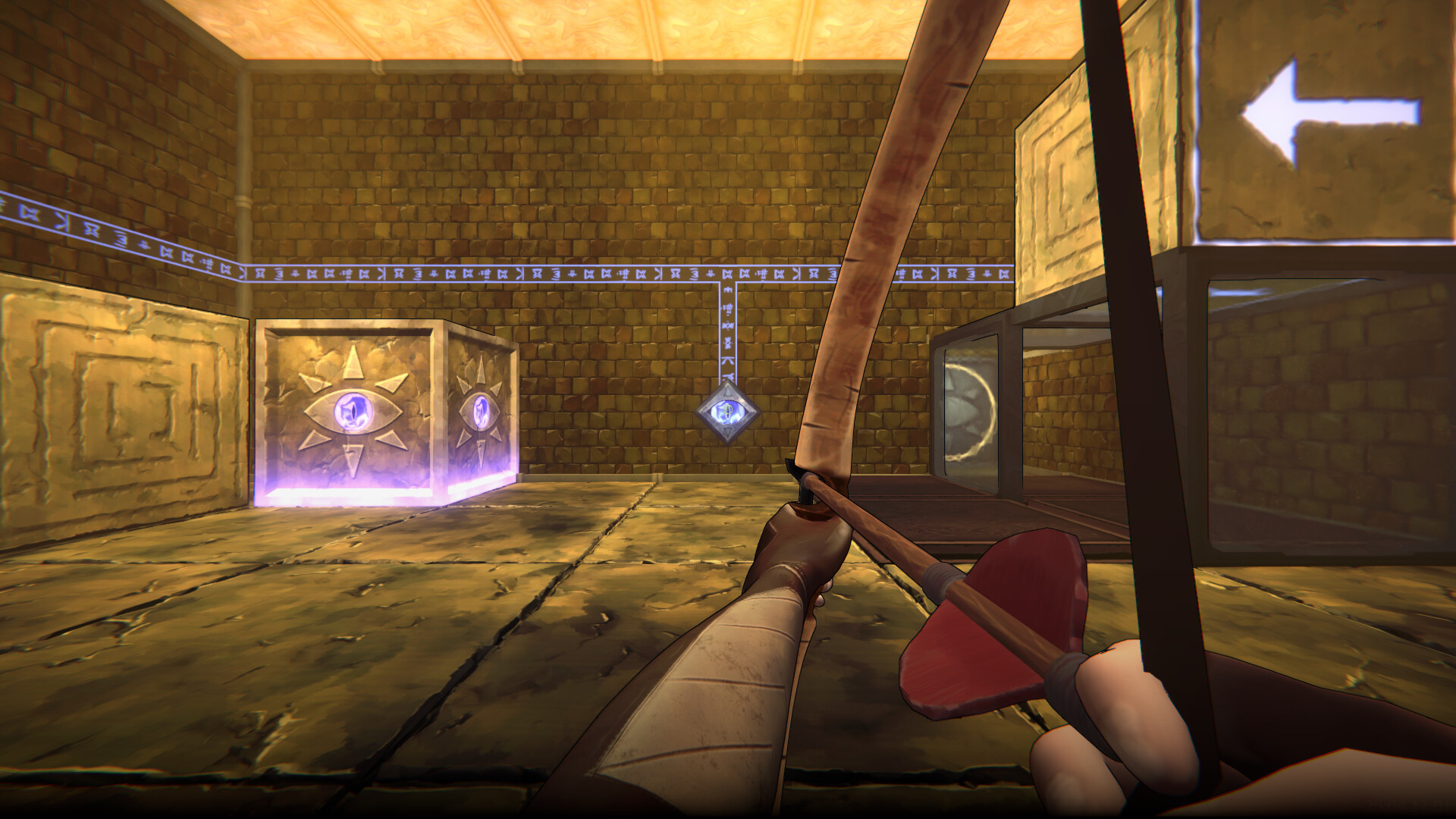
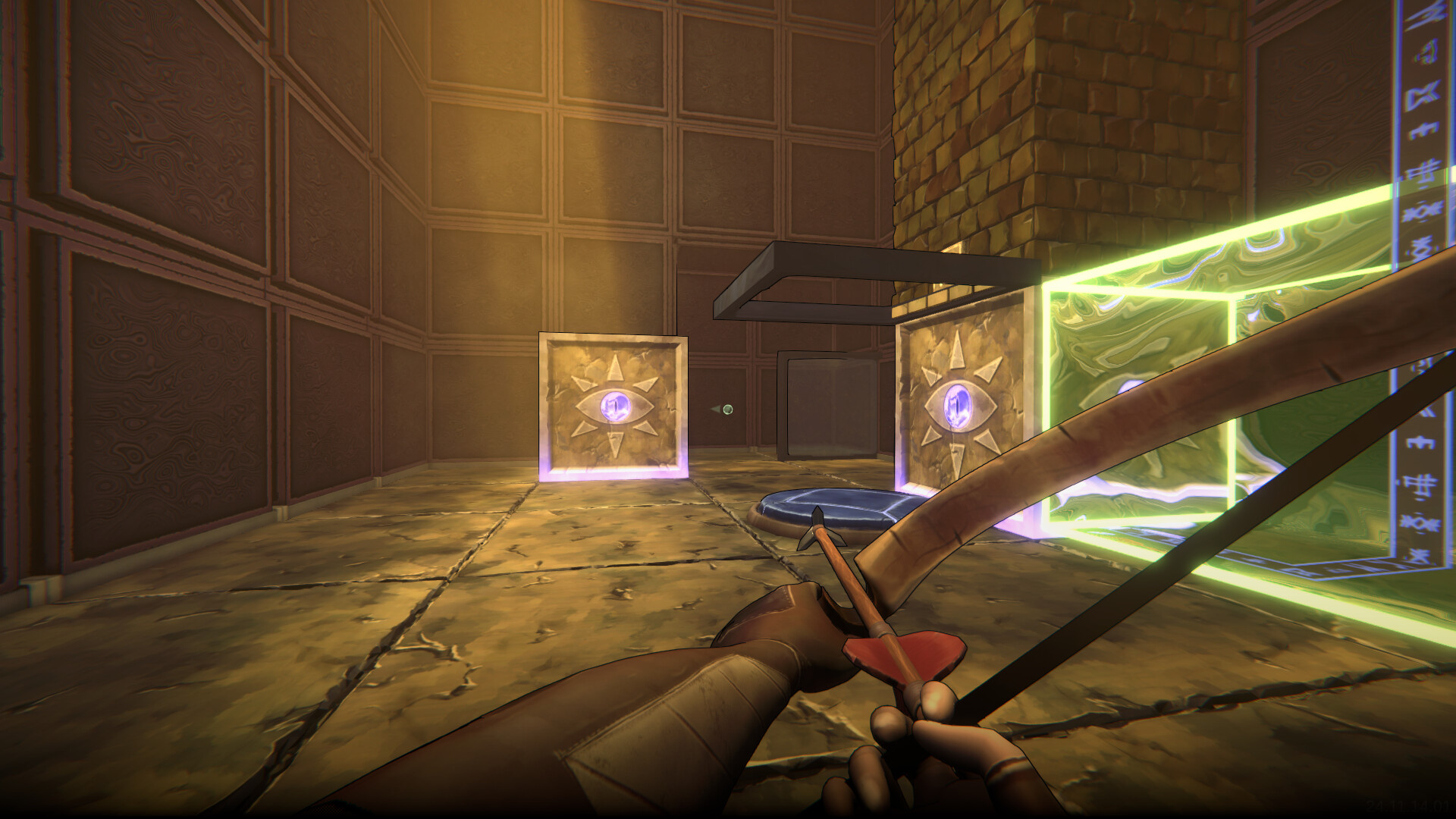
The clearest, most consistent praise across this sample concerns the core gravity-walking mechanic itself. Reviewers describe snappy, precise movement across surfaces that would be walls or ceilings in any conventional game, with several specifically praising how the design keeps genuinely disorienting 3D geometry readable and legible in the moment, rather than confusing for its own sake. Multiple reviewers frame the resulting experience as feeling like being inside a puzzle rather than observing one from outside, distinguishing it directly from more traditional sokoban-style games viewed from a fixed external perspective.
Comparisons to the genre's most respected names
This review found an unusually specific, comparison-rich pattern running through this sample. Reviewers repeatedly and confidently invoke Portal, The Witness, The Talos Principle, Stephen's Sausage Roll, Bonfire Peaks, A Monster's Expedition, and even the more obscure English Country Tune as reference points, with several explicitly framing He Who Watches as belonging in that specific company rather than merely aspiring to it. One reviewer, who identifies themselves as a developer of a separate gravity-shifting game and had played an early demo build at a prior industry showcase, specifically praises the polish of the final execution. Given how demanding and genre-literate this audience clearly is, that level of confident, specific comparison reads as considered, expert endorsement rather than casual praise.
A hint system reviewers specifically single out
Beyond the core mechanic, this review found consistent, specific praise for a distinctive hint system. Rather than simply revealing a direct solution, the game presents a smaller, simplified version of the current puzzle designed to communicate the core underlying insight needed to solve the full-scale version. Reviewers describe genuine appreciation for this approach, several explicitly praising it as preserving the satisfaction of self-discovery while still offering a meaningful path forward when genuinely stuck.
A sharp, well-documented difficulty spike
Set against that acclaim, this review found one highly detailed, methodical negative review that documents a real and specific structural problem rather than a vague difficulty complaint. That reviewer, self-identifying as precisely the target audience this game was built for, describes a carefully-paced, logical difficulty curve across the opening two and a half chambers, followed by a sharp spike in obscurity and frustration beginning around the third chamber. The same reviewer specifically criticises the hint system's later puzzles for sometimes explaining concepts that can only genuinely be discovered "by brute force alone," and separately criticises overworld puzzles gating progress along the main path as unnecessarily obtuse relative to the core chamber content. This review treats this account as unusually credible precisely because of its granular specificity and because the same reviewer explicitly wishes there were a "mixed" rating option, expressing real regret at landing on a negative recommendation for a game whose mechanics and presentation they otherwise praise directly.
Frustration over the demo's handling
A separate, more practical complaint concerns the game's pre-release demo. Multiple reviewers report frustration that the demo was removed at launch without providing a clear sense of how much total content the full release actually contains, with at least one reviewer specifically noting many puzzles in that demo were repeated content rather than a representative sample, making it harder to judge whether the asking price is justified relative to total puzzle volume.
Weighing an exceptional opening against a real late-game problem
Taken as a whole, this review reads He Who Watches as a genuinely excellent puzzle game whose opening hours earn the enthusiastic comparisons this sample offers, sitting alongside a specific, credible and well-documented concern about pacing later in the experience. That's a meaningfully different situation from a game that's simply inconsistent throughout — the strength of the early chambers is not in serious dispute anywhere in this sample, and the difficulty-spike complaint, however detailed, comes from a single account rather than a broad chorus, even as this review takes its specificity seriously enough to weigh directly against the otherwise glowing consensus.
Reading a single detailed dissent against a broad chorus of praise
It's worth explaining directly why this review weighs one methodical negative account as heavily as it does against fifty-five positive reviews. Puzzle games are unusually sensitive to exactly this kind of individual, granular account, since difficulty and clarity are inherently subjective in a way that, say, a bug report or a performance complaint typically isn't. A reviewer who explicitly identifies as the target audience, tracks their own experience chamber by chamber, and distinguishes carefully between different categories of frustration, obtuse overworld gating versus a genuine logical difficulty curve, brute-force hint puzzles versus well-signposted new mechanics, is providing a qualitatively different kind of evidence than a one-line complaint about a game being "too hard." This review treats that specificity as a genuine signal worth taking seriously on its own terms, even while the broader sample's overwhelming positivity suggests this particular reviewer's experience with the mid-game spike, however real, isn't universally shared by everyone who's reached the same point in the labyrinth.
Final Verdict
He Who Watches delivers a genuinely fresh, mechanically inventive first-person puzzle experience that an unusually demanding, puzzle-literate audience confidently places alongside genre landmarks like Portal and The Witness, backed by a thoughtful hint system and strong technical polish including solid Steam Deck performance. What tempers this score is a real, carefully documented difficulty spike after the opening chambers that at least one deeply invested reviewer found serious enough to override an otherwise clear recommendation, alongside real frustration over the pre-release demo's handling ahead of launch. Strongly worth it for dedicated puzzle fans prepared for genuine, sustained mental effort rather than a consistently gentle difficulty curve.
Pros and cons
Pros
- The core gravity-walking mechanic draws overwhelming, specific praise as a genuinely fresh approach to first-person 3D puzzle design, with reviewers describing snappy, disorienting-yet-legible movement and a real sense of inhabiting puzzles from the inside rather than viewing them from outside
- Reviewers repeatedly and specifically compare the game favourably to some of the most respected names in the puzzle genre, including Portal, The Witness, The Talos Principle, Stephen's Sausage Roll, Bonfire Peaks and A Monster's Expedition, reflecting an unusually puzzle-literate and demanding review audience
- A distinctive hint system draws consistent, specific praise, with reviewers describing genuine appreciation for a design that has players solve a smaller, simplified version of the current puzzle to unlock the core insight, rather than simply revealing a direct solution
- Presentation and technical polish draw consistent praise, with reviewers specifically noting strong performance on Steam Deck and an active in-game feedback feature that several reviewers expect will improve the game further after release
Cons
- At least one highly detailed, methodical reviewer documents a sharp difficulty spike after the game's third chamber, describing puzzles that suddenly become obscure and less logically telegraphed than the carefully-paced opening hours, with hint puzzles that sometimes explain concepts through what that reviewer calls "brute force alone" rather than genuine logical deduction
- The same detailed reviewer specifically criticises overworld puzzles gating progress along the main path, describing some as unnecessarily obtuse and requiring elaborate multi-stage setups for what should be simpler connective content, distinct from the core chamber puzzles' quality
- Multiple reviewers report frustration over how the pre-release demo was handled, with at least one reviewer noting it was removed at launch without any clear indication of how much total content the full game contains, making it harder to judge value relative to the asking price
- At least one reviewer specifically wishes for a time-triggered hint system that activates automatically after a set period stuck, rather than requiring players to manually seek out guidance themselves
- A small number of reviewers note the underlying sokoban-style puzzle format simply isn't for them personally, a preference-based observation distinct from any specific quality complaint about the game's execution
Screenshots
-
He Who WatchesImage: Draknek and Friends via Steam -
He Who WatchesImage: Draknek and Friends via Steam -
He Who WatchesImage: Draknek and Friends via Steam -
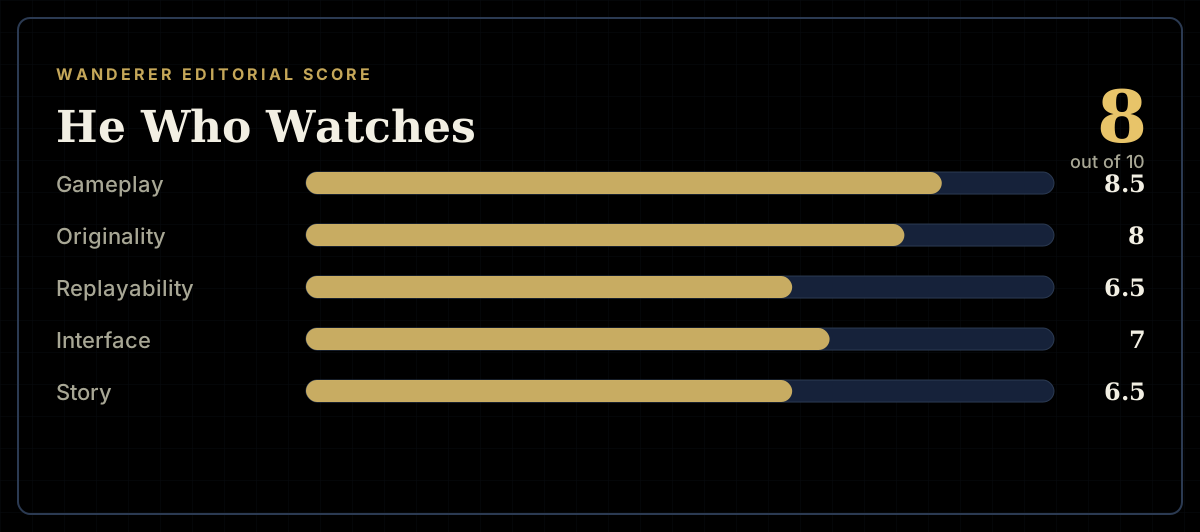
How the review scores each part of the gameWanderer Editorial -
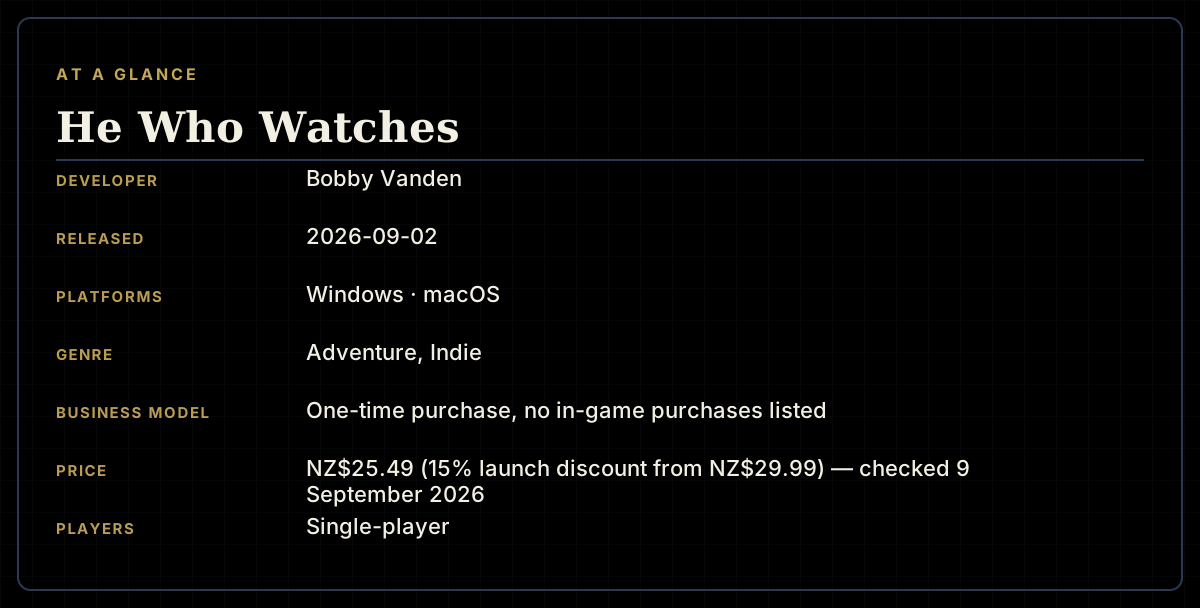
The essentials at a glanceWanderer Editorial -
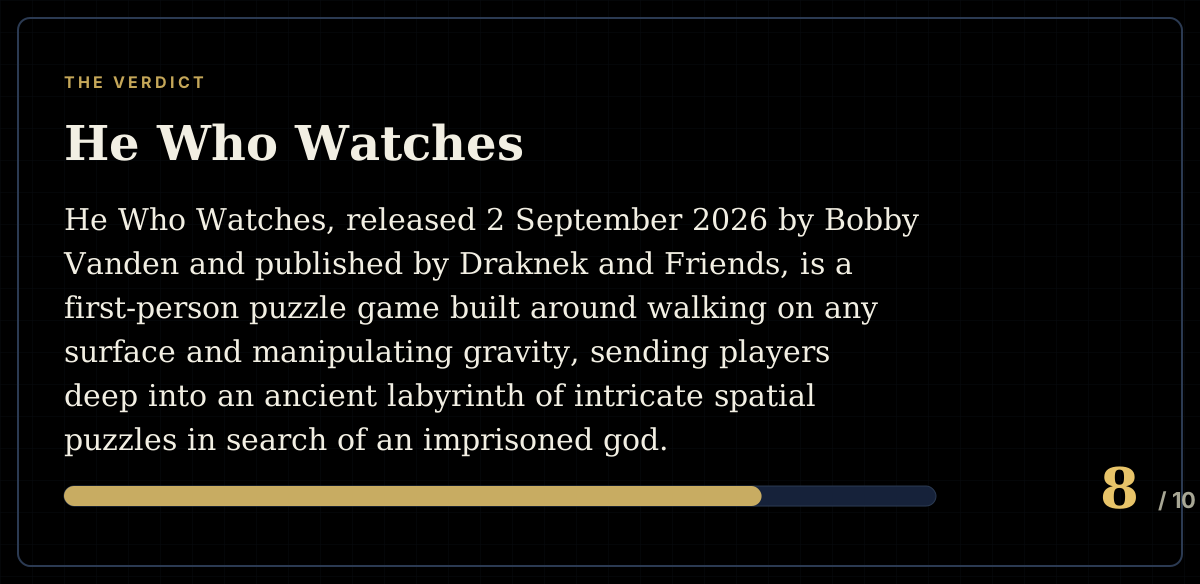
The short versionWanderer Editorial