
Game review
Dungeons of Dreadrock 2 - The Dead King's Secret
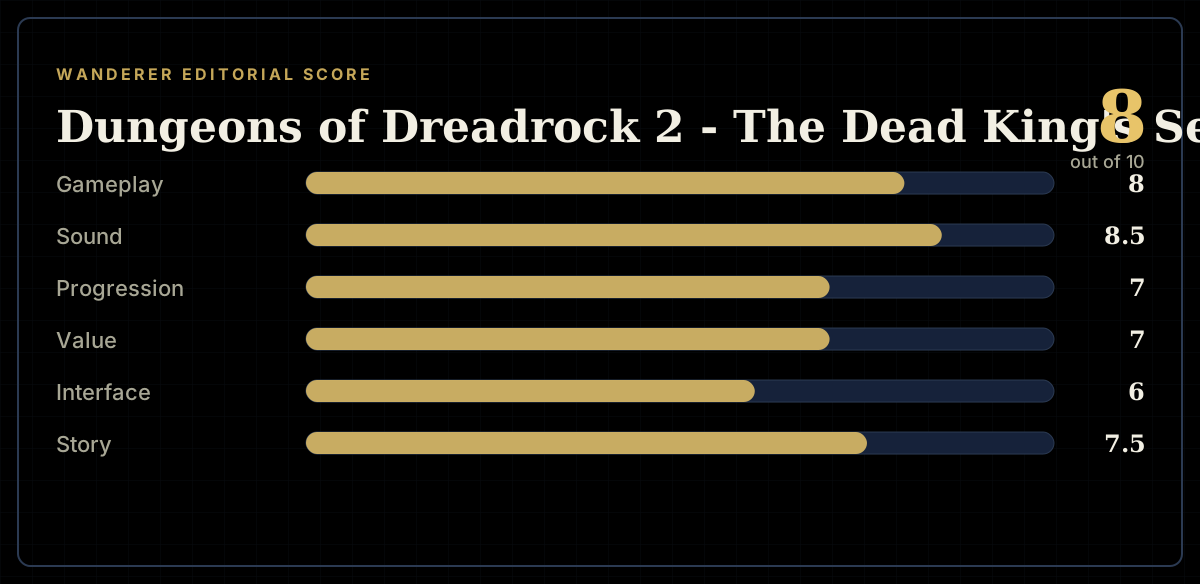
8 / 10
- Developer
- Prof. Dr. Christoph Minnameier
- Publisher
- Prof. Dr. Christoph Minnameier
- Released
- 5 December 2024
- Platforms
- Windows
- Genre
- Puzzle dungeon-crawler adventure
- Monetisation
- One-time purchase, no in-game store or additional currency purchases
- Players
- Single-player only
The short version
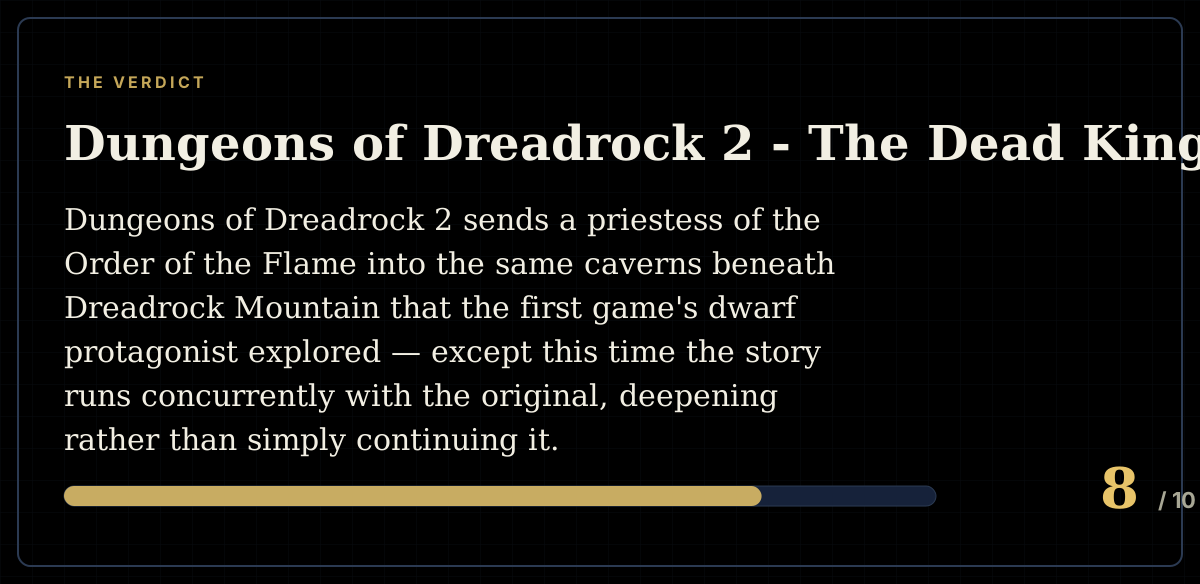
Dungeons of Dreadrock 2 sends a priestess of the Order of the Flame into the same caverns beneath Dreadrock Mountain that the first game's dwarf protagonist explored — except this time the story runs concurrently with the original, deepening rather than simply continuing it. Reviewers consistently describe the sequel as matching the first game's quality across puzzle design, hint-system generosity, and especially its music, with "more of the same, but that's a good thing" a fair summary of the dominant sentiment. A specific, repeatable softlock bug tied to the game's auto-checkpoint system drew real frustration from some players; this review can confirm the developer shipped a dedicated fix titled "Softlocks Patch" within about a month of release, addressing exactly that complaint.
Biggest strengths
- Puzzle design is consistently described as clever and fair, requiring players to learn the specific behaviours of the dungeon's various hazards and creatures rather than relying on trial and error, with a built-in hint system multiple reviewers call generous without giving away solutions outright
- The concurrent-timeline story structure, running alongside rather than after the events of the first game, draws specific praise for deepening the original's narrative and explaining plot details that weren't fully clear before
- Music is singled out by name across a striking number of reviews as a highlight, with multiple reviewers calling specific themes "stunning" or admitting the melodies stayed stuck in their heads well after finishing
Biggest weaknesses
- A specific, repeatable softlock bug tied to the game's auto-checkpoint system was reported by multiple reviewers as capable of trapping players in one or two particular rooms, requiring a manual reload from an earlier checkpoint to escape, though this review confirms a dedicated patch addressing it shipped in January 2025
- At least one detailed negative review argues the sequel feels closer to a large DLC than a full sequel, citing puzzle solutions that lean on singular, similar patterns rather than meaningfully new creative approaches
- A handful of puzzles are reported as having unforgivingly tight timing windows, a specific source of frustration for players who otherwise found the difficulty well-paced
Who it's for: Fans of the first Dungeons of Dreadrock, and puzzle-adventure players generally who want a short, story-rich, beautifully scored game with a genuinely helpful built-in hint system rather than punishing trial-and-error design.
Our recommendation: A confident recommendation for returning fans and puzzle newcomers alike, ideally played after the first game given how directly the two stories interlock. Best value found in a bundle with the original if buying both, and worth checking that the softlock fix has held if starting a fresh save now.
8 / 10
Dungeons of Dreadrock 2 makes an unusual structural choice for a sequel: rather than simply continuing after the first game's ending, it runs its own story concurrently with it, following a priestess of the Order of the Flame through the same mountain's caverns at the same time the original's dwarf protagonist was making his own way through. Reviewers consistently describe this as the game's most interesting addition, deepening rather than merely extending a story they already knew. It's a small structural risk for a solo developer to take on a sequel, and the review sample suggests it paid off.
The same puzzle craft, genuinely maintained
The core loop — navigate a room, learn how its specific hazard or creature behaves, and use that knowledge to proceed — is unchanged from the first game, and reviewers are largely relieved rather than disappointed by that consistency. One reviewer, having tracked their own hint usage closely, reports finishing with "100% achievement" in 5.4 hours having needed only a single optional hint, calling the puzzle design "astonishingly consistent in quality given ~200 puzzle rooms across both games." Another puts it more simply: "it is essentially more of the same, but that is a good thing." The built-in hint system draws specific, repeated praise for striking the right balance — present when needed, but not so aggressive that it undermines the satisfaction of solving a room independently.
Music that keeps coming up unprompted
An unusually large share of the review sample singles out the soundtrack specifically, rather than folding it into general praise for presentation. "The music is absolutely stunning," one reviewer writes; another simply notes "the melody's stuck in my mind too," months after finishing the game. For a small, solo-developed puzzle game, having its score become a specific, recurring talking point across independent reviews is a genuine mark of quality rather than an afterthought, and it's consistent with how the original Dreadrock was received as well.
A real bug, and a real, dated fix
The most substantive technical complaint in the sample concerns a softlock tied to the game's automatic checkpoint system, capable of trapping a player in one or two specific rooms with no way to progress. One reviewer describes it directly: "the auto-checkpoints can cause a softlock in one or two rooms," while noting the workaround — loading back to any earlier checkpoint rather than only the most recent one — was "fortunately" available even if "not obvious." This review can confirm the developer treated this as a priority: the Steam partner-events feed shows a patch titled plainly "Softlocks Patch," dated 8 January 2025, roughly a month after the 5 December 2024 launch. That's a fast, specific, and appropriately named response to a reported bug, and it's the kind of dated confirmation that lets a buyer weigh whether an issue described in an older review still applies to the current build.
A minority view worth naming honestly
Not every review treats the sequel as an unqualified success. One detailed critique argues the game reads closer to "a DLC" than a full sequel, pointing to puzzle solutions that lean on "singular and similar" patterns rather than meaningfully new creative approaches, and calling the story "always bland" without further elaboration. This is a minority position against a much larger chorus of enthusiastic comparisons to the original, but it's worth reporting plainly rather than smoothing over — a buyer who found the first game's puzzles occasionally repetitive may find the same complaint applies here, even if most reviewers experienced fresh variety instead.
Value depends on how you're buying it
Pricing draws a modest but real split. At NZD 21.99 standalone, most reviewers treat the roughly five-to-six-hour runtime as appropriately scoped for a tightly-designed puzzle game, with several explicitly calling it worth the price. A smaller number push back harder — one reviewer calls it "totally not worth 15 dollars even with the rebate," comparing it unfavourably to mobile puzzle game pricing. Notably, several reviewers mention buying the first and second games together in a bundle for a lower combined price, which reads as the most commonly recommended way to actually purchase the series based on how often it comes up unprompted in the sample.
What the achievement curve says about pacing
Steam's own achievement data offers a useful, independent check on how the game's difficulty and length actually play out across its audience. The curve is notably gentle from start to finish: an early caverns milestone sits at 82.9% completion, and even a late-game achievement tied to reaching one of the game's endings still sits at 43.1%. That's a far shallower drop-off than most puzzle or dungeon-crawler games show, and it lines up precisely with reviewer reports of a well-paced, mostly-linear five-to-six-hour experience that the large majority of buyers who start actually finish, rather than one where a punishing midgame difficulty spike thins out the audience early. For a puzzle game specifically, that's a meaningful signal: the hint system and puzzle design are doing their job of keeping players moving forward rather than stuck and frustrated partway through.
Final verdict
Dungeons of Dreadrock 2 delivers exactly what fans of the first game were hoping for: the same generous, well-tuned puzzle design, an even more interesting story structure that rewards knowing the original, and a soundtrack good enough to be a specific selling point on its own. A real, reported softlock bug is a legitimate concern for anyone reading older negative reviews, but this review can confirm the developer treated it seriously and shipped a dedicated fix within about a month of launch — exactly the kind of responsive small-studio support this lane doesn't always find. Play the first game first if you haven't, then come here for a short, beautifully scored continuation that earns its place alongside the original rather than merely riding on its name.
Pros and cons
Pros
- Puzzle design is consistently described as clever and fair, requiring players to learn the specific behaviours of the dungeon's various hazards and creatures rather than relying on trial and error, with a built-in hint system multiple reviewers call generous without giving away solutions outright
- The concurrent-timeline story structure, running alongside rather than after the events of the first game, draws specific praise for deepening the original's narrative and explaining plot details that weren't fully clear before
- Music is singled out by name across a striking number of reviews as a highlight, with multiple reviewers calling specific themes "stunning" or admitting the melodies stayed stuck in their heads well after finishing
- Gamepad controls were meaningfully improved over the first game, with items now assignable to specific buttons rather than relying on a more generic control scheme
- The developer responded quickly and specifically to a reported softlock issue, shipping a dedicated "Softlocks Patch" in January 2025, roughly a month after launch, directly addressing player-reported bugs rather than letting them linger
Cons
- A specific, repeatable softlock bug tied to the game's auto-checkpoint system was reported by multiple reviewers as capable of trapping players in one or two particular rooms, requiring a manual reload from an earlier checkpoint to escape, though this review confirms a dedicated patch addressing it shipped in January 2025
- At least one detailed negative review argues the sequel feels closer to a large DLC than a full sequel, citing puzzle solutions that lean on singular, similar patterns rather than meaningfully new creative approaches
- A handful of puzzles are reported as having unforgivingly tight timing windows, a specific source of frustration for players who otherwise found the difficulty well-paced
- The in-game intro cutscene's volume is reported as disconnected from the general volume slider, meaning at least one reviewer experienced a jarringly loud opening regardless of their configured settings
- At NZD 21.99 for roughly five to six hours of content, at least one reviewer explicitly calls the game not worth its price even discounted, though this reads as a minority view against a broader consensus that treats the length as appropriate for a tightly-paced puzzle game
Screenshots
-

Dungeons of Dreadrock 2 - The Dead King's SecretImage: Prof. Dr. Christoph Minnameier via Steam -

Dungeons of Dreadrock 2 - The Dead King's SecretImage: Prof. Dr. Christoph Minnameier via Steam -

Dungeons of Dreadrock 2 - The Dead King's SecretImage: Prof. Dr. Christoph Minnameier via Steam -
How the review scores each part of the gameWanderer Editorial -
The short versionWanderer Editorial