
Game review
KOKO Dungeon Mania
5.5 / 10
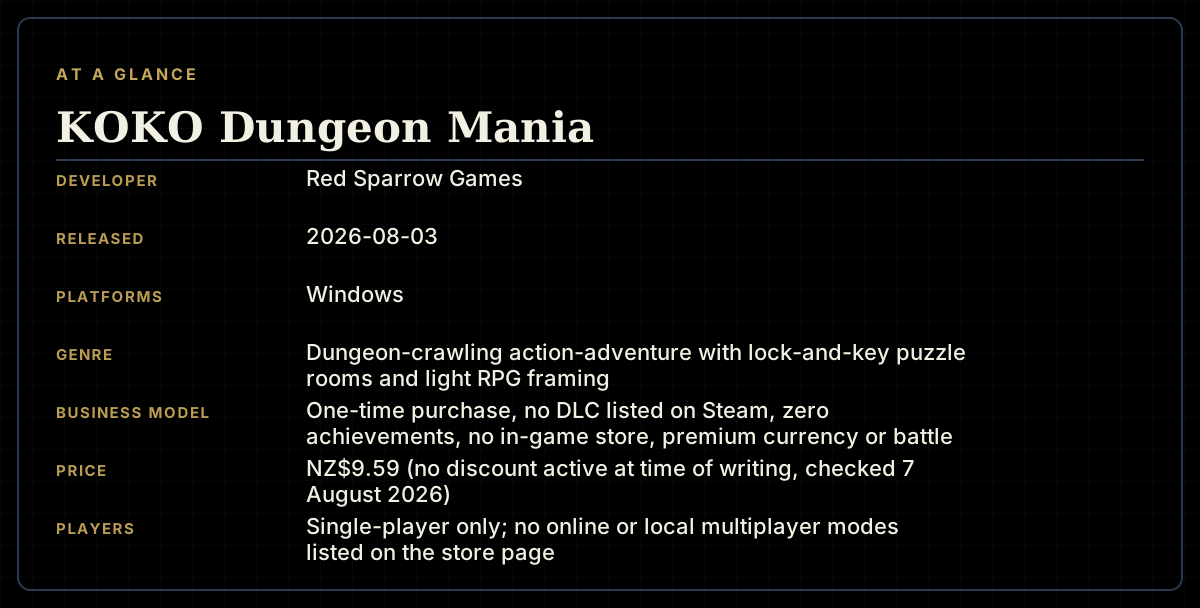
- Developer
- Red Sparrow Games
- Publisher
- Red Sparrow Games
- Released
- 3 August 2026
- Platforms
- Windows
- Genre
- Dungeon-crawling action-adventure with lock-and-key puzzle rooms and light RPG framing
- Monetisation
- One-time purchase, no DLC listed on Steam, zero achievements, no in-game store, premium currency or battle pass
- Players
- Single-player only; no online or local multiplayer modes listed on the store page
The short version
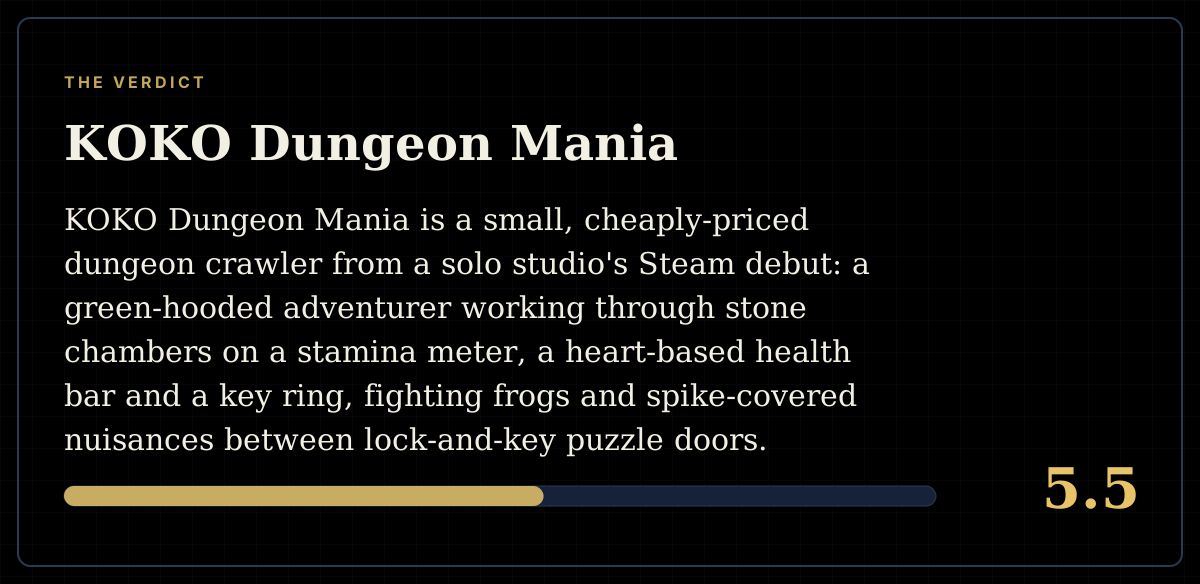
KOKO Dungeon Mania is a small, cheaply-priced dungeon crawler from a solo studio's Steam debut: a green-hooded adventurer working through stone chambers on a stamina meter, a heart-based health bar and a key ring, fighting frogs and spike-covered nuisances between lock-and-key puzzle doors. The developer's own screenshots show it working exactly as described — traps triggering, keys gating progress, a consistent low-poly, moodily-lit dungeon aesthetic across ten different rooms. What none of those screenshots show, and what the store description never mentions either, is anything resembling the RPG systems the Steam genre tag promises: no stats, no levelling, no skills, no inventory beyond a key counter. Four days after launch there are zero Steam user reviews, zero achievements of any kind, zero recorded concurrent players and zero news posts — this is a game nobody outside its own developer has said anything about yet.
Biggest strengths
- A NZ$9.59 one-time purchase with no DLC, no premium currency and no in-game store is about as low-risk as a dungeon crawler's monetisation gets
- The developer's own screenshots show the core lock-and-key loop actually working — a "NEED KEY" prompt blocking a locked door, a red ceiling spike trap mid-swing, a key counter and heart-based health bar all doing their jobs on screen
- Modest minimum system requirements (an Intel Core i3-6100 or AMD FX-6300, a GTX 750 Ti, 8GB RAM) mean the game should run on hardware most other 2026 releases have left behind
Biggest weaknesses
- Steam lists this as an RPG, but nothing in the store description or any of the ten official screenshots shows a stat, a skill, a level-up or an inventory screen beyond a simple key counter — the genre tag currently promises more than anything visible actually delivers
- The game shipped with zero Steam achievements, which is unusual even for a small solo release and leaves no way to gauge how far anyone has gotten
- English is the only supported language, with no partial or UI-only translations for a release aimed at a global storefront
Who it's for: Players after a short, cheap, unpretentious dungeon crawler with light puzzle-platforming and no interest in deep systems, who are comfortable being among the very first people anywhere to actually play it.
Our recommendation: At NZ$9.59 the financial risk is small, and the modest system requirements mean almost any Windows PC from the last decade will run it. The catch isn't the price, it's that there is currently no external evidence at all — no reviews, no achievement data, no player count above zero — to confirm the puzzles, combat and difficulty curve hold up past what ten promotional screenshots can show.
5.5 / 10
Four days ago, KOKO Dungeon Mania went from nothing to a full 1.0 release on Steam with no demo, no playtest build and no Early Access period behind it. That's a bold way for a solo studio's debut to arrive, and it means this review is being written under conditions the genre doesn't usually allow: no Steam user reviews, no achievement data, nobody currently playing it, and no news posts since launch. What follows is built entirely from what Red Sparrow Games has actually shown — the store description, the system requirements, and ten official screenshots examined directly, frame by frame.
What the screenshots actually show
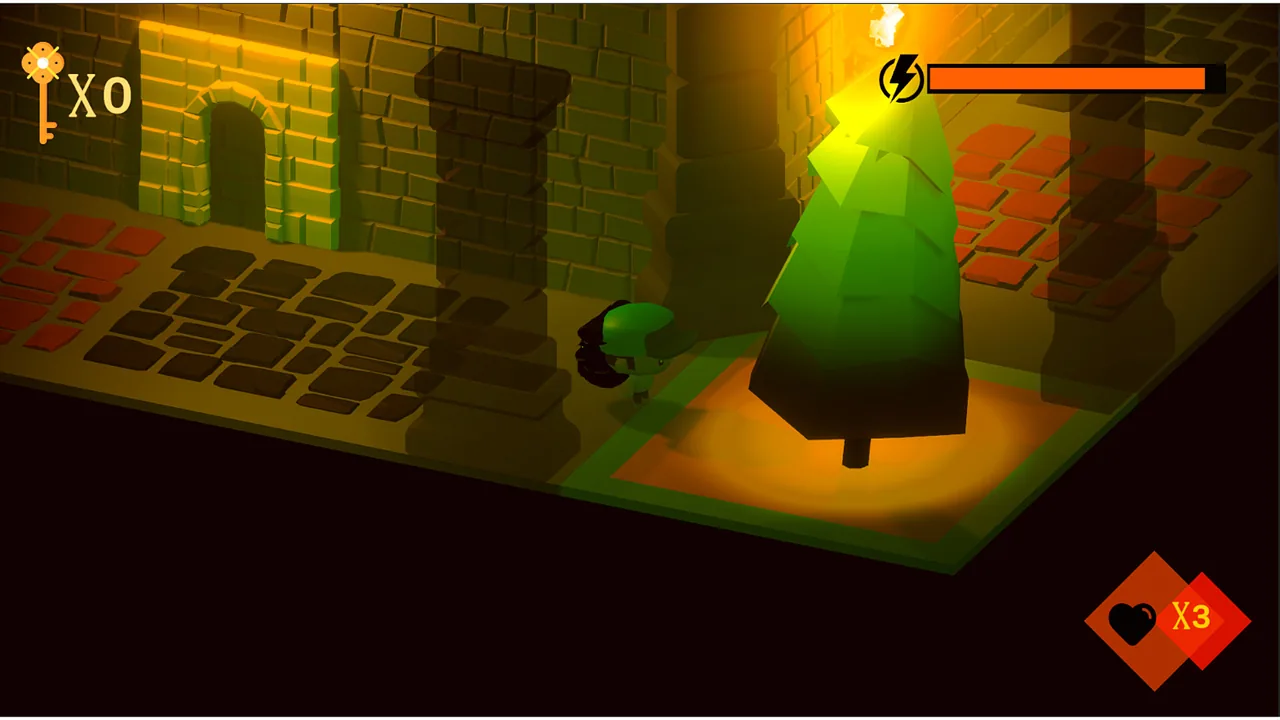
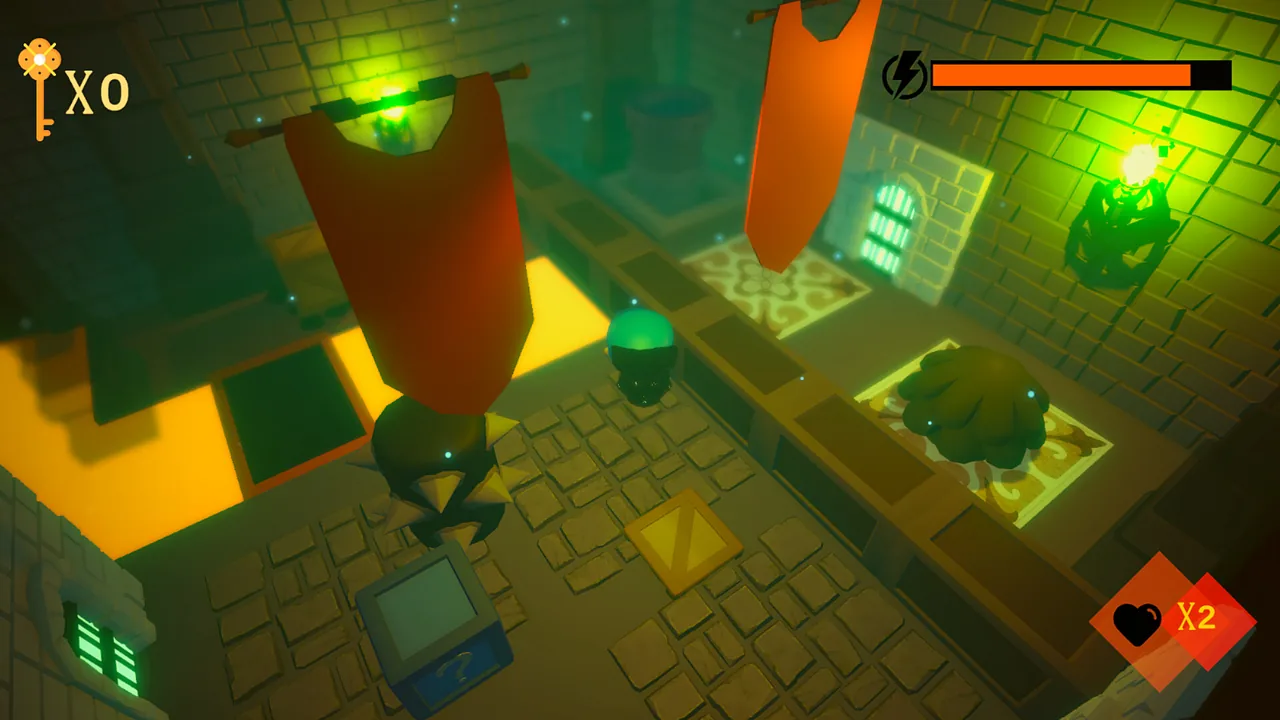
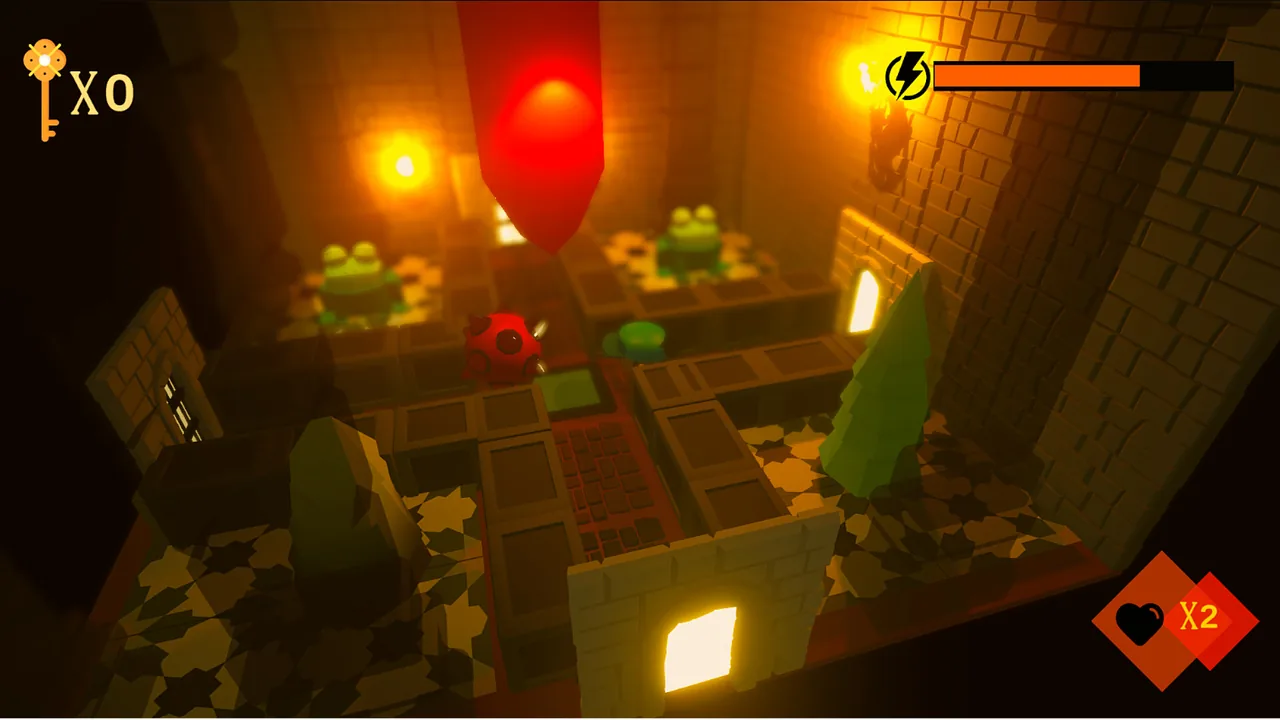
Strip away the store copy and the tags, and the ten official captures tell a consistent story. You play a small, round-headed adventurer in a green cap, working through isometric-camera stone chambers lit in shifting single colours — sickly green in one room, warm amber torchlight in the next, a full magenta wash in another. A key icon sits top-left reading a running total; a lightning-bolt stamina bar sits top-right, draining and refilling as you move; a heart-shaped counter bottom-right tracks health, showing two or three hearts depending on the shot. One capture catches the game mid-sentence: the words "NEED KEY" hang over a glowing locked door while a round-eyed enemy lurks nearby, which is about as direct a confirmation of the lock-and-key loop as marketing material ever gives you. Another shows a red ceiling spike mid-descent over a floor patrolled by squat frog creatures and a spiked mushroom-like foe. A treasure chest marked with a question mark sits in a side room behind hanging banners and stained-glass windows. None of it is ambitious, but none of it looks broken either — the traps trigger, the key gates the door, the character reads clearly against the environment even when the lighting gets aggressive.
That consistency matters more than it might for a bigger release, because it's currently the only evidence anyone has that the game functions as described.
A dungeon crawler, but is it an RPG?
Steam lists KOKO Dungeon Mania under Action, Adventure, Indie and RPG, and the community tag list layers on Action Roguelike, Hack and Slash, Roguelite, Dungeon Crawler and Action RPG on top of that. It's worth checking that framing against what's actually shown, because this batch of reviews has already caught a game mistagged by name alone. Here the mismatch runs the other direction: the genre label oversells the system depth. The store description is entirely mechanical description with no systems talk — "explore mysterious chambers... battle monsters... solve puzzles... uncover hidden areas" — and never once mentions a stat, a level, a skill tree, an equipment slot or a currency. None of the ten screenshots show an inventory screen, a character sheet, a shop or an upgrade menu; the only persistent counters visible anywhere are the key total and the heart-based health display. "Roguelite" doesn't fit any better — nothing in the store text describes procedural generation, permadeath or a run structure, only "each new level expands the dungeon with more chambers, tougher enemies, and greater challenges," which reads as a straight, linear level ladder rather than repeatable runs. Community tags on a four-day-old game with zero recorded reviews are most likely the developer's own initial tag selections rather than anything players have actually voted on, so take the "RPG" and "Roguelite" labels as marketing shorthand for "fantasy dungeon setting with escalating difficulty," not a promise of mechanical depth. What's actually on offer looks closer to a straightforward action-adventure with puzzle-platforming rooms — solid ground for a small debut, but a plainer pitch than the genre tags suggest.
The parts that are genuinely in its favour
The asking price is NZ$9.59, one-time, with no DLC listed and nothing resembling an in-game store. For a budget dungeon crawler that's a fair, low-friction price, and it's honest about what it is — there's no premium currency to worry about and no battle pass creeping in later. The system requirements back that up: a minimum spec of an Intel Core i3-6100 or AMD FX-6300 with a GTX 750 Ti and 8GB of RAM is genuinely low by 2026 standards, and the recommended tier tops out at a GTX 1050 Ti for 1080p at 60 FPS. Whatever else is uncertain about this release, it isn't going to demand new hardware. Steam's category list also flags Keyboard Only Option, meaning the whole game is playable without a controller — a small thing, but a real one for anyone without a gamepad plugged in.
What's missing, and what that absence says
Two gaps stand out beyond the usual "nobody's reviewed it yet" problem that comes with any launch-week release. First, KOKO Dungeon Mania shipped with zero Steam achievements — not a short list, an empty one. That's unusual even for a minimal solo debut; achievements cost little to implement and most new Steam games ship with at least a handful. Their absence here removes a tool this review would otherwise lean on hard: with no achievement curve, there's no way to estimate how many buyers have finished even the first chamber, let alone the whole dungeon. Second, English is the only supported language, with no partial UI translation for other markets — a narrower reach than most Steam debuts attempt.
Beyond that, the numbers are simply thin because the game is new. Steam's review API returns a completely empty query summary — not a low score, an absence of any score — fetched twice to rule out a caching fluke, both times zero. The concurrent-player count read zero at the time of writing. There are no news posts on the app's feed, meaning no post-launch patch, no acknowledged bug, no word from the developer since release. None of that is evidence of a bad game. It's evidence of a release that hasn't found an audience yet, four days in, from a studio whose only public contact point is a Gmail address rather than a dedicated support site.
Final verdict
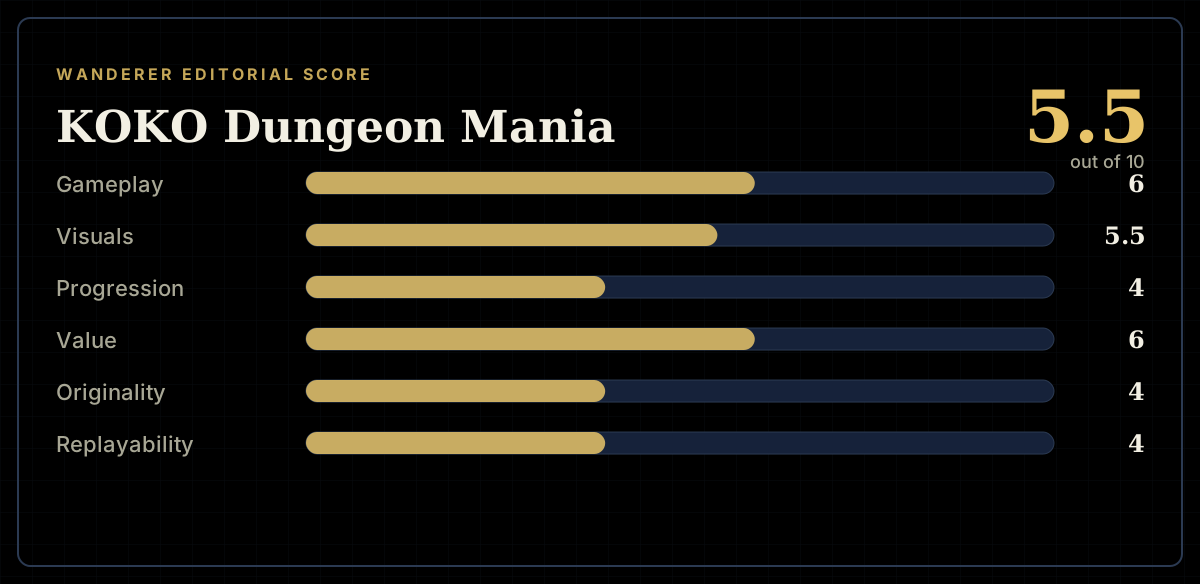
KOKO Dungeon Mania earns a 5.5: a functional, cheaply-priced dungeon crawler whose own promotional material shows its core lock-and-key loop and trap-and-monster combat working as described, wrapped in a consistent if occasionally over-saturated low-poly art style. It doesn't score higher because there's a real gap between what its Steam genre tags promise and what anything the developer has shown actually demonstrates — no RPG systems visible anywhere, no roguelite structure described in the store text, no achievements at all, and absolutely no outside confirmation that the puzzles or difficulty curve hold up past the ten screenshots examined for this review. If a short, unpretentious, budget dungeon crawler with no systems to learn sounds worth NZ$9.59 on its surface alone, the risk here is genuinely small. If you'd rather see a single other person's opinion before buying, there currently isn't one to read.
Pros and cons
Pros
- A NZ$9.59 one-time purchase with no DLC, no premium currency and no in-game store is about as low-risk as a dungeon crawler's monetisation gets
- The developer's own screenshots show the core lock-and-key loop actually working — a "NEED KEY" prompt blocking a locked door, a red ceiling spike trap mid-swing, a key counter and heart-based health bar all doing their jobs on screen
- Modest minimum system requirements (an Intel Core i3-6100 or AMD FX-6300, a GTX 750 Ti, 8GB RAM) mean the game should run on hardware most other 2026 releases have left behind
- Keyboard Only Option is listed as a Steam accessibility category, so a controller is never required to finish it
- The low-poly dungeon art keeps a consistent identity across ten official screenshots, with each room reads a different mood through colour grading alone — green, amber, magenta and deep purple lighting on the same brick-and-tile geometry
Cons
- Steam lists this as an RPG, but nothing in the store description or any of the ten official screenshots shows a stat, a skill, a level-up or an inventory screen beyond a simple key counter — the genre tag currently promises more than anything visible actually delivers
- The game shipped with zero Steam achievements, which is unusual even for a small solo release and leaves no way to gauge how far anyone has gotten
- English is the only supported language, with no partial or UI-only translations for a release aimed at a global storefront
- Four days after a full 1.0 launch, Steam's review API returns zero reviews of any kind, the concurrent-player count reads zero, and there are no news posts on the app — there is no independent read on the puzzle design, combat balance or bug state yet
- Some of the developer's own screenshots wash the whole scene in a single saturated colour (a near-solid magenta floor fills most of one shot, a purple haze another), which looks stylish in a still image but raises real questions about how readable combat and platforming stay in motion
Screenshots
-
KOKO Dungeon ManiaImage: Red Sparrow Games via Steam -
KOKO Dungeon ManiaImage: Red Sparrow Games via Steam -
KOKO Dungeon ManiaImage: Red Sparrow Games via Steam -
How the review scores each part of the gameWanderer Editorial -
The game at a glanceWanderer Editorial -
The short versionWanderer Editorial