The Larian CRPG that laid the groundwork for Divinity: Original Sin 2 — genuinely one of the better-executed "Enhanced Editions" this library has covered, held back mainly by a back half its own fans agree drags compared to the sequel it made possible.
A first-person FMV romance in which strange events awaken the protagonist's ability to enter a hidden "Inner Realm," entangling them in the secrets of six live-action heroines, drawing an Overwhelmingly Positive reception praising its production values, day-one English subtitles and unusually solid translation, tempered by a genre-typical lack of mechanical depth and one detailed complaint about pacing and coherence.
A celebrated, GOTY-winning BioWare fantasy epic whose Steam review page has spent six straight years dominated by one complaint that has nothing to do with the game — the mandatory EA launcher, which reviewers are still calling out for breaking the game as recently as this year.
A hand-drawn Metroidvania built around a genuinely inventive five-day time-loop structure, whose Very Positive reception is well earned by its exploration design even as a consistent cluster of complaints about combat feedback, control mapping, and rough translation keeps it from greatness.
Capcom's open-world action RPG is built around a genuinely strange idea — AI companions on loan from other players' worlds — wrapped in a combat system that rewards climbing monsters like furniture and a map that punishes you for wanting to skip the walk. Two-plus years of patches have quietly answered most of its launch complaints; the review score never fully recovered from asking anyway.
A story-driven narrative puzzle game set in a flooded 204X world run by an AI system, where a chosen partner pulls the player into a maze of dreams that must be solved to wake them, drawing a Very Positive reception praising its art, gender-flexible romance options and unexpectedly sharp commentary on AI-run society, tempered by uneven translation quality and clunky character movement.
A solo-developed 2014 mobile deckbuilding roguelike that reviewers independently and repeatedly credit as the genre's actual origin point — predating and directly influencing Slay the Spire, Monster Slayers and Hearthstone's Kobolds and Catacombs expansion — buried under presentation even its biggest fans call some of the ugliest they've ever seen.
A GBA-styled tactics RPG with a genuinely inventive card-based skill system, held in very high regard by a large audience, with real and specific complaints about mid-game combat bloat, a punishing reverse difficulty curve and an unusual lack of a traditional auto-save.
A blackjack-roguelike deckbuilder whose "Balatro but Blackjack" tagline both sold it and set up its harshest reviews, with a genuine post-launch redemption arc that culminated in a major content-doubling update weeks before this review.
Vienna-based developer James Patton, working with Deloria Patton under the studio name Clockwork Bird and following earlier releases Spinnortality and Silicon Dreams, delivers a dice-driven, Citizen Sleeper-inspired narrative RPG about an ex-soldier surviving a steampunk city on the edge of revolution, earning specific, detailed praise for its writing, world-building and consequence-driven choices from a Very Positive review base, tempered by a smaller, honest minority who found its late-game structure and political framing left them unable to fully recommend it.
Techland's return to Kyle Crane and the original Dying Light formula, widely, specifically praised as a genuine "return to form" after the divisive Dying Light 2 — backed by an unusually clean, well-optimised launch and an explicit, kept promise to ship without microtransactions — undercut for a real minority of players by parkour-unfriendly map design and a genuine, documented fairness controversy over how a later Definitive Edition treated existing Deluxe Edition owners.
FromSoftware compresses Soulslike boss combat into 40-minute three-player runs, trading Elden Ring's open-ended build freedom for ten fixed heroes, a shrinking map and a clock that never stops.
A sprawling, deeply systemic roguelike sandbox RPG from the solo creator of the cult classic Elona, updated almost daily -- one of the densest, most addictive Early Access RPGs on Steam for the players who click with it, and a genuinely confusing wall for anyone who arrives without a wiki tab open.
A three-hour narrative RPG about a boy searching for a reason to live in a civilisation destroyed by a mind-controlling parasitic plant — priced under a dollar, drawing OneShot comparisons, and beloved so far by an audience that, as of this review, is entirely Turkish.
A gorgeous, mournful dark-fantasy metroidvania that entered Early Access in January 2021 and left it that June to Very Positive reviews -- undercut, across five years of feedback, by a remarkably consistent complaint from genre fans that its combat never matches its atmosphere.
A voxel survival game that welds on a real RPG skill tree and dares you to dig, sculpt and build inside a world that is actively trying to kill you on a clock. Two and a half years into Early Access, with a 1.0 date finally on the calendar, the question is whether the fog and the talent tree were ever really talking to each other.
The game that Epic Battle Fantasy 5's critics kept holding up as the better one — except it rates two and a half points lower than the sequel they were complaining about.
A single-player RPG built to feel like a classic MMORPG raid night, populated entirely by NPC "SimPlayers" who level, group up and loot alongside you — a genuinely novel hook wrapped around an Early Access game still finding its footing on UI, quest clarity and combat feedback.
A Paper Mario-inspired satirical RPG about fairytale characters unionizing against a megacorp earns an Overwhelmingly Positive reception for its writing, combat variety, and heart, though its own review sample is split hard on whether the demanding, pixel-tight timing system belongs in a game this narrative-driven.
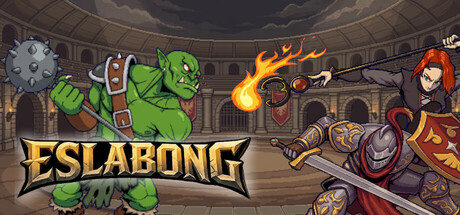
A Gladiator Club Wearing an Autobattler's Clothes Eslabong, from solo developer shirowita, entered Early Access on August 24, 2026, and describes itself simply as "arena c
A tabletop-inspired isometric CRPG that invites Disco Elysium comparisons directly in its own marketing — Overwhelmingly Positive across nearly 8,000 reviews for fans who embrace its absurdist, Discworld-flavoured take on the formula, with an equally substantial and thoughtful critical minority arguing it borrows Disco Elysium's structure without matching the literary subtlety that made the original work.
A debut game from a studio built by BioWare and Ubisoft veterans that pitches itself as "Monster Hunter meets Shadow of the Colossus" and, for most of its 1,764-review Steam audience, actually earns the comparison — while a substantial minority documents real unpolish, from a fiercely disliked inventory system to physics bugs that launch players into the air.
A no-code virtual tabletop builder that lets tabletop RPG groups design their own character sheets, rules and automation without programming, drawing rare and specific praise from an early, tiny reviewer base for solving a real gap left by every other VTT on the market.
Bethesda's sprawling open-world RPG has weathered two separate, nearly identical controversies seven years apart — Creation Club's paid mods in 2017, and a 2024 "next-gen update" that broke almost everything the modding community had built to fix it.