
Game review
DragonLoop
7.5 / 10
- Developer
- Shayin & Xiaoruan
- Publisher
- Shayin & Xiaoruan
- Released
- 17 June 2025
- Platforms
- Windows
- Genre
- Action, Adventure, Indie, RPG
- Monetisation
- paid
- Players
- false
The short version
Biggest strengths
- A genuinely inventive time-loop mechanic, gating traversal by day rather than just ability, that reviewers repeatedly praised as reshaping how exploration and route-planning feel compared to typical Metroidvania design
- A large, creative, and flexible ability set that opens up sequence breaks and alternate routes, drawing repeated favorable comparisons to genre high points like Hollow Knight and Ender Lilies
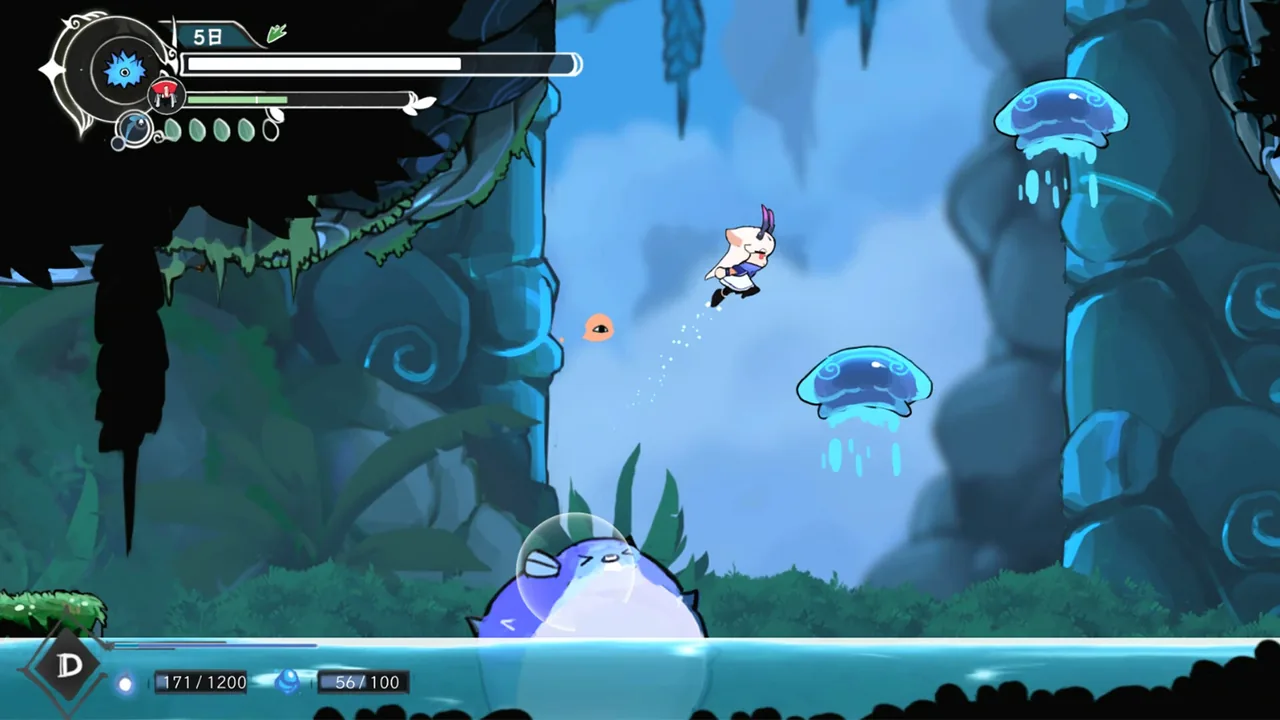
- Charming, colorful hand-drawn art and animation, with a distinctive lighter tone than the genre's usual dark atmosphere
Biggest weaknesses
- A widely and specifically corroborated complaint about a near-total lack of sound effects and impactful combat feedback, with multiple reviewers independently describing hits, bosses, and abilities as feeling weightless
- Repeated reports of imprecise, occasionally frustrating control mapping, including abilities and movement inputs that multiple reviewers described as easy to trigger by accident during combat
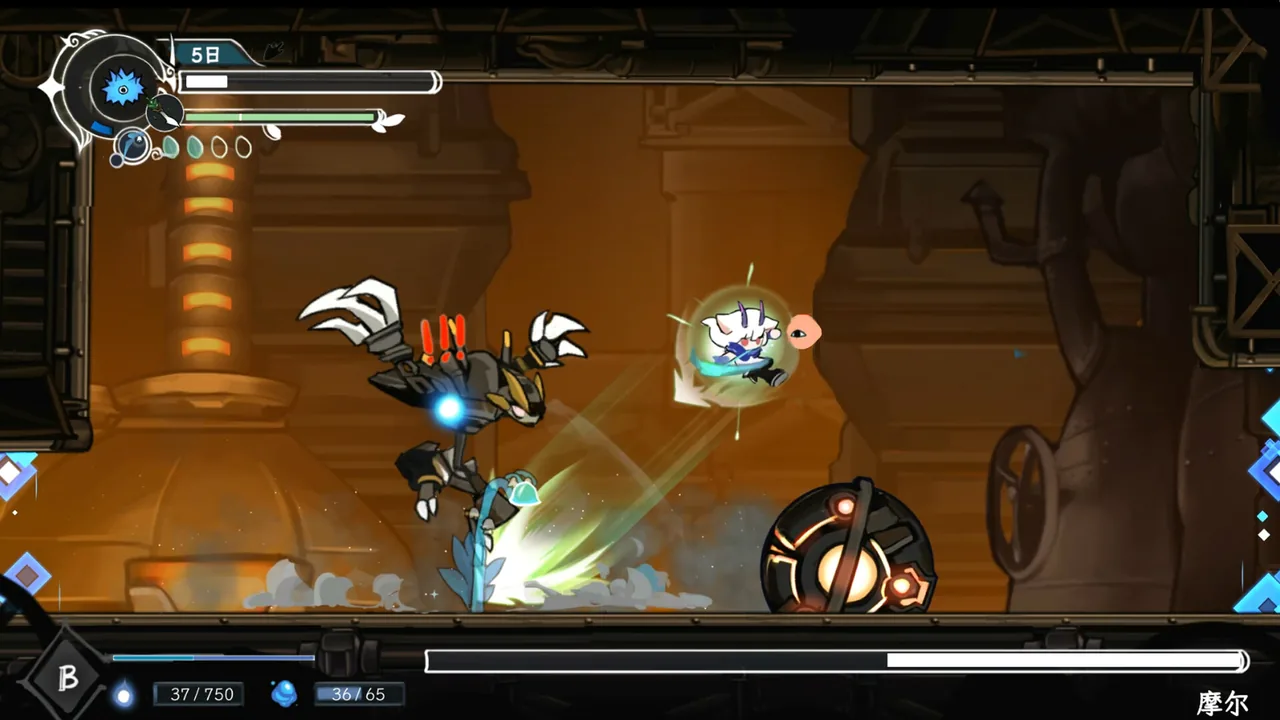
- A well-corroborated complaint about several boss fights leaning on screen-filling, fast, hard-to-read attacks that a number of reviewers found overwhelming rather than fair
Who it's for: Metroidvania fans with patience for a rough translation and imperfect polish, drawn in by a genuinely inventive time-loop structure rather than tight combat
Our recommendation: recommended
7.5 / 10
DragonLoop launched on Steam on June 17, 2025, an $8.99 hand-drawn Metroidvania from the small Chinese development team Shayin & Xiaoruan. Players control Xi, a horned girl trapped in a five-day time loop alongside a silent floating companion named Ouro, exploring a shifting world where progress depends as much on knowing when to be somewhere as where. An 85-review English pool sitting at a strongly Very Positive 75-to-10 reflects a game whose core idea landed exactly as intended with most of the people who played it, even as a specific cluster of rougher edges shows up consistently across the pool.
The time-loop structure is, by a wide margin, the pool's most consistently praised element. One reviewer with 20 hours logged called the loop mechanic "definitely the main appeal," writing that "the way this timeloop mechanic intertwines with map design and ability progression is nothing short of utter" brilliance, while explicitly comparing its gameplay-first approach favorably against other recent time-loop games. A separate reviewer with 32 hours praised how the world's response to time itself is thoughtfully built rather than superficial, noting "you might find some slight variation that will make traversal possible or impossible, and even the NPCs will interact with Xi depending on which day it is." A third reviewer with 22 hours specifically credited the fast-travel system tied to time corridors for keeping the mechanic's complexity from becoming tedious, since players can "easily fast travel to the place and time of any time corridor you pass," avoiding excessive backtracking. That this specific design choice, gating traversal by day rather than purely by ability like a typical Metroidvania, drew such consistent, detailed praise across reviewers with very different total playtimes is a strong signal it's a genuine design success rather than a marketing hook.
Set against that praise, the pool's clearest corroborated weakness concerns sound and combat feedback. One reviewer with 19 hours flagged "a glaring lack of sound effects," specifically noting it was "enough to break immersion" despite otherwise strong production values. A separate, more critical reviewer independently made the identical observation about boss encounters: "there should be a sound effect, but there isn't," at moments like boss roars where the silence undercuts the intended impact. A third reviewer folded this into a broader complaint about combat feeling underpowered, describing bosses as manageable simply by "standing under it and mashing attack while dodging sometimes," suggesting the lack of feedback contributes to fights not registering as dangerous even when mechanically they should. Multiple independent reviewers converging on the specific detail of missing sound design, rather than a vaguer "combat feels weak" complaint, is what makes this read as a genuine, fixable production gap rather than a subjective nitpick.
A second, related and also well-corroborated complaint concerns control precision. One reviewer with 39 hours invested described movement as "a disaster," specifically citing special attacks bound to both the D-pad and scroll wheel simultaneously, resulting in accidental special attacks "ALL the time during combat." A separate reviewer with 11 hours independently reported the identical category of problem with a different input cluster, explaining that several abilities share one button, cycled via a directional modifier, which led to constantly "swapping when I meant to use the ability, and vice versa." That two reviewers, without referencing each other, identified the same underlying design pattern (multiple actions crammed onto overlapping inputs) as their specific source of frustration elevates this above an isolated preference issue.
A third corroborated complaint concerns boss difficulty and readability. The 39-hour critical reviewer above wanted an easy mode specifically because of movement and boss issues, while a separate, purely negative reviewer wrote that DragonLoop's bosses are "all try hard, screen-filled attacks with split-second reactions," adding "you'll get hit, then hit again, then a split second tell to another 3 attacks going on." This is a harder complaint to fully corroborate as an objective flaw rather than a difficulty-curve mismatch, since several of the pool's most enthusiastic positive reviews specifically praised the bosses as "challenging and interesting," but the specificity and independence of the two negative accounts above suggest the difficulty spikes are real rather than purely a matter of skill.
Translation quality drew frequent, if generally softer, criticism throughout the pool, with several reviewers noting the story was hard to follow partly due to "occasionally awkward translation." Encouragingly, multiple reviewers who played at different points after launch specifically credited a translator, referenced by name in several reviews, with meaningfully improving the localization in post-launch patches, suggesting this is a genuinely improving rather than static problem.
One additional, isolated but serious technical report deserves a fair mention: a single detailed negative reviewer with 26 hours invested reported the game "likes to cause kernel level power events," corrupting their save file on PC reboot. This didn't recur elsewhere in the sampled pool with the same specificity, so it reads as either a rare hardware-interaction edge case or a serious but narrow bug rather than a widespread issue, but it's worth flagging plainly given the severity of the described outcome.
Taken together, DragonLoop earns its strongly positive reception through a time-loop mechanic that reviewers across the pool, sometimes writing years into their Metroidvania fandom, found genuinely novel and well executed, wrapped around presentation and combat-feedback issues that keep it from the genre's very top tier. For Metroidvania fans willing to tolerate some roughness around the edges in exchange for a structural idea they likely haven't seen executed quite this way before, it's a well-earned recommendation.
Pros and cons
Pros
- A genuinely inventive time-loop mechanic, gating traversal by day rather than just ability, that reviewers repeatedly praised as reshaping how exploration and route-planning feel compared to typical Metroidvania design
- A large, creative, and flexible ability set that opens up sequence breaks and alternate routes, drawing repeated favorable comparisons to genre high points like Hollow Knight and Ender Lilies
- Charming, colorful hand-drawn art and animation, with a distinctive lighter tone than the genre's usual dark atmosphere
- Strong, thoughtful level design supported by a fast-travel system and a dedicated time-map that keeps the loop's complexity from becoming unmanageable
Cons
- A widely and specifically corroborated complaint about a near-total lack of sound effects and impactful combat feedback, with multiple reviewers independently describing hits, bosses, and abilities as feeling weightless
- Repeated reports of imprecise, occasionally frustrating control mapping, including abilities and movement inputs that multiple reviewers described as easy to trigger by accident during combat
- A well-corroborated complaint about several boss fights leaning on screen-filling, fast, hard-to-read attacks that a number of reviewers found overwhelming rather than fair
- Consistent complaints about a rough, occasionally unfinished-feeling English translation at launch, though several reviewers noted meaningful improvement in later patches
Screenshots
-
DragonLoopImage: 沙因 via Steam -
DragonLoopImage: 沙因 via Steam