Game review
Sunken Sky Review: A Hand-Painted Metroidvania Worth the Patience
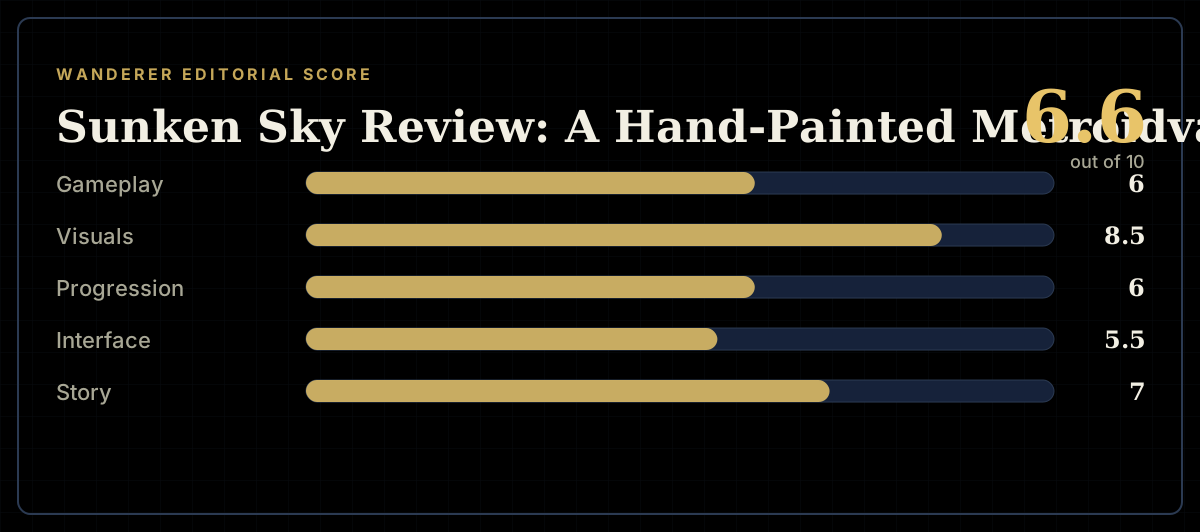
6.6 / 10
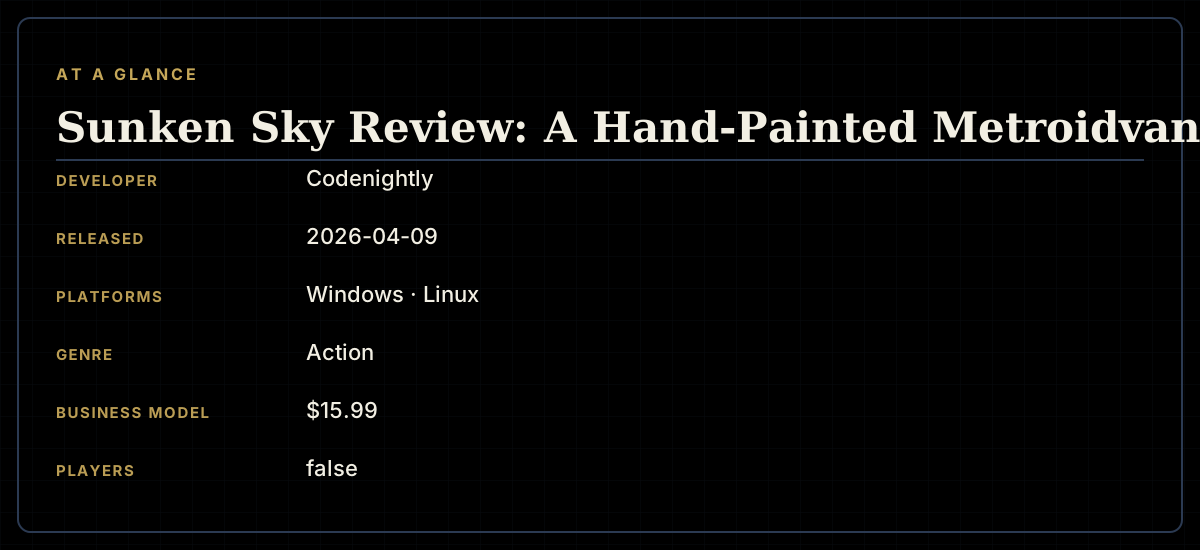
- Developer
- Codenightly
- Publisher
- Codenightly
- Released
- 9 April 2026
- Platforms
- Windows, Linux
- Genre
- Action
- Monetisation
- $15.99
- Players
- false
The short version
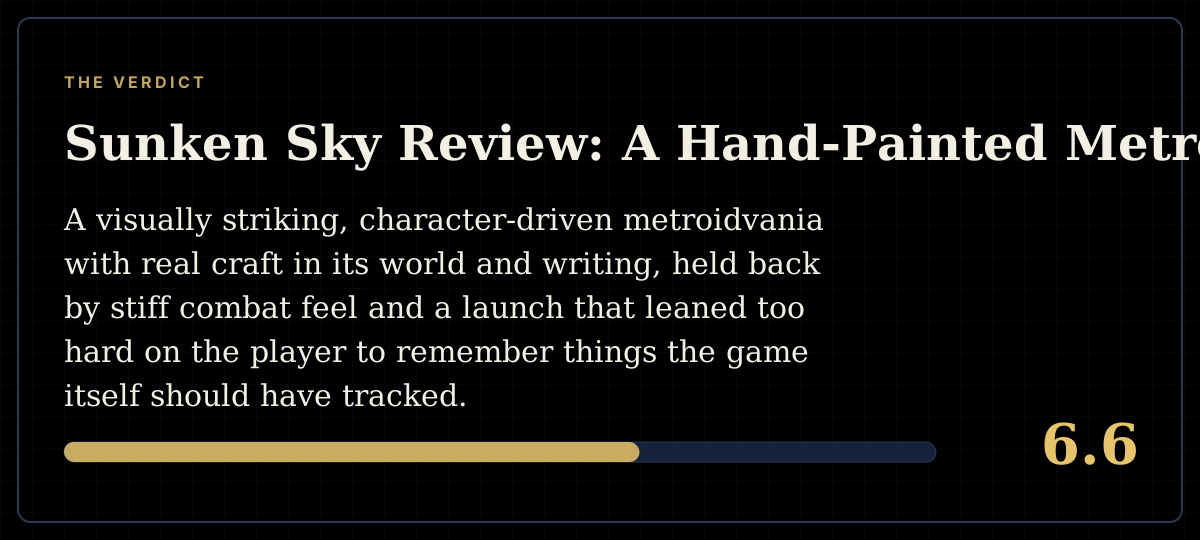
A visually striking, character-driven metroidvania with real craft in its world and writing, held back by stiff combat feel and a launch that leaned too hard on the player to remember things the game itself should have tracked.
Biggest strengths
- Gorgeous hand-drawn 2D world that multiple reviewers describe as looking painted from scratch, with real biome variety
- Three playable characters with genuinely distinct traversal tools (dash-melee, climb-and-wall, teleport-summon) rather than one hero with reskinned moves
- A well-regarded story and NPC cast that reviewers consistently call the game's strongest asset
Biggest weaknesses
- Combat and platforming feel stiff and overly punishing to at least one detailed reviewer, especially attacks that only work from a standstill
- Launched without a quest log or reliable point-of-no-return warning, both serious problems for an exploration-heavy design that were only patched in later
- Very small review base (5 reviews) at time of writing, split 4 positive to 1 strongly negative
Who it's for: Metroidvania and action-adventure fans who prioritize art and story over tight, responsive combat, and who don't mind picking up a game that's still visibly improving months after release.
Our recommendation: Worth playing
6.6 / 10
An open world painted from scratch
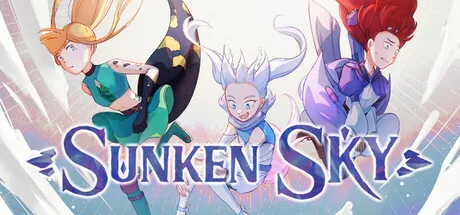
Sunken Sky is a $15.99 action-adventure from Codenightly, a small, apparently solo-adjacent studio, and its pitch is straightforward: a vast, hand-drawn open world to explore, "bizarre creatures" to fight, and "even stranger people" to befriend. What separates it from the crowd of anime-inspired metroidvanias is how consistently reviewers single out the world itself. One described it as looking "painted from scratch," with enough distinct biomes that the game earns real mileage out of just walking somewhere new. The tone sits mostly on the cozy side of anime and manga influence but is willing to get darker, and the character illustrations that surface in dialogue and menus are called out repeatedly as some of the best-looking parts of the whole package.
Three heroes, three very different toolkits
Rather than one player character with a growing move list, Sunken Sky splits traversal and combat across three playable heroes, each unlocked over the course of the story: Sol, a melee fighter who can dash in any direction; Mona, an archer who can climb surfaces and conjure an earth wall that doubles as cover or a stepping stone; and Frieda, a summoner who can drop a teleport waypoint. It's a smart structural choice for a metroidvania, since new traversal options gate new areas the way ability upgrades normally would, but with three visually and mechanically distinct characters doing the gating instead of one hero slowly accumulating skills. Reviewers who got deep into the game's second half specifically credit this setup with keeping exploration interesting well past the point where a single-character metroidvania usually starts repeating itself.
Platforming that asks a lot, sometimes too much
Where opinion splits is combat and movement feel. The positive reviews describe the platforming as "simple" but effective at building "enjoyable puzzles," with combat treated more as an obstacle to clear than a system to master — killing things is often optional, done mainly to unlock treasure or journal entries rather than for its own sake. The one negative review in the sample disagrees sharply and in detail: it describes the controls as "not intuitive," attacks that mostly only work from a standstill, jump timing that demands "perfect and precise timing," and enemy difficulty that feels unfair even on Easy. That reviewer, notably, still logged over 2,300 minutes (nearly 39 hours) before writing the review — a strong signal that the criticism comes from real, extended engagement rather than a bounced first impression, even if the conclusion is negative. Read together, the honest takeaway is that Sunken Sky's combat and movement are functional and occasionally punishing rather than smooth, and players used to fluid, forgiving metroidvania movement should expect some friction.
A launch that leaned too hard on memory
The most consistent complaint across the review sample, positive or negative, is structural rather than mechanical: Sunken Sky shipped without a proper quest log. One long, detailed review put it plainly — the game "really needs a better quest log," describing how an NPC might mention needing help at an inn, or another character being trapped somewhere, with no reliable way to recall that later short of writing it down yourself. A second serious issue compounded this at launch: after defeating the final boss, it initially appeared that any missed side content became permanently unreachable, a real problem for a game built around optional exploration. Both of these were treated by the reviewers not as minor nitpicks but as genuine design gaps in an otherwise exploration-first game.
A developer that visibly kept working
What keeps those launch problems from sinking the review is the sheer volume of follow-through afterward. Codenightly shipped 18 separate update posts between launch and this writing — QoL patches fixing softlocks, controller conflicts, respawn timers, and map clarity within the first two weeks, then a content update in July specifically adding a way back into the main area after the final boss (directly resolving the point-of-no-return problem), and finally, in September, a full quest-tracking journal section addressing the single most-repeated complaint in the reviews. One reviewer who had flagged the missing quest log as their main issue came back and explicitly struck that criticism from their review once it shipped. That's about as clean a case as you'll find of a developer reading reviews and acting on them methodically rather than just patching crashes.
What the numbers show
Sunken Sky's 19 Steam achievements show a clean, natural difficulty curve — 64.4% of players have the first, dropping steadily down to 4.2% for the hardest — consistent with a real playerbase working through a full game rather than a farmed or trivial achievement list. Review volume is thin at just 5 at the time of writing, but every single one reflects substantial, multi-hour engagement (playtimes ranging from roughly 8 to nearly 39 hours), which puts this well inside the threshold where a small sample can still be treated as a workable evidentiary base rather than noise.
Verdict
Sunken Sky is a game that asked players to be patient with it, and mostly earned that patience through five months of attentive, specific patching. The art, world design, and character writing are the clear strengths, praised almost unanimously; the combat and movement feel is the real point of friction, and it's fair to expect a genre fan to bounce off it if precise, fluid metroidvania action is the priority. Go in for the hand-painted world and the story, tolerate some jank along the way, and this is a good $15.99.
Pros and cons
Pros
- Gorgeous hand-drawn 2D world that multiple reviewers describe as looking painted from scratch, with real biome variety
- Three playable characters with genuinely distinct traversal tools (dash-melee, climb-and-wall, teleport-summon) rather than one hero with reskinned moves
- A well-regarded story and NPC cast that reviewers consistently call the game's strongest asset
- An unusually attentive developer, with 18 post-launch updates addressing the exact complaints reviewers raised, including a proper quest log added five months after release
Cons
- Combat and platforming feel stiff and overly punishing to at least one detailed reviewer, especially attacks that only work from a standstill
- Launched without a quest log or reliable point-of-no-return warning, both serious problems for an exploration-heavy design that were only patched in later
- Very small review base (5 reviews) at time of writing, split 4 positive to 1 strongly negative
- No macOS support, and the June point-of-no-return fix suggests progression design wasn't fully thought through pre-launch
Screenshots
-
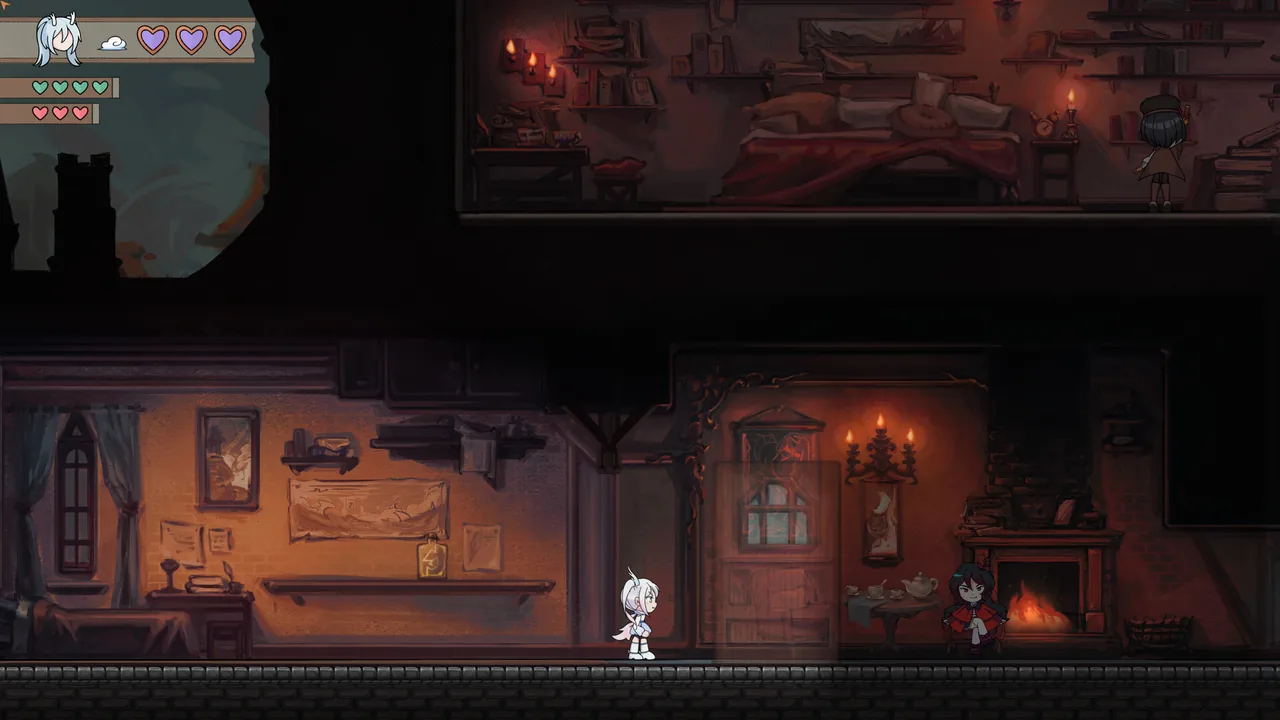
Image: Codenightly via Steam -
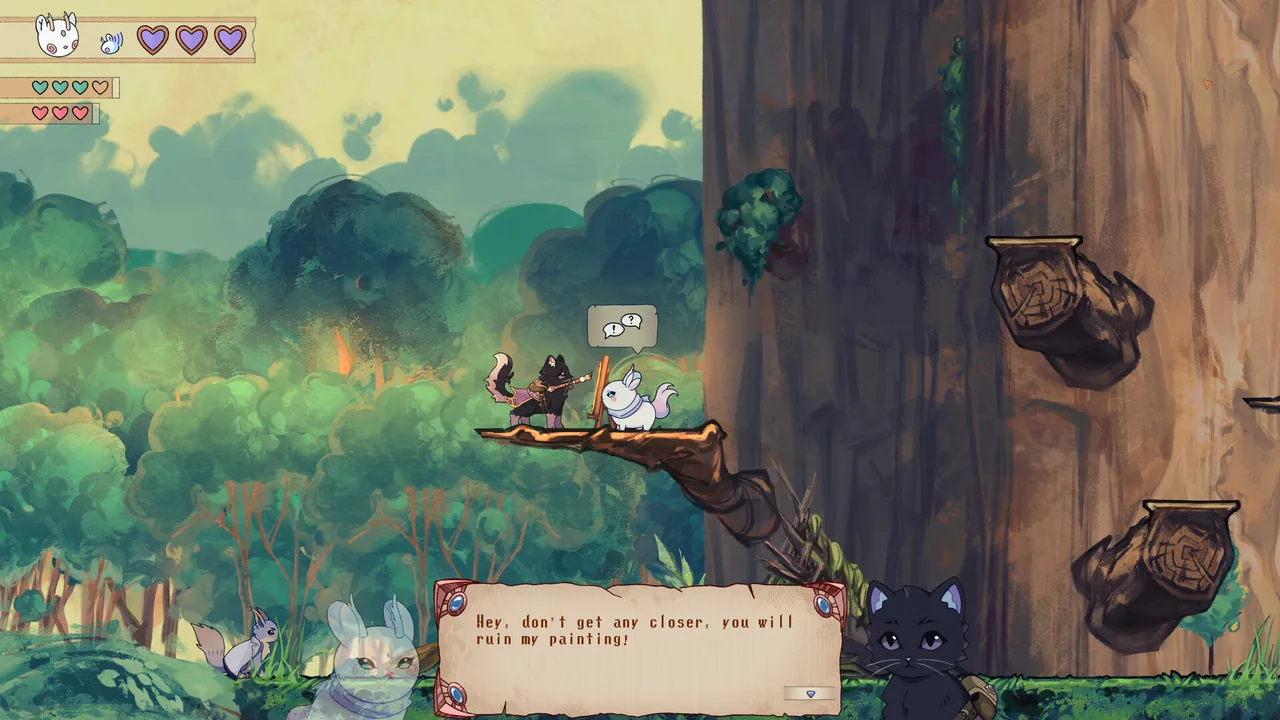
Image: Codenightly via Steam -
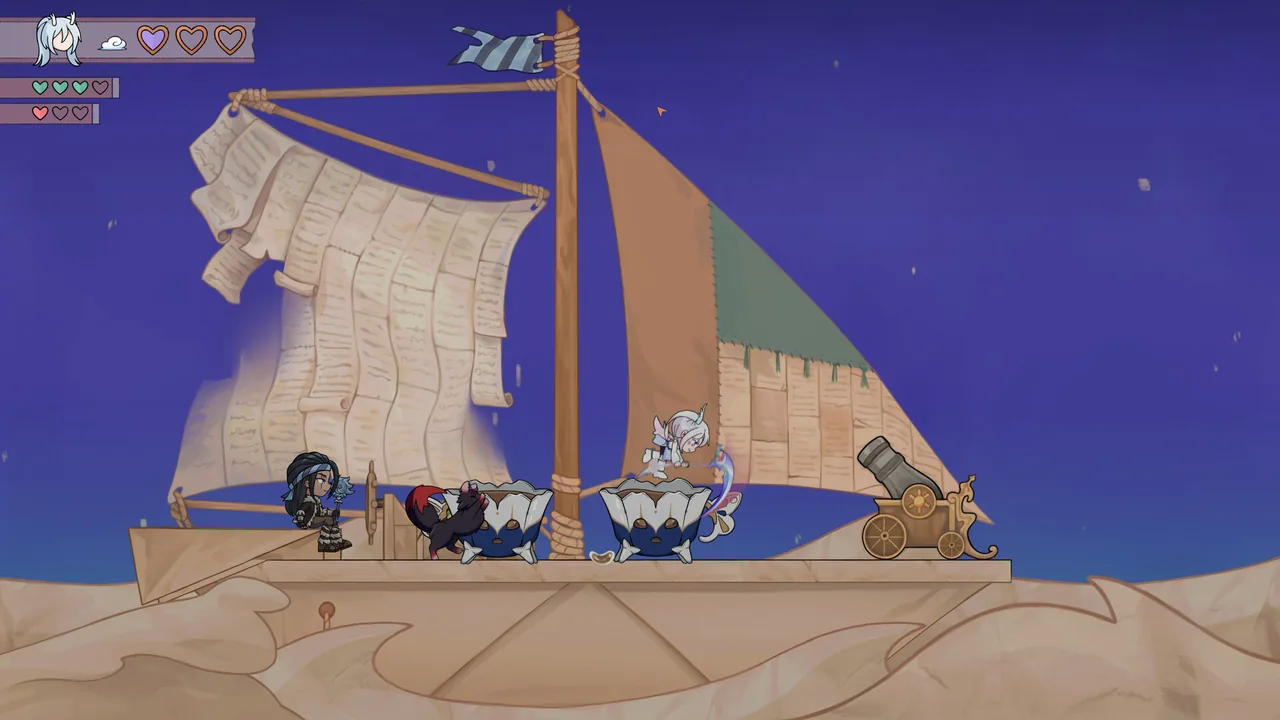
Image: Codenightly via Steam -
Wanderer Editorial -
Wanderer Editorial -
Wanderer Editorial