
Game review
Absentis
4.5 / 10
- Developer
- storkyproduct
- Publisher
- storkyproduct
The short version
Biggest strengths
- A promising roguelite skeleton is visible underneath the rough edges, spawn, scavenge, fight, and push toward an escape portal, that reviewers say could grow into something enjoyable with more polish
- The game's menu design draws specific, repeated praise as genuinely inventive and unlike anything reviewers had seen in a similar small-scale roguelite
- Presentation earns real compliments for its dark, atmospheric procedurally generated world, with more than one reviewer calling it visually beautiful despite the rough gameplay around it
Biggest weaknesses
- Controls are widely described as janky and overly slidy on both gamepad and keyboard and mouse, with at least one reviewer unable to get past the movement feel at all
- Difficulty balance is a frequent complaint, with players starting dramatically underpowered against enemies that hit far harder, undermining the roguelite loop's sense of fair progression
- Multiple reviewers report the escape portal that's supposed to spawn after surviving several minutes simply not appearing, blocking runs from ever ending in anything but death
4.5 / 10
Overview
Absentis is a dark fantasy survival roguelite developed and self-published by the small studio storkyproduct. Set after humanity's mistakes have torn open the gates to the afterlife, players take on the role of the last survivor of a ruined continent, fighting through hordes of unholy creatures and bosses across procedurally generated expeditions while gathering resources to upgrade their shelter between runs. It released on Steam on January 28, 2025, and holds a Mixed rating across 10 reviews, with six recommending it.
The reception paints a clear picture of an early-stage passion project: reviewers consistently identify real promise in its core structure and atmosphere, while also describing enough jank, balance problems, and blocking bugs that the current build feels closer to a rough prototype than a polished release.
Story and Setting
The premise is lean but evocative: after a catastrophic, unspecified human failure opens the gates to the afterlife, darkness floods the world, and the player is the last person brave, or desperate, enough to fight back and try to restore order. There's little in the way of deep narrative delivery beyond that setup, the game leans on its procedurally generated dark world and hostile atmosphere to do most of the storytelling work rather than dialogue or cutscenes.
Reviewers respond well to the mood this creates even when they're frustrated by the gameplay wrapped around it, describing the world itself as genuinely beautiful and unsettling in a way that stands out for a small-team production, even if the fiction never develops much beyond its opening pitch.
Gameplay and Mechanics
The core loop follows familiar roguelite shape: spawn into a procedurally generated area, fight through waves of enemies and the occasional boss, and try to survive long enough for an escape portal to open so you can leave with whatever loot you've scavenged. Currency picked up during a run is lost entirely on death, while experience earned carries over, meaning failed runs still inch you forward even when they don't pay off in gold, a structure a few reviewers say has real potential once it's tuned properly.
In practice, that potential is undercut by consistent complaints about feel and balance. Reviewers repeatedly describe the controls as janky and slidy, with movement that doesn't respond the way a fast-paced combat roguelite needs it to, and at least one reviewer reports being unable to get past this on either a gamepad or keyboard and mouse. Difficulty balance draws similar frustration: several reviewers describe starting the game feeling severely underpowered against enemies that hit disproportionately hard, turning early runs into a slog that takes repeated deaths just to gain a small amount of lasting strength. Environmental clutter, dense trees blocking sightlines and movement in particular, compounds the combat friction rather than adding meaningful tactical texture.
Progression and Replayability
Between-run progression revolves around spending experience earned from expeditions to grow stronger and upgrade a home shelter, giving failed runs at least some forward momentum rather than resetting players to zero every time. The idea of an escape portal that opens after surviving a set stretch of time is meant to give each run a clear success condition beyond simply dying with more loot than last time.
That system doesn't always work as intended, however; multiple reviewers report the portal failing to spawn at all, leaving them stuck exploring an already sparse world with no way to actually complete a run, and no clear indication of what, if anything, they did wrong. Combined with a tutorial reviewers describe as not preparing them for the game's actual demands, the overall onboarding and progression experience currently reads as a foundation still very much under construction rather than a finished loop.
Visual Style and Technical State
Presentation is where Absentis earns its most consistent goodwill. Reviewers describe the procedurally generated world as genuinely beautiful and atmospheric, and the game's menu design draws specific, repeated praise as inventive and distinctive in a way few small-scale roguelites manage. One reviewer even singles out a humorously derivative enemy character model with evident affection rather than frustration, suggesting the game's visual identity has real personality even amid its rougher systems.
Technical execution lags behind that visual promise. Beyond the janky movement and the non-spawning portal bug, reviewers report smaller issues like weapons dropping out of the player's hands mid-fight, and at least one reviewer speculates the project may be built substantially from purchased or stock assets rather than fully original work, a lighter echo of the kind of concern that shows up more forcefully in other budget-priced small-team releases. None of this is presented as confirmed fact, but it's part of the honest picture reviewers paint of a game still finding its feet. Sound design gets comparatively little mention either way, which in a review pool this candid about its complaints is itself a mild point in the game's favor: nothing about the audio side draws the kind of frustration the controls and bugs do.
Verdict
Absentis is a rough-edged but visually promising dark fantasy roguelite whose atmosphere and inventive menu design hint at real potential currently buried under janky controls, harsh difficulty balance, and a portal bug that can block runs from ever properly ending. Reviewers are broadly willing to be patient with it given the very low asking price, treating their reviews more as encouragement for a foundation worth building on than verdicts on a finished product. Right now it's best suited to roguelite fans specifically curious about an early, atmospheric small-team project who can tolerate real jank and the possibility that a run simply won't let them finish it.
Pros and cons
Pros
- A promising roguelite skeleton is visible underneath the rough edges, spawn, scavenge, fight, and push toward an escape portal, that reviewers say could grow into something enjoyable with more polish
- The game's menu design draws specific, repeated praise as genuinely inventive and unlike anything reviewers had seen in a similar small-scale roguelite
- Presentation earns real compliments for its dark, atmospheric procedurally generated world, with more than one reviewer calling it visually beautiful despite the rough gameplay around it
- At a very low asking price, several reviewers are explicitly forgiving of its current jank, framing it as an early foundation worth keeping an eye on rather than a finished failure
Cons
- Controls are widely described as janky and overly slidy on both gamepad and keyboard and mouse, with at least one reviewer unable to get past the movement feel at all
- Difficulty balance is a frequent complaint, with players starting dramatically underpowered against enemies that hit far harder, undermining the roguelite loop's sense of fair progression
- Multiple reviewers report the escape portal that's supposed to spawn after surviving several minutes simply not appearing, blocking runs from ever ending in anything but death
- Onboarding is thin, with the in-game tutorial failing to prepare players for the game's actual pace and expectations, and environmental clutter like trees making navigation and combat needlessly awkward
Screenshots
-
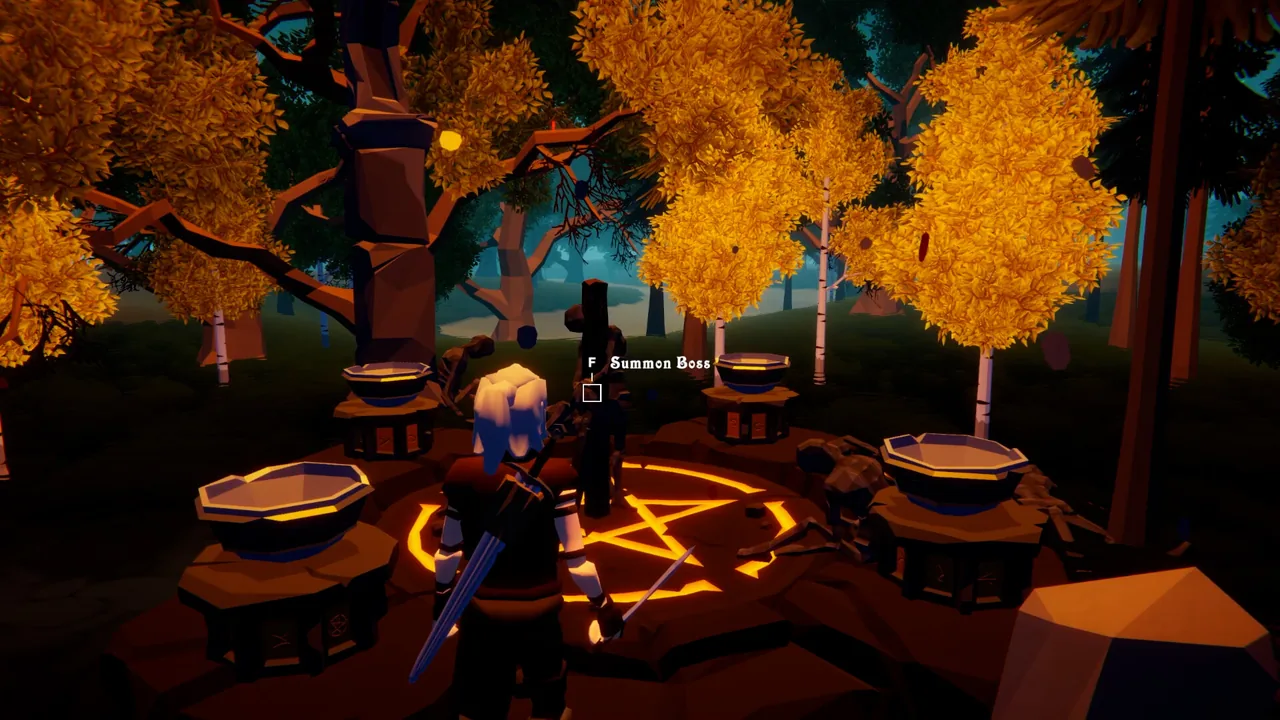
Activating a boss summoning circle in one of Absentis's autumn-lit forest clearingsImage: storkyproduct via Steam -
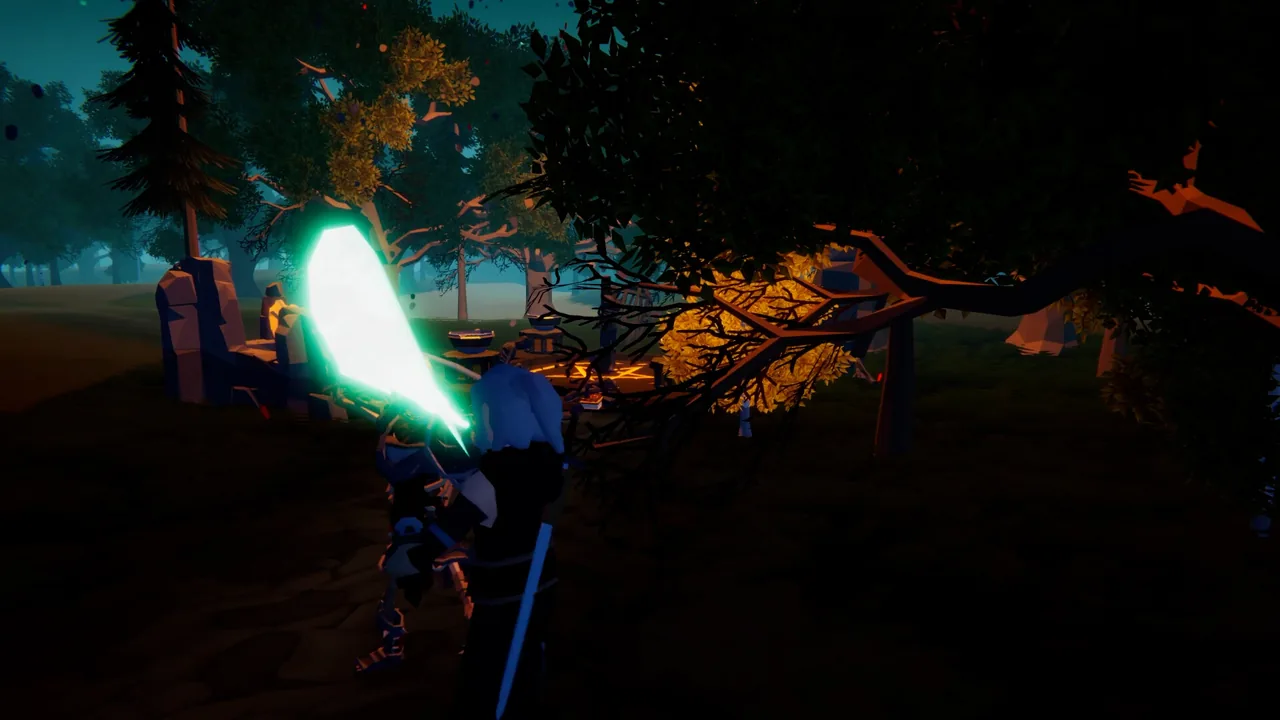
Combat with a glowing energy weapon at dusk, with the summoning circle visible through the treesImage: storkyproduct via Steam -
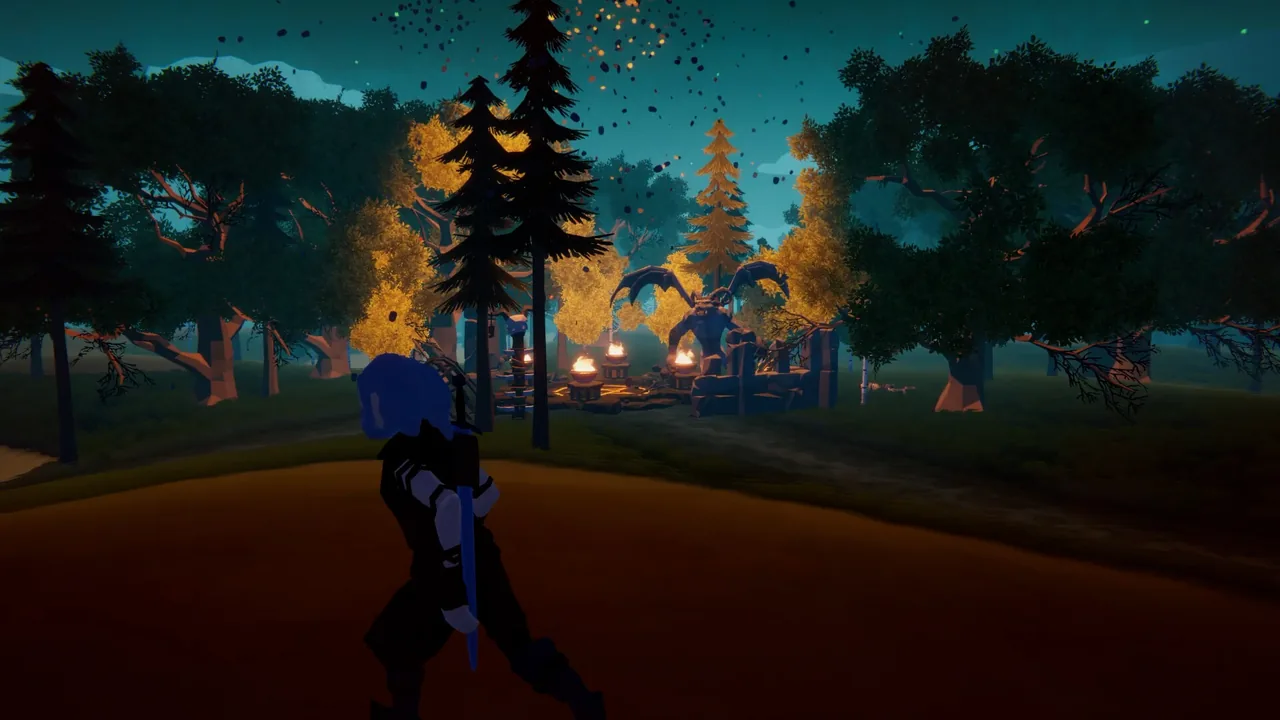
Approaching a winged boss enemy amid torch-lit ruins as night fallsImage: storkyproduct via Steam -
Wanderer Game ReviewsWanderer Game Reviews