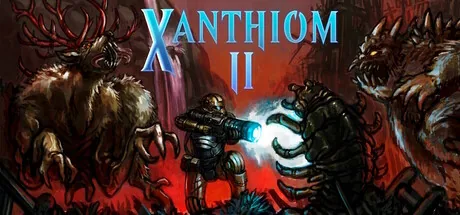
Game review
Xanthiom 2
8 / 10
- Developer
- MathanGames
- Publisher
- MathanGames
- Released
- 12 June 2026
- Platforms
- Windows
- Genre
- Action, Adventure
- Monetisation
- paid
- Players
- false
The short version
Biggest strengths
- A weapon-modification system reviewers consistently called the game's standout feature, letting bullet-spread, wall-penetration, and elemental modifiers combine into genuinely creative, personalized loadouts
- Exploration that stays rewarding throughout, since most upgrades change how combat feels rather than just adding a static stat boost
- A free included remake of the first game, Xanthiom Zero, with altered graphics and level tweaks, adding significant value on top of the main campaign
Biggest weaknesses
- A weapon system several reviewers agreed is significantly unbalanced, letting a well-built gun trivialize boss fights that would otherwise be genuine tests
- A thin, unclear story that multiple reviewers said left them uncertain what was happening even by the final boss
- A relatively short campaign, around four to five hours for full completion, that some felt could have used another biome or two of content
Who it's for: Metroidvania fans who lean toward the Metroid side of the genre and want a deep, freely combinable weapon-modification system to shape exploration and combat
Our recommendation: recommended
8 / 10
A metroidvania built around its gun, not just its map
Xanthiom 2 continues the series' commitment to Super Metroid-style exploration, but its defining feature remains a weapon-customization system that reshapes how combat and traversal both feel. One reviewer described the scope of it: "The Xanthiom series once again prides itself on Metroid-style exploration, with the main feature being able to customize your gun. This ranges from being able to spread bullets, shooting through walls, spatial firing, etc.; with the right amount of tweaks its possible to have an overpowered weapon that shoots up the entire room to a rapid-fire machinegun that melts bosses in seconds." Another reviewer framed why that system matters more than a typical metroidvania's upgrade tree: "I really liked the gun customization the game has, it was super fun to experiment when you found a new modifier or bullet type while exploring. That in turn made exploring much more rewarding when compared to other MVs, as instead of getting some health upgrade or static damage boost or what have you, you're a modifier to your weapon that might completely change how you handle combat encounters."
When the system's biggest strength becomes its clearest flaw
Multiple detailed reviewers independently arrived at the same core criticism: the weapon system's freedom is powerful enough to undercut its own challenge. One wrote, "It's fun, the weapon customization system feels like they just through some things at the wall and let you just have fun with it, because it's very, very unbalanced, but also there aren't a lot of places for that to manifest outside of bosses, so it both feels like too much and also unobtrusive, but also like you want more despite knowing it's ridiculously broken." Another reviewer, who otherwise gave the game high praise, singled out the same issue as their one real complaint: "Actually, that is the one negative I could say about this game. Build the right gun and you can completely trivialize the boss fights. This is not a problem for me because I love that feeling of being totally overpowered by finding a gun a boss cannot defend against, but I understand this might be an issue for others." That reviewer also described how the game occasionally forces players out of an overpowered comfort zone: they relied on a flamethrower build for most of the game until "a water section which made my flamethrower completely useless," and a shielded boss that specifically required a different modifier to beat.
A story that stays mostly out of the way
Where the mechanical design draws consistent praise, the narrative is the pool's clearest weak point. One reviewer noted the disconnect between the game's marketing and its actual content directly: "The description of the game also mentions 'Unfold an Engaging Story', but I had no idea what the hell was going on or what the final boss was even about." A more critical reviewer made a similar point from a harsher angle, comparing the protagonist unfavorably to genre icons: "main character does not look cool in game like he does in the game art. Samus from metroid looks cool. The belmonts look cool... he looks like toad/turtle." For a series clearly more invested in its combat systems than its cast or plot, that criticism lands as a real but secondary complaint rather than a dealbreaker for most of the pool.
Puzzle design and quality-of-life touches reviewers appreciated
Beyond combat, several reviewers highlighted specific design choices that set the game's exploration apart from genre peers. One wrote, "This game relies on a fair amount of puzzles that you'll really need to stop, think, and observe. Sometimes its an element in the background, others its a passcode that's placed in a completely different room that your screenshot ability will come in handy for," referring to an in-game tool that lets players photograph clues for later reference. Another reviewer praised a completion-tracking feature specifically: "I also like the fact that the game made 100%ing it easy instead of a slog in the form of a later game power up that reveals collectables you missed on the map. Some people might take issue with that and say it makes the game too easy, but I'd argue that it's perfectly fine because it's much important to figure out HOW you're going to get that power up than simply just knowing where it is." A more technically minded reviewer flagged a smaller but appreciated detail: "I especially like that this is one of the few metroidvanias that uses SLOPES... it makes the world feel like a world more than you'd expect."
Real value from a free included remake
Nearly every reviewer mentioned the same bonus content as a significant value-add: the game ships with a remake of the original Xanthiom, sometimes called Xanthiom Zero, included at no extra cost. One reviewer called it out directly: "that game includes a full remake of the previous game for free, making it insanely good value, even at full price (which is already at a lower price point than most other Metroidvanias)." Another described the remake's specific changes: "Xanthiom 2 also comes with a remake of Zero with altered graphics, reduced gravity, a different plot (independent from 2), and slight level design changes." Combined with built-in replay modifiers, including a randomizer mode, that value proposition meaningfully offsets the main campaign's relatively short four-to-five-hour runtime.
Verdict
Xanthiom 2 earns its overwhelmingly positive reception primarily through its weapon-customization system, a genuinely creative mechanic that makes exploration feel rewarding in a way most metroidvanias' static upgrade trees don't match, backed by thoughtful puzzles and a generous free remake of its predecessor. Its story remains an afterthought, its runtime is on the short side, and its central system is unbalanced enough to let a strong build steamroll boss fights, a real tradeoff, though one many reviewers said they enjoyed rather than resented. For metroidvania fans who lean toward Metroid's combat-driven side of the genre, it's an easy recommendation.
Pros and cons
Pros
- A weapon-modification system reviewers consistently called the game's standout feature, letting bullet-spread, wall-penetration, and elemental modifiers combine into genuinely creative, personalized loadouts
- Exploration that stays rewarding throughout, since most upgrades change how combat feels rather than just adding a static stat boost
- A free included remake of the first game, Xanthiom Zero, with altered graphics and level tweaks, adding significant value on top of the main campaign
- Thoughtful puzzle design, including a screenshot tool for tracking clues, that several reviewers said was a refreshing change of pace from other metroidvanias
Cons
- A weapon system several reviewers agreed is significantly unbalanced, letting a well-built gun trivialize boss fights that would otherwise be genuine tests
- A thin, unclear story that multiple reviewers said left them uncertain what was happening even by the final boss
- A relatively short campaign, around four to five hours for full completion, that some felt could have used another biome or two of content
- Default keyboard controls and rebinding options a few reviewers found restrictive or unintuitive
Screenshots
-
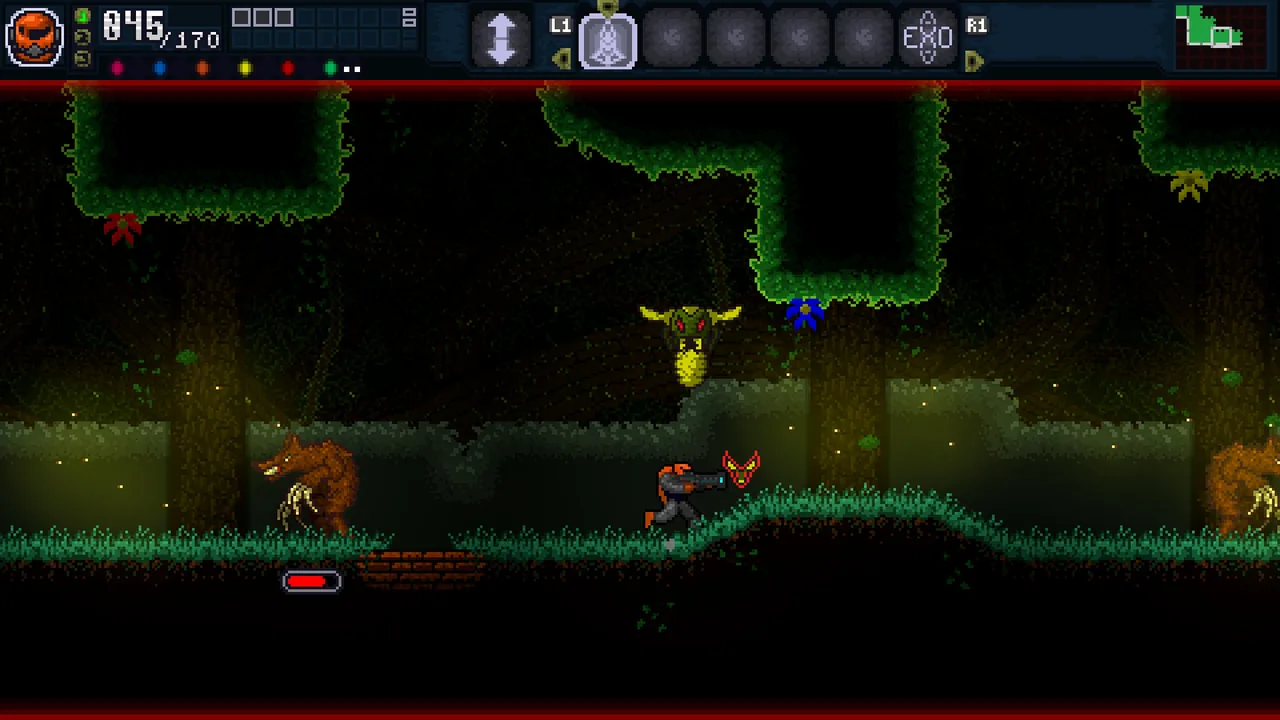
Xanthiom 2Image: MathanGames via Steam -
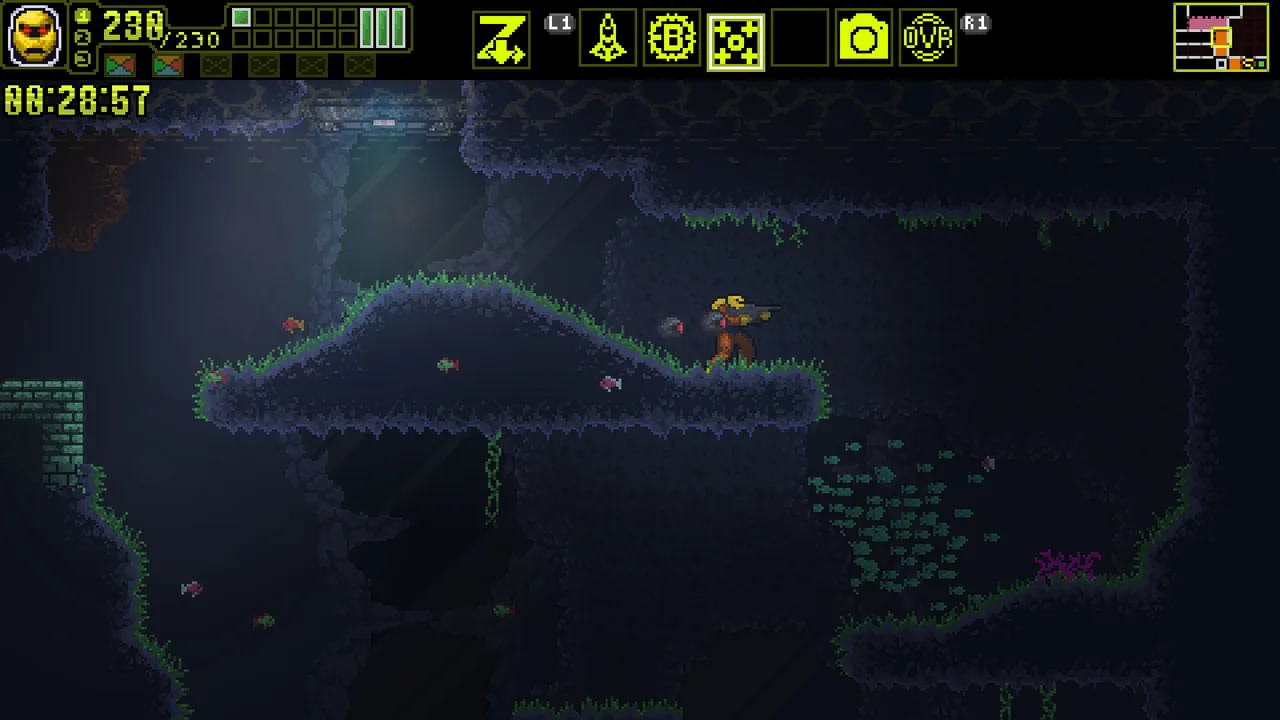
Xanthiom 2Image: MathanGames via Steam -
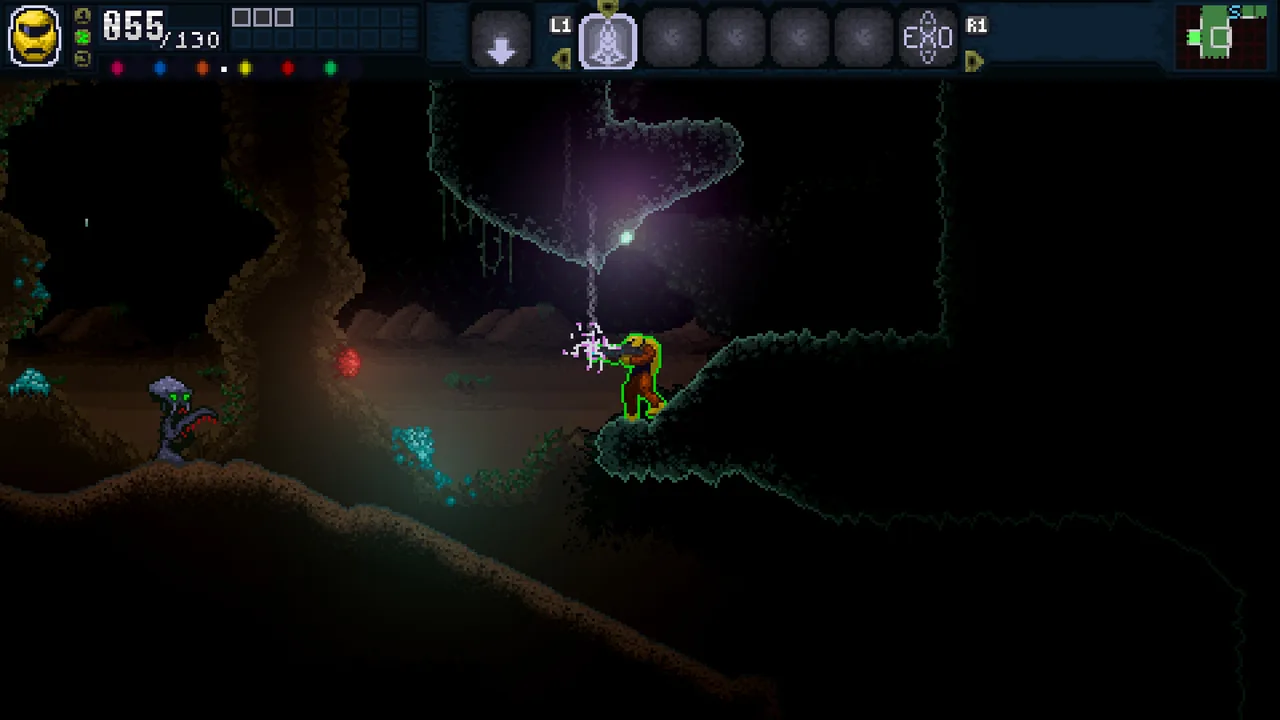
Xanthiom 2Image: MathanGames via Steam