Game review
Alruna: End of History
7 / 10
- Developer
- Neckbolt
- Publisher
- Burning Planet Digital
- Released
- 4 June 2026
- Platforms
- Windows
- Genre
- Action, Adventure, Indie
- Monetisation
- paid
- Players
- false
The short version
Biggest strengths
- Densely designed, single-screen rooms where reviewers said almost every space has a purpose, whether a fight, a collectible, or a puzzle
- A genuinely rewarding secrets layer built on hidden fake walls, discoverable through experimentation, that multiple reviewers said opens up major sequence-breaking possibilities
- A flexible, no-punishment upgrade system with a free respec, letting players freely experiment with build loadouts across roughly 75 collectible currency drops
Biggest weaknesses
- Bosses reviewers described as weak and undertuned, largely passive damage sponges with little real threat, a carryover complaint from the original
- Combat that's slower and less forgiving than the first game, with enemies taking several hits to kill and a lack of invincibility frames that reviewers said leads to unfair stun-locking
- Navigation reviewers found slower overall, since the sequel drops the original's central fast-travel warp in favor of disconnected point-to-point warps and heavy backtracking
Who it's for: Metroidvania fans, especially those who played the original Alruna, who value tight, secret-stuffed exploration and freeform sequence-breaking over polished boss fights or punchy combat
Our recommendation: recommended
7 / 10
A dense, purposeful world to get lost in
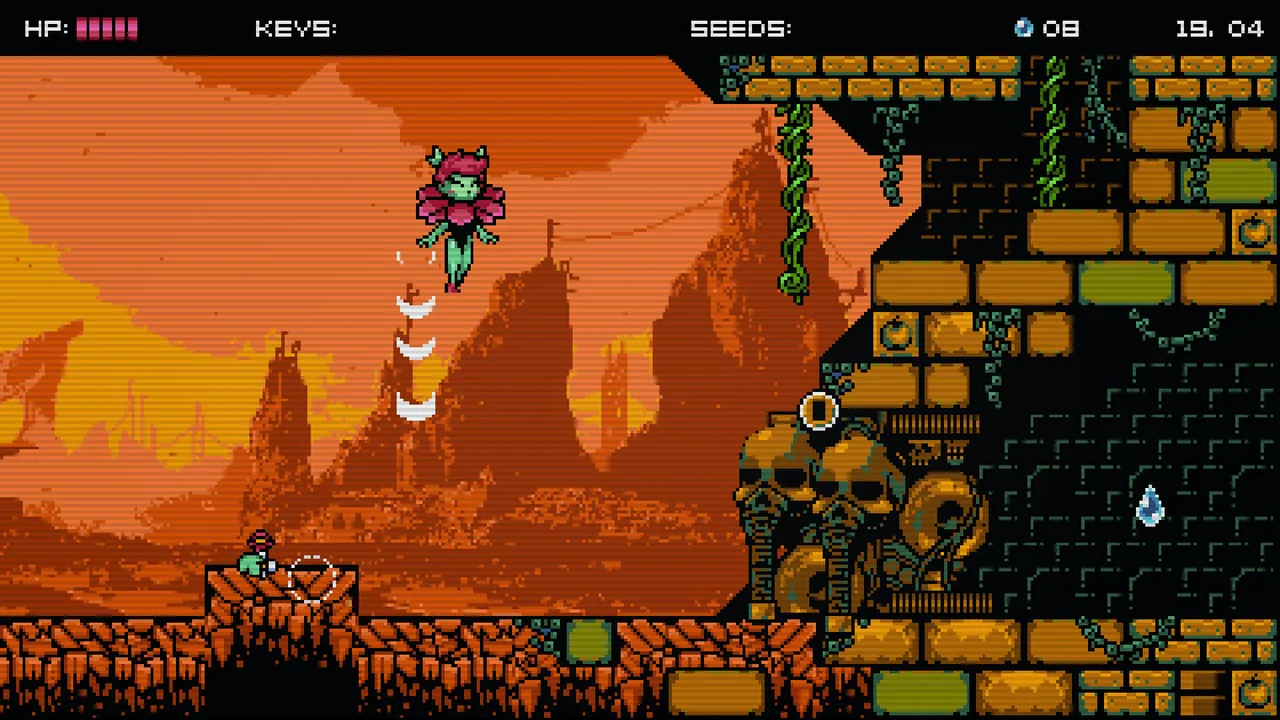
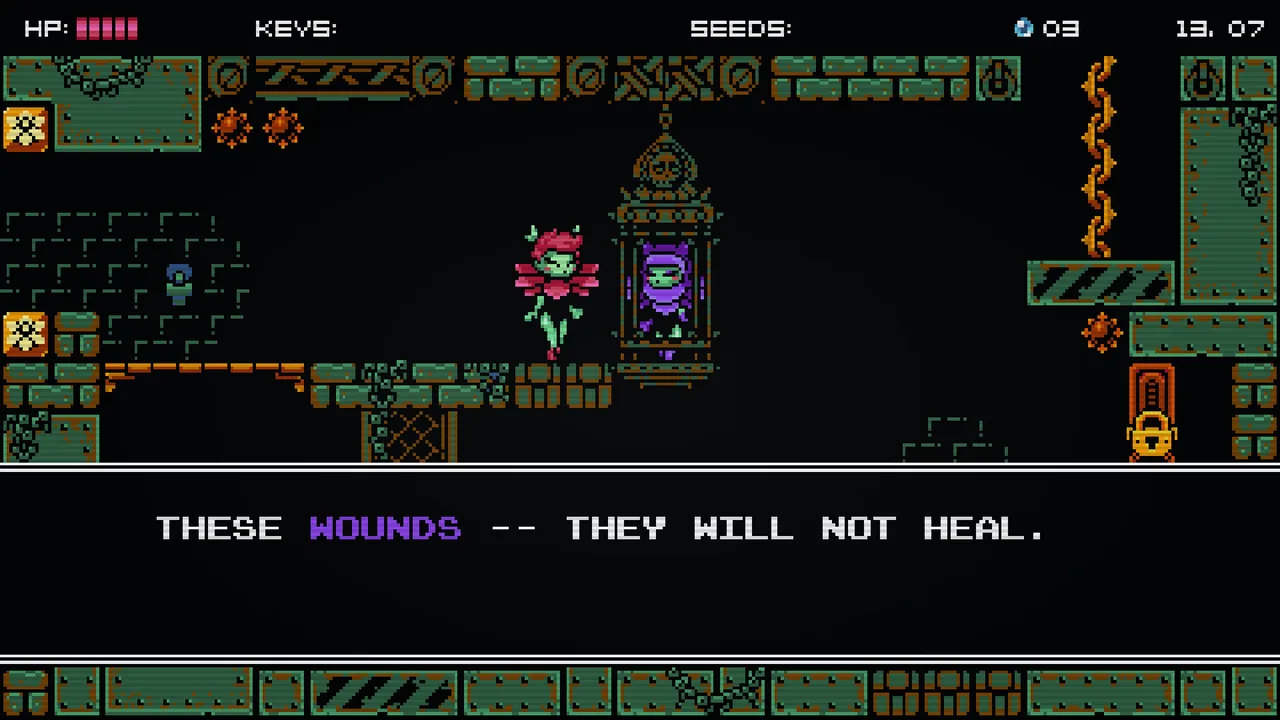
Alruna: End of History picks up the story of a wasteland drained dry by greed, casting players as one of the last living dryads exploring ruins overrun by mindless skeletal machines. Reviewers consistently praised how tightly its compact map is built, with almost no wasted space. One detailed review put it plainly: "Alruna End of History is another uniquely open Metroidvania in a very compact package. The overall map is small but very condensed. Almost every room has a purpose which leads to very satisfying moment-to-moment gameplay. You're never going to be more than 2 screens without having enemies to fight, a collectible to find or a puzzle to solve." A separate, exceptionally thorough review that approached the game with no prior knowledge of the series described the room-by-room design philosophy in similar terms, noting that "most rooms contain a mix of platforming challenges, enemies, and obstacles that either require your current abilities or encourage you to return later with new ones."
A secrets layer built on experimentation
The pool's most distinctive praise centers on the game's hidden fake walls, a mechanic reviewers say rewards careful, deliberate exploration over simply following a critical path. The newcomer review explained the discovery process in detail: "The upgrade room is packed with fake walls that let you bypass obstacles you would otherwise need to pay to remove. Some even provide access to major upgrades much earlier than intended... What makes these secrets particularly interesting is how often they allow access to areas you clearly weren't intended to reach yet." Another reviewer, who finished the game, connected this directly to replay value: "This is a game that is heavily complimented by multiple playthroughs. Its open and short-length nature leads to a surprising amount of freedom. There's a lot of room for theorizing the many ways to go about completing it, as well as 75 hidden droplets to find." That reviewer also praised the currency-driven build system tied to those secrets: "With 5 total permanent inventory items, I believe only 1 to 2 could be needed to complete the game," a level of flexibility a third reviewer echoed, praising a no-cost respec option: "There's a re-spec available too, which costs nothing, so you're totally free to experiment with which loadout you like best."
Weak bosses, a carryover complaint from the original
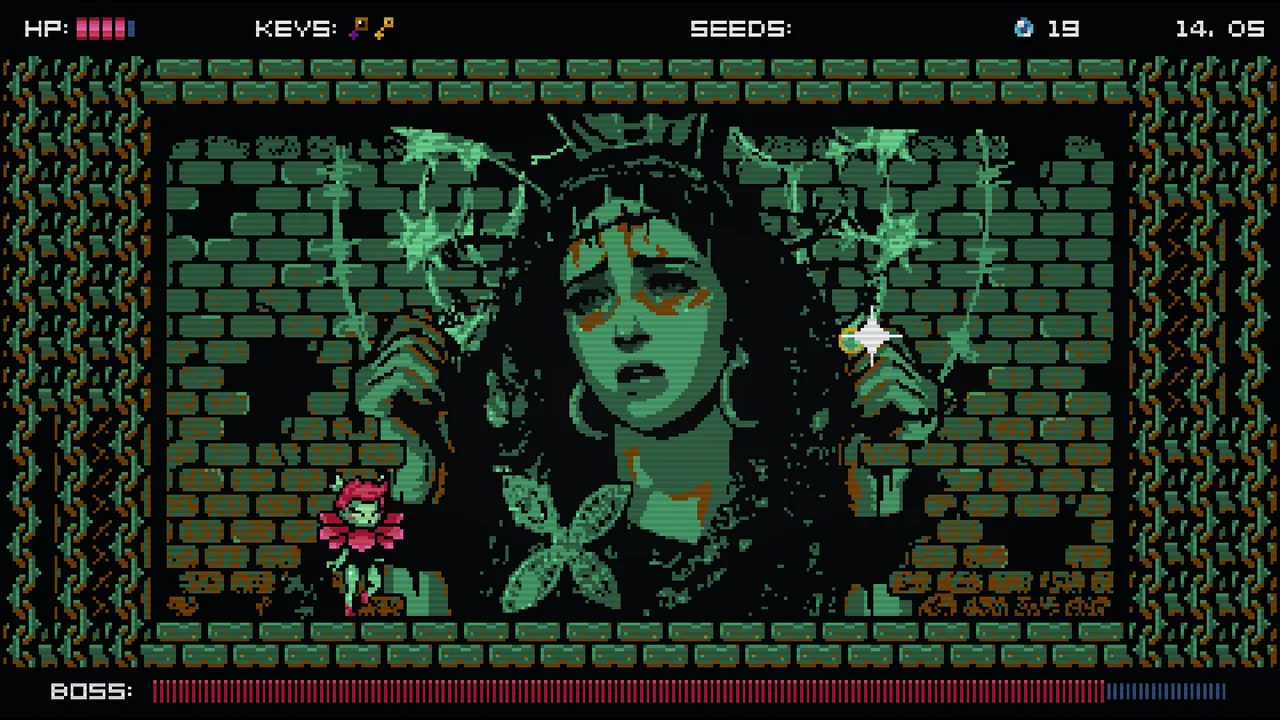
Despite the praise for exploration, reviewers were remarkably consistent in criticizing boss encounters as the game's weakest element. One detailed comparative review didn't mince words: "The bosses are... still garbage. Maybe even worse than the first game. They basically just sit there while you shoot them and dodge some projectiles. There's not much variation at all. The game is about the exploration of course but I felt like the boss design was a major weakness of the first game and it's sad to see no progress on that front." A separate reviewer independently confirmed how trivial bosses are in practice: "The bosses and enemies are extremely easy. There were several 'no damage' runs on youtube within a few hours of release." A third reviewer described stumbling onto an unintended shortcut that made the very first boss trivial and never looked back: "I found the secret(?) Boss quick-kill move on the very first one, so I didn't really have a reason to play them normally after."
Combat that punishes without much give
Beyond bosses, reviewers flagged a specific and recurring frustration with regular enemy combat, centered on a lack of invincibility frames after taking damage. One reviewer described the practical effect bluntly: "There were several 'no damage' runs... The only difficulty comes from strange hitboxes bouncing you between enemies and killing you in a couple of seconds due to lack of i-frames. Several times I was hit despite a literal inch of empty screen space between me and the enemy." A separate reviewer, who otherwise enjoyed the game, raised the same specific issue: "Returning from the first game is a lack of i-frames. You can easily find yourself stun-locked to death by various enemies. It can definitely be frustrating and feel unfair much of the time. Adding a little bit of invincibility would go a long way." That reviewer also found the new ranged weapon slower to use than the original's melee whip: "I found enemy combat to be surprisingly slow. It takes about 4-5 shots to kill many of the basic enemies, which completely halts the otherwise very fast flow of gameplay."
Slower navigation and an unresponsive developer
Multiple reviewers who'd played the original specifically missed its central fast-travel system. One wrote: "Getting around might be much faster but navigation is way slower. Gone is the warp that let's you easily travel to the central point of the map. Instead you pretty much have to walk everywhere, which takes forever... There are warp points in the game, but they're basically useless as they're not linked together, they both only go to one other warp point." That same reviewer criticized the elemental power-up puzzles as more annoying than engaging: "The time limit is pretty short and you lose the power-up if you get hit, change forms, or touch water... It's just not executed very well." Separately, the pool's most detailed negative review raised a more serious concern about the developer's response to reported bugs: "There are several ways to soft lock yourself permanently or block progression without resorting to glitches. The dev's response has been along the lines of 'lol cool. It's supposed to be broken and is how the game is supposed to be!' This seems more like an excuse for not wanting to test their own game." A separate reviewer described running into what may be the same class of issue directly, unable to progress after retreading the map repeatedly following what they suspected was a soft-locking bug.
Verdict
Alruna: End of History is a tightly built, secret-dense Metroidvania that rewards curiosity and experimentation, especially for players willing to shoot and dash into every suspicious wall in search of sequence breaks. Reviewers, including many who'd played and loved the original, consistently praised its room design and flexible build system, while just as consistently flagging the same weaknesses: bosses with little threat or variety, combat that punishes without giving players the tools to avoid unfair hits, slower navigation than its predecessor, and a developer reviewers say has been dismissive about reported soft-lock bugs. It's a worthwhile, compact Metroidvania for genre fans who prize exploration over combat polish, but go in aware that its rough edges are real and, per at least one detailed account, not being actively addressed.
Pros and cons
Pros
- Densely designed, single-screen rooms where reviewers said almost every space has a purpose, whether a fight, a collectible, or a puzzle
- A genuinely rewarding secrets layer built on hidden fake walls, discoverable through experimentation, that multiple reviewers said opens up major sequence-breaking possibilities
- A flexible, no-punishment upgrade system with a free respec, letting players freely experiment with build loadouts across roughly 75 collectible currency drops
- A short, replayable roughly three-to-five-hour runtime reviewers said rewards multiple playthroughs and theorizing about routes
Cons
- Bosses reviewers described as weak and undertuned, largely passive damage sponges with little real threat, a carryover complaint from the original
- Combat that's slower and less forgiving than the first game, with enemies taking several hits to kill and a lack of invincibility frames that reviewers said leads to unfair stun-locking
- Navigation reviewers found slower overall, since the sequel drops the original's central fast-travel warp in favor of disconnected point-to-point warps and heavy backtracking
- A developer reviewers criticized for dismissing reported soft-lock and progression-blocking bugs rather than treating them as issues to fix
Screenshots
-
Alruna: End of HistoryImage: Burning Planet Digital via Steam -
Alruna: End of HistoryImage: Burning Planet Digital via Steam -
Alruna: End of HistoryImage: Burning Planet Digital via Steam