
Game review
Fallout 4
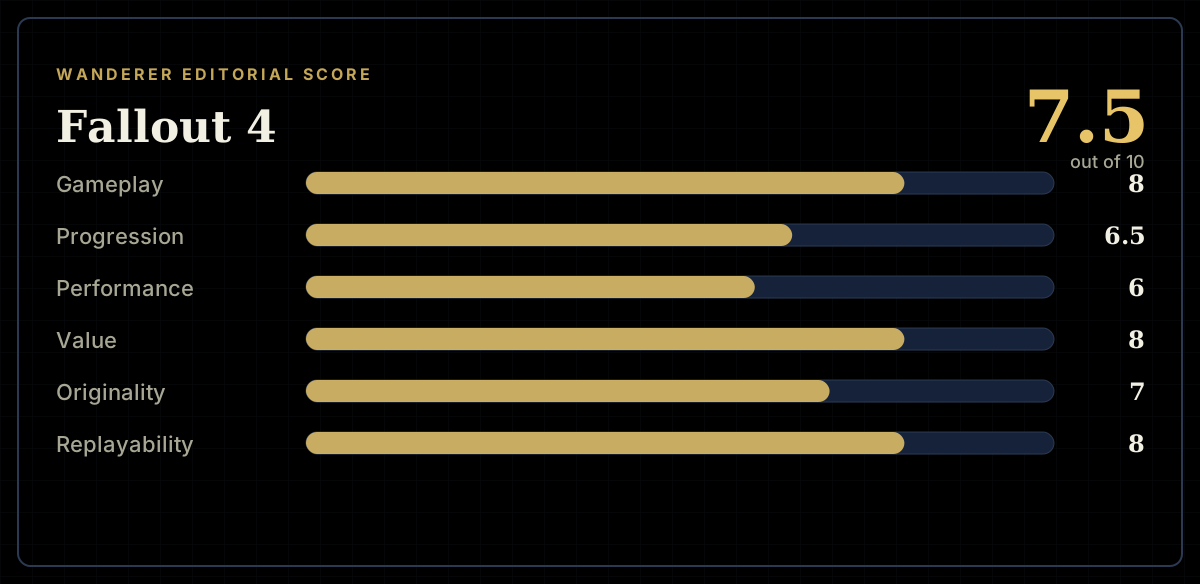
7.5 / 10
- Developer
- Bethesda Game Studios
- Publisher
- Bethesda Softworks
- Released
- 9 November 2015
- Platforms
- Windows
- Genre
- Open-World RPG
- Monetisation
- One-time purchase, currently NZ$13.98 at 60% off (NZ$34.95 full price). Season Pass DLC and the Creation Club paid-mods marketplace sold separately.
- Players
- Single-player only
The short version
Fallout 4 is a vast, moddable open-world RPG that combined its predecessors' exploration with a genuinely popular settlement-building system, and 81.2% positive across 427,277 reviews reflects real, sustained affection for the scale of what Bethesda built. Reviewers with hundreds of hours describe it as compulsively playable even when they list real complaints alongside the praise.
Those complaints cluster into two nearly identical controversies, seven years apart, both driven by the same underlying grievance. In 2017, Bethesda launched Creation Club, charging money for content in a marketplace many reviewers felt was undercutting the free community mods that had long defined the game. In April 2024, a "next-gen update" broke the Fallout 4 Script Extender and reportedly the vast majority of existing mods, introduced new performance problems, and was read by much of the veteran community as another push toward paid content at the mod ecosystem's expense. The same specific complaint — Bethesda monetising the community that keeps its game alive — recurs almost word for word across both eras.
Biggest strengths
- Enormous, densely detailed open world with genuine exploration incentives at nearly every landmark
- A settlement-building system that added a genuinely popular new pillar to the series, cited positively across every era of reviews
- Extensive, high-quality DLC that most reviewers rate well above filler
Biggest weaknesses
- The SPECIAL stat and perk system was simplified compared to earlier Fallout games, and multiple detailed reviews argue this reduces meaningful character-build differentiation over a long playthrough
- Dialogue is widely criticised as shallower and less reactive than Fallout 3 or New Vegas, limiting roleplay depth for players who valued that in earlier entries
- The 2017 launch of Creation Club, a paid marketplace for mod-like content, drew a large, sustained backlash from a community that felt free modding was being undercut for profit
Who it's for: Open-world RPG and settlement-building fans who want a huge, systemically dense post-apocalyptic sandbox, and players comfortable relying on the mod community both to fix technical issues and to restore roleplaying depth some feel the base game simplified from earlier entries. Less suited to players who specifically want the reactivity and faction politics of Fallout: New Vegas.
Our recommendation: Buy it, especially at a discount — the scale and settlement systems remain genuinely compelling for hundreds of hours. If you plan to mod it, which the review corpus treats as close to standard practice, check current compatibility with the post-2024 game version before installing anything, since the update broke long-standing tools for a meaningful stretch and some mod authors are still catching up.
7.5 / 10
Read Fallout 4's negative reviews from 2017 and its negative reviews from 2025 side by side and you'll find, almost word for word, the same accusation aimed at Bethesda twice, seven years apart. That repetition is the most interesting thing this game's review history has to say, and it's worth tracing carefully.
What the game does well, at scale
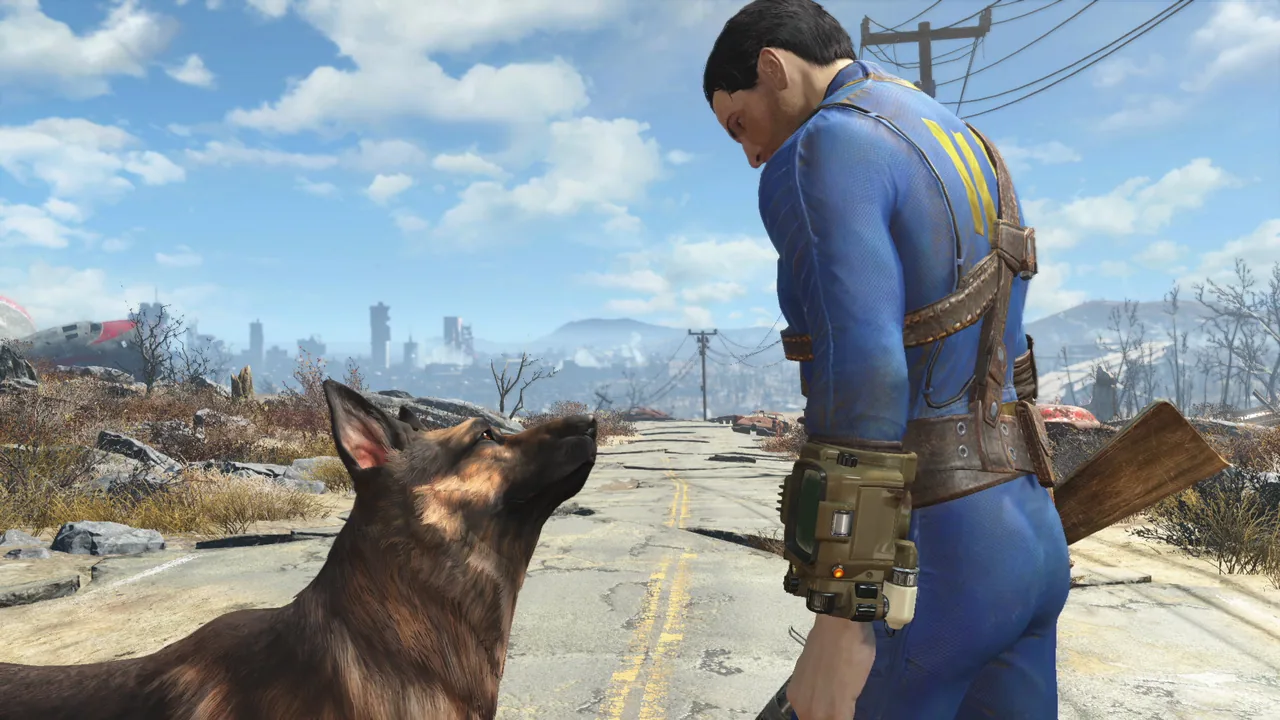
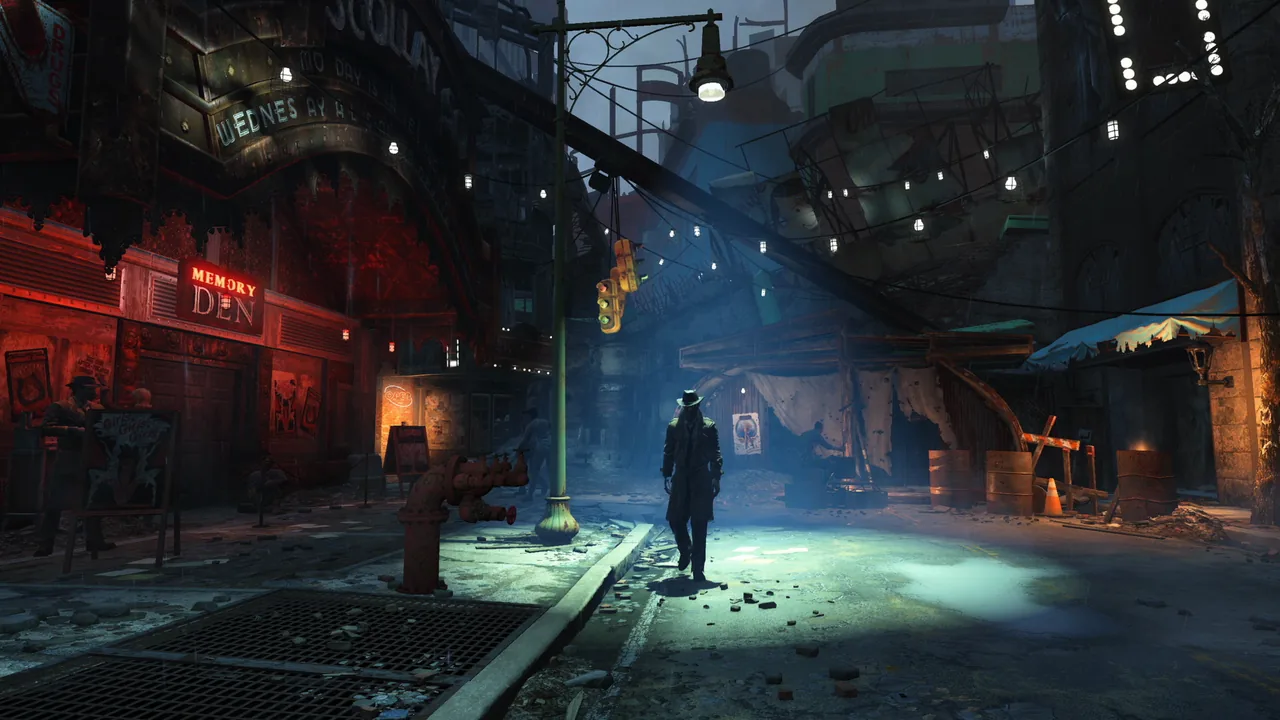
Fallout 4 took the Commonwealth — post-nuclear Boston and its surroundings — and filled it with an enormous density of handcrafted locations, alongside a new settlement-building system that let players construct and manage their own bases across the map. Reviewers across every era credit this combination for the game's addictiveness even when they have real complaints elsewhere; one of the most-upvoted reviews in the game's history, written weeks after launch, opens by warning readers against letting inflated expectations sour a genuinely fun, immersive game. Six DLC expansions following launch are broadly rated well above the filler most games ship as post-launch content, and the settlement system in particular became a pillar of the series' identity going forward.
2017: Creation Club
The first major backlash arrived in August 2017, when Bethesda launched Creation Club, a paid marketplace for mod-adjacent content. The reaction, read across dozens of top-voted reviews from that exact month, was severe and specific. "Bethesda 2015: 'Let modders fix the game.' Bethesda 2017: 'Let modders fix the game and we take the money for it,'" reads one of the most-upvoted reviews from that period. Another, from a player with hundreds of hours already logged, states plainly: "I paid full retail for this game and all the DLC. Not happy about this recent development in paid mods at all." The same August-September 2017 window also produced detailed critiques of the SPECIAL stat system feeling flattened compared to earlier games, and dialogue widely described as shallower than Fallout 3 or New Vegas — criticisms that exist independently of the Creation Club controversy but landed in the same wave and compounded it.
2024: the update that broke everything the community built
The second wave began in April 2024, timed to a "next-gen update" released alongside the Fallout television series. Reviewers report the update broke the Fallout 4 Script Extender — a foundational tool much of the serious modding scene depends on — and, by several accounts, close to all of the mods players had built their setups around. "There was no need for this," one reviewer with 528 hours writes, going on to describe new performance issues and instability introduced by an update nobody asked for. Crucially, reviewers from this period draw the connection to 2017 explicitly rather than treating it as a new, unrelated grievance: "modders built the soul of this game," reads a 2025 review with over 2,200 votes. "Bethesda keeps trying to sell it back to us." That's the same accusation from seven years earlier, aimed at a different specific decision but the same underlying pattern — a studio perceived as monetising or destabilising the exact community infrastructure that keeps its aging game alive and playable.
Reading the completion data
The achievement curve shows a game most buyers genuinely dig into. The most common milestone sits at 83.3%, and several others remain above 60%, reflecting how much of the early-to-mid game most players experience. The rarest achievements, tied to deep faction and settlement-specific goals, fall to around 1.5%, a wide spread consistent with an open-ended sandbox where full completion is optional rather than the point.
7.5 out of 10. Fallout 4 remains a genuinely compelling, enormous open-world RPG whose settlement system and sheer density of content have kept players returning for a decade. It's held below the top tier by a specific, recurring pattern rather than a single flaw: two distinct, well-documented eras, seven years apart, where a meaningful share of the community felt Bethesda was undermining the free modding ecosystem that does much of the work of keeping this game feeling complete. Buy it for the scale and the settlements. If you plan to mod it — and most serious players do — check current tool compatibility first, given how recently that relationship was disrupted again.
Pros and cons
Pros
- Enormous, densely detailed open world with genuine exploration incentives at nearly every landmark
- A settlement-building system that added a genuinely popular new pillar to the series, cited positively across every era of reviews
- Extensive, high-quality DLC that most reviewers rate well above filler
- One of the most actively modded games ever released, with a community that has extended its life far beyond what the base game alone would support
- Strong value at typical discount pricing for the sheer amount of content on offer
Cons
- The SPECIAL stat and perk system was simplified compared to earlier Fallout games, and multiple detailed reviews argue this reduces meaningful character-build differentiation over a long playthrough
- Dialogue is widely criticised as shallower and less reactive than Fallout 3 or New Vegas, limiting roleplay depth for players who valued that in earlier entries
- The 2017 launch of Creation Club, a paid marketplace for mod-like content, drew a large, sustained backlash from a community that felt free modding was being undercut for profit
- A controversial April 2024 "next-gen update" broke the widely-used Script Extender and reported the vast majority of existing mods, introduced new performance and stability issues, and reignited the same monetisation criticism from 2017 in the years since
- Long-standing PC-specific complaints, including historically poor ultrawide monitor support, recur across multiple years of reviews
Screenshots
-
Fallout 4Image: Bethesda Softworks via Steam -
Fallout 4Image: Bethesda Softworks via Steam -
Fallout 4Image: Bethesda Softworks via Steam -
How the review scores each part of the gameWanderer Editorial -
The short versionWanderer Editorial