Game review
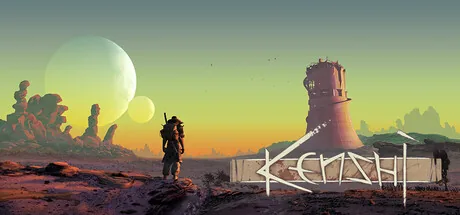
Kenshi
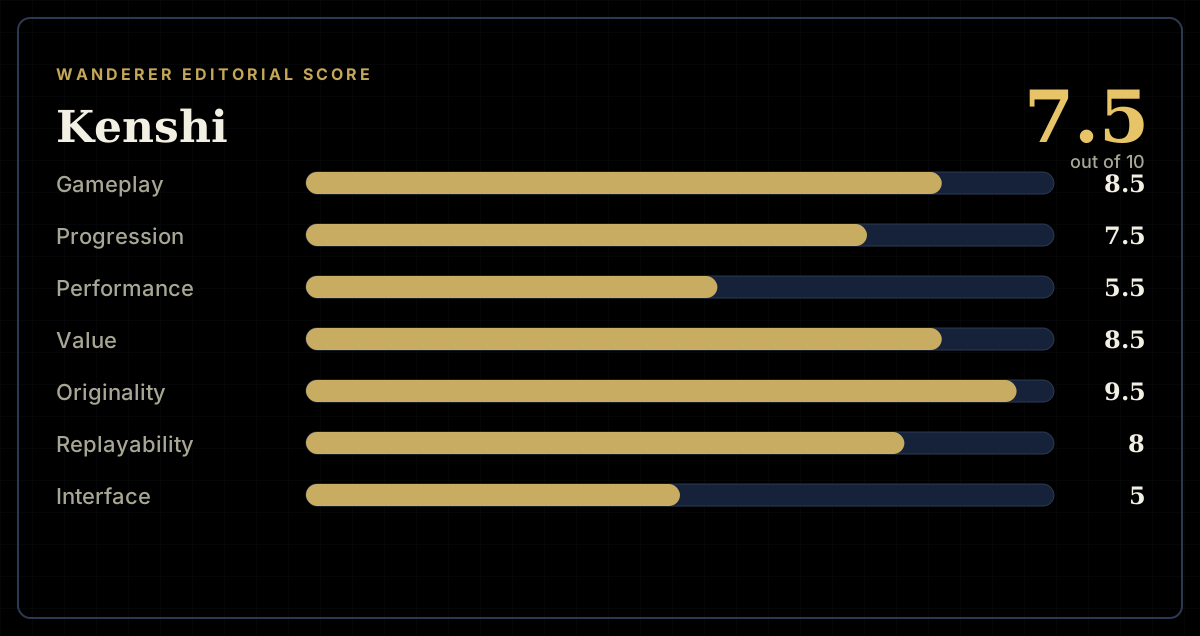
7.5 / 10
- Developer
- Lo-Fi Games
- Publisher
- Lo-Fi Games
- Released
- 6 December 2018
- Platforms
- Windows
- Genre
- Open-World Squad RPG
- Monetisation
- One-time purchase. A single optional cosmetic DLC exists — the Kenshi Original Soundtrack, NZ$5.99, music only, no gameplay content. No ads, no subscription, no premium currency, no season pass.
- Players
- Single-player only. There is no co-op or PvP mode in the base game.
The short version
Kenshi drops you into a broken world with no main quest, no chosen-one framing and no promise that anything you build will survive contact with it, then hands you total freedom to be a trader, a slaver, a farmer, a one-man cannibal-baiting suicide run, or the founder of a fortress that eventually fields a hundred fighters. That freedom is real and almost nothing else on Steam offers it at this scale. What it doesn't hand you is a comfortable way to manage any of it — the interface was cumbersome when the game entered Early Access in 2013 and it is still cumbersome managing a squad of twenty in 2026, and the engine underneath still stutters, mispathes and occasionally corrupts a save on a fortress you spent eighty hours building.
Biggest strengths
- The limb-by-limb injury and prosthetics system turns combat losses into a resource problem instead of a game-over screen, which is the single mechanic that makes the world feel genuinely dangerous without being punishing in the way most permadeath sandboxes are
- Faction reputation, banditry, slavery and trade routes interact with each other in ways the game never explicitly teaches, so the "emergent story" claim on the store page actually holds up once you've put in the unglamorous early hours
- A single NZ$36.99 purchase with no premium currency, no battle pass and only one entirely optional soundtrack DLC, seven-plus years after 1.0
Biggest weaknesses
- The interface gets genuinely difficult to manage once a squad passes a dozen members — giving individual orders, tracking injuries and re-equipping after a fight all require more clicking and menu-diving than the pace of Kenshi's combat comfortably allows
- Pathfinding across the world map and inside built structures is a long-running, still-present complaint: units take circuitous routes, get stuck on terrain, and occasionally refuse a command outright, which is a serious problem in a game built around commanding several characters simultaneously in combat
- Performance has never matched the scale of the world — load times, CPU spikes when the game speed is pushed up, and periodic crashes during zone transitions show up across reviews from 2015 through 2026, not just at launch
Who it's for: Players who want a genuine systems sandbox and are willing to fight an unfriendly interface and a dated engine to get one — the kind of player who enjoyed Dwarf Fortress or RimWorld for the emergent stories and shrugged off their rough edges too. Not for anyone who wants a game to explain itself, hold their hand through the opening hours, or run smoothly on a Steam Deck.
Our recommendation: Worth the NZ$36.99 for the audience above, and probably the most complete "build your own story in a hostile sandbox" experience on Steam at that price — go in expecting the first ten hours to be genuinely miserable by design, expect to lean on the Steam Workshop once the vanilla game's limits show, and expect the UI and performance complaints in this review to still be true whenever you actually buy it.
7.5 / 10
Type "Kenshi release date" into Steam and you get 6 December 2018. That's true, as far as it goes — it's the day Lo-Fi Games flipped the Early Access flag off. It is not when the game became playable, and it is nowhere close to when the game began. Chris Hunt started building Kenshi alone around 2006, working night shifts as a security guard to fund it, and put it into Steam's brand-new Early Access programme in March 2013. The negative-review sample pulled for this piece still carries the fingerprint of that timeline: a review logged at over 77,000 minutes of playtime and dated May 2015, more than three years before the "release date" the store page advertises. Reviewing Kenshi as a 2018 game, or worse, as a 2026 game, misses the more interesting fact — it's a 2013 game that never stopped being worked on, and both its greatest strength and its most persistent flaws trace straight back to that.
A world that refuses to tell you what to do
There is no main quest. There is no chosen one, no marked map objective, no character class screen asking what kind of hero you want to be. Kenshi opens with one or more starving wanderers in a wasteland stitched together from factions who mostly want to rob, enslave or eat them, and the entire game is the space between that starting point and whatever you decide to become — trader, farmer, bandit, cannibal bait, or the founder of a fortress that eventually fields a hundred fighters. Everything you do is systemic rather than scripted: reputation with one faction degrades your standing with its rivals, a caravan route you establish can be raided by bandits who remember you, and a character captured and enslaved doesn't respawn clean — they show up, eventually, wherever slaves in that region end up, and getting them back is a rescue mission you have to plan, not a menu option.
That's a genuinely rare thing to pull off convincingly, and it's the reason Kenshi has kept a 95% positive Steam rating across more than 97,000 reviews spanning over a decade. The freedom isn't cosmetic. Reviewers routinely describe entirely different playthroughs from each other — one built a trading empire, another ran a one-family homestead that got wiped out by a faction war they never saw coming, another spent forty hours as a wandering thief before ever settling down. None of those are scripted paths; they're just what happens when the simulation is left to run and the player is left to make decisions inside it.
The mechanic that makes losing interesting
The system doing the most quiet work here is limb-by-limb injury. Characters don't have a single health bar — arms, legs, head and torso each take damage and can be crippled or severed independently, and a character who loses a leg in a fight against a pack of raiders doesn't die, they crawl, bleed out slowly if nobody drags them home, and if they survive, they can be fitted with a prosthetic that changes their combat profile going forward. That turns combat losses into a resource and logistics problem instead of a reload-the-save problem, and it's a large part of why Kenshi's world feels dangerous without tipping into the kind of punishing permadeath that makes most sandbox survival games exhausting rather than tense. Losing a fight here usually means a costly, painful recovery arc, not a wipe — and recovery arcs are where a lot of the game's best unscripted stories come from.
The engine that never caught up
Set against all of that is a genuinely long-running technical problem, and it isn't new. Reviews from 2015, during Early Access, and reviews posted in early 2025, nearly seven years after 1.0, describe the same specific complaints almost word for word: pathfinding that sends a unit on a looping detour around a rock it should have walked past, commands that silently fail to register, and a UI that was already being called cumbersome when the game had a fraction of its current systems. PC Gamer's own review put it plainly — the interface "can get cumbersome as your group's numbers grow" — and that's the accurate version of the complaint. Managing two or three characters in Kenshi is manageable. Managing a garrison of fifteen or twenty during a raid, where you need to individually reassign roles, check who's bleeding out, and re-equip after losses, turns into a menu-diving exercise that fights the pace of the combat it's supposed to be supporting.
Performance sits alongside it as a separate, equally persistent issue. The game is CPU-bound in a way that shows its age, load times between zones can be long, and running the game at high speed multipliers — which the sandbox actively encourages once you're managing a settlement rather than a single roaming squad — is a known trigger for crashes during zone transitions. None of this is a launch-week problem that got patched out. It's a structural cost of an engine (originally OGRE) that was never rebuilt to match the scope the game eventually grew into, and it shows up in negative reviews from every year of the game's public life, right up to ones posted this year. None of it is disqualifying — the sandbox underneath is worth working around it for the right player — but it is real, it is not fixed, and a review that undersold it to protect the game's reputation would be doing readers a disservice.
Twelve years before the release date, and counting
Kenshi's development timeline matters for more than trivia. Chris Hunt built the first years of this game alone, financing it with security-guard shifts, before Early Access money let him hire a small team by 2014. The game that launched 1.0 in December 2018 had already been shaped by five years of public feedback during Early Access, which is a large part of why it arrived comparatively stable and complete rather than the usual Early-Access-to-1.0 scramble. It's also why the interface and performance complaints read as fossilised rather than fixable with one more patch — they were present in 2013, present at 1.0 in 2018, and present in reviews from this year. A team that's had over a decade to solve a UI complaint and hasn't isn't going to solve it now; Lo-Fi Games' public focus has visibly moved to Kenshi 2, announced in March 2019 and being built on Unreal Engine 5, which at minimum suggests the studio itself agrees the original engine had reached its ceiling.
Mods as the unofficial second half of the game
A meaningful share of Kenshi's audience treats the Steam Workshop as load-bearing rather than optional. Total conversions, added regions, rebalanced factions and quality-of-life fixes for exactly the UI and pathfinding problems above are common enough that experienced players routinely recommend a modded install over vanilla. That's worth knowing before buying: the base game is complete and playable on its own, and its reputation is earned on its own systems, but a meaningful slice of what makes long-time fans still put hundreds of hours in years later is community-built rather than shipped. Lo-Fi Games deserves credit for building a game genuinely open enough to support that scale of modding without walling it behind a paid workshop tier — it's one more way the NZ$36.99 asking price keeps paying off well past the point most games stop giving you reasons to return.
What the review numbers actually say
Ninety-five percent positive across more than 97,000 reviews, spanning Early Access in 2013 through to reviews posted this year, is not a launch-week spike — it's a decade-plus of sustained goodwill, which is a much harder thing for a game to earn than a strong review week. Metacritic's critic aggregate sits lower, at 75, and the gap between the two numbers is informative rather than contradictory: critics reviewing on a deadline hit the genuinely brutal opening hours and the UI friction without the dozens of hours it takes for the systemic freedom to start paying off, while the Steam audience is self-selected from people who pushed through and came out the other side as believers. Both readings are honest; they're just measuring different audiences. Reading the negative sample directly bears this out — complaints cluster tightly around pathfinding, save corruption after very long sessions, and a shallow early-game economy, and they come from players with playtimes ranging from under an hour to well over a thousand, which argues against dismissing any of it as impatience.
Price and what you're actually buying
At NZ$36.99 with a single NZ$5.99 cosmetic soundtrack DLC and nothing else on the storefront, Kenshi's monetisation is about as uncomplicated as PC gaming gets. There's no premium currency, no battle pass, no edition tiers gating content. What you're paying for is a genuinely large, systemically dense sandbox with no natural end state — the fortress you build can always grow, the trade empire can always expand, and the world doesn't stop generating new problems once you've solved the early ones. For the audience this game is built for, that's an easy value case even before modding is factored in. For anyone hoping the price buys a smoother, more modern experience than the systems above describe, it doesn't, and no patch in the last several years has changed that.
Final verdict
Kenshi earns its reputation honestly. The freedom on offer here — a world that doesn't script your story, an injury system that makes losses interesting instead of fatal, and factions that actually remember what you've done to them — is still close to unmatched among open-world sandboxes, and that's true whether you're measuring against 2013's Early Access field or 2026's. What keeps it out of the very top tier is that the interface and the engine underneath it were already showing their limits during Early Access and still show them now, well over a decade later: managing a large squad is a genuine chore, pathfinding is still an active complaint in this year's reviews, and performance has never fully matched the scale the design demands. That combination is a fair description of a 7.5 — an exceptional, singular sandbox that never got the interface or the technical polish its ambition deserved, sold at a price that makes the trade-off easy to justify for the player willing to make it.
Anyone who likes the idea of a hostile sandbox that keeps generating its own stories without a script might also enjoy RimWorld or Dwarf Fortress for a similar systemic-freedom trade-off in a different genre skin, or Wartales for squad-based travel and combat with a gentler interface to learn. And players who'd rather their progression kept advancing quietly in the background instead of demanding constant micromanagement of a growing roster might find Wanderer a welcome change of pace.
Pros and cons
Pros
- The limb-by-limb injury and prosthetics system turns combat losses into a resource problem instead of a game-over screen, which is the single mechanic that makes the world feel genuinely dangerous without being punishing in the way most permadeath sandboxes are
- Faction reputation, banditry, slavery and trade routes interact with each other in ways the game never explicitly teaches, so the "emergent story" claim on the store page actually holds up once you've put in the unglamorous early hours
- A single NZ$36.99 purchase with no premium currency, no battle pass and only one entirely optional soundtrack DLC, seven-plus years after 1.0
- The Steam Workshop is enormous and load-bearing rather than decorative — total conversions, new regions and quality-of-life mods are treated by much of the community as half the actual game, and the base game supports them without a paywall
- Recruiting, training and losing squad members over dozens of hours produces attachment that scripted companion writing rarely manages, because nothing about any individual character's fate is guaranteed
Cons
- The interface gets genuinely difficult to manage once a squad passes a dozen members — giving individual orders, tracking injuries and re-equipping after a fight all require more clicking and menu-diving than the pace of Kenshi's combat comfortably allows
- Pathfinding across the world map and inside built structures is a long-running, still-present complaint: units take circuitous routes, get stuck on terrain, and occasionally refuse a command outright, which is a serious problem in a game built around commanding several characters simultaneously in combat
- Performance has never matched the scale of the world — load times, CPU spikes when the game speed is pushed up, and periodic crashes during zone transitions show up across reviews from 2015 through 2026, not just at launch
- There is no controller support and no announced plan for one, and the mouse-and-keyboard UI it's built around does not translate well to handheld PCs
- The opening several hours are intentionally, sometimes excessively, harsh — a large minority of negative reviews describe quitting before the systems that justify the difficulty ever click into place
Screenshots
-
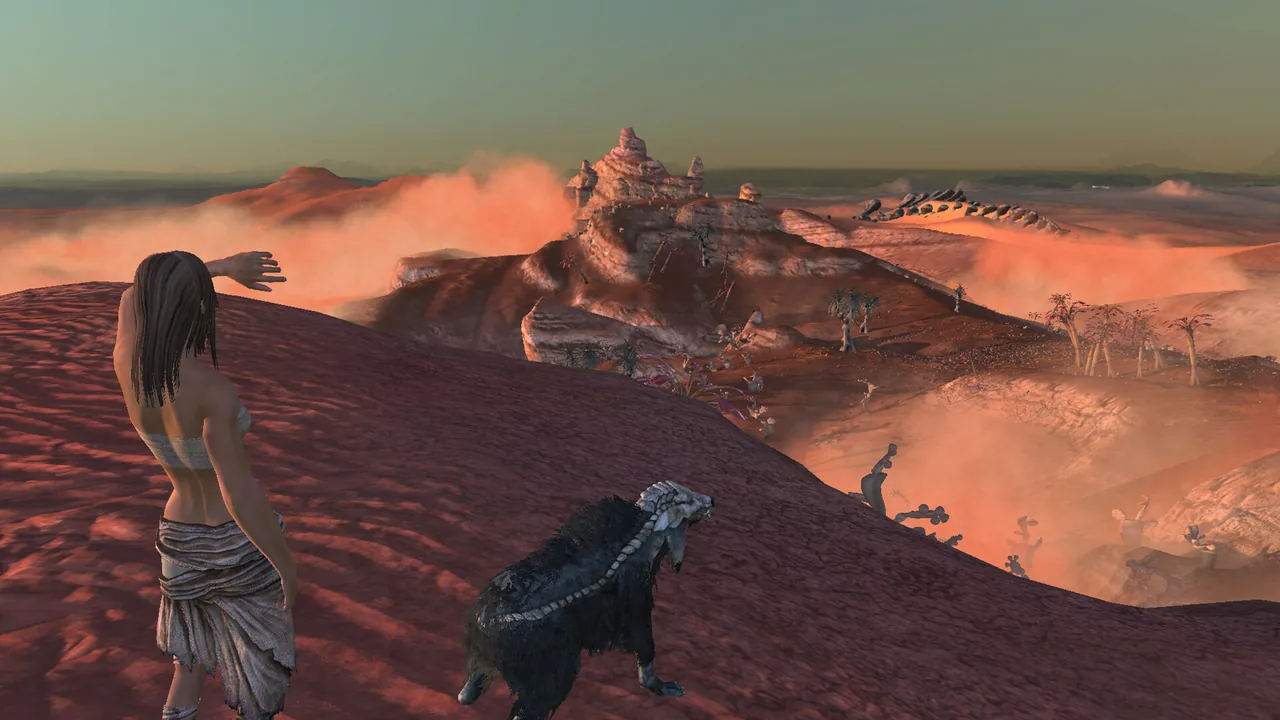
KenshiImage: Lo-Fi Games via Steam -
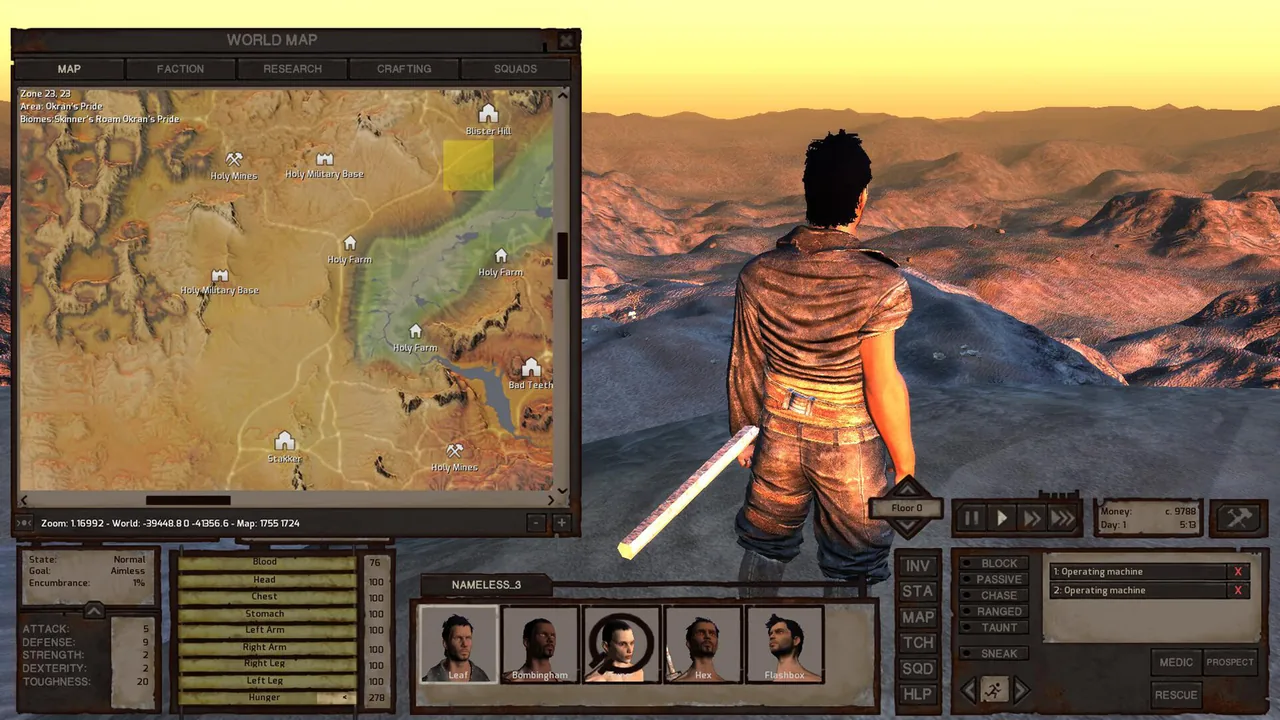
KenshiImage: Lo-Fi Games via Steam -
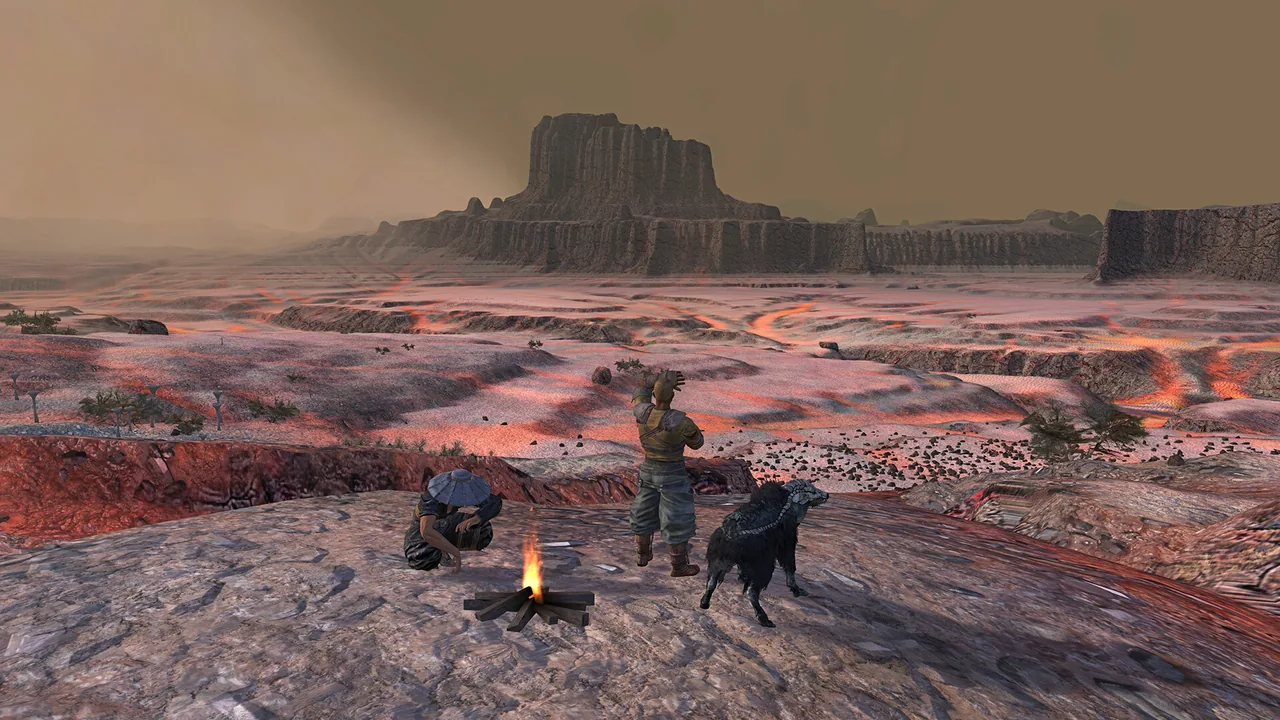
KenshiImage: Lo-Fi Games via Steam -
How the review scores each part of the gameWanderer Editorial -
The short versionWanderer Editorial