Game review
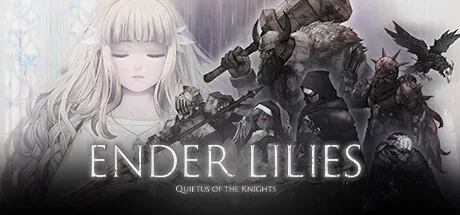
ENDER LILIES: Quietus of the Knights
7.5 / 10
- Developer
- Live Wire, Adglobe
- Publisher
- Binary Haze Interactive
- Released
- 20 January 2021
- Platforms
- Windows
- Genre
- Action RPG, Metroidvania
- Monetisation
- One-time purchase. No DLC beyond an optional soundtrack purchase; no microtransactions.
- Players
- Single-player only
The short version
Ender Lilies is a dark-fantasy metroidvania about a priestess purifying a kingdom drowned in corrupted rain, absorbing the abilities of the fallen knights she defeats along the way. It entered Early Access in January 2021 and left it in June to Very Positive reviews -- roughly 94% of 45,428 total -- built almost entirely on its art direction and a soundtrack composed by Mili, the band behind To the Moon and Deemo's most memorable tracks.
Read the negative sample across five years and one complaint recurs with striking consistency, from launch week through 2026: the combat itself -- floaty, low-impact, prone to bullet-sponge bosses -- never quite lives up to everything around it. It's not a fringe opinion or a launch-week bug list; it is the single most common reason genre fans give for bouncing off an otherwise beloved game, unchanged across half a decade of reviews.
Biggest strengths
- Genuinely exceptional art direction and a soundtrack by Mili that draws sustained praise across virtually every review, positive or negative
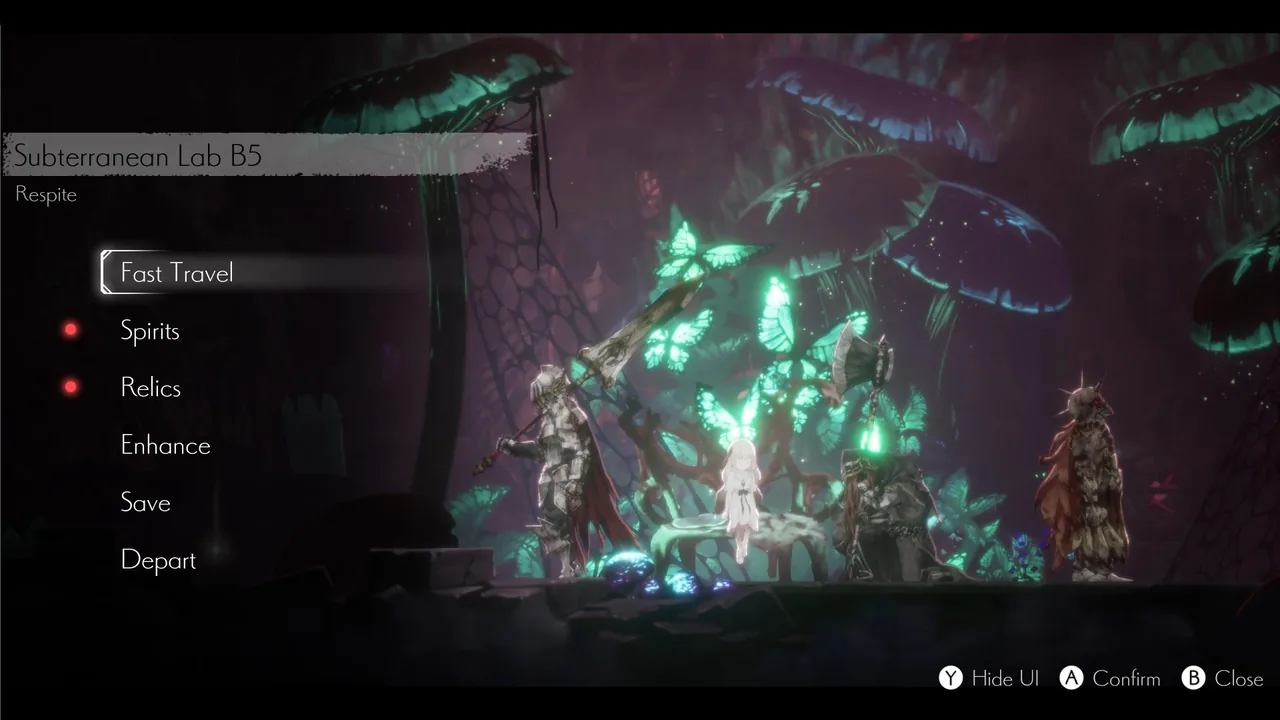
- A distinctive "spirit" progression system -- absorbing the abilities of the fallen knights you defeat -- that gives real, personalised build variety across a roughly 15-20 hour campaign
- A healthy completion curve for the genre; even the hardest achievements sit in the 23-27% range, well above what most metroidvanias manage, suggesting most buyers who start do finish
Biggest weaknesses
- A remarkably consistent five-year complaint, from launch through 2026 reviews, that combat feels stiff, floaty and low-impact, without meaningful hitstun or a sense of weight behind attacks
- Several reviewers -- including some ultimately positive ones -- describe late-game bosses as damage sponges that lean on attrition rather than clever design
- The back half of the campaign is described by a meaningful minority as a step down in level design and enemy placement from the stronger opening hours
Who it's for: Players drawn to atmosphere, environmental storytelling and a genuinely beautiful, melancholic dark-fantasy world first and combat second -- fans of Hollow Knight and Salt and Sanctuary for their mood rather than their mechanical precision. Less suited to players who want a Metroidvania primarily for tight, weighty combat.
Our recommendation: A very worthwhile purchase, especially on sale, for the art, music and atmosphere alone -- but go in aware that a large, consistent slice of critical reviewers over five years single out the same combat complaint, and if that turns out to matter to you, it will matter in the first hour rather than growing on you.
7.5 / 10
Ender Lilies casts you as Lily, a priestess who died and returned to a kingdom drowned in a black, corrupting rain, and sends her through its ruins purifying the fallen knights and creatures the rain twisted into monsters — absorbing each one's abilities into her own growing arsenal along the way. It entered Steam Early Access on 20 January 2021 with three of its eight planned areas, and left it five months later for a full release on 22 June 2021. Half a decade on, it sits at Very Positive, roughly 94% of 45,428 Steam reviews — a strong number that hides a specific, unusually persistent disagreement about exactly what the game is good at.
What everyone agrees on
There is close to unanimous consensus, across positive and negative reviews alike, spanning every year from 2021 to 2026: Ender Lilies looks and sounds extraordinary. The art direction renders a drowned, decaying kingdom with a genuinely mournful, painterly quality, and the soundtrack — composed by Mili, the group known for To the Moon's most memorable cues and Deemo's rhythm-game catalogue — draws praise from reviewers who otherwise have almost nothing good to say about the combat. "I had originally picked this game up because the soundtrack was made by Mili," reads one 2026 review, "but I was pleasantly surprised to find that the atmosphere... left a lasting impact on me." Even a negative, 184-upvote review that calls the combat "not particularly fun to play" opens with "gorgeous artstyle, well done and fitting soundtrack" before getting to its complaints.
The progression system built around Lily's absorbed spirits is the other point of near-universal praise: defeating a boss or notable enemy grants a new ability — a new attack, a new traversal tool, a passive buff — built directly into her expanding kit, giving the campaign's roughly 15-20 hours real, personal build variety without ever feeling like padding. The global achievement data backs up how well that structure holds an audience: even the hardest achievements — full spirit collection, level 100, every collectible tip — sit in the 23-27% range, a notably healthy completion rate for the genre, and a strong signal that most players who start Ender Lilies do see it through rather than bouncing off partway.
The complaint that never goes away
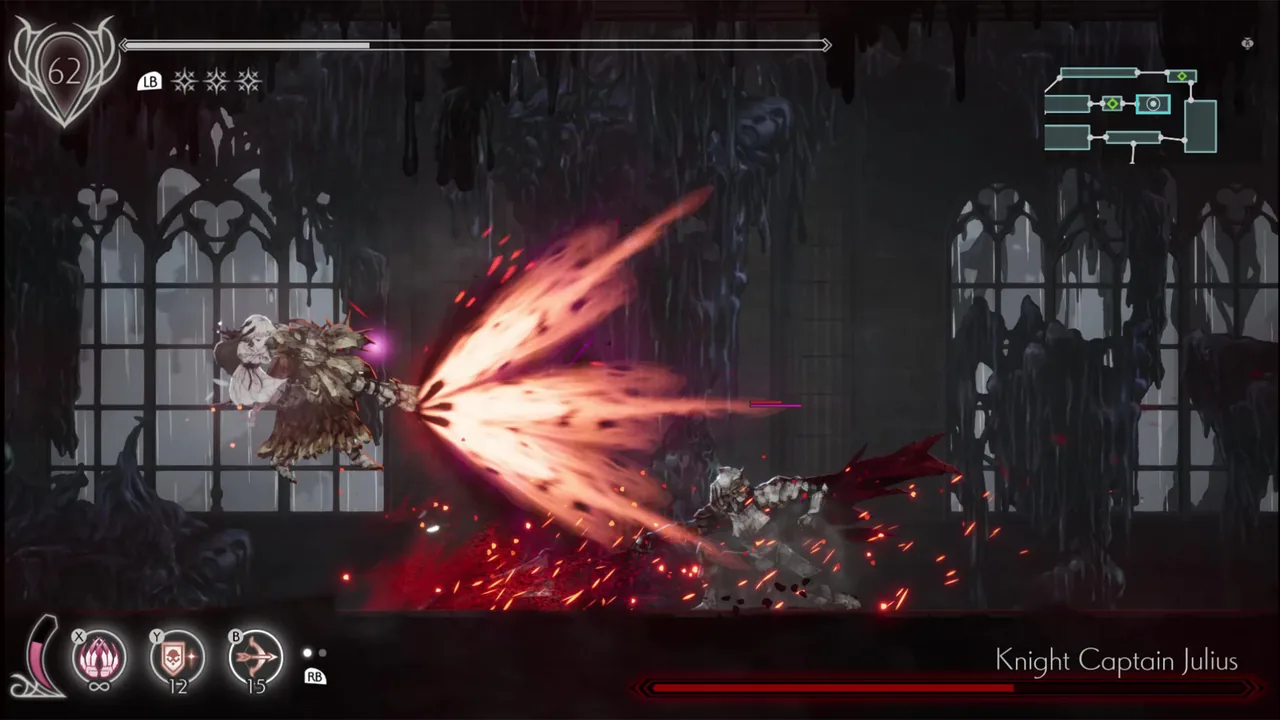
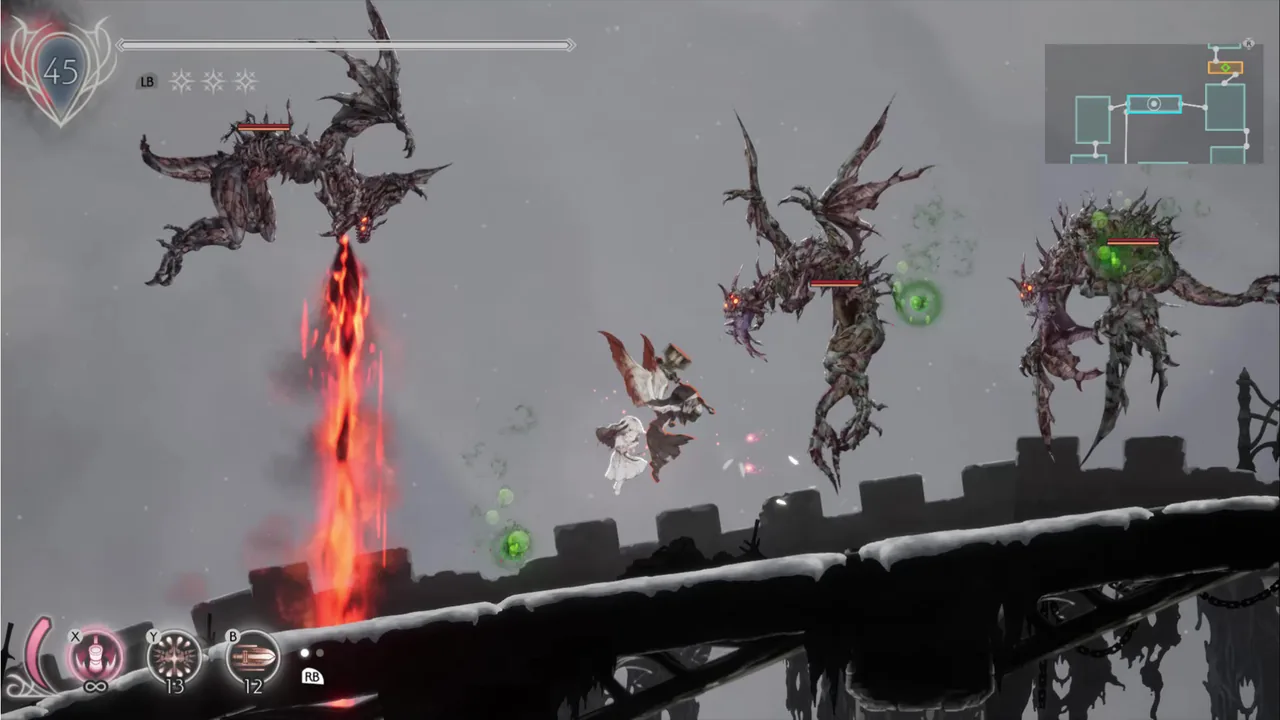
Where the reviews split, and split with unusual consistency over five full years, is combat feel. Read the negative sample from launch week in mid-2021 and the negative sample from mid-2026 side by side and they describe almost exactly the same problem, in almost the same language. "Combat is light and without impact or weight," reads a 2021 review with 184 helpful votes. "There's no hitstun or reaction whatsoever unless you break the enemies' poise/stun meter." A 2025 review: "the combat feels clunky and slow... then you get to a boss and the battles are [a slog]." A 2026 review, five years after launch: "the comabat feels stiff and I cant get used to it. they nailed the atmosphere, art, and music but I simply cannot enjoy playing the game."
This isn't a launch-week bug list that patches fixed — nothing in the review timeline suggests the combat model itself ever meaningfully changed, and the complaint's frequency and specificity are essentially flat across five years of reviews rather than tapering off the way a fixed problem would. One of the most-upvoted negative reviews in the entire sample, with 324 helpful votes, puts the comparison bluntly: the game "absolutely BEGS you to compare it to Dark Souls / Hollow Knight... but doesn't seem to have learned much from" what makes those games' combat satisfying. Several reviewers independently describe late-game bosses specifically as damage sponges — long health bars leaned on in place of more inventive attack patterns — and a meaningful minority describe the back half of the campaign more broadly as a step down in level and enemy design from a genuinely strong opening.
None of this reads as a dealbreaker for most players — the review score is still Very Positive, and plenty of reviewers explicitly weigh the combat complaint and decide the atmosphere, music and progression system are worth it regardless. "Cool looking art style but... combat lacks impact," reads one, landing on a recommendation anyway. What's genuinely useful for a buyer to know is that the complaint is not a matter of taste settling with more playtime; reviewers who bounce off the combat in the first few hours describe feeling the same way at the credits.
How it has aged
Ender Lilies has aged unusually well as a piece of design that clearly succeeded at what it set out to do, even if that thing wasn't quite "tight combat." Its influence and commercial success are visible in the clearest way an indie game's legacy shows up: a full sequel. ENDER MAGNOLIA: Bloom in the Mist, from the same team, followed years later, and reviewers in the 2025-2026 window frequently mention having played both — "Both Ender games are among my favorite Metroidvanias," reads one, "in terms of exploration, combat, character upgrade, soundtrack, and atmosphere" — suggesting the sequel either refined the combat model or simply that returning fans made peace with it. The original remains actively discoverable and well-supported on Steam five years on, regularly discounted (60% off at the time of writing), and continues to draw a steady stream of new reviews years after its release window closed, which is itself a sign of a game that found a durable audience rather than a launch-week spike.
7.5 out of 10. Ender Lilies is a genuinely beautiful, distinctively melancholic dark-fantasy metroidvania with a soundtrack and progression system worth the price on their own, undercut by a combat model that a consistent, sizeable share of players — across every year since its January 2021 Early Access debut — describe as never quite landing the weight the rest of the game earns. If atmosphere and music are what draw you to the genre, this is an easy recommendation; if you need combat with real bite, know what you're signing up for before the first boss.
Pros and cons
Pros
- Genuinely exceptional art direction and a soundtrack by Mili that draws sustained praise across virtually every review, positive or negative
- A distinctive "spirit" progression system -- absorbing the abilities of the fallen knights you defeat -- that gives real, personalised build variety across a roughly 15-20 hour campaign
- A healthy completion curve for the genre; even the hardest achievements sit in the 23-27% range, well above what most metroidvanias manage, suggesting most buyers who start do finish
- Thoughtful pacing touches -- save points placed right outside boss fights, no punishing corpse runs -- that several reviewers call out by name
Cons
- A remarkably consistent five-year complaint, from launch through 2026 reviews, that combat feels stiff, floaty and low-impact, without meaningful hitstun or a sense of weight behind attacks
- Several reviewers -- including some ultimately positive ones -- describe late-game bosses as damage sponges that lean on attrition rather than clever design
- The back half of the campaign is described by a meaningful minority as a step down in level design and enemy placement from the stronger opening hours
- A fairly linear structure with light backtracking rather than the dense interconnection some metroidvania fans look for
Screenshots
-
ENDER LILIES: Quietus of the KnightsImage: Binary Haze Interactive via Steam -
ENDER LILIES: Quietus of the KnightsImage: Binary Haze Interactive via Steam -
ENDER LILIES: Quietus of the KnightsImage: Binary Haze Interactive via Steam -
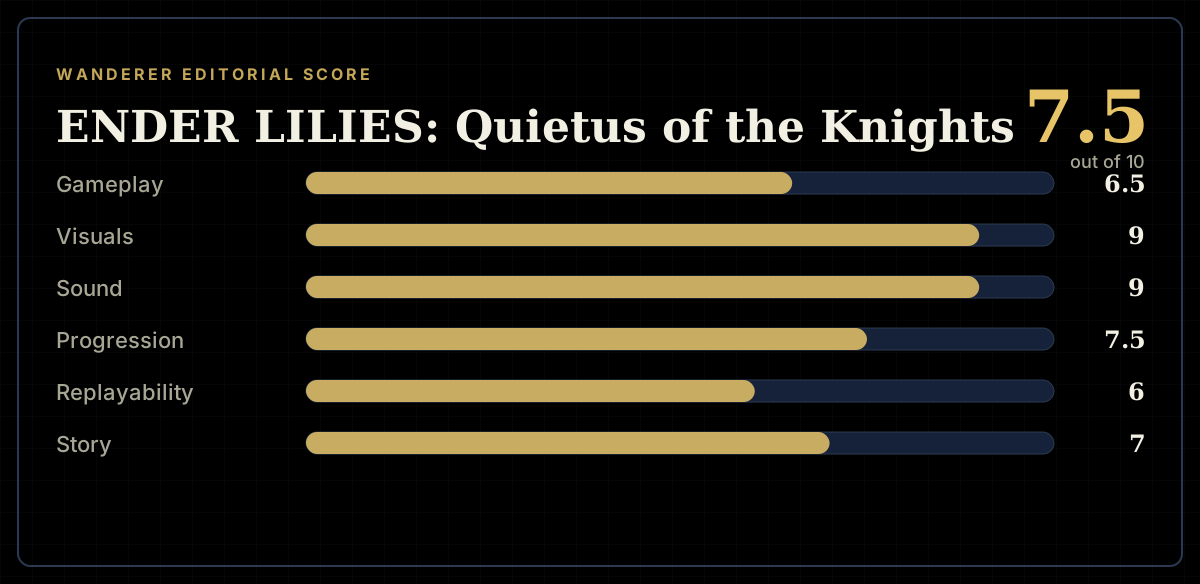
How the review scores each part of the gameWanderer Editorial -
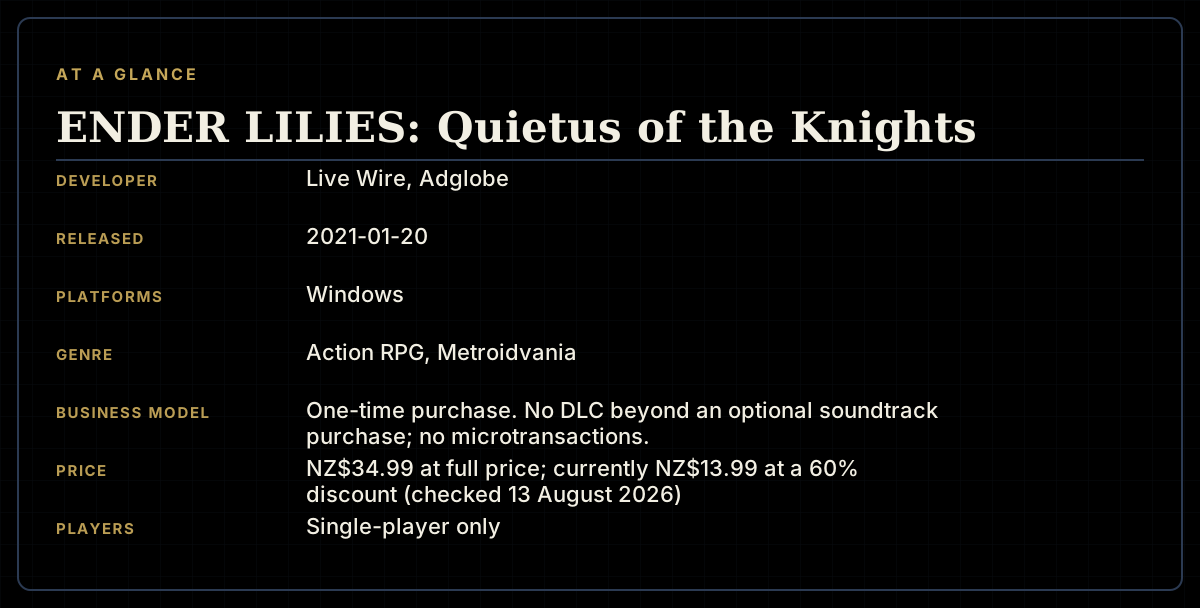
The essentialsWanderer Editorial -
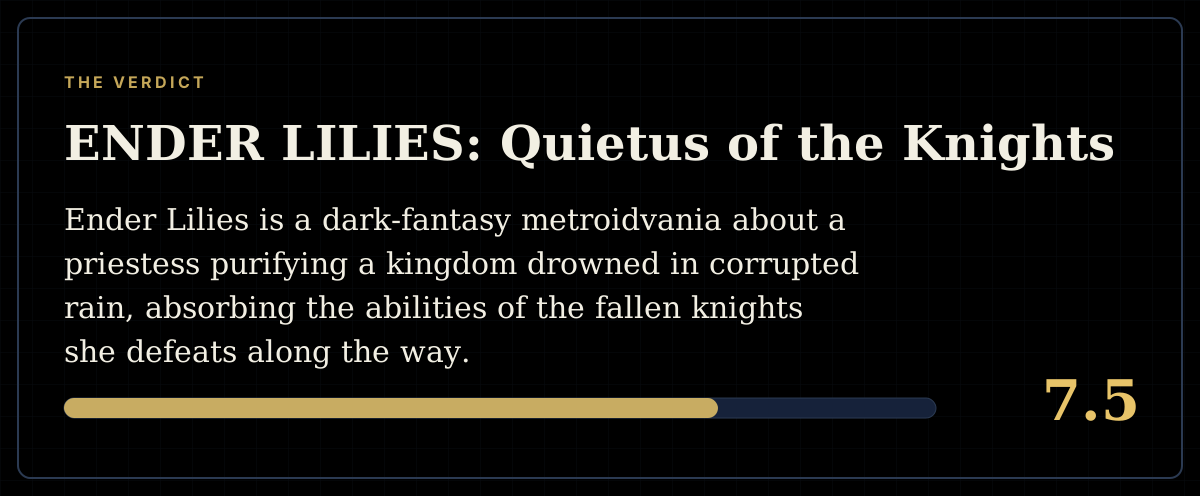
The short versionWanderer Editorial