Game review
Timespinner
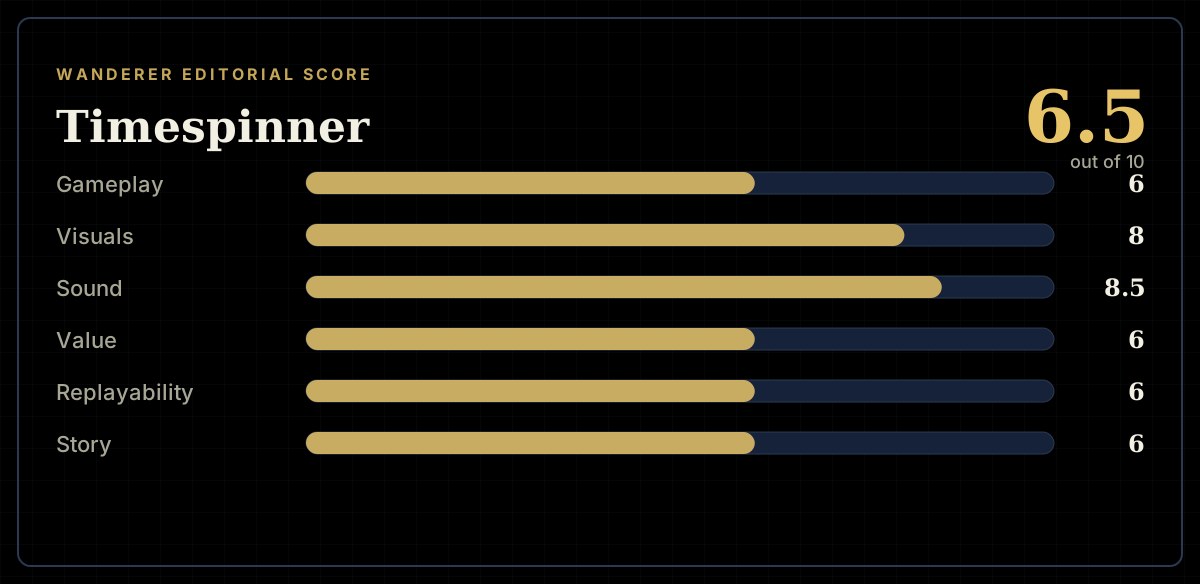
6.5 / 10
- Developer
- Lunar Ray Games
- Publisher
- Chucklefish
- Released
- 25 September 2018
- Platforms
- Windows, Mac, Linux
- Genre
- Metroidvania, Action RPG
- Monetisation
- One-time purchase. One small cosmetic DLC. No in-game purchases.
- Players
- Single-player, with local co-op support
The short version
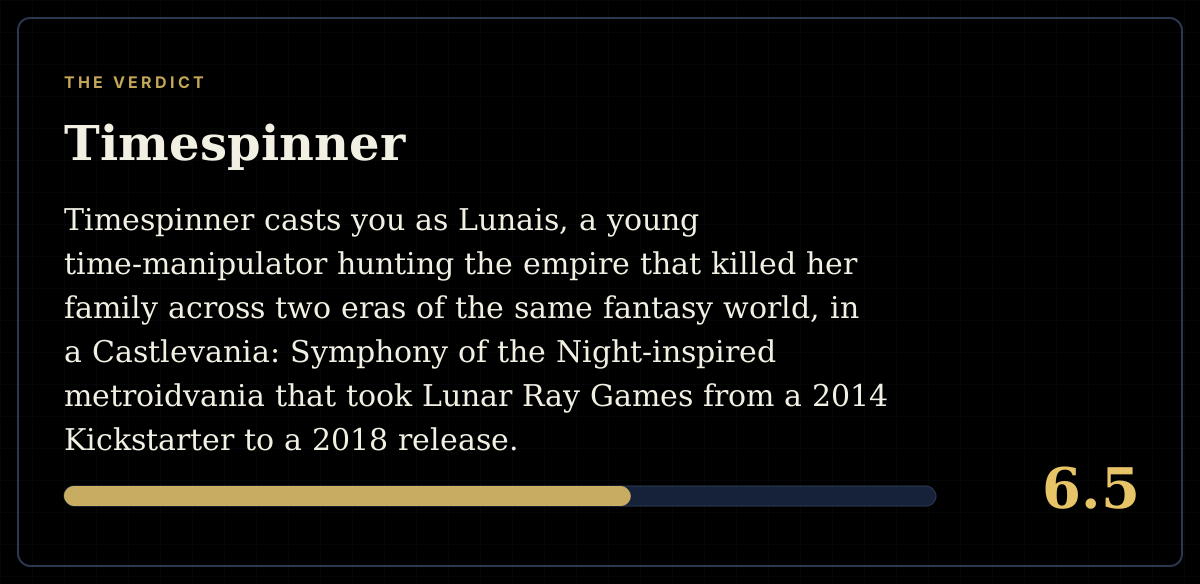
Timespinner casts you as Lunais, a young time-manipulator hunting the empire that killed her family across two eras of the same fantasy world, in a Castlevania: Symphony of the Night-inspired metroidvania that took Lunar Ray Games from a 2014 Kickstarter to a 2018 release. It sits at Very Positive on Steam, 86.1% of 3,174 reviews, and 73 on Metacritic.
Reading a large sample of negative reviews shows two genuinely separate arguments running through it, and they shouldn't be collapsed into one. The first is a real, specific set of design complaints: combat and exploration many reviewers call too easy and shallow, a runtime several call short for the price (commonly 4-8 hours), and a central time-manipulation mechanic that a consistent number of reviewers say gets underused, mostly reduced to turning certain enemies into temporary platforms. The second, and unusually large for a game this size, is a cluster of reviews objecting not to any of that but specifically to Timespinner's prominent queer and trans representation -- deliberate, well-documented and, by the developer's own account, personal to the largely queer team that made it. One recent positive review puts it plainly: the game is "primarily downvoted not for mechanical shortcomings but due to ideological problems that people have with the characters and lore."
Biggest strengths
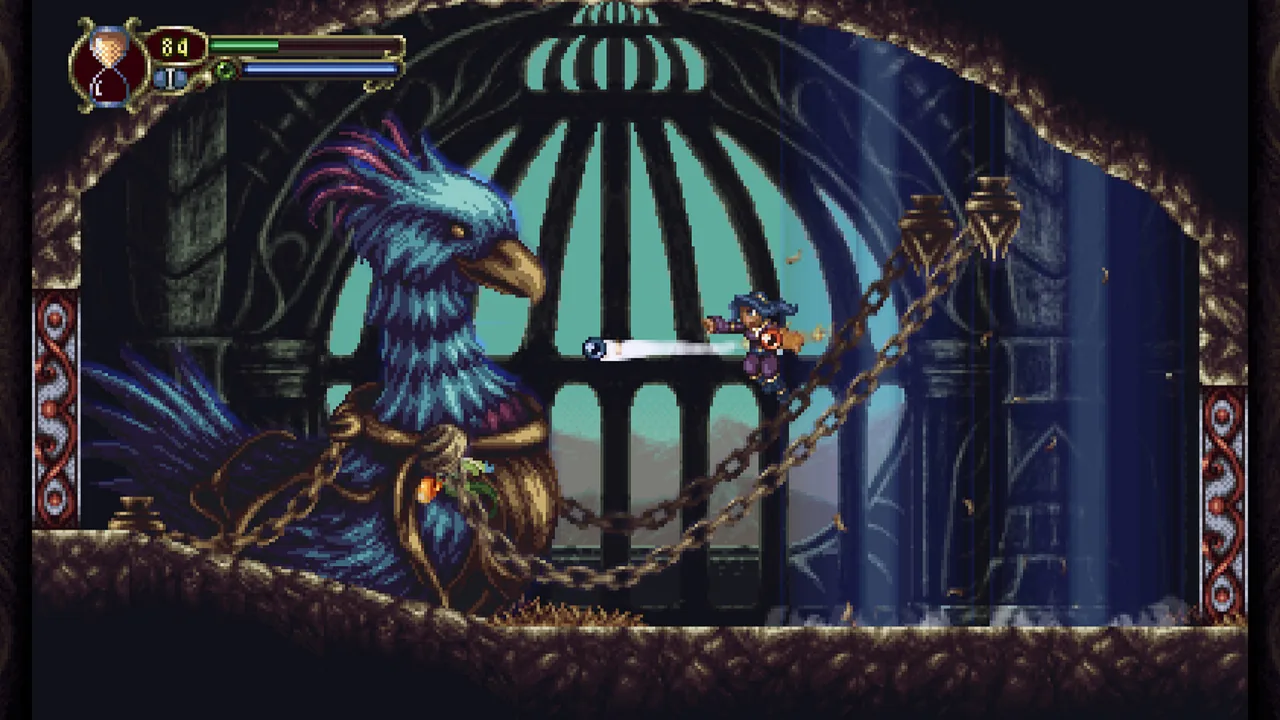
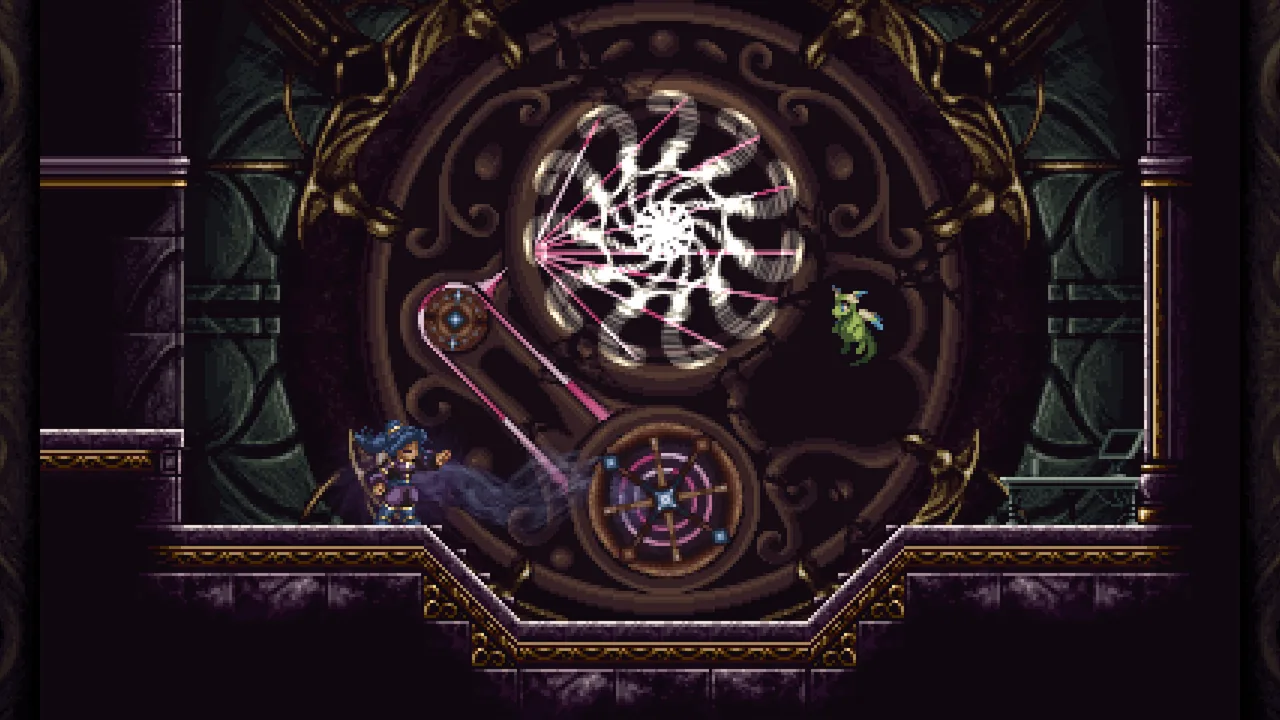
- Strong, consistently praised pixel art and one of the more widely admired soundtracks among its genre peers, drawing praise across almost the entire review sample
- Tight, responsive controls and a Castlevania: Symphony of the Night-style structure that lands well for genre fans, especially once the map opens up
- A short, respectful runtime that several reviewers specifically appreciate as not padded or bloated compared to longer genre entries
Biggest weaknesses
- Combat and exploration are widely described as too easy and shallow, with characters becoming overleveled quickly and several boss fights described as beatable through simple button-mashing
- The central time-manipulation mechanic is a consistent letdown for reviewers, mostly reduced to turning specific enemies into temporary platforms rather than a deeper puzzle or combat tool
- Short for its price -- commonly finished in 4-8 hours -- with several reviewers specifically flagging the length-to-cost ratio as poor
Who it's for: Metroidvania fans who want a shorter, gentler entry point into the genre with a strong Castlevania influence, and players specifically drawn to a fantasy RPG built around explicit, central queer and trans representation. Less good for players wanting a long, mechanically deep metroidvania, or anyone who'd be bothered by that representation being a prominent, unavoidable part of the story.
Our recommendation: Worth it at a discount for the art, soundtrack and a solid if short Castlevania homage; a harder sell at full price given a runtime several reviewers call thin for the cost. Judge it on its actual mechanical shortcomings -- an underused time mechanic and combat that doesn't stay challenging -- rather than review-sample noise that has little to do with how the game plays.
6.5 / 10
Timespinner began as a 2014 Kickstarter and arrived four years later as a Castlevania: Symphony of the Night-inspired metroidvania about Lunais, a young woman who can manipulate time, hunting the empire that destroyed her family across two eras of the same fantasy world. It's a clear, well- executed homage — tight pixel art, a soundtrack that draws praise from nearly everyone who plays it, and a structure that will feel immediately familiar to fans of the genre's Igavania lineage. It sits at Very Positive on Steam eight years later, 86.1% of over 3,100 reviews, and reading a large sample of the available negative reviews closely shows two genuinely distinct arguments running through the sample, worth separating rather than treating as one undifferentiated pile of criticism.
The mechanical complaints, on their own terms
Set the second argument aside for a moment and look at what reviewers say about how the game actually plays. The most consistent, mechanically specific complaint is that combat and exploration are simply too easy: characters become overleveled quickly through ordinary play, and several reviewers describe boss fights as beatable through straightforward button-mashing rather than requiring real tactical engagement. A second, more disappointing complaint concerns the central premise itself — the time-manipulation mechanic that gives the game its name is, according to a consistent number of reviewers, mostly reduced to turning specific enemies into temporary climbable platforms rather than developing into a deeper puzzle or combat system across the campaign. Combined with a runtime several reviewers put at four to eight hours, a meaningful share of the sample lands on the same conclusion: a game with real craft in its presentation that doesn't fully deliver on its own central hook, and asks a fairly full price for a fairly short experience. Writing quality comes up too, and worth noting specifically: several reviewers unconnected to any broader objection describe the dialogue as heavy-handed or thin purely on craft grounds — pacing, characterisation, exposition — the same kind of criticism a reviewer might level at any game's script regardless of its subject matter.
A second, separate argument in the same review sample
The other pattern in the negative sample is different in kind, not just degree. Timespinner features prominent, explicit queer and trans representation — several central characters at the game's home base are gay, bisexual, asexual or transgender, woven directly into the main cast rather than kept peripheral — and it's well documented that this was personal rather than incidental for Lunar Ray Games, a team the developer has described as majority queer, built by people who wanted to see themselves reflected in a genre that rarely did. A specific and unusually large share of the negative review sample objects to this directly, using language that targets the representation itself rather than any design or mechanical choice. One recent positive review addresses this pattern head-on: the game, it argues, is "primarily downvoted not for mechanical shortcomings but due to ideological problems that people have with the characters and lore" — a framing borne out by reading the negative sample itself, where objections to content sit alongside, but separately from, the mechanical complaints above. This review scores and evaluates the game on its design; the representation itself is a documented, intentional creative choice rather than a flaw, and readers can weigh their own feelings about it independently of the design questions this review is actually assessing.
What holds up regardless
Strip both arguments away and what's left is a competent, attractive, unusually short metroidvania that does one thing very well — art and music — and one thing less well than its own premise promises. The Castlevania influence is worn proudly and executed with real care in level design and controls, and several reviewers specifically praise the game for not overstaying its welcome the way some longer genre entries do, framing the short runtime as a feature for players who want a tight metroidvania rather than a 20-hour commitment. New Game+ and multiple endings add some replay value on top of a base campaign most reviewers finish well within a single sitting or two.
Verdict
6.5 out of 10. Timespinner is a well-presented, competently built metroidvania whose real shortcomings are specific and mechanical: an underused central time mechanic, combat that stops being challenging early, and a runtime that a meaningful share of reviewers feel doesn't match its asking price. Its review sample also contains an unusually large amount of criticism aimed at its prominent, deliberate queer and trans representation rather than at how the game plays — a documented creative choice from a team for whom it was personal, and a separate question from the design evaluation this review is built around. Buy it for the art, music and a solid short Castlevania homage; go in with realistic expectations about its length and about how much its time mechanic actually gets used.
Pros and cons
Pros
- Strong, consistently praised pixel art and one of the more widely admired soundtracks among its genre peers, drawing praise across almost the entire review sample
- Tight, responsive controls and a Castlevania: Symphony of the Night-style structure that lands well for genre fans, especially once the map opens up
- A short, respectful runtime that several reviewers specifically appreciate as not padded or bloated compared to longer genre entries
- Deliberate, prominent queer and trans representation that's genuinely meaningful to a real part of its audience, built by a team for whom it was personal rather than incidental
Cons
- Combat and exploration are widely described as too easy and shallow, with characters becoming overleveled quickly and several boss fights described as beatable through simple button-mashing
- The central time-manipulation mechanic is a consistent letdown for reviewers, mostly reduced to turning specific enemies into temporary platforms rather than a deeper puzzle or combat tool
- Short for its price -- commonly finished in 4-8 hours -- with several reviewers specifically flagging the length-to-cost ratio as poor
- Writing quality is criticised on craft grounds by reviewers unrelated to its subject matter, describing dialogue as heavy-handed or thin regardless of content; separately, an unusually large share of the negative review sample objects specifically to the game's prominent queer and trans representation rather than to any mechanical issue
Screenshots
-
TimespinnerImage: Chucklefish via Steam -
TimespinnerImage: Chucklefish via Steam -
TimespinnerImage: Chucklefish via Steam -
How the review scores each part of the gameWanderer Editorial -

The essentialsWanderer Editorial -
The short versionWanderer Editorial