
Game review
Astral Ascent
7.5 / 10
- Developer
- Hibernian Workshop
- Publisher
- Hibernian Workshop, MP2 Games
- Released
- 14 November 2023
- Platforms
- Windows, macOS, Linux
- Genre
- Roguelite
- Monetisation
- One-time purchase, cosmetic and character-expansion DLC available separately
- Players
- Local co-op, up to 2 players
The short version
Astral Ascent is Hibernian Workshop's roguelite metroidvania, sending one of four heroes through the Garden, an astral prison guarded by twelve Zodiac bosses, in runs built around spell gambits, elemental synergies and a persistent hub between attempts. Released 14 November 2023 after Early Access from March 2022, it holds 8,500 Steam reviews at Very Positive, roughly 94.6%, with recent sentiment running slightly higher at 92%. This review's read of a substantial share of both samples finds strong, consistent praise for its art, combat feel and hub-world character writing, alongside a specific, recurring counter-argument from committed players: that the game's meta-progression grows passive rather than build-defining once difficulty tiers climb, and that a striking number of reviewers who loved their first five hours describe the cracks showing well before their tenth.
Biggest strengths
- Art direction and animation draw close to universal, enthusiastic praise, with reviewers reaching for Hades and Dead Cells as reference points the game earns rather than merely imitates
- Combat feels satisfying and flexible according to most reviewers, with movement options adding real verticality and approach variety to encounters
- Hub-world writing and character interactions between runs are specifically credited as genuinely well done, giving the roguelite structure real narrative texture
Biggest weaknesses
- A specific, recurring complaint from committed players holds that meta-progression upgrades feel passive rather than meaningfully changing playstyle between runs, with several reviewers describing the cracks in build variety showing clearly by higher difficulty tiers
- Enemy attack telegraphing draws a real, specific complaint about visual clarity, with reviewers describing inconsistency in knowing whether an incoming attack can be dodged or must be blocked
- UI friction recurs across the negative sample, including dialogue that interrupts active gameplay and a shop interface reviewers describe as slower to navigate than it needs to be
Who it's for: Fans of Hades and Dead Cells who want a stylish, fast-paced roguelite with genuine hub-world character writing between runs; less suited to players specifically chasing the escalating build-defining choices those genre benchmarks are known for at higher difficulty.
Our recommendation: A gorgeous, genuinely fun roguelite for its first several hours, with real, specific limits to how much depth it offers once you're chasing higher difficulty tiers — worth playing, best enjoyed without expecting endless replay depth.
7.5 / 10
Introduction
Astral Ascent sends one of four playable heroes into the Garden, an astral prison guarded by twelve Zodiac bosses, building spell loadouts and elemental synergies across roguelite runs punctuated by a persistent hub world full of returning characters. Developed by Hibernian Workshop and published by Hibernian Workshop and MP2 Games, it left Early Access and released fully on 14 November 2023 for NZ$30.99. Over two years on, it holds 8,500 Steam reviews sitting at Very Positive, roughly 94.6%, with recent sentiment running slightly higher at 92%. This review reads a substantial share of both the negative and positive samples, and finds a game whose opening hours draw close to universal acclaim, set against a specific, well-articulated counter-argument from the players who stayed longest.
An opening stretch reviewers genuinely love
Start with what draws this review's clearest, most consistent praise: Astral Ascent's presentation and combat feel exceptional out of the gate. Art direction and animation earn close to universal credit, with reviewers reaching for Hades and Dead Cells as comparison points the game earns rather than borrows superficially. Combat draws matching praise as satisfying and flexible, with movement options — dashes, wall interactions, verticality — giving encounters real approach variety rather than a single optimal pattern. The hub world between runs draws its own specific credit: character writing and interactions there are described as genuinely well-crafted, giving the roguelite loop real narrative texture rather than existing purely as a shop screen between attempts. Reviewers who followed the game through Early Access also specifically credit Hibernian Workshop with visible, substantive responsiveness to community feedback across its development.
Where committed players say the cracks show
Set against that acclaim, this review's sample surfaces a specific, recurring argument from players who stayed with the game past its opening hours: meta-progression grows passive rather than meaningfully build-defining as difficulty tiers climb. Reviewers describe upgrades that stack incrementally onto an existing playstyle rather than opening genuinely new approaches, and several detailed reviews independently reach the same conclusion — the game is excellent for roughly the first five hours, and noticeably thinner by the time a player is attempting higher difficulty runs. A related, more concrete complaint concerns combat readability: reviewers describe inconsistent visual telegraphing on enemy attacks, making it genuinely difficult in places to know whether an incoming hit can be dodged, blocked, or simply has to be eaten. UI friction compounds these complaints in a smaller but real way — dialogue interrupting active combat and a shop interface reviewers describe as slower to navigate than the genre typically demands.
A monetisation complaint worth naming directly
A specific, recurring complaint in this review's sample concerns downloadable content: several reviewers describe characters and stages that are visible and referenced within the base game but locked behind separate DLC purchases, arguing the presentation inside the game oversells content that isn't actually included. That's a real, specific criticism distinct from the design debate about meta-progression, and worth a prospective buyer's attention separately.
Final Verdict
Astral Ascent earns its Very Positive standing convincingly through its first several hours — gorgeous art, satisfying combat, and hub-world writing that gives its roguelite structure real character. What keeps this from a stronger recommendation is a specific, well-articulated argument from this review's most committed reviewers: that meta-progression doesn't keep pace with the game's own difficulty curve, leaving build variety feeling thinner exactly when higher-tier runs demand more from it. For players who want a stylish, satisfying roguelite for a solid opening stretch, Astral Ascent delivers convincingly. For genre veterans specifically chasing the kind of escalating build depth Hades offers at its hardest difficulties, this review's own sample suggests tempering that expectation.
Pros and cons
Pros
- Art direction and animation draw close to universal, enthusiastic praise, with reviewers reaching for Hades and Dead Cells as reference points the game earns rather than merely imitates
- Combat feels satisfying and flexible according to most reviewers, with movement options adding real verticality and approach variety to encounters
- Hub-world writing and character interactions between runs are specifically credited as genuinely well done, giving the roguelite structure real narrative texture
- The developer's Early Access period is credited by returning players with real, substantive community-driven improvements, several noting Hibernian Workshop visibly incorporated player feedback across updates
Cons
- A specific, recurring complaint from committed players holds that meta-progression upgrades feel passive rather than meaningfully changing playstyle between runs, with several reviewers describing the cracks in build variety showing clearly by higher difficulty tiers
- Enemy attack telegraphing draws a real, specific complaint about visual clarity, with reviewers describing inconsistency in knowing whether an incoming attack can be dodged or must be blocked
- UI friction recurs across the negative sample, including dialogue that interrupts active gameplay and a shop interface reviewers describe as slower to navigate than it needs to be
- Several reviewers flag DLC-locked characters and stages that are visible within the base game but unusable without a separate purchase, describing the presentation as more aggressive than the underlying content justifies
Screenshots
-
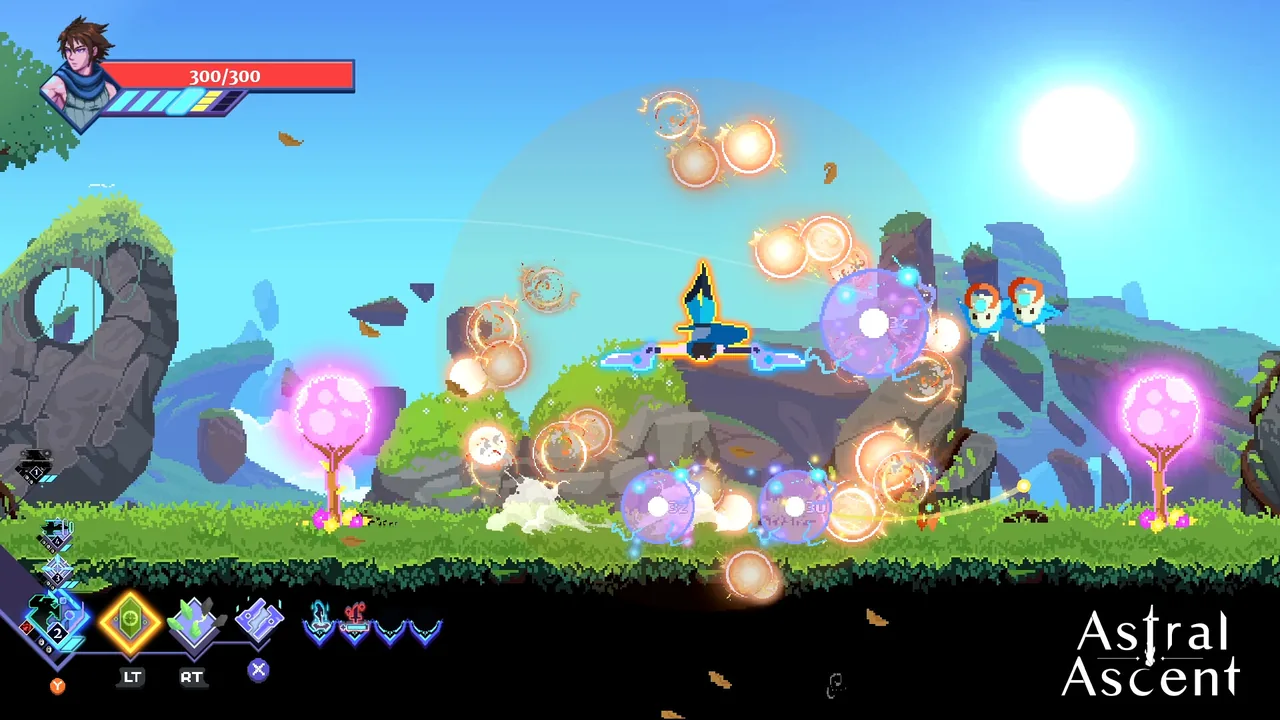
Astral AscentImage: Hibernian Workshop via Steam -
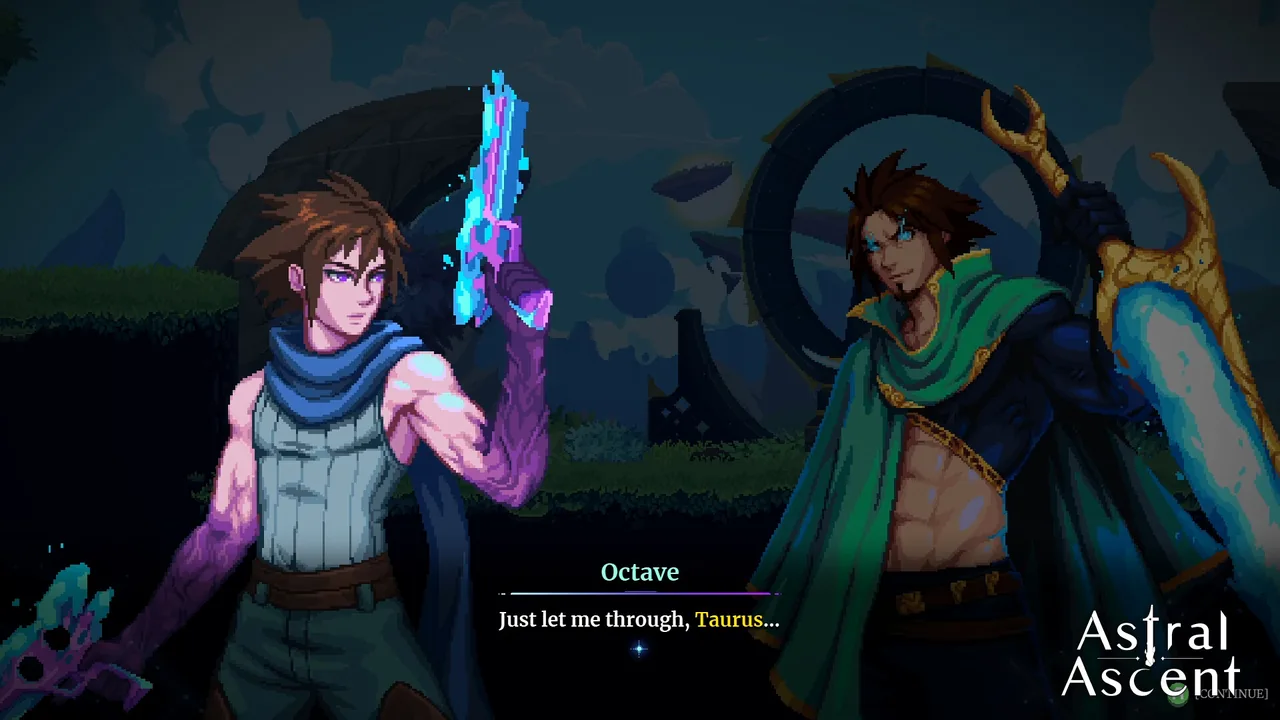
Astral AscentImage: Hibernian Workshop via Steam -
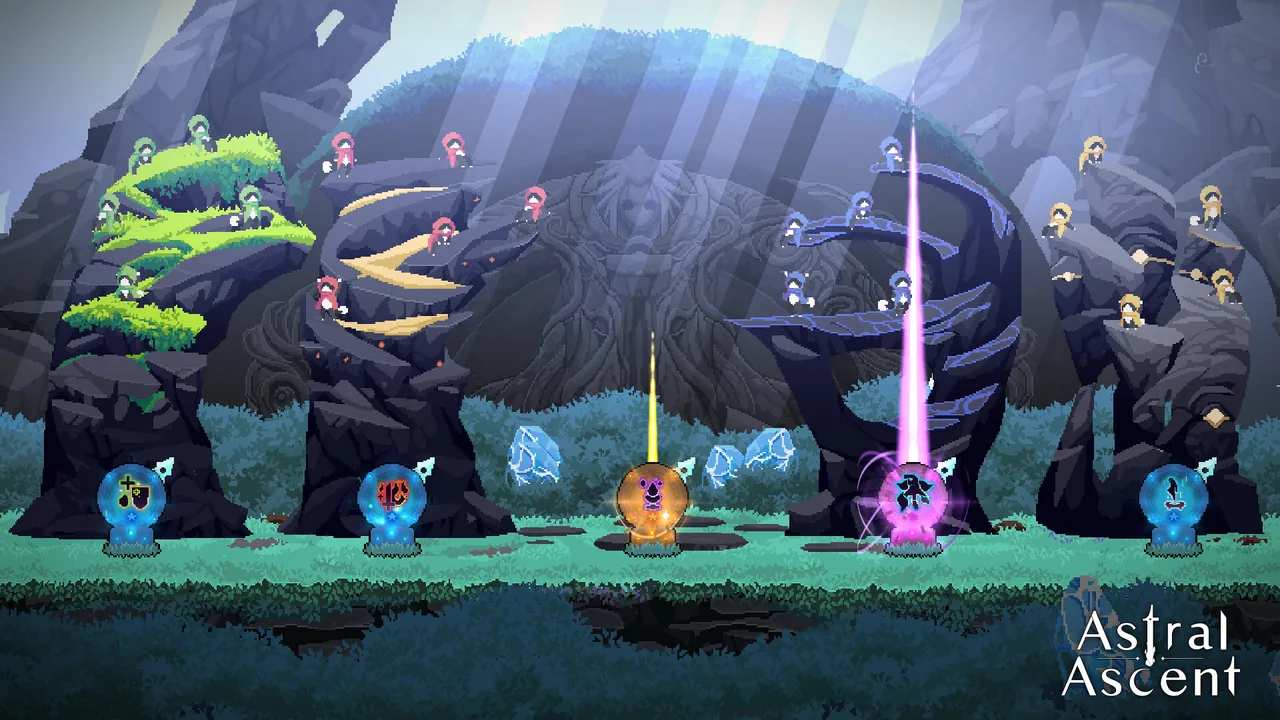
Astral AscentImage: Hibernian Workshop via Steam -
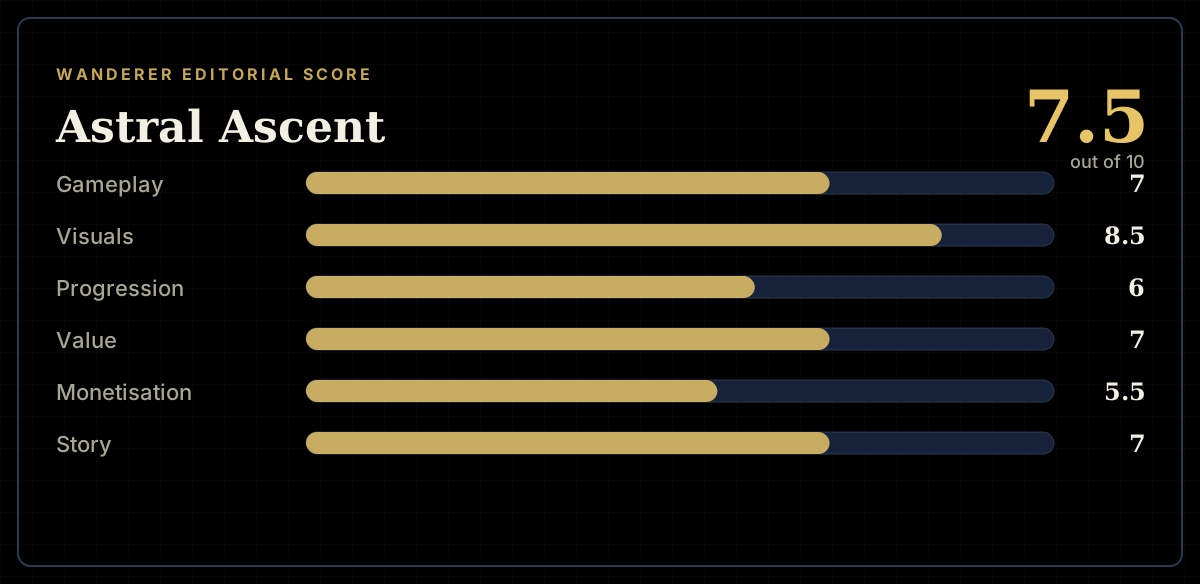
How the review scores each part of the gameWanderer Editorial -
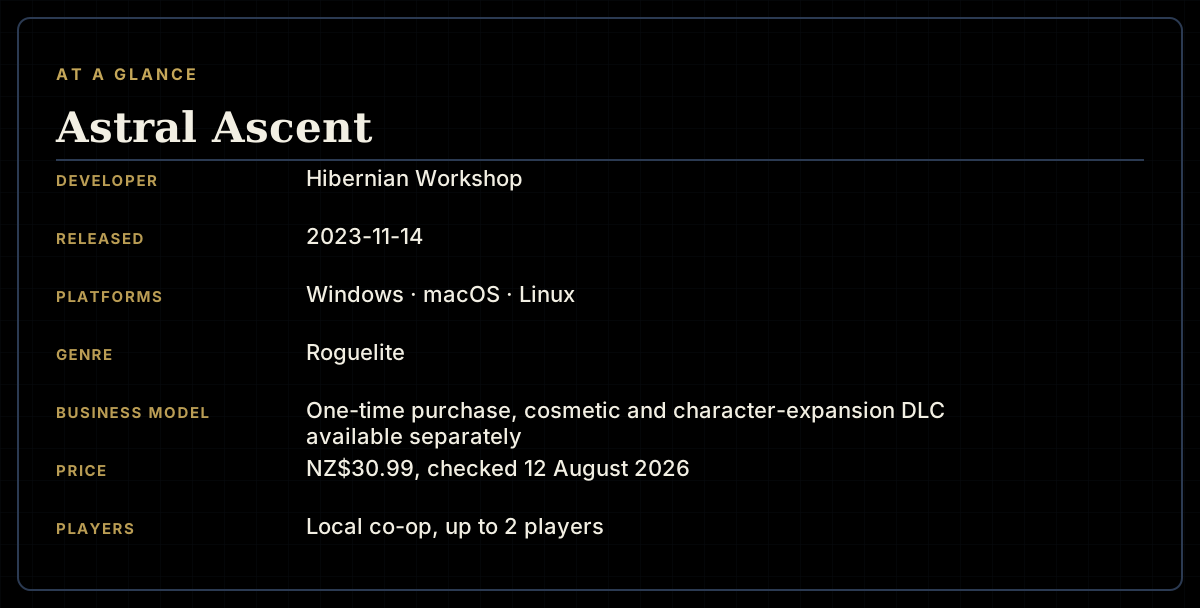
The essentials at a glanceWanderer Editorial -
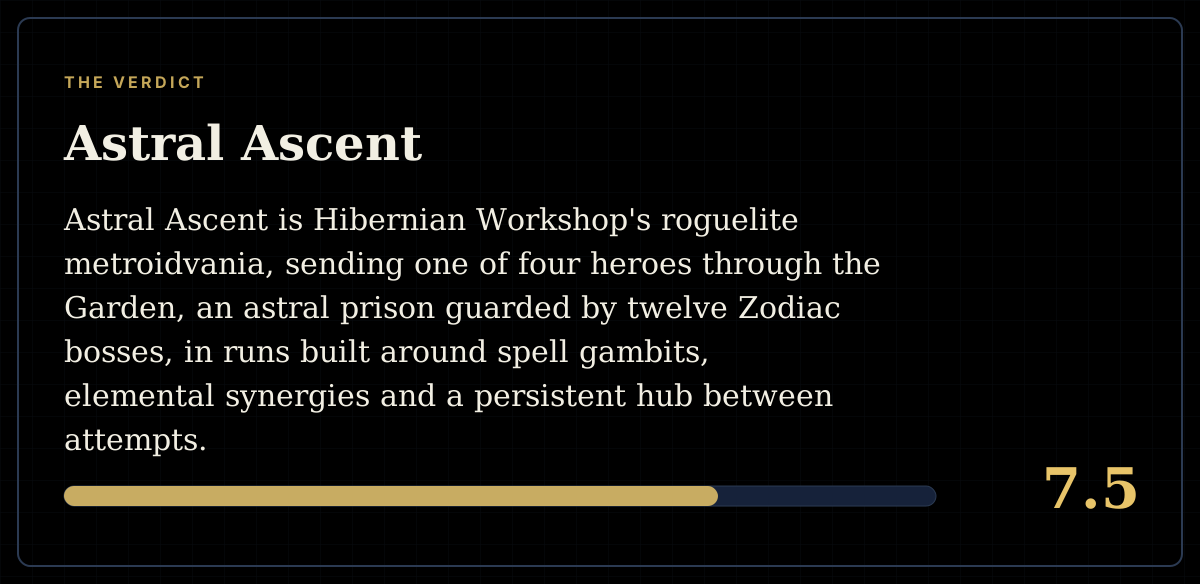
The short versionWanderer Editorial