
Game review
Eternal Strands
7.5 / 10
- Developer
- Yellow Brick Games
- Publisher
- Yellow Brick Games
- Released
- 28 January 2025
- Platforms
- Windows
- Genre
- Action RPG, Fantasy Adventure
- Monetisation
- One-time purchase, optional soundtrack DLC
- Players
- Single-player
The short version
Eternal Strands is the debut release from Yellow Brick Games, a Quebec City studio founded in 2020 by former Dragon Age creative director Mike Laidlaw alongside Ubisoft veterans of Watch Dogs and Assassin's Creed Syndicate. You play Brynn, a Weaver who wields fire, ice and telekinetic magic against a broken, physics-reactive world and the colossal beasts that roam it — heat spreads and ignites dry grass, ice can freeze a dragon's wing mid-flight, hurled boulders and burning logs become weapons in their own right. It launched to Very Positive, 87.7% across 1,764 Steam reviews, and the corpus is unusually articulate about exactly why: an inventive, physics-driven combat system against genuinely impressive giant enemies, wrapped in a shorter, more focused package than most open-world action RPGs attempt. Set against that is an equally specific and equally common complaint — an inventory system reviewers call actively hostile to the game's own pacing, backtracking-heavy fetch quests in the back half, and enough physics and combat-feel bugs that "unpolished first game from a new studio" is the honest framing several positive reviews themselves reach for.
Biggest strengths
- The central pitch — physics-driven elemental combat against colossal, climbable enemies, described repeatedly as "Monster Hunter meets Shadow of the Colossus" — is genuinely novel, and reviewers who came in skeptical of the comparison consistently say the game earns it
- Environmental interactivity is real and reactive rather than scripted: reviewers describe freezing a boss's limbs to open new attack angles, starting wildfires that spread toward enemies, and improvising with hurled terrain rather than following one scripted solution per encounter
- Strong pedigree carries through into the writing and world: reviewers who identify as longtime BioWare fans specifically credit the game with recapturing companion-driven storytelling and world-building they say has been missing from the genre
Biggest weaknesses
- The single most-repeated specific complaint in the corpus is the inventory and carry-weight system, which reviewers describe as adding nothing to gameplay or immersion while forcing frequent, pacing-breaking trips back to camp — one of the highest-voted positive reviews in the entire corpus is built around this one complaint alone
- Multiple reviewers report physics and combat-feel bugs significant enough to affect play: characters launched into the air by barrels, items falling through the floor, and a "roller skates"-style movement feel that several separate reviewers compare unfavourably to the otherwise strong art direction
- A detailed 38-hour review that ultimately went negative describes a design pattern common across critical accounts: strong early hours giving way to repetitive giant fights and backtracking-heavy fetch quests in the back half, with companion-quest quality dropping off outside one exception
Who it's for: Fans of Monster Hunter-style giant-slaying and Shadow of the Colossus-style scale who want that fantasy wrapped in BioWare-flavoured companion writing and exploration, and who can tolerate real first-game rough edges in exchange for a genuinely novel combat system. Less of a fit for anyone who needs tight, responsive combat feel from the first hour, or who has no patience for inventory management friction.
Our recommendation: Worth playing at a discount for the concept alone — the elemental-physics combat against giant foes is the kind of idea few other games attempt, and most of its audience says it delivers. Go in expecting a talented new studio's ambitious first swing rather than a fully polished AAA product, and the inventory system in particular will test your patience early on.
7.5 / 10
A studio's first swing, and a distinctive one
Eternal Strands is the debut release of Yellow Brick Games, founded in Quebec City in February 2020 by Mike Laidlaw — Dragon Age's creative director across three mainline entries at BioWare — alongside Ubisoft veterans of Watch Dogs and Assassin's Creed Syndicate. That pedigree matters for how the game plays, not just where it comes from: reviewers who identify themselves as longtime BioWare fans consistently point to the companion writing and world-building as the clearest through-line from Laidlaw's earlier work, at a moment when several reviewers say that specific flavour of character-driven fantasy storytelling has been thin on the ground elsewhere in the genre.
The pitch itself is the more immediately striking thing, though. You play Brynn, a Weaver whose magical Mantle channels fire, ice and telekinetic force, set loose in a fantasy world built around real-time environmental reaction rather than scripted set-pieces. Heat spreads across dry grass and starts wildfires; ice can freeze an enemy's limb, wing or attack in place; boulders, burning logs and enemy projectiles alike can be picked up, redirected and thrown. Reviewers repeatedly reach for the same shorthand — "Monster Hunter meets Shadow of the Colossus" — and, notably, several who arrived skeptical of that framing say the game actually earns it, rather than falling short of the comparison the way most "X meets Y" pitches do.
Giants worth climbing
The strongest, most consistently-praised material in Eternal Strands is its fights against colossal enemies — climbing onto their bodies mid-battle, targeting specific weak points, freezing a dragon's wing to ground it or setting a beast's own fur alight with arcane flame. This is where the physics systems and the elemental toolkit meet most productively, and it's the part of the game that even several of its harshest critics single out as worth the price of admission on its own. One reviewer who ultimately gave the game a thumbs-down after 38 hours still opens by calling the visuals "BEAUTIFUL" and describes real internal conflict over the negative verdict; a separate, 100%-completion review that also lands negative explicitly says "this one is not bad" and "conceptually, it's actually decent" before detailing where the execution falls short. That pattern — real affection for the concept sitting inside a negative overall verdict — recurs often enough in this corpus to be treated as a genuine signal about the gap between Eternal Strands' ideas and its polish, not just genre noise.
The inventory system reviewers can't stop talking about
If there's one single mechanical complaint that unites the corpus more than any other, it's carry weight. One of the highest-voted positive reviews in the entire sample — a thumbs-up overall — is built almost entirely around a direct appeal to the developers that the inventory limit "exists only to be annoying," adds nothing to gameplay or immersion, and forces frequent, pacing-breaking return trips to camp. That a reviewer who otherwise liked the game enough to recommend it spent most of their review on this one complaint says something about how disruptive it is in actual play, and it recurs independently across multiple other reviews on both sides of the recommendation line.
Layered on top of that are more conventional new-studio growing pains. Several reviewers report physics and movement bugs specific enough to be checkable rather than vague griping: characters sent flying after clipping a barrel, items falling through the floor after being knocked from containers, and a general movement feel more than one reviewer independently compares to "roller skates." Combat against regular, non-giant enemies draws a similarly split verdict — praised by some as satisfying and skill-expressive, and called "floaty," "unresponsive" or simply bad by others, sometimes within the same review that praises the giant fights a paragraph later. Steam's own achievement data adds a useful, objective data point to the "back half gets tedious" complaints raised by several long-playtime critical reviews: the game's first story-progress achievement sits at a strong 86.5%, but the very next one already drops to 55.9%, and several late-game achievements sit under 5% — a meaningfully steeper attrition curve than the front-loaded enthusiasm in most of the positive reviews would suggest on its own.
The pronoun controversy, reported plainly
One more pattern in the corpus is worth naming directly rather than glossing over, because it's large enough to be the single highest-voted negative review in the entire sample. That review, with 159 votes, describes refunding the game roughly 20 minutes in after a character refers to themself using they/them pronouns, and a smaller cluster of separate reviews raises a similar objection to a later story beat. This is reported here as a documented, checkable fact about what a meaningful slice of the review corpus reacted to and why — not as this review's own judgement on the writing, which falls well outside what a small handful of reviews can responsibly settle either way. Readers who know this kind of culture-war flashpoint affects their own enjoyment of a game should be aware it's present in the corpus at real scale; readers who don't care are unlikely to notice it in actual play, since it isn't a recurring theme across the hundreds of other reviews in the sample.
The verdict
Eternal Strands is exactly what an ambitious, well-pedigreed debut studio's first game often looks like: a genuinely novel core idea — physics-reactive elemental combat against climbable giants — that a clear majority of its audience says the game delivers on, wrapped around real, specific, repeatedly- documented rough edges that a more experienced studio might have caught before launch. The inventory system in particular reads as a fixable, first-game misstep rather than a fundamental design flaw, and the achievement data's steep back-half drop-off corroborates what several of the most detailed critical reviews independently describe. None of that erases what most of the 1,764-review corpus is telling you: this is a talented new studio's confident, if imperfect, first swing, and for players drawn to its central pitch, most of them say it's worth taking.
Wanderer's own combat systems are built with a similar instinct — that letting players improvise with the world around them beats a purely scripted solution — which is exactly the instinct Eternal Strands leans on hardest, even where its own execution hasn't quite caught up to the idea yet.
Pros and cons
Pros
- The central pitch — physics-driven elemental combat against colossal, climbable enemies, described repeatedly as "Monster Hunter meets Shadow of the Colossus" — is genuinely novel, and reviewers who came in skeptical of the comparison consistently say the game earns it
- Environmental interactivity is real and reactive rather than scripted: reviewers describe freezing a boss's limbs to open new attack angles, starting wildfires that spread toward enemies, and improvising with hurled terrain rather than following one scripted solution per encounter
- Strong pedigree carries through into the writing and world: reviewers who identify as longtime BioWare fans specifically credit the game with recapturing companion-driven storytelling and world-building they say has been missing from the genre
- A first-game success story worth stating plainly: Yellow Brick Games' debut, built by a team with deep AAA credentials but shipping independently for the first time, landed at Very Positive rather than the rougher reception first outings from new studios often receive
- Multiple reviewers who ultimately gave up on the game still describe real affection for its ideas and visuals, framing their negative verdicts as disappointment in the execution rather than rejection of the concept
Cons
- The single most-repeated specific complaint in the corpus is the inventory and carry-weight system, which reviewers describe as adding nothing to gameplay or immersion while forcing frequent, pacing-breaking trips back to camp — one of the highest-voted positive reviews in the entire corpus is built around this one complaint alone
- Multiple reviewers report physics and combat-feel bugs significant enough to affect play: characters launched into the air by barrels, items falling through the floor, and a "roller skates"-style movement feel that several separate reviewers compare unfavourably to the otherwise strong art direction
- A detailed 38-hour review that ultimately went negative describes a design pattern common across critical accounts: strong early hours giving way to repetitive giant fights and backtracking-heavy fetch quests in the back half, with companion-quest quality dropping off outside one exception
- The single most-upvoted negative review in the whole corpus (159 votes) isn't about gameplay at all — it objects to a character using they/them pronouns and abandons the game roughly 20 minutes in; a smaller, separate cluster of reviews raises the same objection to a later story beat, and both are reported here as a documented pattern in the corpus rather than an editorial judgement on the writing itself
- Combat feel is genuinely contested rather than universally praised: several reviewers independently describe it as "floaty," "unresponsive" or "clunky" against regular enemies, even while agreeing the giant-monster encounters are the game's strongest material
Screenshots
-

Eternal StrandsImage: Yellow Brick Games via Steam -

Eternal StrandsImage: Yellow Brick Games via Steam -

Eternal StrandsImage: Yellow Brick Games via Steam -
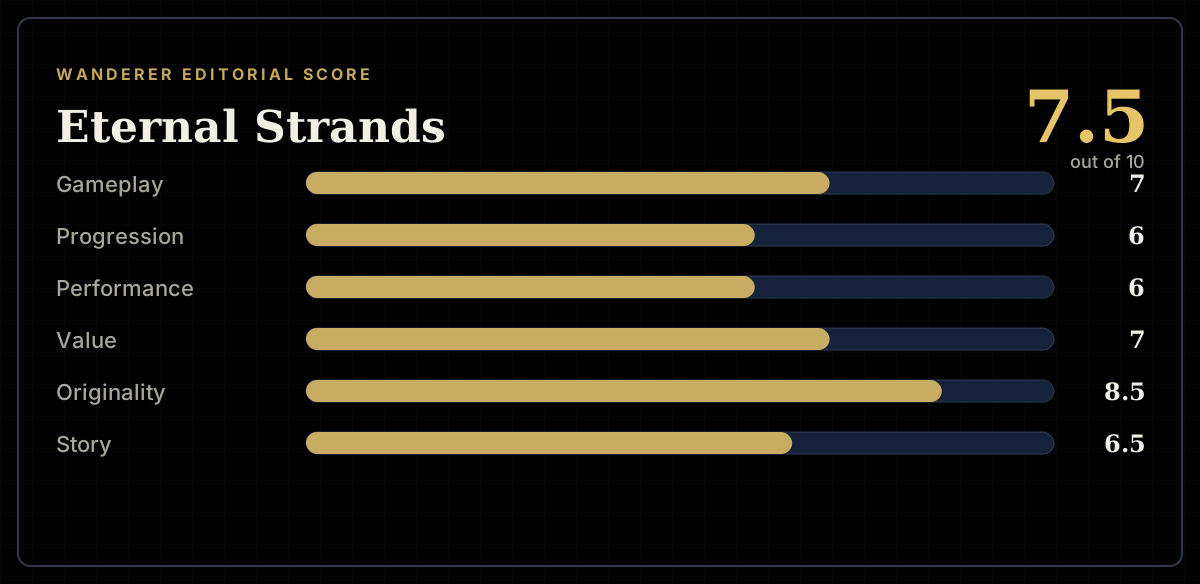
How the review scores each part of the gameWanderer Editorial -
The short versionWanderer Editorial