
Game review
DmonMaster
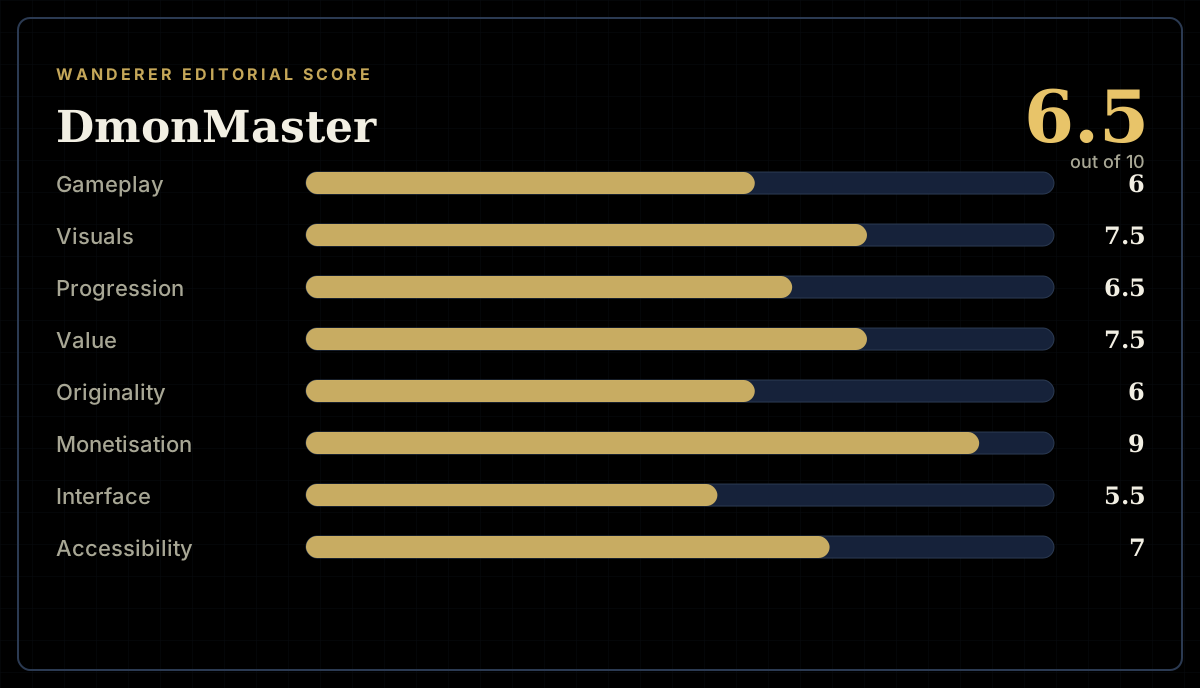
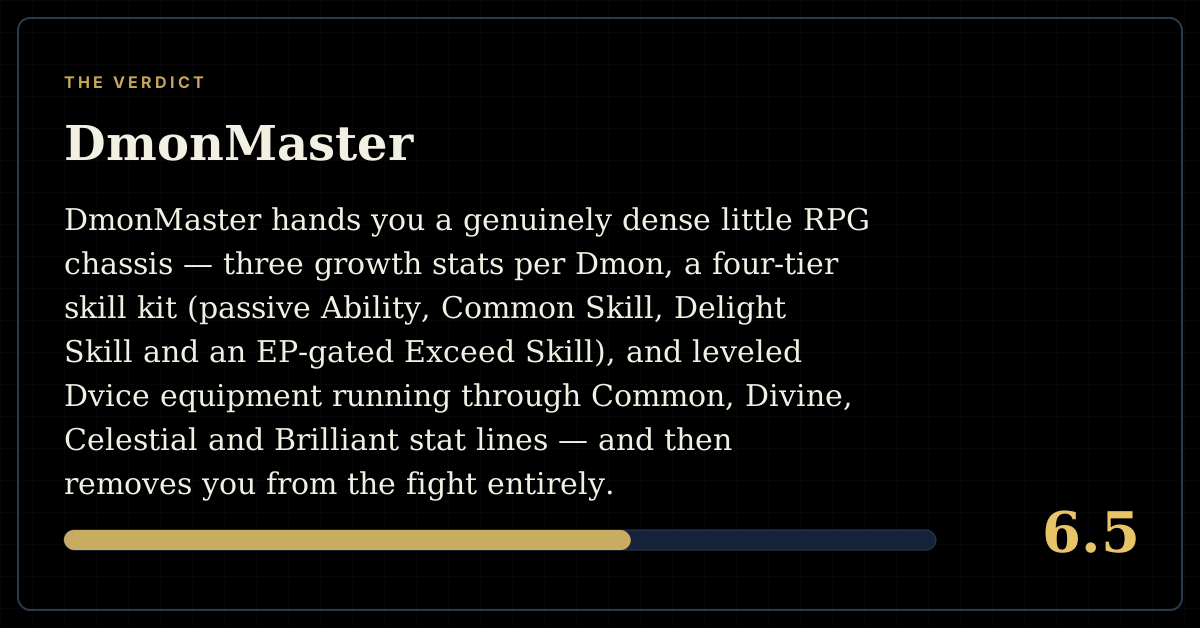
6.5 / 10
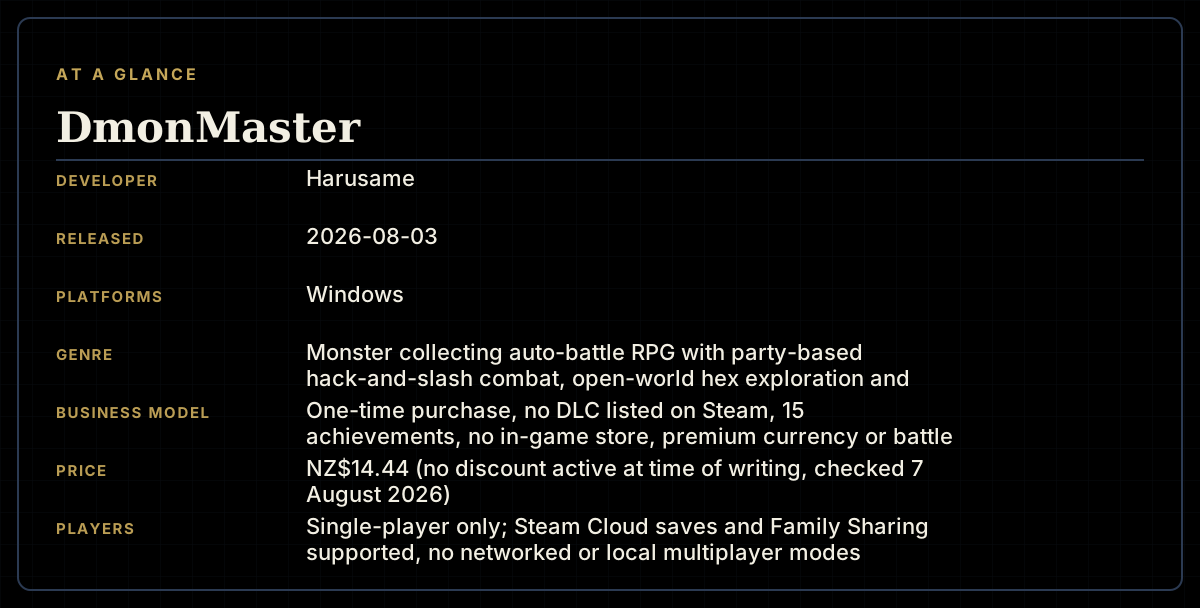
- Developer
- Harusame
- Publisher
- Harusame
- Released
- 3 August 2026
- Platforms
- Windows
- Genre
- Monster collecting auto-battle RPG with party-based hack-and-slash combat, open-world hex exploration and tactical team building
- Monetisation
- One-time purchase, no DLC listed on Steam, 15 achievements, no in-game store, premium currency or battle pass
- Players
- Single-player only; Steam Cloud saves and Family Sharing supported, no networked or local multiplayer modes
The short version
DmonMaster hands you a genuinely dense little RPG chassis — three growth stats per Dmon, a four-tier skill kit (passive Ability, Common Skill, Delight Skill and an EP-gated Exceed Skill), and leveled Dvice equipment running through Common, Divine, Celestial and Brilliant stat lines — and then removes you from the fight entirely. Every battle plays itself once your three Dmon and your Dvice loadout are locked in, and that trade-off splits its own tiny review corpus straight down the middle: watchers who find the numbers satisfying to assemble, and players who call it boring to sit through with no speed-up button. A wide-reaching AI Generated Content Disclosure covering the game's code, art, music and translation is worth knowing about at a NZ$14.44 asking price, and four days after launch there simply isn't enough of an audience yet — English, Chinese, Japanese and Korean players combined have left eight reviews and the concurrent player count sits in single digits.
Biggest strengths
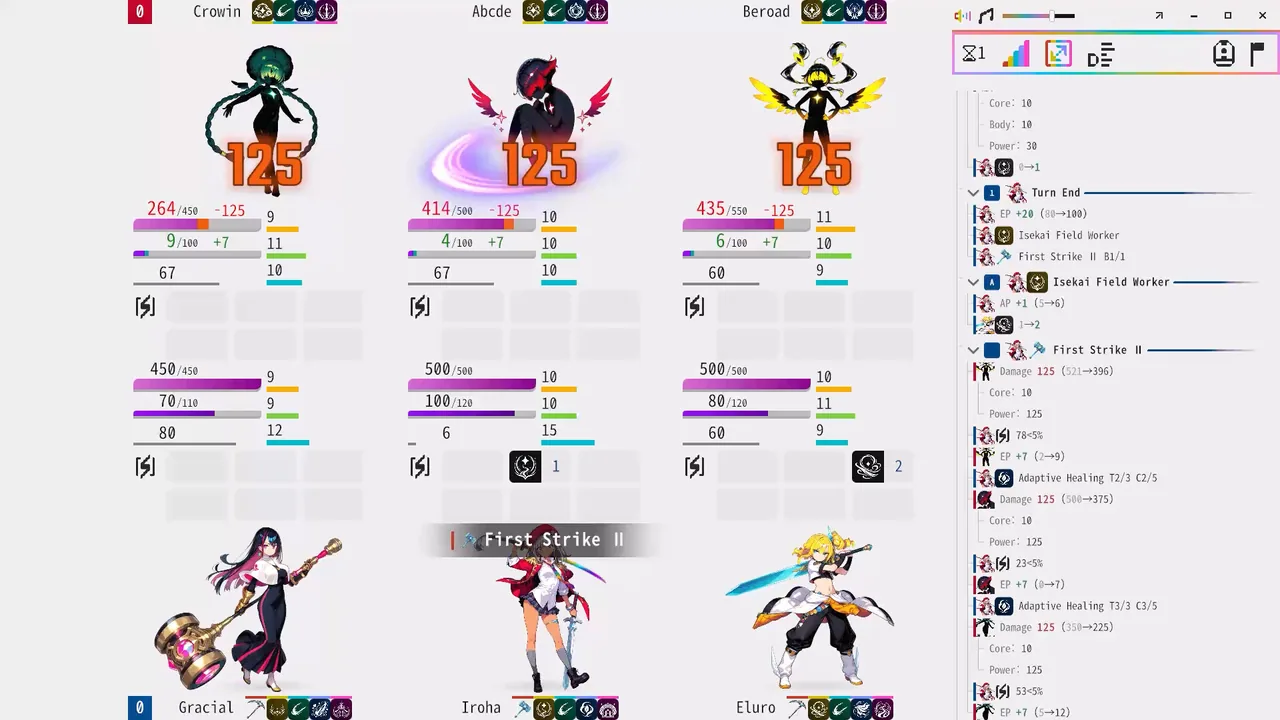
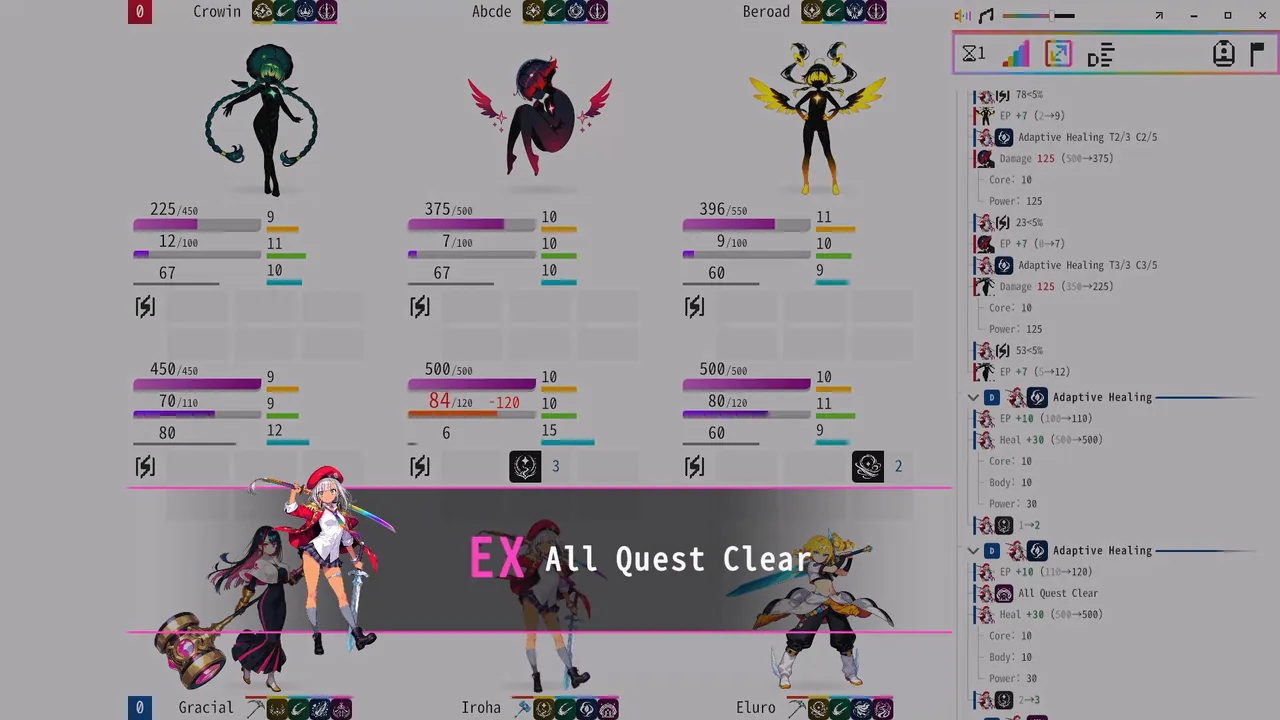
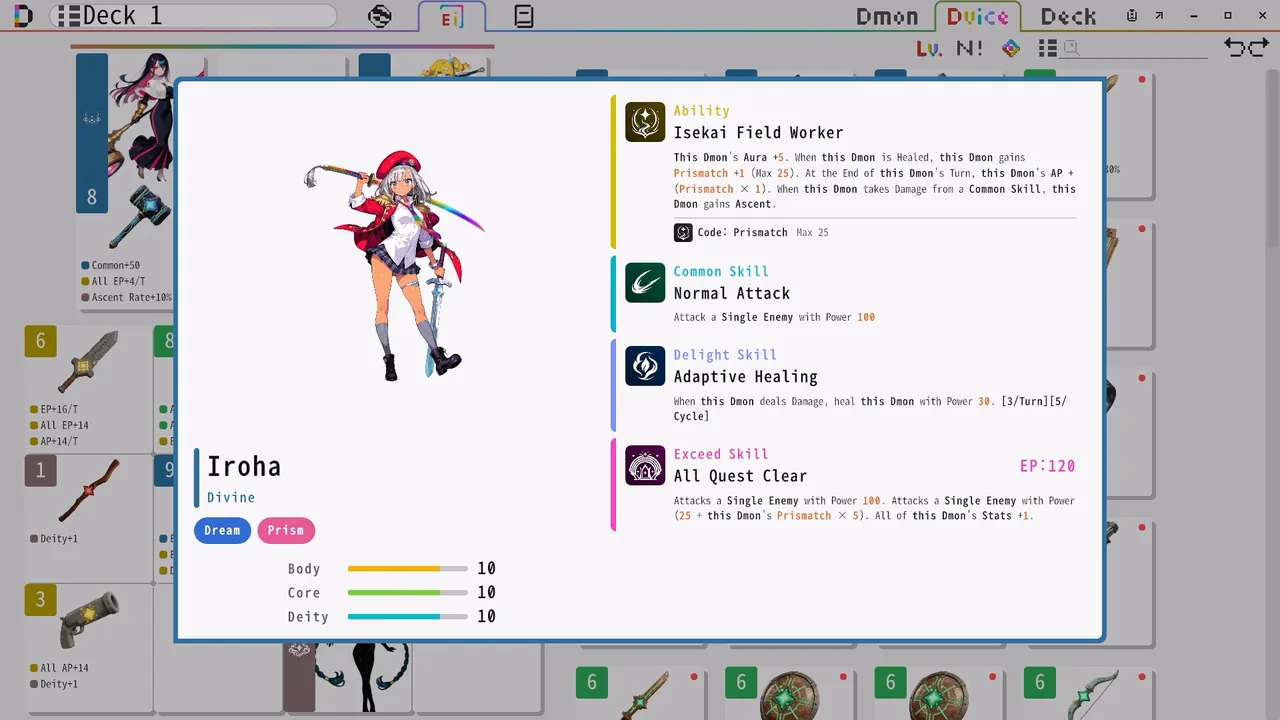
- Each Dmon carries a real four-part kit — a passive Ability, a Common Skill, a Delight Skill and an EP-gated Exceed Skill — visible working exactly as described in the developer's own combat-log screenshots, not just claimed on the store page
- Dvice equipment levels independently of its owner and stacks bonuses across four named tiers (Common, Divine, Celestial, Brilliant), giving the loadout screen more depth than the "auto-battler" label usually implies
- A one-time NZ$14.44 purchase with no DLC, no premium currency and no in-game store is about as clean as this genre's monetisation gets
Biggest weaknesses
- Combat is fully automatic once a battle starts, and there is no reported speed-up or skip control — one Japanese reviewer's clearest complaint, echoed by others, is that the pacing drags with nothing to do but watch
- The store page's AI Generated Content Disclosure covers "general coding," character art, skill icons, all background music, some sound effects and general translation — a wider scope than most AI disclosures in this library, which usually stop at art and audio
- Supported languages are English, Simplified and Traditional Chinese, and Japanese only; a Korean player who logged 46.5 hours used their entire review to ask for Korean localisation
Who it's for: Auto-battler and monster-collector fans who like optimising a squad from the sidelines and don't mind combat with zero manual input once the party is set, particularly players already comfortable reading Japanese, Chinese or English UI.
Our recommendation: At NZ$14.44 for a one-time purchase with no DLC or in-game store, the price matches the amount of system here — three stats, four skill slots and four gear tiers across 100 collectible Dmon. The catches are a fully hands-off combat loop that several of its own early reviewers found dull to watch, no Korean localisation despite a visibly interested Korean audience, and a review base too small to say yet whether the mid and late game holds up.
6.5 / 10
DmonMaster wants you to build the roster and then get out of the way. Every one of its 100 collectible Dmon carries a real four-part kit and a leveled piece of equipment underneath it, and none of that matters once a fight actually starts — the game plays itself, end to end, with the player watching from the sidelines. That single design choice is the whole story of this launch: a first-week Steam review corpus split almost exactly between people who find the numbers satisfying to assemble and people who find the fights themselves close to unwatchable.
Ninety-nine strangers and a narrator who won't stop winking
The pitch, straight from the store page, arrives in the voice of DREAL, a fourth-wall-poking narrator who addresses the player directly ("Hello there, XXXXX!") and frames the entire game as a self-aware isekai gag: you've been summoned to gather 100 Dmon, beings described as "the very Code of this world, given form... so basically, gods, kind of." It's a knowingly silly hook for a solo developer's debut, and it sets the tone for everything that follows — light on lore, heavy on winking at the anime-RPG genre it's built from.
Underneath the joke is a genuinely workable structure. You recruit Dmon, assign three of them plus a Dvice loadout apiece into a party, and send that party into 3v3 auto-battles. Combat runs turn by turn on its own: each Dmon has a passive Ability, a basic Common Skill, a resource-fed Delight Skill and an EP-gated Exceed Skill that fires once enough energy has built up, and the developer's own combat-log screenshots show all four categories actually working — status effects named "Adaptive Healing" and "First Strike II" stacking, EP counters ticking from 2 to 9, damage numbers reducing HP bars in real time. It's a denser kit than the phrase "auto battler" usually promises.
Three stats, four gear tiers, and no hands on the wheel
Every Dmon is built from three growth stats — Body, Core and Deity — and equips a single Dvice that levels independently, shown in the marketing shots climbing as high as Lv. 10. Those Dvice stack bonuses across four named tiers (Common, Divine, Celestial, Brilliant), each granting a different kind of stat line: flat power boosts, "Ascent Rate" percentage buffs, EP-per-turn generation, or party-wide effects that trigger "on Battle Start." The inventory grid visible in the developer's own gear-management screenshot runs deep, with dozens of weapons, shields, books, bows and rings sorted by level. Whatever else DmonMaster is short on this early in its life, a shallow stat sheet doesn't appear to be one of them.
None of that changes what happens once the fight begins, though, which is nothing you do. You pick the team, you pick the gear, and then you watch. That's by design — the store page frames it as the whole joke, "you just get to watch from way in the back, arms crossed, looking smug" — but it's also the single complaint that shows up across languages in the review sample: a Japanese reviewer at two hours in wrote plainly that the game "needs at least a speed-up or skip option," and that the effort of collecting 100 Dmon, gearing them up and opening the map "doesn't match the fun" on offer so far. A Simplified Chinese review at nearly eight hours went further, calling the whole thing boring and (inaccurately, going by the developer's own screenshots) claiming there's "no growth system at all." The truer read, based on what's actually on screen, is narrower and more specific: the growth system exists and is reasonably deep, but the moment-to-moment combat gives you nothing to do with it beyond team selection.
A hex map, not quite the open world it's sold as
The store page's "Hello, Open World! ... Go wherever you want, just as you please!" is worth checking against the developer's own screenshot of it in action, and the honest description is narrower than the pitch: a hex-tile overworld map, numbered by encounter difficulty, with a "Discovered 1/42" counter tracking how much of the current zone has been revealed and a DIVE! button to enter a selected tile. That's a legitimate structure for an auto-battler — a node map gives you meaningful choices about difficulty and pacing without asking for movement input the combat system doesn't otherwise use — but it's a tile-selection map, not a continuous walkable world, and a reader buying specifically on the "open world" line in the store description should know what they're actually getting.
What the developer has already fixed
DmonMaster's launch window has been unusually short and unusually responsive. A Chinese-language review posted the same day as launch, 3 August, asked for more built-in tutorials players could look up themselves; the developer's v1.0.3 patch, dated 5 August, added exactly that — expanded early-game tutorials, revised term descriptions, and an in-game patch-notes screen — alongside two Dmon and one Dvice balance adjustment and a fix for skill names occasionally going missing from battle logs. A v1.0.5 patch the same day fixed an issue in the patch notes themselves. Two updates in 48 hours from a solo (or very small) developer is a good early signal, even if it can't yet answer the bigger structural question about the combat loop's lack of player input.
The AI disclosure is broader than most
DmonMaster's Steam page carries an AI Generated Content Disclosure that's worth quoting in full because of how much it actually covers: "General coding. General imagery, including character art and skill icons. All BGM. Some sound effects. General translation." Most AI disclosures this library has seen stop at art or audio; this one extends to the game's code and its translation work as well, which is a materially bigger claim about how the whole product was assembled. It lines up with an English-language review's own aside — a mostly positive first-impression review that closes by suggesting the developer "tone down the AI a bit next time." The disclosure is specific and honestly stated rather than buried, and the developer's own screenshots show a consistent, appealing anime art style that Japanese reviewers repeatedly singled out as the game's best feature ("キャラがとにかくかわいい" — "the characters are just so cute" — appears, in close to those words, in two separate reviews). Whether an extensively AI-assisted pipeline matters to you at NZ$14.44 is a personal call, but it's one worth making with the actual scope of the disclosure in hand.
An audience that barely exists yet
Steam's review count for DmonMaster sits at eight, four days after a full 1.0 launch: six positive, two negative, split across Simplified Chinese, Japanese, English and a single Korean review. That Korean review, from a player with 46.5 hours already logged, uses its entire text to ask for Korean-language support — a real signal of interest from a market the current English/Chinese/Japanese-only localisation doesn't reach, and a striking amount of playtime from someone who apparently can't read the interface fluently. The concurrent player count at time of writing was six. The achievement curve tells a similar story about depth versus reach: 57.5% of players who've opened the game have hit the LV10 milestone, falling steadily to 4.1% at LV100, and five higher-tier "EXCEIL" achievements each sit at exactly 2.7% — a small, apparently identical cohort that pushed all the way through the current ceiling. None of that is damning for a game four days old, but it does mean every claim in this review about how the systems hold up at range is a reading of what's visibly built, not a report on how a broad playerbase has found it.
Final verdict
DmonMaster earns a 6.5 for building more RPG than its "auto battler" label implies — a real three-stat growth system, a four-part skill kit per Dmon that visibly does what it says, and leveled equipment running through four meaningful tiers — and then handing none of the moment-to- moment combat back to the player, which is the exact thing its own early reviewers keep bringing up unprompted. A wide-scope AI disclosure that includes the game's coding as well as its art and music, a localisation gap that's already frustrating an invested Korean player, and a store description that oversells its map as an "open world" all cost it further. What keeps it from falling lower is a genuinely clean one-time price with no DLC or in-game store, real evidence of active post-launch support, and character art that's landed well with the small audience who's tried it. If a fully hands-off collector with real gear math sounds like your kind of background game, it's a fair NZ$14.44 bet. If you want any say over how your team actually fights once the bell rings, wait and see whether a speed toggle or a manual mode ever gets patched in.
Pros and cons
Pros
- Each Dmon carries a real four-part kit — a passive Ability, a Common Skill, a Delight Skill and an EP-gated Exceed Skill — visible working exactly as described in the developer's own combat-log screenshots, not just claimed on the store page
- Dvice equipment levels independently of its owner and stacks bonuses across four named tiers (Common, Divine, Celestial, Brilliant), giving the loadout screen more depth than the "auto-battler" label usually implies
- A one-time NZ$14.44 purchase with no DLC, no premium currency and no in-game store is about as clean as this genre's monetisation gets
- The developer shipped a balance and UI patch two days after launch that expanded the early-game tutorials and clarified skill-term descriptions — a direct, fast answer to the exact confusion an early Chinese-language review complained about
- Steam's accessibility tags (Mouse Only Option, Playable without Timed Input, playable at your own pace) are concrete and specific rather than a vague promise, and match a combat system that genuinely never demands quick input
Cons
- Combat is fully automatic once a battle starts, and there is no reported speed-up or skip control — one Japanese reviewer's clearest complaint, echoed by others, is that the pacing drags with nothing to do but watch
- The store page's AI Generated Content Disclosure covers "general coding," character art, skill icons, all background music, some sound effects and general translation — a wider scope than most AI disclosures in this library, which usually stop at art and audio
- Supported languages are English, Simplified and Traditional Chinese, and Japanese only; a Korean player who logged 46.5 hours used their entire review to ask for Korean localisation
- The store's "Hello, Open World!" pitch describes a hex-tile node map with a "Discovered 1/42" counter and a DIVE! button per tile, not a walkable, continuous world — a marketing framing worth knowing before buying on that promise specifically
- Eight Steam reviews and a concurrent player count of six, four days after a full 1.0 launch, mean there's no way yet to confirm how the 100-Dmon collection loop or the later gear tiers hold up over a longer run
Screenshots
-
DmonMasterImage: Harusame via Steam -
DmonMasterImage: Harusame via Steam -
DmonMasterImage: Harusame via Steam -
How the review scores each part of the gameWanderer Editorial -
The game at a glanceWanderer Editorial -
The short versionWanderer Editorial