Game review
Esoteric Ebb
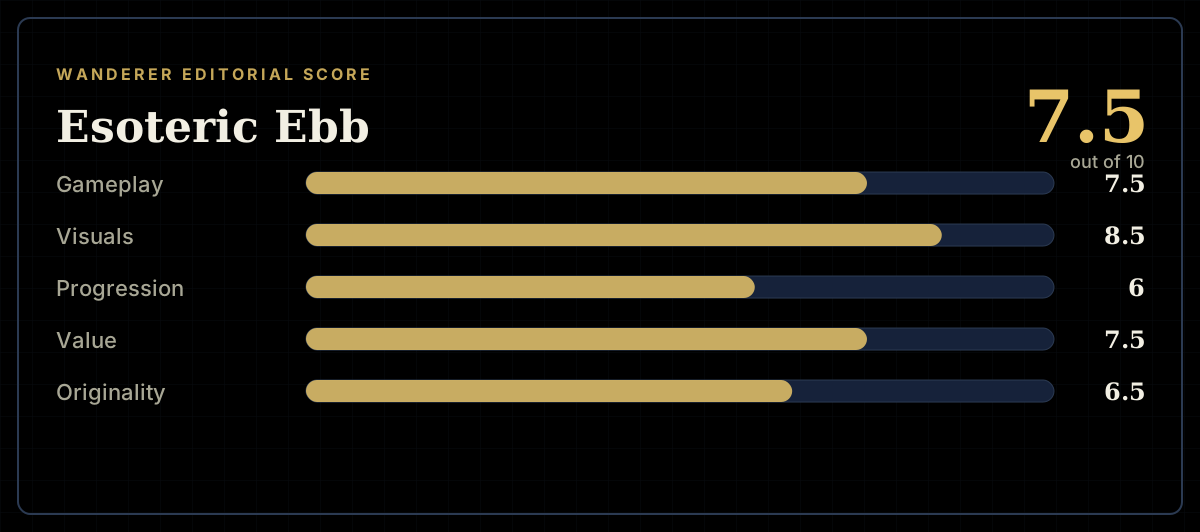
7.5 / 10
- Developer
- Christoffer Bodegård
- Publisher
- Raw Fury
- Released
- 3 March 2026
- Platforms
- Windows
- Genre
- Isometric CRPG
- Monetisation
- One-off premium purchase, no DLC, no in-app purchases and no premium currency
- Players
- None. Single-player only, with no leaderboard, co-op or shared-progress feature
The short version
Esoteric Ebb casts players as the Cleric, an "expert in esoteric events" investigating a political conspiracy in the fantasy city of Norvik, five days before its first-ever election. The debt to Disco Elysium is enormous and openly acknowledged — internal Stats that argue with the player, tense tabletop-style dice checks, a morally compromised investigator protagonist — and the game's own marketing invites the comparison directly rather than hiding from it. Since its 3 March 2026 solo-developer release, that comparison has produced two genuinely thoughtful, substantial camps among its Overwhelmingly Positive 95.5% rating. Fans describe it as a worthy spiritual successor in its own right, mixing Terry Pratchett's absurdist comedy with Disco Elysium's systems into something that stands on its own legs. An equally detailed, equally sincere critical minority argues the opposite: that leaning this heavily on a beloved predecessor's exact structure invites a comparison the writing doesn't consistently win, with specific complaints about heavy-handed moralising, exhausting lore dumps, and humour that replaces Disco Elysium's mystique with what one reviewer calls "shallow silliness."
Biggest strengths
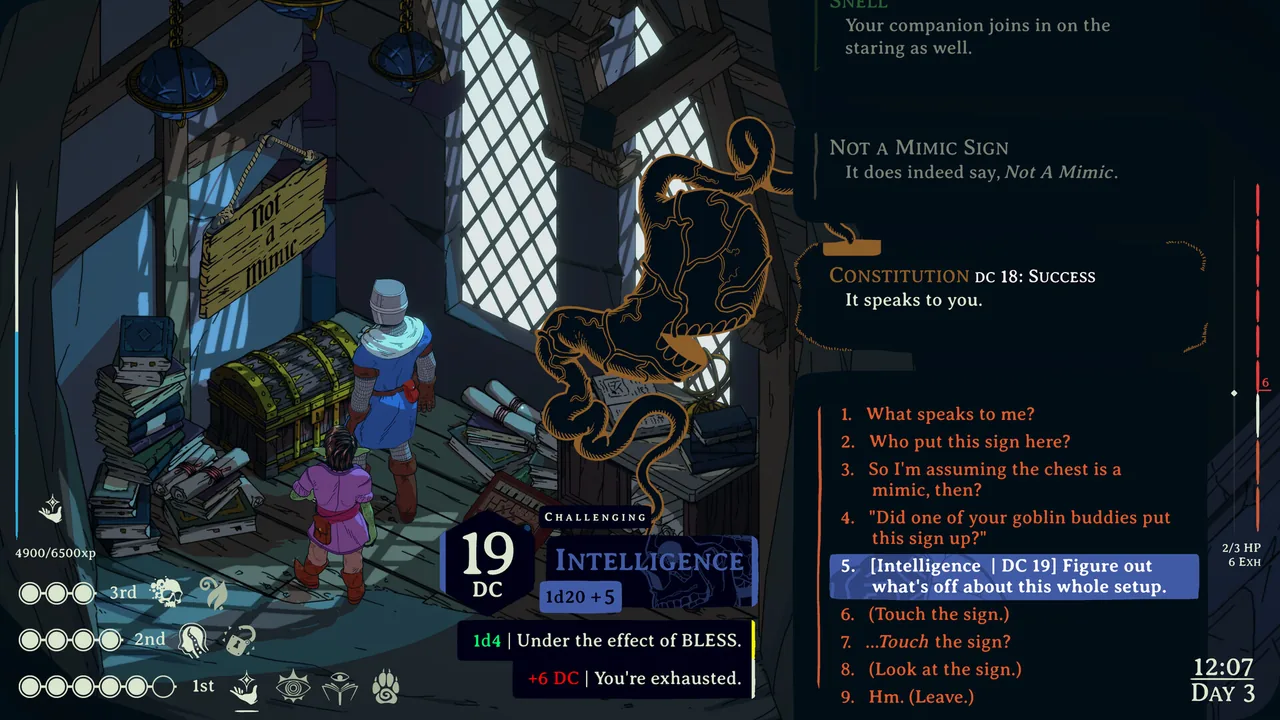
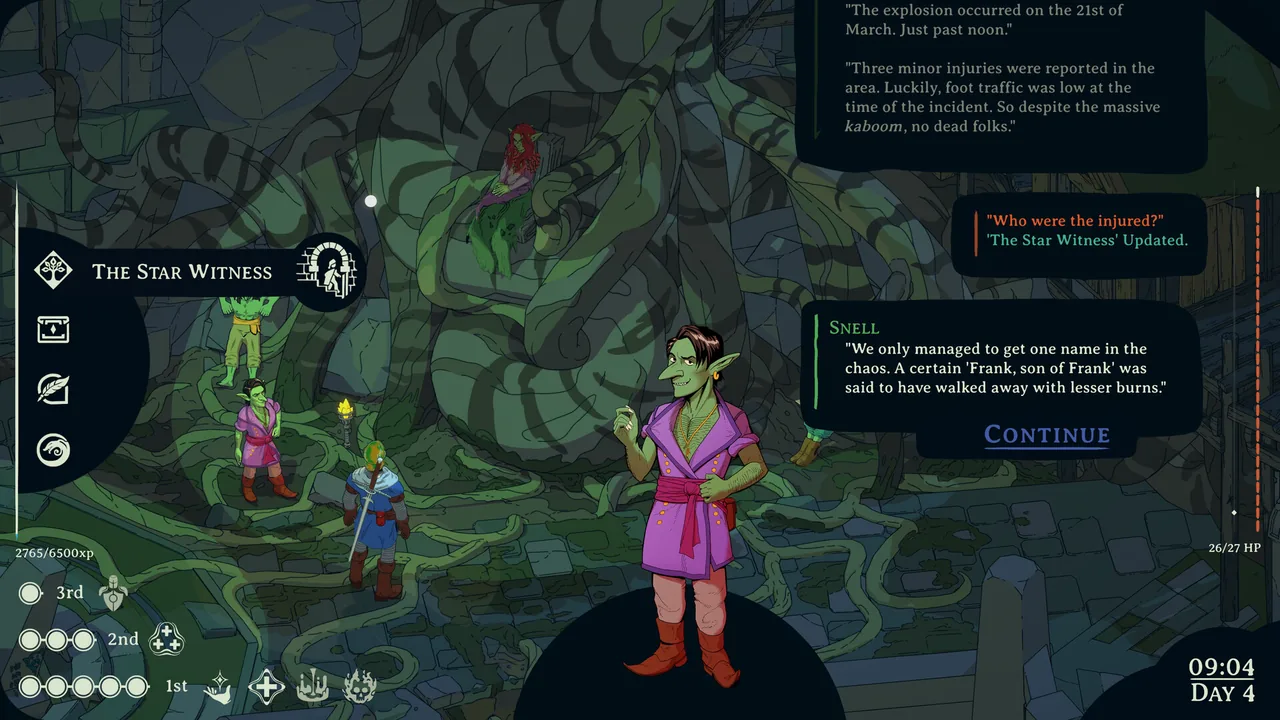
- Deep, branching dialogue and tabletop-style dice-roll mechanics deliver genuine tension and consequence, with internal Stats that argue with the player in ways reviewers consistently praise as well-executed
- A distinctive absurdist, Pratchett-flavoured comedic tone gives the game real identity of its own, drawing sincere praise from reviewers who describe it as standing apart from its clearest influence rather than simply imitating it
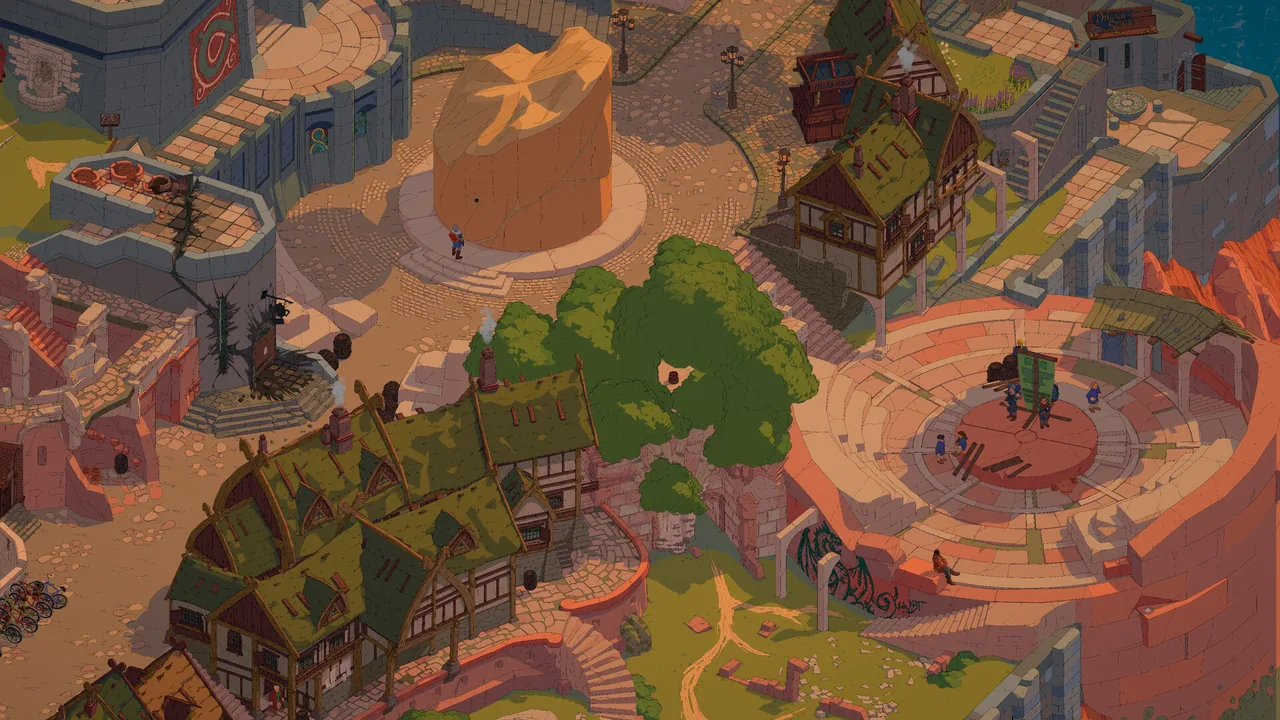
- Striking 3D art direction and soundtrack draw praise even from the game's more critical reviewers, who otherwise found the writing didn't land for them
Biggest weaknesses
- A substantial, detailed critical minority argues the writing leans on heavy-handed moralising, with several reviewers describing "bad" choices as followed by an explicit lecture on why they were wrong rather than trusting the player to draw their own conclusions
- Multiple reviewers describe exhausting lore dumps and walls of text, with more than one specifically citing fatigue setting in by the game's third in-fiction day
- Several thoughtful reviews argue the game's political themes are handled with less nuance and craft than Disco Elysium's, despite covering similar structural ground
Who it's for: CRPG and dice-based narrative RPG fans specifically drawn to Disco Elysium's formula, who are comfortable with a more overtly comedic, Discworld-flavoured tone rather than expecting the same melancholic literary register.
Our recommendation: A genuinely well-crafted, content-dense CRPG worth its price for fans of the formula, though buyers expecting Disco Elysium's specific tonal and literary subtlety should read the substantial critical minority's complaints carefully before assuming the comparison holds throughout.
7.5 / 10
Few recent CRPGs invite a specific comparison as directly as Esoteric Ebb does. Solo developer Christoffer Bodegård's isometric fantasy investigation game — you play the Cleric, a government-employed "expert in esoteric events" untangling a political conspiracy days before a city's first-ever election — wears its Disco Elysium influence openly, right down to internal Stats that bicker with the player mid-conversation and tense, tabletop-style dice checks standing in for combat and skill resolution. That's a bold, high-stakes choice: inviting comparison to one of the genre's most acclaimed recent achievements means the reviews were always going to measure the game against that specific yardstick. Since its 3 March 2026 release — which drew over 3,000 concurrent players within its first two days — Esoteric Ebb has settled at Overwhelmingly Positive across nearly 8,000 Steam reviews, and unpacking exactly how that comparison plays out across the sample is what makes this review worth writing in full.
A genuine, distinct identity underneath the influence
The strongest case for Esoteric Ebb standing on its own comes from reviewers who clearly know the genre well and still come away convinced it earns its place. "Many games have tried to be a successor to Planescape Torment. Many games have tried to be a successor to Disco Elysium. This game is a successor to Planescape Torment and Disco Elysium," one review states, a specific, confident claim from someone who's clearly weighed the comparison carefully rather than reaching for it lazily. Another frames the tonal distinction precisely: "Terry Pratchett meets Disco Elysium in a D&D game. I honestly cannot sell it harder than that" — capturing a specific comedic, Discworld-flavoured absurdism that several reviewers identify as the game's genuine point of difference rather than simple imitation. "Beautiful game. Great art, great soundtrack, great writing. Despite having learned from the genre's greatest, it's not derivative but stands on its own legs," reads another representative positive review. The dice-based encounter system draws consistent, specific praise for delivering real tension — internal Stats arguing with the player at critical moments is repeatedly singled out as executed with genuine craft rather than as a surface-level mechanical borrow.
Where the comparison stops paying off for its critics
What makes this review necessary rather than a straightforward celebration is how detailed and sincere the opposing case is — these aren't drive-by dismissals, they're carefully argued reviews from players who clearly wanted the comparison to hold and found specific reasons it didn't. The most consistent, specific complaint concerns moralising in the writing. "It's so painfully obvious that the whole thing is just a lecture that it becomes unbearable to play. Every single 'bad' choice you make comes with a lecture on why it's bad," one detailed review states — a structural critique distinct from simply disliking the politics, arguing the game doesn't trust players to draw their own conclusions the way its influence did. A related, equally specific complaint concerns pacing and density: "by about day 3, it was just a tiringly massive wall a[fter wall of text]," one reviewer notes, echoed by several others describing genuine fatigue setting in around the same point in the story despite real appreciation for the underlying craft and breadth of world-building on display.
Tone draws the sharpest, most pointed criticism of all. "The writing style is strongly 'inspired' by Disco Elysium, with internal traits dialog, except here the mystique and poetry has been replaced by shallow silliness," one review argues directly. Another, equally blunt: "This game tries so hard to be Disco Elysium but doesn't understand historical materialism beyond a dictionary definition." A particularly candid review captures the emotional arc many critical players describe experiencing: "I was enchanted by the demo but having played the whole game I'm not certain I recommend it," going on to specifically identify lore dumps and tonal inconsistency as the reasons the initial promise didn't fully deliver. One especially useful, self-aware observation frames the whole dynamic precisely: "The strong reception likely reflects the enthusiasm of CRPG fans as opposed to the crossover appeal" that made Disco Elysium a broader cultural moment — a fair, testable hypothesis about who the Overwhelmingly Positive score is actually representing, worth taking seriously as a genuine calibration point for buyers coming from outside the CRPG genre specifically.
What both camps agree on
Notably, the presentation draws consistent praise across almost the entire sample regardless of which side of the writing debate a given reviewer lands on. Even reviews that ultimately recommend against the game credit the 3D art style and soundtrack directly — "the 3D art style is a highlight," one detailed negative review states plainly, even while arguing "the rest of the experience is hampered by" the writing's execution. That's a meaningful signal in itself: a game whose presentation earns respect even from its harshest critics has a genuine technical and artistic foundation, whatever a given player ultimately concludes about the writing built on top of it.
Where this leaves a buyer
At NZ$35.99, Esoteric Ebb is a substantial, ambitious CRPG from a solo developer that's clearly poured enormous effort into its world, systems and dice-driven narrative design — the scale of what one person built here is worth respecting regardless of where a given player lands on the writing debate. Fans specifically drawn to Disco Elysium's formula, and willing to meet the game on its own more overtly comedic, Discworld-inflected terms rather than expecting the same melancholic literary register, are likely to find exactly the worthy successor its strongest advocates describe. Buyers coming in expecting a close match to Disco Elysium's specific tonal subtlety and restraint should weigh the substantial, detailed critical minority carefully — their complaints about heavy-handed moralising, exhausting pacing, and tonal inconsistency are specific and well-argued enough to be a genuine, fair warning rather than simple genre gatekeeping.
Pros and cons
Pros
- Deep, branching dialogue and tabletop-style dice-roll mechanics deliver genuine tension and consequence, with internal Stats that argue with the player in ways reviewers consistently praise as well-executed
- A distinctive absurdist, Pratchett-flavoured comedic tone gives the game real identity of its own, drawing sincere praise from reviewers who describe it as standing apart from its clearest influence rather than simply imitating it
- Striking 3D art direction and soundtrack draw praise even from the game's more critical reviewers, who otherwise found the writing didn't land for them
- Enormous breadth of writing and world-building, with faction politics, lore and reactive trait systems that reward attentive, exploratory play
Cons
- A substantial, detailed critical minority argues the writing leans on heavy-handed moralising, with several reviewers describing "bad" choices as followed by an explicit lecture on why they were wrong rather than trusting the player to draw their own conclusions
- Multiple reviewers describe exhausting lore dumps and walls of text, with more than one specifically citing fatigue setting in by the game's third in-fiction day
- Several thoughtful reviews argue the game's political themes are handled with less nuance and craft than Disco Elysium's, despite covering similar structural ground
- At least one reviewer suggests the game's Overwhelmingly Positive score may partly reflect enthusiasm from CRPG genre loyalists rather than the same broad crossover appeal Disco Elysium achieved, worth weighing for buyers coming from outside the genre specifically
Screenshots
-
Esoteric EbbImage: Raw Fury via Steam -
Esoteric EbbImage: Raw Fury via Steam -
Esoteric EbbImage: Raw Fury via Steam -
How the review scores each part of the gameWanderer Editorial -
The short versionWanderer Editorial