Idle RPGs, MMOs, browser games and mobile RPGs, taken apart properly. Every review carries a
score out of 10, what the game does well, what it does badly, and the kind of player it is actually for.
An unabashed Ragnarok Online homage with seven classes, thirty maps and a community that loves it. Its Early Access launch also spent a fortnight with the servers falling over and player trading switched off entirely after dupers took the marketplace.
Hazelight Studios' co-op action-adventure follow-up to 2021's Game of the Year winner It Takes Two, drawing Overwhelmingly Positive reviews and near-universal praise for its inventive, constantly-shifting gameplay and unusually generous Friend's Pass model — with a smaller, coherent minority of the same fanbase arguing its writing and characters fall short of its predecessor.
A village builder where everything — villagers, berries, houses, monsters — is a card on a table, and you craft by dragging one onto another. Twelve dollars, 96% positive, genuinely inventive. Then your table fills up and there is no way to automate anything.
A genuinely pretty, systems-rich cozy farming life-sim whose Early Access launch was overshadowed by a real corporate-backing revelation, a suspected fake-review campaign, and a broken promise about paid content — a case where the discourse around the game may matter as much to a buyer as the game itself.
A grid-tactics deckbuilder that fuses Into the Breach-style positioning with a real card engine and a Space Invaders-flavoured alien assault, backed by a Metacritic 85 and an Overwhelmingly Positive Steam score — with real, specific complaints about UI clarity and balance outliers sitting underneath the acclaim.
Ubisoft's first open-world Star Wars game delivers genuinely praised atmosphere and world-building as scoundrel Kay Vess, undercut by a real, consistently repeated "Ubisoft formula fatigue" complaint about an empty, on-rails open world, a specific, reproducible manual cloud-save failure that has cost multiple reviewers dozens of hours of progress, and a patch cadence that this review can confirm effectively stopped in mid-2025 even as bug reports continued well into 2026.
Shift Up's PS5-exclusive-turned-PC-port lands with genuinely praised combat, striking visuals and one of the strongest PC ports of its console-exclusive generation, undercut by a real, widely repeated "style over substance" complaint about shallow side content and a thin story — one this review can confirm the game's own director has publicly, directly admitted was underdeveloped.
Capcom's genre-redefining fighting game remains Very Positive across nearly 78,000 Steam reviews, widely credited with the best netcode and most accessible entry point the series has ever offered — undercut by a real, remarkably consistent, mathematically verifiable complaint that its premium currency is deliberately priced so purchases never divide evenly, a pattern independently described in near-identical terms by reviewers spanning tens to well over a thousand hours.
A genuinely excellent, atmospheric successor to one of survival gaming's most beloved titles, selling two million copies in twelve hours — whose launch was immediately overshadowed by a well-documented controversy over an unusually restrictive EULA from publisher Krafton, set against a pre-existing, publicly reported dispute over developer bonuses that the community rallied around in real time.
A farming sim with classes, magic and dragons, sold for twelve dollars with a hundred and seventy-four dollars of DLC behind it. Its recent reviews have collapsed to 74% — and most of them aren't about the farming.
Nightdive Studios' remake of the genre-defining 1994 original remains Very Positive across nearly 13,000 Steam reviews, widely credited as a remarkably faithful, lovingly crafted recreation — a fidelity that cuts both ways, as the review sample consistently describes the remake preserving the original's genuinely cryptic, maze-like navigation right alongside its atmosphere, and this review can confirm the remake's own development nearly collapsed entirely when the project ran out of money partway through.
A free idle RPG that lives in your taskbar became a genuine phenomenon — peaking at over 360,000 concurrent players, briefly outranking everything on Steam except Counter-Strike 2 and Dota 2 — before its own server infrastructure buckled under that success and started eating players' item collections.
The roguelike that taught the genre what item synergy could be, at 97% across 439,000 reviews. Twelve years and hundreds of items later, its most experienced players are asking whether it now has too many.
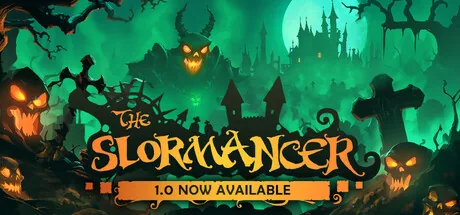
A genre mashup its own fans call an "uncut diamond" — Fallout-flavoured post-apocalyptic exploration, Darkest Dungeon-style combat and a real card-battler deckbuilding layer — whose lifetime review score is dragged down mostly by complaints from over a year before its actual 1.0 release.
A genuinely beloved Early Access survival-crafting game about a lone robot scavenging a drowned Earth to save the last of humanity, Very Positive across more than 12,000 reviews for a premise and atmosphere reviewers describe with real passion — undercut by severe, well-documented performance problems, a persistent unresolved crash bug, and a motion-sickness accessibility gap that several devoted fans describe as painful to keep flagging.
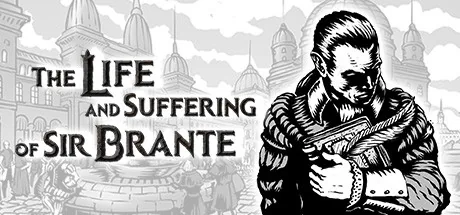
A narrative RPG that plays out across a lifetime, from birth to death, built around a genuinely subversive idea — your choices are gated by the stats your earlier choices built, whether or not that matches how you actually want to roleplay — that reviewers alternately praise as a brilliant deconstruction of choice-based storytelling and criticise as breaking the promise of meaningful choice altogether.
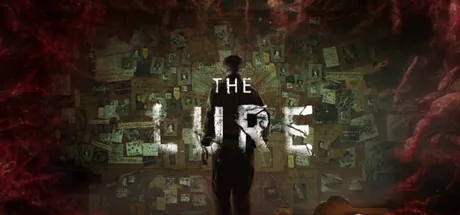
A free, twenty-minute psychological horror vertical slice built around a genuinely unsettling premise — you're trapped inside a mimic that's rebuilding a familiar environment around you to keep you docile before it eats you — with visual ambition well beyond what its tiny indie studio should be able to pull off.
The base game is free and the creative tools are still the best in the genre. The full catalogue — all 113 add-ons — costs about NZ$1,580, and almost every negative review this game has ever received is about that number.
An action RPG that layers levelling on top of levelling — your character, your skills, your weapons and your items all grow independently — and earns real comparisons to Diablo and Last Epoch for its first ten hours, before a near-universally hated grind wall right before the final boss undoes a lot of that goodwill.
An adorable desktop-companion idler where pixel animals roam the bottom of your screen while you work — undercut by a genuinely strange design choice for a game in this genre, its own idle mascots get sick if you leave them alone for too long.
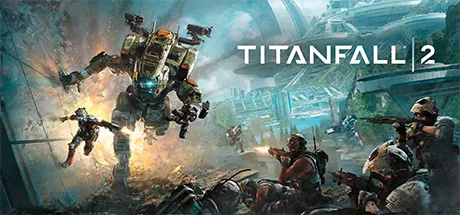
Respawn Entertainment's 2016 shooter remains Overwhelmingly Positive across more than 284,000 Steam reviews, widely regarded as one of the finest FPS campaigns ever made — a reputation shadowed by a genuine, years-long multiplayer DDoS crisis this review can confirm directly from the developer's own communications, and by the mandatory EA App launcher requirement that recurs as a real, persistent complaint even in reviews from Steam Deck-era players decades removed from launch.
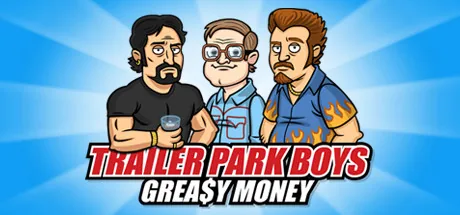
East Side Games' 2017 licensed idle tycoon turns Sunnyvale Trailer Park into a business-management loop, wraps its prestige reset in the show's own running joke about jail, and is still getting seasonal updates on mobile nine years later — even after its Steam PC version was quietly abandoned and delisted.
Two Point Studios' museum management sim remains Overwhelmingly Positive across nearly 13,000 Steam reviews, widely credited by longtime series fans as the best entry yet — undercut by a real, remarkably consistent complaint about its "Thieves" mechanic, which recurring reviewers describe as a poorly-tuned frustration distinct from the rest of the game's gentle, decoration- focused design, alongside a real, repetitive "expedition loot-box" content-acquisition loop.
The deckbuilder that removed the luck. You see every reward in advance and rebuild your deck between every fight — which makes it the most controllable game in its genre, and is exactly why some players bounce off it. Six dollars, 251 achievements, and criminally under-noticed.