Game review
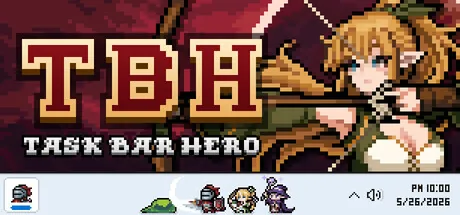
TBH: Task Bar Hero
6 / 10
- Developer
- Nugem Studio, Tesseract Studio
- Publisher
- Nugem Studio
- Released
- 27 May 2026
- Platforms
- Windows
- Genre
- Idle RPG
- Monetisation
- Free-to-play with a player-driven Steam Market trading system and several optional cosmetic Supporter Pack DLC bundles at NZ$4.79 each; most reviewers describe the core progression as achievable without spending
- Players
- Nominally single-player, but items and progress route through the developer's own servers and a Steam Market trading economy, which is precisely where this review's central story comes from
The short version
TBH: Task Bar Hero earned its viral moment honestly: a genuinely charming, surprisingly deep idle RPG that lives quietly in your taskbar, with real class variety, a five-hundred-item build space, and enough content that hundreds-of-hours reviews aren't rare in its positive sample. Then it became one of the most-played games on Steam almost overnight, and the server infrastructure behind what should have been a simple single-player idler couldn't keep up. Reviews from July 2026 describe lag severe enough to earn the nickname "world's laggiest single player idler," and — far more seriously — reports of entire chests and inventories being deleted outright, sometimes after players spent real time accumulating them. The developers have acknowledged the crisis directly, issued compensation, and kept shipping hotfixes, but the trust damage from losing progress to a server failure in what's marketed as a solo idle game is real and still being felt in the review sample.
Biggest strengths
- A surprisingly deep RPG for something running quietly at the bottom of your screen — diverse classes, skills and a roughly 500-item build space give real strategic depth
- Genuinely free-to-play friendly by most accounts: progression is achievable without spending, and the player-driven Steam Market trading system gives an alternative to direct purchases
- The pixel art and overall presentation draw consistent praise, and were a large part of what drove the game's initial viral spread
Biggest weaknesses
- Server instability is severe and specific: multiple reviewers report items, chests and entire inventories being deleted outright, sometimes after significant time investment
- Lag is bad enough that reviewers call this "the world's laggiest single-player idler," a genuinely strange problem for a game that should have minimal reason to depend on live servers at all
- A gacha-like "Cube" synthesis system is tied to the unstable online infrastructure, turning what should be a core progression feature into what one reviewer calls "a gamble" for reasons unrelated to the actual game mechanics
Who it's for: Fans of desktop-companion idle RPGs who want genuine build depth for free, and who can tolerate real instability risk while the developer works through the consequences of scaling faster than its infrastructure could handle.
Our recommendation: The core game is good enough to be worth trying at no cost, but back up nothing you'd be devastated to lose, and check the game's own recent patch notes before investing real time — this is a genuinely unresolved situation as of this review, not a settled one.
6 / 10
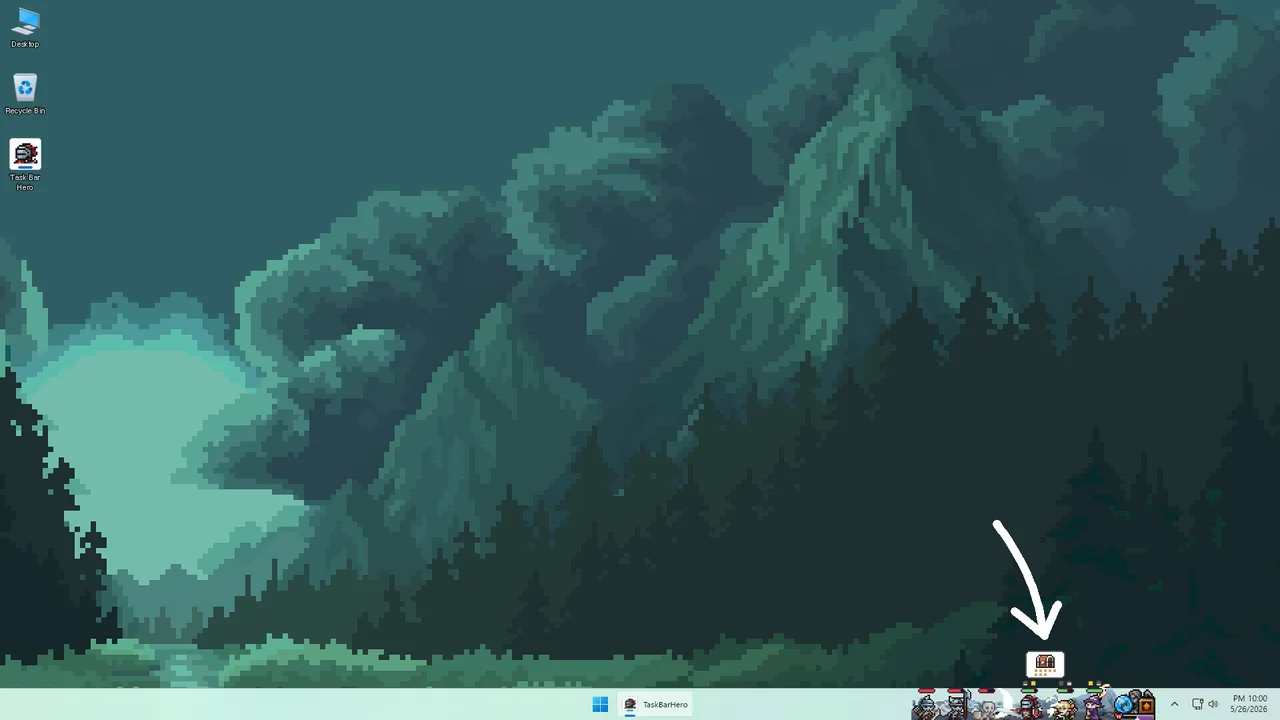
Every so often a small, unassuming free game catches lightning on Steam and turns into a genuine phenomenon almost overnight. TBH: Task Bar Hero is 2026's clearest example: a tiny idle RPG that lives at the bottom of your screen while you work, built around pixel-art heroes, a roughly 500-item equipment pool and enough class variety to give the build-crafting real substance. On 6 June 2026 it peaked at 364,058 concurrent players, briefly sitting third on Steam's own charts behind only Counter-Strike 2 and Dota 2, ahead of far bigger-budget names like PUBG and Path of Exile 2. That's not a modest indie success — that's a genuine cultural moment for a free desktop companion idler. What makes this review necessary rather than a straightforward celebration is what happened next.
A genuinely well-built idle RPG
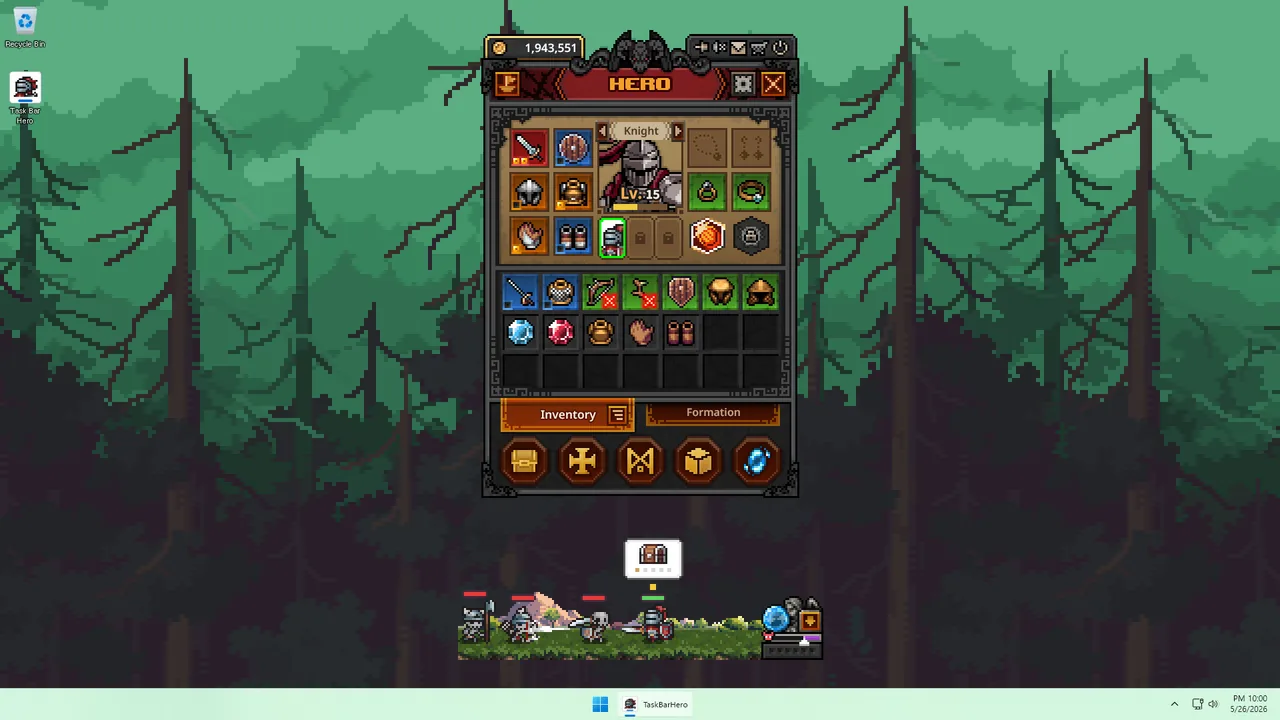
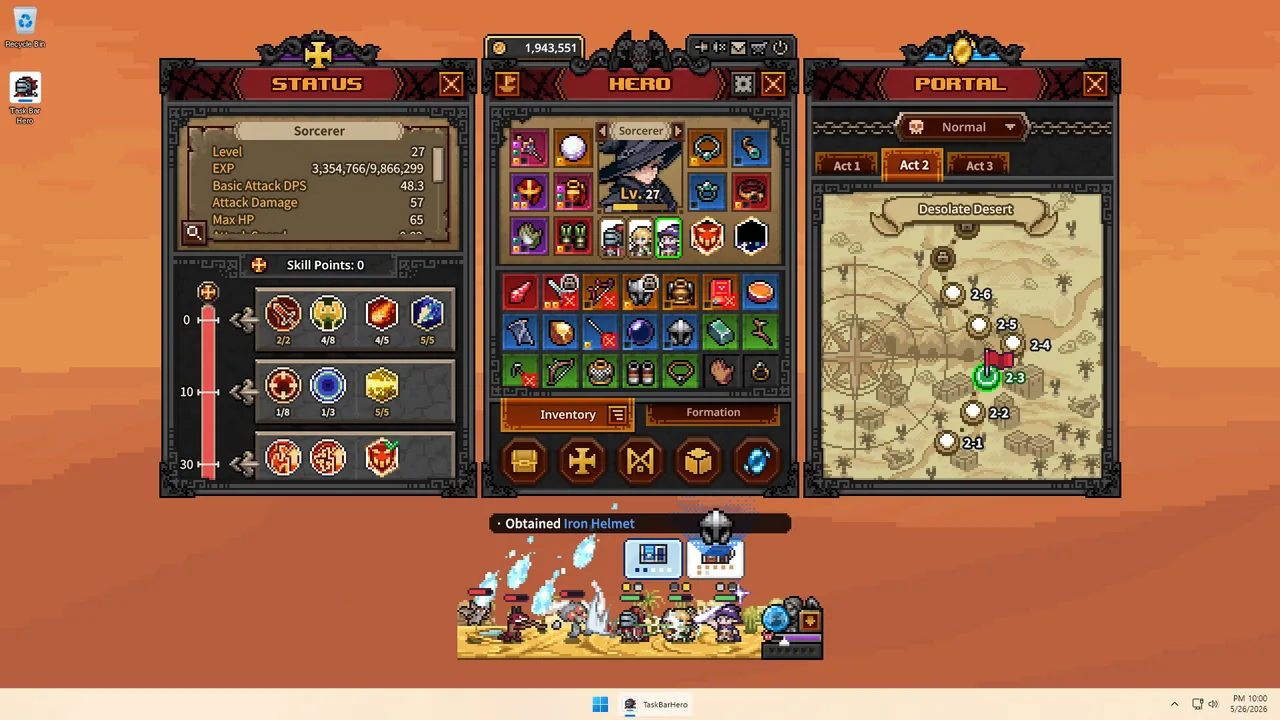
Strip away everything that follows and there's a real, well-regarded game underneath. Three acts, four difficulties, more than fifty monster types and over five hundred items give Task Bar Hero substantially more content than the "tiny taskbar idler" framing might suggest, and reviewers with hundreds of hours logged describe exactly the kind of build-crafting depth that keeps a committed idle RPG audience engaged long-term. The pixel art specifically drove a lot of the initial word-of-mouth — more than one reviewer describes discovering the game purely because a screenshot caught their eye — and the free-to-play structure is, by most accounts, genuinely fair: progression is achievable without spending, and a player-driven Steam Market trading system gives an alternative route to gear that doesn't require a wallet.
Success outpacing infrastructure
The trouble started once the game's popularity exceeded what its server infrastructure could handle, and the consequences described in July 2026 reviews are serious rather than cosmetic. One reviewer's headline captures it bluntly: "world's laggiest single player idler." Another, specifically, calls out that the game's Cube synthesis system — a core progression mechanic — "feels like a gamble, not because of the game mechanics" but because there's reportedly a high chance the action simply fails to register due to server strain. For a game that should have almost no structural reason to depend on live servers for single-player idle progression, that's a genuinely strange and avoidable failure mode.
Far more serious than lag: multiple, independent reviewers report items, chests and entire inventories disappearing outright. One describes spending a full day collecting materials for a cube synthesis only for the game to delete all of it. Another reports losing several rare chests and a full inventory of common items to what they describe as the game "constantly" deleting their stored items. This isn't a minor inconvenience — it's the kind of failure that erodes the basic trust a progression-based game depends on, and it shows up often enough in the review sample to read as a systemic infrastructure problem rather than isolated bad luck.
The developers' own news feed corroborates the severity directly rather than downplaying it: a "Response to Server Instability and Item Disappearance Issues" post, a subsequent "Server Outage Compensation Mail Resend Notice," and an "Item Restoration Results" update all landed within days of each other in late July 2026, alongside a steady cadence of hotfixes continuing into August. That's a studio actively working through a genuine crisis in real time rather than one hiding from it, which matters — but it doesn't erase the fact that the crisis happened, or that some players lost real progress to it.
Other cracks in the picture
A handful of secondary complaints round out the negative sample. Some reviewers allege bots and cheaters have manipulated the Steam Market economy, with at least one going as far as suggesting developer tolerance or involvement rather than active moderation — a serious claim this review can't independently verify, but one worth flagging as a live community concern rather than ignoring. Progression pacing also draws criticism in some post-launch reviews: complaints about unrewarding late-game gear grinding and the absence of a clear end-game goal suggest the update history hasn't been purely about server stability, and that some balance changes have landed poorly with players who'd already invested significant time.
Where this leaves a player today
None of this erases what made Task Bar Hero a phenomenon in the first place — the core game is good, the presentation is charming, and the monetisation model is honestly about as fair as free-to-play gets. But this is, as of writing, an unresolved situation rather than a settled one: a beloved idle RPG whose own success broke the infrastructure underneath it, with real, ongoing consequences for players' stored progress. It costs nothing to try, which makes the calculation simpler than it would be for a paid game — but anyone investing real time should watch the developer's own patch notes closely before trusting the game with anything they'd be genuinely upset to lose, and should go in with eyes open about a story that's still actively being written.
Pros and cons
Pros
- A surprisingly deep RPG for something running quietly at the bottom of your screen — diverse classes, skills and a roughly 500-item build space give real strategic depth
- Genuinely free-to-play friendly by most accounts: progression is achievable without spending, and the player-driven Steam Market trading system gives an alternative to direct purchases
- The pixel art and overall presentation draw consistent praise, and were a large part of what drove the game's initial viral spread
- The developers have publicly acknowledged the server crisis, issued compensation for lost items, and maintained a visible, frequent hotfix cadence rather than going quiet
- Hundreds-of-hours reviews from committed players suggest genuine long-term content depth once the technical situation is set aside
Cons
- Server instability is severe and specific: multiple reviewers report items, chests and entire inventories being deleted outright, sometimes after significant time investment
- Lag is bad enough that reviewers call this "the world's laggiest single-player idler," a genuinely strange problem for a game that should have minimal reason to depend on live servers at all
- A gacha-like "Cube" synthesis system is tied to the unstable online infrastructure, turning what should be a core progression feature into what one reviewer calls "a gamble" for reasons unrelated to the actual game mechanics
- Reports of bots and cheaters manipulating the Steam Market economy, with at least one reviewer alleging developer involvement or tolerance rather than active moderation
- Progression pacing reportedly changed for the worse in some updates, with complaints about unrewarding late-game gear grinding and no clear end-game goal
Screenshots
-
TBH: Task Bar HeroImage: Nugem Studio via Steam -
TBH: Task Bar HeroImage: Nugem Studio via Steam -
TBH: Task Bar HeroImage: Nugem Studio via Steam -
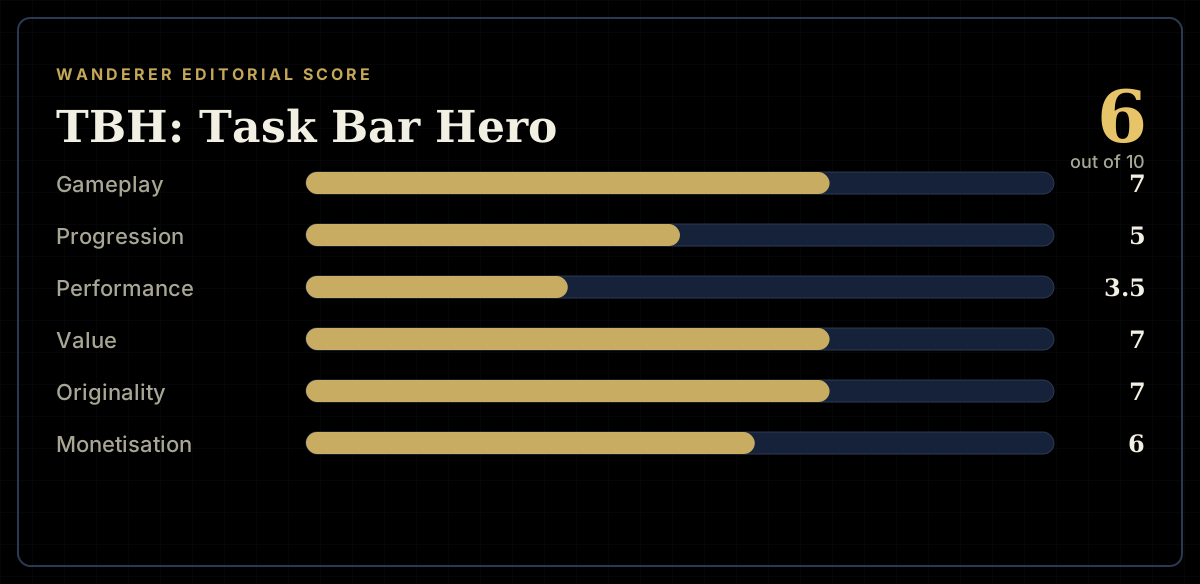
How the review scores each part of the gameWanderer Editorial -
The short versionWanderer Editorial