A visual-novel-first tactical RPG that opens a respected trilogy, where reviewers overwhelmingly praise the emotional storytelling and world-building and just as consistently admit the tactical battles are the least interesting part of the package.
MachineGames' 2014 reboot remains Very Positive across more than 61,000 Steam reviews a decade later, widely credited with successfully reviving a dormant franchise through genuinely strong gunplay and an unexpectedly earnest story — undercut for AMD graphics card owners by a severe, reproducible technical incompatibility this review can confirm has gone unresolved in the developer's own communications for well over a decade.
A GUI-driven text adventure about a priest's disappearance and the son retracing his steps, running two timelines and two protagonists through 78,000 words of prose. Every one of its 23 Steam reviews is positive, and the achievement data backs up what reviewers say about the pacing — most players who start it see it through.
A genuinely beautiful, emotionally resonant narrative exploration game about a pizza delivery rider stuck in a looping, half-real world, undercut by a specific, widely reported mouse- focus bug and a save system that can lose an entire chapter of progress.
A short, gorgeously presented puzzle-adventure built around a genuinely clever core mechanic — shifting entire rows and columns of the world to move yourself — whose puzzles rarely escalate past their opening ideas and whose YA-inflected writing draws consistent criticism even from its own fans.
Ubisoft's feudal Japan entry delivers genuinely beautiful visuals and a widely loved shinobi protagonist, undercut by a real, consistently repeated "formula fatigue" complaint — towers, icons, repetition — a verified gap between Ubisoft's public promise of full offline play and what reviewers report experiencing in practice, and a heavily monetised in-game store layered on top of a full NZ$109.95 purchase.
A Greek-and-Roman-mythology action RPG that plays like Immortals Fenyx Rising crossed with a lighter Dark Souls — strongest in its opening hours, and still missing basic quality-of-life features four years and nine patches later.
Hazelight Studios' prison-break co-op predecessor to It Takes Two and Split Fiction remains Very Positive across more than 102,000 Steam reviews for its inventive, purely two-player design — but this review can confirm a real, still-current complaint It Takes Two eventually resolved: A Way Out's mandatory EA App launcher continues to cause connection failures, crashes and Steam-invite friction in reviews dated as recently as August 2025, with no fix announcement found anywhere in the developer's own Steam communications.
A charming, well-written bed-and-breakfast management game about a bear renovating forest cabins for human guests, whose extremely consistent negative-review complaint — genuine charm wrapped around slow, repetitive, empty gameplay — recurs so often that it reads as the honest consensus rather than a minority view.
A well-loved anime school RPG going through a gacha revolt in real time. Nine of its last hundred English reviews are positive — and the change they're protesting isn't in the version most Steam players are running yet. Reviewed 4 August 2026, mid-storm.
A Chinese-developed xianxia tactics RPG with a genuinely good grid on it, sold at a fair price with 19 chapters already in the box — and a cultivation ladder that turns out to be the thinnest system in the game.
A fully-voiced, deliberately shock-comedy visual novel sequel about a chaotic late-2000s American high school, overwhelmingly beloved by its target audience — and, since September 2024, shadowed by a disputed public controversy over its creator's past conduct that a meaningful minority of reviewers now cite as their reason for stepping back.
A gorgeous voxel-built cyberpunk delivery-driver story that most of its own fans agree is close to a walking (or rather, flying) simulator — Very Positive at 86.2% across 8,209 reviews, propped up almost entirely by atmosphere and writing, with an unusually large and specific negative corpus arguing the actual moment-to-moment gameplay barely exists.
A gorgeous, hand-drawn metroidvania about a paintbrush-wielding artist escaping a decaying inner world built from her declining mental health — whose art, music and premise draw near-universal praise, sitting alongside a majority-of-negative-sample complaint about spongy, repetitive boss fights and platforming precision the movement itself doesn't reliably support.
A Kickstarter-funded, GBA-era Fire Emblem homage that launched buggy and unbalanced in 2021, drew backlash for a bolted-on ad launcher and a swimsuit DLC, and has spent four years of patches earning enough goodwill to justify a 2025 sequel.
Arkane's stylish time-loop shooter won Game of the Year honours from multiple outlets in 2021, but sits Mostly Positive across more than 30,000 Steam reviews — a notably wider gap between critical acclaim and player reception than sibling title Dishonored 2, driven by a real, detailed "undershoots Dishonored and Prey" complaint from longtime Arkane fans, and by a persistent Denuvo DRM and mandatory-online requirement this review can confirm, unlike Dishonored 2's, has not been removed even five years after launch.
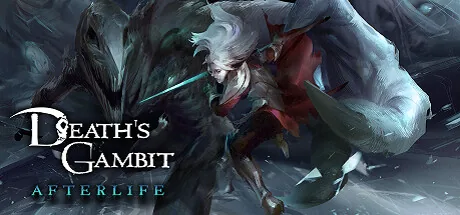
White Rabbit's 2D souls-like metroidvania launched thin and unpolished in 2018, then got a genuinely massive free overhaul three years later -- and while Afterlife fixed a lot, its own recent reviews show real, specific problems (balance spikes, no fast travel until late, a six-year-old unfixed framerate bug) that never fully went away.
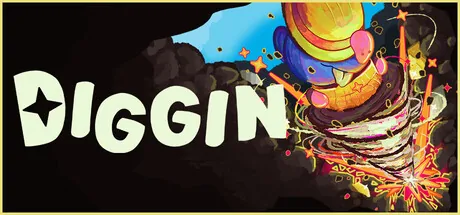
A short, charming incremental about a young mole drilling into a meteor crater — genuinely distinctive for giving its dig-upgrade-repeat loop an actual story, but held back by spiky progression pacing and a back half that plays itself.
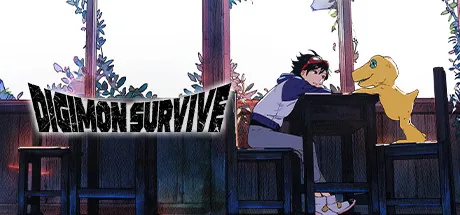
A long-delayed, darker Digimon story that both its fans and its critics agree is a visual novel first and a tactical RPG a distant second -- and whose own trailers, by wide reviewer account, misled buyers about exactly that ratio.
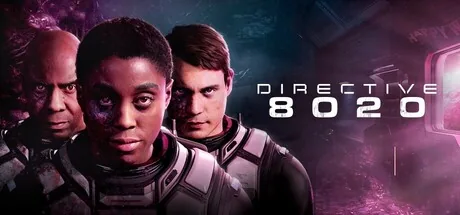
Supermassive set up the best premise they've ever had — a shapeshifting alien aboard a crashed colony ship, where the horror is not trusting the crew — and then spent the second half forgetting to use it.
A gorgeously painted, nostalgic coming-of-age story whose watercolour art draws near-universal praise, undercut by a consistent and specific complaint — echoed even by its fans — that the interactivity underneath is shallow, clunky and short enough that many players never see it through.
A genre-defining, universally beloved CRPG whose Steam version has become genuinely unreliable on modern hardware — three-quarters of this review's negative sample cite crashes, the complaint has worsened every year since 2023 rather than fading, and 16 of 100 negative reviewers independently recommend buying the DRM-free GOG version instead.
BioWare builds its most mechanically confident combat in the series, then spends most of the RPG scaffolding around it — choice continuity, itemization, party structure — to do it, leaving a fun action game wearing a Dragon Age name plenty of longtime fans don't recognise.
A charming, town-building prequel built to bridge Suikoden fans to the crowdfunded Eiyuden Chronicle: Hundred Heroes -- loved for its characters and world, but honest with itself about being, structurally, a fetch-quest and material-farming loop dressed up as an action RPG.