
Game review
Celestial Descends
6.5 / 10
- Developer
- Destined Game Studio
- Publisher
- Destined Game Studio
- Released
- 22 July 2026
- Platforms
- Windows
- Genre
- Tactical RPG
- Monetisation
- Premium, one-off purchase. No in-game currency, no DLC, no season pass
- Players
- Single-player
The short version
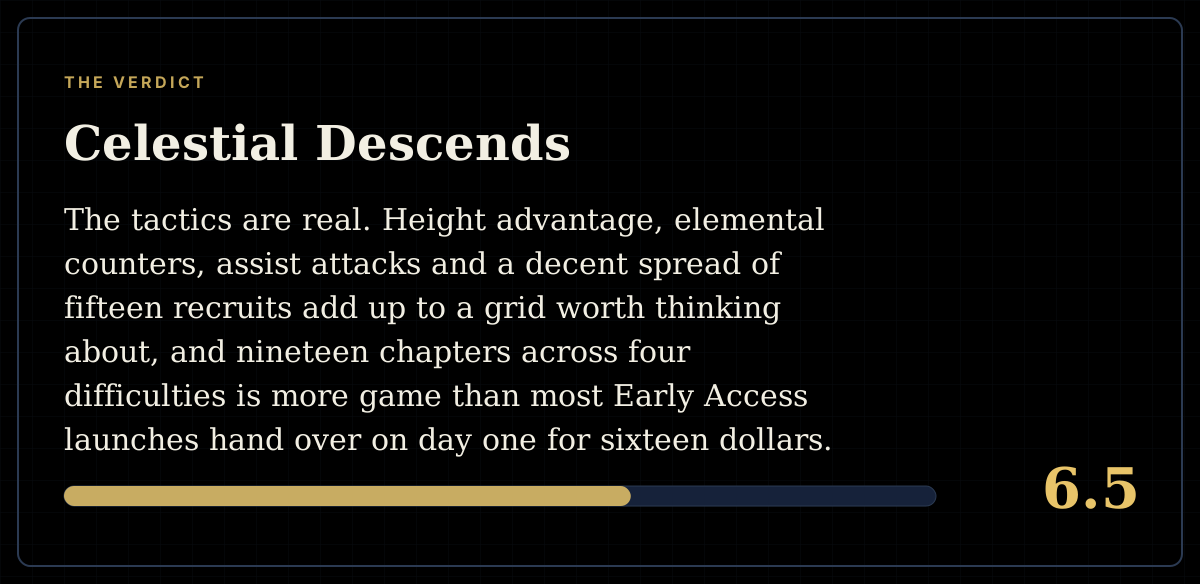
The tactics are real. Height advantage, elemental counters, assist attacks and a decent spread of fifteen recruits add up to a grid worth thinking about, and nineteen chapters across four difficulties is more game than most Early Access launches hand over on day one for sixteen dollars.
What it hasn't got is a growth curve. Characters can't change their kit, experience is pinned to each chapter's level ceiling, and the realm breakthroughs the setting promises land as small stat bumps at fixed levels. For a game whose entire fantasy is climbing, that is a strange thing to get wrong.
Biggest strengths
- Terrain height, elemental counters and assist attacks make positioning matter from the first fight
- Nineteen chapters and 30-plus hours of content at launch, with four difficulties up to Hardcore
- Fifteen recruitable companions, each with a distinct role rather than a reskinned stat block
Biggest weaknesses
- Skills don't show damage multipliers and the attack preview isn't numeric, so planning turns is guesswork
- Characters can't retrain or reassign abilities, and per-chapter experience caps remove almost all progression choice
- Spirit-pet feeding and world-boss respawns run on real-world timers in a single-player game
Who it's for: Tactics players who want a Chinese fantasy setting and don't mind that the character sheet is mostly decided for them.
Our recommendation: Play the demo first — it covers the opening chapters and will tell you inside an hour whether the combat is enough on its own. Buyers who need visible build-crafting should wait for the progression rework the studio has promised.
6.5 / 10
Xianxia is a genre about becoming stronger on purpose. The whole literary tradition runs on thresholds — you grind, you break through, you look back at the version of yourself who couldn't survive a fight you now win in a turn. It is, on paper, the most natural fit imaginable for an RPG progression system, which is why it keeps getting adapted.
Celestial Descends adapts the tactics half brilliantly and the cultivation half barely at all. Its battle grid is sharp, readable and full of decisions. Its character growth is a series of ceilings you bump into on a schedule. Fifteen dollars buys a good tactics game wearing a robe it hasn't grown into.
The grid does its job
Destined Game Studio has built the fights around three ideas that reinforce each other, and all three are working already.
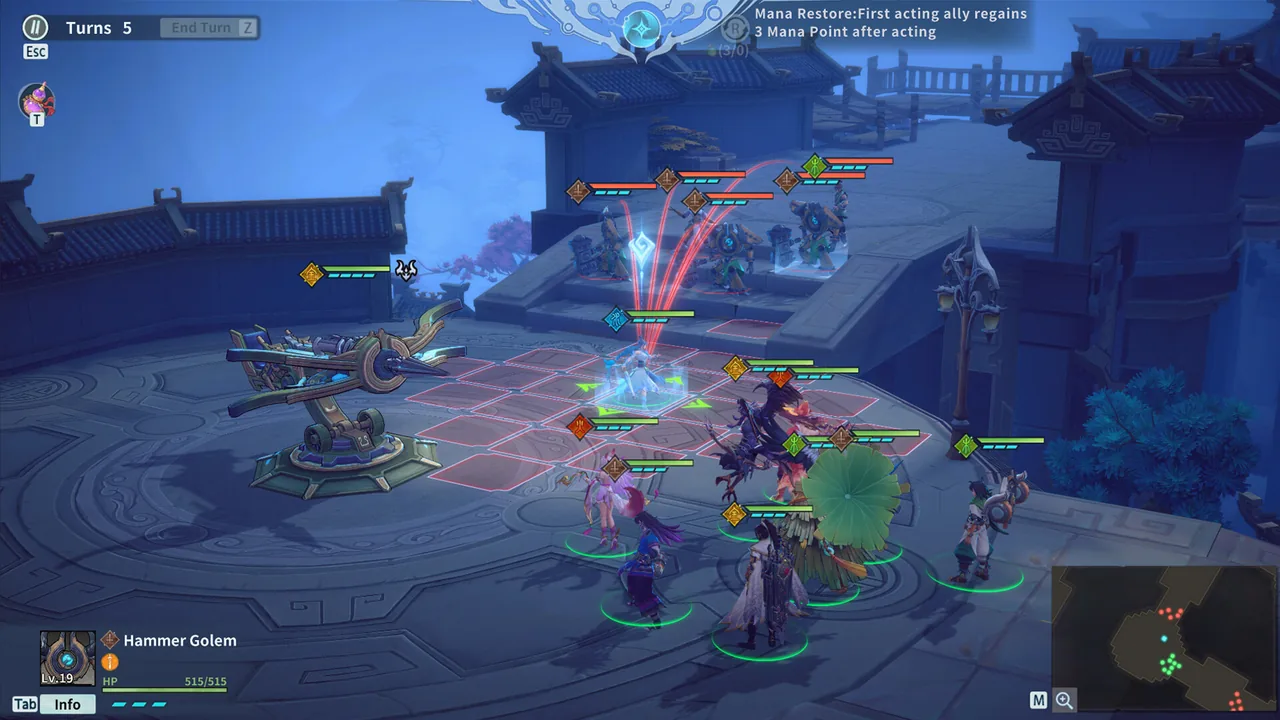
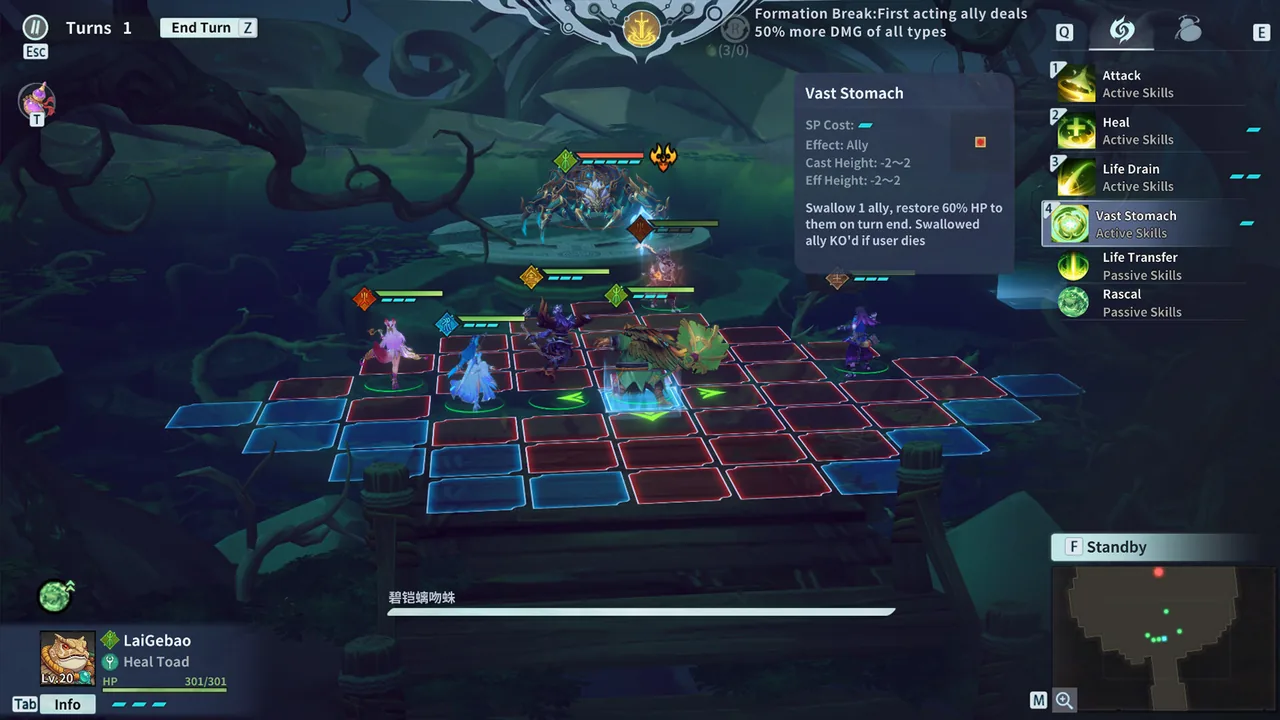
Elevation matters: attacking downhill hits harder, so the map's raised ground is a resource two sides are competing for rather than scenery. A five-element counter system sits underneath the damage maths, which means the correct answer to an enemy line-up changes rather than defaulting to "send the highest attack stat". And characters trigger assist attacks off each other's positioning, so the party has an internal geometry — where you stand relative to your own team is a second puzzle running alongside where you stand relative to theirs.
None of that is new to the genre. Fire Emblem has been doing weapon triangles and terrain since the Super Famicom. What matters is that Celestial Descends implements them with enough weight that you can lose a Hard-difficulty map by getting the shape of a turn wrong. Fifteen recruitable companions across the usual frontline, archer, mage, healer and support roles give you a genuine roster to draft from, and the recurring criticism from tactics veterans isn't that the combat is shallow. It's that it's the same depth in chapter nineteen as it was in chapter three.
Four difficulty settings — Easy, Hard, Nightmare and Hardcore — cover a wide range, and the studio has already had to walk back a Hardcore boss health increase after players pushed back. That is a healthy sign about responsiveness and an unhealthy sign about what "harder" currently means here, because the lever being pulled is hit points.
Where the cultivation went
Here's the problem that keeps this out of the sevens.
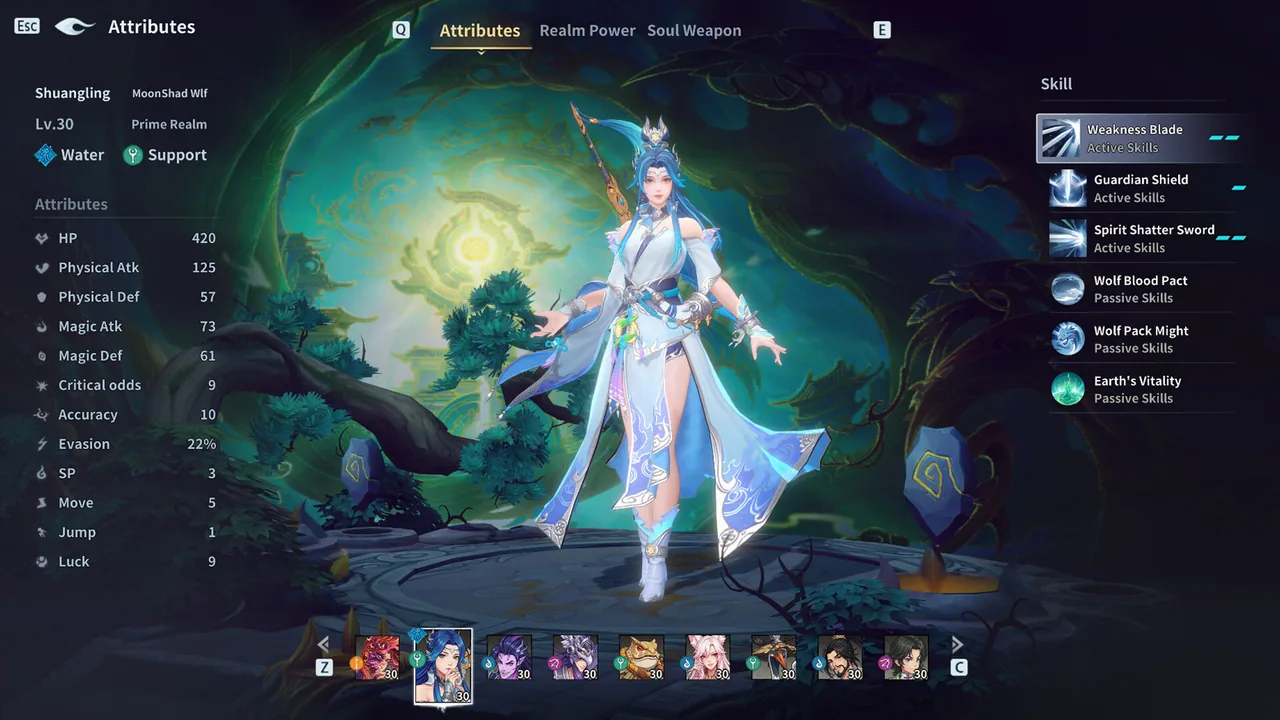
Each character has a talent web and a realm track. Realm advancement unlocks at fixed character levels — level 20 and level 30 — and grants percentage bonuses to attack and damage. That is the whole breakthrough. There is no moment where a discipline you invested in changes what a character can do, no branch where two players end up with meaningfully different versions of the same recruit. Abilities are fixed from recruitment and there's no class-change system, so the "build" you're crafting is a set of numeric modifiers on a kit somebody else decided.
Experience makes it worse. Each chapter has a level ceiling, and once your party sits above the stage's monsters the experience yield decays to a floor — a mechanic the studio patched in openly on 26 July to stop over-levelling. Read that as design intent rather than a bug fix: the game does not want you grinding out of its difficulty curve. Plenty of good tactics games control power that way. But combined with locked abilities, it means the answer to "what did I get for the last three hours" is almost always "the numbers the schedule said I would have by now".
The talent screen itself is oversized and needs panning to read, and a chunk of its nodes are universal must-picks like movement range that every character takes and nobody agonises over. A talent tree where the correct path is obvious is a menu with extra clicks.
There is a real cultivation ladder buried in the crafting instead. Refining artifacts, potions and charms produces variable results, runestones socket into each character's innate weapon, and spirit pets pair with party members for combinations that aren't obvious in advance. Those systems have the texture the realm track doesn't. If the studio's promised "more comprehensive progression system" for 1.0 means moving power decisions out of the level schedule and into the forge, this game gets considerably better. Today it hasn't happened.
Numbers you're not allowed to see
Skills describe what they do in prose and don't show their multipliers. The attack preview tells you roughly what will happen without committing to a figure, which produces the specific misery of lining up what looks like a kill and leaving the target on a sliver. Buffs and debuffs are inconsistently signposted, and there's no way to display every enemy's threat range at once — you right-click them individually and hold the picture in your head.
For a genre built on precise arithmetic, that's the most damaging omission in the game. A tactics title asks you to make a commitment you can't take back; hiding the inputs turns deliberate play into estimation. It also interacts badly with the other missing feature — there's no mid-battle save and no rewind, on maps that can run past thirty minutes on the higher difficulties. Losing a long fight to a number you were never shown is not the kind of difficulty anyone signed up for.
Sprawling maps compound it. Several stages put the boss encounter three or four movement turns away from the last cleared pocket of enemies, and every mission ends the same way, by killing everything on the board. Defend-the-point, escort, seize-the-tower — the game has one map that experiments with splitting the party into groups, and the difference is immediately noticeable.
Habits from another kind of game
Destined Game Studio's back catalogue includes an MMORPG and a collection RPG built around daily free rewards, and you can feel that lineage in two places where it doesn't belong.
Spirit pets are raised by feeding them, three feeds at a time, then waiting out a real-world cooldown of around half an hour before the next batch. Open-world bosses respawn on roughly hourly timers. In a live-service game those are retention mechanics with a purpose. In a single-player premium tactics RPG they're a clock telling a paying customer to go away, and they've drawn some of the sharpest criticism the game has taken from its own audience. It's an easy fix — tie pet growth to combat participation and let bosses respawn on progress rather than the system clock — and it would remove the loudest complaint in the store page's negative reviews at a stroke.
English, and who's actually playing this
Six languages ship at launch: Simplified and Traditional Chinese, English, Japanese, Korean and Spanish, with full voice-over in English as well as Chinese. That's an unusually generous spread for a small independent studio, and the English text is serviceable rather than embarrassing — readable skill and story writing, occasional stiffness, nothing that obscures what a mechanic does. The studio has named localisation as one of the things it wants Early Access feedback on.
The engineering around the localisation is rougher than the translation. A launch-week bug left characters with oversized models and stuck cutscenes under some non-Chinese system locales, patched on 27 July, and players have found that number formatting outside the US convention can cause problems — the sort of decimal-separator assumption that catches European and Latin American players first.
Worth knowing before you buy: the Very Positive rating on the store page is overwhelmingly a domestic verdict. Of the 135 reviews posted by 29 July, roughly 125 are in Simplified Chinese and three are in English. That score is real, but it's a score from an audience with a lifetime of context for this setting and different expectations of what a sixteen-dollar tactics game owes them. Weight it accordingly.
What sixteen dollars gets you today
Nineteen chapters, four difficulties, 30-plus hours, fifteen companions, an open world map unlocked partway through the story, world bosses, crafting, fishing, and a genuinely odd side activity involving cultivating a golden-cicada tree. What it doesn't get you is the ending — the build covers about 70% of the main story, and the late-game regions and advanced techniques are still being written. The studio expects roughly a year in Early Access and has said it will raise the price as content lands.
The support so far is the most encouraging thing about the project. Seven named patches went out in the first eight days, fixing individual talent configurations, damage-type mislabels, audio levels and a fish-count display, with credit given to the players who reported them.
The score
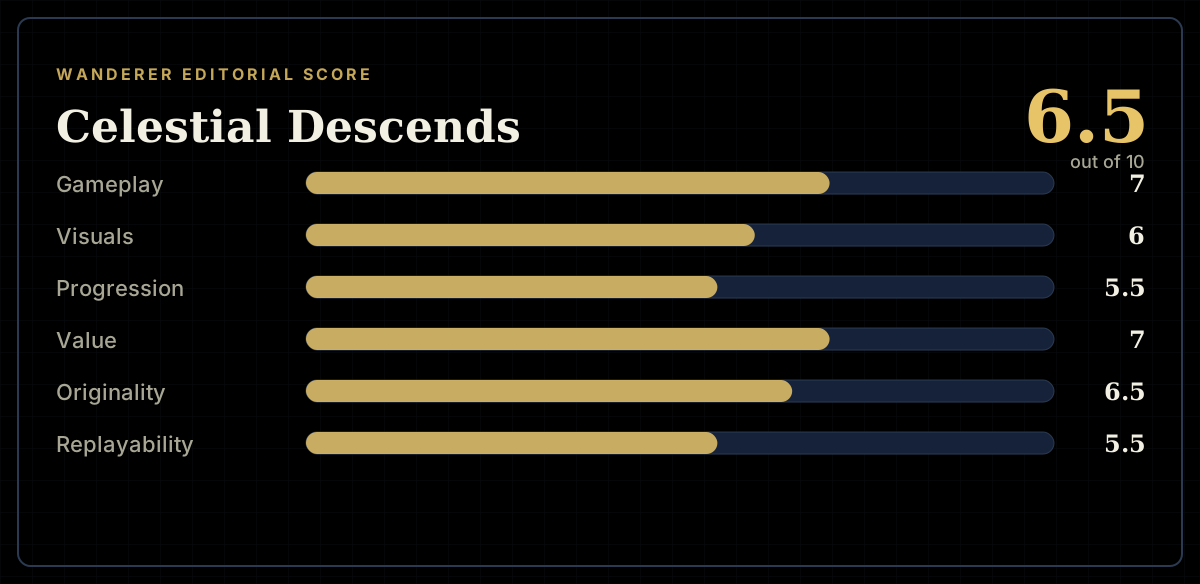
Celestial Descends is a 6.5 because the part it built well is only half of what it promised. As a tactics game it's competent and occasionally clever, priced honestly, free of any monetisation beyond the purchase, and backed by a developer who is visibly working. As a cultivation RPG it doesn't deliver the one sensation the genre exists for, and the missing numbers, the fixed abilities, the schedule-bound levelling and the mobile-style timers are all decisions rather than incomplete work.
Buy it if a good grid is enough on its own and the setting is a bonus. Skip it for now if you came for the ladder — the demo covers the opening chapters and will tell you which of those you are inside an hour. There's a real game here that a year of Early Access could turn into a very good one, and the changes it needs are the kind studios do make when the feedback is this consistent.
Pricing, storefront ratings and version details checked 29 July 2026 against the Early Access build (V0.0.7).
For another Early Access RPG in the middle of the same argument about what a buyer is owed on day one, see our Titan Quest II review; for turn-based combat with the progression depth this one is missing, Octopath Traveler 0. And if you want progression that keeps climbing while you're not at the keyboard, Wanderer is built around exactly that.
Pros and cons
Pros
- Terrain height, elemental counters and assist attacks make positioning matter from the first fight
- Nineteen chapters and 30-plus hours of content at launch, with four difficulties up to Hardcore
- Fifteen recruitable companions, each with a distinct role rather than a reskinned stat block
- Full controller support and a build that runs on a GTX 1060, with players reporting it works well on Steam Deck
- The studio is shipping named bug-fix patches almost daily and quoting reporters in the notes
Cons
- Skills don't show damage multipliers and the attack preview isn't numeric, so planning turns is guesswork
- Characters can't retrain or reassign abilities, and per-chapter experience caps remove almost all progression choice
- Spirit-pet feeding and world-boss respawns run on real-world timers in a single-player game
- No mid-battle save or rewind, in a game where a Hardcore boss map can run past half an hour
- Every mission is won the same way — kill everything — and late bosses lean on summon spam to pad it out
- The final act of the story isn't in the build; you are buying about 70% of it
Screenshots
-
Celestial DescendsImage: Destined Game Studio via Steam -
Celestial DescendsImage: Destined Game Studio via Steam -
Celestial DescendsImage: Destined Game Studio via Steam -
How the review scores each part of the gameWanderer Editorial -
The short versionWanderer Editorial