
Game review
Arranger: A Role-Puzzling Adventure
6.5 / 10
- Developer
- Furniture & Mattress LLC
- Publisher
- Furniture & Mattress LLC
- Released
- 25 July 2024
- Platforms
- Windows
- Genre
- Puzzle, Adventure, RPG
- Monetisation
- One-time purchase, no in-game store
- Players
- Single-player only
The short version
Arranger: A Role-Puzzling Adventure builds its entire puzzle system around one striking idea: moving your character shifts the whole row or column of the world along with you, turning ordinary overworld traversal into the puzzle itself rather than a wrapper around it. Developed and self-published by Furniture & Mattress LLC, it released on 25 July 2024. Its 299 English-language Steam reviews sit at Very Positive, roughly 93.3%, and this review reads every one of the game's 20 available negative reviews alongside the top 100 positives to find a strikingly consistent shape: reviewers on both sides love the concept and the presentation, and a meaningful, specific minority feel the puzzles never grow past their own tutorial ideas, while the writing draws criticism that shows up even inside otherwise glowing reviews.
Biggest strengths
- The row-and-column shifting mechanic draws wide, specific praise as a genuinely novel puzzle idea, executed without excessive gimmickry according to multiple detailed reviews
- Art direction, character design and music earn consistent, strong praise across nearly the entire sample, including from reviewers who otherwise recommend against buying
- The core loop is credited as fast and reactive to play, giving puzzle-solving a satisfying tactile feel some reviewers compare favourably to action games
Biggest weaknesses
- The most consistent complaint across the negative sample is that puzzles introduce interesting mechanical ideas and then largely abandon them after what feels like a tutorial stretch, rather than escalating them into genuinely difficult challenges
- The writing draws pointed criticism for being heavy-handed and moralising, with even several strongly positive reviews independently describing it as "painfully YA fiction" or worse
- At roughly 6 to 10 hours to complete, several reviewers argue the length doesn't justify the asking price, particularly compared to other puzzle games in the same range
Who it's for: Puzzle-adventure fans who want a genuinely original grid mechanic wrapped in charming presentation, and who don't mind a light, short experience over a demanding one; a poor fit for hardened Sokoban veterans looking for real difficulty or anyone sensitive to earnest, message-heavy YA-style writing.
Our recommendation: A short, beautifully made puzzle game whose central idea is genuinely clever, best approached for its concept and craft rather than for puzzle difficulty or narrative depth.
6.5 / 10
Introduction
Arranger's puzzle hook is disarmingly simple to describe and genuinely unusual to play: moving your character shifts an entire row or column of the world along with you, so navigating a room and solving its puzzle are the same action rather than separate systems. Furniture & Mattress LLC developed and self-published it, releasing on 25 July 2024. Reading every one of the game's 20 available English-language negative reviews alongside the top 100 positives, out of a Very Positive corpus (roughly 93.3% across 299 reviews), turns up a review base that agrees almost entirely on what the game is good at, and splits over how far it takes that idea.
A genuinely original core mechanic
Reviewers reach for real praise when describing the central conceit. One detailed review called the "arrangement" mechanic "taken to such perfect lengths, without excessive gimmickry or abstraction," and another specifically credited it with giving puzzle-solving a tactile, action-game-like satisfaction rather than feeling purely cerebral. Art direction, character design and the soundtrack draw consistently strong praise across nearly the whole sample — striking even inside several of the negative reviews, where reviewers who otherwise recommend against buying still stop to call the presentation "insanely charming" or "beautifully painted." The free demo is repeatedly singled out as an honest representation of the full game, with more than one reviewer explicitly telling prospective buyers to use it as the decision point.
Puzzles that don't escalate
The most consistent complaint in the negative sample, and the reason this review lands short of a higher score, is that Arranger's puzzles rarely grow beyond the ideas they open with. One detailed review put it precisely: the shifting mechanic "seemed interesting and relatively novel," but areas tend to end "as soon as the puzzles get a bit challenging," leaving what feels like an extended tutorial rather than an escalating challenge curve. Another reviewer, self-described as a lover of grid-based puzzle games, said almost every promising mechanical idea gets abandoned after what amounts to a small set of introductory puzzles using it. This isn't a majority complaint — most reviewers who finished the game recommend it — but it's specific, detailed and repeated enough across independent critics to read as a real design choice rather than a difficulty mismatch. Steam's achievement data offers a supporting data point: 16.5% of tracked players have earned the 100% completion achievement, an unusually high full-completion rate for this library, consistent with a game whose puzzles don't gatekeep progress behind serious difficulty.
Writing that undercuts its own charm
A second, more surprising thread of criticism concerns the story, and it shows up on both sides of the recommendation split rather than being confined to the negative sample. One negative reviewer went so far as to write that they "could eat alphabet soup and crap better writing," and a positive reviewer, recommending the game overall, independently warned that the story is "painfully YA fiction," summarising its beats — a chosen one, a sacred mission, an instant soulmate — with open exasperation. That kind of criticism appearing inside a thumbs-up review, unprompted, is a stronger signal than the same complaint appearing only in negatives: it suggests the writing is a real, broadly-felt weak point that simply doesn't outweigh the puzzle design and presentation for most players, rather than one that goes unnoticed.
Final Verdict
Arranger is a genuinely inventive puzzle game built on an idea this review's sample rarely disputes is clever, wrapped in art and music that earn their praise from critics and fans alike. Where it falls short of a stronger score is in following through on its own best idea — puzzles that introduce a fresh wrinkle and then move on before testing it seriously — and in writing that a notable share of even its supporters find hard to defend. At roughly six to ten hours for its asking price, it's best approached as a short, well-crafted mechanical showcase rather than a lengthy or narratively ambitious adventure, and the free demo is a genuinely reliable way to know in advance which side of that trade-off you'll land on.
Pros and cons
Pros
- The row-and-column shifting mechanic draws wide, specific praise as a genuinely novel puzzle idea, executed without excessive gimmickry according to multiple detailed reviews
- Art direction, character design and music earn consistent, strong praise across nearly the entire sample, including from reviewers who otherwise recommend against buying
- The core loop is credited as fast and reactive to play, giving puzzle-solving a satisfying tactile feel some reviewers compare favourably to action games
- A free demo exists and multiple reviewers explicitly recommend trying it first, since it accurately represents the full game's puzzle design and pacing
Cons
- The most consistent complaint across the negative sample is that puzzles introduce interesting mechanical ideas and then largely abandon them after what feels like a tutorial stretch, rather than escalating them into genuinely difficult challenges
- The writing draws pointed criticism for being heavy-handed and moralising, with even several strongly positive reviews independently describing it as "painfully YA fiction" or worse
- At roughly 6 to 10 hours to complete, several reviewers argue the length doesn't justify the asking price, particularly compared to other puzzle games in the same range
- Quality-of-life gaps recur across the sample, including no in-game map, no dedicated undo button for puzzle mistakes, and a "point of no return" some reviewers say arrives without clear warning about incomplete optional content
Screenshots
-
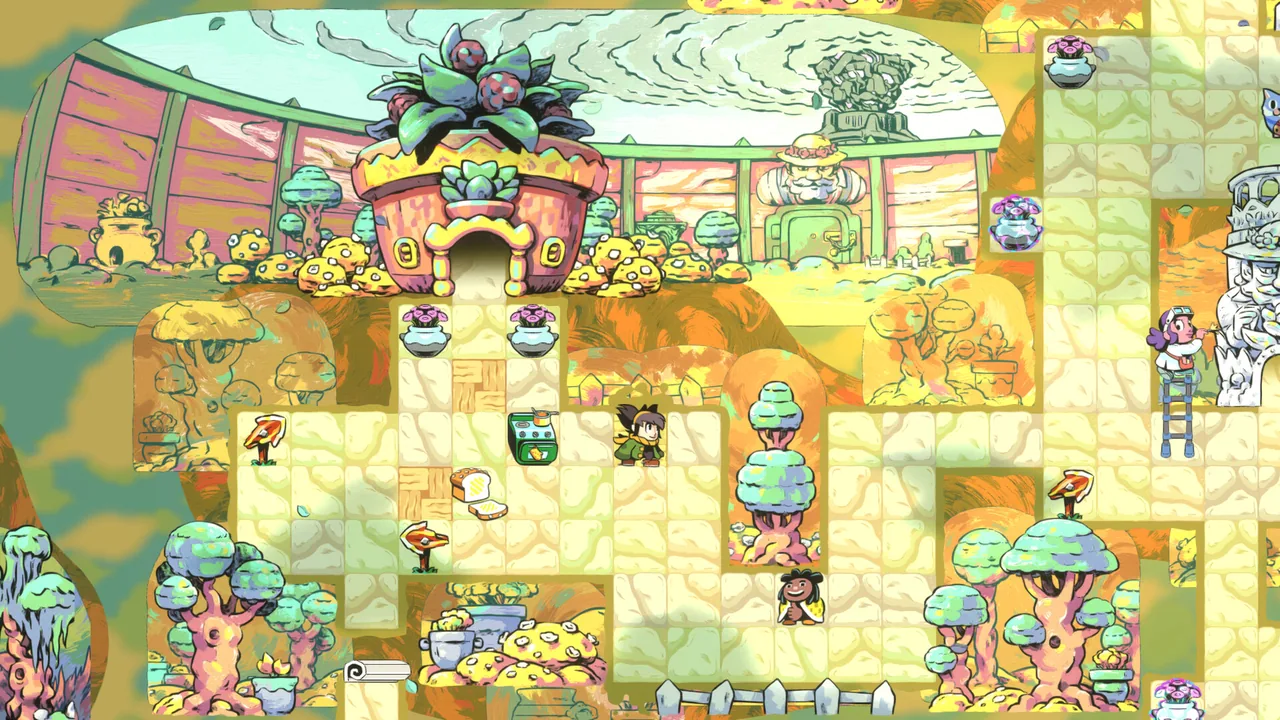
Arranger: A Role-Puzzling AdventureImage: Furniture & Mattress LLC via Steam -
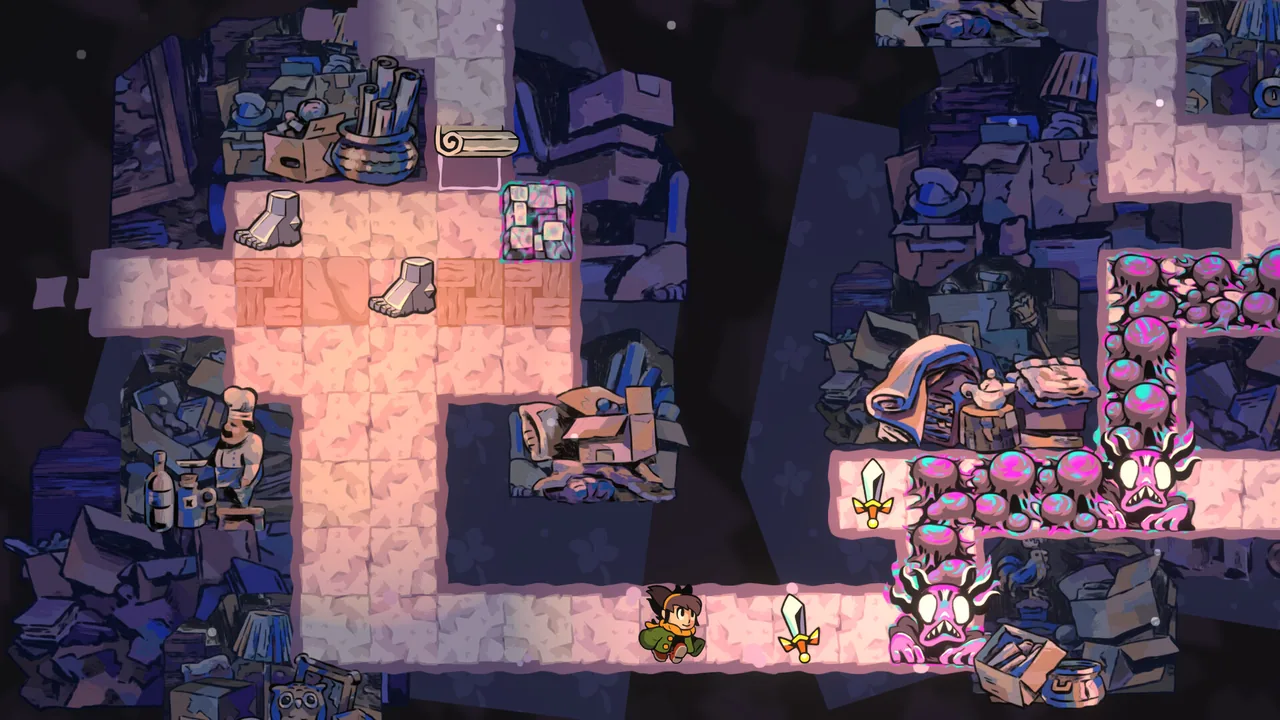
Arranger: A Role-Puzzling AdventureImage: Furniture & Mattress LLC via Steam -

Arranger: A Role-Puzzling AdventureImage: Furniture & Mattress LLC via Steam -
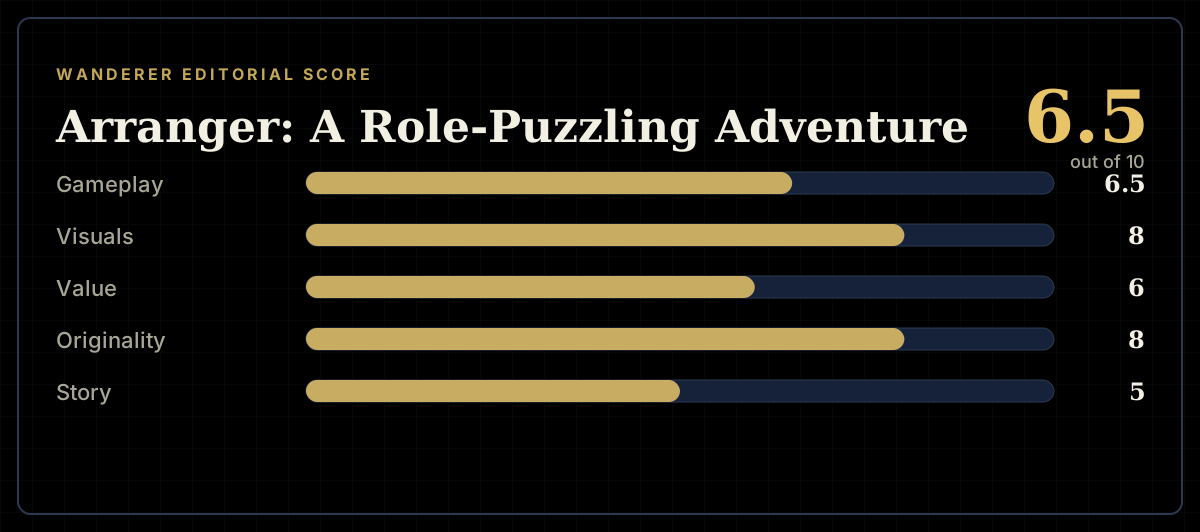
How the review scores each part of the gameWanderer Editorial -
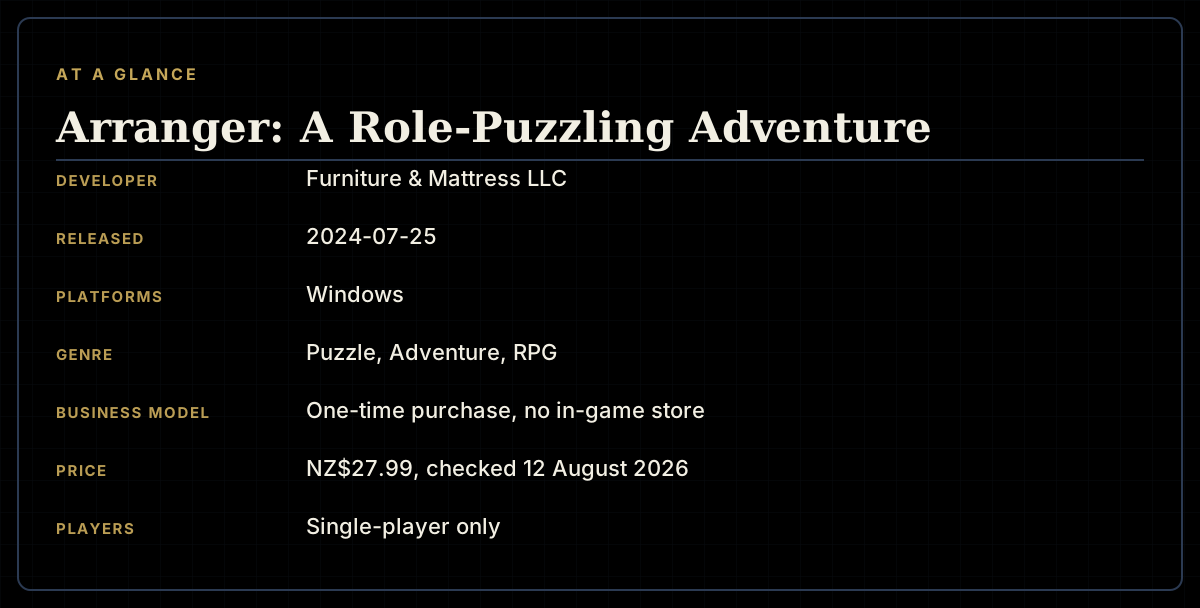
The essentials at a glanceWanderer Editorial -
The short versionWanderer Editorial