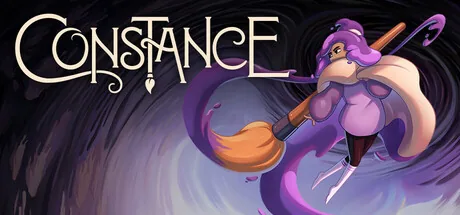
Game review
Constance
6.5 / 10
- Developer
- Blue Backpack
- Publisher
- Blue Backpack, ByteRockers' Games, PARCO GAMES
- Released
- 24 November 2025
- Platforms
- Windows
- Genre
- Metroidvania
- Monetisation
- One-time purchase, no in-game store
- Players
- Single-player only
The short version
Constance is a hand-drawn metroidvania from Blue Backpack, following a paintbrush-wielding artist escaping a colourful but decaying inner world shaped by her declining mental health. Released 24 November 2025, it holds a Very Positive rating — 85.5% across 1,225 English-language reviews, 82.9% across its wider 2,892-review all-language corpus. This review reads the 100 most-relevant English negative reviews and finds a corpus that agrees almost entirely with the game's fans on presentation while raising a specific, majority-of-sample complaint about execution: 57 of the 100 raise repetitive or "spongy" boss combat, and 47 raise clunky or imprecise platforming, often citing the same specific late-game area — a carnival sequence — as the point where movement precision demands outstrip what the controls reliably deliver. A further 36 of the 100 describe the roughly five-to-eight-hour runtime as thin for its NZ$36.50 price, several noting the game arrived in the shadow of Hollow Knight: Silksong and explicitly asking readers not to compare the two directly given the difference in scope.
Biggest strengths
- Hand-drawn art direction draws near-universal, specific praise as some of the strongest visual work in the genre this year, with colour and animation credited even by the game's harshest critics
- The mental-health-themed narrative earns genuine, thoughtful appreciation from a meaningful share of reviewers, several describing the story as emotionally resonant rather than merely decorative window dressing
- Several reviewers specifically credit the game's risk-management death system — allowing players to prevent a death and continue with a temporary penalty rather than a hard reset — as a genuinely player-friendly design choice
Biggest weaknesses
- Boss and general combat design is this review's most-repeated complaint by a wide margin — 57 of the 100 negative reviews describe fights as repetitive, "spongy," or built around fixed-sequence trial-and-error patterns rather than genuine tactical engagement
- Platforming precision is a close second complaint, raised in 47 of the 100 negatives, with reviewers repeatedly naming a specific late-game carnival sequence as the point where the game demands more precision than its movement mechanics reliably deliver
- Thirty-six of the 100 negatives describe the roughly five-to-eight-hour campaign as short relative to its NZ$36.50 price, several directly comparing it unfavourably on a value basis to longer genre peers
Who it's for: Fans of shorter, art-forward metroidvanias (Islets, Guacamelee) looking for a beautiful, emotionally resonant few hours; a tougher sell for players specifically wanting tight, demanding combat or a long exploration-heavy campaign.
Our recommendation: A genuinely gorgeous, heartfelt small metroidvania whose story and presentation outpace its combat and platforming execution — worth it for the art and atmosphere alone, but temper expectations for the moment-to-moment gameplay specifically.
6.5 / 10
Introduction
Constance follows a paintbrush-wielding artist navigating a colourful, decaying inner world built from her own declining mental health, using paint-transformation abilities to dive through walls, slice through enemies and traverse a hand-drawn 2D landscape. Developed by Blue Backpack, it released 24 November 2025 and holds a Very Positive rating since — 85.5% across 1,225 English-language Steam reviews, 82.9% across its wider 2,892-review all-language corpus. This review reads the 100 most-relevant English negative reviews and finds a corpus with a striking, consistent shape: near-total agreement with the game's fans on what it looks and sounds like, paired with a specific, majority-weight argument about how it plays.
Presentation that draws almost no dissent
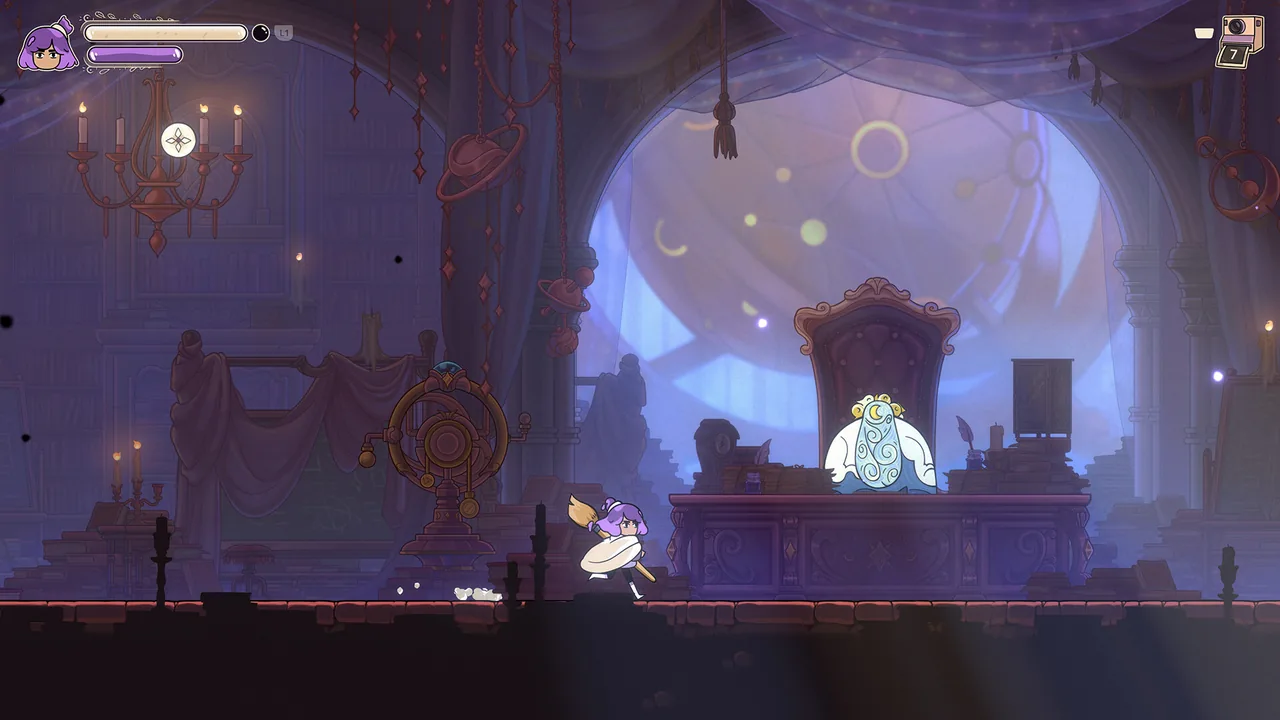
Before the criticism, it's worth stating how strong the agreement is on Constance's craft. Hand-drawn art direction earns near-universal praise across this review's entire sample — colour, animation and world design are credited even inside reviews marked not recommended. "Constance is a gorgeous game and a comforting experience," reads one 80-vote review, going on to specifically praise a player-friendly death system that lets players prevent a fatal blow and continue with a temporary penalty rather than a hard reset. The mental-health-themed narrative earns its own genuine, thoughtful appreciation from a real share of reviewers, several describing it as emotionally resonant rather than mere decoration. And the core movement, at its best, draws real enthusiasm — the "grapple dash" specifically singled out as feeling excellent when level design supports it.
Where the majority of criticism actually lives
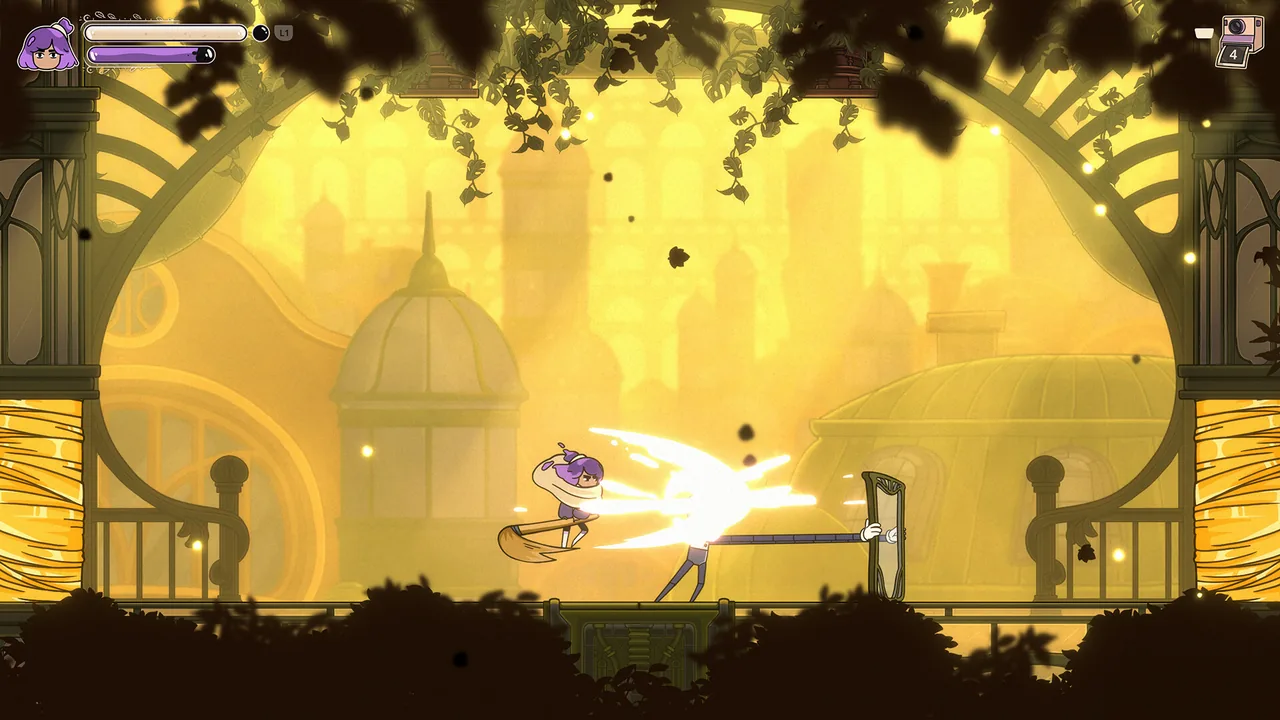
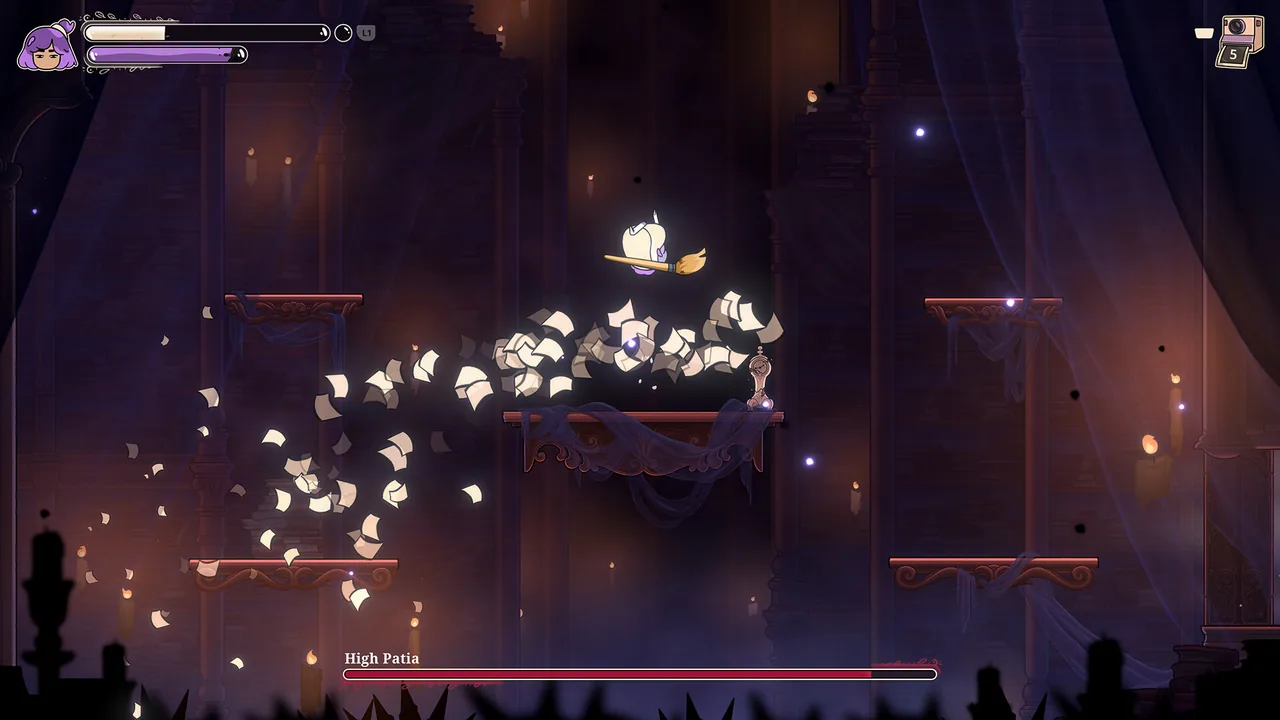
Read the negative sample in bulk and two specific, closely related complaints dominate by a wide margin. Fifty-seven of the 100 negative reviews raise boss or general combat design directly, describing fights as repetitive or "spongy" — enemies that absorb damage without offering proportionate tactical depth, often structured around fixed-sequence patterns several reviewers call trial-and-error rather than genuine skill expression. "Most boss combat in this game put you through a fixed-sequence 'fight' where it feels like a repetitive trial-an[d error]," reads one representative review. Forty-seven of the 100 raise platforming precision as a distinct but related problem, and the specificity here is worth noting: multiple independent reviewers name the same late-game area — a carnival sequence — as the exact point where the game's demands for precise timing outstrip what its movement mechanics reliably deliver. "A game with movement this clunky has no business demanding such precise platforming," reads one, and another calls it "one of the worst forced scrolling platforming sections I've ever played." That two separate, large complaint clusters converge on the same specific level is a stronger signal than either complaint would be alone.
A value question sharpened by timing
Thirty-six of the 100 negative reviews describe the roughly five-to-eight-hour campaign as short relative to its NZ$36.50 asking price, several drawing direct value comparisons to longer genre peers. That complaint arrives with unusual context: Constance launched into a period where Hollow Knight: Silksong — an enormously scoped, critically garlanded metroidvania — was fresh in players' minds, and several reviewers, both positive and negative, explicitly address the comparison rather than let it go unstated. "Don't compare it to Silksong, another great game. This stands on its own," reads one positive review, while another frames the two side by side deliberately: "It's a bit like if Silksong or Biomorph had 6 biomes and under 10 hours of content... it feels like it ought to be 5x bigger than it is." That's a fair, specific framing worth passing on directly — Constance was never positioned as a Silksong-scale epic, but its price sits closer to that tier than its runtime does.
Is it really a metroidvania?
A smaller but specific structural critique, raised across a real cluster of this review's sample, questions the genre label itself: several reviewers argue the world isn't designed to meaningfully reward returning to earlier areas with newly unlocked abilities, a foundational convention of the genre Constance is marketed under. "This is not a metroidvania game," reads one particularly direct 10-vote review, arguing the connected-world structure functions more like a straightforward platformer-with-combat than genre-defining exploration design.
Final Verdict
Constance is a genuinely beautiful, emotionally sincere small metroidvania whose art direction and narrative ambition draw praise from nearly its entire review base, critics included. Where this review's close read of the negative sample finds real, well-documented substance is specifically in execution: boss and combat design that a majority of its negative reviewers call repetitive and under-tuned, platforming precision that converges on the same specific problem area across independent accounts, and a runtime that a meaningful share of buyers feel doesn't match its price — compounded by timing that invited an unflattering, if not entirely fair, comparison to a much larger game. None of that undoes what Constance clearly gets right, but a reader specifically weighing whether to buy at full price should know the gap between its presentation and its play is real and consistently documented, not a matter of a few outlier complaints.
Pros and cons
Pros
- Hand-drawn art direction draws near-universal, specific praise as some of the strongest visual work in the genre this year, with colour and animation credited even by the game's harshest critics
- The mental-health-themed narrative earns genuine, thoughtful appreciation from a meaningful share of reviewers, several describing the story as emotionally resonant rather than merely decorative window dressing
- Several reviewers specifically credit the game's risk-management death system — allowing players to prevent a death and continue with a temporary penalty rather than a hard reset — as a genuinely player-friendly design choice
- Movement mechanics at their best draw real enthusiasm, with the "grapple dash" specifically singled out as feeling excellent when the surrounding level design supports it
Cons
- Boss and general combat design is this review's most-repeated complaint by a wide margin — 57 of the 100 negative reviews describe fights as repetitive, "spongy," or built around fixed-sequence trial-and-error patterns rather than genuine tactical engagement
- Platforming precision is a close second complaint, raised in 47 of the 100 negatives, with reviewers repeatedly naming a specific late-game carnival sequence as the point where the game demands more precision than its movement mechanics reliably deliver
- Thirty-six of the 100 negatives describe the roughly five-to-eight-hour campaign as short relative to its NZ$36.50 price, several directly comparing it unfavourably on a value basis to longer genre peers
- A structural critique, raised in a smaller but specific cluster of reviews, argues the game doesn't function as a true metroidvania — world design doesn't meaningfully reward returning to earlier areas with new abilities, a genre convention several reviewers say is largely absent
Screenshots
-
ConstanceImage: Blue Backpack via Steam -
ConstanceImage: Blue Backpack via Steam -
ConstanceImage: Blue Backpack via Steam -
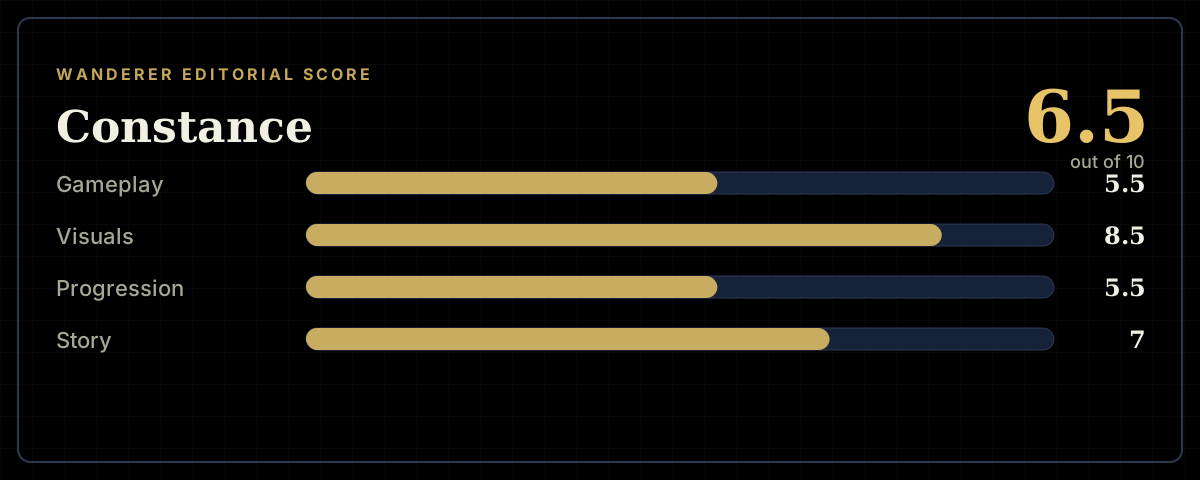
How the review scores each part of the gameWanderer Editorial -
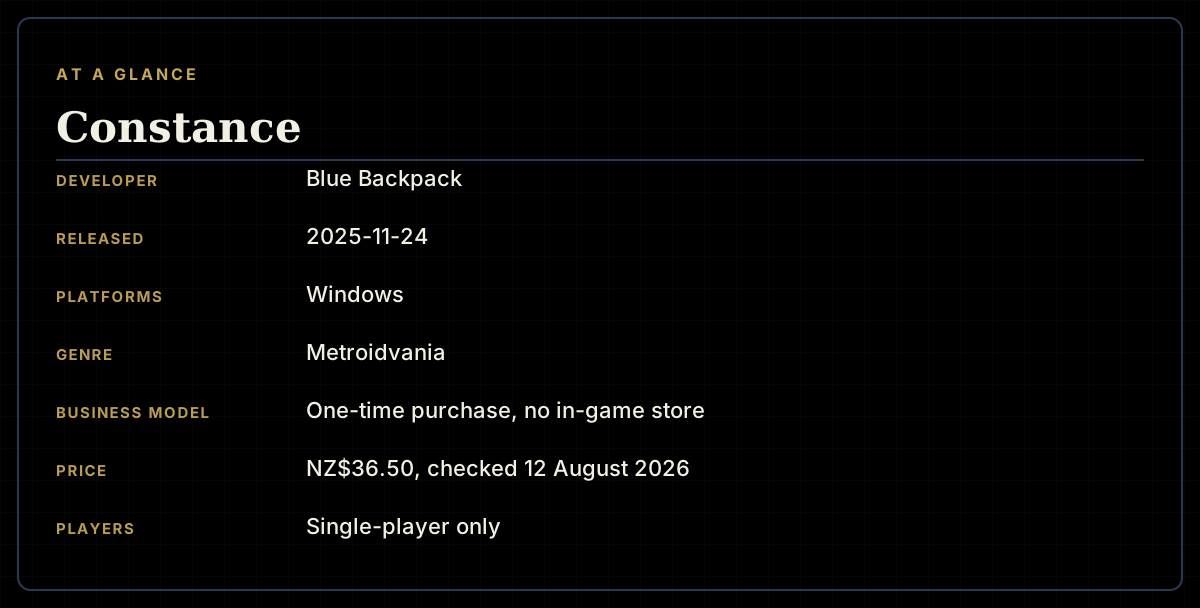
The essentials at a glanceWanderer Editorial -
The short versionWanderer Editorial