Game review
Crystal Project
7.5 / 10
- Developer
- Andrew Willman
- Publisher
- Andrew Willman
- Released
- 31 March 2022
- Platforms
- Windows, macOS, Linux
- Genre
- JRPG
- Monetisation
- One-time purchase at NZ$17.59. No in-app purchases.
- Players
- Single-player only
The short version
Crystal Project is a non-linear job-system JRPG built by one developer, Andrew Willman, for a very specific audience: players who miss the era of Final Fantasy V and Bravely Default and want every number on screen, no hidden mechanics, and a genuinely open voxel world to explore in any order. It sits at Very Positive — 91.9% of 2,314 English reviews — and its fans, many logging well over 100 hours, describe it in language usually reserved for genre classics.
The 100 most-helpful English negatives, read in full with a median critic playtime of 23 hours, converge overwhelmingly on one specific mechanical choice: exploration in this game is built around platforming, and it's mandatory rather than optional (raised in 46 of 100 negatives). A second, smaller but sharper thread concerns the endgame, where several long-time players describe a deliberate design decision to make the party grow relatively weaker as difficulty scales up.
Biggest strengths
- A transparent, deeply customisable job/class system that reviewers repeatedly compare favourably to Final Fantasy V, with every number and mechanic shown rather than hidden
- A large, genuinely non-linear voxel world that rewards exploration on your own terms, with no gatekeeping on where you're "allowed" to go
- Remarkable value and scope for a solo-developer project, with numerous reviewers logging 100-plus hours and several past 400
Biggest weaknesses
- 3D platforming is the primary exploration mechanic and is mandatory rather than optional to progress the story — by far the most common complaint in the negative corpus, raised in 46 of 100 English negatives
- A deliberate late-game design choice, confirmed by the developer in community discussion, makes the party comparatively weaker relative to enemies as the game progresses, which several reviewers who otherwise finished and enjoyed the game describe as tipping into genuinely unbalanced and frustrating around the level cap
- Minimal narrative guidance can leave players unsure where to go next, which several reviewers frame as a deliberate design choice they didn't enjoy rather than a flaw they overlooked
Who it's for: JRPG veterans who specifically want deep, transparent class-building systems and don't mind figuring out where to go without a quest marker. A poor fit for anyone who dislikes 3D platforming, since jumping puzzles are the primary way this game gates its exploration, or anyone who wants a difficulty curve that stays forgiving all the way to the credits.
Our recommendation: An easy recommendation for the specific audience it's built for, and one of the strongest solo-developer JRPGs this library has covered on system depth alone. Try the platforming in the opening area before committing, since that mechanic is not optional and is the single biggest reason reviewers who otherwise loved the class system bounce off the game.
7.5 / 10
Is Crystal Project still worth playing in 2026?
Yes, for JRPG veterans who value deep, transparent class-building and open exploration. Its 7.5 out of 10 reflects an excellent job system and remarkable solo-developer scope, tempered by mandatory 3D platforming and a punishing endgame that will repel as many players as it attracts.
"This game is made with a very specific audience in mind," reads one of Crystal Project's most-upvoted reviews (127 votes). "If you belong to that audience, you'll probably see this as a pinnacle of JRPG evolution, the reason why Final Fantasy games were made." That's about as honest a pitch as any review in this library has offered, and it's worth taking seriously — Crystal Project is one of the clearest cases of a game succeeding precisely by refusing to soften itself for anyone outside its target player.
Final Fantasy V's job system, built by one person
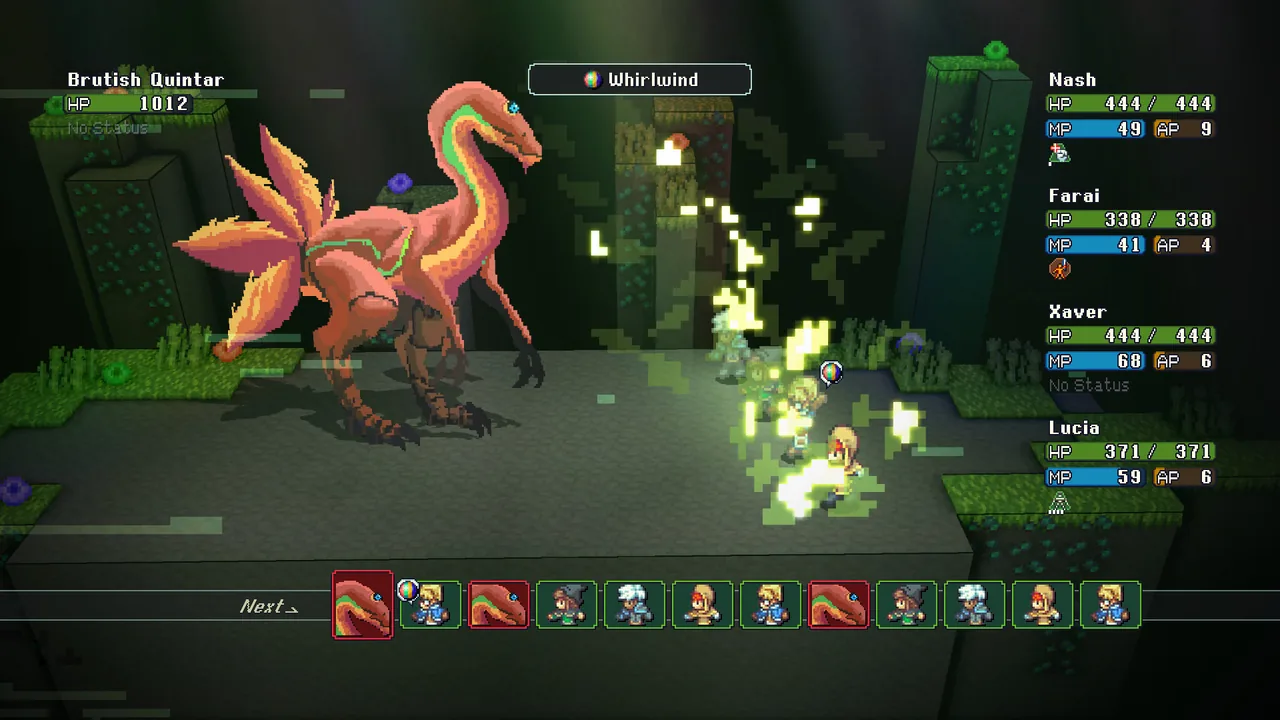
The core of the game is a class system with real depth: characters can mix and match jobs freely, every stat and formula is shown on screen rather than hidden behind vague descriptions, and there's no artificial gatekeeping on where you can explore or what gear you're "meant" to have at a given point. Reviewers across the review's four-year history reach for the same reference points — Final Fantasy V, Bravely Default, occasionally Etrian Odyssey — and mean it as the highest compliment the genre has to offer. "No hidden information," reads one review's summary of what it likes. "Turn orders, enemy targets, and attack types are shown, including damage values & status effects inflicted." That transparency, paired with a genuinely open voxel world you can explore in almost any order, is what drives the extraordinary playtimes in this game's review section — 100, 200, in one case 424 hours logged by a single reviewer who still calls it "truly a gem."
The mechanic that splits the whole audience
Set combat and class-building aside, and the single most contentious design decision in the entire game is how you explore it: 3D platforming. Ledges, jumps and precise voxel-hopping aren't an optional side activity here — they're the primary way the world gates content, and it shows up in 46 of the 100 most-helpful negative reviews, by a wide margin the most common complaint in the corpus. "You really, really have to love platforming not to find the exploration part frustrating," reads one. "It's just an endless series of jumping puzzles." Another, from a reviewer who otherwise liked the combat and class system, is blunter: "Were it not for the constant obnoxious platforming I would really enjoy this game." What makes this a genuine split rather than a simple flaw is that plenty of fans list the exact same mechanic as a highlight — "Metroidvania" sits among the game's top community tags at 394 votes, right alongside "JRPG" and "Party-Based RPG," which tells you the platforming is core to the design's identity rather than an afterthought that slipped through.
The endgame wall
The second recurring thread is sharper and more specific: several long-time players — people who'd already put 30, 50, sometimes over 100 hours in — describe a deliberate late-game balance choice where the party effectively grows weaker relative to its enemies as the difficulty scales, capped by a level 60 ceiling that removes grinding as an escape valve. "The difficulty scales up rapidly when you reach end game making most customization of characters not viable," reads a 140-vote review from launch month. A 2025 review, written after finishing most of the content, describes it even more directly: "the developer strongly feels that your party should grow comparatively weaker to enemies as you progress, so the farther you get the more difficult fights are." The achievement data corroborates how sharp that wall is — the true final-boss achievement sits at just 5.5% of the tracked population, against 66.3% for the first tier of boss fights, a much steeper drop than this genre typically shows.
7.5 out of 10. Crystal Project earns its Very Positive reputation honestly: the class system is genuinely one of the best the genre has produced in years, the world rewards curiosity rather than punishing it, and the scope of what one developer built here is remarkable. But its two defining choices — mandatory platforming as the exploration mechanic, and a late-game difficulty curve that several dedicated fans call punishing rather than challenging — are exactly the kind of uncompromising decisions that make a game beloved by its intended audience and genuinely difficult to recommend past that. Know which side of that line you're on before buying.
Pros and cons
Pros
- A transparent, deeply customisable job/class system that reviewers repeatedly compare favourably to Final Fantasy V, with every number and mechanic shown rather than hidden
- A large, genuinely non-linear voxel world that rewards exploration on your own terms, with no gatekeeping on where you're "allowed" to go
- Remarkable value and scope for a solo-developer project, with numerous reviewers logging 100-plus hours and several past 400
- Strong turn-based combat widely praised even by critical reviewers, with full visibility into turn order, enemy stats and damage calculations
- A gentle, well-populated completion curve for its earlier milestones (66.3% for the first boss tier), suggesting the core game lands well before the harder content kicks in
Cons
- 3D platforming is the primary exploration mechanic and is mandatory rather than optional to progress the story — by far the most common complaint in the negative corpus, raised in 46 of 100 English negatives
- A deliberate late-game design choice, confirmed by the developer in community discussion, makes the party comparatively weaker relative to enemies as the game progresses, which several reviewers who otherwise finished and enjoyed the game describe as tipping into genuinely unbalanced and frustrating around the level cap
- Minimal narrative guidance can leave players unsure where to go next, which several reviewers frame as a deliberate design choice they didn't enjoy rather than a flaw they overlooked
- The completion curve falls off sharply at the far end (5.5% for the true final boss), consistent with reviewer reports that the hardest content is a serious wall even for dedicated players
Screenshots
-
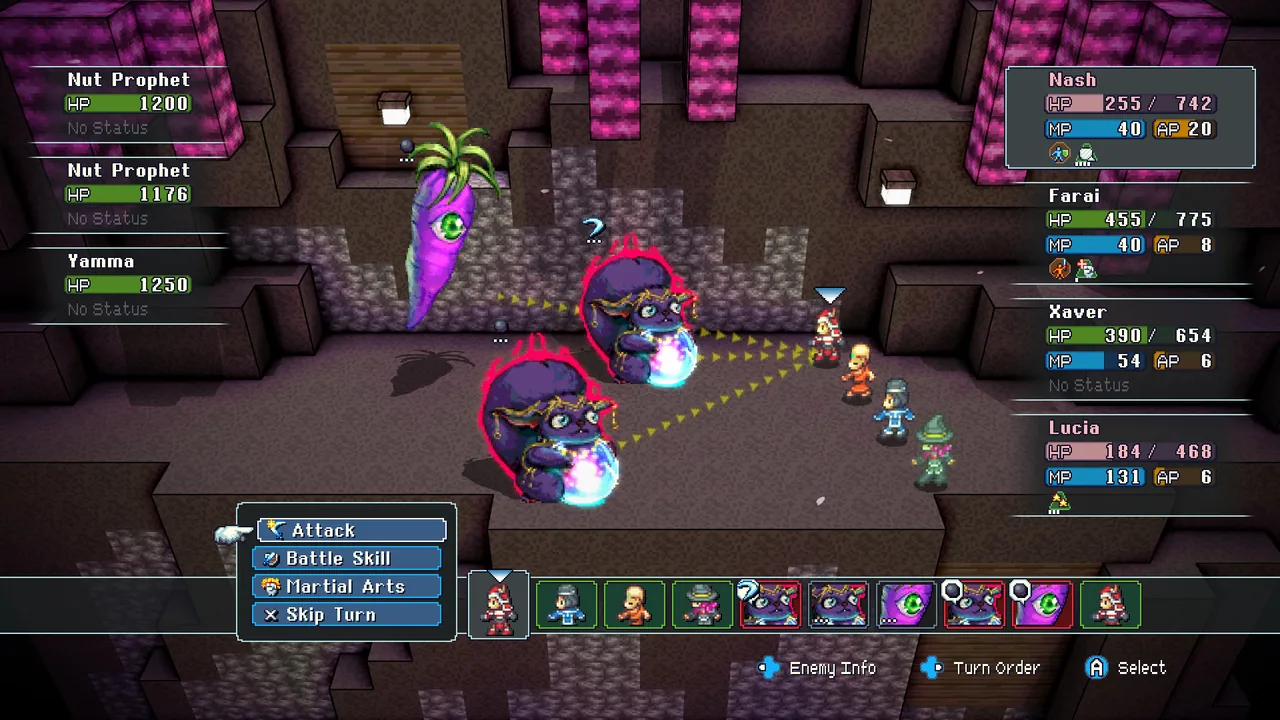
Combat with every number visible -- turn order, HP, MP and AP for the whole partyImage: Andrew Willman via Steam -
Crystal ProjectImage: Andrew Willman via Steam -
Crystal ProjectImage: Andrew Willman via Steam -
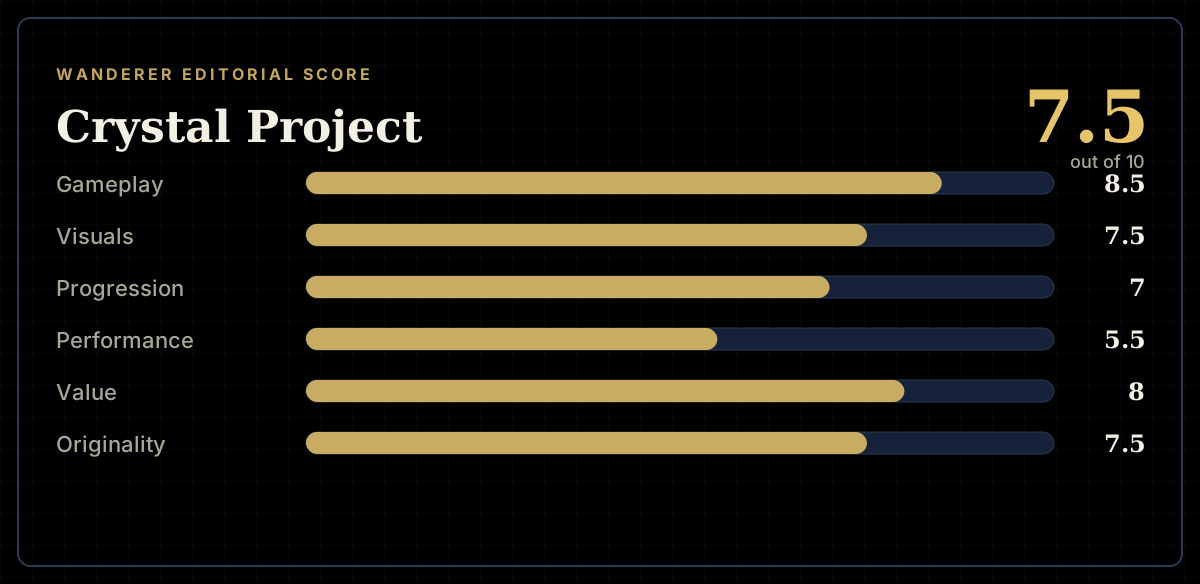
How the review scores each part of the gameWanderer Editorial -
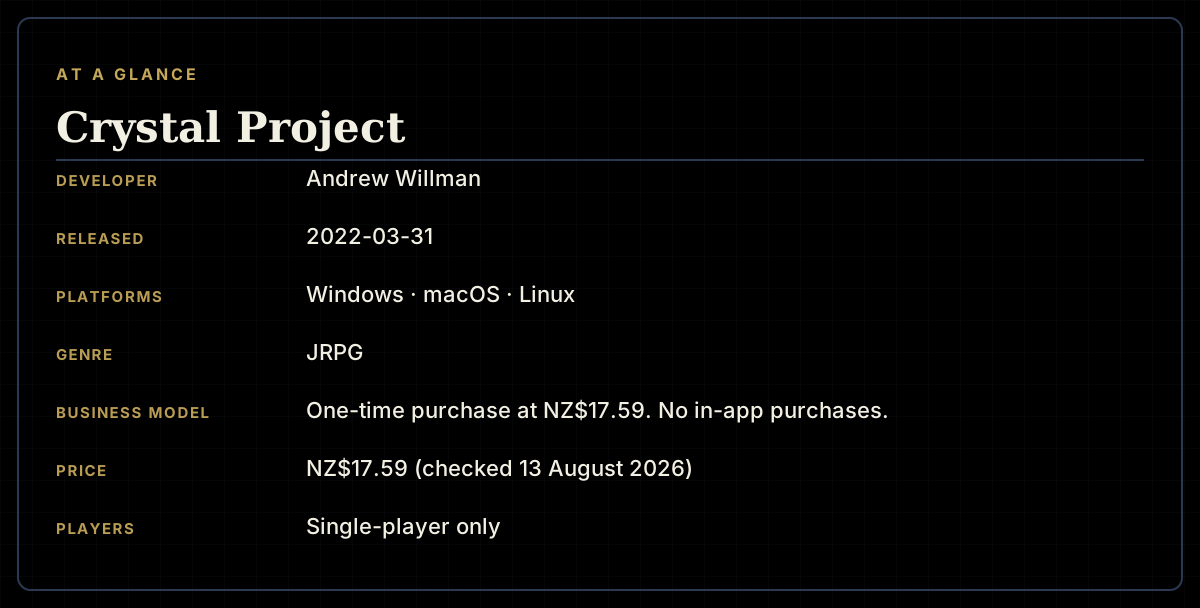
The essentialsWanderer Editorial -
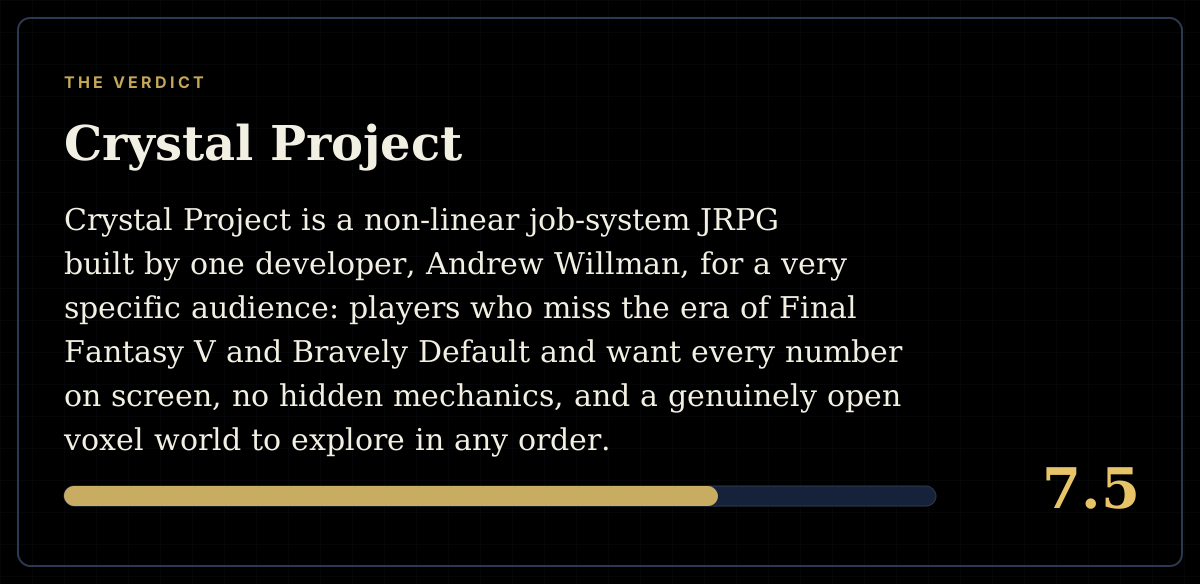
The short versionWanderer Editorial