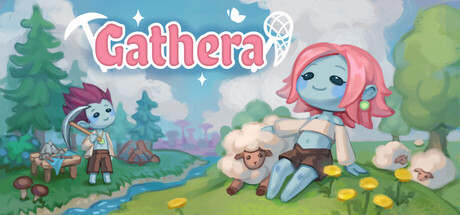
Gathera Review
A Cozy Crafting Sandbox With a Surprising Bite Gathera left its Steam Next Fest demo behind and entered Early Access on August 31, 2026, from solo-flavored developer Catris Games.
7.5 / 10
Browse by genre
1033 Co-op & Multiplayer games reviewed and scored, best first.
1033 reviews
A Cozy Crafting Sandbox With a Surprising Bite Gathera left its Steam Next Fest demo behind and entered Early Access on August 31, 2026, from solo-flavored developer Catris Games.
7.5 / 10
A charming, cheap, unusually fair take on The Bazaar's automatic-play PvP deckbuilder formula from respected indie collective Sokpop, widely praised for deep build variety and a real absence of predatory monetisation, held back by real RNG-driven balance complaints, a punishing crit system, launch-week server instability, and reports of a late-game meta that funnels players toward a narrow set of viable burst-damage builds.
7.5 / 10
Cygames' stand-alone action RPG wraps a four-player hunting-game loop inside a JRPG's full production budget, and the combat mostly earns the spectacle around it. This is not the mobile gacha that shares its name — it's a single upfront purchase with no pulls and no premium currency — but its sigil-driven, Proud Quest endgame asks more patience than it repays.
7.5 / 10
A widely acclaimed single-player crime saga bundled with an online mode whose 2017-2018 wrongful-ban epidemic became one of the most documented anti-cheat fairness disputes on Steam — improved since, but echoed by a related complaint that persists into 2024-2025.
7.5 / 10
A "Risk of Rain, Dead Cells and Borderlands had a baby" FPS roguelite RPG that reviewers overwhelmingly praise for its gunplay and build variety, held back years after launch by stagnant level variety, an unpopular EULA change, and a server relocation that badly hurt latency for large parts of its audience.
7.5 / 10
Scythe Dev Team's co-op reinvention of its cult-favourite Happy's Humble Burger Farm turns solo fast-food horror into 1-4 player chaos, landing strongly with the friend groups it's built for while its own achievement data confirms a real solo-mode and early-balance rough patch.
7.5 / 10
The best co-op shooter of its generation and one of the most argued-about games on Steam. Its top negative review has thirty-four thousand helpful votes, its second has twenty-two thousand, and neither is about the shooting — which is superb.
7.5 / 10
Heroes of Hammerwatch turns the original Hammerwatch's four-player arcade dungeon crawl into a roguelite with a persistent town to rebuild between runs. Seven years and two paid expansions later, the question isn't whether there's enough content — there plainly is — it's whether the grind holding all of it together is a deliberate long game or the thing that wears players out first.
7.5 / 10
A well-regarded, combat-focused Infinity Engine classic that reviewers consistently frame as the weaker sibling of Baldur's Gate and Planescape: Torment on story and characters — a stable complaint across a full decade — alongside a recurring multiplayer connectivity bug and some criticism of Beamdog's own Enhanced Edition script changes.
7.5 / 10
Your Typing Becomes A Bookstore Idle Bookstore is a $5.99 desktop-companion idler from small indie studio Purpledoor Studios: a tiny pixel-art writer and their bookstore live in a
7.5 / 10
An Early Access survival shooter that blends looter-shooter loot systems with flexible tower defence, tasking you with defending a rocket project against zombie hordes during an acid rain apocalypse, drawing an early Very Positive reception for its layered base-building and mercenary systems, tempered by one detailed critical account calling out weak enemy AI and low-effort tutorial art.
7.5 / 10
Tripwire Interactive's wave-based co-op horde shooter, grown from a 2005 Unreal Tournament 2004 mod into a standalone genre landmark, still draws deeply personal devotion from a community that's stuck with it for well over a decade — tempered by a specific, well- corroborated complaint that later paid weapon-pack DLC tilted balance in a way free content updates never did.
7.5 / 10
A sardonic, nation-scale Cold War in miniature Kiloton casts players as the anonymous steward of an entire nation, managing population, industry, and military doctrine in a minimal
7.5 / 10
The third and most complete entry in the minimalist Kingdom series — a side-scrolling micro-strategy game about riding a horse, throwing coins and watching a kingdom grow — is Very Positive across 10,000-plus reviews, and genuinely loved, but shares a specific, long-documented builder-AI bug with its predecessors that several reviewers say has survived multiple sequels unfixed.
7.5 / 10
A solo developer's co-op scavenging horror-comedy that became one of the defining games of its era, still funny and still tense two years on — while its own reviews increasingly argue about whether the person who made it has moved on from it.
7.5 / 10
Tetsuya Mizuguchi's Enhance returns to the block-and-music puzzler that predates Tetris Effect, and the review corpus responds with genuine reverence for its synchronised audiovisual flow, tempered by a specific, recurring accessibility complaint about reading blocks against busy backgrounds and a music selection some longtime fans find thinner than the series' PSP roots.
7.5 / 10
A brutal, funny Mario Party from the Buckshot Roulette developer, for ten dollars — with no matchmaking, and a developer who has now said plainly that there never will be.
7.5 / 10
Capcom's biggest Monster Hunter yet strips away almost everything that used to make the series hard to love — and a lot of what used to make it worth loving. A phenomenal hunt loop wrapped around a launch-year PC performance crisis and an endgame that shipped thinner than the marketing suggested.
7.5 / 10
A vertical, three-floor twist on the deckbuilding roguelike that Slay the Spire built, still sitting Overwhelmingly Positive on Steam more than five years after launch — and still worth playing on its own terms, even with the numbers showing exactly where its late-game balance stops holding up.
7.5 / 10
A genuinely acclaimed medieval melee combat game whose combat system reviewers on both sides of the score still call the best in its genre — undercut by a worsening, well-corroborated problem as the game ages: a shrinking, veteran-dominated population creates a steep skill gap that new players increasingly describe as insurmountable, with negative reviews trending upward every year since 2021.
7.5 / 10
The finest medieval battle simulator ever built, wrapped in a sandbox its own fans say is thinner than the 2010 game it replaced. Its most-upvoted negative review is a list of features Warband had and this doesn't.
7.5 / 10
A hundred-and-eighteen-hour median playtime and 92% of recent reviews positive — this is one of the best crafting RPGs anyone has made. It also sells a multiplayer mode with no story in it, and NZ$122 of small DLC on top of a NZ$70 game.
7.5 / 10
Team Ninja's samurai-era Souls-like pairs one of the deepest stance-based combat systems in the genre with a Diablo-style loot flood that a large, vocal share of its own fans say fights against everything the combat is trying to do -- a disagreement that hasn't moved in nine years of reviews.
7.5 / 10
Nitro Turtles is a Mario Kart-style kart racer from solo developer Lucky Turtle, replacing go-karts with nitro-enhanced sea turtles that gain speed bursts on contact with water, and this review's unanimously positive sample finds a charming, well-supported genre clone whose most detailed critical account documented specific bugs that the developer has since visibly and directly fixed.
7.5 / 10