
Game review
Grail
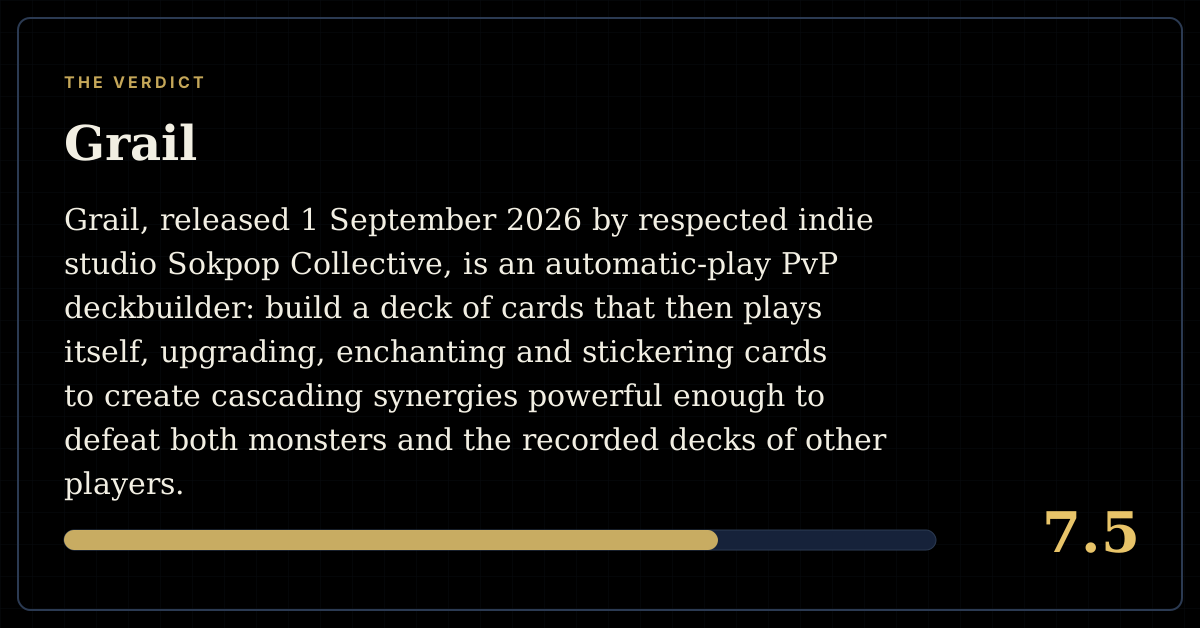
7.5 / 10
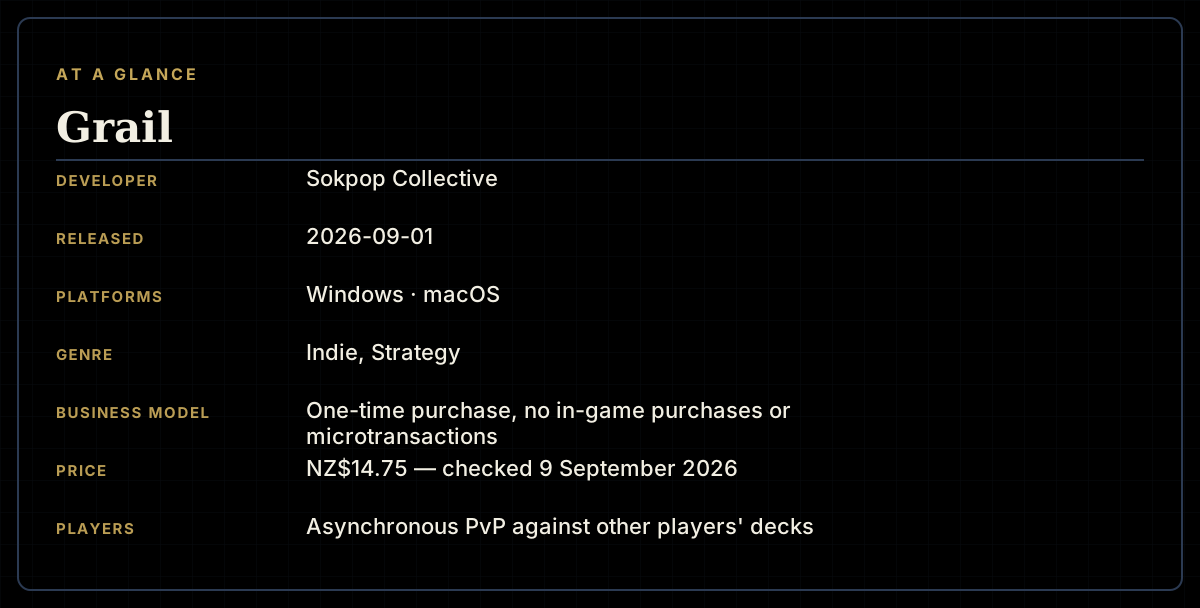
- Developer
- Sokpop Collective
- Publisher
- Sokpop Collective
- Released
- 1 September 2026
- Platforms
- Windows, macOS
- Genre
- Indie, Strategy
- Monetisation
- One-time purchase, no in-game purchases or microtransactions
- Players
- Asynchronous PvP against other players' decks
The short version
Grail, released 1 September 2026 by respected indie studio Sokpop Collective, is an automatic-play PvP deckbuilder: build a deck of cards that then plays itself, upgrading, enchanting and stickering cards to create cascading synergies powerful enough to defeat both monsters and the recorded decks of other players. It sits Very Positive with a substantial sample of 178 reviews, and reading widely through it reveals a game reviewers repeatedly and specifically frame in direct contrast to The Bazaar, a similarly-structured but more heavily monetised genre rival, with Grail consistently praised for charging one fair upfront price and refusing to nickel-and-dime players for new characters. Reviewers describe genuinely deep build variety, witty card and status-effect design, and a satisfying core loop of watching carefully assembled synergies play out automatically. Set against that praise, this review found real, specific complaints: a crit system reviewers describe as punishing and RNG-driven, reports of severe connection and server instability during launch week, a late-game meta that several detailed reviewers say increasingly funnels players toward narrow, fast burst-damage builds while slower scaling strategies become unviable, and a specific, reproducible bug in which the tutorial repeats before every match for some players.
Biggest strengths
- The core automatic-play deckbuilding loop draws extensive, detailed praise, with reviewers describing genuinely deep, clever synergy potential across upgrades, enchantments and card stickers, and unusual, specific status-effect design rarely seen in similar games
- Reviewers consistently and specifically praise the complete absence of microtransactions, repeatedly contrasting Grail favourably against The Bazaar's monetisation model and describing the low, one-time price as genuinely fair value for the depth on offer
- Presentation draws consistent, warm praise, with reviewers describing charming art, pleasant music, and well-written lore, and multiple reviewers specifically credit playable character variety and distinct deck archetypes, from clothing-based builds to food-and-cheese builds, as genuinely fun to discover
Biggest weaknesses
- Multiple reviewers describe the crit system as a specific, punishing source of frustration, reporting losses to low-probability critical hits that feel unfair and can end an otherwise strong run in a single unlucky moment, echoing a similar complaint several reviewers say plagues The Bazaar as well
- This review found reports of severe connection and server instability during launch week, with at least one detailed reviewer describing an initially lacklustre experience before crediting the developers with likely needing additional server bandwidth to handle demand
- Multiple reviewers report a late-game meta that increasingly funnels players toward narrow, fast burst-damage builds, describing slower scaling or ramping strategies as effectively non-viable by the final stages of a run, which several frame as a meaningful balance concern rather than simple difficulty
Who it's for: Fans of deckbuilders and autobattlers, particularly players who enjoyed The Bazaar's core concept but were put off by its monetisation, looking for a cheap, one-time-purchase alternative with genuine build depth.
Our recommendation: Strongly worth it at this price for deckbuilder and autobattler fans; go in aware of real RNG-driven balance frustration in competitive PvP and some launch-week server issues.
7.5 / 10
Introduction
Grail, released 1 September 2026 by respected indie studio Sokpop Collective, is an automatic-play PvP deckbuilder: assemble a deck of cards that then plays itself, upgrading, enchanting and stickering individual cards to create cascading synergies powerful enough to defeat both roaming monsters and the recorded decks of real other players. It sits Very Positive with a substantial sample of 178 reviews, and reading widely through it reveals a game reviewers repeatedly and specifically frame through direct comparison to The Bazaar, a similarly-structured but far more heavily monetised genre rival, with Grail consistently praised for taking that same core concept and delivering it honestly, at a single fair price.
A fairer Bazaar, and reviewers know it
The single most consistent theme across this sample isn't really about Grail's mechanics in isolation — it's about what Grail refuses to do. Reviewer after reviewer explicitly and favourably contrasts Grail against The Bazaar, praising the complete absence of microtransactions and the fact that new playable characters don't require additional payment beyond the base purchase. One reviewer frames this directly, joking that Grail is essentially what would happen "if The Bazaar was made by the Stacklands devs and cost $10 instead of whatever the hell they're doing over there." That framing recurs across dozens of reviews in slightly different words, and reads less like a novelty comparison and more like a genuinely load-bearing part of why this specific sample recommends the game so consistently.
Real, deep build variety
Beyond the monetisation contrast, this review found extensive, specific praise for the underlying deckbuilding itself. Reviewers describe genuinely deep synergy potential across card upgrades, enchantments and stickers, with distinctive, specific status-effect design — burn triggered on discard, poison on shuffle, shock on energy gain, bleed on damage taken — that several reviewers note is rarely handled this thoughtfully in comparable games. Multiple reviewers specifically praise being able to build around unconventional archetypes, from clothing-focused decks to food-and-cheese builds capable of tanking damage through sheer accumulated mass, and describe genuine, sustained engagement well beyond what the low price might suggest.
A punishing crit system, inherited from its inspiration
Set against that praise, this review found a specific, recurring complaint that closely echoes a known issue in Grail's own stated inspiration. Multiple reviewers describe the crit system as a genuine source of frustration, reporting losses to low-probability critical hits that can end an otherwise well-executed run in a single unlucky moment, with one reviewer specifically noting this mirrors a complaint that similarly plagues The Bazaar. Given how directly this sample otherwise credits Grail with improving on its inspiration's flaws, this specific inherited problem stands out as a notable exception reviewers are less willing to forgive.
Launch-week server instability
This review found a separate, more infrastructure-focused complaint concerning the game's first days after release. Multiple reviewers report severe connection and server instability during launch week, with at least one detailed reviewer describing an initially lacklustre, frustrating experience before ultimately deciding the underlying game and concept were strong enough to warrant patience while the developers presumably added server capacity to handle unexpectedly high demand.
A late-game meta that narrows, according to detailed reviewers
A more structural complaint, raised by several of this sample's more detailed and experienced reviewers, concerns how build diversity holds up across a full run. Multiple reviewers report the game's late stages increasingly funnel players toward narrow, fast burst-damage builds, describing slower scaling or ramping strategies as effectively non-viable by the final days of a run regardless of how well they'd performed earlier. This reads as a genuine balance concern distinct from ordinary difficulty, since it directly undercuts the build diversity the game's own extensive card and synergy system otherwise earns real praise for offering.
A repeating tutorial, and smaller rough edges
This review also found a specific, reproducible bug worth flagging directly: at least one reviewer reports the tutorial repeats before every single match rather than only on first launch, forcing unwanted card choices and route selections each time rather than respecting a player's prior familiarity. Separately, multiple reviewers note an initially long trophy grind for unlocking new playable characters, though several specifically credit the developers with already reducing this grind in response to community feedback — a pattern of responsiveness consistent with Sokpop Collective's broader reputation. Smaller complaints round out this sample, including text readability issues on high-resolution displays and the absence of any dedicated practice mode against NPC opponents for players who'd rather learn mechanics before entering real PvP stakes.
A note on early review playtime
It's worth directly addressing a pattern at least one reviewer flags explicitly: some of the earliest posted reviews show playtime far exceeding what would be possible since release, which that reviewer attributes to private pre-release access distributed to playtesters and demo players over preceding months, rather than anything more concerning. This review treats that explanation as plausible and unremarkable given how common extended demo and playtest periods are for indie releases, and notes it here only for transparency rather than as a credibility concern about the review sample itself.
Final Verdict
Grail succeeds at a genuinely difficult task: taking a compelling but controversial genre concept popularised by The Bazaar and delivering it with real integrity, at a fair one-time price, without sacrificing the build depth and synergy satisfaction that made the original concept compelling in the first place. What holds this score back from the very top of that range is a specific, inherited crit-system frustration, real launch-week server instability, a late-game meta several detailed reviewers say narrows build diversity more than it should, and a handful of reproducible bugs and rough edges. Strongly worth it at this price for deckbuilder and autobattler fans, especially anyone who wanted to like The Bazaar but couldn't stomach its monetisation.
Pros and cons
Pros
- The core automatic-play deckbuilding loop draws extensive, detailed praise, with reviewers describing genuinely deep, clever synergy potential across upgrades, enchantments and card stickers, and unusual, specific status-effect design rarely seen in similar games
- Reviewers consistently and specifically praise the complete absence of microtransactions, repeatedly contrasting Grail favourably against The Bazaar's monetisation model and describing the low, one-time price as genuinely fair value for the depth on offer
- Presentation draws consistent, warm praise, with reviewers describing charming art, pleasant music, and well-written lore, and multiple reviewers specifically credit playable character variety and distinct deck archetypes, from clothing-based builds to food-and-cheese builds, as genuinely fun to discover
- Multiple reviewers specifically praise the PvP structure of fighting recorded decks from real players rather than purely scripted opponents, describing genuine satisfaction and curiosity in seeing how other players have built their own decks
Cons
- Multiple reviewers describe the crit system as a specific, punishing source of frustration, reporting losses to low-probability critical hits that feel unfair and can end an otherwise strong run in a single unlucky moment, echoing a similar complaint several reviewers say plagues The Bazaar as well
- This review found reports of severe connection and server instability during launch week, with at least one detailed reviewer describing an initially lacklustre experience before crediting the developers with likely needing additional server bandwidth to handle demand
- Multiple reviewers report a late-game meta that increasingly funnels players toward narrow, fast burst-damage builds, describing slower scaling or ramping strategies as effectively non-viable by the final stages of a run, which several frame as a meaningful balance concern rather than simple difficulty
- At least one reviewer reports a specific, reproducible bug in which the tutorial repeats before every match rather than only on first launch, forcing unwanted card and route choices each time
- Separate reviewers report a trophy grind for unlocking new characters that initially felt overly long, though multiple reviewers note the developers have already reduced this specific grind following community feedback, alongside smaller complaints about text readability on high resolution displays and the absence of any practice mode against NPC opponents
Screenshots
-
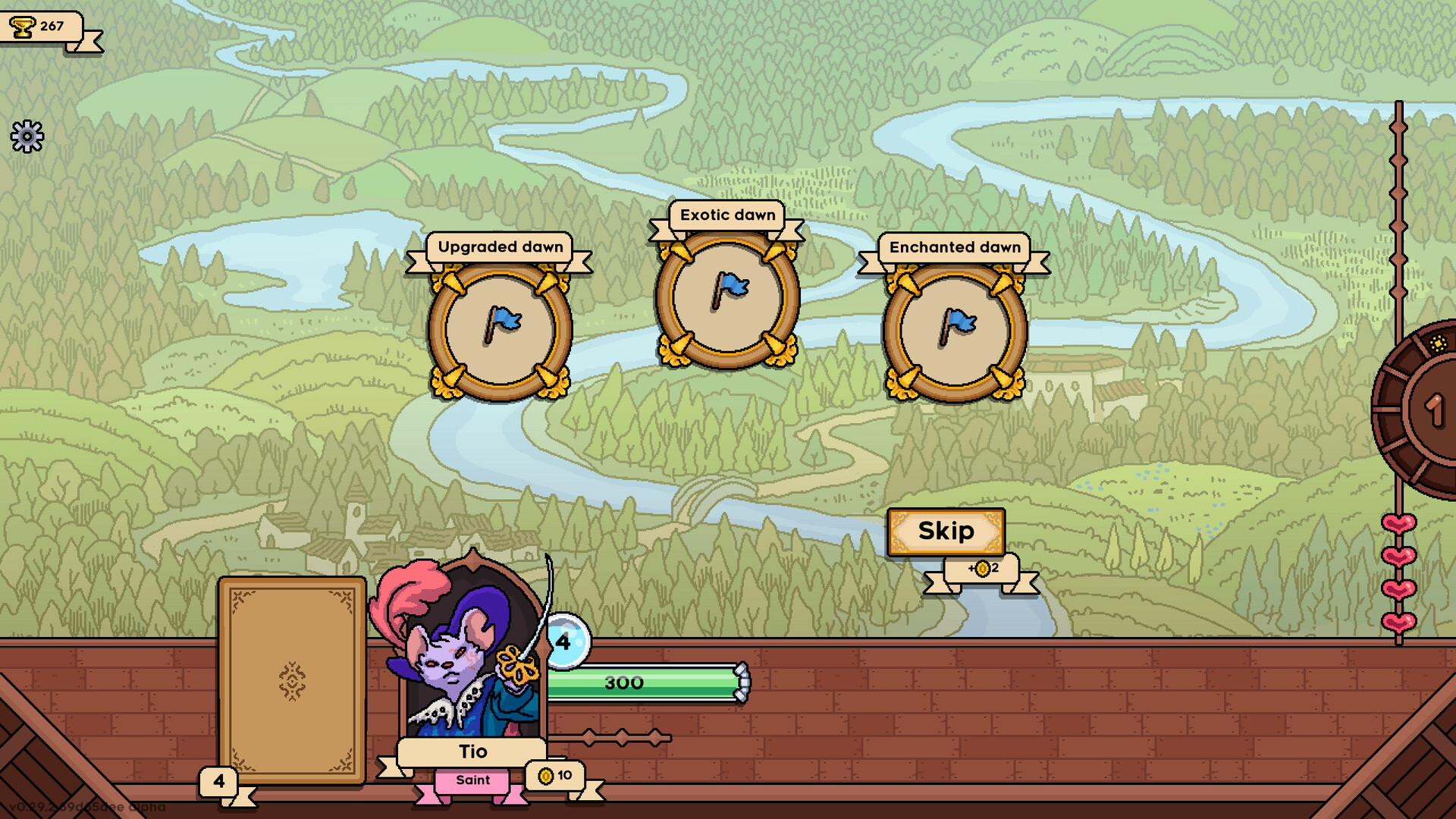
GrailImage: Sokpop Collective via Steam -
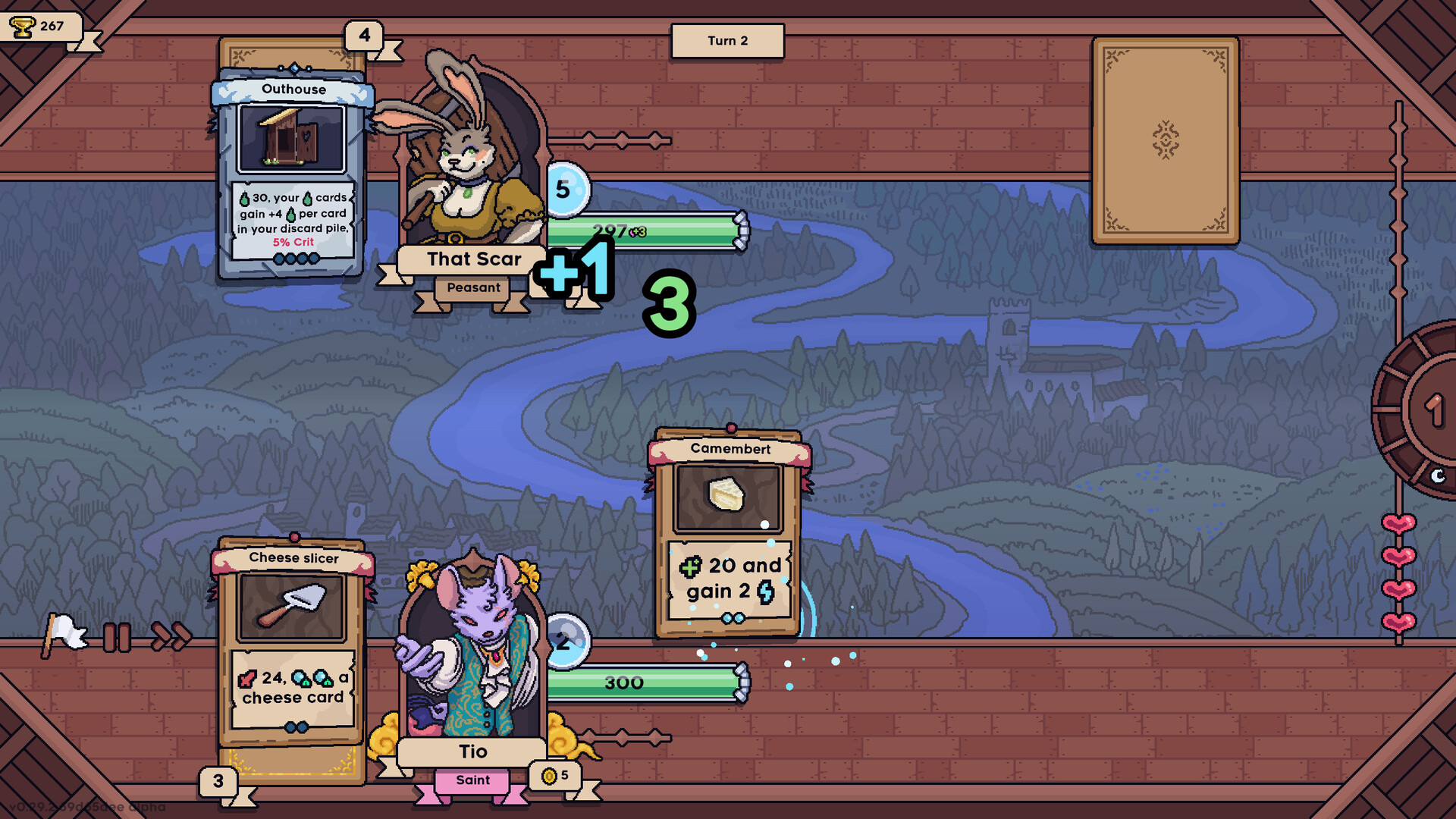
GrailImage: Sokpop Collective via Steam -
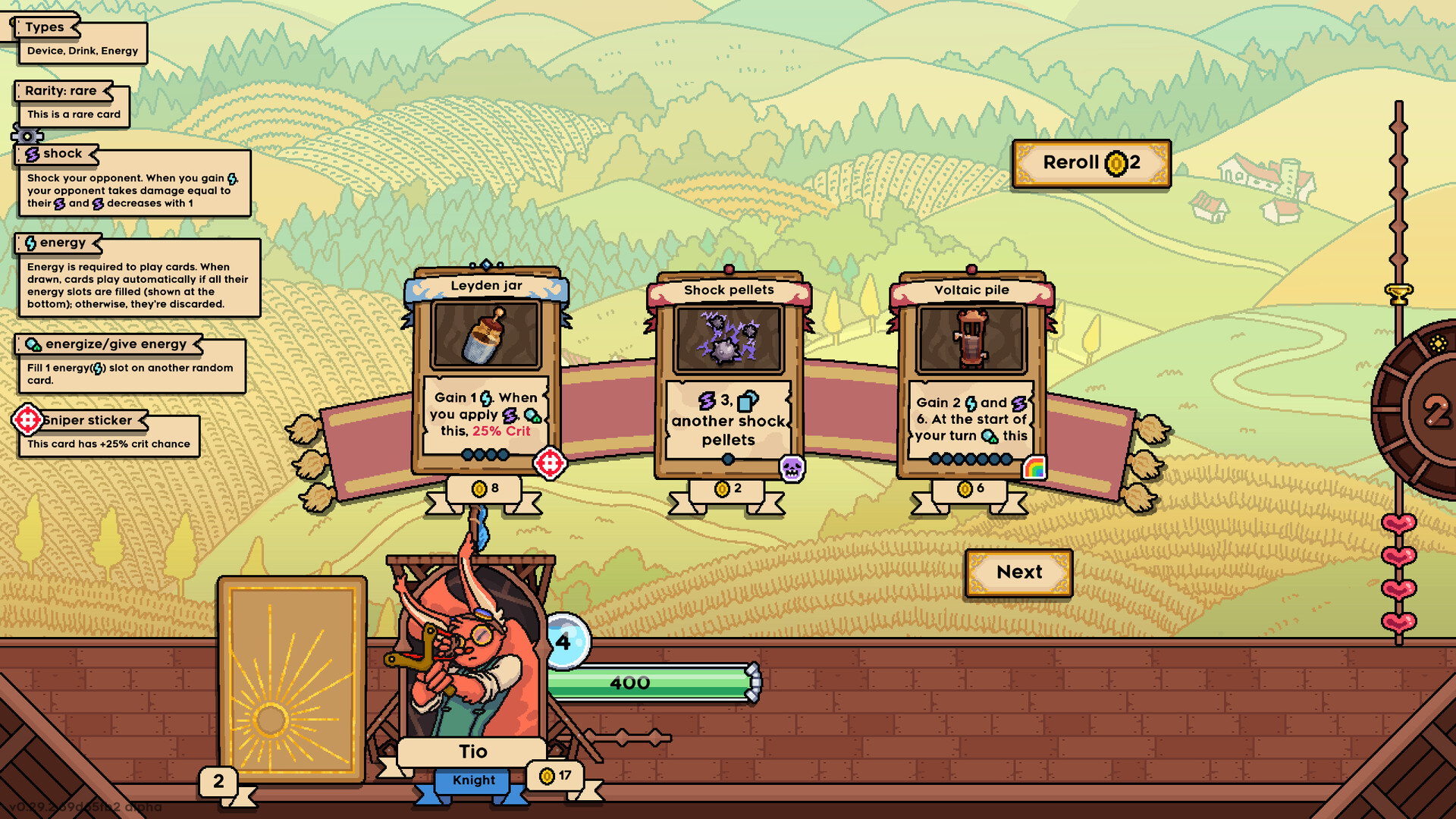
GrailImage: Sokpop Collective via Steam -
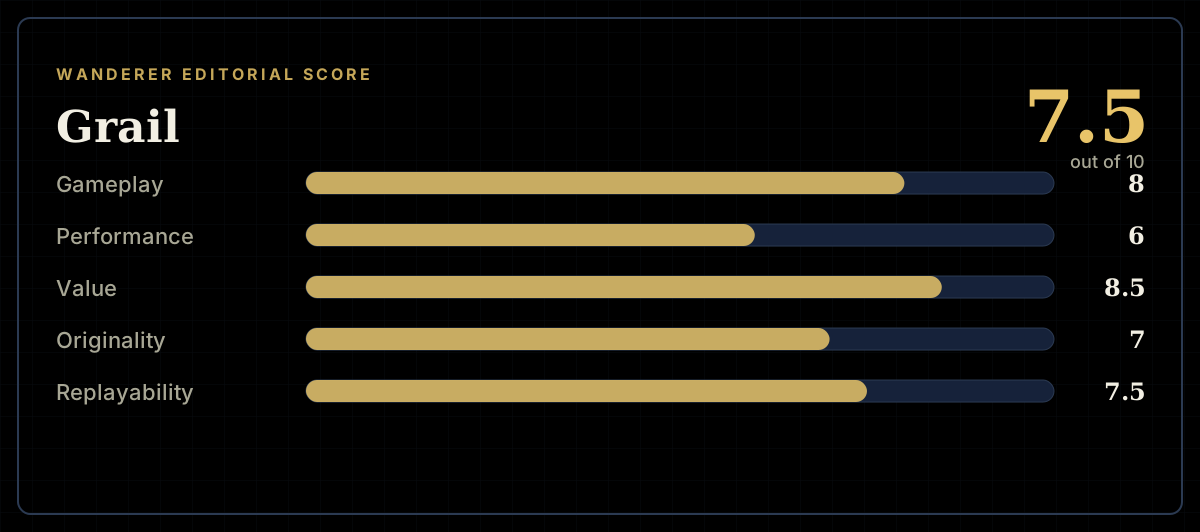
How the review scores each part of the gameWanderer Editorial -
The essentials at a glanceWanderer Editorial -
The short versionWanderer Editorial