
Game review
The First Million
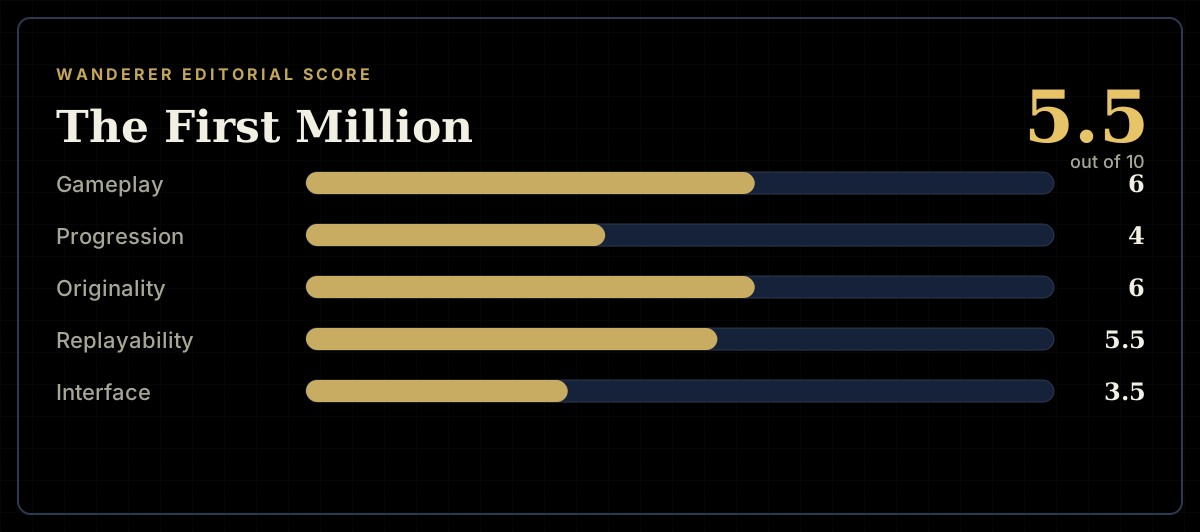
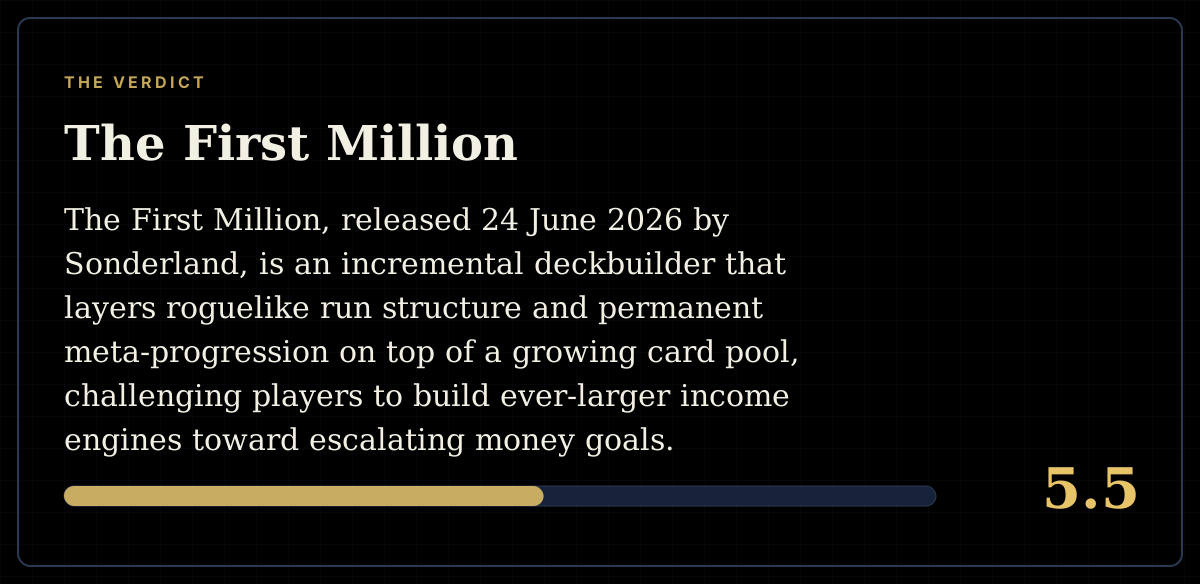
5.5 / 10
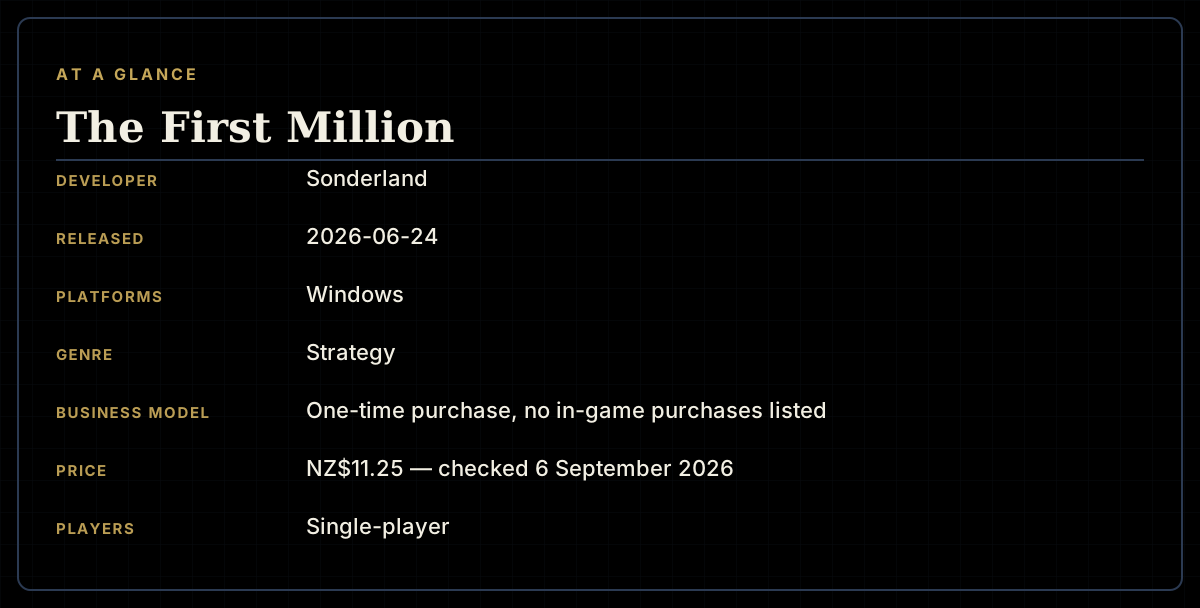
- Developer
- Sonderland
- Publisher
- Sonderland
- Released
- 24 June 2026
- Platforms
- Windows
- Genre
- Strategy
- Monetisation
- One-time purchase, no in-game purchases listed
- Players
- Single-player
The short version
The First Million, released 24 June 2026 by Sonderland, is an incremental deckbuilder that layers roguelike run structure and permanent meta-progression on top of a growing card pool, challenging players to build ever-larger income engines toward escalating money goals. It sits Mostly Positive with a strong sample of 100 reviews, and reading widely through it turns up a genuinely engaging core loop sitting alongside a specific, well-documented design paradox multiple reviewers independently identify: unlocking more cards is reported to make runs harder rather than easier, since a larger card pool dilutes the odds of drawing the specific synergistic cards a build actually needs. Layered on top of this, a large number of reviewers separately describe the game's randomness as excessive enough to undermine meaningful planning, and several reviewers specifically and pointedly object to the developer nerfing successful strategies after players have already invested significant time perfecting them. Set against these complaints, reviewers engaged with the genre's "numbers go up" appeal consistently describe genuine, sustained satisfaction piecing together a working engine, and several specifically credit a daily challenge mode with fixed cards and a leaderboard for giving the game real longevity once a dominant strategy is found.
Biggest strengths
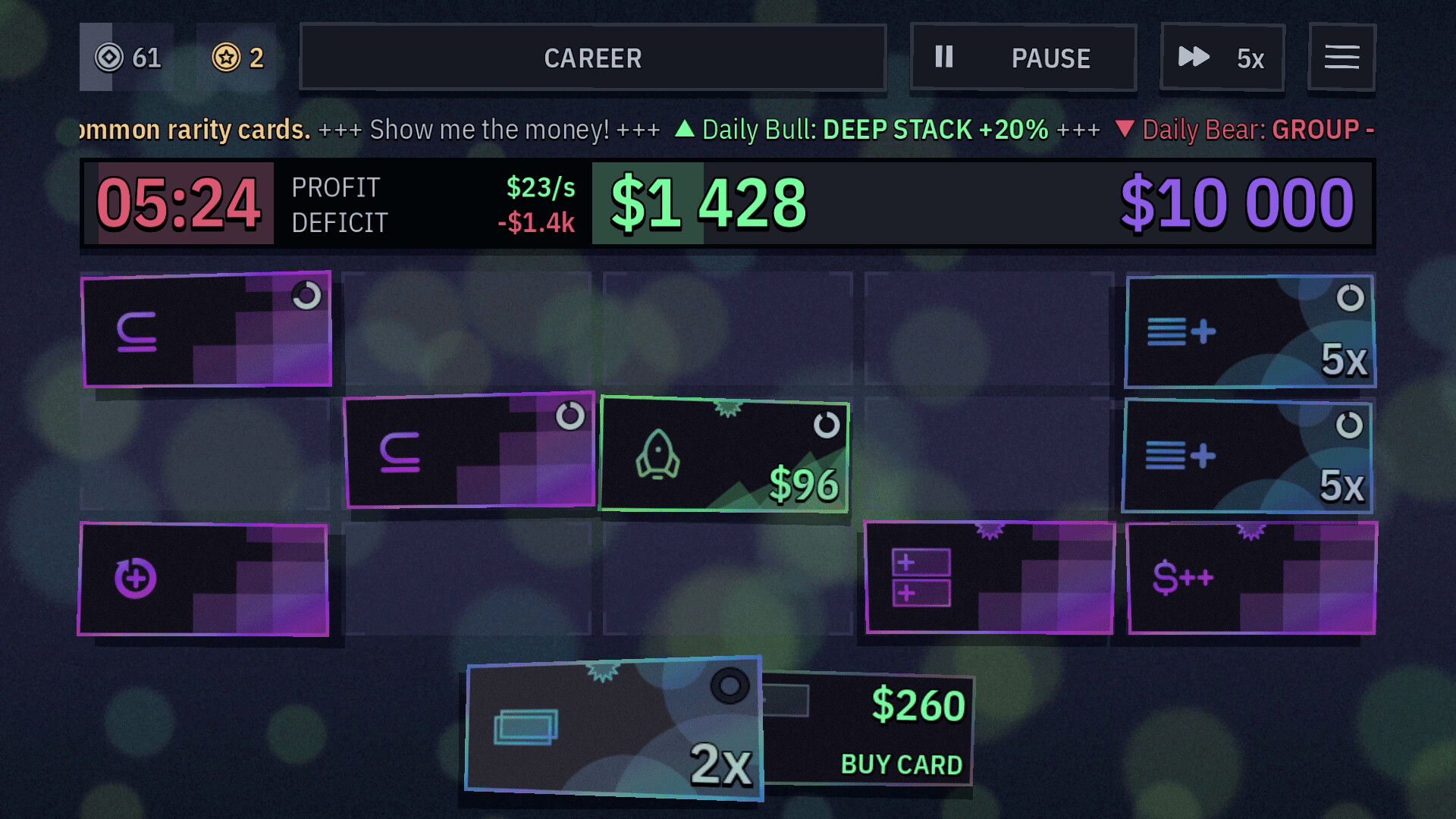
- The core engine-building loop draws genuine, repeated praise, with multiple reviewers describing real satisfaction piecing together synergistic card combinations across several attempts before achieving a first successful run
- The daily challenge mode, which fixes the available cards and adds a leaderboard, draws specific praise for giving the game meaningful longevity once a dominant, game-breaking strategy has been found in the main mode, preventing the core challenge from simply evaporating
- Multiple reviewers describe the game as genuinely addictive in the classic incremental sense, with more than one reporting a planned ten-minute session turning into several hours chasing "one more run"
Biggest weaknesses
- A specific, independently repeated design paradox is central to this sample's criticism: multiple reviewers report that unlocking more cards makes runs harder rather than easier, since a larger overall card pool dilutes the odds of drawing the specific cards a given strategy depends on, effectively punishing players for engaging with the game's own unlock systems
- A large number of reviewers describe randomness as excessive to the point of undermining meaningful planning, with more than one reporting that a run's outcome is effectively decided by whether strong synergy cards appear within the first several draws, regardless of subsequent player skill
- Several reviewers specifically and pointedly object to the developer nerfing successful strategies after the fact, with one detailed account describing a build they'd worked hard to perfect being reduced in power by 20 percent shortly after it won them a run, forcing them to find an entirely different approach
Who it's for: Incremental and deckbuilding fans who enjoy engine-building puzzles and can tolerate real frustration with randomness and difficulty scaling that multiple experienced players say currently works against the genre's usual sense of steady progress.
Our recommendation: Worth it for genre fans specifically drawn to engine-building and daily-challenge replayability; approach with caution if unpredictable randomness or a developer actively rebalancing successful strategies after the fact would frustrate you.
5.5 / 10
Introduction
The First Million, released 24 June 2026 by Sonderland, is an incremental deckbuilder that challenges players to build ever-larger income engines from a growing card pool, chasing escalating money goals through roguelike runs and permanent meta-progression between attempts. It sits Mostly Positive with a strong sample of 100 reviews, and reading widely through it reveals a genuinely engaging core loop wrapped around a specific, well-documented design tension that a large share of this review's research keeps returning to independently.
A genuinely satisfying engine-building loop
The praise here is real and specific. Multiple reviewers describe genuine satisfaction piecing together synergistic card combinations across several failed attempts before finally achieving a first successful run, and more than one reviewer describes the classic incremental "numbers go up" appeal working exactly as intended, with a planned ten-minute session turning into several hours of continued play. The daily challenge mode, which fixes available cards and adds a competitive leaderboard, draws specific praise for giving the game real longevity once a dominant strategy is discovered in the main mode — several reviewers explicitly credit it with preventing the game's core challenge from evaporating entirely once a working build has been found and repeated.
A specific, repeated paradox: unlocking cards makes it harder
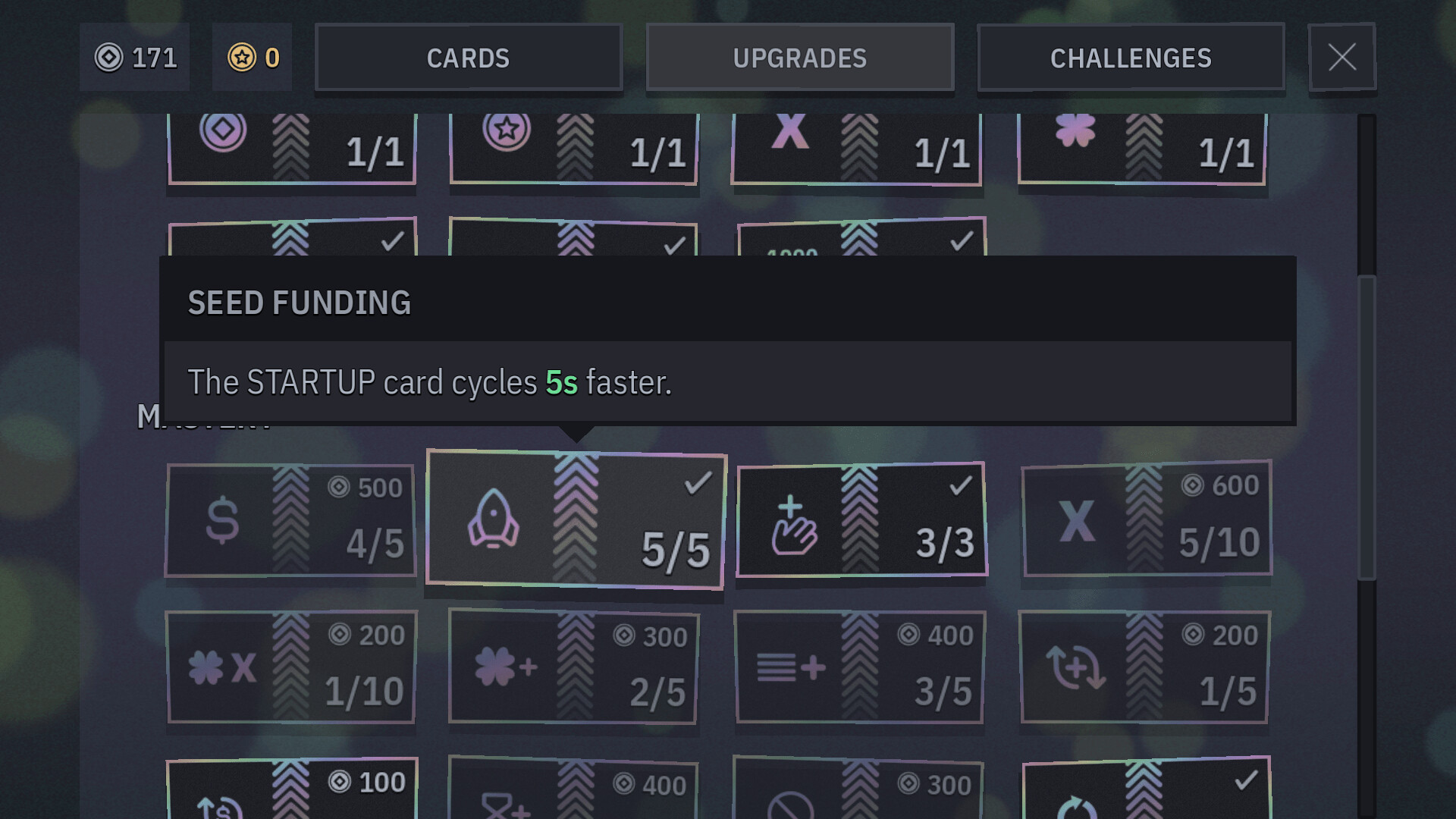
The central, most distinctive complaint in this sample is a specific mechanical paradox multiple reviewers independently identify and describe in nearly identical terms. As players unlock more cards, the overall card pool grows, which dilutes the odds of drawing the specific synergistic cards any given strategy actually depends on — meaning engaging with the game's own progression systems can make subsequent runs genuinely harder rather than easier. One detailed reviewer describes making the specific mistake of unlocking every available card early, only to find that the useful cards for any given strategy became correspondingly rarer, stalling their progress. This isn't a vague difficulty complaint; it's a specific, mechanically identifiable tension between the game's unlock systems and its own randomness that a meaningful number of independent reviewers arrive at without apparent coordination.
Randomness that multiple reviewers say defeats planning
Related to but distinct from the unlock paradox, a large number of reviewers separately describe the game's randomness as excessive enough to undermine meaningful strategic planning. Multiple reviewers report that a run's ultimate success often comes down to whether strong synergy cards appear within the first few draws, with subsequent skillful play unable to meaningfully compensate for an unlucky opening. One reviewer frames this specifically as making the difficulty scaling feel unfun regardless of skill, arguing that finding one good strategy isn't enough since the specific cards that made it work in an earlier difficulty tier often aren't available or effective by the time a harder tier is reached.
A specific controversy: nerfing winning strategies after the fact
A further pointed complaint concerns post-launch balance changes. Several reviewers specifically and directly object to the developer reducing the power of successful strategies after the fact, with one detailed account describing a build they'd worked hard to perfect across multiple runs being nerfed by roughly 20 percent shortly after it won them a run, effectively forcing them to abandon a strategy they'd already invested significant time mastering in favour of finding a new one. This review reports this as a specific, repeated point of frustration rather than a universal complaint about balance patches in general — the objection isn't to rebalancing itself, but to strategies being weakened specifically once they've proven successful, which several reviewers frame as punishing exactly the kind of mastery the genre is supposed to reward.
Unclear terminology and missing onboarding
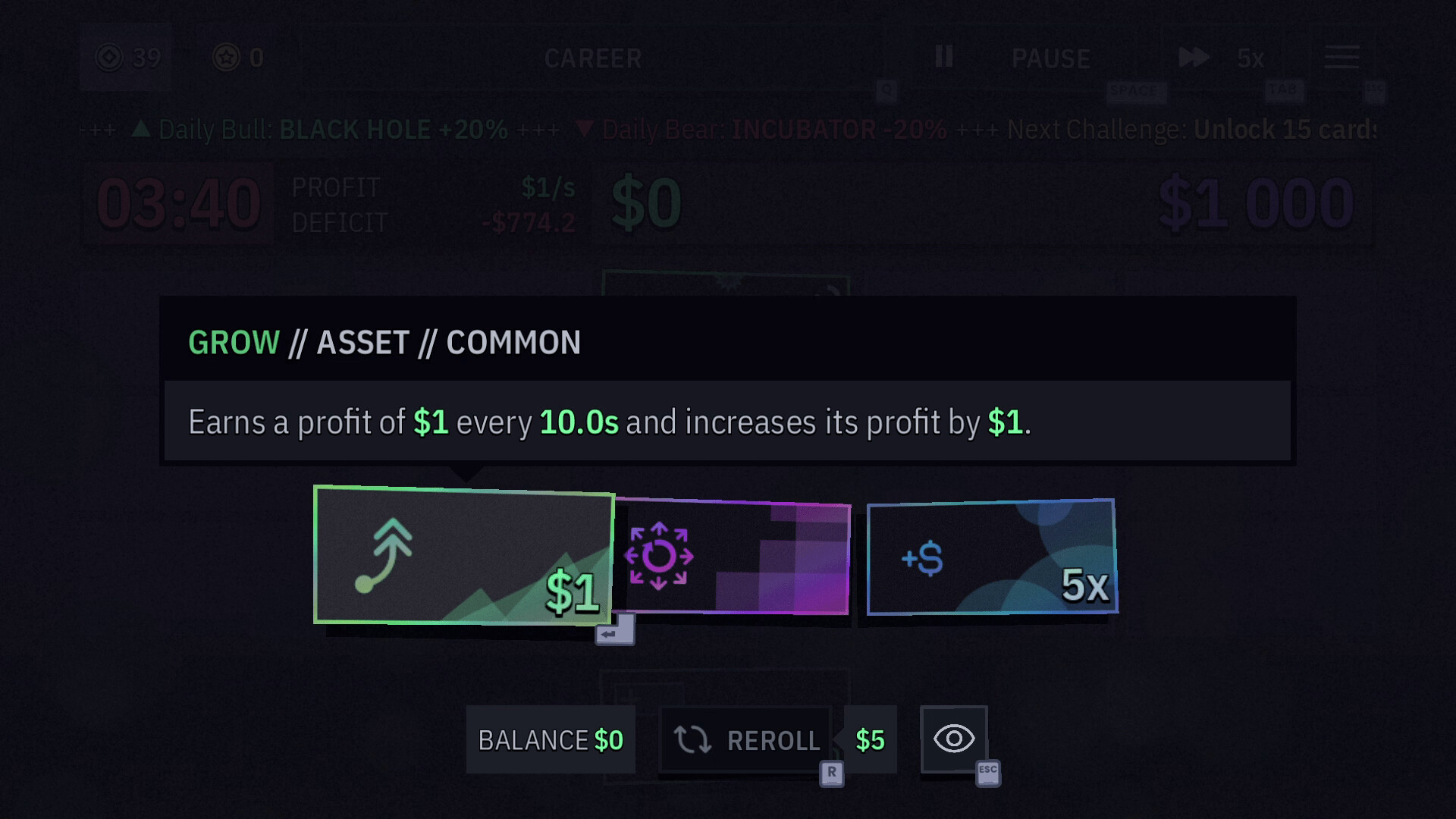
Beyond the design-level complaints, this review found repeated, more basic frustration with the game's own communication of its systems. Multiple reviewers report confusion over specific mechanics, including what the "stack" effect actually does and how to sell unwanted cards, with at least one reviewer stating directly that a proper tutorial explaining the game's own terminology is needed. This is a more straightforward, fixable complaint than the deeper randomness and balance issues above, but it compounds the sense of a promising system that hasn't yet fully explained itself to new players.
Weak card synergies and the risk of a game solving itself
A more subtle complaint, raised by several reviewers with the most invested playtime in this sample, concerns what happens once the card pool's interactions are fully understood. Multiple reviewers report that stacking or combining specific card effects doesn't reliably behave as expected, and one experienced reviewer with over 30 hours logged states directly that meaningful synergies between cards feel thin once the theme and flavour text are stripped away, leaving mostly standalone numerical effects rather than genuinely combinable systems. A related complaint from another highly invested reviewer describes discovering a way to "completely break" the game's progression once card interactions are understood well enough, turning later difficulty tiers and most story-driven challenges into a formality rather than a genuine test — a common risk in deckbuilders with permanent unlocks, but one this sample specifically ties back to a shallower web of card interactions than reviewers say the genre's best examples typically offer.
Final Verdict
The First Million delivers a genuinely satisfying incremental deckbuilding loop for players willing to engage with its systems, and its daily challenge mode is a real, specific strength that gives the game meaningful longevity beyond a single dominant strategy. What holds this score down is a cluster of specific, independently corroborated design tensions: a documented paradox where unlocking more cards makes runs harder rather than easier, randomness several reviewers say defeats meaningful planning, and a pattern of nerfing successful strategies after players have already invested real time mastering them. Worth it for genre fans who enjoy engine-building puzzles and don't mind fighting against the game's own systems as much as against its difficulty curve; more casual incremental fans may find the randomness and balance philosophy here more frustrating than rewarding.
Pros and cons
Pros
- The core engine-building loop draws genuine, repeated praise, with multiple reviewers describing real satisfaction piecing together synergistic card combinations across several attempts before achieving a first successful run
- The daily challenge mode, which fixes the available cards and adds a leaderboard, draws specific praise for giving the game meaningful longevity once a dominant, game-breaking strategy has been found in the main mode, preventing the core challenge from simply evaporating
- Multiple reviewers describe the game as genuinely addictive in the classic incremental sense, with more than one reporting a planned ten-minute session turning into several hours chasing "one more run"
- At least one reviewer specifically credits the developer with fast, personal responsiveness to a reported bug via Discord, describing the resolution as a strong reason to trust the game's ongoing support
Cons
- A specific, independently repeated design paradox is central to this sample's criticism: multiple reviewers report that unlocking more cards makes runs harder rather than easier, since a larger overall card pool dilutes the odds of drawing the specific cards a given strategy depends on, effectively punishing players for engaging with the game's own unlock systems
- A large number of reviewers describe randomness as excessive to the point of undermining meaningful planning, with more than one reporting that a run's outcome is effectively decided by whether strong synergy cards appear within the first several draws, regardless of subsequent player skill
- Several reviewers specifically and pointedly object to the developer nerfing successful strategies after the fact, with one detailed account describing a build they'd worked hard to perfect being reduced in power by 20 percent shortly after it won them a run, forcing them to find an entirely different approach
- The interface and onboarding draw repeated complaints, including confusion over what specific mechanics like "stack" actually do and how to sell unwanted cards, with at least one reviewer stating the game needs a proper tutorial to explain its own terminology
- Multiple reviewers report the game becoming repetitive or boring on later difficulty levels once an effective strategy is found and repeated, with card flavour text and theme largely forgotten in favour of purely mechanical effects after extended play
Screenshots
-
The First MillionImage: Sonderland via Steam -
The First MillionImage: Sonderland via Steam -
The First MillionImage: Sonderland via Steam -
How the review scores each part of the gameWanderer Editorial -
The essentials at a glanceWanderer Editorial -
The short versionWanderer Editorial