Game review
Mount & Blade II: Bannerlord
7.5 / 10
- Developer
- TaleWorlds Entertainment
- Publisher
- TaleWorlds Entertainment
- Released
- 25 October 2022
- Platforms
- Windows
- Genre
- Sandbox RPG / Strategy
- Monetisation
- NZ$79.99 with three DLC. No microtransactions. Extensive mod support, which players treat as effectively mandatory. Checked 4 August 2026.
- Players
- Online multiplayer and, more recently, campaign co-op
The short version
Nothing else lets you charge a shield wall with five hundred men and feel every impact. Bannerlord's battles — the formations, the cavalry timing, the sieges, the way a rout spreads across a field — are the best in gaming, and the world map they sit on is beautiful. What surrounds them is a sandbox that long-time players describe as emptier than Warband's, a fifteen-year-old game. The most-upvoted criticism isn't a rant; it's an itemised list of things the predecessor had and this doesn't. Superb battle simulator, unfinished-feeling kingdom.
Biggest strengths
- Combat is unmatched — formation control, cavalry, morale and rout dynamics all work at a scale nothing else attempts
- Sieges are genuinely excellent, with ladders, towers and battering rams that change the shape of an assault
- A beautiful, legible world map with a functioning trade and recruitment economy underneath
Biggest weaknesses
- Long-term players list numerous Warband features absent here — feasts, claimants, named companions, right-to-rule, naval combat, upgradable villages among them
- The 1.0 release was widely felt to change little after two and a half years of Early Access
- Kingdom and diplomacy systems are shallow relative to the battles they frame
Who it's for: Players who want the best medieval combat available and are happy to fill the rest in with mods. Not for anyone expecting the deep political sandbox the setting implies, and not for players who resent paying eighty dollars for a game the community completes.
Our recommendation: Buy it on sale and install mods before your first campaign — this is the rare game where "just mod it" is the community's sincere, near-universal advice rather than a deflection. Treat the battles as the product and the kingdom layer as a frame for them. If you loved Warband specifically for feasts, claimants and companion writing, read the list below before spending anything.
7.5 / 10
The most-upvoted negative review of Bannerlord with any real substance isn't an argument. It's a list, from a player with 811 hours:
No feasts or events. No claimants or usurpers. Randomly generated companions. No gang or brigand playstyle. Villages don't count as fiefs. No upgradable villages. No manhunters. No naval combat. Right-to-rule discarded, so a clown could become a faction leader overnight. No books or trainers.
Every item on that list is a thing Mount & Blade: Warband had in 2010. That's the review this game keeps receiving, and understanding why it's both accurate and insufficient is the whole job here.
The battles are the best there are
Start with what nothing else does.
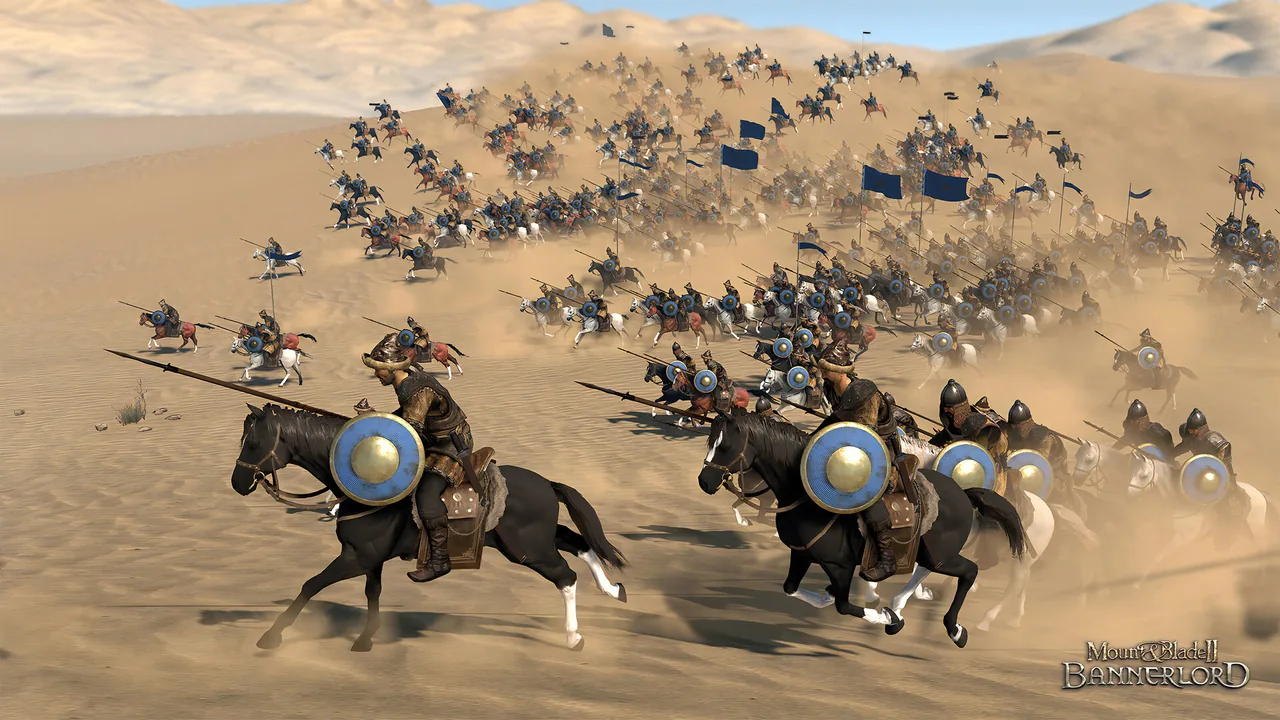
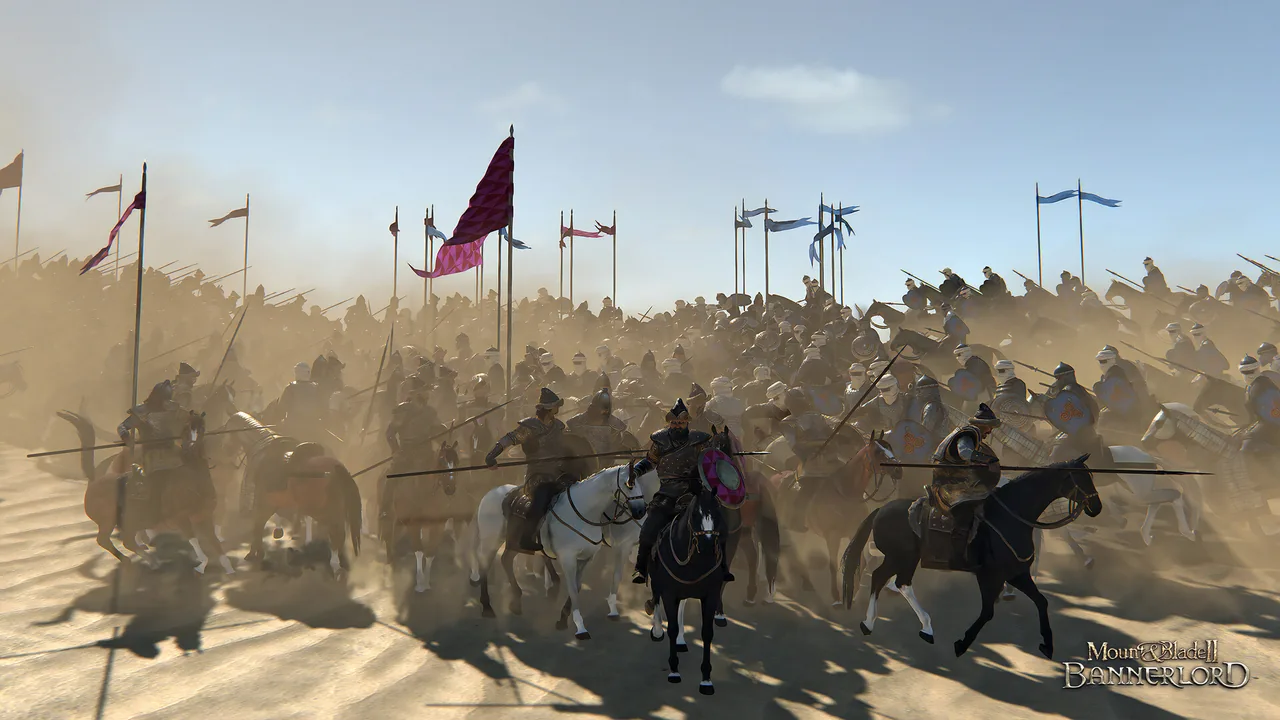
Bannerlord puts you on a horse in the middle of a battle involving hundreds of soldiers, and every part of that battle behaves. Formations hold and break. Cavalry hits with weight and loses momentum in a press. Archers matter until they don't. Morale propagates, so a rout starts somewhere specific and spreads. You can be in the front rank swinging a two-handed axe or up a hill giving orders, and both are real ways to fight.
Sieges are the showpiece. Ladders, towers, rams, boiling oil and a wall that actually has to be taken, with your troops climbing while you decide whether to lead from the front. There is no other game where a medieval assault feels like this.
Around it sits a beautiful world map with a working economy — trade goods that vary by region, recruitment that depends on relations, garrisons and wages that make an army a business. The freedom is genuine: you can be a caravan merchant, a mercenary, a bandit, a vassal or a king, and the game supports all of it.
Median recent playtime is 116 hours. Nobody is putting that in under duress.
The kingdom is where it thins out
Now the list.
The core complaint, sustained since Early Access and repeated by players with hundreds of hours, is that the sandbox around the battles is shallower than the fifteen-year-old game it succeeds. Companions are procedurally generated rather than written characters, so the memorable named followers of Warband are gone. There are no feasts, no claimant quests to install a rival on a throne, no right-to-rule score to make succession coherent. Villages aren't fiefs. Diplomacy is thin, and faction leadership can change in ways players describe as absurd.
Whether every item is precisely true today I can't verify — this is a game that patches, and some gaps have narrowed. But the pattern is consistent across six years and hundreds of reviews, and it's corroborated by the reaction to 1.0 itself. A player with 295 hours wrote at release that they'd had high hopes for the 1.0 update and found "just a few fixes," concluding that the only thing that feels right are the battles: "If you want a pretty battle simulator, please buy and enjoy."
That's the fairest summary of Bannerlord anyone has written, and it's from a negative review.
The sequel problem, stated fairly
It's worth being even-handed about the Warband comparison, because "the old game had more features" is a complaint sequels attract whether or not they deserve it.
Bannerlord is unambiguously better at the things it chose to rebuild. Combat has weight and clarity Warband never approached. Sieges went from an abstraction to a set piece. Troop management, the world map, the trade economy and the recruitment systems are all more legible. Character progression runs on a use-based skill system that responds to how you actually play. None of that is nostalgia- proof — it's simply superior, and the players listing missing features usually say so in the same review.
What happened is a breadth-for-depth trade. Warband was a fifteen-year-old game with a decade of accumulated systems, many of them shallow but characterful: a feast you could attend, a claimant you could back, a companion with written dialogue and a grudge. Bannerlord rebuilt the foundations to a much higher standard and shipped with fewer of those small, flavourful systems on top.
That's a defensible engineering decision and a genuinely disappointing player experience, which is why the argument never resolves. A sandbox is made of incidents, and Bannerlord has fewer kinds of incident than its predecessor while simulating each one better.
The honest test is what you remember afterwards. Bannerlord players tell stories about battles. Warband players told stories about people. Both are worth having; only one of them is what the setting promises.
Mods, and the developer
The community's answer is mods, and here the recommendation is unusually sincere. Where "just mod it" is normally a deflection, in Bannerlord's review corpus it appears as practical advice from people who like the game: install mods, then play.
Which makes the other recurring complaint sting. A reviewer with 91 hours who followed development closely argues that TaleWorlds have consistently sidelined their community and hindered modders' attempts to fix the game. I can't verify the characterisation and I'm not going to repeat the stronger accusations attached to it — but a developer-modder relationship described this persistently, on a game whose players consider mods essential, is worth knowing about before you buy.
One dated item for completeness: a heavily-upvoted 2020 review reports players being banned from multiplayer under content rules applied to a specific market, including for having an "incorrect" Steam ID. That's six years old, I have no information on its current status, and I raise it only because of its prominence in the corpus. If multiplayer is your reason for buying, check the current situation.
Better recent news: campaign co-op has arrived, and it's what several of the most enthusiastic recent reviews are about.
7.5 out of 10. Rated 7.5 out of 10.
Bannerlord is two games in one box. The battle simulator is a 9 and has no competitor — if you want to command and fight in a medieval army, buy this and be happy. The kingdom sandbox around it is a 6, thinner than its own predecessor in ways its most devoted players have itemised for six years, and eighty dollars is a lot to pay for something the community is expected to finish.
Buy it on sale, mod it before your first campaign, and go in for the fighting. On those terms it's one of the great time sinks in gaming — a 116-hour median doesn't lie — and the list at the top of this review is a description of the game it could have been rather than a reason to skip the one that exists.
Pros and cons
Pros
- Combat is unmatched — formation control, cavalry, morale and rout dynamics all work at a scale nothing else attempts
- Sieges are genuinely excellent, with ladders, towers and battering rams that change the shape of an assault
- A beautiful, legible world map with a functioning trade and recruitment economy underneath
- Enormous freedom: mercenary, merchant, bandit, vassal or ruler are all viable paths
- Deep mod support, and the scene has built much of what players say is missing
- Still drawing a 116-hour median among recent reviewers, four years after 1.0
Cons
- Long-term players list numerous Warband features absent here — feasts, claimants, named companions, right-to-rule, naval combat, upgradable villages among them
- The 1.0 release was widely felt to change little after two and a half years of Early Access
- Kingdom and diplomacy systems are shallow relative to the battles they frame
- Faction leadership and succession can produce outcomes players describe as nonsensical
- Reviewers describe a difficult relationship between the developer and its modding community
- NZ$79.99 is a lot for a game whose players routinely recommend mods to complete it
Screenshots
-
Mount & Blade II: BannerlordImage: TaleWorlds Entertainment via Steam -
Mount & Blade II: BannerlordImage: TaleWorlds Entertainment via Steam -
Mount & Blade II: BannerlordImage: TaleWorlds Entertainment via Steam -
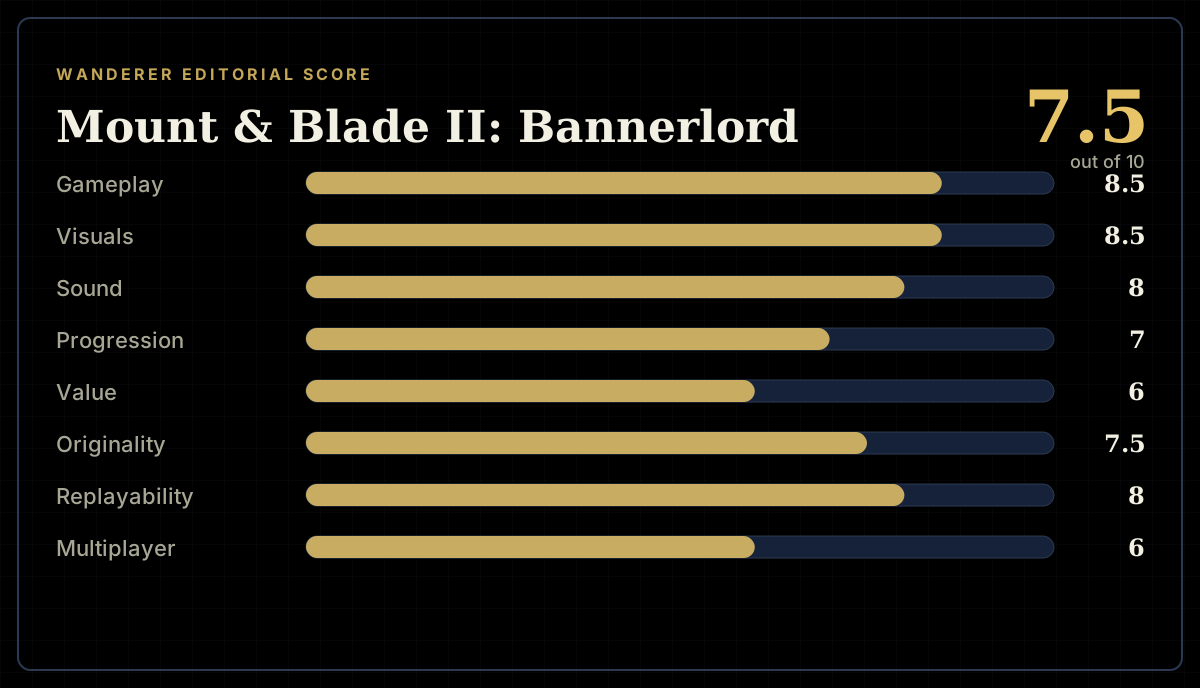
How the review scores each part of the gameWanderer Editorial -
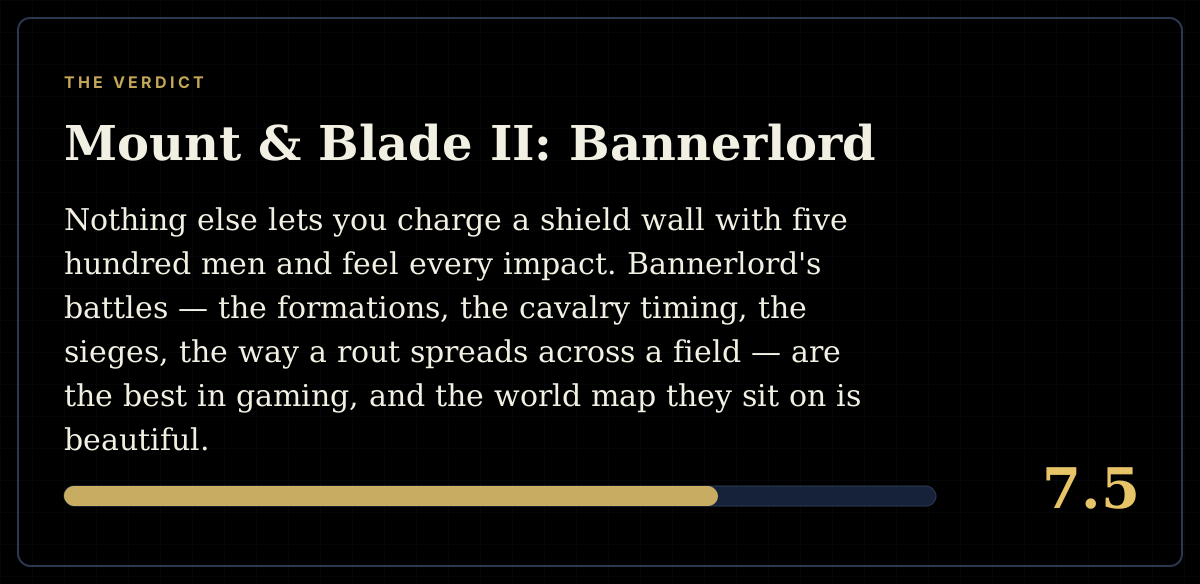
The short versionWanderer Editorial