Game review
Nioh: Complete Edition
7.5 / 10
- Developer
- Team Ninja / Koei Tecmo Games
- Publisher
- Koei Tecmo Games
- Released
- 7 February 2017
- Platforms
- Windows
- Genre
- Souls-Like Action RPG
- Monetisation
- One-time purchase, including all three story DLC expansions in the Complete Edition package.
- Players
- Online co-op and PvP alongside the single-player campaign
The short version
Nioh sends a Western sailor stranded in feudal Japan through a Souls-like built around one of the genre's deepest combat systems: a Low, Mid and High stance for every weapon type, a Ki-pulse timing mechanic layered on top of stamina management, and a spirit-guardian system pulled from Japanese folklore. On PC, where it arrived in November 2017 as the Complete Edition bundling all three story expansions, it sits at Very Positive among English-language reviewers, 82% of 11,701, with the combat system drawing close to universal praise -- reviewers who disagree about almost everything else in the game keep independently landing on "the combat is genuinely excellent" as their starting point.
What they don't agree on is everything wrapped around that combat. A large, consistent share of the negative sample -- spanning launch-year reviews and reviews written in 2026 -- describes a loot system that floods the player with near-constant gear drops, most of them numerically marginal upgrades that demand near-constant menu management rather than the more considered, rarer finds Souls games are built around. Several reviewers describe enemy difficulty scaling through raw stat inflation on higher difficulties rather than smarter design, and mission-based, more linear level structure that a meaningful number of Souls veterans say lacks the interconnected world design the comparison invites. "This is NOT a Soulslike," reads one detailed, widely-read review -- "this is more akin to Ninja Gaiden meets Diablo" -- a framing several other reviewers independently arrive at as the more accurate way to set expectations.
Biggest strengths
- A genuinely deep, technical combat system -- three stances per weapon type, a Ki-pulse timing mechanic, and multiple viable weapon and playstyle combinations -- that draws close to universal praise even from otherwise critical reviewers
- A distinctive, well-researched setting rooted in real Sengoku-era history and Japanese folklore, including a spirit-guardian system reviewers say is genuinely novel for the genre
- Very large amount of content for the price, including all three story DLC in the Complete Edition and strong replay incentive via New Game Plus difficulty tiers
Biggest weaknesses
- A loot system that floods players with near-constant, mostly marginal gear drops, repeatedly described as demanding tedious inventory management rather than rewarding meaningful finds
- Enemy difficulty on higher tiers frequently described as scaling through raw stat increases rather than smarter design, producing damage-sponge encounters several reviewers call artificial rather than skill-based
- Mission-based level structure that a meaningful share of Souls veterans say lacks the interconnected, exploration-driven world design the genre comparison sets them up to expect
Who it's for: Action RPG fans specifically drawn to deep, technical combat systems, and anyone who wants a loot-heavy Diablo-style progression grafted onto Souls-adjacent difficulty. Not for players expecting a close FromSoftware clone, or anyone who dislikes managing a constant stream of incremental gear upgrades.
Our recommendation: One of the genre's most mechanically rewarding combat systems, attached to a loot and mission structure that divides even its own fans -- go in expecting Ninja Gaiden with a loot grind rather than Dark Souls in Japan, and the gap between what's promised and what's delivered mostly closes.
7.5 / 10
The pitch
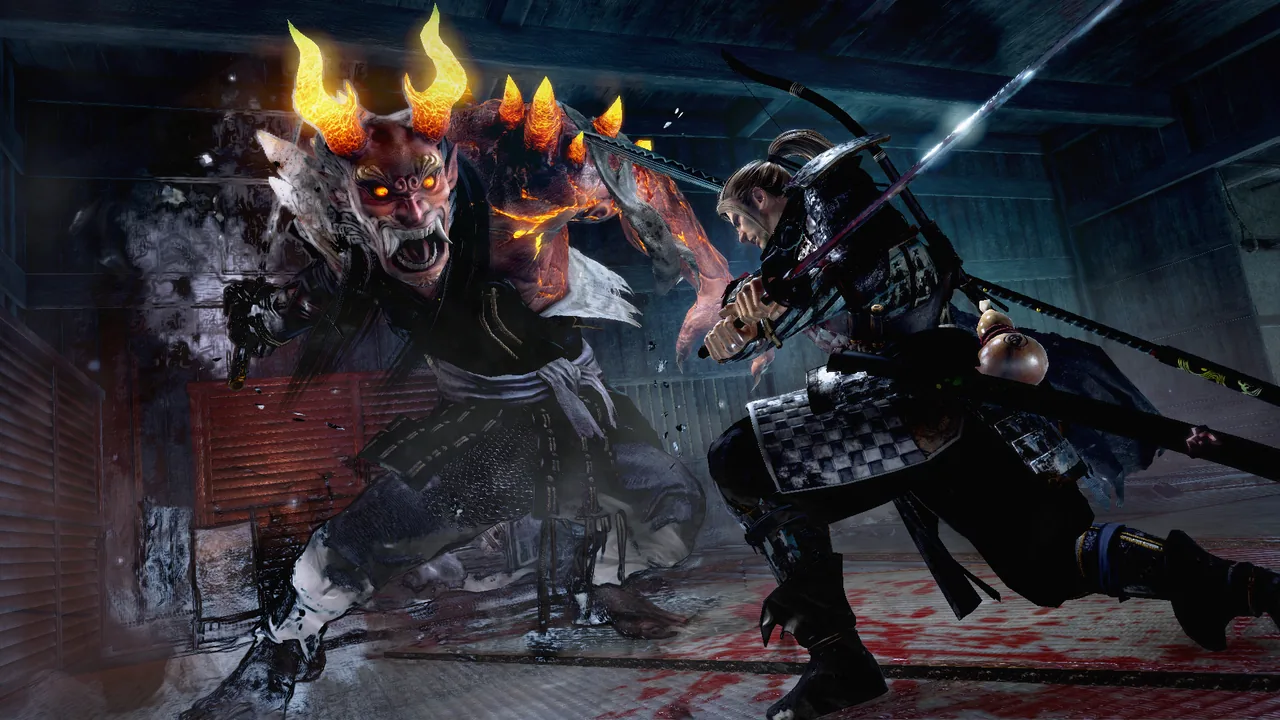
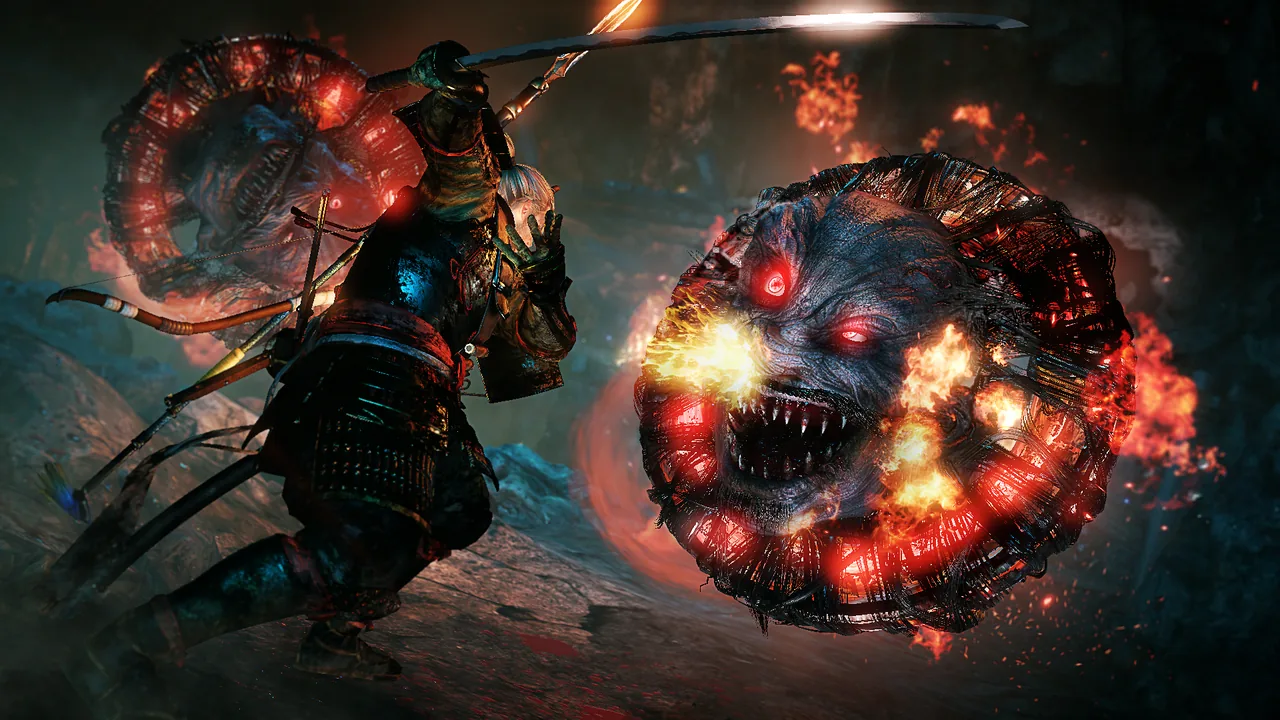
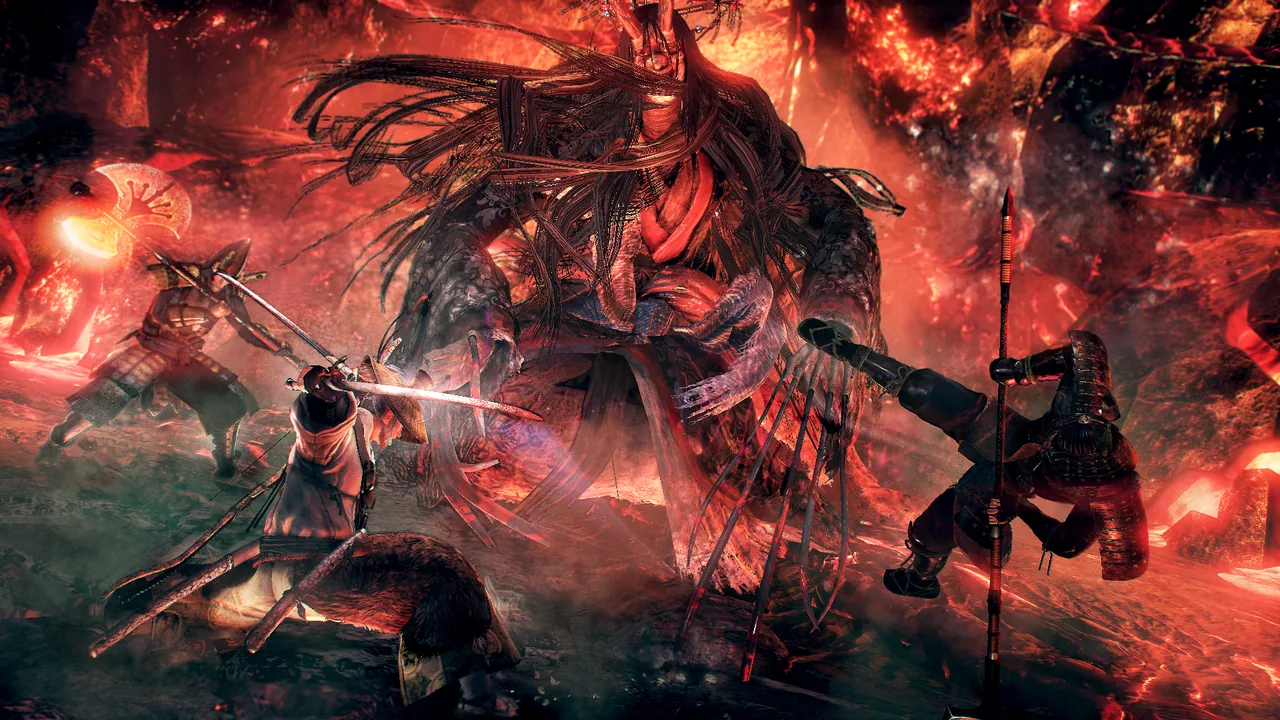
Nioh drops William Adams -- based loosely on the real historical figure, an English sailor who became the first Western samurai -- into a supernatural version of Sengoku-era Japan, hunting a kidnapped alchemist and a mysterious substance called Amrita through a war-torn landscape crawling with Yokai, demons drawn from Japanese folklore. Mechanically, it's a third-person action RPG built on the Souls formula's bones -- stamina management, punishing enemies, bonfire-style shrines, recoverable currency dropped on death -- with Team Ninja's own combat DNA from the Ninja Gaiden series layered heavily on top. Every weapon type has three stances, trading speed for power, and a timed "Ki Pulse" mechanic rewards precise stamina recovery at the end of every exchange, giving combat a rhythm distinct from anything FromSoftware has built.
It released for PS4 on 7 February 2017; the PC version arrived later that year, on 7 November 2017, as the Complete Edition, bundling all three of the game's story DLC expansions into a single package from day one on that platform. Both releases came as full launches, with no Early Access period on either.
Where almost nobody disagrees: the combat
Read enough Nioh reviews, and one thing survives every disagreement about the rest of the game: the combat is exceptional. Reviewers who otherwise pan the loot system, the level design or the difficulty balance still, with striking consistency, open or close with some version of "the combat is the best part of this game." The stance system gives every weapon type real tactical range -- High stance for damage against staggered enemies, Low stance for speed and evasion, Mid as the flexible middle ground -- and the Ki Pulse timing window rewards precise play in a way several reviewers say has no real equivalent in Dark Souls or Bloodborne. One long-time player, describing over 300 hours across console and PC, calls it simply the deepest and most flexible combat system among third-person action games they've played. It's rare for a review corpus this large and this divided to agree on anything as completely as it agrees on this.
Where the disagreement lives: everything wrapped around it
The negative sample -- and a fair number of otherwise-positive reviews with real reservations -- converges on a different, more structural set of complaints, and they've stayed remarkably consistent from 2017 through 2026. The most frequently repeated is the loot system: Nioh drops gear constantly, at a rate several reviewers describe as overwhelming rather than exciting, with the overwhelming majority of drops representing marginal numeric upgrades rather than meaningful finds. "You will get the best armor and weapons and be over level 100 by endgame and will somehow feel even weaker than you were," reads one particularly frustrated 2024 review, describing a sense that raw numbers rather than skill increasingly define whether an encounter is winnable. Several reviewers connect this directly to difficulty complaints on the game's higher post-campaign tiers, describing damage-sponge enemies and stat walls that feel less like the escalating, telegraphed challenge Souls games are known for and more like a grind gate.
The second consistent complaint concerns structure: Nioh is built from discrete, replayable missions rather than one continuous, interconnected world, and a meaningful number of Souls veterans say that costs the game the sense of a real, explorable place that FromSoftware's level design is famous for. One of the most widely-read reviews in the sample makes the comparison explicit and corrective rather than dismissive: "this is NOT a Soulslike... this is more akin to Ninja Gaiden meets Diablo," going on to describe the loot-and-missions structure as closer to an action RPG grind than a slow, deliberate Souls campaign. That reframing shows up independently across many reviews, which suggests it's less a complaint about quality and more a genuinely useful correction to what the marketing and surface-level comparisons imply.
The achievement curve backs up how hard this actually is
Global achievement completion supports the review corpus's central tension well. Early milestones -- completing the first mission, reaching a base character level, first use of the game's hot spring rest system -- sit at 50-75%, reasonable numbers for any long action RPG's opening hours. From there the curve falls steadily and then drops sharply for DLC-specific and challenge-run achievements, several sitting at 3-4%. The platinum-equivalent full-completion achievement sits at just 2.6%, one of the lowest completion rates covered in this review's lane -- a concrete number behind the review corpus's repeated description of a game that demands real, sustained commitment to see through to full completion, on top of the difficulty complaints layered on top of that.
Value
At NZ$71.49 with no discount active at the time of checking, the Complete Edition represents a genuinely large amount of content for the price: the full base campaign plus all three story DLC expansions, multiple New Game Plus difficulty tiers with escalating challenge and rewards, and online co-op and PvP that reviewers describe as still functional and populated years after launch. For players who click with the combat system, hour-for-hour value is strong; for players who bounce off the loot-management and mission-structure complaints documented above, the campaign's length can work against it rather than for it.
Verdict
Nioh is a genuine case of a game whose best element and its most divisive elements sit right next to each other rather than separated across different systems. The combat -- stances, Ki Pulse, weapon variety -- is close to universally praised, including by reviewers who otherwise recommend against the game. The loot flood, the more linear mission structure and the stat-driven difficulty spikes on higher tiers are just as consistently the reasons a real share of players, including committed Souls veterans, pull back from a full recommendation. Go in with the right comparison in mind -- Ninja Gaiden's combat depth wrapped in a Diablo-style loot grind, not a Dark Souls clone set in Japan -- and the gap between Nioh's reputation and what it actually delivers mostly closes.
Pros and cons
Pros
- A genuinely deep, technical combat system -- three stances per weapon type, a Ki-pulse timing mechanic, and multiple viable weapon and playstyle combinations -- that draws close to universal praise even from otherwise critical reviewers
- A distinctive, well-researched setting rooted in real Sengoku-era history and Japanese folklore, including a spirit-guardian system reviewers say is genuinely novel for the genre
- Very large amount of content for the price, including all three story DLC in the Complete Edition and strong replay incentive via New Game Plus difficulty tiers
- A serviceable, actively-used PC port with online co-op and PvP that reviewers describe as functional years after launch
Cons
- A loot system that floods players with near-constant, mostly marginal gear drops, repeatedly described as demanding tedious inventory management rather than rewarding meaningful finds
- Enemy difficulty on higher tiers frequently described as scaling through raw stat increases rather than smarter design, producing damage-sponge encounters several reviewers call artificial rather than skill-based
- Mission-based level structure that a meaningful share of Souls veterans say lacks the interconnected, exploration-driven world design the genre comparison sets them up to expect
- Global achievement data shows a very steep completion curve -- common early milestones sit at 50-75%, while the platinum-equivalent full-completion trophy sits at 2.6%, one of the lowest in this review's coverage
Screenshots
-
Nioh: Complete EditionImage: KOEI TECMO GAMES CO., LTD. via Steam -
Nioh: Complete EditionImage: KOEI TECMO GAMES CO., LTD. via Steam -
Nioh: Complete EditionImage: KOEI TECMO GAMES CO., LTD. via Steam -
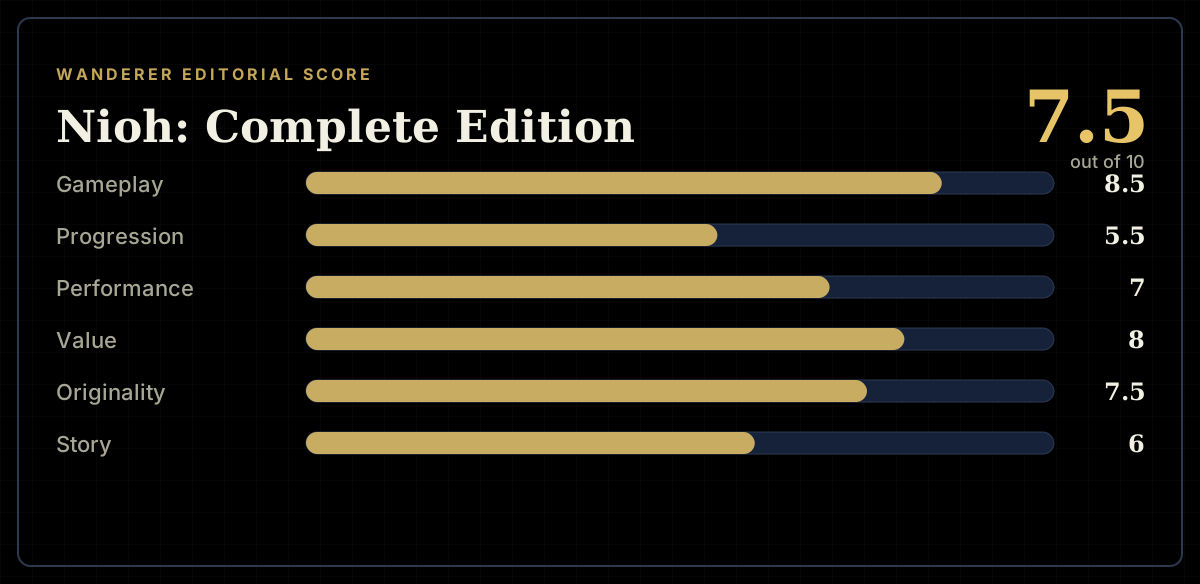
How the review scores each part of the gameWanderer Editorial -
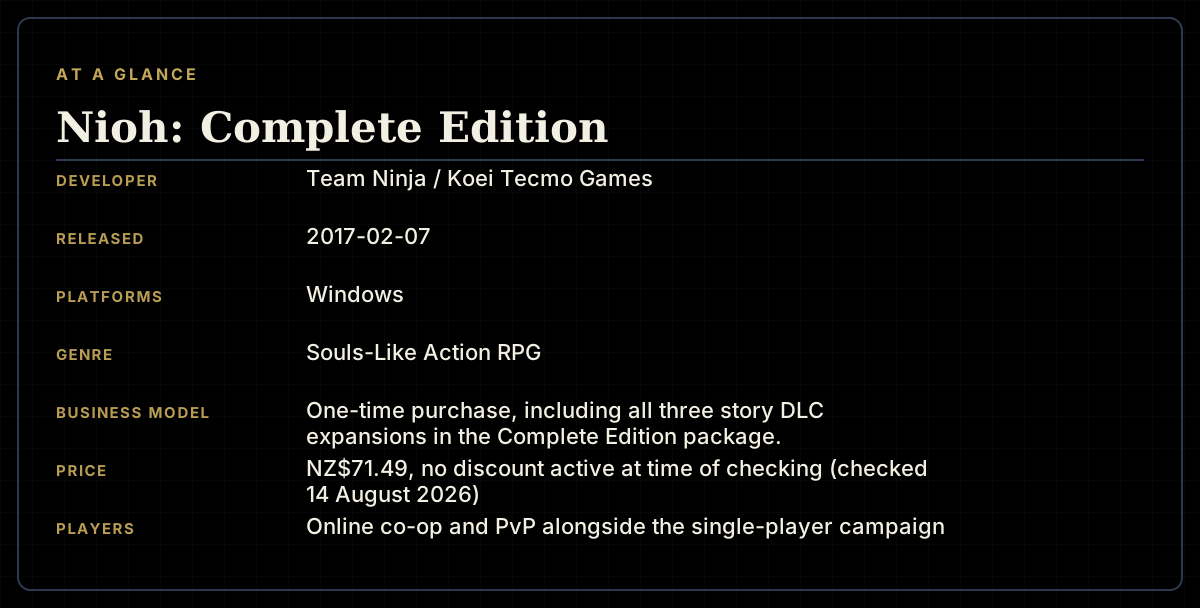
Nioh: Complete Edition at a glanceWanderer Editorial -
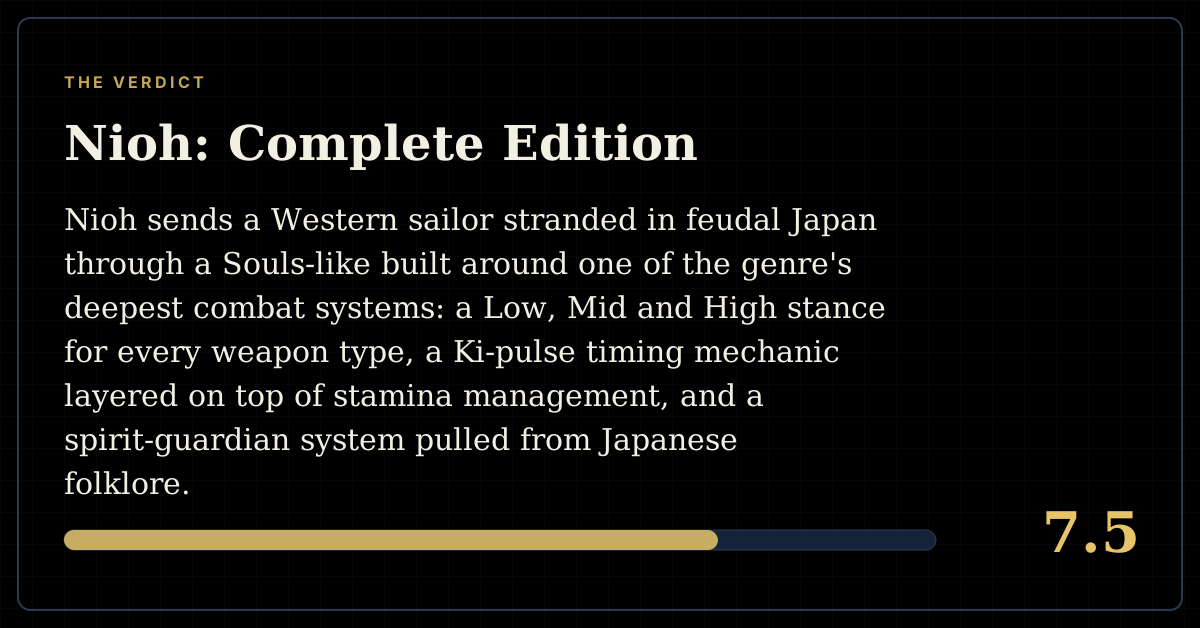
The short versionWanderer Editorial