Game review
Warhammer 40,000: Inquisitor - Martyr
6 / 10
- Developer
- NeocoreGames
- Publisher
- NeocoreGames
- Released
- 5 June 2018
- Platforms
- Windows
- Genre
- Action RPG
- Monetisation
- One-time base purchase plus 22 separate paid DLC packs (classes, cosmetics and content expansions) at the time of writing.
- Players
- Online and LAN co-op and PvP; offline single-player mode added in May 2024
The short version
Warhammer 40,000: Inquisitor - Martyr is a Diablo-style action RPG set in the grimdark 40k universe, entering Steam Early Access on 31 August 2017 and exiting to a full release on 5 June 2018 -- 2017 as its original release year under this lane's rule. It sits at Mostly Positive on Steam, 78% of 11,658 English-language reviews, and its review corpus tells an unusually clear before-and-after story: a rough, thin launch build widely criticised in 2018, and a substantially reworked game after a major "2.0" content and combat overhaul landed in May 2019, which a large share of returning players credit with making the game genuinely good rather than merely functional.
What kept dragging on the game's reputation long after that turnaround wasn't balance or content -- it was a design decision baked in from the start: Inquisitor - Martyr required a constant internet connection even to play its single-player campaign solo, a specific and frequently repeated complaint across years of reviews, including from players who otherwise liked the game. NeocoreGames didn't ship a dedicated offline mode until 23 May 2024, nearly seven years after the game's original Early Access launch -- a genuinely long wait for what reviewers consistently named as the single biggest thing standing between them and a full recommendation.
Biggest strengths
- A genuinely well-realised, lore-accurate grimdark setting that even critical reviewers consistently praise, with strong art direction and voice work
- Widely credited turnaround after the May 2019 "2.0" update, which reworked combat and content and is repeatedly cited by returning players as the point the game became genuinely good
- Slower, more tactical combat pacing than genre leaders like Diablo III or Path of Exile, which several reviewers specifically prefer
Biggest weaknesses
- Required a constant internet connection to play even solo content for nearly seven years after launch, a complaint that recurs across almost every year of reviews until the 2024 offline mode
- A genuinely thin, disappointing launch build in 2017-2018, with "open world" marketing several reviewers call misleading relative to the actual, more limited endgame content on offer
- A steep, ongoing DLC catalogue -- 22 separate paid packs at the time of writing -- that several reviewers flag as excessive relative to the base game's price
Who it's for: Warhammer 40k fans wanting a grimdark, lore-accurate action RPG, and Diablo-style ARPG fans who don't mind a slower, more tactical pace than genre leaders. Not for anyone who wants a large amount of endgame variety, or who was burned by the always-online requirement in the past and hasn't checked back since the 2024 offline mode shipped.
Our recommendation: A genuinely improved game since its 2019 overhaul, worth it at a discount for 40k fans specifically, and finally playable fully offline as of May 2024 -- check the DLC list before buying, since the base game alone is a smaller slice of the full content than the 22-pack DLC catalogue implies.
6 / 10
The pitch
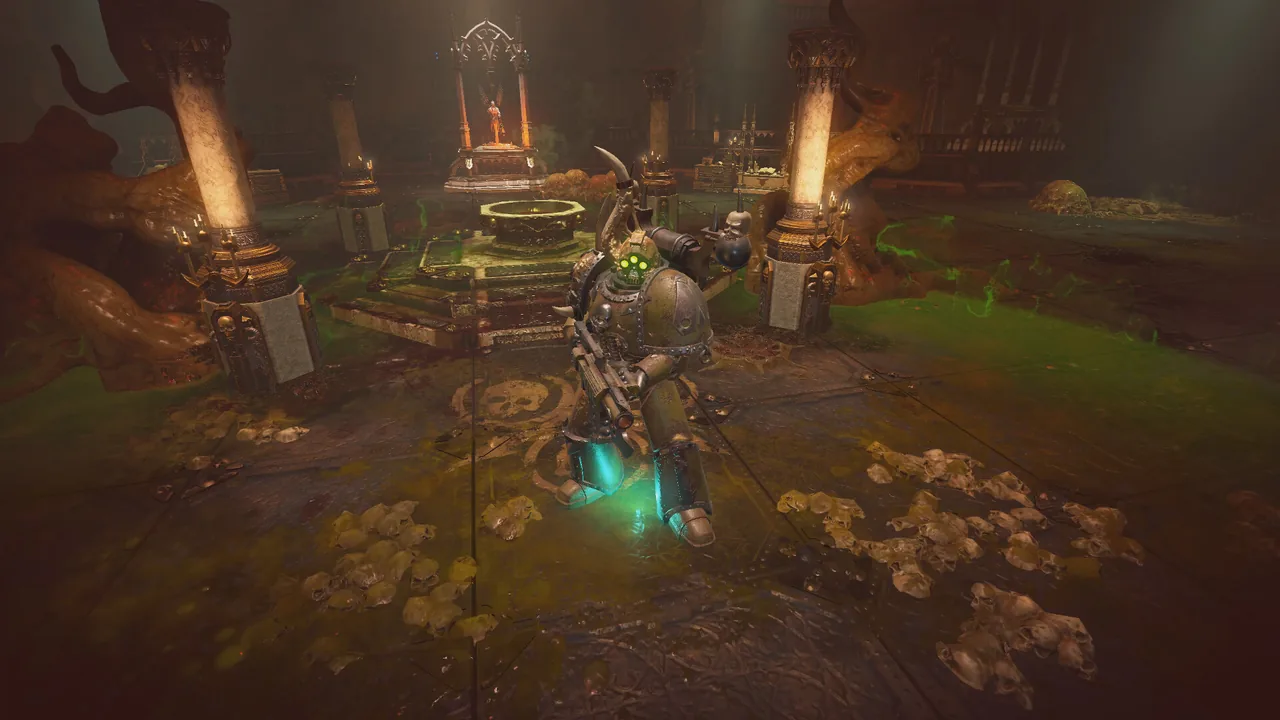
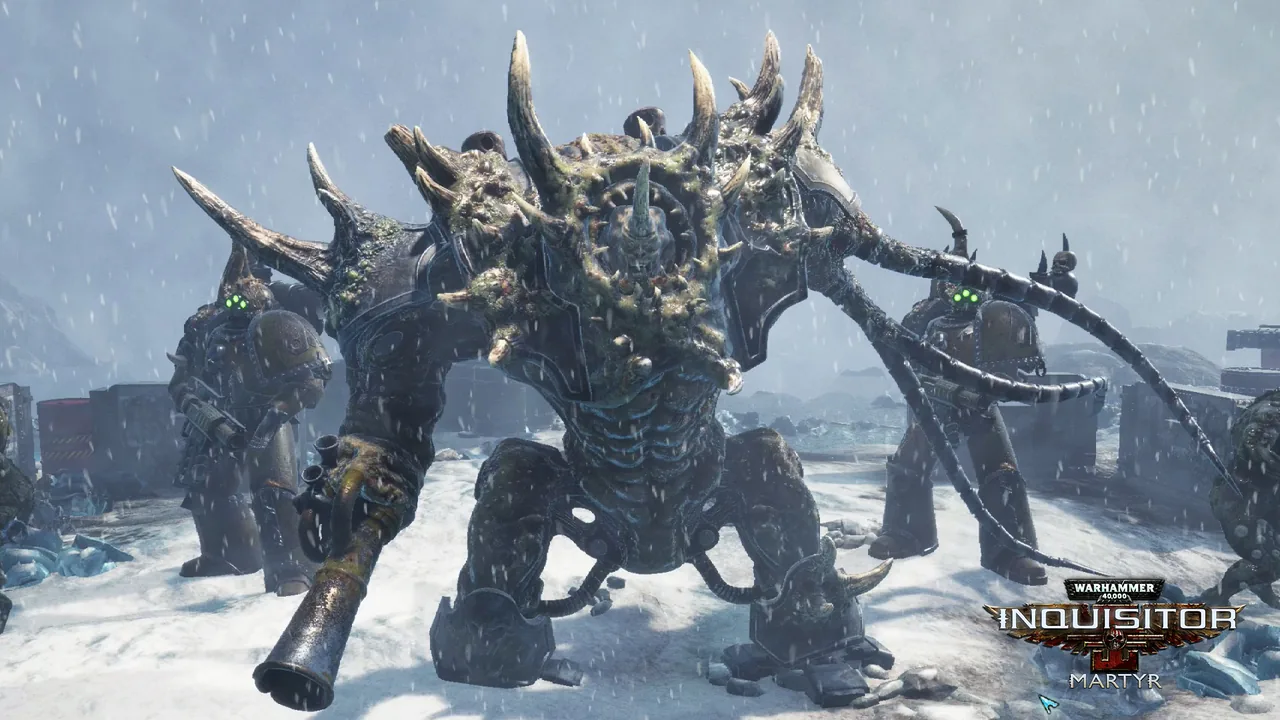
Warhammer 40,000: Inquisitor - Martyr puts you in the boots of an Inquisitorial agent -- Crusader, Assassin, Psyker, Tech-Adept or one of several later-added classes -- hunting heresy and Chaos corruption across the war-torn Caligari Sector. Structurally it's a Diablo-style action RPG: isometric combat, a loot and gear treadmill, skill trees and a mix of story missions and repeatable endgame content. What sets it apart from most 40k video game adaptations, according to its own review corpus, is a genuine commitment to the setting's grim, oppressive tone rather than a generic fantasy skin with Warhammer branding painted over it.
Developed and published by NeocoreGames -- the Hungarian studio also behind the Van Helsing action RPG series -- Inquisitor - Martyr entered Steam Early Access on 31 August 2017 and exited to a full 1.0 release on 5 June 2018, making 2017 its original release year under this review's lane rule.
A rough start, honestly documented
The launch-era reviews, from 2017 through much of 2018, are consistent about what didn't work. Several reviewers call out the game's "open world sandbox" marketing directly as misleading, with one long, detailed review from July 2018 stating flatly: "forget 'open world sand box': this is simply a lie... nothing is epic, nothing makes you feel like you are actually exploring a huge open region." Endgame content in particular drew criticism for feeling thin relative to what a genre built on repeatable, evolving endgame loops needs to hold players' attention. None of this reads as reviewers rejecting the core concept -- the setting and lore accuracy draw praise even inside otherwise negative reviews from this period -- but the consensus is clear that the game shipped without enough content or polish to support its ambitions.
The turnaround: a specific, dated update
What makes Inquisitor - Martyr's story worth telling nine years on is what happened next, and it's unusually well-documented compared to most games in this review's coverage: NeocoreGames shipped a major overhaul, referred to across the review corpus as "the 2.0 update," in May 2019, reworking combat and adding substantial new content. The before-and-after in player sentiment is stark and consistent. "The game has been significantly improved with the 2.0 update and is finally fun to play," reads one widely-read review; another, describing years of on-and-off play, states plainly that "the game is currently the best it has ever been" as of a 2022 revisit. This isn't a single enthusiastic outlier -- it's a pattern repeated by multiple long-time players independently returning to the game specifically because of that update, which is a meaningfully stronger signal than the usual vague "it's gotten better" comment games sometimes accrue over time.
The complaint that outlived the turnaround
What the 2.0 update didn't fix, and what continued to dog the game's reputation for years afterward, was a specific design decision: Inquisitor - Martyr required a persistent internet connection to play, including its ostensibly single-player campaign. Reviewers across nearly every year from launch onward name this directly and specifically as their reason for hesitating or declining to recommend the game, independent of how they felt about the combat or content. "This game need a constant connection to servers to play single player, and if you lose connection for even half a second you get booted back to the main menu," reads a 2022 review; a 2025 review describes being unable to play during a server outage years into the game's life, still frustrated by the same structural choice. It's a rare case where a specific technical decision, rather than balance or content depth, is the dominant recurring complaint across a game's entire review history.
NeocoreGames eventually addressed it directly: a dedicated offline single-player mode, allowing the base game and its story DLC to be played without any connection (seasonal and multiplayer content excluded), shipped on 23 May 2024 -- nearly seven years after the game's original Early Access launch. That's a genuine, if very late, response to the single most consistent complaint in the game's review history, and it's worth knowing about explicitly for anyone who tried the game years ago, hit the always-online wall, and never went back.
Monetisation and value
Inquisitor - Martyr's DLC catalogue has grown substantially since launch -- 22 separate paid packs at the time of writing, spanning new classes, cosmetics and content expansions. Several reviewers, particularly from 2019 onward, flag the scale of that catalogue as excessive relative to the base game's NZ$79.99 price, one commenting on "15 dlc already" back in 2019 when the number was considerably smaller than it is now. That said, the base game and its DLC are both frequently discounted in Steam sales, and multiple reviewers specifically recommend waiting for a "complete edition" bundle or a steep discount rather than buying piecemeal at full price -- one reports getting the base game and expansion bundled at 90% off and calling it "completely worth it" at that price, a very different verdict from anyone paying full catalogue price.
What the achievement data shows
Global achievement completion follows a familiar shape for a long-running action RPG: early tutorial and campaign milestones sit at 47-85%, and the curve falls steadily through later content. By the far end, endgame and challenge-specific achievements sit well under 1%, consistent with the review corpus's description of a smaller, more repetitive endgame loop that a meaningful share of players don't engage with heavily even after enjoying the main campaign.
Verdict
Warhammer 40,000: Inquisitor - Martyr is an unusually well-documented turnaround story: a thin, disappointing 2017-2018 launch, a specific and widely-credited overhaul in May 2019 that genuinely changed player sentiment, and one structural complaint -- the always-online requirement -- that outlived the turnaround by years before finally being addressed in 2024. For 40k fans specifically, the lore accuracy and tone have been a consistent strength throughout; for action RPG fans more broadly, it's a slower, more tactical alternative to genre leaders that rewards patience with its setting more than its endgame variety. Buy it today, on a discount and with the base game plus a sensible DLC bundle rather than the full 22-pack catalogue, and you're getting a meaningfully better and more flexible game than the one its early reputation was built on.
Pros and cons
Pros
- A genuinely well-realised, lore-accurate grimdark setting that even critical reviewers consistently praise, with strong art direction and voice work
- Widely credited turnaround after the May 2019 "2.0" update, which reworked combat and content and is repeatedly cited by returning players as the point the game became genuinely good
- Slower, more tactical combat pacing than genre leaders like Diablo III or Path of Exile, which several reviewers specifically prefer
- A real, if belated, response to its most-repeated complaint: a dedicated offline single-player mode shipped in May 2024
Cons
- Required a constant internet connection to play even solo content for nearly seven years after launch, a complaint that recurs across almost every year of reviews until the 2024 offline mode
- A genuinely thin, disappointing launch build in 2017-2018, with "open world" marketing several reviewers call misleading relative to the actual, more limited endgame content on offer
- A steep, ongoing DLC catalogue -- 22 separate paid packs at the time of writing -- that several reviewers flag as excessive relative to the base game's price
- Endgame content several reviewers describe as repetitive grinding once the story campaign ends, with achievement data showing a steep fall-off past the early campaign
Screenshots
-
Warhammer 40,000: Inquisitor - MartyrImage: NeocoreGames via Steam -
Warhammer 40,000: Inquisitor - MartyrImage: NeocoreGames via Steam -
Warhammer 40,000: Inquisitor - MartyrImage: NeocoreGames via Steam -
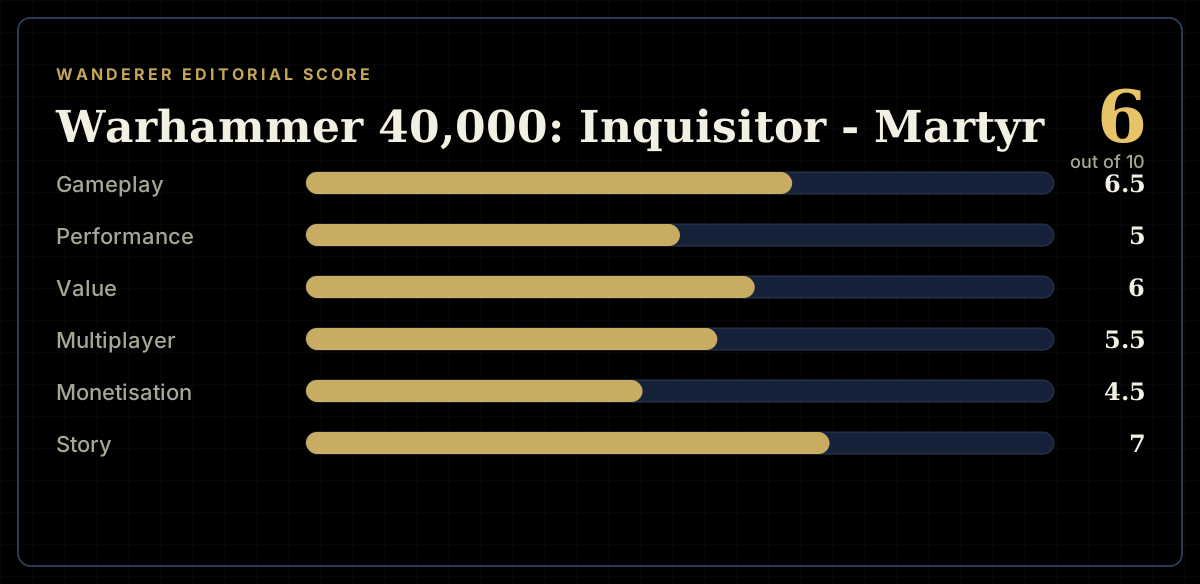
How the review scores each part of the gameWanderer Editorial -
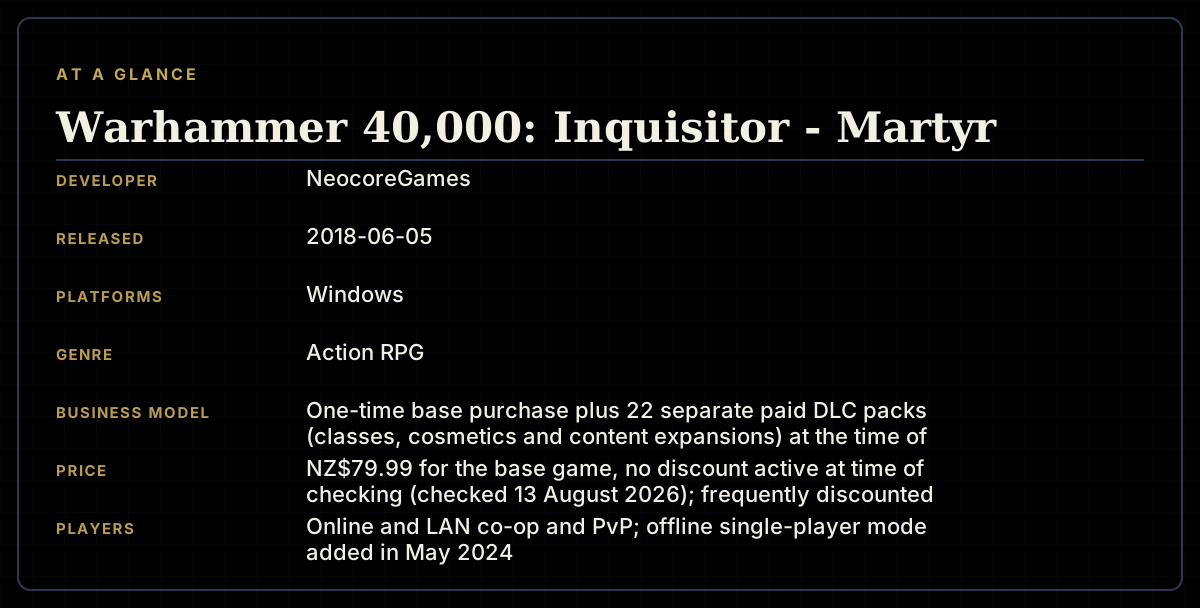
Warhammer 40,000: Inquisitor - Martyr at a glanceWanderer Editorial -
The short versionWanderer Editorial