Game review
Nioh 2 – The Complete Edition
8 / 10
- Developer
- Team Ninja
- Publisher
- Koei Tecmo Games Co., Ltd.
- Released
- 13 March 2020
- Platforms
- Windows, PlayStation 4, PlayStation 5
- Genre
- Action RPG
- Monetisation
- Premium, one-off purchase. The Complete Edition bundles all three story expansions; none are sold separately on Steam and there is no ongoing monetisation of any kind.
- Players
- Online co-op for up to three players via Visitor summons, plus solo-friendly Benevolent Grave AI allies. No competitive PvP.
The short version
Nioh 2's combat is built from more interacting systems than almost anything else in the genre — three stances, Ki Pulse timing, Burst Counters and a Yokai Shift layered with three independent Guardian Spirit forms — and the execution ceiling that produces is genuinely up there with the best action combat FromSoftware or anyone else has shipped. What surrounds that combat is a lot messier. The Complete Edition floods every mission with Diablo-quantities of gear, and unlike the game that comparison invites, Nioh 2 never quite builds the interface or the itemization clarity to make that volume feel like abundance rather than noise. Add mission-based structure that leans on reused level layouts by the midgame, and you get a genre highlight for combat depth that asks real patience of anyone who wants the rest of the package to match it.
Biggest strengths
- Stance-switching between High, Mid and Low combined with Ki Pulse timing produces a decision density most action games never attempt
- Burst Counters turn defensive reads into a genuine offensive tool by punishing an enemy's own Burst Attack for heavy Ki damage
- Yokai Shift's three Guardian Spirit forms each carry an independent Anima pool, effectively tripling the ability set available in a single fight
Biggest weaknesses
- Missions drop gear at a rate that buries meaningful upgrades under dozens of near-identical affix rolls, and the comparison screen was never built to sort through that volume quickly
- Side missions and even later main-story missions reuse the same handful of level layouts, a pattern experienced players call out specifically after finishing the base game and its DLC
- The Sengoku-era plot, built around a protagonist whose identity keeps shifting between historical episodes, is easy to ignore entirely without ever losing track of what to do next
Who it's for: Players who want the deepest stance-and-timing combat system currently on the market and are willing to fight the inventory screen to get it. A rougher fit for anyone who came from Elden Ring wanting a connected world, or who bounced off itemization bloat in a Diablo-style looter before.
Our recommendation: Buy the Complete Edition — at a discounted price under NZ$30 for the base campaign and all three expansions, it's one of the best value packages in the genre regardless of the interface friction. Go in expecting to spend real menu time managing gear you'll mostly salvage, and know that the difficulty spike hits early, before the game has taught you all the tools that make it fair.
8 / 10
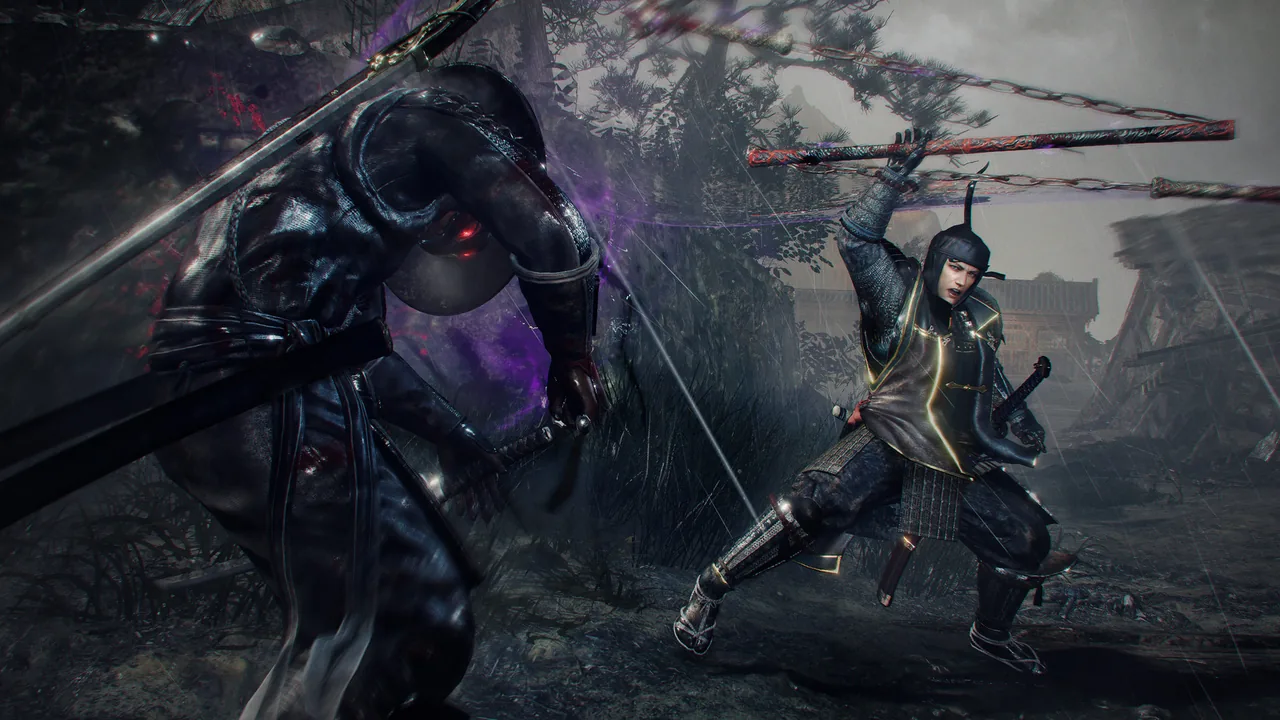
Most action games give you one way to swing a weapon and ask you to get good at it. Nioh 2 gives you three — High, Mid and Low stance, each with its own moveset and stamina cost — and expects you to switch between them mid-combo, in real time, based on what the enemy in front of you is about to do next. Team Ninja then stacks a stamina-recovery minigame, a counter system built around a separate resource, and a temporary transformation with three independent movesets on top of that, and asks one build to juggle all of it at once. The result is combat that gets discussed in the same breath as Sekiro's deflection duel, and it's the best reason to play this game. It is very much not the only thing the game asks of you, and the rest of the package is considerably less consistent.
Three stances, one Ki Pulse
The stance system is the spine everything else hangs off. High Stance trades Ki efficiency for raw damage and the heaviest techniques in a weapon's moveset; Low Stance conserves Ki and prioritises evasive mobility; Mid Stance sits between the two, the generalist option with the broadest, most forgiving technique list. None of that matters much without Ki Pulse, the mechanic that makes switching stances mid-fight worth the risk. Land an attack and a blue flash marks a brief recovery window; press the stance button inside it and stamina recovers immediately rather than trickling back, with tighter timing returning more Ki. Skip it and you're stuck managing a slower, more vulnerable stamina curve for the rest of the exchange. Ki Pulse timing gets meaningfully harder inside Yokai Realms, corrupted zones bosses can summon mid-fight where Ki recovery slows across the board — the system that rewards precision under normal conditions punishes carelessness hardest exactly when a fight is already going worse. Stringing stance changes through Ki Pulse timing across a boss encounter is the closest thing this genre has to a rhythm game layered on top of a sword fight, and it's genuinely thrilling once it clicks.
Burst Counters, Yokai Shift and soul cores
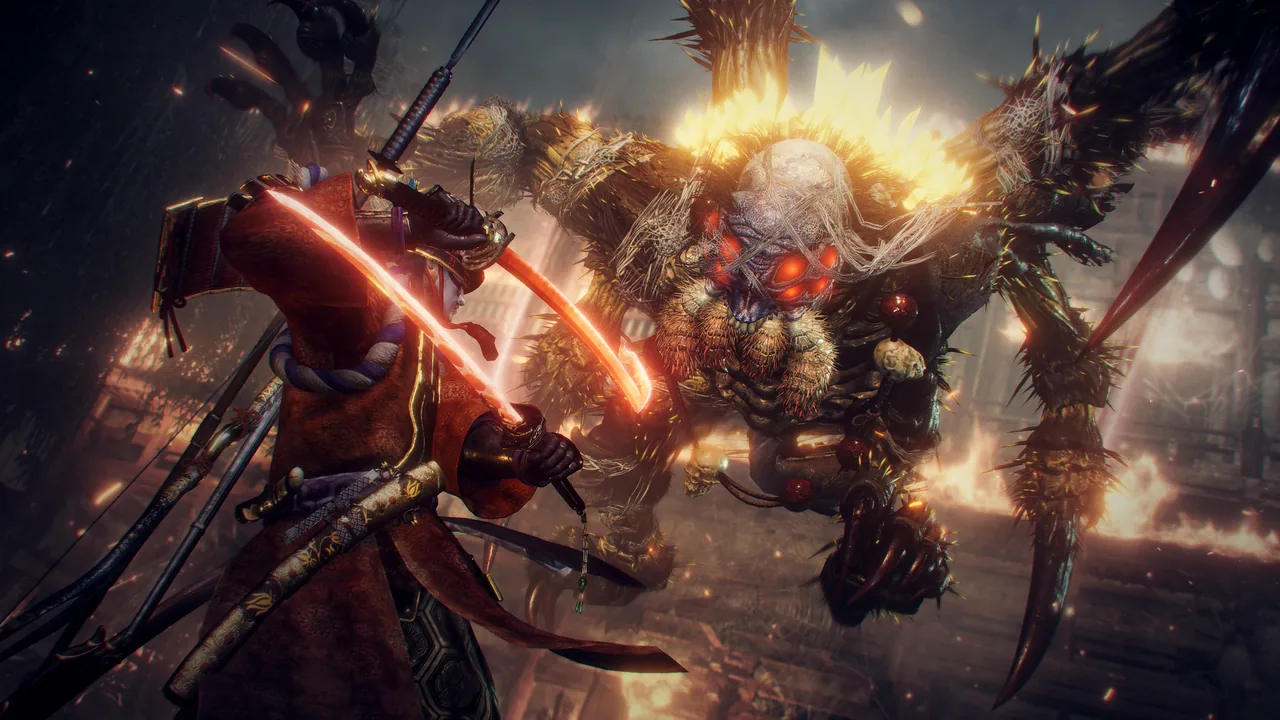
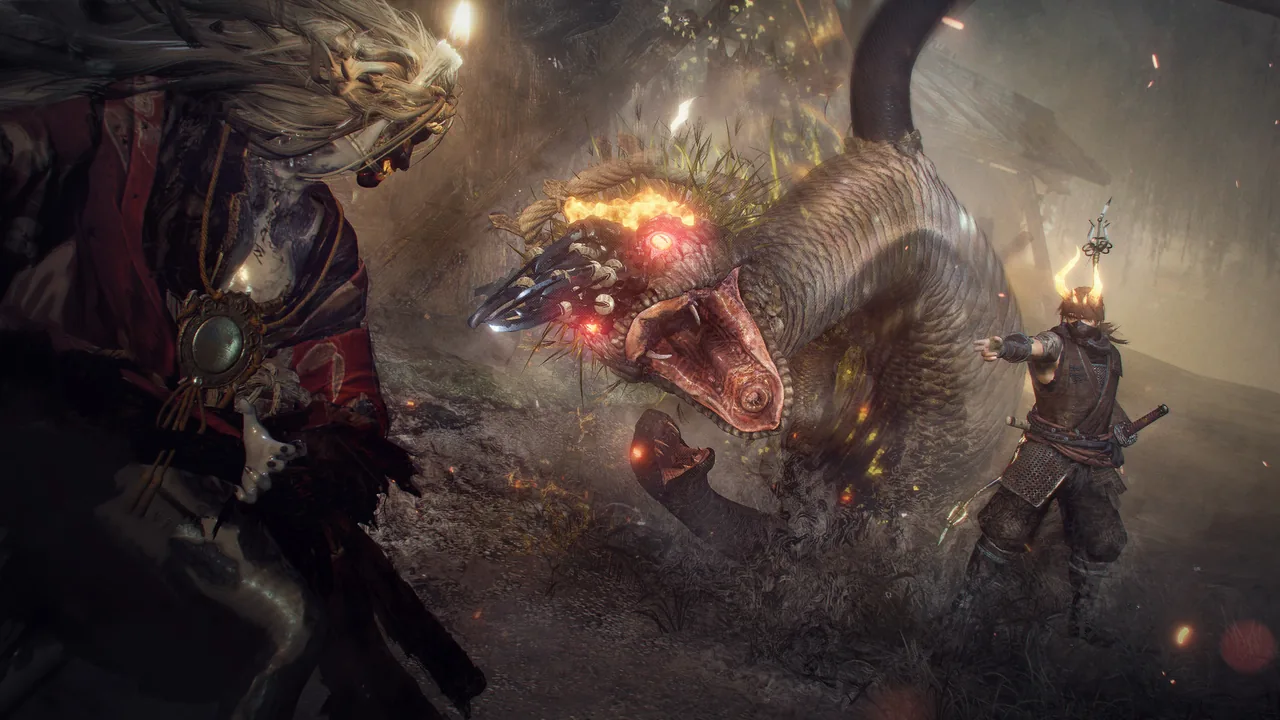
Two more systems sit on top of stances and Ki Pulse, turning what would otherwise be pure offense-reading into a resource-management puzzle. Burst Counters consume a point of Anima to interrupt an enemy's telegraphed Burst Attack, punishing a good read with heavy Ki damage and converting a defensive gamble into a genuine offensive opening. Yokai Shift is Nioh 2's answer to a limit-break: once the Amrita gauge fills — fastest through Soul Core abilities, more slowly through melee hits, parries and absorbed Amrita — the player transforms into one of three Guardian Spirit forms. Brute Form can't be staggered and forces yokai to release extra Amrita on a successful interaction; Feral Form rewards precise last-second dodging; Phantom Form stays unstaggerable and lets the player weapon-throw straight into an enemy's position. Each form runs its own Anima pool fed by whichever Soul Cores are equipped, so a well-built loadout can burn through roughly three times the ability usage of a single form. It's an enormous amount of interacting machinery for one combat system to carry, and it mostly holds together — the ceiling on what a skilled player can do with stances, counters and Yokai Shift stacked together sits alongside Sekiro's deflection-and-posture system as some of the best action combat design in the genre. Where Sekiro asks one exceptional mechanic to carry an entire game, Nioh 2 asks four or five good ones to carry it together, and accepts a steeper learning curve as the price.
The loot problem
Here's the part that decides how much of that combat system a given player actually gets to enjoy. Nioh 2 drops gear constantly — multiple items per fight, dozens per mission, each rolling its own affixes, +levels and, later, set bonuses, inside a structure that owes far more to Diablo III's loot-driven lineage than to the sparse, hand-placed drops of a typical Souls game. That volume is the single most divisive thing about Nioh 2, and it's worth assessing honestly rather than praising it as generous or dismissing it as clutter. The generous read is real: build variety genuinely benefits from that much raw material, and a player willing to engage with forging and set-bonus theorycrafting has more to work with than in almost any Souls-adjacent game on the market. The costly read is also real, and it dominates player feedback — functionally interchangeable pieces stack up by the dozen, the comparison screen was never built to triage that volume quickly, and the single most common complaint in Nioh 2's own Steam reviews isn't the difficulty, it's the loot itself: too many nearly identical drops with little signal for which ones are worth a second look. Where Diablo III solved this exact problem by rebuilding its itemization around set-driven, build-warping bonuses after its 2014 auction-house rework, Nioh 2 never quite gets there — the volume is Diablo-scale, the clarity is not. Lies of P took the opposite bet, building a small, deliberate weapon-assembly system instead of a drop flood, and next to it Nioh 2's choice looks less like a philosophy than a system the interface never caught up to.
Missions, not a world
Nioh 2 structures its campaign as discrete, selectable missions rather than the interconnected open world Elden Ring or the looping, gated regions of Dark Souls III build their pacing around. Each mission is a self-contained, linear-to-branching level with its own boss and loot table, selected from a hub map rather than walked to. That trade-off has real upside: missions are tightly authored, replayable individually for farming, and never ask a player to trek back across a half-remembered map to reach the next objective. The cost shows up in the game's middle stretch and its side-mission roster, where level layouts start reappearing with palette swaps and rearranged enemies rather than genuinely new geography — a pattern players who finish the base campaign and its DLC call out specifically, describing main missions later in the game leaning on the same reused spaces side missions already recycled. It's a trade-off rather than a failure: mission-based design buys tight pacing and sacrifices the sense of a single, coherent place worth exploring for its own sake. Anyone coming from Elden Ring's continent-scale discovery should recalibrate expectations first.
Difficulty, co-op and the Benevolent Grave
Nioh 2 earns its reputation as one of the harder entries in the genre, and the timing is worth being specific about: it front-loads hard. Early missions throw fast, heavily telegraphed but unforgiving attack strings at a player who hasn't yet internalised stance-switching, Ki Pulse or Burst Counter timing, and a noticeable share of negative feedback traces to that opening stretch rather than the brutal late-game content the curve eventually earns. That's a real design problem, not just a skill-issue complaint — a system this dependent on layered mechanics needs more room to teach them before testing them at full intensity. Two systems soften that curve: online co-op lets up to three players tackle a mission together via Visitor summons, and the solo-friendly Benevolent Grave lets players leave AI-controlled allies at points where they died, summonable by others or a later visit from the same player. Neither trivialises a fight the way an easy-mode toggle would, but both offer real, in-fiction help — more accommodation than Sekiro offers, and roughly in line with Dark Souls III's summon signs.
Underworld and Depths, once the campaign runs out
Nioh 2's transition from campaign to loot treadmill happens through a specific, well-defined system rather than a vague "endgame grind," and Wanderer's own readers will recognise the shape of it. The Underworld unlocks after reaching Dream of the Nioh — the final New Game Plus tier — and consists of 108 fixed floors followed by 30 procedurally generated Depths floors, each floor running through three stages: Terra Firma, a hub where earned resources buy permanent account-wide benefits; the Netherscape, a mission populated with enemies; and the Crucible, a boss arena that has to be cleared to progress. The first fifty floors scale to early-game enemy behaviour and the back half to late-game intensity, while Depths floors regenerate on every visit, the first five changing daily. The payoff is concrete: raised item-level caps, level-200 gear, and rare currencies like Ethereal Graces found nowhere else. It's a genuinely deep system for the slice of the audience that clears the base campaign and all three DLC and still wants somewhere to point that combat system — closer in spirit to a seasonal ARPG's endgame ladder than to anything a typical Souls game offers.
Interface friction and what's easy to skip
The story, centred on a protagonist whose identity and form shift across historical episodes spanning the Sengoku and Heian periods, asks for a level of attention to Japanese political history most players simply won't bring, and the game is forgiving about that — missions are selectable by objective, not gated by narrative comprehension, so skipping every cutscene costs nothing mechanically. The interface is a different story, and it's this review's most load-bearing weakness alongside the loot volume itself. Comparing two pieces of gear means reading through stacked affix lists, set-bonus tooltips and forging options clearly designed for a controller-and-couch context first, and doing that dozens of times per mission — which the drop rate all but guarantees — turns inventory management into the game's most persistent source of friction. Nothing here is broken, it's simply not built for the volume of decisions the loot system generates, and that mismatch is more consistently frustrating across a full playthrough than any individual boss fight.
Player feedback on the PC version skews toward gameplay frustration rather than technical instability — difficulty and loot-volume complaints dominate negative Steam reviews far more than crashes or frame-pacing issues, a good sign for a game this system-heavy. A handful of long-session reports describe co-op desyncs after a host disconnects and a persistent, if isolated, item-use input glitch where the animation's cues play without the effect actually triggering. Neither is widespread, but both recur independently enough that co-op and item-heavy builds should go in aware. There's no sign of the systemic PC port problems that dog other console-first action games at launch — arriving on Steam a year after the PlayStation release likely bought Team Ninja time to iron out rough edges first.
Value
This is where Nioh 2 makes its strongest case regardless of everything above. The Complete Edition is the only version PC ever received — no cheaper base-game listing to compare against, no separately sold DLC to budget for afterward — and at a current discounted price under NZ$30 it bundles the full campaign, all three story expansions and the entire Underworld and Depths endgame into one purchase. Against a Steam user base of over fifty thousand reviews sitting at "Very Positive" and a Metacritic score of 86, that's an unusually large amount of well-regarded content for the price, even accounting for the loot and interface friction docked elsewhere here. Team Ninja has since moved on to Nioh 3, but that doesn't diminish what's on offer — a mature, fully patched, deeply discounted Complete Edition several years past its combat system's debut rewards waiting rather than buying day one.
Final verdict
Nioh 2 earns its 8.0 for genuinely excelling at the one thing an action RPG most needs to get right: the combat. Stance-switching, Ki Pulse, Burst Counters and Yokai Shift's three Guardian Spirit forms interact in ways that reward real mastery, and the ceiling that produces sits alongside the best the genre has to offer. What keeps it half a point or more below FromSoftware's best is everything wrapped around that combat — a loot system that drops Diablo-scale volume without Diablo-scale clarity, mission design that leans on reused level layouts once the base campaign's freshest ideas run out, and an interface that was never quite built for the number of decisions the drop rate forces on every player. None of that undoes what the combat achieves. It does mean this is a game that asks patience of its audience in a way Sekiro or Dark Souls III never had to, because the reward sits behind menus those games didn't need.
Buy the Complete Edition if the idea of the deepest stance-and-timing combat system currently shipping is worth fighting an inventory screen for. Skip it, or at least go in forewarned, if loot bloat has burned you out on a Diablo-style looter before — this is the same problem, wearing a katana instead of a legendary staff.
Players who'd rather their progression accrue quietly in the background than get buried under a few hundred nearly identical drops might also want to look at what Wanderer does instead.
Pricing and Steam review data checked 2 August 2026.
Pros and cons
Pros
- Stance-switching between High, Mid and Low combined with Ki Pulse timing produces a decision density most action games never attempt
- Burst Counters turn defensive reads into a genuine offensive tool by punishing an enemy's own Burst Attack for heavy Ki damage
- Yokai Shift's three Guardian Spirit forms each carry an independent Anima pool, effectively tripling the ability set available in a single fight
- The Complete Edition bundles the full campaign and all three story DLC episodes for one deeply discounted Steam price with no DLC sold separately
- The Underworld's 108 fixed floors plus 30 rotating Depths floors give committed players a genuinely deep endgame built around item-level progression rather than recycled story bosses
- Benevolent Grave AI allies and three-player online co-op soften specific difficulty walls without trivialising the underlying combat
Cons
- Missions drop gear at a rate that buries meaningful upgrades under dozens of near-identical affix rolls, and the comparison screen was never built to sort through that volume quickly
- Side missions and even later main-story missions reuse the same handful of level layouts, a pattern experienced players call out specifically after finishing the base game and its DLC
- The Sengoku-era plot, built around a protagonist whose identity keeps shifting between historical episodes, is easy to ignore entirely without ever losing track of what to do next
- Difficulty spikes hard in the opening hours, before the game has taught stance-switching or Ki Pulse well enough for new players to answer it, and it shows in how often early quitting shows up in player feedback
- Two of the three Guardian Spirit forms and most Soul Core abilities sit behind menus dense enough that build experimentation often means more scrolling than fighting
- A minority of long-session players report co-op desyncs after a host disconnect, and isolated but recurring reports describe an item-use input glitch on PC that plays the correct animation cue without triggering the actual effect
Screenshots
-
Nioh 2 – The Complete EditionImage: KOEI TECMO GAMES CO., LTD. via Steam -
Nioh 2 – The Complete EditionImage: KOEI TECMO GAMES CO., LTD. via Steam -
Nioh 2 – The Complete EditionImage: KOEI TECMO GAMES CO., LTD. via Steam -
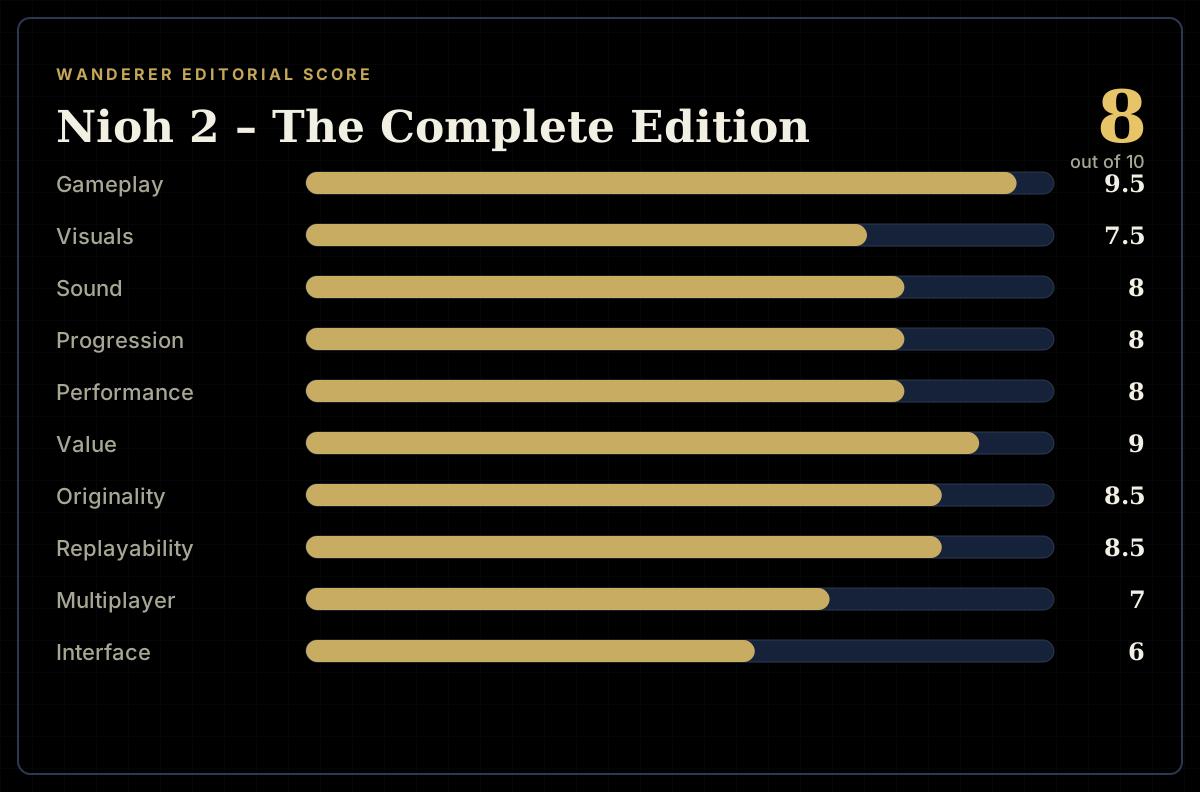
How the review scores each part of the gameWanderer Editorial -
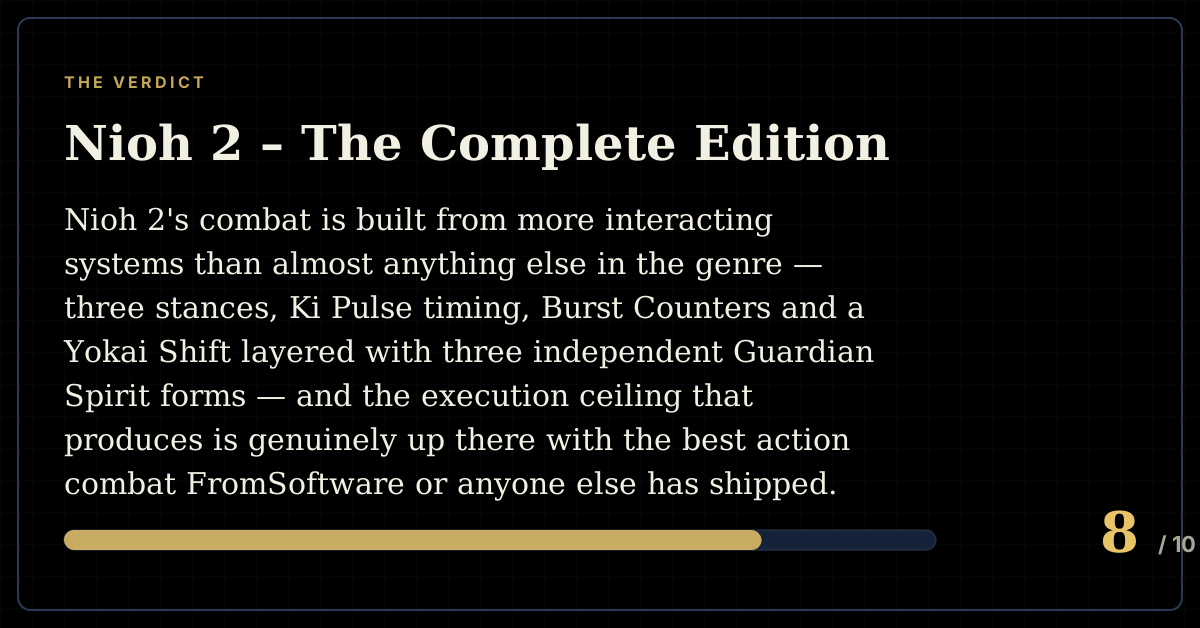
The short versionWanderer Editorial