Game review
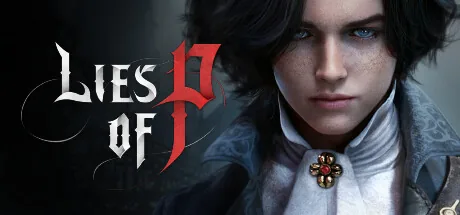
Lies of P
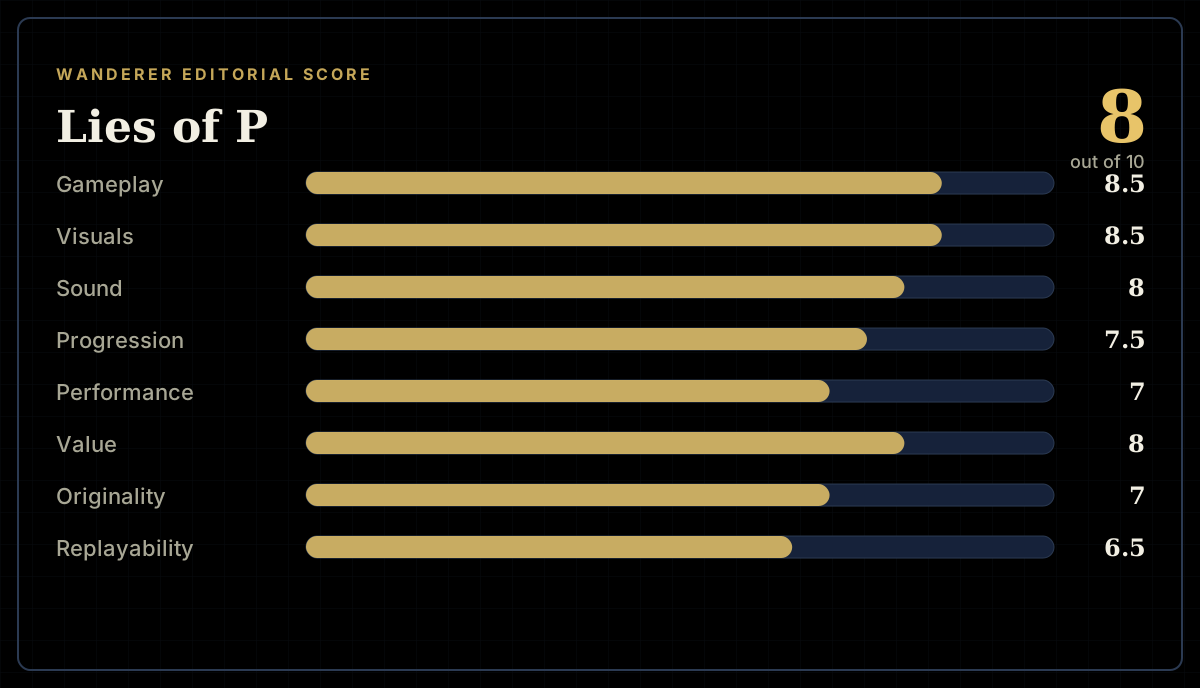
8 / 10
- Developer
- NEOWIZ
- Publisher
- NEOWIZ
- Released
- 19 September 2023
- Platforms
- Windows, macOS, PlayStation 4, PlayStation 5, Xbox One, Xbox Series X|S
- Genre
- Action RPG
- Monetisation
- Premium, one-off purchase; Overture expansion sold separately
- Players
- None. Lies of P is entirely single-player, with no co-op summoning and no invasions
The short version
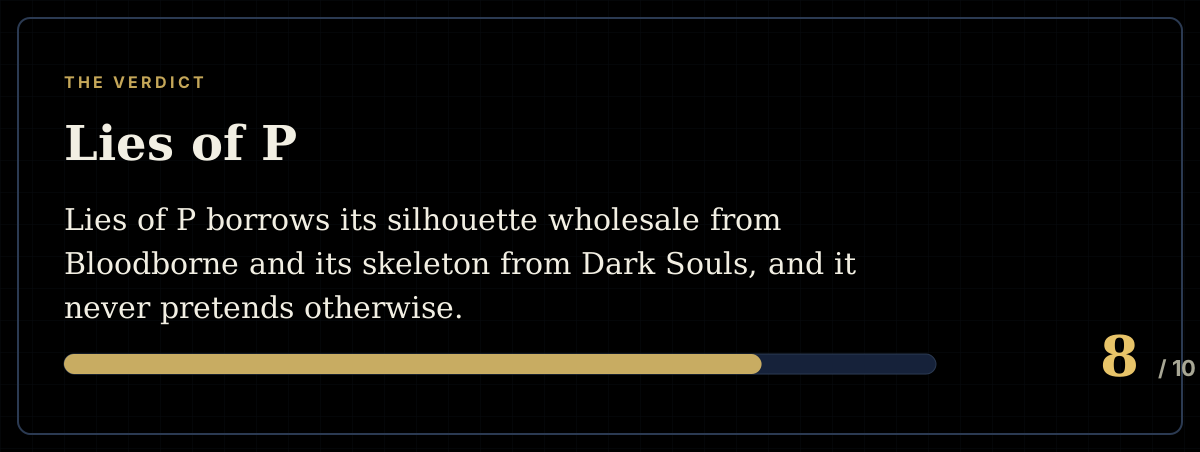
Lies of P borrows its silhouette wholesale from Bloodborne and its skeleton from Dark Souls, and it never pretends otherwise. What earns it a real place next to those games rather than a footnote underneath them is what Round8 Studio built on top: a weapon-assembly system that lets you mix any blade with any handle, a perfect-guard mechanic that rewards learning exact timing over just rolling away from everything, and a lying mechanic that quietly tracks your honesty across the whole campaign and pays it off in the ending. It asks a lot early — there's a difficulty wall a few hours in that has turned a meaningful number of players away before the systems fully click — and several of its harder bosses lean on long combo strings the way the genre's weaker entries do. The Overture prequel expansion is the better-balanced version of the same idea, and worth adding once the base campaign is done.
Biggest strengths
- Blades and handles can be freely swapped between any weapon in your collection, so a favourite moveset isn't locked to one set of stats
- Perfect guard rewards learning an attack's exact rhythm with real stagger damage, giving a genuine alternative to pure dodge-and-punish play
- The Legion Arm prosthetics change your combat options mid-fight without breaking the weapon-assembly system's logic
Biggest weaknesses
- A difficulty spike a few hours into the campaign, well before most of the weapon-assembly system has opened up, has pushed a meaningful share of players to quit before the game's best ideas arrive
- Several harder bosses rely on long, low-recovery combo strings that reward memorised patience over the earlier fights' emphasis on reading an attack in real time
- The influence from Bloodborne specifically is close enough in city layout, colour palette and enemy silhouette that it periodically reads as tribute rather than reinterpretation
Who it's for: Souls and Bloodborne veterans who want a new skeleton to hang familiar systems on; players who enjoy tinkering with build variety more than raw exploration; anyone curious what a well-funded, non-FromSoftware team does with the formula when they commit to it rather than half-copying it.
Our recommendation: Buy it, especially if Bloodborne's gothic industrial city was ever your favourite Souls setting and you've been waiting for something built in that space since. At NZ$85.99 it's priced like the AAA game it is, the campaign runs long enough to justify that, and Overture at NZ$43.00 is a legitimate second helping rather than a token add-on — just budget extra patience for the early-to-mid difficulty spike before deciding whether the whole package is for you.
8 / 10
Carlo Collodi's Pinocchio is, underneath the Disney varnish most people know it through, a genuinely strange and often dark fable about a wooden puppet lying his way toward humanity. Round8 Studio and NEOWIZ took that premise seriously rather than decoratively: in Lies of P, the puppet is a combat-capable killer built by the master craftsman Geppetto, the city he wakes up in is being torn apart by a "Puppet Frenzy" that's turned mechanical servants homicidal, and the choice between telling the truth and lying to the people you meet is tracked, quietly, for the entire length of the game. Released 19 September 2023 for PC, PlayStation 4/5 and Xbox One/Series X|S, with an Xbox-published prequel expansion, Overture, following on 6 June 2025, it is a Soulslike in the most literal sense of the word — and it's confident enough about that lineage to spend its energy building things that lineage hadn't tried yet, rather than pretending the influence isn't there.
Getting the elephant in the room out of the way
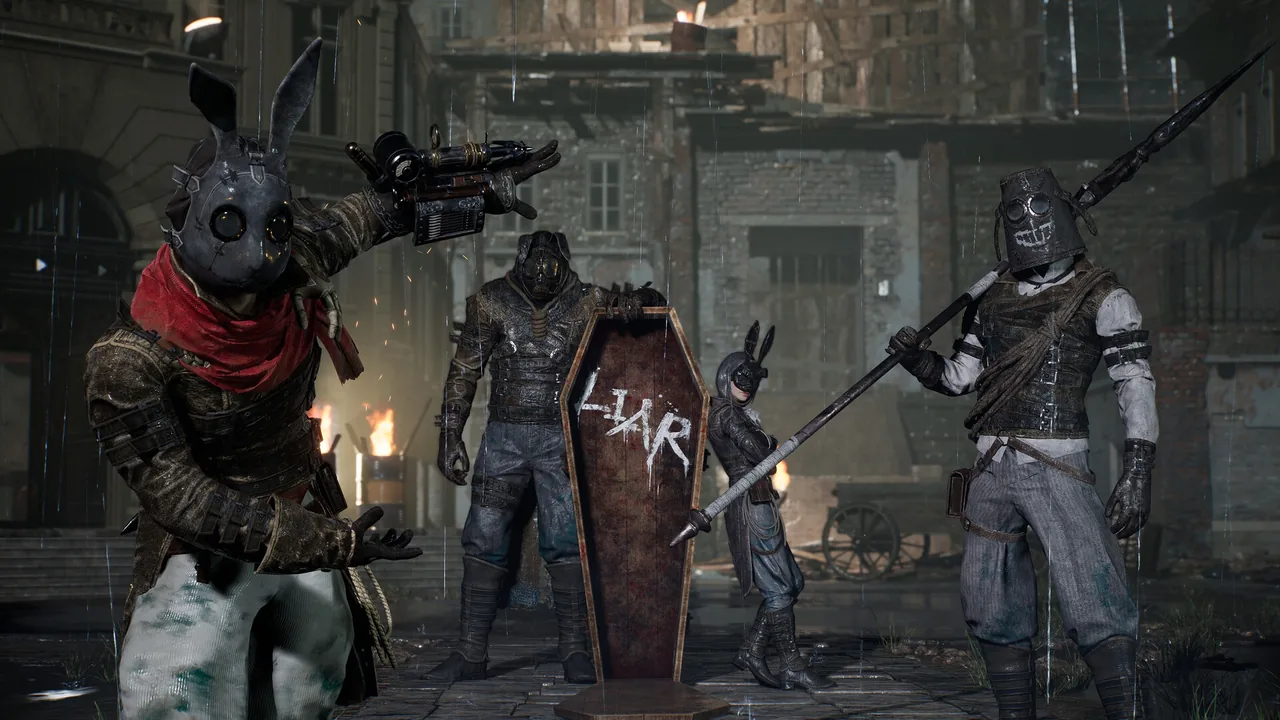
There's no point reviewing this game as though its visual debt weren't obvious. Krat, the fictional Belle Époque city P wakes up in, shares an enormous amount of DNA with Yharnam: gaslit stone streets, a once-grand population turned into howling, disfigured threats, an oppressive gothic skyline, weapons that transform mid-swing. Round8 Studio has been upfront in interviews about Bloodborne being a direct touchstone, and it shows in ways beyond mood — certain enemy silhouettes, certain street layouts, certain boss arena shapes land close enough to specific Bloodborne moments that veteran players will clock them immediately. Some critics, VG247's Sherif Saed among them, argued the combat system itself leans too heavily on other Soulslikes without contributing enough of its own, calling parts of it "wasted potential" relative to what the presentation promises.
That criticism isn't wrong about the surface. It undersells what's actually different once you're a few systems deep, though, and the gap between "looks derivative" and "plays derivative" is where this review spends most of its time, because it's the gap that decides whether Lies of P is worth your NZ$85.99 or just an expensive cover version.
Weapon assembly: the system that actually earns its keep
Every weapon in Lies of P is built from two parts — a blade and a handle — and almost any blade can be attached to almost any handle. A heavy, slow greatsword blade can sit on a fast, light rapier handle, trading the blade's usual sluggishness for the handle's speed while keeping the blade's raw damage and its unique Fable Art, a special move tied to that specific blade. The reverse works too: a small, quick blade on a heavy handle turns into something closer to a poking spear with real reach. This isn't a cosmetic reskin system or a minor stat-shuffle — it's a genuine second axis of build variety layered on top of the usual armour-and-stat progression, and it means two players who both favour "big two-handed weapons" can end up with meaningfully different combat feel depending on which handle they've paired with which blade.
It's also, notably, the system the difficulty spike sits in front of. The early chapters don't give you enough blade and handle variety to feel the system's full range, so the game's hardest early impression — the one that's driven a share of its Steam negative reviews — happens before its best idea has had room to open up. That's a real pacing problem, not a design flaw in the system itself: by the time you've cleared Hotel Krat and started collecting a real spread of parts, weapon assembly is doing exactly what it's supposed to. Getting there is the ask.
Perfect guard: timing over evasion
The other genuinely load-bearing system is Fatal Blow-adjacent parrying built around perfect guards. Block an attack at the right instant and you don't just avoid damage — you stagger the enemy's weapon durability and your own guard gauge barely moves, opening a real punish window. Block late and you take chip damage and lose ground on your guard meter; block an unblockable and you're in trouble regardless. The mechanic asks you to learn an attack's actual timing rather than its general shape, which is a different skill from Dark Souls' dodge-focused i-frame rhythm and closer to Sekiro's deflect system than to anything Bloodborne itself does. It's the strongest single piece of combat design in the game: legible enough to learn on a normal enemy, demanding enough that even late bosses keep testing it rather than making it trivial once you're skilled.
Where perfect guard runs into the same wall as weapon assembly is boss pacing. Several of the harder required fights, particularly in the back half of the campaign, lean on long unbroken combo strings — four, five, six-hit chains with minimal recovery between swings — that punish a player still learning the specific fight more than they reward someone reading body language in real time. That's a familiar complaint across this whole genre, and Lies of P isn't uniquely guilty of it, but it does mean the perfect-guard system's promise of "timing over memorisation" gets undercut by individual fights that are closer to memorisation than the system's own logic suggests they should be.
Legion Arm and the moral ledger
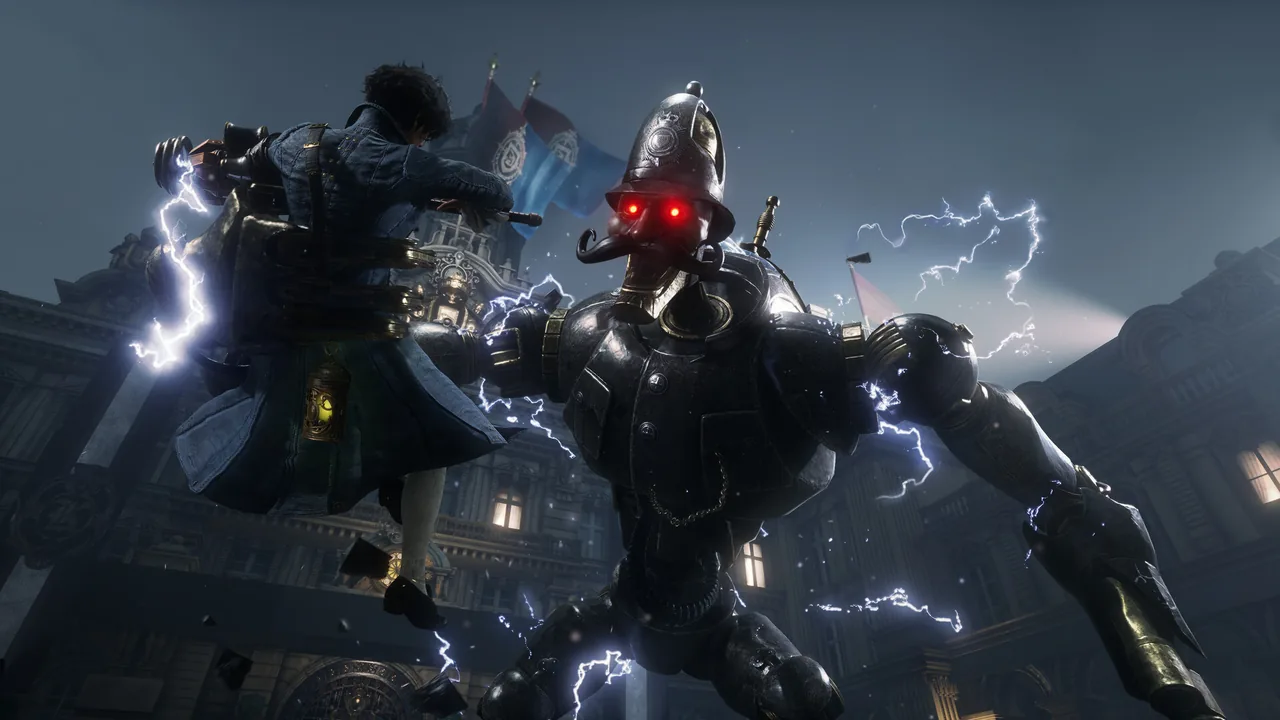
The Legion Arm is P's mechanical left forearm, swappable between several tools — a grappling hook that closes distance and opens flanking routes, a flamethrower attachment, a rope-and-hook that can yank certain enemies off balance — each usable a limited number of times before recharging at a checkpoint. It's a smaller system than weapon assembly but it does real work in specific match-ups, giving you an answer to enemies that are otherwise built to counter your default combat approach. The one real friction point is that swapping arms mid-fight goes through a brief menu pause rather than a quick button-hold cycle, which feels at odds with a combat system that's otherwise built around split-second decisions.
The lying mechanic is the part of the game that rewards patience rather than reflexes. Throughout the campaign, NPCs ask P questions with a time-limited window to answer honestly or lie, and unlike most Soulslike morality systems — which tend to boil down to one big binary choice near the credits — Lies of P tracks a running tally of small choices across the entire runtime. Whether Geppetto ultimately treats P as "just a puppet" or as something closer to a son is shaped by that tally, not by a single prompt at the end, and it's structured so you genuinely can't game it by saving your "real" answer for a final decision screen. It's a quiet system, easy to miss the first time through, and it's one of the clearest places where the Pinocchio framing does actual design work instead of just supplying a costume.
Krat itself, and where the presentation actually distinguishes itself
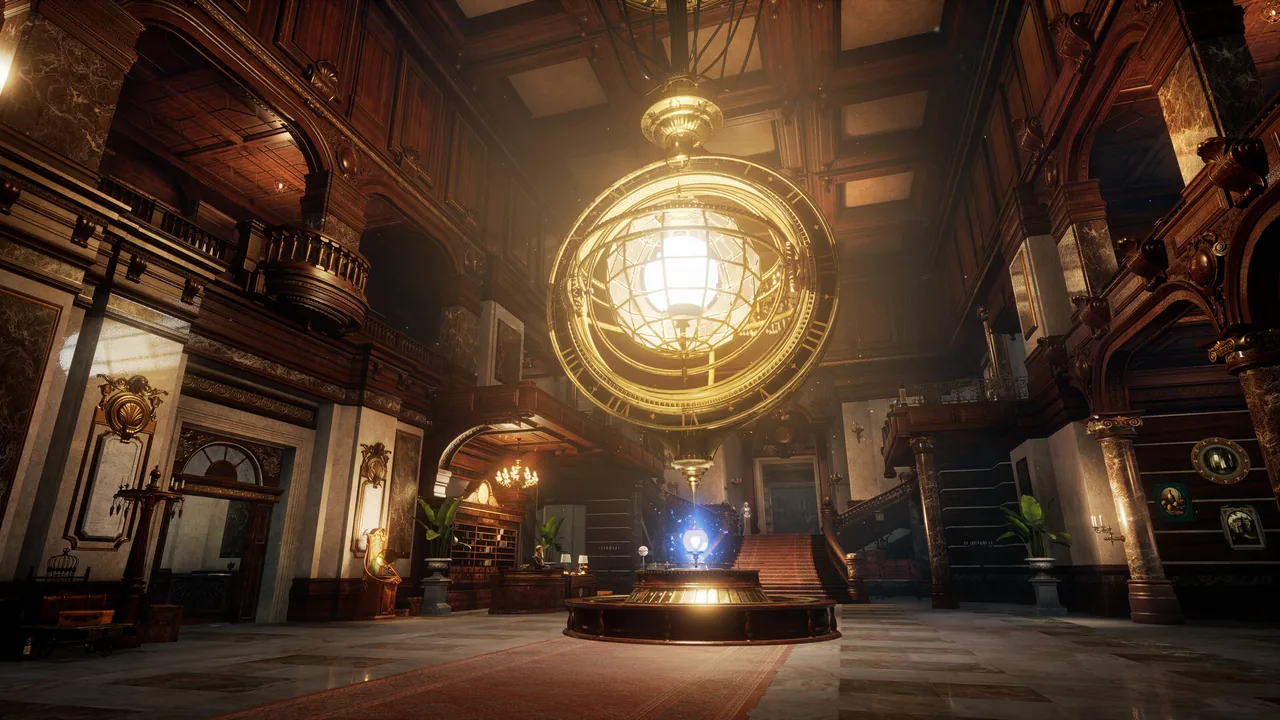
For all the Bloodborne comparisons, Krat earns its own identity in the specifics: this is a Belle Époque city built on a puppet-manufacturing industry, and that shows in the environmental storytelling — automaton parts scattered through workshops, elegant clockwork machinery integrated into ordinary architecture, a grand hotel serving as the game's hub rather than a dream-realm. The art direction is confident rather than derivative when it's given room to be its own thing, and the grander set pieces — the collapsing streets of the opening chapters, the cathedral district later on — hold up against the genre's best environmental design. Sound carries a similar amount of the tension boss fights depend on: clockwork ticking, distant screaming, the specific metallic ring of a perfectly timed guard landing, all doing real work in a genre where audio cues frequently matter as much as visual ones.
Performance is solid rather than exceptional. The PC version runs well on mid-range hardware at launch-era settings, though like most titles built on Unreal Engine 4 it has occasional traversal stutter tied to shader compilation on first encounters with new areas — a known, documented category of issue for the engine generation rather than something specific to this build.
Overture: the better-balanced sequel that came first, chronologically
Released 6 June 2025 for NZ$43.00 as a standalone purchase requiring the base game, Overture is a prequel — it's set before the main campaign, following the same puppet protagonist through Krat's last days of "unseen grandeur" before its collapse, centred on Lea Florence Monad, known as the Legendary Stalker, as a major supporting figure. It adds a full new explorable area (the Rose Estate), new weapons, new Fable Arts and a fresh boss roster, and reviewers who covered it — Travis Northup among them — specifically singled out the new bosses as better balanced than several of the base game's, suggesting Round8 Studio took the "unbroken combo string" criticism from launch seriously the second time around. Its Steam reception backs that up: Very Positive, at roughly 86% positive across some 6,400 reviews at time of writing, comparable to the base game's own split. The trade-off reviewers noted is that Overture plays it relatively safe mechanically — it refines weapon assembly, perfect guard and the Legion Arm rather than adding a genuinely new system on top of them, and a few of its new areas were described as lacking the base game's strongest set-piece moments.
That's a fair trade for the price. Overture isn't essential in the way a mainline chapter would be, but it's a real second campaign built by a team that had clearly absorbed feedback from the first one, not a cosmetic pack dressed up as an expansion. If you finished the base game and wanted more of exactly what worked about it, with the rough edges sanded down slightly, it's worth the NZ$43.00.
Progression, value and who should skip it
Levelling runs through the familiar Souls currency loop — Ergo collected from enemies, spent on stats or lost at your death location if you don't reclaim it before dying again — layered with a skill tree called the P-Organ that unlocks passive upgrades using a separate currency found through exploration. It's a legible system once you've seen an hour of it, though like most of this genre it explains itself sparingly and expects you to cross-reference item descriptions rather than reading a tutorial screen.
At NZ$85.99, Lies of P is priced like the full-scale AAA release it is, and the campaign plus Overture together represent a genuinely long, well-built package for that money — this isn't a six-hour experience stretched thin. The lack of any multiplayer, co-op or otherwise, is the one value-proposition gap worth naming plainly: players who lean on summon assistance to get past a wall in Elden Ring or Dark Souls have no equivalent safety net here. You either get better, find a different weapon build, or sit with the difficulty spike until it breaks.
Verdict
Lies of P earns the comparisons it invites rather than merely surviving them. Weapon assembly gives build variety a genuine second dimension most of the genre doesn't bother with, perfect guard is a timing-based defensive system with real depth, the Legion Arm adds situational tools without breaking the combat's internal logic, and the lying mechanic is a quiet, well-tracked piece of narrative design that rewards attention rather than demanding a single big choice. Its weaknesses are just as specific: an early difficulty spike that arrives before the game's best systems have opened up, several bosses that lean on combo-string memorisation over readable telegraphing, and a visual debt to Bloodborne close enough that it periodically distracts from what Round8 Studio actually built. Overture is a legitimate, better-calibrated continuation rather than a victory-lap DLC, and worth the additional NZ$43.00 once the main campaign is finished.
Eight out of ten reflects a Soulslike that's derivative on purpose and good enough underneath that derivation to be worth playing on its own terms — not a game hiding behind its influences, but one using them as a starting point it was confident enough to build past. Players frustrated by Elden Ring's insistence on exploring around a wall might actually prefer this game's more honest, head-on structure: there's no escape valve here, just the fight in front of you and the tools you've built to face it.
Pricing checked 30 July 2026.
Pros and cons
Pros
- Blades and handles can be freely swapped between any weapon in your collection, so a favourite moveset isn't locked to one set of stats
- Perfect guard rewards learning an attack's exact rhythm with real stagger damage, giving a genuine alternative to pure dodge-and-punish play
- The Legion Arm prosthetics change your combat options mid-fight without breaking the weapon-assembly system's logic
- The lying mechanic tracks small, easy-to-miss choices across the entire game and pays them off with distinct ending content rather than a single late binary prompt
- Krat's Belle Époque architecture gives familiar Souls-genre spaces — plague streets, a grand hotel, a cathedral district — a distinct visual identity instead of reusing gothic-castle default
Cons
- A difficulty spike a few hours into the campaign, well before most of the weapon-assembly system has opened up, has pushed a meaningful share of players to quit before the game's best ideas arrive
- Several harder bosses rely on long, low-recovery combo strings that reward memorised patience over the earlier fights' emphasis on reading an attack in real time
- The influence from Bloodborne specifically is close enough in city layout, colour palette and enemy silhouette that it periodically reads as tribute rather than reinterpretation
- No multiplayer of any kind means solo players get no summon-assist for a fight that's beating them, unlike most of the genre's other major entries
- Legion Arm swapping requires a menu pause mid-combat rather than a quick hotkey cycle, which slows down a system that's otherwise built for fast decision-making
Screenshots
-
Lies of PImage: NEOWIZ via Steam -
Lies of PImage: NEOWIZ via Steam -
Lies of PImage: NEOWIZ via Steam -
How the review scores each part of the gameWanderer Editorial -
The short versionWanderer Editorial